






Don't miss what's happening in education today, around the country.
TODAY:JUST RELEASED!
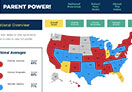
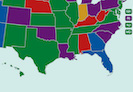
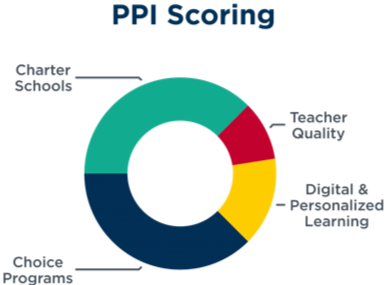
With Covid-19’s impact on education a wake-up call for most parents, a new study of state education laws validates the reasons why so many parents are struggling to educate their children. The 2020 Parent Power! Index (PPI) is the most comprehensive analysis of states’ structural and behavioral policies that inform parents and allow them to make decisions regarding the education of their children, within or outside any crisis. Discover where innovation, opportunity, and policy environment intersect to enable parents to make the best choices for their children’s education.
ITALY – IN JUST FIVE DAYS:
The U.S.-Italia ED Innovation Festival will be coming live from Italy, to virtual points throughout the Globe. “JOIN” us on ground (if you’re permitted) or better yet, virtually, to explore the wonders of science and culture throughout Italy through VR and AR, the intersection of school and work across our two countries, and the growing education technology and innovation companies that are solving our most pressing challenges left by Covid-19.
LESS THAN ONE MONTH:
To make a $100 donation to CER and get CEO and Founder Jeanne Allen’s unique book on the path to An Unfinished Journey: Education and the American Dream, signed, sealed and delivered.
SIGN THE PLEDGE:
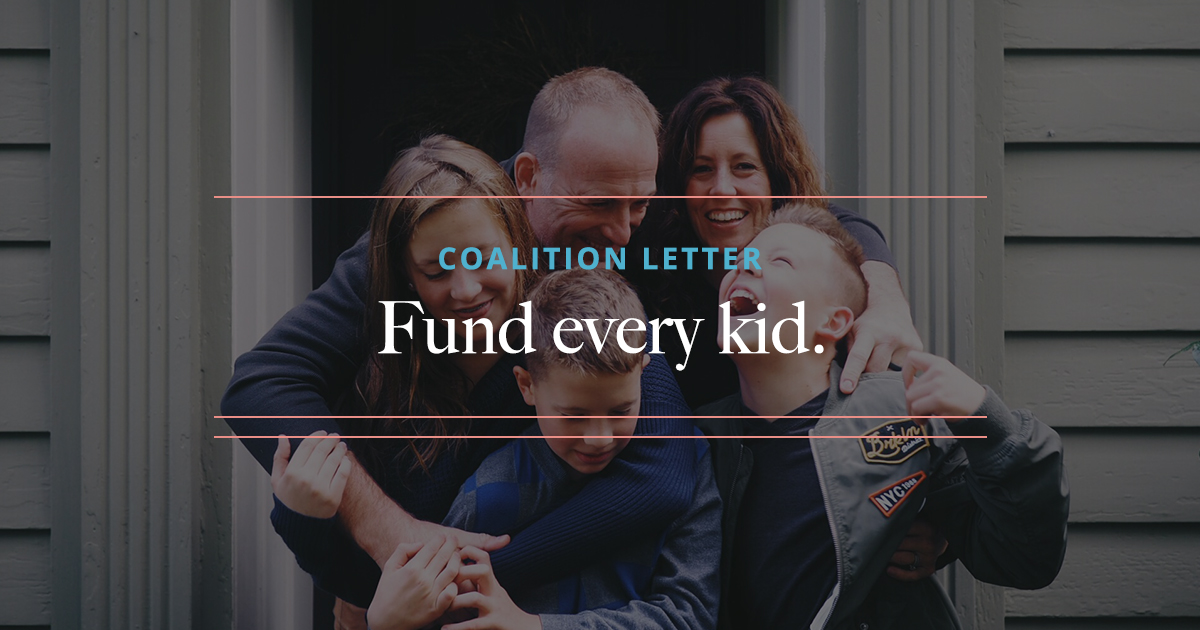
#FundEveryKid And join the millions pledging to fight to fund families and students, not institutions. As the pledge says, “At a time when tens of millions of students face nearly 6 months without consistent schooling, priorities should focus on the needs of families over institutions.” Thanks to the newest kids on the block in the education opportunity world, Yes.Every.Kid for organizing this collective powerhouse of Advocates. Join us!
CATCH UP:
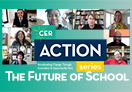
Parents and those who want to help them will want to watch this edition of CER’s Back to School ACTION SERIES, with Erica Komisar, psychoanalyst, parent coach and author, who addressed parent questions and suggested strategies on how to create a healthy learning environment for our kids in the time of COVID-19.
ICYMI:
CER’s 2020 National Charter School Laws and Ranking is out! Since 1996, this analysis has guided parents and policymakers in their quest to assure that the innovative public schools are able to open and thrive!
Founded in 1993, the Center for Education Reform aims to expand educational opportunities that lead to improved economic outcomes for all Americans — particularly our youth — ensuring that conditions are ripe for innovation, freedom and flexibility throughout U.S. education.
 “It shouldn’t take a pandemic to trigger a demand for more and better educational opportunities for our kids,” said Jeanne Allen, the founder and chief executive of the Center for Education Reform, which released today’s study. “But that is precisely what’s happening across the country, as more and more parents find out that their ability to educate their kids is wholly dependent on a limited, finite, and often deficient set of offerings.”





 Thinking about the two months between now and the election brings to mind Bette Davis’ famous quote from “All About Eve,” “fasten your seatbelts, it’s going to be a bumpy ride”. Our hope is that it is not too bumpy for all Americans — or at least most Americans — to come together afterwards, no doubt after a time for some wound healing. In that spirit, we offer the wish of the
Center for Education Reform Looks to Preserve the American Dream
CER IN THE NEWS
RealClear Education | August 17, 2020
“Who will teach our children, and what will we teach them?” According to Center for Education Reform Founder and CEO Jeanne Allen, having a good answer for these questions is crucial for maintaining the American heritage and the traditions of Western Civilization.
Based in Washington, D.C., CER was founded by Allen in 1993 to “expand educational opportunities” that can yield “improved economic outcomes for all Americans, particularly our youth.”
CER’s mission was motivated in part by Allen’s experience as a first-generation American. Her grandparents emigrated from Sicily to America over a century ago, lured by the promise of the American Dream—a freer, more prosperous, and more promising life, open to anyone willing to work for it.
In her recent book, An Unfinished Journey: Education & the American Dream, Allen writes that our “nation’s economy and workforce, its culture and stewardship of its past” and the “functionality of its democracy” are dependent on “how we as a nation prepare our youngest citizens for their future.”
It was during her college years that Allen realized that the U.S. public education system was in a tailspin. A “cold reality” set in “that my education wasn’t so great after all, that it had been shallow on many levels, lacked rigor and in short, prepared me little for my higher education.” A century-old, sclerotic education bureaucracy was leaving U.S. students behind.
CER was founded to close this widening chasm, Allen says, through “rapid, relentless, and honest analysis of and advocacy for the basic principle that every student should be afforded the education they need and deserve, no matter their zip code.”
Maintaining a robust media presence, CER tries to get the word out through a steady volume of op-eds, television interviews, podcasts, and social media posts, combined with policy reports and the CER ACTION Series webinars, in which educators discuss promising educational options.
One way that CER puts the principle of equal education into practice is its proposal to give every child a “digital backpack,” which Allen argues should “include a device, a hotspot, basic supplies, a meal, and a ticket that gains them access anywhere to any school that has room.”
CER offers a multitude of useful resources that can keep children engaged and learning in these unusual times, when many parents are looking to supplement their children’s online learning or even begin homeschooling this fall. CER’s digital resources for parents and teachers include primary resources, teacher’s guides, lesson plans, and curricula for students from Kindergarten through college and beyond.
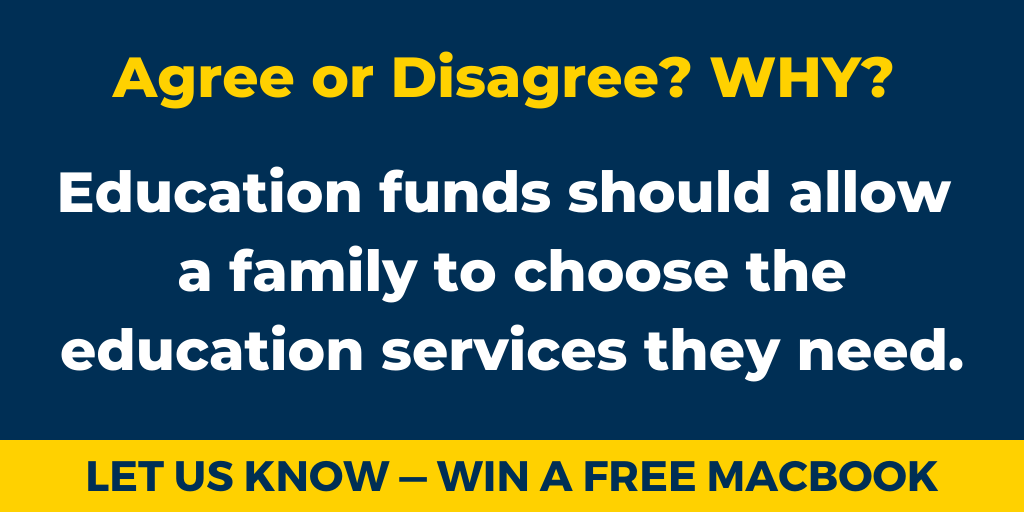
CER also offers interactive tools such as the Parent Power! Index, which supplies data on education quality in each state, and Education50, which provides information on what governors are doing to improve educational choice in their states. Also, throughout August, parents can answer a weekly Facebook prompt on how their families are being affected by COVID-19. (One answer is selected each week, with the winner receiving a MacBook.)
In the wake of COVID-19, CER has made available five lessons from its “Why America?” program, originally launched for Washington-area students in grades four through eight. The mission of “Why America?” is to instill “in young people an understanding of what it means to be an American,” including appreciating their rights and responsibilities as United States citizens.
Among U.S. eighth-graders, “more than three-quarters are below proficiency in civics,” Allen notes, a fact that “should frighten every American.” She argues that “Civics education should be about teaching students to engage with their nation, with public discourse, and to practice the freedoms they have been given.”
In the digital version of “Why America?”, students can learn about the Constitution, Alexander Hamilton’s vision for America, and the meaning of holidays such as Flag Day and Memorial Day. CER hopes that when students begin digging into U.S. history, a love of country will be kindled, and they will become equipped with the knowledge necessary to preserve the blessings of liberty that America was founded upon.
“The citizens of the United States deserve freedom, and access, and input,” Allen states. “Only by achieving that will we restore excellence to education, maximizing everyone’s potential success, regardless of the circumstances into which they’re born.”
Mike Sabo is the editor of RealClear’s American Civics portal.