





Forbes | July 27, 2020
By Jeanne Allen, Founder and CEO of CER
It shouldn’t take a pandemic.
It’s the biggest and hottest topic – reopening school.
Left, right and center, political reporters are knee deep in covering the impact and controversy over conflicting calls and demands to open school or limit everyone to learning remotely. Community, parent and teacher responses have been fast and furious. It’s hard to keep up. Nearly every hour of the day there is a new story about another system announcing new opening plans, unions standing in their way, or parents losing faith.
It wasn’t the decade-long decline in student achievement that got our attention—that just one-third of all students are actually reading, writing, performing math, science or demonstrating knowledge of history and civics at grade level, across nearly every demographic. It wasn’t the fact that college entrance exam scores among even high achievers have plateaued or fallen drastically as well that commanded our attention. No, because the media’s minute-quick coverage of our academic predicament consistently fails to impart the right amount of gravity on its audience, the public has until now been tragically under-informed about the condition of public education, which Covid-19 has now brought into full focus. A system whose structure makes it impervious to failure in everything, from reading to college or career readiness, is a system that is incapable of innovating. The lightbulb has seemingly gone off. Parents aren’t taking it anymore.
When affluent Montgomery County, Maryland last week announced its enormous 162,000 enrollment public school system would be operating 100% remotely, thousands of parents expressed their outrage on local listservs. “I’m just hoping and praying for the taxpayer revolt over paying $16,952 per pupil at Westbrook for students to stay home,” said one. Many across social media echoed the sentiment too, demanding that if their education system cannot figure out how to best educate kids they should be able to take matters into their own hands.
They have good reason. In the same area, all non-public schools are physically opening, with variations in delivery for parents who insist on a remote learning option. One school reports that applications for admissions are up an estimated 20 percent and that is consistent across peer schools across the area.
While many of our leaders are demanding public education get all students “back in school,” most systems are releasing confusing plans for remote-only education.
“I can’t even begin to wrap my head around this stuff! Our town had webinars last night… posts of the guided and misguided are flying – a lot to wade through!,” reported one neighbor.
Another whose school is giving options says, “I dream of 5 full days of in-class instruction… (Hoping lots of families opt for full time remote learning so my kids can sit in the classroom!)” They are understandably looking for a return to “normal,” given their experience with months of ineffective remote education where they had to coax their kids constantly to do their work, putting the burden on the parent not the school. The problem is that few have ever experienced effective online education.
Technology is but a tool, and innovation can happen with it playing a leading role or a supporting role. This is contrary to what most know – and what most reporters report. The conventional wisdom is that there are only two kinds of teaching remotely – in front of Zoom, or just some online school-directed program that delivers and receives assignments, with little feedback or interaction. These ineffective approaches raise concerns about students not being able to learn when an adult is not present and ignores the evidence that students can be fiercely independent and engaged with the right tools.
The reality is that digital learning can be highly interactive and provide substantial opportunity to see, talk and work with other students and teachers. PE, Sports and lunchroom time aside, hallway cliques and pressures to conform go away when students do not have to be in the same building configured only one way day after day.
“K-12 online schools have been around for two decades,” says Amy Valentine, Chief Executive Officer and Education Evangelist of Future of School, an organization dedicated to helping teachers teach and students learn through innovative approaches. “They are actual schools, with learning experiences that have been developed and designed to be delivered fully online. Administrators set policies; certified, qualified teachers design course content and teach students; opportunities abound for peer collaboration, and high-quality special education services are provided, among other supports.
“What most kids in our country experienced this past spring was not online, virtual or blended education. It was crisis schooling at best.”
And that’s precisely what parents are beginning to discover. They are actively learning – on their own and not from their schools – about the amazing innovations that have been happening that they never knew existed, and that they can deploy themselves to make sure that their kids truly do go back to school, even if it’s different than what it once was.
It is reminiscent of the parent-led push for charter schools that TIME called “A Grassroots Revolt,” when parents’ frustration with a one-size-fits-all approach to education gave way to new bold and ambitious ways to ensure their kids were educated well. Now, from ‘Pandemic Pods’ and microschools, to reinvigorated demands at a policy level for money to follow kids, parents and change advocates are helping to usher in a new era in education innovation. “Fed up with remote education, parents who can pay have a new plan for fall: import teachers to their homes,” says the Washington Post. These new kinds of schools are being built on a variety of existing curricula, pedagogy and programs that are largely being pulled together independent of traditional oversight bodies and delivered either directly by the parents or by educators that fit parents’ conception of what school needs to look like.
Not everyone has that luxury, however. Lower income families who have reason to be even more concerned about their students’ health are facing untenable choices: Return to potentially risky physical buildings, or suffer through poorly-devised remote education. Without the money to put together their own schools, they are talking about boycotting schools that don’t deliver education for them well. Some are asking for an individualized learning plan for every student, something that is normally reserved for students formally categorized in special education programs. In essence they are arguing that they, not the schools, should get the funds to spend on education, to decide what will work for their kids in this unprecedented time. It’s a brilliant concept, actually, that money should pay for the education a parent deems best. It shouldn’t take a pandemic to prompt novel ideas for ensuring all students have access to the education they deserve. But it has.
Smart state and education leaders understand parents’ concerns. When Florida Governor Ron DeSantis and his administration issued an emergency order requiring all ‘brick and mortar schools’ to open at least five days per week for all students, they were met with fierce opposition- and a union lawsuit. He argued that schools must be responsible for delivering education for 180 days, which is what they are paid more than enough to do. “If a parent wants to opt for virtual education,” he said, “they should absolutely be able to do that. We shouldn’t be forcing them to make any types of decisions.”
Jon Hage, CEO of one of the nation’s largest charter school networks, didn’t need an order to open school. Charter Schools USA’s approach was to create different options for parents. “Our classrooms will be safe and ready for students. But for those not ready to return to a school building, we are using innovative ideas and technology to bring the classroom to students, wherever they are. Our philosophy is simple: allow parents to have a choice not only when it comes to which school to send their child to, but to how to have school delivered to them.”
There’s no excuse for districts not to innovate in a state that has a long history of providing flexibility for school leaders. Florida also offers effective virtual options, including a statewide virtual school which was serving more than 200,000 students before the pandemic. Many charter schools and a few bold traditional school district leaders, like Miami’s Alberto M. Carvalho, also embrace the varied needs of a wide array of diverse parents.
Most parents will not have options when school “starts,” however, other than the false choice of sending their kids to school or keeping them home. That’s why we need a new approach to education systems that makes districts accountable, puts parents in charge, and empowers professionals who want to teach. All three can effected quickly at the state and national levels:
1. Tie new federal stimulus funding to universal education delivery. Negotiations are ongoing and approximately $70 billion may soon be approved for state and local education use. Every state should be required as a condition of this next funding round to distribute funds to schools only if they can offer effective, proven online and on-ground solutions to every parent. Some will argue this is heavy-handed, but let’s resolve that if a district in 2020 doesn’t utilize one of the hundreds of exceptional programs or providers able to deliver education digitally, virtually, personalized or blended, they shouldn’t get any federal support funds, period.
2. Require funds to follow the child. Schools that do not meet parents’ needs – whether as a result of the kind of education they are offering or health concerns – should pay the provider of their choice to deliver education. Public schools contract with private and other public entities all the time for special education, transportation, curriculum and the like. If a parent wants a better education than what the district is giving, they should tell them which provider they are using and send their money there. That should include microschools, private tutors and the new “pandemic pods.”
3. Open up the teaching profession to interested, qualified people.Some teachers are understandably worried for their family about going back to the classroom. Teachers that cannot go back to their traditional school, are unable to deliver education digitally or have another issue (like their union has negotiated restrictions on their time) should be free to find another job. Requirements for certification (which have nothing to do with being a good teacher) should be suspended during this pandemic. We must allow individuals who want and can teach and are highly qualified in their field (like the aerospace engineer who could teach science and math) to work in schools for commensurate pay. That kind of flexibility does not exist in public education right now and it’s part of what’s killing our kids.
It’s time to end the universal dependency on national, state and local leaders to fund and run a system that has outlived its usefulness particularly in these extraordinary times. The crisis has wrought a unique opportunity to recraft how we as a nation “do” school. Put the parents in charge. Allow money to flow only where education is happening. Then watch the new innovation era unfold.
Follow Jeanne on Twitter or LinkedIn or some of her other work here.
 BLACK MINDS MATTER. A hyper-powerful
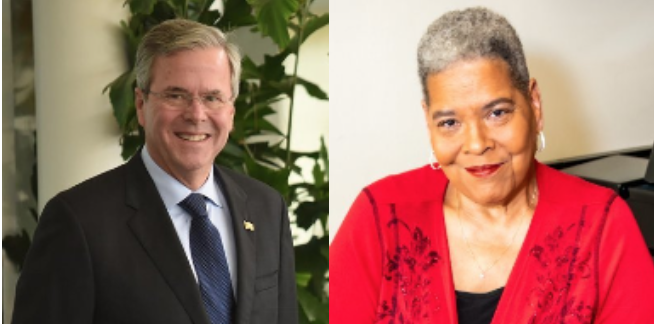
  SO DO BLACK VOICES. The most recent CER ACTION event, titled


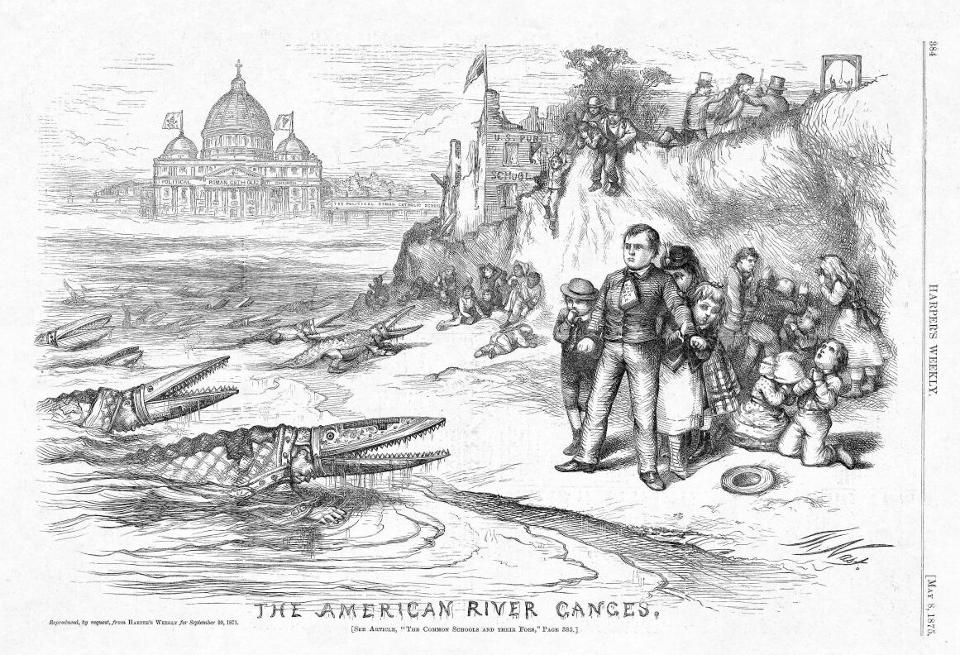
 BLAINE BIGOTRY NO MORE. We confess to still feeling the glow from last week’s Supreme Court decision ruling Montana’s “Blaine Amendment” illegal. Lots of work remains however, as the action now shifts to the states. You can read Jeanne Allen’s insight in
  SUPPORTING BLACK LIVES MEANS SUPPORTING SCHOOL CHOICE. That is the headline of a
  BUILD AMERICA’S DIGITAL HIGHWAY. The smart way to improve educational access for all is

Teachers Union’s Actions Exacerbate Learning Losses Caused by Coronavirus Impact
Teachers Union’s Actions Exacerbate Learning Losses Caused by Coronavirus Impact
Forbes | July 28, 2020
By Jeanne Allen, Founder and CEO of CER
Massachusetts is a textbook case of vested interests over kids
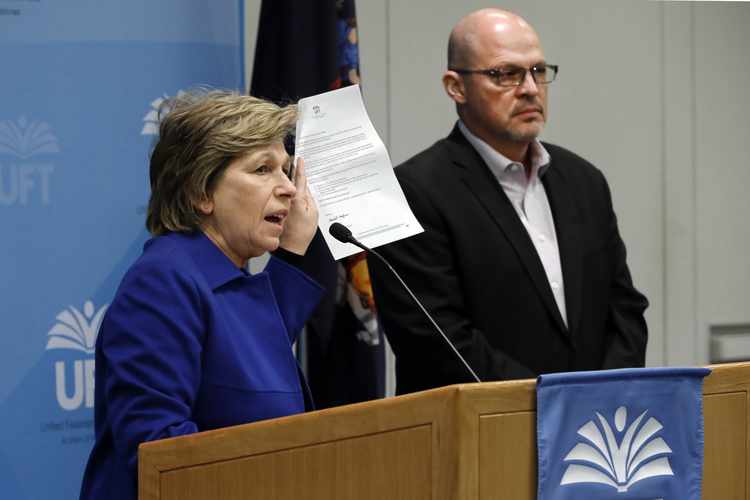
The Massachusetts Teachers Association secured a major concession to delay school another two weeks to give teachers time to “prepare” for school. Districts will now be starting school September 15, rather than provide for students to begin their education on time or at least close to it, by taking advantage of the varied and innovative approaches that exist in these unprecedented times. That may work for wealthy families who can stay at the beach, or afford tutors, but what about the vast majority of families whose students lost ground this spring?
As Robin Lake of the Center on Reinventing Public Education at the University of Washington argues, learning loss can have profound effects. A few weeks time lost can be life-altering. “For some students, half a year of lost schooling might not ever be recovered. This can affect their odds of graduating from high school or doing any college work and, thus, their lifetime incomes — often multiple years’ worth.
It would be one thing if the union had said, “Hey, we’re on the verge of creating a major new educational program that is unlike anything we’ve done. We’ve figured out how to educate all kids, wherever they are. Just give us 2 more weeks and watch the amazing results occur and don’t worry, we’ll stay in school until it’s done, well after the 170 days are up.”
Teachers and supporters gather for the rally on the first day of strike by the Chicago Teachers Union on October 17 2019 in Chicago, Illinois. (Photo by KAMIL KRZACZYNSKI / AFP) (Photo by KAMIL KRZACZYNSKI/AFP via Getty Images) AFP VIA GETTY IMAGES
But instead, the union boasted right after the deal was done: “When we fight, we win! Educator unions’ agreement with DESE reduces the student school year to 170 days to give educators crucially important time to plan.”
Meanwhile, over in the Boston Archdiocese, schools are opening for live instruction beginning in August. In Fall River, the plan for reopening schools includes both a five-day week as well as preparations for remote learning, should students need to stay home again. In Massachusetts, charter educators and school leaders have been working since their schools shut down to devise plans to continue, no matter what challenges the fallout from the pandemic would bring. MATCH Charter Public School for example, which serves 1,250 students in grades preK-12, on July 17 issued a memo to its entire community laying out in great detail how they are planning for reopening and soliciting continued parent feedback.
Preparations for learning, scheduling, structure and safety were underway at Brooke Charter School, a high-performing K-12 public school, in July. It will be ready to go after Labor Day educating its almost 2,000 enrolled students who are more than 90% free and reduced lunch kids. There are dozens more like that, which operate around the state but whose enrollment has been artificially capped because, wait for it, the Massachusetts unions spent more than $12 million to defeat a referendum calling for the cap to be lifted. Meanwhile 25,000 students are on waiting lists which could easily fill another life-saving 25 schools if permitted to open.
The Catholic, private and public charter schools in Massachusetts, just like around the nation, have been working round the clock since March to deliver instruction, despite having less money, and not being funded by billions in stimulus funds that propped up the traditional public schools.
They will be open to their kids on time, and are committed to delivering what is needed by their mission, even as their nemesis, the teachers union, is fighting the state and in Congress to keep any stimulus funds from reaching them to teach their kids.
And where was the organization that just negotiated the un-kid friendly concession to delay school again when Covid-19 hit? It was busy negotiating contracts that forbid teachers to be working more than five hours in asynchronous work, and limiting to 15 hours real-time interactive work (including meetings with colleagues and professional development), setting a maximum limit of 20 hours of work per week. There were no requirements for student-facing time, no requirements for daily work (only per-week), and video could not be required at any time.
Yet those are precisely the tools and approaches that ensured continuous learning for students around the world! From Miami to Shanghai, students of all income levels were able to access education continuously because technology was in fact a requirement of the schools.
The goals of the Massachusetts Teachers Association, an affiliate of the National Education Association, is clear in this treatise, which outlines what they expect from the government during the crisis. This is not a proactive, forward-looking plan of action, but a manifesto with nothing about how education should be delivered.
Teachers are understandably confused. Said one on Twitter in response to criticism of the teachers unions’ move to delay schools, “I’m one of those teachers that has done work this summer on my own….If your expectation was that teachers come together and collaborate to start preparing over the summer, then a contract should have been drafted.”
Ah, but there’s the rub. Schools that are working around the clock to open are not requiring the teachers to do the work; it’s the leaders of the charter schools and Catholic schools who are working with their staffs and volunteer governing boards to develop, and prepare innovative approaches to teaching and learning. Then the teachers can start their prep time as usual a couple of weeks before school officially starts, and students can safely return when school is supposed to begin.
That the traditional districts are not doing the same begs the question: How has the $215 million that Massachusetts districts received from the federal government been spent, if not to prepare for reopening?
The answer should have been the job of the interest groups allegedly working to represent teachers. Instead, they’ve been spending their time negotiating concessions, and organizing around a national day of resistance!
“The national collective of teachers unions is advocating for 8 demands in order to reopen schools safely, including: no reopening until the scientific data supports it, safe conditions, equitable access to online learning, and more. Read more about the collective’s purpose, demands, tactics and targets.”
Among those demands – a moratorium on charter schools and vouchers, the two tools that most have supported poor kids learning now.
You just can’t make this stuff up.
But irony aside, student success around the country now hinges on the selfish motivations of adults whose power puts them in a position to demand that educational delivery suit their needs more than students, the beneficiaries for whom schools were intended.
Keri Rodrigues, the founder of the National Parent Union and a former labor organizer puts it this way.
“When your Resistance is protecting a status quo that continues to hurt Black and Brown children you can keep it.” Rodrigues, who is mobilizing parents all over the country, doesn’t agree that we should be opening schools only physically for all students given health and safety concerns, but that they should be making remote learning effective and not delay it.
“This is an equity issue. Shortening the school year is not a decision based in equity.”
Nor are the unions relentless attacks on charters – which in her home town of Boston are focused on the needs of minority students – based on equity concerns. “Charters were so much better adapting to remote learning,” Keri Rodrigues argues. “Instead of looking to these schools as models they are doubling down on their agenda” to close these schools.
“These folks represent the wants of adults over the needs of children. Our kids are underserved on a good day, and the idea that spending more time away from learning is a good idea is ludicrous.”
Rodrigues’ group has created a National Parents Union Family Bill of Rights to guide better thinking and it rightly argues that we must as a society change our focus from funding systems to funding students, which would take only a few simple policy steps to accomplish.
Without that, not only is education at risk, but so is our national security. As retired Adm. William McRaven, the Navy Seal in charge of the Bin Laden capture argues, “…Unless we are giving opportunity and a quality education to the young men and women in the United States, then we won’t have the right people to be able to make the right decisions about our national security…They won’t have an understanding of different cultures. They won’t have an understanding of different ideas. They won’t be critical thinkers.
“So we have got to have an education system within the United States that really does teach and educate young men and women to think critically, to look outside their kind of small microcosm because if we don’t develop those great folks, then our national security in the long run may be in jeopardy,” McRaven argues.
Students whose fate we permit to be left to politics rather than parents will never understand how true that is.
Follow Jeanne on Twitter or LinkedIn or some of her other work here.
Founded in 1993, the Center for Education Reform aims to expand educational opportunities that lead to improved economic outcomes for all Americans — particularly our youth — ensuring that conditions are ripe for innovation, freedom and flexibility throughout U.S. education.