








Sign up for our newsletter

NYC Data? There’s An App for That

As districts across the country have become more diverse and students are able to attend schools not determined by their zip code, the need for accessible education data has grown exponentially.

Education Week reported this week on the School Choice Design Challenge, which resulted in the creation of six mobile applications or ‘apps,’ with which students can compare data on the city’s 732 high school programs.

The apps – created at the relatively low cost of $72,000 – allow for side-by-side comparisons of schools, and have reportedly become useful for low-income and immigrant families in search of educational alternatives.

The ease at which NYC families can access this technology demonstrates the positive effects and popularity of having access to school data. Transparency of information is a hallmark of Parent Power, which will hopefully continue to expand beyond this Big Apple app.

California Parents Hungry for More Power

In California, more communities are finding new and innovative ways to bolster Parent Power. Numerous civil rights groups and community activists are organizing parents to wield more influence in schools and increase access to administrators, while also educating them on issues such as budgeting and disciplinary practices.

Recent initiatives from California parents include questioning the performance of a school principal in Cudahy, CA, combating the unionization of classroom aides, and demanding more input in the state budgeting process.

This past fall, former California legislator Gloria Romero recalled writing the first-ever parent trigger law in the United States, enabling parents to decide to take action when their neighborhood school is failing their children.

It’s clear that the legacy of parent empowerment is spreading three years after Romero drafted that monumental piece of legislation.

And it’s not just in Calfornia. Parental input and influence in education is gaining traction across the country, as evidenced by the 72 percent of Americans who have a favorable opinion of the term ‘parent choice,’ according to CER’s recent national survey.

The decision of activists and self-described civil rights groups to take up the cause of parent empowerment is a testament to the truth that education is the civil rights issue of our time, and students and parents have an inherent right to choose the quality education that’s right for them.

Daily Headlines for December 4, 2013

Click here for Newswire, the latest weekly report on education news and commentary you won’t find anywhere else – spiced with a dash of irreverence – from the nation’s leading voice in school reform.

NATIONAL COVERAGE

Let’s Call Off the Education Arms Race
Opinion, Wall Street Journal, December 3, 2013
On Tuesday, the highly anticipated results of the Program for International Student Assessment were released—and like clockwork, out came a barrage of media stories hyping the results.

PISA test shows ‘stagnation.’ Is US education reform failing?
Christian Science Monitor, MA, December 3, 2013
In the 2012 PISA test comparing educational performance worldwide, US teenagers were stuck at average in reading and science, and below average in mathematics. Other countries improved.

Sense and Sustainability in Education Reform
Opinion, Huffington Post, December 3, 2013
It’s a question that’s daunted educators for decades: Why haven’t well-intentioned efforts to improve teaching and learning in our schools had the kind of impact we want and need?

STATE COVERAGE

DISTRICT OF COLUMBIA

D.C. Council votes unanimously to give schools more money for at-risk kids
Washington Post, DC, December 3, 2013
The D.C. Council gave its tentative but unanimous approval Tuesday to a bill that would funnel extra dollars to public schools serving low-income students and others at risk of academic failure.

GEORGIA

Atlanta school board elections bring heavy turnover
Atlanta Journal-Constitution, GA, December 4, 2013
Two-thirds of Atlanta’s school board will be filled with new representatives following a runoff election Tuesday that ousted the board’s chairman.

FLORIDA

Charter school’s $400,000 ‘grant’ to Doral College draws questions from auditors
Miami Herald, FL, December 3, 2013
Fledgling Doral College got a $400,000 windfall two years ago that helped the small start-up open its doors. The “grant” came from Doral Academy Charter High, a publicly funded school run by the same company.

Schools making the grade in state’s new evaluations
Tampa Tribune, FL, December 4, 2013
The majority of local teachers, as well as those across the state, once again received good evaluations, according to preliminary data released by the Florida Department of Education on Tuesday.

ILLINOIS

Teachers, unions unhappy with pension deal, vow legal challenge
Chicago Daily Herald, IL, December 3, 2013
In the aftermath of the Illinois House and Senate passing pension reform legislation Tuesday, leaders of several suburban teachers unions said they were unhappy with the deal and vowed to continue the fight in the courts.

LOUISIANA

KIPP leadership to vote on returning to Orleans school board
The Lens, LA, December 3, 2013
The board of directors of KIPP New Orleans Schools plans to vote on whether to return several of it charter schools to Orleans Parish School Board oversight at a board meeting Dec. 19.

MASSACHUSETTS

Boston Promise Corps program unveiled at Dudley Street Neighborhood Charter School
Boston Globe, MA, December 3, 2013
Governor Deval Patrick’s message was clear as he joined other elected officials and education advocates today to unveil the Boston Promise Corps program: a zip code should not determine a child’s future.

Flawed evaluation system betrays teachers, taxpayers
Editorial, Gloucester Daily Times, MA
December 4, 2013
When Gloucester teachers hand out grades to their students, those students, their parents — and, yes, school administrators — have a right to assume the grades are fair and accurate, right?

MICHIGAN

Almost 220,000 Michigan Public School Students Rely On School Choice
Michigan Capital Confidential, MI, December 4, 2013
Charter public schools blamed for problems with traditional public schools, but parents choose charters and other alternatives for their kids

EMU education dean leaving EAA board
Detroit News, MI, December 3, 2013
The dean of Eastern Michigan University’s College of Education has left the board that oversees the state’s recovery school district, as faculty members push for the university to end its partnership with the Education Achievement Authority.

NEW JERSEY

Camden Renaissance school plans criticized
Courier Post, NJ, December 4, 2013
The request for proposals comes before the district has completed work on its first application, filed jointly by KIPP, a charter school chain, and charitable foundations for Cooper University Hospital and the Norcross family.

NEW MEXICO

APS board to discuss member’s test boycott idea
Albuquerque Journal, NM, December 4, 2013
The Albuquerque school board tonight will discuss the potential ramifications of a testing boycott being advocated by one of its members.

NEW YORK

Levin pushes for moratorium on charter schools
Brooklyn Eagle, NY, December 3, 2013
Charging that the city is facing skyrocketing costs for charter schools, Councilman Stephen Levin has introduced a resolution in the council calling on the Department of Education to place a moratorium on new charter schools.

Showdown on Tuition for the Disabled
Wall Street Journal, December 3, 2013
More parents in New York state are enrolling their children with special needs in private schools and seeking taxpayer-funded tuition payments under a federal law. New York City, for example, will spend an estimated $223 million in 2013-14 on private-school tuition, up from about $63 million in the 2007-08 school year, according to the city’s Independent Budget Office.

Speculating on de Blasio’s Choice for Schools Chief
New York Times, NY, December 4, 2013
It might normally be of little interest that Joshua P. Starr, a Maryland schools superintendent, spent the Thanksgiving holiday in Brooklyn, dining on crispy beef tongue fries and visiting a Jean Paul Gaultier exhibit.

OHIO

Senate bill would allow students to help grade teachers
Toledo Blade, OH, December 4, 2013
In a development some may relish, students may get chances to help grade their teachers under a fast-tracked bill headed for an Ohio Senate vote as soon as today.

OKLAHOMA

Fewer dropouts
Editorial, Tulsa World, OK, December 4, 2013
Here’s a good news story about Tulsa Public Schools at a time when we could use one.
TPS saw a nearly 18 percent decrease in middle school, junior high and high school dropouts last year, the district reports.

PENNSYLVANIA

GOP pushes performance-based teacher furloughs in Pennsylvania
Pittsburgh Post-Gazette, PA, December 4, 2013
Currently, state law allows teachers to be laid off only for reasons related to declines in student enrollment or changes in the organization of a school or district.

Selling ads on school buildings wins early backing
Philadelphia Inquirer, PA, December 4, 2013
City Council moved Tuesday on a long-percolating idea to raise money for the School District of Philadelphia – by selling advertising space on district buildings.

SOUTH CAROLINA

Haley focuses attention on education reform
Spartanburg Herald Journal, SC, December 3, 2013
Gov. Nikki Haley laid the groundwork Tuesday for a new education reform package she plans to unveil in January.

TENNESSEE

Questions outnumber answers on IA’s future
Kingsport Times News, TN, December 3, 2013
Parents and prospective parents of Innovation Academy of Northeast Tennessee students had more questions than Sullivan County Director of Schools Jubal Yennnie had answers Tuesday night.

Thousands Apply For Metro’s Optional Schools
WTVF-TV, TN, December 3, 2013
Thousands of hopeful parents have applied for Metropolitan Nashville Public Schools’ Optional Schools.

WASHINGTON

Charter schools following an upward trajectory
Editorial, News Tribune, WA, December 4, 2013
Washington is getting its first glimpse of what public charter schools will look like in this state. Eight of them are to be launched next year under Initiative 1240, approved by the voters last year. Three nonprofit organizations propose to open schools in Tacoma; another nonprofit seeks to create one near Joint Base Lewis-McChord.

ONLINE LEARNING

Two groups again seek OK for online Maine charter schools
Portland Press Herald, ME, December 4, 2013
They try a third time for state approval while two other groups file for brick-and-mortar charter schools.

NC virtual charter group rebuffed by NC Court of Appeals
Charlotte Observer, NC, December 3, 2013
RALEIGH A charter school that had planned to open in the fall of 2012 and offer only online classes failed to convince the N.C. Court of Appeals that it should have been allowed to move forward with its plan without approval by the State Board of Education.

Virtual High School courses offer extras for students, insight into demand
Valley Breeze, RI, December 3, 2013
Students and teachers are seeing the benefits of boosting the existing curriculum with online courses, which have, in turn, even prompted changes within the school walls.

U.S. Students Slide on International Measure

Joy Pullmann, The Heartland Institute 

The latest international test scores, released Tuesday, show U.S. students sliding further behind their global counterparts in math, reading, and science.

On the Programme for International Student Assessment (PISA), a test administered every three years, U.S. students came in 20th in reading in 2012. In 2009, they were tenth. On math, U.S. students ranked 30th this year. In 2009, they ranked 24th. And in science, U.S. students were 23rd of the more than 65 countries tested, four below their 2009 ranking.

The results generated a raft of concerned statements.

“With all the available resources and innovation that occurs within the United States, it’s inexcusable that we have not yet embraced the necessary reforms to significantly boost student outcomes,” said Kara Kerwin, president of the Center for Education Reform (CER).

“Our kids trail…most of the industrialized world and lag far behind countries like Germany, Korea, Canada, and Australia, to say nothing of the broad grouping of East Asian countries at the top,” said Paul Peterson, who directs the Program on Education Policy and Governance at Harvard University. “This embarrassing performance, unchanged even as politicians and citizens profess a keen interest in improving our schools, bodes poorly for the future economic security of the United States.”

Overall, U.S. students were at about the international average in reading and science and below-average in math. Connecticut, Florida, and Massachusetts chose to separate their results. Massachusetts and Connecticut ranked above average when compared internationally, while Florida was at the U.S. average.

High Spending, Mediocre Results
The Organization for Economic Cooperation and Development administers PISA to fifteen-year-olds across the world. OECD also found that the United States spends more than every country on K-12 education except for four. This means nearly all the countries whose students perform better than U.S. students spend less to get better results.

OECD’s report notes that the Slovak Republic performs at the same level as the United States, but spends an average of $62,000 less per student from age 6 to 15. The U.S. spends nearly $13,000 per K-12 student per year.

“Korea, the highest-performing OECD country in mathematics, spends well below the average per-student expenditure,” the report notes.

“This drop represents not only a threat to our economic competitiveness but also demonstrates that the system as it has been functioning for decades is no longer viable,” Kerwin said.

Choice and Information
Kerwin recommended that policy makers quickly give families more information and choices in education, reforms proven to improve student outcomes.

The results show “the dire need to entertain more radical changes in our stagnant schools: more choice, more performance pay, and more local decision-making,” said Eric Hanushek, a Hoover Institution senior fellow. “Each of these will help America’s kids, however, only if there is also a good system of standardized testing that identifies failing schools and holds them accountable.  Then, when the next round of international test scores is released in 2016, we may finally have some genuine good news.”

NEWSWIRE: December 3, 2013

Vol. 15, No. 45

POSITIVE CULTURE. We were on the ground today touring Democracy Prep Endurance Charter School in New York City, where it shares a building with a traditional public school. As we made our way towards Endurance’s classrooms, the cultural shift in the building’s atmosphere became abundantly clear. Detailed, colorful banners lined the hallways, students were more engaged and the overall positive feel made it obvious that a higher level of learning and education was taking place. However, co-located charters like Endurance could be constrained if Mayoral elect de Blasio keeps his promise to force charter schools to pay rent, diverting resources away from kids and towards City Hall. Charter schools like Endurance should be encouraged to expand so their culture of excellence is accessible to more students across the Big Apple, not inhibited by a system that limits their chances of success.

MAKING PISA MATTER. The 2012 Programme for International Student Assessment (PISA) scores were released today, and US students unsurprisingly fared worse than many of their international peers. Not only did US scores actually drop  from 2009, but they didn’t even break the top 20 highest-performing countries in math, reading and science. There was never a realistic expectation that American achievement was going to catapult to the top of the list, largely because lawmakers fail to enact real education reform to foster student growth. According to PISA’s own description, the purpose of administering the test in the first place is to motivate policymakers to re-examine their educational system and make necessary improvements based on results. The ongoing fixation with the US ranking is unproductive without the motivation to enact policies that revolve around choice and accountability. If anything, the drop in US test scores demonstrates that the system as it functions today is no longer viable.

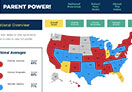
GETTING THE WORD OUT. It’s one thing for lawmakers to implement parent empowering policies that foster choice and accountability, but it’s equally critical to actually make them aware of their power. We try to do our part with the Parent Power Index (PPI) as well as creating resources for parents to improve their child’s school, and many other groups take a similar initiative. There is often a disconnect between policy implementation and parental outreach, especially when it comes to education reform. Government bureaucrats often make misplaced efforts at informing parents, lacking the necessary fervor and grassroots mindset that make parents eager to explore alternatives and make a positive impact within their communities. On top of that, anti-reformers attempt to quell the excitement about the ability of parents to remove their child from failing systems and place them in schools better suited to their needs. It’s essential for all of us to get the word out, and ensure parents are knowledgeable about the power afforded to them.

A FAMILIAR CHALLENGE. A new report shows that charter schools in South Carolina are lacking the proper facilities necessary to provide the best education possible to the students they serve. In addition to being unable to sell bonds for facility funding like traditional public schools, the Palmetto State’s charter school law doesn’t allow for any additional facility funding. Public school funds also pass through the district, a surefire way to underfund charters and allow districts to manipulate education dollars as they see fit. Unfortunately, this is not a new obstacle for charter schools nationwide, and this report advocates for per-pupil allocation of funds that would be devoted to facilities. Hopefully lawmakers resolve to fix this glaring inequity within public education.

TODAY is #Giving Tuesday!  Please consider DONATING to CER now to help us accelerate the pace of education reform in our country. Click here to give.  You can help us raise $5,000 by MIDNIGHT tonight to support CER and our work to advance education reform – thank you!

The Adjunct Question

by Jeanne Allen
National Journal
December 3, 2013

Adjunct professors do indeed make higher education solvent, and are an important pipeline for schools and students. On one hand, “it” is a model for K-12, where rather than having only full-time teachers a more fluid, flexible human capital pipeline should include people whose lives might need or desire teaching or leading on a part-time basis to fill gaps, elevate students’ exposure to more content and generally expand the knowledge pool around schools. I remember meeting my first charter school “teacher” who was a full time Stanford Physics professor working part-time teaching science at California’s first charter in San Carlos, where then-superintendent and now Gates Foundation leader Don Shalvey was superintendent. The “adjunct” teacher was a full-time professor there and while this is still possible in charter and non-charter public schools, it is much more rare today “thanks” to the inflexible rules governing the hiring and certification of teachers which was a result of a a mis-regulated NCLB. But I digress. The point is that the method of using adjuncts is a good one, and should be emulated in all levels of learning. The notion of supplementing our schools will talent is no different than a business hiring a consultant to do things for which they have unique skills that supplements, not supplants, other vital positions in an organization. But how it’s constructed, as you raise, Fawn, is a serious issue.

As a consumer, I’ve watched my kids in college have adjuncts that are totally unqualified to teach or just disconnected from the entire university experience. Their schedules prevent them from being on campus or in touch to meet. A few Fordham University adjuncts “we” got to “know” taught courses that promoted their latest book or research (often agenda-driven) as opposed to what the course outline demanded. A St. John’s University adjunct sought to expose her students to the museums and sites of New York, on weekends, to fulfill some core requirement that “we” never quite understood. These folks – like so many others I’ve heard about — were filling gaps, plugging holes and merit very few benefits for their inadequate contribution to higher learning. I suspect the administrations for whom they work have too much on their plate to really worry, given the low cost, whether it’s effective. Perhaps that’s the problem — if it were a higher cost to the institution these professors might be taken more seriously, and more seriously vetted.

Not only have I been exposed to more than my share of adjuncts through kids and my own education, but I’m married to one. By day he teaches at a prestigious boys’ school. By night, he teachers at a university. He’s exceptional, of course, by even objective standards. The pay is not, but he does it to maintain and continue to use his expertise, and because he loves teaching. My adjunct professor-husband is not looking to get rich on this work, or become part of another system. Like him, most other adjuncts he knows also simply like keeping their hand in higher education and feel it’s professionally and personally enriching. I wonder if “systemizing” their employ and benefits wouldn’t do to these individuals what it did to K-12 education, which is create a factory model of hiring and benefits that has resulted in more mediocrity as the ability to make personnel decisions became diffuse and disconnected from whether quality matters.

Let’s not overthink this one. Like all aspects of education today, quality does matter and codifying pay and benefits at any level might improve the employee’s welfare but doesn’t necessarily result in our fulfilling the intent and purpose of educational institutions, which should be the ultimate and measurable goal of any changes we make, at any level.

2012 PROGRAMME FOR INTERNATIONAL STUDENT ASSESSMENT (PISA)

CER Press Release
Washington, DC
December 3, 2013

Kara Kerwin, president of The Center for Education Reform, released the following statement on the 2012 Programme for International Student Assessment (PISA):

“The United States’ dismal scores on the Programme for International Student Assessment (PISA) was once again expected due to the inability of lawmakers at all levels of government to adequately embrace proven reforms to increase student achievement.

“The whole point of PISA is to transfer the griping about our low placement into action that results in improving America’s education system; examining solutions that incorporate choice and accountability are paramount.

“The 2012 PISA scores of US students actually decreased in all three subject areas from 2009, with 18 education systems scoring higher in math, science and reading. This drop represents not only a threat to our economic competitiveness but also demonstrates that the system as it has been functioning for decades is no longer viable.

“As is the case with any release of test sores and other indicators of student growth, we continue to wait for more policymakers to recognize the potential for achievement gains when access to data and options is given to parents. But far too many families are currently trapped in failing systems, and don’t have the luxury of waiting for policymakers to enact real reform.

“With all the available resources and innovation that occurs within the United States, it’s inexcusable that we have not yet embraced the necessary reforms to significantly boost student outcomes.”


Daily Headlines for December 3, 2013

Click here for Newswire, the latest weekly report on education news and commentary you won’t find anywhere else – spiced with a dash of irreverence – from the nation’s leading voice in school reform.

NATIONAL COVERAGE

Common Core education supporters want Obama administration to shut up
Washington Times, DC, December 2, 2013
The Obama administration’s cheerleading for the Common Core State Standards Initiative is designed to calm critics and rally supporters for the ambitious overhaul of the nation’s elementary and secondary school curriculums.

For critics of common core, educational folly
Associated Press, December 3, 2013
Critics are relentless in warning about what they see as the folly of the new Common Core academic standards, designed to prepare students for college or a job by the time they graduate from high school.

STATE COVERAGE

ARIZONA

Federal officials: Arizona must defend teacher-evaluation system
Arizona Republic, AZ, December 2, 2013
The U.S. Department of Education has threatened action against Arizona’s schools unless the state can prove that it has an acceptable teacher-evaluation system that uses students’ test scores as part of the rating.

CALIFORNIA

L.A. Unified accuses state of ‘shortchanging’ needy students
Los Angeles Times, CA, December 3, 2013
L.A. Unified accused state education officials Monday of “shortchanging” the school district’s impoverished students, saying they could be prevented from receiving all of the estimated $200 million due them under a new school funding system.

Parent involvement at L.A. schools getting new look
Los Angeles Times, CA, December 3, 2013
An increasing number of community and civil rights groups are reaching out to immigrants to boost activism in education.

CONNECTICUT

Superintendent seeks funds to close achievement gap
Greenwich Time, CT, December 2, 2013
As the Board of Education continues its review of Superintendent of Schools William McKersie’s proposed 2014-15 operating budget, a six-figure allocation to raise achievement at schools with large numbers of low-income students is attracting scrutiny.

GEORGIA

Atlanta voters return to polls today for critical school board elections
Atlanta Journal Constitution, GA
December 2, 2013
Atlanta residents return to the polls today to settle four races for Atlanta school board.

Audit: Additional Funding for Charter Systems Not Formally Tracked by State
WABE, GA, December 2, 2013
A new state audit says Georgia’s Department of Education does not track all of the supplemental funding given to charter school systems.

FLORIDA

For parents, finding the right magnet or charter school can be hard work
Miami Herald, FL, December 2, 2013
When Angel Pittman started to look into Miami-Dade magnet and charter schools for her sons, she quickly found herself frustrated.

Scott urges counties, including Palm Beach, to OK teacher pay hikes
Sunshine State News, FL, December 2, 2013
Gov. Rick Scott tried to light a fire Monday under two dozen Florida counties, including Palm Beach, which still haven’t approved the teacher pay raises he made his top priority during last spring’s legislative session.

IDAHO

1 of state’s top schools in Coeur d’Alene
Associated Press, December 1, 2013
From the outside, the Coeur d’Alene Charter Academy, built in two former commercial buildings in a non-descript industrial corner of town, hardly fits the prototype for a school that consistently ranks among the best in the state.

ILLINOIS

Northwestern to start program for CPS students
Chicago Tribune, IL, December 2, 2013
Five years ago, Northwestern University’s freshman class included just 28 graduates from Chicago Public Schools.

LOUISIANA

State school board to vote on Common Core pullback
Times-Picayune, LA, December 2, 2013
The state Board of Elementary and Secondary Education is set to vote this week on Superintendent John White’s plans to postpone the consequences of the Common Core English and mathematics standards until Gov. Bobby Jindal is almost out of office. White’s retreat was announced Nov. 21 amid a storm of opposition to the national education standards.

MICHIGAN

Charters elevate our public schools
Letter, Battle Creek Enquirer, MI, December 2, 2013
It’s unfortunate that the Enquirer chose to pit one type of public school against another in its Nov. 25 editorial (“Charters, choice are strangling our public schools.”)

NEW JERSEY

How we can improve charter school regulations
Opinion, The Record, NJ, December 2, 2013
IN 1996, Gov. Christine Todd Whitman signed the Charter School Program Act, allowing for the establishment of charter schools in New Jersey. At the time, this legislation made New Jersey one of the preeminent states for public school choice.

More Renaissance schools for state-controlled Camden district?
New Jersey Spotlight, NJ, December 3, 2013
Camden issues RFP for up to three more ‘renaissance schools,’ even though its first is still to open

School Choice competition for students creates ‘shark tank’ atmosphere says Hampton board member
Hunterdon County Democrat, NJ, December 2, 2013
Competition among School Choice districts for incoming students has become fierce in Hunterdon County, where all but four elementary districts and two high school districts participate in the state Department of Education program.

NEW YORK

Bill de Blasio changes mind on public input into schools chancellor decision
New York Daily News, NY, December 3, 2013
Critics are saying that the Mayor-elect’s statement that he was ‘not going to put the different finalists on display’ contradicts a promise he made during his campaign.

STEAM Blends Science and the Arts in Public Education
Wall Street Journal, December 3, 2013
The pilot program in the public school is part of a growing national push to blend science and the arts—subjects that, at times, have seemed locked in a zero-sum game for school funding.

Study: Rich N.Y. schools spend 80% more than poor
USA Today, December 2, 2013
The wealthiest 10% of New York school districts spent 80% more per student last year compared to the poorest 10%, according to the state’s largest teacher union.

NORTH CAROLINA

A chance for governor, legislators to be heroes
Editorial, Charlotte Observer, NC, December 3, 2013
You’ve heard the outcry over teacher pay in North Carolina. But do you recognize just how much worse North Carolina has been than every other state in the nation over the past decade?

OHIO

Teacher evaluations, school disciplinary policies to be addressed by General Assembly this week
Cleveland Plain Dealer, OH, December 2, 2013
A bill that would change the state’s requirements for teacher evaluations is slated for a hearing and possible vote in a Senate committee this week.

OREGON

Federal decision could hobble state education reform
Editorial, Democrat Herald, OR, December 2, 2013
Oregon’s attempts to reform its educational system – from preschool all the way through college – hit a bit of a speed bump last week.

PENNSYLVANIA

Master’s degrees for teachers a matter of debate
Lehigh Valley Express-News, PA, December 2, 2013
Is a teacher with a master’s degree a better educator than one without?

State Senate should reject misnamed “charter school reform” bill
Opinion, Patriot News, PA, December 3, 2013
Legislation now before the state Senate — inaccurately referred to as the “Charter School Reform Bill” — would not only affect charter school students but also all 1.8 million kindergarten through 12th grade students in Pennsylvania.

Would Green mimic Vallas?
Editorial, Philadelphia Inquirer, PA, December 3, 2013
Some intriguing questions have been raised by the floating of Councilman Bill Green’s name as a possible successor to Pedro Ramos, who quit as chairman of Philadelphia’s School Reform Commission in October, three months before the end of his term.

SOUTH CAROLINA

S.C. should grant help toward charter schools
Editorial, Island Packet, SC, December 1, 2013
The state’s charter schools have long struggled to find appropriate and affordable school buildings.

TENNESSEE

Suburbs take historic step in start of municipal schools; former Shelby County superintendent withdraws from consideration in 2
Memphis Commercial Appeal, TN, December 2, 2013
Suburbs from Millington around the outskirts of Memphis to Collierville held ceremonies Monday night to swear in their new school boards, putting in office the people who will make decisions on the formation of six municipal education districts in Shelby County.

UTAH

Should parents pay extra for under-performing students?
Deseret News, UT, December 2, 2013
Sen. Aaron Osmond, R-South Jordan, sent a shot across the bow of Utah schools in July by calling for an end to compulsory education laws.

WASHINGTON

Washington Charter Opponents Turn to Lawsuit
Heartland.org, December 3, 2013
The first-ever charter school law in Washington has come under fire from a coalition arguing the voter-approved measure is unconstitutional.

ONLINE LEARNING

Brewster eyes education reform
Pittsburgh Tribune-Review, PA, December 3, 2013
Sen. James Brewster, D-McKeesport, said he is sponsoring four bills that address the accountability of charter and cyber charter schools, and, he said, “ensure that the legislature moves toward a better comprehensive education system.”

Schools get grant to support digital initiative
Greenwich Times, CT, December 2, 2013
The school district has received a state grant of approximately $90,000 for educational technology, which will support the implementation of the second phase of the school system’s Digital Learning Environment initiative.

School tailored toward students with special circumstances
Las Vegas Review-Journal, NV, December 2, 2013
Traditional classroom settings are not made for everyone. Some children have busy schedules, while others do better in an isolated environment.

The Purpose of PISA

This week, we will learn the 2012 results of the Programme for International Student Assessment (PISA), taken by 15 year-old students from all over the world. If 2009 is any judge, no one really expects the United States to catapult to the top of the list of participating countries, but 2012 results are guaranteed to indicate how much work we have to do in improving education.

In 2009, US students scored only in the “average” category in reading, below countries like Finland, Canada, Japan, Poland and Iceland. Thirty-one jurisdictions outperformed the U.S in mathematics.

But before examining 2012 scores, it’s important to know why PISA was created in the first place. According to the Organization for Economic Cooperation and Development (OECD), the group that administers PISA, test results are intended to show where countries stand, and motivate policymakers to identify shortcomings and remedy them with proper reforms.

The central finding based on PISA has been that students around the world, regardless of economic situation or cultural background, have the potential to learn when given the opportunity.

This coincides seamlessly with the need to create environments where parents are given access and options to schools, and to ensure schools are accountable to boosting student outcomes. When children are placed in the environment that’s right for them, their ability to learn and prepare themselves for the world beyond secondary education increases exponentially. (Which is why it’s critical for parents to know what options are available to them, and why we’ve created the Parent Power Index.)

What good is the fixation on how the United States stacks up against other countries if it’s not followed up by introspection and action?

This year, it’s paramount that policymakers, members of the media, and legislators identify the challenges facing our education system, and enact the necessary reforms to overcome them.

When the 2015 results come out, we’ll know whether things remain business as usual when it comes to education in America. And while we’ve certainly moved the reform needle in the last 20 years, we know there is much work to be done still.  Make it your New Year’s Resolution to take action and help better education in America – start by seeing how much power parents have in your state, and contact us for more ways to help!


School Choice Proponents’ Challenge? Educating Parents

Mary C. Tillotson, Watchdog.org

One of the greatest challenges for proponents of school choice is simply educating parents that they have a choice.

“If we’re going to really have parents engaged in knowing what all their options are, someone’s got to go and tell them,” said Jonathan Butcher, education director at Goldwater Institute.

His group has published a handy school choice guide for Arizona parents. The booklet has information on each choice — what education savings accounts are, for example — who qualifies, and how to pursue each option.

The Center for Education Reform keeps a Parent Power Index on its website, ranking states based on teacher quality, school choice, transparency and other information that could help parents make good choices.

“There’s a huge disconnect between policy implementation and practice, especially when it comes to educational choices,” said Kara Kerwin, CFER president. “There’s a lot of barriers. Once a law gets passed, you’ll have those that defend the status quo working hard to quell any excitement about it. Sometimes we put these options or these choices in the hands of bureaucrats who don’t know how to communicate with parents.”

School choice proponents are taking to the streets, and mailboxes, and community centers to get the word out. Here’s what some of them are doing.

Florida

Word of mouth marketing and community outreach has been the most sustainable and effective way to spread the word in Florida, said Alissa Ciaramello, vice president for marketing at Step Up for Students.

Step Up provides scholarships for Florida students who are homeless, in foster care or whose families make up to 185 percent of the federal poverty level, allowing those students to attend private schools if they choose.

“We want to empower those families, parents and caregivers to find the best educational option for their child because we’ve found that education is one of the ways to break generational poverty. It’s really what we believe in wholeheartedly,” Ciaramello said.

The effort isn’t intended to be anti-public school, she said, but pro-family.

“We don’t play into the failing school model,” she said. “We just want the families we serve to have choice about their child’s education, and a school may do well for one child but not for another. It’s all about finding the right learning environment for that particular child.”

The group works with community-based agencies, schools, families, employers and faith-based providers to connect information with families.

“Really, we try to find anyone and everyone who spends time with our families, but it’s a very multi-faceted approach — top down and bottom up,” Ciaramello said.

Step Up includes information about school choice in newsletters or on websites for community groups, she said. They’ve stuffed Happy Meal bags at McDonald’s and partnered with other groups that work with foster kids, homeless families or senior citizens who may be raising their grandchildren.

“[Scholarship families] felt empowered, humbled and grateful to have this opportunity for their children, and they’re very happy to spread the word,” Ciaramello said.

Arkansas

Lawmakers in Arkansas considered tax-credit scholarships and voucher programs at the most recent legislative session, but neither passed.

“People are just learning about school choice in this state, and I think there are a lot of questions,” said Virginia Walden-Ford, founder of theArkansas Parent Network. School choice bills are likely to return when lawmakers come back together, she said.

So Walden-Ford traveled the state giving presentations about school choice. The meetings were well-attended and parents were excited, she said. But they had a lot of learning to do.

“I said, ‘Let me give you information about school choice,’ and they’d ask, ‘Well, what is school choice?’” she said.

“We provided information about school choice and what states have school choice programs and how they’re working, particularly in Louisiana and Florida and D.C.,” she said. “We talk to parents about how effective school choice programs can be for kids who just aren’t doing well in a traditional setting.”

She gave parents opportunities to ask questions and discuss their feelings about their kids’ schools.

Walden-Ford had advocated for the D.C. Opportunity Scholarship Program for years, then returned to Arkansas.

“It was time to come home and see what I can do to help here,” she said.

National School Choice Week

Every community is different, and no one method of spreading the word will work everywhere, said Andrew Campanella, president of National School Choice Week.

The organization promotes a week in January — about the time parents are enrolling their children in school for the upcoming year — to celebrate “school choice regardless of choice,” Campanella said.

That includes traditional public schools, public charter schools, magnet schools, private schools, virtual schools and homeschooling.

Last year, the country saw about 3,600 School Choice Week events, and Campanella said he hopes for about 5,000 events for 2014.

School Choice Week is intentionally decentralized; participants plan events in their communities and don’t need permission from the organization. In the past, participants have hosted school fairs, rallies, roundtable discussions, movie screenings and community service activities.

“In a society where for so many years, parents didn’t have school choices for their kids, we almost become conditioned to know that you’re going to be assigned to a certain school, and if you don’t like it, there’s nothing you can do about it,” he said. “So when people hear they have a choice, they’re often very surprised.”

He said he hopes parents begin thinking about K-12 education the way many of them think about higher education: “What school are we going to send our child to?”

One of the biggest challenges in the school choice movement is parents not knowing their options, he said.

“The reform community has gotten a lot better at reaching parents and telling them of their options, but there still needs to be a lot of work done in reaching parents in the communities where they live and communicating with them in the ways they receive their news and information.”