









Sign up for our newsletter

Espinoza v. Montana at Supreme Court

Statement by Center for Education Reform 
Founder & CEO Jeanne Allen on
Espinoza v. Montana at Supreme Court

In landmark case heard earlier today, educational opportunity is on the line as SCOTUS reviews state’s discrimination against plaintiff Kendra Espinoza’s right to decide children’s school

WASHINGTON — The founder and CEO of the Center for Education Reform, Jeanne Allen, today released the following statement regarding Espinoza v. Montana Department of Revenue, the oral arguments for which were heard today by the U.S. Supreme Court.

“This is by far the most important case involving education in more than 60 years,” said Jeanne Allen. “At today’s hearing, Kendra’s team made a clear and convincing case that the state of Montana did indeed discriminate against her and her fellow petitioners. The families and school leaders here and around the country who support her fight were are equally inspiring. If the court overrules Montana’s action, then CER will be ready to work with all states to ensure the right of parents to direct their kids’ education is fully supported nationwide.”

IN CASE YOU MISSED IT: 

  • CER filed a friend-of-the-court brief in support of Kendra Espinoza and the other plaintiffs last year with former U.S. Solicitor General Paul Clement. *Read it here*
  • Jeanne Allen and Paul Clement co-authored a guest opinion piece featured this week by TIME about the impact of the case on educational choice. *Read it at TIME.com here*
  • Hours before oral arguments began this morning, Allen appeared on Fox News Channel’s Fox & Friends to discuss the case’s meaning. *Watch the full interview here

For in-depth information about Espinoza v. Montana and the true history of the Blaine Amendment, visit CER’s online resource bank here.


Founded in 1993, the Center for Education Reform aims to expand educational opportunities that lead to improved economic outcomes for all Americans — particularly our youth — ensuring that conditions are ripe for innovation, freedom and flexibility throughout U.S. education.

TIME – Espinoza v. Montana Department of Revenue

CER IN THE NEWS January 21, 2020

BY PAUL D. CLEMENT AND JEANNE ALLEN

Friends, We are one day away from the most significant Supreme Court case involving education in over 60 years – Espinoza v. Montana Department of Revenue.  As we all continue to work hard to spread lead plaintiff Kendra Espinoza’s important story, we are sharing a new piece co-written by Paul Clement and CER’s Jeanne Allen and published in TIME magazine.  
This piece is extremely important for highlighting the case’s stakes and reminding Americans of the biggest issue at hand: protecting parents’ rights to make the best education choices for their children.  Please be sure to share it with your supporters and on your social media sites. You can find @TIME on Twitter and reshare from there, or from @edreform.

For the latest information about this historic Supreme Court case, please take a look at CER’s online resource bank here.

Also, stay tuned to CER’s Newswire as we will be following and sharing the oral arguments taking place at the Supreme Court, and engage with us on social media. Please tag us in your posts and use these key hashtags:

#Espinoza
#BlaineAmendments
#BlaineAmendment
#SCOTUS
#EducationOpportunity

Let’s continue to stay strong, share our stories, and push hard to protect choice in education!

The CER Team

NEXT WEEK: Supreme Court to Hear Biggest Education Case in 60 Years 

COMING NEXT WEEK:
Supreme Court to Hear Biggest Education Case in 60 Years 

In Espinoza v. Montana, educational opportunity & parental rights at stake as SCOTUS decides constitutionality of discriminatory “Blaine Amendments”

Montana among 37 states with Blaine Amendment on law books, threatening education choices for families most in need

WASHINGTON — On January 22, 2020, the U.S. Supreme Court (SCOTUS) will hear the most monumental case involving both education and civil rights in more than 60 years — Espinoza v. Montana Department of Revenue — in which state-level “Blaine Amendments” could finally be struck down after nearly 150 years of undermining equal opportunity in education and First Amendment rights.

The Center for Education Reform (CER) filed a friend-of-the-court brief in support of Kendra Espinoza and the other plaintiffs last year. It was joined by a dozen other organizations and civil rights leaders. *READ IT HERE*

“The stakes truly don’t get any bigger than this,” said CER founder and CEO Jeanne Allen. “If justice prevails and all Blaine Amendments are struck down, then hundreds of thousands of students in lower-income families nationwide will be free to obtain or continue a quality education without fear of having it taken from them because of an outdated relic from a prejudicial past—which is tragically what occurred in Montana.”

The significance of the high court ruling in favor of Espinoza is that state legislatures would then be able to enact programs providing parents the opportunity to use tax dollars allocated for their children’s education at the schools they choose, including religious schools. In all 37 states with a Blaine Amendment on the books, the government currently retains the power to deny families of lesser means certain educational options that other families enjoy.

The author of the CER amicus brief, former U.S. Solicitor General Paul Clement (2004-2008), emphasized the following:

“For many parents, this is not about choosing a religious school, but about choosing the right school for their child and his or her learning needs. Well-off parents have the ability to make that choice, and if they have multiple children, they often pick different schools for the different learning needs of each child. But parents like Kendra Espinoza and her fellow petitioners aren't able to exercise that right. That’s what this case is truly about.”

As Kendra Espinoza sadly learned, Montana is one of 17 states operating under an oftentimes confusing interpretation of the Blaine Amendment, the result of which can be the discrimination under review in this case. For the children of Montana families like Kendra’s, Blaine being overturned would mark a tremendous victory as it would remove future justification for inhibiting educational options.

“In every Blaine Amendment state, overturning the 19th century amendment would open up endless possibilities for students to receive the kind of 21st century education they need and deserve in this global economy,” added CER’s Allen.

Following the case’s likely decision in June, lawmakers in all 37 Blaine Amendment states are poised to enact corresponding legislation in the event of an Espinoza victory.

For in-depth information about Espinoza v. Montana and the true history of the Blaine Amendment, visit CER’s online resource bank here

OTHER USEFUL LINKS:

THE HILL: The 7 big Supreme Court cases to watch in 2020

THE ATLANTIC: The Court Case That Could Finally Take Down Antiquated Anti-Catholic Laws

A Decision 144 Years In the Making: CER’s exclusive podcast with Kendra Espinoza

Stay up to date with the latest news about Espinoza v. Montana and the Blaine Amendments by following CER on Facebook and Twitter!


Founded in 1993, the Center for Education Reform aims to expand educational opportunities that lead to improved economic outcomes for all Americans — particularly our youth — ensuring that conditions are ripe for innovation, freedom and flexibility throughout U.S. education.

Newswire – January14, 2020


In brief, what you need to know about Mrs. Robinson’s "candidate debate" tonight in Des Moines, the latest candidate positions, the upcoming US Supreme Court case and teacher ed… all in your favorite weekly report from CER - Newswire!

EYE ON IOWA. The remaining Democratic candidates gather tonight in Des Moines, Iowa for the last debate before the caucuses in the Hawkeye State. Look for talk of “free money,” for college and debt relief, with Senator Elizabeth Warren announcing she will bypass Congress to cancel 95% of student debt if elected. (Darn why the heck did we pay ourselves??!) And just in time for tonight’s cattle call, Senator Bernie Sanders can moo about his big union endorsement by the Clark County (Las Vegas) Education Association, which with 19,000 members is the 800 lb gorilla of Nevada politics.


NO FLIP FLOP GOES UNPUNISHED. Many once hopeful education reformers thought Cory Booker would boldly defend his long term support for educational freedom, excellence and other attempts to unfurl students from the status quo. But before the cock could crow in Iowa, Booker instead denied three times his support, then tried to walk it back, and despite it all, he never had a chance at the union endorsement. So yesterday he ended his presidential campaign. His story is a pity. As Mayor of Newark and Senator he was a consistent supporter of charter schools, and the children of Newark are better off because of his willingness to put quality education ahead of teacher union rhetoric, until recently, which cost him dearly with rank and file voters. You might say no flip-flop goes unpunished. Or as Hamlet almost said, “Alas, poor Cory, we knew him well”. Fingers crossed that he now feels free to return to his support of real education reform.

THE SIMON & GARFUNKEL TREATMENT. One would think that the candidates might attempt to focus on the most important domestic policy issue of our time. But amidst the 6 debates, 15 hours, and 900 minutes, the total time spent discussing education was 21 minutes, or two and a half percent. Jeanne Allen’s new column in Forbes goes into detail as to why for education, silence is not golden — it’s deadly.

ENTER MAYOR MIKE. Bloomberg, that is. Could he shake up the field with his unencumbered support for charter schools, teacher quality efforts, and more? With his new promise to “absolutely promote charter schools,” the 2020 race could at least stand to benefit from more focus on education issues.


A UNIQUE NBA SCORE. From the basketball court to the battle for opportunity and choice in education, meet a true superstar in former NBA basketball great and ESPN talk show host Jalen Rose, (@JalenRose), this week’s guest on Reality Check podcast. Rose is a star for kids too. The Founder and Chairman of the Jalen Rose Leadership Academy charter high school in his hometown of Detroit, MI has one hundred percent of graduates going onto college and post-secondary educational opportunities. Jalen Rose is full of hope, and optimism, and passion (and a few choice words of advice for policymakers). His enthusiasm is infectious, and you will catch it when you listen in on this conversation.

 “MASTER'S OF NONE. Teachers across the country earn grad degrees to get raises. Turns out those degrees don’t improve student learning—they just fatten universities’ bottom lines.”

If the title and the subtitle weren’t enough, you’ll want to read this expose — which validates the sense of so many — about masters of education programs and calls for rerouting the millions spent annually to teachers' salaries instead. Reminiscent of Rita Kramer’s Ed School Follies: The Miseducation of America’s Teachers — which was actually endorsed by none other than Diane Ravitch!—this article could help finally bring a boost to teacher professionalism.

BLAINE ON TRIAL. Nearly a week away on January 22, the Supreme Court will hear the Espinoza v. Montana case that would overturn the bigoted “Blaine Amendments” which are currently the law in 37 states. Follow the countdown here and get caught up on what’s at stake with our Attorney, Paul Clement, a partner at Kirkland and Ellis, former clerk to the late Justice Antonin Scalia and former U.S. Solicitor General who authored our unique Amicus Brief. This special reprise edition of Reality Check breaks down what you need to know to be informed about the most important education case in over 50 years. Watch for more next week.


Founded in 1993, the Center for Education Reform aims to expand educational opportunities that lead to improved economic outcomes for all Americans — particularly our youth — ensuring that conditions are ripe for innovation, freedom and flexibility throughout U.S. education. 
We’re always delighted to hear from our readers...suggestions, questions and even the occasional complaint!


Sounds Of Silence: Education In The 2020 Race

Forbes | January 9, 2020
By Jeanne Allen

Doesn’t education deserve more than 2% of the attention?

Getty Images

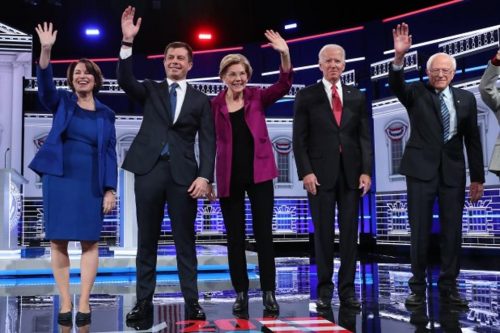
We are just days away from the next Democratic presidential debate on January 14 when the five candidates who made the most recent cut—former Vice President Joe Biden, South Bend Mayor Pete Buttigieg, and Senators Amy Klobuchar, Bernie Sanders, and Elizabeth Warren— will gather in Des Moines, Iowa to make their arguments for the final time before the polls open in February. Sadly, it is not clear they will put more focus on the most fundamental issue facing all Americans: education. No matter what your status in life, job or location, education is essential for long-term success.

In the first six debates, the hundreds of thousands of words aimed at the viewing audience consisted of hundreds of sound-bites prepped for the media, and dozens of “gotcha” questions hurled at opposing candidates. The candidates have debated now for nearly 15 hours in total, which means they have shared their views on what they consider the important issues for more than 900 minutes. 

If you thought that the condition of education in America would have merited attention for a decent fraction of that time, you will be sorely disappointed.

The total amount of time devoted to discussing education has been merely 21 minutes. That’s not a misprint—21 minutes, or less than two and a half percent. The Democrats gave education the Simon & Garfunkel treatment—Sounds of Silence. When the candidates did speak of their policy proposals, they were either about higher education (making it free) or spending more federal dollars on the traditional public school bureaucracy. But mostly they mouthed platitudes that were directed to the nation’s single largest political interest group—the teachers unions.

Elizabeth Warren eschews educational options for low income parents. When confronted by a group of pro-educational freedom, African American parents, she lied about her son attending a private school. Joe Biden said charter schools would be “gone” if he were president. Bernie Sanders joinedthe chorus against public funding for all new charter schools, even though they are public schools. And before he exited the race, Cory Booker did an embarrassing number of flip flops on the same issues

This kind of posturing will not cut it for America’s kids in the 21st century, a majority of whom are forced to attend schools in an education system that has continued to fail on major national and international indicators. The Nation’s Report Card, issued by the National Assessment of Educational Progress (NAEP) found that close to two-thirds of American students are performing below “grade proficiency,” with almost zero progress being made in year-over-year measurements. The ACT test, measuring college preparedness, was essentially a mirror image of the NAEP results. And the international comparison done by the Programme for International Student Assessment (PISA) reported in 2018 that America ranked 13th in reading and 30th in math globally. 

But instead of recognizing that the Emperor has no clothes, the leading Democratic candidates seemed to have put their critical thinking on education into a blind trust with teachers unions as executors. They have endorsed a 19th century model of education in an era when learning can be ubiquitous and technology and brain science provides proof that learning must be diverse and individualized for students to succeed—particularly those who have exceptionalities or challenges in learning.

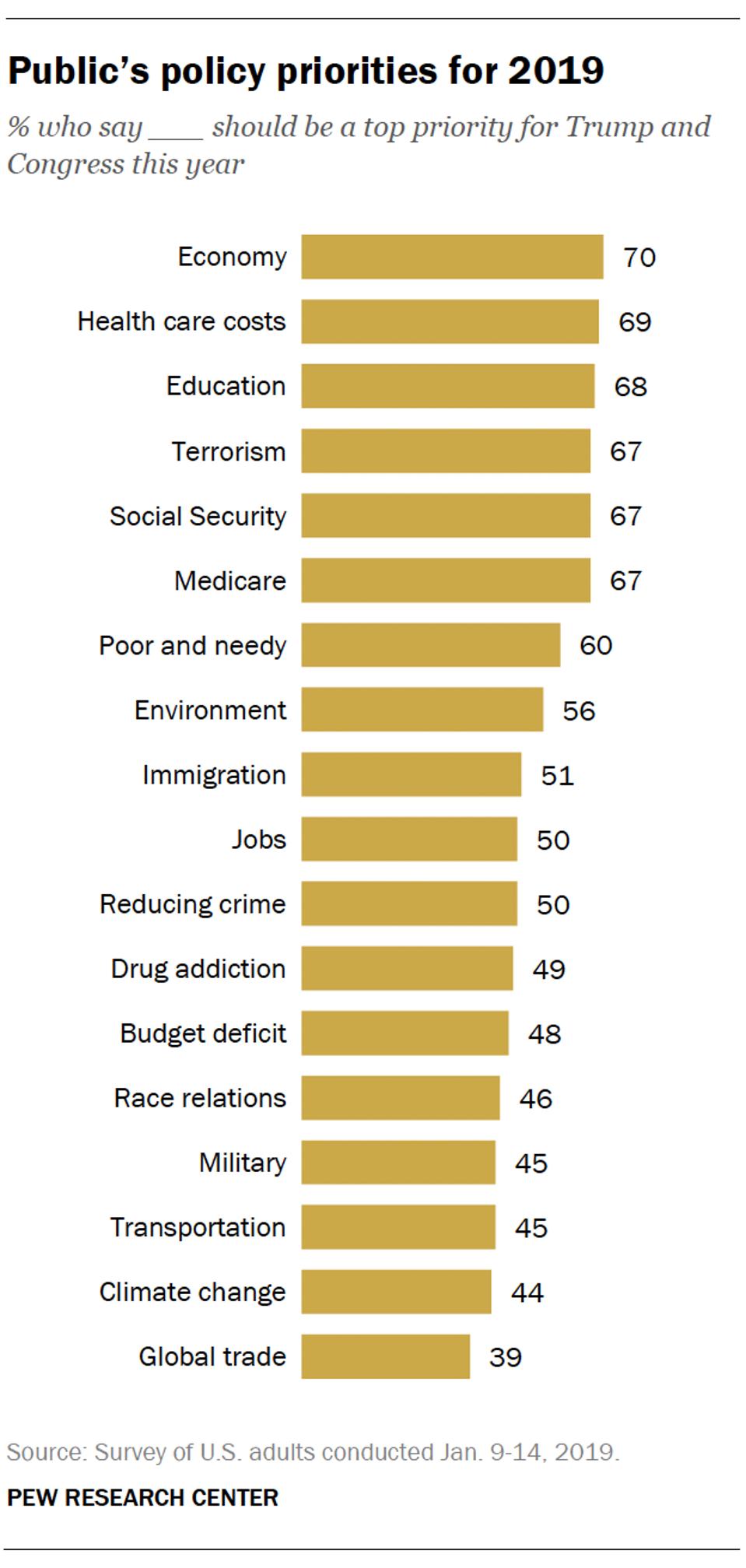
Public's priorities 2019

PEW RESEARCH CENTER

The U.S. needs not a one-size-fits-all education system, rigid and outdated, but a system of schools that incorporates the best we have to offer—whether it be public, private, or public charter, or in wholly new ways of learning, on school grounds, online, or independently. Our country needs education that will optimize our future international competitiveness; education that imparts excellence in critical areas of core knowledge—numeracy, literacy, science; education that imbues future generations with a civic awareness and an appreciation for American history and society—challenges and all.

Education ranks among the top five issues in many voter surveys, and at the very top of surveys of minority voters, which makes sense when one considers that it is largely minority and economically disadvantaged kids who are stuck in failing schools. The parents of these kids surely realize this, and are showing up to events to tell the politicians they have voted for, and the party minority voters most often support, that they are “mad as hell,” and they’re “not going to take it anymore!”

Hundreds of education opportunity supporters of all races and incomes stood in the rain outside the November debate at the Tyler Perry Studios in Atlanta, and challenged Elizabeth Warren in person. The protests were repeated—with even larger crowds—at the Los Angeles debate last month, with signs asking #WhatAboutUs?. Said Freedom Coalition for Charter Schools leader Howard Fuller, “We felt like there needed to be a response, and it needed to be led by black and brown people. We believe this issue of charter schools is an issue of self-determination.”

Minority parents and grandparents see the quality of education their children are often restricted to based on zip code, and know inferior education threatens those kids’ future as surely as drugs and violent crime. They see the grisly truths revealed in the tests mentioned above on a daily basis and are demanding that aspirant leaders give their children the opportunity to escape failing schools. 

But the Democrats appear to be tone deaf. I know the old saying that free advice is worth what you pay for it, but let me impart this bit of wisdom to the Democratic candidates gratis: Look to Florida, and specifically the 2018 election for governor, when white Republican Ron DiSantis defeated African American Democrat Andrew Gillum by 32,463 votes out of more than four million cast.

The state’s robust education choice options were a major campaign issue, with DeSantis promising to expand them while Gillum promised to totally end them. Exit poll analysts are unanimous in the opinion that DeSantis’ win is in part owed to the votes of about 100,000 African American Democratic women who cast their ballots based on the education choice issue. Education options and excellence were more important to these women than party loyalty, and that’s how it should be for voters of all skin hues in both parties.

Speaking in the pouring rain outside the Los Angeles Democrat debate, Sarah Carpenter, an organizer of the demonstration and a leader in the Powerful Parent Network put it succinctly: 

“We want to be heard. That’s all we want, is to be heard by people who may end up running the country. When parents are not afraid to stand up for their kids, that is what success looks like to me. If we don’t fight for our children, who else is going to do it?”

Who else, indeed. Thank goodness parents are making their voices heard, and breaking through the deafening sounds of silence.


Jeanne Allen is Founder and CEO of CER, the Center for Education Reform.

Newswire – January 7, 2020

(CNS photo/Jim Judkis, Focus Features)

A BEAUTIFUL DAY IN ALL NEIGHBORHOODS.  "Can Mr. Rogers nostalgia help cure today's culture"?  Erica Komisar, a psychoanalyst in New York City thinks yes, it can.  “Rogers rejected the old-fashioned idea that children are to be seen and not heard. He believed adults should lead them with love and understanding, not fear and punishment.” Closely related to the potential for an overturned Blaine Amendment to provide access for parents to enroll their students in religious schools if they so desire, the independent Komisar makes a compelling case on why religious faith is the underpinning of much successful child-rearing and educational success. An important read.

WHAT WE’RE READING TODAY.  An alarming article from the Associated Press that some think high school is enough.  Meanwhile employers want students to have more training… and the options are plentiful, but are they enough? Finally, the cause for equity and justice gets a boost from Washington, where poor kids are given another few years to enjoy attending the kinds of private schools that many of us reading can already afford.

AND THEY’RE OFF!  It’s the start of another Presidential Derby.  And there’s no need to peruse dozens of websites, blogs, columns, harangues, etc., to find out where education opportunity and choice stand in the race at the moment.  CER’s new Education 2020 section lays it out for you.  While most of the current candidates defy the polls of Democratic voters on expanding education reforms, Michael Bloomberg could throw a wrench into the engine as he is an unapologetic supporter of educational opportunity and choice for kids currently trapped in failing schools. It’s gonna be a heckuva horse race!

A SCOTUS CASE 144 YEARS IN THE MAKING.  The day is near for the most important education related Supreme Court case in 50 years. Be prepared by  tuning into Jeanne's interview with Kendra Espinoza, lead plaintiff in Espinoza v. Montana Department of Revenue, to be heard by the nation’s highest court on January 22. A win for Espinoza would strike down the bigoted Blaine Amendments that currently exist in 37 states’ constitutions and deny kids attending private schools equal access to state education funds.

Kendra Espinoza was a single mother of two young girls when fate — and the Montana Supreme Court — propelled her into this legal fight to strike down religious exceptions to equal access to state education funds for Montana’s kids. You will be impressed, and maybe a little awed, by this story of determination and courage. Don’t miss this inside look at history in the making.

BE BRAVE, BE BOLD, BE INSPIRED.  That is the motto of the movie "Miss Virginia", which is being screened nationally from January 20th to the 31st. Based on the life and struggle for education excellence for disadvantaged kids of  CER pal Virginia Walden Ford, this exceptional movie stars Uzo Aduba, Matthew Modine, Vanessa Williams and Niles Fitch. The screening locations and times for this exceptional tale of perseverance and courage can be found here. We don’t know if you’ll be brave or bold after seeing it — but do yourself — and your kids — a favor and go see it. You and they will be inspired.

GOOD NIGHT, SWEET PRINCE. A sad note from St. Paul, Minnesota.  Civil rights legend and education pioneer Bill Wilson went to his great reward just before New Year's Day. Overcoming being raised in an orphanage, Wilson was the first African American elected to the St. Paul City Council, and founder/executive director of Higher Ground Academy, a St. Paul charter school that won many local state and national awards for its success with low income students of color. Hundreds of St. Paul kids have brighter futures because of Bill Wilson’s vision and courage. To quote the last lines of “Hamlet”, good night sweet prince, and may flights of angels sing thee to thy rest.  HT to Joe Nathan for sharing… praying that his example reaches the presidential candidates sometime soon!

(New Harmony High School)

(Diana Solis)

TO CLOSE ON A HAPPY NOTE. Happy news from New OrleansNew Harmony High School which is diversifyingeducation for kids who not only take traditional classes in math, literature and history but courses to help them tackle environmental and coastal erosion issues exceptionally relevant to Louisiana.  And about 500 miles to the east,Charleston Acceleration Academy offers previously failed studentsa second chance at a diploma. As one student put it, “Charleston Acceleration Academy has been absolutely life-changing”. And there you have it — two vignettes of two very different schools that are giving life-changing opportunities — you might even say choice — to two very different sets of kids. It’s what choice is all about.

(CNS photo/Jim Judkis, Focus Features)

A BEAUTIFUL DAY IN ALL NEIGHBORHOODS.  "Can Mr. Rogers nostalgia help cure today's culture"?  Erica Komisar, a psychoanalyst in New York City thinks yes, it can.  “Rogers rejected the old-fashioned idea that children are to be seen and not heard. He believed adults should lead them with love and understanding, not fear and punishment.” Closely related to the potential for an overturned Blaine Amendment to provide access for parents to enroll their students in religious schools if they so desire, the independent Komisar makes a compelling case on why religious faith is the underpinning of much successful child-rearing and educational success. An important read.

WHAT WE’RE READING TODAY.  An alarming article from the Associated Press that some think high school is enough.  Meanwhile employers want students to have more training… and the options are plentiful, but are they enough? Finally, the cause for equity and justice gets a boost from Washington, where poor kids are given another few years to enjoy attending the kinds of private schools that many of us reading can already afford.

AND THEY’RE OFF!  It’s the start of another Presidential Derby.  And there’s no need to peruse dozens of websites, blogs, columns, harangues, etc., to find out where education opportunity and choice stand in the race at the moment.  CER’s new Education 2020 section lays it out for you.  While most of the current candidates defy the polls of Democratic voters on expanding education reforms, Michael Bloomberg could throw a wrench into the engine as he is an unapologetic supporter of educational opportunity and choice for kids currently trapped in failing schools. It’s gonna be a heckuva horse race!

A SCOTUS CASE 144 YEARS IN THE MAKING.  The day is near for the most important education related Supreme Court case in 50 years. Be prepared by  tuning into Jeanne's interview with Kendra Espinoza, lead plaintiff in Espinoza v. Montana Department of Revenue, to be heard by the nation’s highest court on January 22. A win for Espinoza would strike down the bigoted Blaine Amendments that currently exist in 37 states’ constitutions and deny kids attending private schools equal access to state education funds.

Kendra Espinoza was a single mother of two young girls when fate — and the Montana Supreme Court — propelled her into this legal fight to strike down religious exceptions to equal access to state education funds for Montana’s kids. You will be impressed, and maybe a little awed, by this story of determination and courage. Don’t miss this inside look at history in the making.

BE BRAVE, BE BOLD, BE INSPIRED.  That is the motto of the movie "Miss Virginia", which is being screened nationally from January 20th to the 31st. Based on the life and struggle for education excellence for disadvantaged kids of  CER pal Virginia Walden Ford, this exceptional movie stars Uzo Aduba, Matthew Modine, Vanessa Williams and Niles Fitch. The screening locations and times for this exceptional tale of perseverance and courage can be found here. We don’t know if you’ll be brave or bold after seeing it — but do yourself — and your kids — a favor and go see it. You and they will be inspired.

GOOD NIGHT, SWEET PRINCE. A sad note from St. Paul, Minnesota.  Civil rights legend and education pioneer Bill Wilson went to his great reward just before New Year's Day. Overcoming being raised in an orphanage, Wilson was the first African American elected to the St. Paul City Council, and founder/executive director of Higher Ground Academy, a St. Paul charter school that won many local state and national awards for its success with low income students of color. Hundreds of St. Paul kids have brighter futures because of Bill Wilson’s vision and courage. To quote the last lines of “Hamlet”, good night sweet prince, and may flights of angels sing thee to thy rest.  HT to Joe Nathan for sharing… praying that his example reaches the presidential candidates sometime soon!

(New Harmony High School)

(Diana Solis)

TO CLOSE ON A HAPPY NOTE. Happy news from New OrleansNew Harmony High School which is diversifyingeducation for kids who not only take traditional classes in math, literature and history but courses to help them tackle environmental and coastal erosion issues exceptionally relevant to Louisiana.  And about 500 miles to the east,Charleston Acceleration Academy offers previously failed studentsa second chance at a diploma. As one student put it, “Charleston Acceleration Academy has been absolutely life-changing”. And there you have it — two vignettes of two very different schools that are giving life-changing opportunities — you might even say choice — to two very different sets of kids. It’s what choice is all about.


Founded in 1993, the Center for Education Reform aims to expand educational opportunities that lead to improved economic outcomes for all Americans — particularly our youth — ensuring that conditions are ripe for innovation, freedom and flexibility throughout U.S. education. 
We’re always delighted to hear from our readers...suggestions, questions and even the occasional complaint!


Education is the Best Antidote for Ignorance

“While it cannot cure everything, education is the best antidote for ignorance.”

Dear Friends,

I hope you’ve had time to enjoy the company of family and friends this holiday season. My heart goes out to those who are suffering in numerous ways from the tragedies that seem to beset us at every turn. I remain convinced that while it cannot cure everything, education is the best antidote for ignorance.

Here is just a brief summary of what we are resolved to do to ensure light is shed on the critical importance of education opportunity in each and every community this year:

Coalesce and build up the efforts of individual citizens, teachers, and parents who are trying to create their own schools and education programs to serve more students. There’s nothing like the American spirit to turn upside down the status quo (think Tocqueville).

At CER, we’ve never been big fans of working through pre-existing organizations that have their own challenges, goals and constituents to worry about. We’d rather bolster the efforts of real people doing the work daily — with advice, counsel, connections and the strategic public relations influence that CER has to connect the individual to the agency that he or she needs to get their idea recognized, expanded or pushed through state halls.

Engage the tens of thousands of education entrepreneurs who are at the heart of the technological advances that make learning accessible to people everywhere!

With a special connection to the edtech universe globally, and our connections with the best of schools and school pioneers in the charter movement and larger education choice arena, we can move mountains to ensure that new schools and proven practices are expanding and growing. What we’ve seen accomplished in just under 30 years with the entrepreneurial innovations borne in the edreform movement could, if expanded, provide millions more students with what they need and deserve.


Inspire the movement that we helped launch 26 years ago to put parents front and center in leading policy, advocacy and their own efforts to educate their children.

We need PARENT POWER like never before. I’m gratified the term we once helped coin for education is actually making ripples in politics today, thanks to the inspiration of Dr. Howard Fuller and his new army of advocates who are challenging any one who stands in front of the proverbial schoolhouse door to prevent parents from making the decisions most critical to their own children’s lives.

We will accomplish these things in many ways — from engaging in legal efforts, advocacy, public relations, research, information sharing and good old fashioned public awareness. Regardless of tactic, however, we must ensure the opportunity for learners at all levels to find the best education — rich in content and in character formation — and tailored to their needs.

As we begin the last hours until the New Year and a New Decade, let us resolve to hold leaders to account for what we know to be consistent with the values this country holds dear — freedom, equality and prosperity for all! And to those who stand in the way of applying all those things to education, we say, look out! You haven’t seen anything yet!

Please consider giving to CER this calendar year before the clock strikes midnight! There are many ways to engage — donations (click below!), memberships, sponsorships of our programs and podcasts, or consider engaging our new CER Advisory team to help you advance your idea, your school or your product! Whichever way you decide, just remember that if you want something to get done, you always go to the busiest people… and those who’ve shown their impact consistently year after year.

And please designate The Center for Education Reform as your charity when shopping through AmazonSmile.

That’s CER! Please join us.

And from all of us, Cheers to a Healthy, Prosperous and Opportunity-filled New Year! Happy 2020!!

Founded in 1993, the Center for Education Reform aims to expand educational opportunities that lead to improved economic outcomes for all Americans — particularly our youth — ensuring that conditions are ripe for innovation, freedom and flexibility throughout U.S. education.

Don’t Attack Charters Schools–Learn From Them

Forbes | December 14, 2019
By Jeanne Allen

As the teachers' union-sponsored “Public Education Forum 2020," winds down in Pittsburgh this weekend, let’s state the obvious truth: our nation’s education system is shockingly failing most students and teachers.

On national, international, and local data points, most schools are failing to provide the personalization and mobile economy necessary to teach and learn. And rather than offer effective solutions for students in desperate need of revolutionary change, the Democratic presidential candidates scheduled to be at the forum have already embraced the status quo, backing programs and proposals that add more power and money to failing institutions.

Something we also did not hear during this December 14 event: that American education today is inadequate for most because parents do not have enough power, and because public dollars are spent on bureaucracies that deny educators freedom and funds to teach and excel. Rules, not results, are valued in a system that looks exactly like it did 150 years ago.

Enter one of the most path-breaking solutions in the history of public education: charter schools.

Charters were first designed nearly 30 years ago to turn the top-down, mismanaged, financially inefficient, and educationally failing status quo on its head. They give educators and citizens the ability to start new schools that are tightly regulated for outcomes and financial integrity, but free to operate – and innovate – in any way that faculty and parents believe works for their children.

The result? In almost every place they’ve opened, charter schools have created a revolution in educational excellence, especially for so many of our nation’s most vulnerable students. How? Because, among other things, charters are a parent’s choice, accountable for results, and able to be closed should they underperform. And that’s a good thing!

Between 1992 and 2011, only 15 percent of charter schools were closed, mostly because of financial challenges caused by state and local politics, not the school itself. Nevertheless, the indisputable academic results that charter schools produce in proficiency and progress have made them sensibly embraced by leaders in both parties.

Because charters work so well, and are subsequently so popular, defenders of the old public education empire have been losing their grip. Since it’s a bit harder to condemn parents who simply want the best for their kids and vote with their feet, the public school industry fights back by attacking the very schools that rescue kids and offer them bright futures. Over the years the attacks have only become nastier, with teachers unions smearing charter school proponents as everything from “anti-public education” to “fraudulent,” and worse.

Alas, on Saturday we can expect charters schools to either have a starring role – as the lead villain, of course – or just be ignored. Rather than praise innovation and demand the kind of flexibility that charters prove work, the organizations hosting the forum will instead be using their voices to secure commitments from the presidential candidates to protect, defend, and, in fact, expand the status quo. While purporting to represent education, these powerful entities are steadfastly committed to reducing parents’ ability to choose schools that better meet their kids’ needs outside of their zip code, and will make lockstep agreement the price of support.

At their core, charter schools believe that the best way to arrive at success is to be free to pursue it and measured regularly. Prior to charter schools starting, there were no performance indexes for any school in the Pennsylvania’s schools, or elsewhere. The pressure on traditional education applied by the advent of charters, multiplied by the freedom by which charter schools can operate to perform (and not guaranteed enrollment regardless of success or failure), resulted in states creating accountability measures that track and report educational progress.

Student success, curriculum flexibility, parental choice. These are the discussion themes the presidential candidates should be having. Instead they are working to curry favor with powerful unions that boast an overabundance of public money and resources to deploy in elections.

Do the candidates honestly think they’re being invited to share novel ideas and debate the best way to educate kids? If so, they’re fooling themselves.

If Public Education Forum 2020 was to be a forum about what works, then the candidates would be listening to Pittsburgh’s – and the nation’s – best school leaders, regardless of sector. They’d be probing the creative minds of local leaders from schools like Propel Schools. Instead these schools, their leaders, and the happy families they serve were not even invited.

Saturday’s forum is about nothing more than which candidates will best do the special interests’ bidding. The more they agree, the more likely they are to get endorsed. That’s it.

It’s a disheartening truth to be sure. But if 2016 is any consolation to those candidates who might want to step up and put kids ahead of politics, Hillary Clinton gave the unions what they wanted, sang their tune, and got their endorsement. And as we know, it didn’t translate into a win. To avoid a similar fate, the candidates should add history to their education lessons before they take the stage.

Jeanne Allen is Founder and CEO of CER, the Center for Education Reform.

#WhatAboutUs?

Democratic Candidates Asked to Listen to Voices of Struggling Parents Following Them Across Nation

Minority parents, advocates, and school leaders demand an answer to #WhatAboutUs?

As the seven leading candidates for the Democratic presidential nomination gather for the debate in Los Angeles, charter school parents, advocates, and leaders from throughout the country are calling on the debate moderators and the candidates to give education opportunity the attention it demands.

With signs and placards asking #WhatAboutUs?, #PowerfulParentNetwork and #SaveCharters, parents of Latino and African-American students and education reform advocates are on their way to the sixth presidential debate, their third effort to draw attention to the most critical issue facing America’s youth: the quality of their education.

“That out of six months, six stages, and 11 hours of presidential debating only 18 minutes so far have focused on education is irresponsible for people aspiring to be the leader of the free world,” said CER’s Founder & CEO Jeanne Allen. “Not only have they ignored this critical issue, but when they have talked about education, it’s been focused on saving a failing system rather than giving parents the power to drive their own children’s education.”

“This isn’t progressive,” Allen added. “It’s retrogressive.”

As American students continue to fall behind in core subjects, leaving the nation’s fiercest global competitors to continue beating us in education, the presidential candidates and the media are being urged to focus on solutions to transform education outcomes. The thousands of voices that will raise awareness of the need for an education transformation during the Los Angeles debate represent millions who want to protect and expand charter schools, education scholarships, and numerous other opportunities to drive their own education.

For more information on the upcoming rally, its goals, and the organizing entity, the Freedom Coalition for Charters, click here.


U.S. EDUCATION DATA

  • U.S. math performance is below the international average. According to the results of the most recent Programme for International Student Assessment (PISA), the U.S. ranks 36th out of the 79 countries and regions that participate in the test. U.S. achievement in general is flat (or lower) since 2000 and significantly behind China and elsewhere. A snapshot of overall worldwide student performance can be viewed here.
  • From U.S. News & World Report: “The results largely mirror the top-line findings in the most recent results from the National Assessment of Education Progress, also known as NAEP or the Nation's Report Card, which last month showed math and reading scores dropping for fourth- and eighth-grade students in the U.S.”
  • Earlier this fall, it was revealed that high school ACT scores have dropped nationally and that college readiness rates in math and English are at record lows.


BACKGROUND

Since this past summer, charter school advocates – including parents, teachers, and students – have rallied their voices before major debates and events to increase awareness of the need for education innovation and opportunity and to facilitate a productive dialogue between presidential candidates and elected officials.


Founded in 1993, the Center for Education Reform started with a simple premise—to achieve excellence in education. The first laws supporting charter schools, school choice offerings and even state standards were owing to CER’s leadership.

Today CER works to bring about every opportunity possible to expose learners at all levels, from K through Career, to the best innovations America can provide, a goal we know from our history is boundless.

Newswire – December 18, 2019


‘TWAS THE NIGHT BEFORE THE DEBATES, when all thru’ the house,
Randi was stirring the Democratic candidates’ house.
The strike signs were hung ‘ron the country with care,
In hopes that Ms. Warren soon would be there.

The union agitators were all snug in their red,
While visions of new contracts danc’d in their heads.
And Bernie in his kerchief, and Joe in his shawl,
Had just settled in for a 40 minute long explanation of Medicare for all.

When out in the Free Speech zone there arose such a clatter,
The media sprang from impeachment coverage to see what was the matter.
Away to the cameras the journalists flew like a flash,
Turned on the microphones and called Dana Bash.

The moon on the park where protestors flow,
Gave a lustre of hope to the people made low.
When what to Ms. Klobuchar’s wondering eyes should appear,
But mighty charter school parents marching so near.

With zeal in their eyes, moving lively and quick,
I knew in a moment, Mayor Pete would be sick.
More rapid than unions the charter advocates came,
Senator Bennet took the time to tell them his name.

Now Castro! Now Gabbard! Now Steyer and Williamson!
All missed the chance to just try and listen-some.
To the podiums, to the comfy chairs, candidates all.
Now hustling, bustling and trampling all.  (Read the rest and share!)


#WHATABOUTUS ? As we near the grand finale of the Holiday Season, it’s fitting, though frustrating, that parents and teachers and opportunity-loving people would have to travel to and through Los Angeles to demand that the Democratic candidates for president pay attention and give voice to the failing schools that they struggle to get themselves out of, asking #WHATABOUTUS ?  Life saving choices, like education scholarships, charter schools, innovative micro-schools, home schools, blended and online learning all are available in some though too few places in this the greatest country on earth. And rather than help them grow these opportunities, the candidates are more interested in special interest money.

SHOW YOUR SUPPORT - Join the Freedom Coalition for Charter Schools, California charter schools, parent power advocates and more… all you need to know to do so is below.

ICYMI. HEAR the voices of charter leaders and teachers who gathered in Pittsburgh Saturday on this special Reality Check podcast. READ Jeanne’s piece in Forbes.

UNTIL WE MEET AGAIN.  We hope and pray in this special season of giving that the opponents of education change, parent choice, education freedom and opportunity will cease their attacks and their intransigence that prevents them from accepting what parents want for their children as the driver of education. We hope and pray for them, and their families, that the light of the season will touch their hearts. Until then, we will continue to fight. Merry Christmas, Happy Hanukkah, and may all your holidays be bright. We’ll be back with regularly scheduled news alerts after the Holidays. Peace.


Founded in 1993, the Center for Education Reform aims to expand educational opportunities that lead to improved economic outcomes for all Americans — particularly our youth — ensuring that conditions are ripe for innovation, freedom and flexibility throughout U.S. education. We’re always delighted to hear from our readers...suggestions, questions and even the occasional complaint!