






Sign up for our newsletter

VIRTUAL EVENTS

Tired of abstract discussions about whether or not children can learn at home?
Spending too much time finding answers?
Have questions about how to do digital and remote learning?

COME TO THE NEXT IN
CER’S ED INNOVATION VIRTUAL SERIES
AND LEARN FROM THE BEST!

Tuesday April 14, from 11 am - 12 pm EST 

 Register here
for this Complimentary Virtual Event 


Livestreams


Khan Academy is hosting livestreams and answering questions weekdays at noon EST/9am PST for students, parents and teachers navigating school closures




Join EdSurge who is hosting weekly online conversations with leaders and practitioners across K-12 and higher education about how coronavirus will impact education.

Every Tuesday, at 1 p.m. PT, Jeff Young will cohost a joint EdSurge Live / Future Trends Forum on how colleges should respond to the coronavirus, in partnership with futurist Bryan Alexander

Every Friday, at 11 a.m. PT, K-12 editor Stephen Noonoo will host a webinar to help K-12 school leaders cope with the move to online classes, create digital learning plans and communicate them effectively to students and parents.


Webinars


Thursdays, 9:00 am PDT, 12:00 pm EDT
Coronavirus is here and higher ed institutions are responding.
Join for a webinar discussing resources for higher ed 



Coronavirus COVID-19 Webinar: What higher education leaders need to know right now

Newswire – March 17, 2020

YOU KNOW WHEN THE NEA AND THE PRESIDENT AGREE it must be serious, but that’s precisely what happened today when both said students must go online to continue their learning. So here’s your news wire to help you comply with what everyone agrees needs to happen...

THE CRISIS. It’s here, it’s everywhere, and we offer our support, gratitude and concern to all those enduring the worst. We may only be an education opportunity group, but we are doing what we can to both Flatten the Curve of Covid and to flatten its impact on education.

NEW! FLATTEN THE IMPACT. They say the more you can create predictability the better off your kids are. But what about adults, too?  There’s no question that it’s hard to stay focussed when there’s not a rhythm or a plan —  for all of us!  To help build predictably around learning — during the current Covid crisis and hopefully for long after — starting today CER is putting its team, time and resources at your disposal to help you navigate and turn that unpredictability on its head. The virus has given us plenty of lemons — so we’re making some lemonade. Starting with...

COUNTERING COVID: DON’T LET EDUCATION FALL IN THE CURVE. CER has put up an extensive resource page  listing  the tools and services available to students, families and educators everywhere. We’ll be keeping tabs on those who are keeping tabs, sharing the best of the aggregators, product providers, media sources and above all — the real people who are doing the real work to fight the virus’ impact on learning.  And that includes YOU.  We’re highlighting what we’re seeing and learning daily from the extraordinary people and organizations we are following and making sure you have a place that you can go if you’d prefer not to hunt, and let us do the hunting for you. Consider it your one-stop shopping for the best and latest efforts in accessing substantive, innovative education options, here and across the globe, while we all work to ‘flatten the curve’ of COVID-19.   You’ll also learn which reporters are tracking the best and latest education trends. And check back regularly, as we will be updating daily if necessary to provide the newest and latest resources available to you.

ESPRESSO FOR YOUR BODY; EDSPRESSO FOR THE MIND! Are you going stir crazy? Need an outlet for your ideas, for your writing, for the best tools you have to offer? EdSpresso was once the blog that offered “Your daily addiction for breaking news, commentary and debate on real education reform." Today, in support of our communities of parents, learners, educators and anyone who wants to make learning continuous during this pandemic, CER is retooling Edspresso, its education blog site, for you, to be your daily fix on the best and latest efforts of those in the trenches — teachers, parents and experts. We may need to practice “social distancing” from people,  but we’ll need anything but from information and learning if we’re to keep our minds busy !


SHARE IT Follow us on twitter and FB and tell us your stories/solutions. Whatever we get from you on social media — or directly via an email — will be shared, utilized in tele-townhalls, conferences and provided to the media. So please keep us informed by sending us what you know — so we can keep everyone informed.

REMOTE LEARNING’S TIME HAS COME. Scientists and doctors will solve the medical problems brought on by the virus.  Remote learning — whether it’s with books, outside on projects, on the computer face to face with others or all on your own digitally —  will get us through the current crisis. Let the extraordinary number of people and organizations be your guides, and let our blog EDSPRESSO be your daily update on this journey, how to make it easier and most effective. So look around, explore, learn from our sources here and share what you find worthwhile.Godspeed to you all.  We’ll get through this together.


THEY SAY THAT EVERYONE’S A WEE BIT IRISH ON ST. PATRICK’S DAY. HERE’S OUR WISH FOR YOU - A FAVORITE IRISH TOAST:

May God grant you always - A sunbeam to warm you,
A moonbeam to charm you - A sheltering angel so nothing can harm you,
And may you be in Heaven half an hour before the Devil knows you’re dead


Founded in 1993, the Center for Education Reform aims to expand educational opportunities that lead to improved economic outcomes for all Americans — particularly our youth — ensuring that conditions are ripe for innovation, freedom and flexibility throughout U.S. education. 
We’re always delighted to hear from our readers...suggestions, questions and even the occasional complaint!


How Technological Innovation In Education Is Taking On COVID-19

Forbes | March 13, 2020
By Jeanne Allen

Every challenge is an opportunity, they say. I’ve been thinking about the impact of the coronavirus, and the kinds of tools and services that could be focused on ensuring that students don’t miss a beat in their learning. COVID-19 has brought home the reality  that education technology that delivers great content and engages students and teachers has never been more important. While many education systems have resisted changing their 150-year-old structure, necessity now compels them to do what declining student achievement could not. Thousands of entrepreneurs and innovations can help our students keep moving in their educational journey no matter where this virus disruption takes them. While we are all upset by this global problem, we can and we must overcome it. And fortunately the tools to do so are at hand.

Reinventing Education

In the field of education technology, most products and services on the market work to improve the educational experiences of students, instructors or managers. Far fewer are intended to ensure the educational experience can continue for each student on their own, in the event of choice — or necessity. 

Higher education is the exception. University students have had access to advanced and interactive curricula online for at least a decade, though many institutions are still slow getting to the party. In reflecting on the current situation, Andrea Leone-Pizzighella, who manages English language instruction remotely in Italy for the University of Pennsylvania, “You want to have the option...to do lots of different things, having every possible tool available to us… It makes sense to continue to develop our online infrastructure and have everything available to us and also because it’s not complicated; [we need to get] over the idea of high quality education needing to be offered in a face-to-face format as opposed to being offered in an adaptable, online format.”  

That’s a lesson that Coursera, EdX and the non-profit Modern States Education Alliance have taught us, as well as Arizona State University, who has been a leader in delivering highly adaptive and interactive programs online. But primary and secondary education have lagged unless you live in a community or state with innovative leaders, like Florida, whose state-wide virtual school has been working to help incorporate digital learning in classrooms by providing personalized, student centric solutions for 23 years. "If and when that time comes, I think we are well poised to be able to educate, with our teacher population and with our student population, kids without losing hours," Florida’s commissioner of education Richard Corcoran told reporters.

In the charter school arena there are large and small players that have long served as options for students with numerous needs and challenges, like the nearly 300,000 full-time online charter school students who’ll continue their education seamlessly in spite of the virus. This model has yet to be utilized across much of “traditional” education, but could become an equitable, quality substitute for virtually all students should tragedy, or potentially opportunity, hit.

Rather than leave it to chance when a tragedy strikes, what if we were actually deploying the many advances in the science of learning and technology to bring an “end to average?” As Harvard’s Todd Rose argues, “The hardest part of learning something new is not embracing new ideas, but letting go of old ones.” 

New Jersey, for example, began considering legislation last week to permit school districts “to use remote or virtual education in emergency situations such as a coronavirus outbreak that would require facilities to be shuttered for more than three days.”  They’ve also asked the Commissioner to come up with standards to guide that. But why only in an emergency? And what kind of new quality standards are needed for a world of ed technology that is already faster, smarter and often more personalized than the average traditional classroom? Why try to fix what’s not broken?

Conversely, the Northshore School District near Seattle announced closure of its 33 schools for at least two weeks. The district, located north of Seattle, will move coursework to a cloud-based online learning platform. “Let me be clear: Education is a service to which our district is resolutely committed. It is not a place,” the superintendent Michelle Reid wrote in her letter to parents. “To that end, we are shifting our education from the classroom with four walls to the cloud,” using Google for Education. 

Edmentum is responding to increasing demands to deploy their online learning and assessment tools in districts across the country. Their adaptive curriculum and research-based assessments can help students access quality instruction and resources for an extended period out of the classroom. The company is responding to hundreds of requests for help and is holding webinars dedicated to helping educators “learn how Edmentum can help ensure learning continues outside of the classroom”.

Artificial intelligence is demonstrating its power to serve as a teacher in cases where students need to be isolated. Italian Educator Michael McDonald uses virtual reality to improve the way people learn or teach English as a foreign language. Using Rumii “a social virtual reality space, students can collaborate and communicate in one room from anywhere in the world - as though they're all in the same physical location.”  

A company founded by literature and English expert Dr. Jamey Heit puts that expertise to the service of teachers everywhere using artificial intelligence that essentially mimics the gifted writer’s brain. Say Ecree leaders: “We want to offer our #support to schools closing due to #COVID. We are ready to give access to our online writing software to any school or district that asks!”

But what about when whole institutions and countries have to close for extended periods of time and are not prepared? Italy has had to step up its march toward education innovation. Enrico Poli, head of Zanichelli Venture, the parent to Zanichelli Editore, which has long been developing integrated digital education products for the country, reports that the Italian government put out a request for proposal to ensure remote learning was possible for all of its students. Imagine the potential for all Italian students to use adaptive tutors on their smartphones which can replace, for now, or augment paper learning in Latin, grammar and literature.

What about the adults who can’t go to work and are currently confined to their homes?  They could be gaining valuable insights on closing their skills gaps if GLEAC’s corporate upskilling was ubiquitous. It helps employers and employees to “map and measure soft skills gaps for any job” and helps improve job performance readiness. 

There’s an APP for just about anything in education and a lot are deploying the best in AR, VR and AI to put the learner in charge. We shouldn’t need a crisis to rethink education and how it functions. But technology changes the role the teacher plays from directing to supporting and guiding, and changes the reliance on certain times and places that we expect students, particularly young students, to “do” school.  Because at the end of the day, students, no matter where they are and how old they are, should be able to make their way through their education and work journeys with the benefit of superior technical innovations that can more easily and quickly identify, respond, correct and expose them to deep learning.

Let’s hope that when COVID-19 is in our rear view mirrors, the innovations and technology that helped our students and educational institutions get through it become commonplace and often used tools in the great task of educating America’s students.

Jeanne Allen is Founder and CEO of CER, the Center for Education Reform.

Newswire – March 10, 2020

Virus or No Virus, Education Needs to Advance

Education technology that delivers great content, engages students and teachers has never been more important.  While the many education systems have resisted changing their 150 year old structure, necessity now compels it to do what ailing student achievement could not.  We’re excited to be part of it and know many of the thousands of entrepreneurs and innovations that can help our students — at every level — keep moving in their educational journey no matter where this virus disruption takes them.  While we are all upset by this global problem, we can and we must overcome it. Here’s our part to do just that:

REINVENT EDUCATION. Every challenge is an opportunity, they say, and now the opportunity to reinvent how we “do” school has never been more possible, nor more necessary.  There are copious tools and services that can and should be focussed on ensuring that students don’t miss a beat in their learning. While most of the major accomplishments in ed tech serve to improve the educational experiences of student, instructor or manager, fewer are intended to ensure the educational experience can continue solo, on one’s own, in the event of choice -- or necessity.  While advances in delivering highly adaptive and interactive programs online abound in postsecondary education (think ASU), other parts of the system have lagged, unless open minded states or communities permit online or virtual schools that have been most prevalent in the charter movement (think K12) or in some statewide offerings (think Florida Virtual) But there has not really been anything envisioned across the whole of “traditional” education that could become the equitable, quality substitute should tragedy — or potentially — opportunity hit.

Rather than leave it to chance when a tragedy strikes what if we were actually deploying the many advances in the science of learning and technology to bring an “end to average?” As Todd Rose argues, “The hardest part of learning something new is not embracing new ideas, but letting go of old ones.” But now it’s not hard, it’s necessary. And the great news is, we can keep the kids moving forward if those in charge are willing to open their minds and invite the help. Here’s just a few thoughts to get you started, especially for our friends here, and in Italy:

NEED HELP ON ENGLISH LANGUAGE LEARNING? Check. From your home computer your avatar can join a global network of students exploring a 1500 year old church using Rumii “ a social-virtual reality space that enables people to collaborate and communicate in one room from anywhere in the world — as though they're all in the same physical location.”  Italian Educator Michael McDonald uses virtual reality as a way of improving the way people learn or teach English as a foreign language.”

WRITING SUPPORT? A company founded by literature and English expert Dr. Jamey Heit puts that expertise to the service of teachers everywhere using artificial intelligence that essentially mimics the gifted writer’s brain. Says Ecree leaders: "We want to offer our #support to schools closing due to #COVID. We are ready to give access to our online writing software to any school or district that asks! Please reach out to our CEO @jameyheit"

HOW DO YOU GO ONLINE? Edmentum is responding to increasing demands to deploy their online learning and assessment tools in districts across the country. Their adaptive curriculum and research-based assessments can help students access quality instruction and resources for an extended period out of the classroom. Reports their Twitter feed:

IN ITALY, AMIDST MANY COMPANIES, SCHOOLS CAN LOOK TO:

  •  Zanichelli Editore, which has long been developing integrated digital education for the Italian system, extensive assessment applications, an intelligent step-by-step assistant in solving mathematical exercises; comprehensive, widely enhanced, multimedia, interactive, mobile-enabled print-replica and reflowable ebook platforms and augmented textbooks via smartphone app.
  • Maieutical Labs, whose adaptive tutors created for use on smartphones or paper can replace for now, or augment learning in Latin, grammar and literature.


DISRUPTIONS AT WORK? 
Keep your employees moving forward despite potential interruptions to the workplace.  SallyAnn Della Casa’s GLEAC “maps and measures your soft skills gaps for any job (current and future) and helps you develop them in 10 minutes a day... to industry standard ranking and/or culture fit ranking for any role and will deliver to you daily 5-10 min industry-specific micro-learnings to improve your job readiness. SallyAnn counts Prada among her many clients.

IS THERE AN APP FOR THAT? You bet there is.  We don't need to replace the teachers but we can change their role to support and direct the learning of students, while the students, no matter where they are, make their way through superior technical innovations that can more easily and quickly identify, respond, correct and expose them to learning.

@futureof_school scholarships. Talk about good timing! The far sighted folks at “Future Of School” established a scholarship program for current high school seniors who have completed a minimum of five (5) blended or online courses during their last two years of high school and plan to continue their education in college or vocational school programs. Scholarships in the amounts of $5,000 and $10,000 are available but the deadline for applying is 3 PM Central Time this Monday the 16th.

AND LET’S NOT FORGET THAT CHARTERS WERE AND ARE THE LABORATORY OF INNOVATION FOR U.S. PUBLIC EDUCATION. (A fact the remaining candidates would do well to learn — perhaps online? — in a day and age where every lever at our disposal needs to be on the table for our students). It was charters that brought online and blended approaches to public ed, that initiated the first personalized learning programs, that put technology into adaptive use, rather than leaving clunky computers in the back of the classroom, that started real time assessment, feedback loops and more.

As has been widely written and preached for more than 2 decades, here and elsewhere, examples abound, from Summit Public Schools, to High Tech High,  to Mission Achievement and Success Charter School, to SLAM, and thousands in between. We can do this, folks! Education should be the least affected by epidemics and pandemics. We just need to do, not just try.

BE CAREFUL OUT THERE. This, too shall pass.  The origins of “this too shall pass” are lost in the midst of time, but its truth has been proven through the centuries. So it is with the Coronavirus. In the meantime, be careful, be safe and as our Brit cousins did during The Blitz...keep calm and carry on!


Founded in 1993, the Center for Education Reform aims to expand educational opportunities that lead to improved economic outcomes for all Americans — particularly our youth — ensuring that conditions are ripe for innovation, freedom and flexibility throughout U.S. education. 
We’re always delighted to hear from our readers...suggestions, questions and even the occasional complaint!


Progress Report: Exponential Impact

People ask us all the time, “What do you do?” The goals we’ve had since 1993 haven’t changed, but they have become better articulated and improved. CER works to advance education opportunity and innovation so all may have access to the achieve the American dream.

This brief Progress Report for 2019 through this year so far tells you how we do it. Year after year, no matter what the challenges, we have consistently followed this simple but powerful formula: Opportunity, together with Innovation, yields Results.

CER and the Center’s leadership, staff and partners around the country are relentless in everything we do. We are unapologetic believers in American exceptionalism, and our mission to help our country’s students become exceptional themselves is a continuing fight.

That’s why it’s so critical for us to continue to aggressively pursue laws that demand flexibility, freedom, and innovation in U.S. schools. Please take a look and help us continue the work to ensure that education in the US becomes exceptional for learners at all levels.

If you would like a printed copy of the report sent to you, please contact us at PR@staging.edreform.com.

Founded in 1993, the Center for Education Reform aims to expand educational opportunities that lead to improved economic outcomes for all Americans — particularly our youth — ensuring that conditions are ripe for innovation, freedom and flexibility throughout U.S. education.

Newswire – March 3, 2020

MAKING SUPER TUESDAY SUPER. It’s that day when the citizens of 14 states begin to turn the presidential elections toward the more likely candidate. We remain deeply concerned for the Republic that discussing education — the critical link for our security and prosperity — is altogether missing in a substantive way from the campaign trail (as Jeanne opines this week in Forbes). Let’s make this Super Tuesday super again. Let’s use it to mark a departure from failure to address the most critical domestic policy issue of our time, to a full out debate about why we must accelerate transformational changes — today.

CHARTER SCHOOLS MAKE THE DEBATE. A bright spot in the Charleston Debate was when CBS News Anchor Bill Whitaker asked a question about a topic that had been ignored during the previous NINE debates: charter schools! (Whitaker also courageously mentioned how low South Carolina’s NAEP scores are — also a first for a presidential debate!)  The question was for former New York City Mayor Mike Bloomberg about his long-time support, and whether he’d seek to expand charter schools nationwide. Sadly Bloomberg softened his stance saying “I’m not sure they’re appropriate every place.” Oh please.


@SAVECHARTERS MAKES THE EVENING NEWS. Hundreds of families seeking to protect the opportunity to choose charter schools rallied once again outside the debate, attracting the attention of candidates and the media.  The Freedom Coalition for Charter Schools made the evening news (Families & Activists Hold Rally Before Democratic Debate) and got motivated for their next round of actions to make candidates take notice of their cause.


POWERFUL PARENTS. Meanwhile, the #PowerfulParentNetwork has been on a Freedom Ride for Education Equity, and they visited all the candidates speaking on the ground in South Carolina.  Their delegation scored private meetings with Joe Biden, Pete Buttigieg, Bernie Sanders and Elizabeth Warren.  They correctly observe that “being heard is the first step toward bringing change,” and that “easy promises are easily broken”.  This is not a group that is looking for easy promises, nor one that will take lightly promises that are easily broken. "They would do anything for their children.”

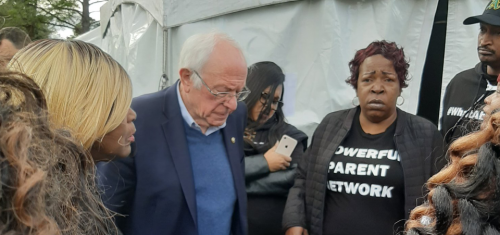
BERNIE BURNS.  During the group’s meeting with Senator Bernie Sanders, PPN’s amazing Sarah Carpenter (@LadyTenn) told him they wanted choices and quality schools. His advice to her was that the parents should “join the PTA”.  No really, that was his solution. Her immediate reaction to Sanders was not recorded but later to the press she put it perfectly; “When poor black and brown children’s lives are on the line, DON’T try to convince me that the PTA is the answer”.


HELLO? JOE? THEY ARE PUBLIC SCHOOLS!  We don’t know whether to laugh or cry at this item — though on second thought it’s too egregious to laugh at. The #PowerfulParentsNetwork attends a Biden speech and asks his views on charter schools. At about the 4 minute mark in this video he says he’s against them because “they take away resources from public schools.”  Joe, JOE, JOE! Repeat after us please — charter schools ARE public schools — just not the kind that are all managed in one centralized way, top down, with archaic rules and controlled not by parents and citizens but by government rules and regulations that the very people who work in them eschew. Do you get it now? If you’re going to be the front runner, facts are important.

ED TECH TO THE RESCUE? More than ever, students shouldn’t have to sacrifice their access to a great education, no matter what the situation. Online learning  already provides an opportunity for hundreds of thousands to be educated regardless of space and place and is poised to become even more useful for people everywhere.  This week Jamie Candee (@candeeJamie) of Edmentum joins Reality Check to discuss the way online learning may be more relevant and helpful than ever, innovative not only when it comes educating students in blended and online settings, but also during times of national crises and strife, like we’re facing with the CoronaVirus pandemic.  Tune in to learn how E-learning can be particularly important for kids with so many nations on high alert. And here’s a prediction — once this crisis has passed — many parents who were exposed for the first time to the convenience and quality available in E-learning will look to expand their students’ access to the concept even more.


Founded in 1993, the Center for Education Reform aims to expand educational opportunities that lead to improved economic outcomes for all Americans — particularly our youth — ensuring that conditions are ripe for innovation, freedom and flexibility throughout U.S. education. 
We’re always delighted to hear from our readers...suggestions, questions and even the occasional complaint!


They Would Do Anything For Their Children

Forbes | March 2, 2020
By Jeanne Allen

Parents v Candidates in Election 2020

With American education in a state of mediocrity or worse in many of the nation’s most volatile communities, the absence of a substantive debate on education issues on the national political stage is shocking. Sure, promises of universal healthcare and free college are more immediately gratifying than thinking about the numbers on youth literacy or career-readiness. But does anyone out there really believe that the issue with the greatest impact on our future economic and national security should continue to be ignored? 

In fact, many are livid about the state of education in the nation, and they know that the whole system is not only out of date but far too inadequate to ensure the successful education and training of our youth. While the candidates from the debate stage to the campaign trail pontificate about equalizing opportunity, real opportunity can only be realized when everyone in America, no matter their zip code, has equal access to participate in the future.  

That future— which immigrants have sought for more than a century, is unique to America — one founded on the free pursuit of happiness, an economic system that embraces individual liberty and where government is limited by design. “If men were angels,” said Madison in Federalist 51, “no government would be necessary. If angels were to govern men, neither external nor internal controls on government would be necessary. … you must first enable the government to control the governed; and in the next place oblige it to control itself. …”  

This is the essence of American government: that it be controlled by the people, exist for the people, and be of the people. Far from a nation that seeks to predetermine fortunes, distributing and redistributing wealth, this nation’s government exists to ensure that every person has access to certain rights and liberties— freedoms that allow them to pursue their own goals and dreams.

For families, that freedom is nowhere more important than education. It’s why there is a bold, powerful chorus of parents boldly calling on government leaders and hopefuls to give them the freedom to control their children’s education. The African-American led Powerful Parent Network (PPN) wants a reprieve from misguided policies and ill-informed political leaders which have caused their schools failures. Their demand is simple: ‘let us exercise our uniquely American freedoms, and choose ourselves for our children an education that we decide best meets their individual needs. Don’t restrict us to sending our kids somewhere someone else determined.’ 

This request offends the guardians of a bureaucracy worth over $700 billion from which teachers unions derive more than $700 million annually protecting the system they lobby to preserve.

“… We are NOT anti-union,” say the PPN, “but they have held power over the education agenda in our country for decades and their power has, unfortunately, not resulted in positive change for our children. We believe it’s time for new power in education …” 

Bernie Sanders with Powerful Parent Network's Sarah Carpenter POWERFUL PARENT NETWORK (@WEAREPPN)

Bernie Sanders’ response to the parents was to suggest they join the PTA, as if that would turn around 10-18% reading and math proficiency in Tennessee, Wisconsin or South Carolina, to name just a few. Yet only when states and communities allow parents to make decisions for their own children are they able to close critical achievement gaps and help all students succeed.

The Democratic candidates have all made critical choices on how and where to educate their children, even as they oppose such choices for others to vie for teachers union endorsements. As civil rights activist Howard Fuller argued as he led families to the debates, “We are [here] to bear witness to the right of Black and Brown families to have self determination when it comes to choosing charter schools for their children’s education; the right to choose that @ewarren exercised for her child.”

“We can decide what's best for our children.”

Thanks to voices like these, CBS News anchor Bill Whitaker finally asked during the Charleston debate about an issue long overdue its time on stage— charter schools. The question was to Mayor Bloomberg, who has supported charter schools. At last summer’s NAACP National Convention he boasted, “Some of the top-performing schools in New York City are public charter schools. …the results can be incredibly impressive among millions of kids, giving them the opportunity to succeed in life and pursue their dreams. And that model can work nationally.” Across Bloomberg’s 12-year mayoral administration, the city’s charter community grew from 18 schools and 4,442 students to more than 180 schools serving 71,422 kids.

Yet in his response to the question, Bloomberg softened his position, only sheepishly acknowledging charters’ success, adding, “I'm not sure they're appropriate every place.”  

Imagine if any candidate had been asked about gun control, climate restrictions or healthcare and answered, “Here’s a solution; it’s good for some people.” It wouldn’t happen.

As candidates contort themselves catering to an anti-education reform constituency, advocates of educational equity and justice will continue to rally harder and stronger. These parents will never support a President who does not respect their basic civil right to educate their children as they see fit, and who turns their back on young Americans whose lives could be dramatically improved by a school different from the one their address assigns. One parent who rallied just about summed it up; “I would do anything for my children.”

We are counting on just that. This nation’s future depends on it.

Newswire – February 25, 2020

CHOICE WORDS FOR THE DEBATE

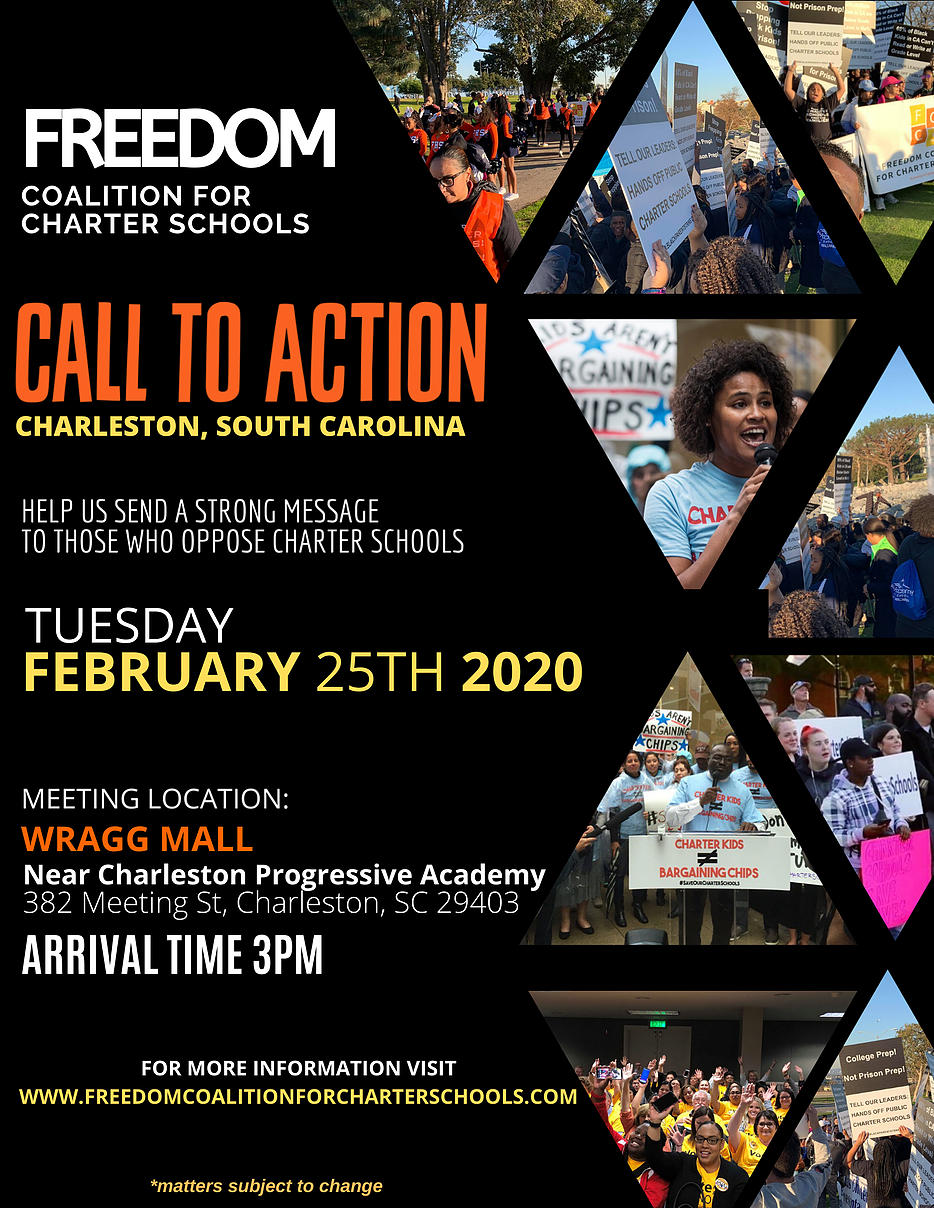
#WHATABOUTUS? Tonight in the Palmetto State at the Democratic Debate, the most interesting activity is likely to be outside, not inside, if Vegas is any guide. Activists led by the Freedom Coalition for Charter Schools and civil rights leader Dr. Howard Fuller are already gathering at Wragg Mall, 382 Meeting St., just a few blocks from the Debate Stage, to engage the media and the candidates in Charleston, starting at 3 PM, to demonstrate that they — together with thousands more across the country — are not going away until the kids they care about have equal access to education opportunity. They couldn’t be more well placed. The motto of SC is, “While I breathe, I hope.”  Join and support the work from your desk! PLEASE RETWEET ALL YOU SEE ABOUT THIS @edreform @HowardLFuller@SaveCharters and @WearePPN.

BY THE NUMBERS. With the overwhelming amount of data showing widespread bipartisan support for charter schools and school choice across the country, it’s a wonder that both the 2020 candidates, and the people who most directly deal with our students and our education system seem so adamant in their quest to drown out the voices of parents, who really matter. And there’s much more than anecdotal support for options in education— “A recent EdChoice public opinion survey found that 78% of Democrats agreed with 78% of Republicans and 77% of independents” in support of education savings accounts, a popular form of school choice.

UNION ENDORSEMENTS OUT.  Randi Weingarten, the head of the AFT, has called education choice and charter schools “only slightly more polite cousins of segregation,” despite the fact that in her hometown of NYC, more minority children have succeeded and thrived because of it. Go figure. So it’s no surprise that her Union came out already to say that their members should only vote for Biden, Sanders and Warren, all who have strongly aligned themselves with her. You can’t make this stuff up.  It’s like a scene from Gangs of New York!  In the same vein, check out George Will’s critique about Elizabeth Warren. We’ll see if her pandering gets her the presidency. It didn’t for Hillary Clinton.

JUST THE FACTS. Charter schools in Newark New Jersey vastly outperform traditional public schools, according to gold standard research by Boston University professor and Manhattan Institute Senior Fellow Marcus Winter.  In fact, the difference between the charters and those traditional public schools the union endorsed candidates want to force students to attend is extreme. “Attending a Newark charter school has a larger effect than 80% of other educational interventions that have been recently studied.”  


FIRST OPRAH, NOW ELLEN.  Oprah featured leading charter schools a number of times on the air and in her philanthropy. Now Ellen is getting into the act. Upon hearing about KIPP DC teacher Azel Prather teaming up with local barbers, hair stylists, and nail techs to treat his students to a day of pampering, she had him on and presented him with brand new 2020 Hyundai and a $20,000 donation to his foundation.  It’s not the first time Degeneres has helped charter schools. Despite Bernie, Liz and the rest, likely it won’t be the last.

COUNTERACTING COVID… or at least its impact on lives. Our hearts go out to those affected by the coronavirus worldwide. But its arrival in Italy hits closer to home for many of us in the West. While all facets of life are restricted, it’s the schools getting closed until March that had us thinking about what we all could do to reduce the impact of this devastating global epidemic while leaders and scientists get it under control.

So what are the kids and students doing? Likely there’s lots of screen time, but what if rather than leave it to the imagination of the student or family there was a plan whenever a tragedy strikes, like in New Orleans, or Puerto Rico, to keep the kids moving forward. The extraordinary array of educational technologies — from being able to learn the English language and explore a 1600 year old church like Italian Educator Michael McDonald has done for students worldwide with his VR tools, to cutting ed digital tools that can connect teachers and students regardless of their location or like those that Enrico Poli and his team at Zanichelli Venture has developed. What about the young and slightly older adults confined to their homes. They could be gaining valuable insights on closing their skills gaps if GLEAC was ubiquitous, or ECREE’s platform was available to them. Thousands of such resources, tools and products are available throughout the globe that could mitigate the time losses caused by these disasters. So it’s a good thing that long after it’s over there, we’ll be highlighting several dozen, in the birthplace of civilization…

ANDIAMO!  We hope you’ll learn more about and consider joining us for the first ever U.S. - Italia Education Innovation Festival, April 27 - 29 in Ercolano, Italy.  Let’s build a global community that puts students first, and ensures that effective technologies are available that can amplify, engage and educate the world's students. Exceptional speakers and cutting edge ideas from both countries — and other global leaders abound — not to mention beautiful surroundings and Italian cuisine.


Founded in 1993, the Center for Education Reform aims to expand educational opportunities that lead to improved economic outcomes for all Americans — particularly our youth — ensuring that conditions are ripe for innovation, freedom and flexibility throughout U.S. education. 
We’re always delighted to hear from our readers...suggestions, questions and even the occasional complaint!


Activists & Families Marching to South Carolina Democratic Presidential Debate

TOMORROW: Parents and advocates for education equity & justice rally to call out candidates who oppose both

February 24, 2020 – WASHINGTON —

Tomorrow’s rally in Charleston, South Carolina, led by civil rights leader Dr. Howard Fuller and members of the Freedom Coalition for Charter Schoolsnear the site of the next candidate debate for the 2020 Democratic presidential nomination -- hosted by CBS News and the Congressional Black Caucus Institute -- is sure to capture the attention of the candidates and their supporters.

“The parents, students, families, and activists who have marched from Atlanta to Los Angeles to Las Vegas and now to South Carolina are delivering a clear message to the candidates. As they have said at other rallies: ‘You better check yourselves because the reality is that other candidates have had the support of the teachers unions and lost anyway. You better find someone else to attack because you’re going to need us.’  The defenders of the status quo who fail the majority of black and brown children are not only paper tigers when compared to the power of parents—they are on the wrong side of history,” said CER Founder & CEO Jeanne Allen. 

WHO: Freedom Coalition for Charter Schools, with civil rights leader Dr. Howard Fuller, featuring black South Carolina charter school families, teachers, advocates

WHAT: RALLY TOMORROW - Tuesday, February 25, 2020, at 3:00 PM EST

WHERE: WRAGG Mall, 382 Meeting Street, Charleston, SC 29403
Following the press conference, activists will relocate and demonstrate in the “Free Speech” area outside the presidential debate venue.

Additional Information:

Freedom Coalition for Charter Schools Official Website

Media Coverage and Activities of Pro-Charter School Parent Protests

South Carolina Charter School Data


Founded in 1993, the Center for Education Reform aims to expand educational opportunities that lead to improved economic outcomes for all Americans — particularly our youth — ensuring that conditions are ripe for innovation, freedom and flexibility throughout U.S. education.

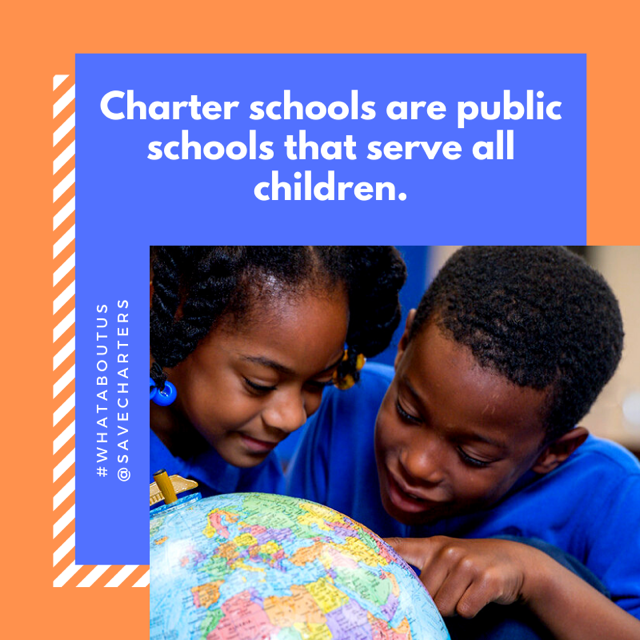
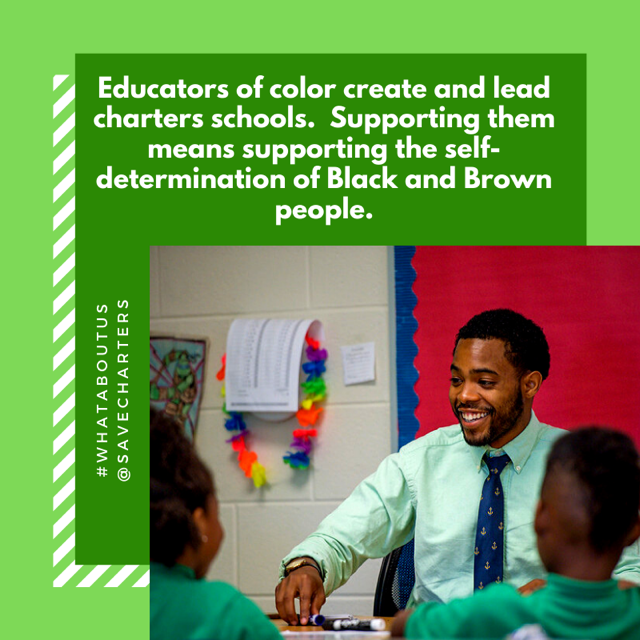
#WHATABOUTUS

February 2020
#WHATABOUTUS

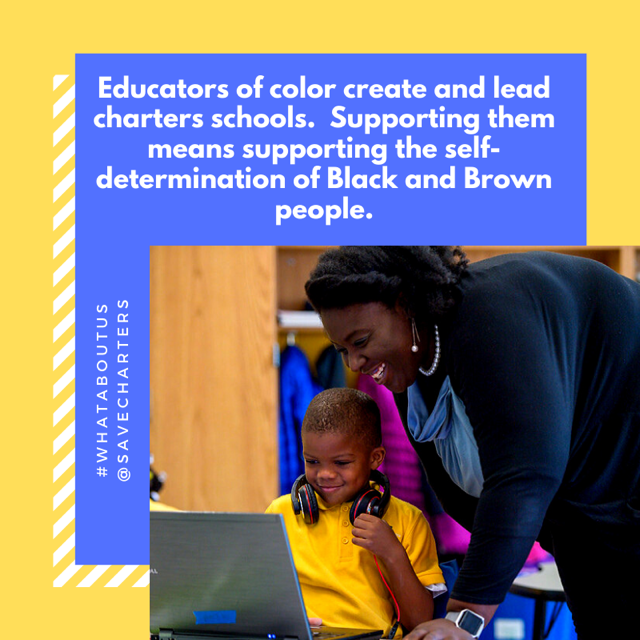
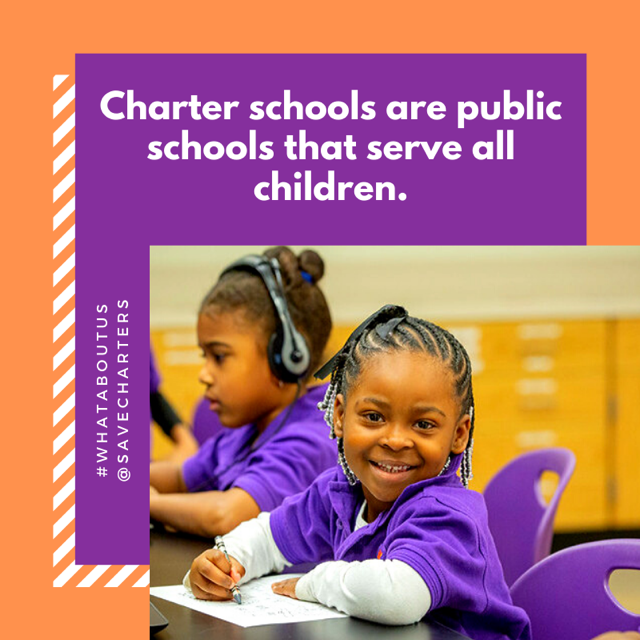
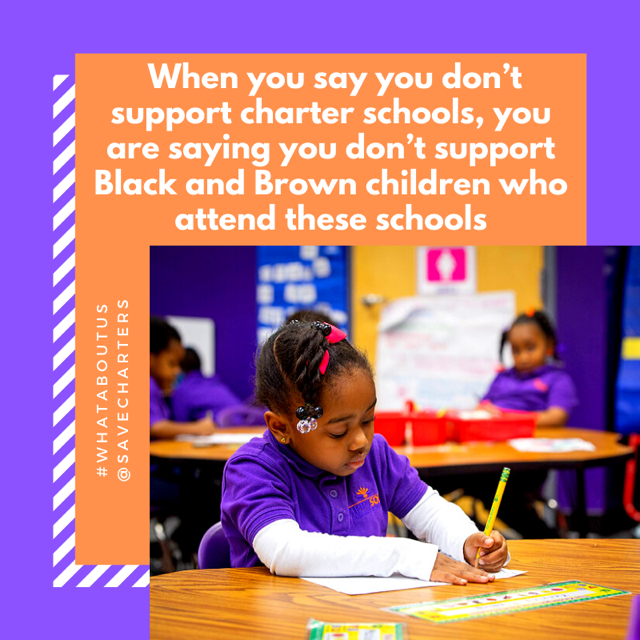
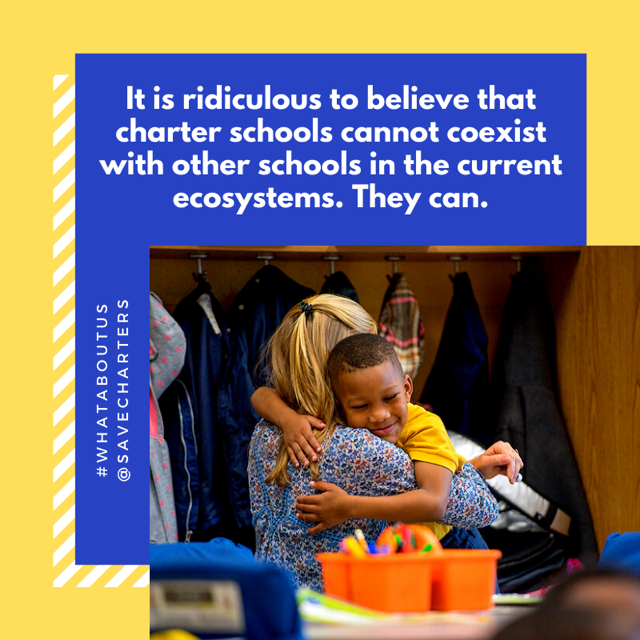
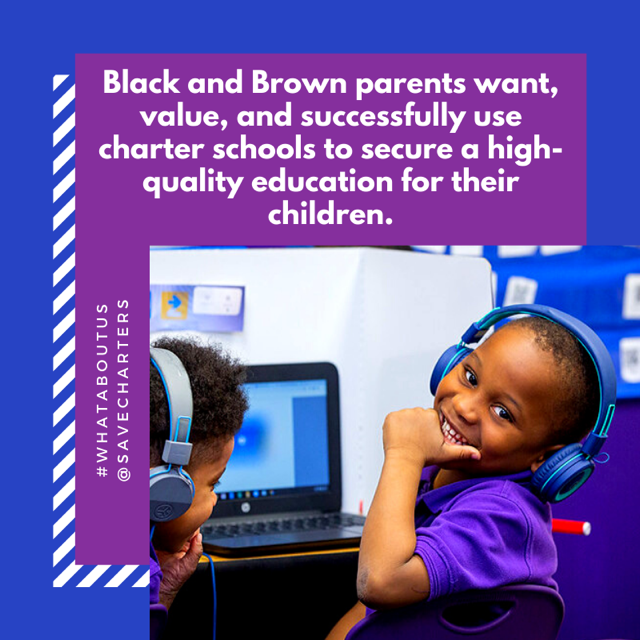
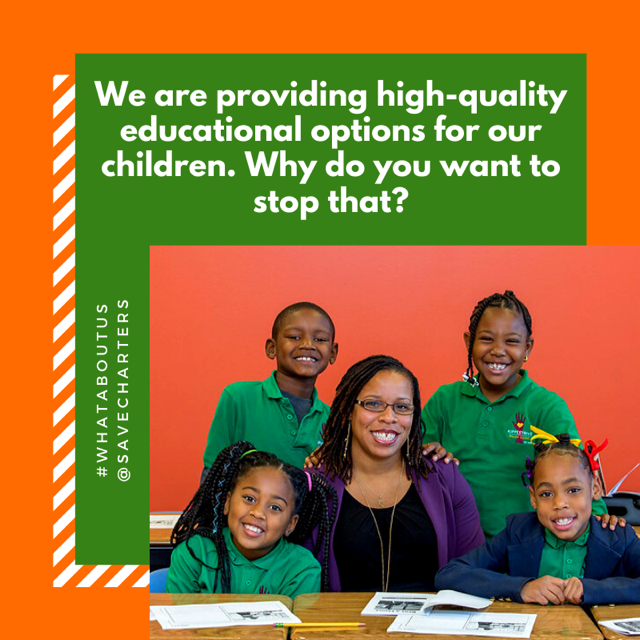
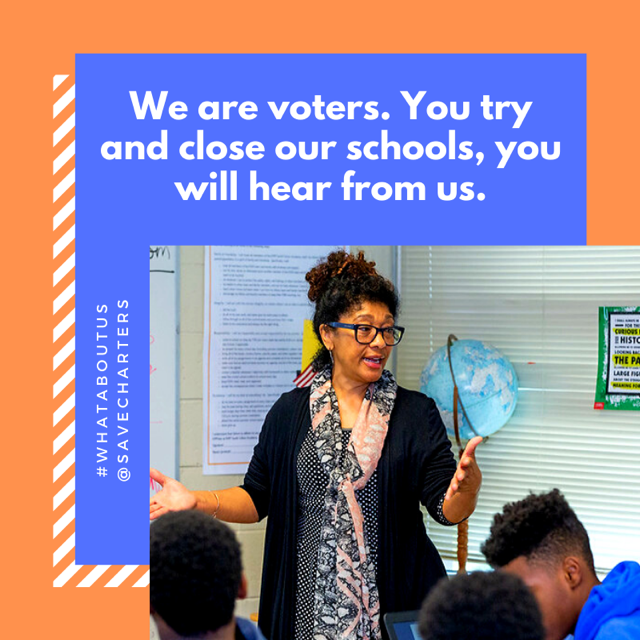
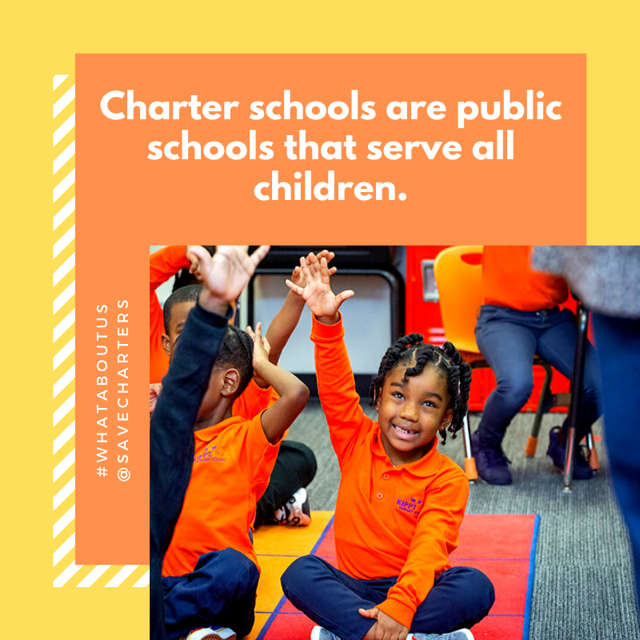
As the leading candidates for the Democratic presidential nomination gather for the debates, charter school parents, advocates, and leaders from throughout the country are calling on the debate moderators and the candidates to give education opportunity the attention it demands.

With signs and placards asking #WhatAboutUs?, #PowerfulParentNetwork and #SaveCharters, parents of Latino and African-American students and education reform advocates are on their way to the sixth presidential debate, their third effort to draw attention to the most critical issue facing America’s youth: the quality of their education.

HELP SEND A STRONG MESSAGE TO THOSE WHO OPPOSE CHARTER SCHOOLS

Please Download and Share 

BACKGROUND

Since this past summer, charter school advocates – including parents, teachers, and students – have rallied their voices before major debates and events to increase awareness of the need for education innovation and opportunity and to facilitate a productive dialogue between presidential candidates and elected officials.

  • October 14, 2019, in Westerville, OH, charter school parents, teachers, and students rallied outside of the presidential debate venue to make their voices heard.
  • November 20, 2019, in Atlanta, dozens of charter school champions rallied near the debate venue. The next day, parents of charter school students confronted Sen. Elizabeth Warren for her anti-charter school rhetoric and policy proposals.
  • December 14, 2019, in Pittsburgh, while many of the Democratic presidential candidates were participating in “Public Education Forum 2020,” more than 200 charter advocates marched to make their presence and stories known. After Sen. Michael Bennet left the forum, he met with the activists to hear their concerns.
  • February 19, 2020, in Las Vegas, the Freedom Coalition for Charter Schools broadcasted live from Las Vegas right now before the debate, fighting for public charter schools. 


LATEST PRESS RELEASES

February 24,2020
ACTIVISTS & FAMILIES MARCHING TO SOUTH CAROLINA DEMOCRATIC PRESIDENTIAL DEBATE

Tomorrow’s rally in Charleston, South Carolina, led by civil rights leader Dr. Howard Fuller and members of the Freedom Coalition for Charter Schoolsnear the site of the next candidate debate for the 2020 Democratic presidential nomination -- hosted by CBS News and the Congressional Black Caucus Institute -- is sure to capture the attention of the candidates and their supporters.


February 18, 2020
CER APPLAUDS CHARTER SCHOOL FAMILIES TAKING A STAND AT LAS VEGAS DEMOCRATIC PRESIDENTIAL DEBATE

Parents of minority students – put at risk by anti-charter platforms – to rally tomorrow, demand answer to #WHATABOUTUS?


December 19, 2019
DEMOCRATIC CANDIDATES ASKED TO LISTEN TO VOICES OF STRUGGLING PARENTS FOLLOWING THEM ACROSS NATION

Democratic Candidates Asked to Listen to Voices of Struggling Parents Following Them Across Nation. Minority parents, advocates, and school leaders demand an answer to #WHATABOUTUS?


December 13, 2019
CHARTER SCHOOLS IN PITTSBURGH & LEADERS THROUGHOUT PENNSYLVANIA UNITE

Charter school leaders in Pittsburgh, joined by others throughout Pennsylvania, and by key state democratic officials issued strong message to special interest sponsors of “Public Education Forum 2020” and the Democratic candidates ignoring parental demands