








Sign up for our newsletter

Digital Learning Day 2013

Join us in observing the second annual Digital Learning Day, a national campaign that celebrates teachers and shines a spotlight on successful instructional practice and effective use of technology in classrooms across the country, on February 6, 2013.

Full-time online schools are certainly starting to take off, but a more common practice is blended learning, or integrating digital learning with face-to-face instruction. Learn more about blended learning and see some examples of schools employing blended learning well here.

A Digital Town Hall will be simulcast live on Wednesday, February 6, from 1:00 – 2:30 p.m. (ET). It will feature leaders in the movement and showcase promising practices in digital learning and integrating technology into the classroom. Click here to view the webcast.

In honor of Digital Learning Day, Digital Learning Now! (DLN) released its fifth white paper in the DLN Smart Series, “Blended Learning Implementation Guide,” which explores blended learning as a phase change with a goal of accelerating learning toward college and career readiness. To view the paper and executive summary, click here, and enjoy the blended learning infographic DLN created below!

Download or print a PDF copy of the DLN Blended Learning Infographic


Daily Headlines for February 4, 2013

NEWSWIRE IS BACK! Click here for the latest weekly report on education news and commentary you won’t find anywhere else, spiced with a dash of irreverence, from the nation’s leading voice in school reform.

NATIONAL COVERAGE

Rhee Wary Of Stressing On Testing
Washington Times, DC, February 3, 2013

As organized opposition to standardized testing grows, one of the nation’s most outspoken and controversial education activists said Sunday that such assessments have a place in public schools but cautioned against an “overemphasis” on them.

School Turnaround Prompts Community Backlash
Associated Press, February 3, 2013

The federal government’s push for drastic reforms at chronically low achieving schools has led to takeovers by charter operators, overhauls of staff and curriculum, and even school shutdowns across the country.

More Lessons About Charter Schools
New York Times, NY, February 2, 2013

The charter school movement gained a foothold in American education two decades ago partly by asserting that independently run, publicly financed schools would outperform traditional public schools if they were exempted from onerous regulations.

FROM THE STATES

ALASKA

Alaska Lawmakers Consider School Voucher Proposal
KTUU, AK, February 3, 2013

Parents would be able to send their kids to private or religious schools using public education funds if a new constitutional amendment passes.

CALIFORNIA

L.A.’s First Hebrew-Language Charter School Raises Questions
Los Angeles Times, CA, February, 2013

Lashon Academy is to teach modern Hebrew, have no religious component and aim for a diverse student body. But some worry that dual-language charters blur the line between public and private schools.

COLORADO

Charter School Rally Highlights Choices For Students
Colorado Springs Gazette, CO, February 1, 2013

Nearly 400 students, teachers and others rallied Friday afternoon for National School Choice Week at Pikes Peak Prep.

Colorado Should Expand Its School Choice
Denver Post, CO, January 4, 2013

A great school isn’t great for every student.
I was fortunate. Columbine High School was a great school for me. My senior year, I was making good grades, was an editor on the school newspaper staff, and competed on the speech and debate team.

FLORIDA

Charting Florida’s K-12 Legislative Landscape
Orlando Sentinel, FL, February 3, 2013

K-12 education in Florida is a never-ending series of tweaks. Expect a new round of fine-tuning in March when the 2013 legislative session begins.

Pines Charters, Broward School Board In Tug-Of-War For Tax Money
Sun Sentinel, FL, February 2, 2013

The 5,600 students who attend the Pembroke Pines Charter schools are no different than their peers at Chapel Trail Elementary or West Broward High.

Charter Schools Put Unfair Pressure On Public-School Construction Funding
Miami Herald, FL, February 3, 2013

In the past week, The Herald has published two stories regarding the Pembroke Pines Charter school system’s attempt to relieve its financial pressure by requesting a portion of the Broward County Public Schools’ (BCPS) local capital dollars.

Florida Praised For Support Of Charter Schools
Tampa Bay Tribune, FL, February 3, 2013

New rankings from a national charter school advocacy group rate Florida as the nation’s fifth-best state because of laws that make it easy for such schools to open and operate, but critics say those policies may not be best for students.

GEORGIA

Georgia’s Bid For Federal School Grant At Risk
Gainesville Times, GA, February 3, 2013

Federal officials have moved a piece of Georgia’s Race to the Top education grant into a “high risk” category because of the state’s difficulty with implementing a new teacher-evaluation strategy.

Resolution of Atlanta Cheating Scandal Caught Between 2 Agencies
Augusta Chronicle, GA, February 3, 2013

Most of the educators named in an Atlanta school cheating scandal are gone. But for many, there is no closure because they are caught between two agencies.

IDAHO

Idaho’s Charter School Law Could Be Revamped Soon
Idaho Statesman, ID, February 3, 2013

For charter school advocates, the key to promoting choice in Idaho is finding a way to pay for projects, since charter schools can’t hold a levy election and must pay for facilities with the per-student operating money the state distributes.

ILLINOIS

For Insiders, Community Group UNO’s Charter Schools Pay
Chicago Sun Times, IL, February 4, 2013

A $98 million state grant — approved by the Illinois Legislature in 2009 and believed to be the nation’s largest government investment in charter schools to date — funded the construction of Soccer Academy Elementary and other new schools built by UNO.

All They Want Is A Choice
Chicago Tribune, IL, February 4, 2013

On Aug. 11 inside a school gymnasium in West Englewood, more than 200 parents scribbled their child’s name on a pink raffle ticket.

INDIANA

Teacher Union Regroups After Financial Scandal
Courier Journal, IN, February 3, , 2013

Indiana’s largest teachers union, battered by the 2009 collapse of its insurance trust, hopes the election of teacher and union activist Glenda Ritz as the state’s top school official will help it rebuild its clout and overcome financial challenges.

KANSAS

Teacher Evaluations Undergoing Overhaul
Topeka Capital Journal, KS, February 3, 2013

Federally mandated changes to teacher evaluations in Kansas mean educators soon will be evaluated at least in part based on the state assessment scores of their students — a requirement that will apply to math teachers and gym instructors alike.

LOUISIANA

Teachers Union Requests Info From 35 N.O. Charter Schools
The Advocate, LA, February 4, 2013

In an attempt to organize and rebuild its profile, the city’s teachers union has requested teachers’ names and contact information, employee handbooks and charter agreements from 35 of the city’s 70-plus charter schools.

COMPASS Needs To Be Revisited
Monroe News Star, LA, February 4, 2013

As a member of the Louisiana Board of Elementary and Secondary Education and a director of human resources , I am appealing to the Louisiana Legislature to revisit COMPASS — the new teacher-leader evaluation program.

MARYLAND

Something Is Wrong In Maryland
Washington Post Blog, DC, February 4, 2013

For years, Maryland has been known for its excellent public schools. That doesn’t mean they are all of equal quality, but the state has been ranked No. 1 for five straight years by Education Week, which, if you put any stock in rankings, is the best on this subject because of the multiple indicators it considers.

MASSACHUSETTS

Parents Go Shopping — For Schools
South Coast Today, MA, February 3, 2013

Parents went shopping Saturday. But not for clothes or groceries. They were shopping for schools for their children’s education.

MICHIGAN

Everyone Has A Plan For Education Reform, Except Educator
Michigan Live, MI, February 3, 2013

The Center for Michigan has one. So does the Governor and legislature. Even the Oxford Foundation has one. What is it? A plan for educational reform and it seems that everyone, with the exception of the educational community, has one. It seems the would rather simply to on the sidelines and carp about ideas being advanced.

Education Reform Builds Momentum
Lansing State Journal, MI, February 2, 2013

For much of the past decade, some person or group at the Capitol has been pressing the cause for school finance reform.

NEW HAMPSHIRE

Educational Opportunity Under Attack On Many Fronts
Foster’s Daily Democrat, NH, February 3, 2013

Educational opportunity is something we all want for our children. But it is under threat in New Hampshire.

NEW YORK

Teacher Evaluation Law Puts Bloomberg In A Bind
New York Daily News, NY, February 4, 2013

The nation’s most knowledgeable school reform experts believe New York is the only state to, in effect, give unions veto power over how to evaluate teacher performance.

In a Memphis Cheating Ring, the Teachers Are the Accused
New York Times, NY, February 2, 2013

In the end, it was a pink baseball cap that revealed an audacious test-cheating scheme in three Southern states that spanned at least 15 years.

NORTH CAROLINA

Charter Advocate Seeks Reform Within A Climate Of Choice
Herald Sun, NC, February 2, 2013

Darrell Allison doesn’t have much use for the idea of a moratorium on public-supported charter schools in Durham – or anywhere else, for that matter.

Changes To CMS Teacher Pay Remain Unclear
Charlotte Observer, NC, February 3, 2013

By the end of this month, Charlotte-Mecklenburg Schools plans to unveil a proposal for changing the way teachers are paid, with rewards for leadership and classroom results.

OHIO

Millions Of Dollars Owed To State By Failed Charter Schools
10TV, OH, February 3, 2013

Millions of taxpayer dollars in Central Ohio are missing, and chances are the state will never get them back. Much of the money is attributed to failed charter schools, such as Harte Crossroads, which opened in the former Columbus City Center mall in 2004.

Kasich’s School Funding Plan Is A Positive Step Forward, But Effects On Traditional Public Schools Are Still Murky
Cleveland Plain Dealer, OH, February 2, 2013

Ohio Gov. John Kasich’s long-awaited school funding formula appears overall to be a promising fix for a long-broken funding system that the Ohio Supreme Court first ruled unconstitutional in 1997.

Only Limit On New Voucher Is The Budget
Columbus Dispatch, OH, February 3, 2013

Nearly half of Ohio’s 1.8 million elementary and secondary students could qualify in the coming years for tax-funded tuition to private schools under Gov. John Kasich’s plan to expand the state’s voucher program, which would change the face of education in the Buckeye State.

PENNSYLVANIA

Renaissance Schools Still Alive
Philadelphia Daily News, PA, February 3, 2013

THE SCHOOL DISTRICT announced Friday that it would continue the Renaissance Charter Schools initiative for a fourth straight year.

Can’t Avoid Closing Schools
Philadelphia Inquirer, PA, February 3, 2013

Parents and other opponents of plans to close 37 city schools have been asking the right questions, and they deserve answers, but it shouldn’t take the yearlong moratorium they want to get the answers.

Chester Considering More Charter Schools
Delaware County Times, PA, February 2, 2013

Chester Upland School District Receiver Joseph Watkins has about a month to decide whether to approve two charter school proposals.

SOUTH CAROLINA

School Choice A Waste Of Time
The State, SC, February 4, 2013

I object to my tax dollars being used to give tax deductions to send children to private schools and home schools (“School choice bill introduced again,” Jan. 25).

TENNESSEE

In Memphis, Gates Testing Ways To Give Teacher Quick Feedback
Commercial Appeal, TN, February 4, 2013

As the nation pushes to improve the quality of its public school teachers, it’s pouring hundreds of millions of dollars into professional development with little way to measure the results.

Teacher Pay System Has To Be Equitable
The Tennessean, TN, February 3, 2013

“What’s with the war on teachers?” a Tennessean reader asked last week in the comments on a recent story outlining research that questions the value of pay differentials for teaching experience and advanced degrees.

Ease Up On Charter Push
Commercial Appeal, TN, February 4, 2013

Why do we need charter schools in Mississippi? I don’t understand why Gov. Phil Bryant and his elected Cabinet members are so gung-ho in trying to force charter schools down the throats of all Mississippians.

TEXAS

Perry Praises Charter Schools, Voucher Plan
Longview News-Journal, TX, February 2, 2013

Gov. Rick Perry told the State Board of Education on Friday that it’s time for Texas to increase the number of charter schools allowed to operate statewide and embrace a voucher system that would let parents get their kids out of poor-performing public schools and into private ones.

VIRGINIA

Charter School Fights Uphill Battle in Loudoun County
Washington Examiner, DC, February 3, 2013

Loudoun County’s would-be first public charter school has four meetings left to win over the county school board, but so far the school has not had much success.

Gov’s Charter Schools Measure Dies In House Panel
WTOP, VA, February 1, 2013

A proposed state constitutional amendment that would have given Virginia more say in establishing charter schools died in a House committee Friday over concerns that cities and counties would wind up footing the bill.

ONLINE LEARNING

Virtual Learning Academy Charter School Looks Toward Growth
Nashua Telegraph, NH, February 4, 2013

In only five years, enrollment at the Virtual Learning Academy Charter School has increased from 700 to 15,500, and is larger than many of the state’s school districts.

Say Hello to ‘The Flipped Classroom’ in Niagara Falls
Buffalo News, NY, February 2, 2013

Some classes at two local schools have been flipped. Work that used to be done in the classroom is being done at home, and what used to be done as homework is being done in class.

GOP Proposal Harms Cyber Schools, Limits Choices
Tribune Democrat, PA, February 3, 2013

Harrisburg fourth-grader Ashley Matunis excels at math, which allows her to learn faster than her classmates. Her 7-year-old sister Anna suffers from Type I diabetes. Their mother, Sarah, found a way to meet both her daughters’ learning needs at Pennsylvania Cyber Charter School, which has more than 11,000 students across the state.

Pa. Students Need To Have Education Choices
Pittsburgh Post-Gazette, PA, February 2, 2013

This year more Pennsylvania families than ever have a reason to celebrate School Choice Week, Jan. 27 to Feb. 2, and Digital Learning Day on Feb. 6. As a teacher at the virtual public school Commonwealth Connections Academy’s Seven Fields office, I celebrate both proudly, as I see firsthand the benefits of choice and technology in learning every day.

Haslam Bill Seeks To Make Real Improvements In State’s Virtual Schools
Knoxville News Sentinel, TN, February 3, 2013

Legislation imposing enrollment limits in Tennessee virtual schools is included in a 59-bill package in the Haslam administration’s legislative package for the 2013 session, though the governor never mentioned it in his “state-of-the-state” speech or news releases on his “priorities” for the year.

Appleton Online School Growing
WHBY, WI, February 4, 2013

Leaders of an Appleton-based online school are looking forward to the start of the state’s open enrollment period.

New Online-Only Charter School Gets State Approval
KOB, MN, February 1, 2013

This fall public school students across New Mexico could start getting their education completely online.

School Choice Pays Off, Literally

by Patrick Wolf & Michael Q. McShane
National Review
February 1, 2013

The District of Columbia Opportunity Scholarship Program (OSP) produced $2.62 in benefits for every dollar spent on it. In other words, the return on public investment for the private-school voucher program during its early years was 162 percent.

That is the major finding from a follow-up study we completed, based on the results of the official U.S. Department of Education evaluation of the program. Our study has just been published in the peer-reviewed journal Education Finance and Policy.

The OSP was the nation’s first federally funded private-school choice program. It was launched in 2004 as part of a three-sector strategy for urban education reform that also included increased funding for public charter-school facilities and added funds for educational improvements in District of Columbia public schools.

After the program’s five-year pilot run ended in 2009, Congress and President Obama cut funding for the school-choice program and closed it to new students. Senator Joe Lieberman (I., Conn.) and House Speaker John Boehner (R., Ohio) persuaded President Obama to agree to a reauthorization of the program as one of the final elements of the budget compromise in April 2011.
That was a good thing, as the research indicates. The OSP increased the high-school graduation rate of students by 12 percentage points if they were lucky enough to win the annual scholarship lottery. Scholarship winners had the chance to use their scholarships at any of the more than 60 private schools in the District participating in the program. Some 3,738 students won scholarships during the trial period, and the older students among them have graduated from high school at a higher rate than their peers who lost the lottery. We can reasonably estimate that 421 extra students will walk across the stage, mortarboards atop their heads, as a result of this school-choice program.

Students who graduate from high school live longer, healthier, and more productive lives than their peers who do not. They make significantly more money and as a consequence pay significantly more taxes, are less likely to commit crimes, and are less likely to become a burden on the public. In other words, high-school graduates on average contribute more to society and require less from it than do high-school dropouts.

In our study we combined the increased-graduation results from the rigorous government evaluation with the work of labor, health, and public-policy economists who have at various times estimated the value of a high-school diploma to get an overall estimate of the impact of the program. Combining the increased income and financial benefits of longevity and quality of life, a high-school diploma is worth almost $350,000 to an individual.

Because a high-school diploma makes an individual less likely to commit crimes, it therefore decreases both the costs incurred by victims of crimes and those borne by the public in administering the justice system. Coupled with the increased tax revenue made on the increased income, this yields an extra benefit for society of over $87,000 per high-school graduate.

Multiplying the number of additional graduates by the value of a high-school diploma yields a total benefit of over $183 million. Over the time of our study, the OSP cost taxpayers $70 million, so dividing the benefits by the cost yields an overall benefit-to-cost ratio of 2.62, or $2.62 for every dollar that was spent.

Programs that perform better and save money are the most sought-after of public policies. The District of Columbia Opportunity Scholarship Program was and is such a program. We see no reason why the current group of 1,584 low-income DC students participating in the program won’t realize the same benefit of higher high-school graduation rates that their predecessors did.

January has ushered in three major events: Martin Luther King Day, President Obama’s second inauguration, and National School Choice Week. Dr. King shared with us his dream of equal opportunity in our society, beginning with education. President Obama has promised to “fund what works in education, regardless of ideology.” National School Choice Week brings attention to the issue of parental options in education. Our analysis of the OSP suggests that increased parental choice works in education in ways that deliver the dream of high-school graduation to more disadvantaged inner-city children.

It is often said that nothing seems to work in Washington. One clear exception is the DC Opportunity Scholarship Program.

Patrick J. Wolf is professor of education reform and 21st Century Endowed Chair in School Choice at the University of Arkansas in Fayetteville. Michael Q. McShane is a research fellow in education-policy studies at the American Enterprise Institute and a distinguished doctoral fellow in the department of education reform at the University of Arkansas.

Saving Catholic Schools

The Center for Education Reform (CER) was asked to take a critical look at the issues facing struggling Catholic schools and determine if there were any new, untapped solutions worth exploring to stem their losses, reduce the closures, and sustain what is widely believed –– by educators and experts alike, regardless of catholicity –– to be a national treasure. This report puts forth suggestions — a blueprint — for saving Catholic schools.

Download or print your PDF copy of Saving Catholic Schools: New Wine in an Old Bottle

MN Gets Passing Grade in K-12 Educational Parent Power

by Peter Kay
WJON, The Pete & Doug Show
January 31, 2013

The K-12 Educational System in the Land of 10,000 Lakes is one of the leaders in the country when it comes to how much input, influence and interest parents of students have exercised.

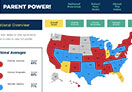
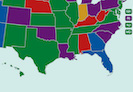
The website EdReform.com released it’s yearly Parent Power Index (PPI), a result of combining 5 criteria experts feel create a healthy, inspiring and successful learning and environment. The Index takes into account availability of charter schools, school choice, teacher quality, transparency and online learning. The North Star State came in as the 7th most powerful state, when it comes to parents providing direction for their schools. The Minnesota PPI is at 75%, placing it higher than any other upper Midwest state. Wisconsin is the closest, with a PPI of 74%, ranking it at 9th, just below Pennsylvania.

But it’s more than parents driving the success of the Minnesota educational system, the index is also influenced by school official’s and state government policies.

Today on The Pete & Doug Show, we asked Kara Kerwin, from The Center for Education Reform, which runs the website, what strengths our state has when it comes to education and the PPI.

Listen to the entire interview with Kara Kerwin from The Pete & Doug Show below.

Daily Headlines for February 1, 2013

NEWSWIRE IS BACK! Click here for the latest weekly report on education news and commentary you won’t find anywhere else, spiced with a dash of irreverence, from the nation’s leading voice in school reform.

NATIONAL

Teachers and Policy Makers: Troubling Disconnect
New York Times Blog, NY, January 31, 2013

Can the school reform movement accept constructive criticism? Gary Rubinstein hopes so. Mr. Rubinstein joined Teach for America in 1991, the program’s second year, and has now been teaching math for 15 years, five of them in some of the nation’s neediest public schools and 10 more at the prestigious Stuyvesant High School in Manhattan.

Race to the Top: D.C., Maryland and Georgia Way Back in the Field
Washington Post, DC, February 1, 2013

In the second year of Race to the Top, the Obama administration’s signature effort to improve public schools, nine of 12 jurisdictions that received $4 billion in federal grants made good progress. But three — the District, Maryland and Georgia — have stumbled, federal officials said.

Growing Number Of Educators Boycott Standardized Tests
USA Today, January 1, 2013

The decision by a group of Seattle teachers to boycott a standardized test this winter could spill out to other cities as a decade of frustration over testing simmers.

Charter Schools That Start Bad Stay Bad, Study Finds
Washington Post Blog, DC, January 31, 2013

Charter schools that start out doing poorly aren’t likely to improve, and charters that are successful from the beginning most often stay that way, according to a new study by researchers at Stanford University.

Democrats Launch Speakers Bureau To Hold Obama’s Feet To Fire On Education Reform
Forbes, January 31, 2013

Democrats for Education Reform (DFER), in conjunction with Education Reform Now (ERN), launched today their “I’m A DFER” Speakers Bureau of former Democratic state legislators, according to a press release obtained by Crotty on Education.

FROM THE STATES

New Legislation May Change Charter School Authorization Process
Alaska Public Radio Network, AK, January 31, 2013

Right now, if you and a group of like-minded individuals want to set up a charter school in your community, you need to petition your local school board to get your plan approved. A new bill could change that and open authorization up to universities, other government agencies, and nonprofits.

ARIZONA

Bill Would Mandate School-Choice Guide
Arizona Republic, AZ, January 31, 2013

A bill in the state Legislature would require the Arizona Department of Education to mail a “how-to” guide of educational options each year to the parents of 1 million children.

COLORADO

Parent Trigger Bill Pops Up
Education News Colorado, CO, January 31, 2013

A group of 10 Republican lawmakers has introduced a measure that would allow parents to petition the State Board of Education for conversion of struggling schools.

DISTRICT OF COLUMBIA

School Choice Pays Off, Literally
National Review Online, February 1, 2013

The District of Columbia Opportunity Scholarship Program (OSP) produced $2.62 in benefits for every dollar spent on it. In other words, the return on public investment for the private-school voucher program during its early years was 162 percent.

FLORIDA

Fla. Back on Track with Race to the Top
St. Augustine Record, FL, February 1, 2013

Top grant projects, U.S. Department of Education officials say the state has regained its momentum.

GEORGIA

Charter Students, Lawmakers Mark School Choice Week
Cherokee Tribune, GA, February 1, 2013

Cherokee Charter Academy students visited the state Capitol on Friday to meet with local legislators and participate in a rally to celebrate National School Choice Week.

ILLINOIS

The Ins And Outs Of Chicago’s Charter Network Expansion: What’s Working, What’s Not – And Why
Medill Reports: Chicago, IL, January 31, 2013

Don’t let the name fool you. This is not a school with selective enrollment. This is not a private school. It’s a charter school. It’s also a public school, according to Angela Montagna, director of external affairs for the Noble charter network, who is quick to correct anyone who says otherwise.

INDIANA

Parents Faced With More School Choices
Muncie Star Press, IN, February 1, 2013

As one local charter school prepares to close its doors, another one is planning its grand opening. Hoosier Academies, a tuition-free public charter school, will shut down its brick-and-mortar Muncie location in June.

Ball State Puts More Rigor Into Charter Renewal Process
Northwest Times, IN, February 1, 2013

Tabitha and Eliseo Velez, who have six children enrolled at Charter School of the Dunes in Gary, are among parents and community members advocating the school remain open.

Mayor Greg Ballard Seeks Authority To Take Over IPS Schools Taken Over By State
Indianapolis Star, IN, January 31, 2013

Mayor Greg Ballard will ask the State Board of Education next week to give him authority over four former Indianapolis Public Schools taken over by the state.

IOWA

Report: Iowa Teacher Evaluations Fail To Identify Top Educators
Des Moines Register, IA, February 1, 2013

The first statewide review of teacher evaluations revealed a patchwork system in which the majority of teachers aren’t rated in a way that identifies the best performers, according to an annual state education report released Thursday.

MAINE

Reactions to Charter School Cuts
WLBZ-TV, ME, January 31, 2013

Republicans are reacting with anger at the Education Committee’s vote to cut funding from Charter Schools along with Public Schools.

MARYLAND

Charter School Students, Parents, Teachers Lobby Lawmakers
WBAL, MD, January 31, 2013

Ten years after Maryland’s charter school law was enacted, more than 200 student, parents and teachers from charter schools around the state were in Annapolis today to urge lawmakers to make changes to the charter school law.

Johns Hopkins Hoping To Revive East Baltimore Neighborhood On Its Border
Washington Post, DC, January 31, 2013

The renowned Johns Hopkins University medical campus looms over East Baltimore like a fortress on a hill. On its northern edge lies a humble neighborhood of rowhouses weathered by decades of crime, poverty and decay.

MICHIGAN

Detroit Area’s Catholic Schools Shrink, But Tradition Endures
Detroit Free Press, MI, February 1, 2013

More than 13,000 “Mercy girls” have received a Catholic education from Mercy High School, founded in Detroit in 1945, when the city’s population was heavily Catholic.

NEVADA

Success-Induced Environment
Daily Sparks Tribune, NV, January 31, 2013

Parents and families came out in hoards Thursday night at Alpine Academy Charter School in Sparks. The school celebrated National School Choice Week, a nationally recognized program, advocating for parents’ choice to send their children to the school of their choice.

Empowering Parents To Choose Best School
Las Vegas Review-Journal, NV, February 1, 2013

Failure can be one of the best things in life. In the short term, failure doesn’t seem attractive, because it involves … well … failing. In the longer term, however, failure motivates us to either try a different method and succeed or find a different path entirely.

NEW HAMPSHIRE

Charter Schools Group Drops State’s Rank Due To Moratorium
Union Leader, NH, January 31, 2013

The National Alliance for Public Charter Schools has dropped New Hampshire’s ranking from one of the most friendly states for charter schools to one of the most hostile, citing a State Board of Education moratorium on the approval of any new state-authorized charters. In its 2013 assessment of state charter school laws, New Hampshire dropped from No. 11 in 2012 to No. 30.

NEW JERSEY

Two Camden Charter Schools Scramble To Restore Tax-Exempt Status
Philadelphia Inquirer, PA, February 1, 2013

Charter schools across New Jersey leverage their federal tax-exempt status to enhance their classrooms and expand their facilities.

NEW YORK

Teach-Eval Talks Thaw
New York Post, NY, February 1, 2013

Gov. Cuomo’s threat to have Albany impose a new teacher-evaluation system if the city and UFT can’t agree to one on their own is working.

The Plan to Save Catholic Schools
Wall Street Journal, February 1, 2013

This is Catholic Schools Week, when dioceses across the country celebrate the great gifts that are our Catholic schools.

Democracy Prep Founder Seth Andrew Unveils Ambitious Plan To Help Grads Hit The Ground Running In College
New York Daily News, NY, January 31, 2013

Call it the gift that keeps on giving. A highly touted charter school has already helped students from Harlem’s poorest families nail down a spot in a college next fall.

Plan for Older Students Faces Obstacles
New York Times, NY, February 1, 2013

With that in mind, Goodwill wants to expand its services by opening a charter school that focuses on awarding high school diplomas to older students, instead of the G.E.D.’s that adult education programs traditionally offer. The charter application will be filed in February.

NORTH CAROLINA

School Districts And Charters
Burlington Times News, NC, February 1, 2013

We have long supported charter schools in North Carolina. We favored lifting the state’s 100-school cap in 2011 because we think charter schools encourage innovation, give parents a choice, and put needed competitive pressure on the public schools to do a better job.

OHIO

Gov. John Kasich’s School Plan Would Dramatically Overhaul Ohio’s Funding Formula
Cleveland Plain Dealer, OH, January 31, 2013

Gov. John Kasich wants a major overhaul of Ohio school funding that focuses on bridging the wide gaps in income and property values among districts, while also giving charter schools the same level of state money that traditional districts get.

Kasich School Plan Prompts Optimism For Area Educators
Toledo Blade, OH, February 1, 2013

Ohio school superintendents reacted with guarded optimism Thursday to Gov. John Kasich’s school funding proposal, as they hailed a guarantee that no school districts will receive less money under the plan than they currently do, but must wait for details on how the formula would affect individual districts.

PENNSYLVANIA

No Cheating On Charters: We Must Be Honest About The Performance Of Our Schools
Pittsburgh Post-Gazette, PA, February 1, 2013

Wouldn’t we all love to respond to a disappointing performance review by changing the measuring tool to give us a better result? Many of us would joyfully toss the bathroom scale out the window in favor of one that knocked off 10 pounds. How about moving the end zone five yards closer so our favorite wide receiver could catch the game-winning throw?

SOUTH CAROLINA

Teacher Grading Plan Draws Fire From Greenville County School Board
Greenville News, SC, January 31, 2013

Their progress is her progress. And it gets measured in many ways, including with a test three times a year in math and reading called Measuring Academic Progress.

Zais: Choice Funds Students, Not Schools
SCNow, SC, January 31, 2013

South Carolina Superintendent of Education Mick Zais said he has high hopes a school choice bill will be passed in the General Assembly this year.

TENNESSEE

Tennessee Voucher Debate: The Chance, And Price, of ‘School Choice’
WRCBTV, TN, January 31, 2013

His second graders have reached the point that Daris Waters calls “show what you know.” “What’s my first step,” he asks. “You want to borrow a ten so the two becomes a 12,” a young man answers softly but confidently.

TN Teachers Not Told of Bad Evaluations
The Tennessean, TN, February 1, 2013

The number of Tennessee teachers apparently not told how poorly they scored on a teacher evaluation is worrisome to Education Commissioner Kevin Huffman, who questions how they can improve without feedback.

TEXAS

AISD School Board Joins Anti-Voucher Resolution
KFDA, TX, January 31, 2013

Amarillo schools are jumping on board the growing resistance toward the controversial school voucher program.

‘Choice’ Schools OK Testing, Not Open Enrollment
Fort Worth Star Telegram, TX, January 31, 2013

Between now and the Legislature’s scheduled May 27 adjournment, Texas will almost surely see its most extensive push ever for sending students to private schools with state-arranged financing.

VIRGINIA

Va. Senate Panel OKs Grading Schools
Washington Times, DC, January 31, 2013

Two major components of Republican Gov. Bob McDonnell’s education reform agenda won a Senate committee’s endorsement Thursday on the narrowest of party-line votes.

WASHINGTON

Bills To Grade Schools, Hold Back Third-Graders Well-Meaning But Problematic
Seattle Times, WA, January 31, 2013

The State Senate Education Committee falls short in efforts to rate schools and ensure all third-graders can read.

WISCONSIN

School Vouchers Harm Public Education
Milwaukee Journal Sentinel, WI, January 31, 2013

With voucher advocates this week trumpeting National School Choice Week, it is a fitting time to examine some Milwaukee choice schools and the proposed expansion of private school vouchers in Wisconsin. Some politicians are intent on slowly doing away with our public education system in favor of privatized education that is paid for with taxpayers’ money.

ONLINE LEARNING

School in Thumb Takes Online Learning To The Max
Bridge Magazine, MI, January 31, 2013

Allison Ruiz was attending the Thanksgiving parade in downtown Detroit two months ago when she got a call from a student with a homework question.

Lakeville Looks At Doing More With Online Learning
Star Tribune, MN, January 31, 2013

The district wants to tap into a growing, and potentially lucrative, market of students working via the Internet.

Skandera OK’s Virtual School
Albuquerque Journal, NM, February 1, 2013

State education chief Hanna Skandera overruled the Public Education Commission this week, opting to allow a new all-online charter school to open in the fall.

Seasoned Political and Communications Expert Joins CER

CER Press Release
Washington, D.C.
February 1, 2013

Citing the critical role of communications and the intersection of politics with the organization’s mission to educate and activate the public and policymakers on substantive education reform, CER President Jeanne Allen welcomed Nate Breeding as Director of Communications, overseeing all of the organizations outreach, public affairs and media relations.

“A new generation of technologies and communications requires a new generation of leadership,” said Allen. “We are so excited to have the skills and drive that Nate brings to the world of education reform.”

Prior to joining CER this week, Nate served for four years as the Outreach Manager with The German Marshall Fund (GMF) where he worked to position and promote GMF as a leader in transatlantic foreign policy and civil society issues. In addition to this, he served as a liaison to ambassadors and diplomatic staff in Washington and managed embassy outreach efforts and relations across all programmatic areas. Nate also has vast experience in designing and executing high-level events, summits, and press conferences throughout the United States, Europe and North Africa.

Holding a Masters in Communications from Johns Hopkins University, Nate has also been active in several political campaigns and has served as a press advance representative for President George W. Bush, Senator John McCain, and most recently Governor Mitt Romney.

“I am excited for the opportunity to take the skills and expertise I have developed over the years to ensure that CER continues to serve as the leading authority, voice and advocate for education reform. I am proud to be joining an organization with such a tradition of excellence.”

Nate can be reached at 301-986-8088.

To learn more about CER, its staff and programs go to www.staging.edreform.com.

###

CER, since 1993, is the leading voice and advocate for lasting, substantive and structural education reform in the U.S. Additional information about the Center and its activities can be found at www.staging.edreform.com.

Bill Gates Should Not Go to Spam

Bill Gates was in my spam. He shouldn’t have been. His letter is powerful, his message is powerful, and unlike way too many funders, he actually knows that we are all in this for the long haul!

The Gates Foundation was forward thinking enough to fund the Center’s bold media outreach work, and the Media Bullpen to help improve the discourse in the media and the grassroots, particularly in our target states of FL, GA, NC, TN and PA. Detractors think the Gates Fdn is part of some conspiracy to undo public education. Actually, they funded what we wanted to do, and they had nothing to do with creating it! Gates is putting his money where his mouth is — and the operative word here is “his”. America allows us to prosper, paves the way for many, and gives those that succeed incentives to spread their wealth. What a great innovation.

Read his letter here, join the conversation at #billsletter and think about measurement the next time you want to launch a career in ed reform!

by Jeanne Allen

Did You Know? 10 Fast Facts on School Choice

The Education and the Workforce Committee put together these 10 fast facts on school choice in honor of National School Choice Week 2013. For more on education options and school choice programs across the U.S., check out “Improving American Education with School Choice“.

State and local school choice initiatives continue to boost academic achievement and strengthen the nation’s education system. In honor of National School Choice Week (January 27 – February 2), the House Education and the Workforce Committee compiled the following facts on a variety of innovative programs and policies that are expanding choice and options in education:

FACT #1: Demand and support for charter schools continues to grow. More than 2 million students are enrolled at 5,618 charter schools in America. An additional 610,000 students are currently on charter school waiting lists.

FACT # 2: Eighty percent of states have embraced charter schools.Forty-one states and the District of Columbia have laws that support the funding and authorizing of public charter schools.

FACT #3: Magnet schools educate millions of students every year. In the 2010-2011 academic year, more than 2 million students were enrolled at 2,722 magnet schools in 31 states. These public schools often have a specific focus, such as science and technology, math, or the humanities, and help prepare students for in-demand jobs.

FACT #4: States are expanding private school choice programs. In 2012, 16 states, the District of Columbia, and Douglas County, Colorado offered private school choice programs. More than 210,000 students participated in these programs in 2011-2012 academic year.

FACT #5: Private school choice programs can help increase college enrollment. According to a 2012 study, disadvantaged African American students who received private school vouchers in New York City were 24 percent more likely to attend college.

FACT #6: Private scholarship programs can help raise high school graduation rates. In the 2010-2011 academic year, the D.C. Opportunity Scholarship Program had a 94 percent high school graduation rate. Nearly 90 percent of participating students went on to pursue a postsecondary degree.

FACT #7: A growing number of states and students are taking advantage of virtual schools. Thirty-one states and the District of Columbia allow full time online schools and approximately 275,000 students were enrolled during the 2011-2012 school year. These online schools improve access to education for rural students who would otherwise be forced to commute long distances to attend school.

FACT #8: An estimated two-thirds of school districts now offer blended learning programs, a combination of traditional and online schooling. These fast-growing programs allow parents to select more personalized curriculum for their students, while also incorporating the benefits of a traditional classroom setting.

FACT #9: Since 1999, the popularity of homeschooling has grown significantly. From 1999 to 2007, the number of homeschooled students increased by 74 percent. There were approximately 2 million home school students in the U.S. in 2010.

FACT #10: In 2011, 46 states offered open enrollment to students. Open enrollment policies allow students to transfer to a different public school within the district or state, helping children escape low-performing schools.

School choice has helped Michigan’s children

Opinion
by Michael Van Beek
The Detroit News
January 31, 2013

A new study by researchers at Stanford University shows superb positive effects for students attending charter schools in Michigan. It is the most rigorous study of charter schools ever done in this state and positions Michigan as one of the nation’s leaders in charter school policy and performance.

No other study of Michigan’s charter schools comes close to matching the sophistication or comprehensiveness used by Stanford’s Center for Research on Education Outcomes (CREDO). This study compared students in charters to their peers in local public schools who were identical in terms of race, gender, socioeconomic status, prior academic achievement and more.

Researchers measured annual learning gains for about 85,000 charter school students over a five-year period and compared them to their “virtual twins” in conventional schools.

The findings were almost wholly positive for charter school students, and most impressive in Detroit. The typical charter school student made gains worth about two months of learning in reading and math. For a charter school student in Detroit, it was more than three months. Forty-two percent of charters outperformed conventional public schools in math and 35 percent did the same in reading. In Detroit, those numbers are 49 and 47 percent, respectively.

CREDO has evaluated charter school performance in 19 states using this same methodology. Of those, only Louisiana and New Jersey can hold a candle to Michigan. Louisiana charter school students also demonstrated learning gains of about two months when compared to their peers. In New Jersey, the average student in a charter made gains of about two months in reading and about three months in math.

Michigan’s results were more consistent, though. Unlike Louisiana, students in Michigan charters demonstrated increased learning gains the longer they were enrolled. And while the New Jersey study found positive results for 44 of 54 of subgroups of student and schools, CREDO found a charter school advantage in 52 of 56 cases studied in Michigan.

What accounts for Michigan’s success is hard to pinpoint, but certainly the state’s charter school law and policies have a lot to do with it. In fact, a just-released analysis of such policies by the Center for Education Reform gave Michigan’s policies one of only four “A’s,” ranking it fourth overall in the country.

Michigan is unique in the number of charter school authorizers it allows — such as public universities and community colleges — and the amount of autonomy it grants these authorizers.

These authorizers are not concerned with protecting existing K-12 institutions, which comes at the expense of denying quality charter school options for parents.

Michigan has historically allowed more charter schools than other states. The new CREDO study suggests that Michigan has a “highly dynamic market … creating a new positive stock of charter schools.”

In time, the cap on charter schools will sunset. More net-positive competition will occur.

The typical Michigan student is better off for having enrolled in a charter school. Expanding school choice options in this state seems prudent.

Neither this recommendation, nor CREDO’s findings, is a condemnation of conventional public schools. They are rather merely an affirmation that Michigan’s 20-year-old charter school experiment is working and a compliment to the policymakers responsible for creating charter school laws and to the work of charter school authorizers, boards, principals and teachers.

Michael Van Beek is the education policy director at the Mackinac Center for Public Policy.