









Sign up for our newsletter

Daily Headlines for April 25, 2013

NEWSWIRE IS BACK! Click here for the latest weekly report on education news and commentary you won’t find anywhere else, spiced with a dash of irreverence, from the nation’s leading voice in school reform.

STATE COVERAGE

ALABAMA

Senate Committee Cuts Size Of Teacher Pay Raise
The Huntsville Times Blog, AL, April 24, 2013

The proposed pay raise for Alabama’s K-12 school employees keeps shrinking the longer the Legislature stays in session.

CALIFORNIA

Michael Bloomberg Donates $350,000 To L.A. School Board Race
Los Angeles Times, CA, April 25, 2013

The New York City mayor’s contribution to a political action committee led by L.A. Mayor Antonio Villaraigosa will benefit board candidate Antonio Sanchez.

Rumor Of Deal Roils Teachers Union
Los Angeles Times, CA, April 24, 2013

UTLA members allege that one of their leaders made a private arrangement on staffing with a school board candidate. Antonio Sanchez and union vice president Gregg Solkovits deny any deal.

Legislation That Would Have Required More Frequent Evaluations Of Educators Was Killed By A State
Los Angeles Times, CA, April 24, 2013

Senate committee Wednesday under strong opposition from teachers’ unions. Legislation that would have required more frequent evaluations of educators was killed by a state Senate committee Wednesday under strong opposition from teachers’ unions.

Gov. Jerry Brown Promises Fight Over Education Overhaul
Los Angeles Times, CA, April 24, 2013

Jerry Brown says lawmakers will get ‘the battle of their lives’ if they balk at his plan to give more funds to poor districts and more spending flexibility to all school districts.

Saugus Board Again Rejects Einstein’s Charter Bid
SCV News, CA, April 24, 2013

Saugus Union School District board members voted 3-1 Tuesday to reject a fourth charter school petition from the Einstein Academy for the Letters, Arts and Sciences for a kindergarten to sixth-grade school.

LASD Bids On Sunnyvale Site For BCS Campus
Los Altos Town Crier, CA, April 24, 2013

In an effort to find an adequate site for Bullis Charter School, the Los Altos School District Board of Trustees voted to instruct staff to prepare a bid for the Raynor Activity Center in Sunnyvale.

Breaking The Monopoly Of Mediocrity In Our Schools
San Diego Union-Tribune, CA, April 25, 2013

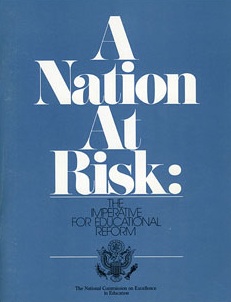
Thirty years ago this month, “A Nation At Risk,” the landmark publication on America’s education system from the Reagan administration, made the case that education reform in the United States was an absolute necessity.

COLORADO

St. Vrain Charter Budgets Show Schools’ Differences
Longmont Daily Times-Call, CO, April 25, 2013

The St. Vrain Valley School District Board of Education got its first look at the charter schools’ proposed 2013-14 budgets on Wednesday.

CONNECTICUT

Hartford Superintendent Proposes Opening New Charter School
Hartford Courant, CT, April 24, 2013

Superintendent Christina Kishimoto said Wednesday morning that she wants to open another Achievement First charter school in the city for the 2014-15 year.

FLORIDA

Neighbors Fight Plan For 2,000-Student School In Kendall
Miami Herald, FL, April 24, 2013

Plans to replace a small neighborhood school in East Kendall with a massive charter school housing 2,000 students from pre-kindergarten through 12th grade drew a crowd of outraged residents this week demanding the school be stopped.

GEORGIA

Some GA Charter Schools Now Complaining About State Commission They Wanted
WXIA-TV, GA, April 24, 2013

This is one of those stories about being careful what you ask for. Last fall many Georgia charter schools and their supporters were elated when voters overwhelmingly passed a constitutional amendment re-establishing a Georgia Charter Schools Commission.

ILLINOIS

CPS Protests: Students Reject Tests, Charter School Backers Want Equal Funding
Chicago Sun Times, IL, April 24, 2013

Two different groups of protesters gathered Wednesday outside the Chicago Public Schools headquarters to make their voices heard.

Let Parents Dictate School Funding
Chicago Tribune, IL, April 24, 2013

Regarding, “Charter school parents form advocacy group,” (News, April 23), this battle between public schools and charter schools is completely off base. Rather than this silly fighting, let’s change the very paradigm upon which public education is based.

LOUISIANA

Rare Show Of Unity Among Education Leaders On RSD ‘Parent Trigger’ Bill
Times-Picayune, LA, April 24, 2013

“Unified” is not a word usually used to refer to the education community in Louisiana. But in a rare show of solidarity Wednesday, teachers unions, education officials and lawmakers from both parties came together in support of a bill that would allow parents to petition to transfer control over their child’s school from the Recovery School District to the local system.

Education Panel Adopts Bill To Postpone Rating System
Alexandria Town Talk, LA, April 24, 2013

Teachers shouldn’t be penalized by a faulty evaluation system that can be corrected and put into place next year, members of the House Education Committee said Wednesday night after a nearly three-hour meeting.

Orleans School Board Backs Bill To Let Charters Remain Local Education Agencies
The Advocate, LA, April 25, 2013

The Orleans Parish School Board on Tuesday night addressed one of the reasons charter schools cite for hesitating to return to School Board authority: the desire to keep their status as a local education agency.

MAINE

Debate Continues Over Weight Of Student Test Scores In Teacher Evaluations
Bangor Daily News, ME, April 24, 2013

A lengthy and ongoing legislative debate over how much student test scores should count when evaluating teachers continued Wednesday with a new proposal to limit the scores’ impact to 10 percent.

Sign-Ups For First Portland Charter School Falling Short
Portland Press Herald, ME, April 25, 2013

Portland’s first charter school has letters of commitment from only 105 students, far short of the 160 the school hopes to enroll by the time it opens in the fall.

MARYLAND

Maryland ‘On Track’ On Federal Teacher Evaluation Deadline, State Says
Washington Post, DC, April 24, 2013

Maryland officials say they are confident the state will meet federal deadlines to develop new teacher evaluation systems requiring the use of standardized test scores.

MASSACHUSETTS

Complaints About Mystic Valley Piled Up With State
Boston Globe, MA, April 25, 2013

As the trustees of Mystic Valley Regional Charter School in Malden seek a review of the state education commissioner’s decision to deny the school’s request to increase its enrollment cap, written complaints filed with the Massachusetts Department of Elementary and Secondary Education since 2001 reveal that parents have repeatedly voiced concern about the way trustees run the school.

Lift Cap On Urban Charters
Worchester Telegram, MA, April 25, 2013

As former federal and state government education officials, we continue to be impressed by the performance of Massachusetts charter public schools.

MICHIGAN

Three Little-Known Facts About Charter Schools In Michigan
Michigan Radio, MI, April 24, 2013

Today, on State of Opportunity, I report on a troubling fact of charter school expansion in Michigan: Some of the state’s best charter schools are struggling to compete against low-performing charter schools.

Don’t Trust Ed-Trust on Charter Schools
Mackinac Center for Public Policy, MI, April 24, 2013

A new report from Education Trust-Michigan lays out an “education roadmap” for improving average standardized test scores in Michigan. Before describing the roadmap, however, the report goes to great lengths to criticize state policies that have enabled parents to enroll their children in public charter schools.

Secretive Education Panel To Go Public
Detroit News, MI, April 25, 2013

A group focused on using technology to lower school costs is emerging from the shadows after Gov. Rick Snyder’s administration was criticized for its secret meetings.

Educational Achievement Authority Bad For State – And Its Kids
Detroit Free Press, MI, April 25, 2013

Some educational entities have backed off of their opposition to the expansion of the governor’s Educational Achievement Authority (EAA). But I continue to believe that its expansion is a bad idea for Michigan’s children. The EAA circumvents educational laws, robs the school aid fund and plays by its own rules.

NEW JERSEY

State Officials Back In The Classroom With Charter School Tour
New Jersey Herald, NJ, April 24, 2013

Amid the controversy that surrounds charter schools in New Jersey, State Sen. Steve Oroho, Assemblywoman Alison Littell McHose and Assemblyman Parker Space were invited to take a tour and meet with the students of the Sussex County Charter School for Technology on Wednesday.

NORTH CAROLINA

Go Slow On Vouchers
News-Record, NC, April 25, 2013

A rally for public school vouchers drew a big crowd to the Greensboro Coliseum Tuesday, proving the idea has appeal in North Carolina. But rushing to spend $90 million on a statewide voucher plan without even a pilot project could be an expensive mistake.

OHIO

Strongsville: SCAC Says 61 Teachers Want To Cross Picket Line
WKYC, OH, April 24, 2013

The Strongsville Community Action Committee says it knows of 61 striking teachers who have expressed interest in crossing the strike picket lines.

PENNSYLVANIA

$6 Million To Aid Three Phila. Public Schools
Philadelphia Inquirer, PA, April 25, 2013

Three progressive Philadelphia public schools will expand in the fall as a result of a $6 million investment from a city nonprofit with growing clout, officials announced Wednesday.

RHODE ISLAND

The Struggle To Retain Seniority For Teachers
Go Local Prov, RI, April 25, 2013

The problem with this long-standing practice is that seniority (time in the system) does not necessarily equate to highly effective teaching. Couple the job fairs with lackluster professional evaluations and we had a recipe for poor academic outcomes.

SOUTH CAROLINA

S.C. Bill Drops Exemption To School Attendance Zones
Augusta Chronicle, GA, April 24, 2013

Parents could no longer buy a small plot to send their child to a certain school under a bill advanced Wednesday by a House panel.

TENNESSEE

Tennessee Charter School Incubator To Expand Services
The Tennessean, TN, April 25, 2013

The Tennessee group known for helping its participants start successful charter schools is branching out to help other charter operators start second schools.

TEXAS

Uplift Leaders Stand with Other Charters in Support of Texas SB 2
San Antonio Express, TX, April 24, 2013

Charter leaders from around Texas gathered in Austin Tuesday to give testimony in support of Senate Bill 2 which could bring major changes to charter schools including the replication and regulation processes, raising the cap on the limit of charters schools in Texas and closing low-performing, public charter schools.

ONLINE LEARNING

McKeesport School Directors Ask For State Mandate Reform
Pittsburgh Tribune-Review, PA, April 25, 2013

Directors adopted two resolutions calling for reform at Wednesday’s school board meeting — one in the funding of the Pennsylvania Public School Employees Retirement System and the other in the funding formula for charter and cyber schools.

Bethel Park Board Asks State To Update Charter School Regulations
Pittsburgh Post-Gazette, PA, April 25, 2013

Bethel Park school board is asking the state Legislature to update laws regarding charter schools and their cyber counterparts.

Flaws Found At Virtual School Wooing Maine
Portland Press Herald, FL, April 25, 2013

Investigators in Florida have found that online education company K12 Inc., which is seeking to operate a full-time virtual charter school in Maine, has employed teachers to teach subjects for which they lacked the proper certification.

Middle Schoolers Get A Head Start On High School Credits
Highlands Today, FL, April 25, 2013

When mother Gabrielle Birnie enrolled her daughter in the Personal Fitness class at the online Florida Virtual School, she wanted to help her get some of her high school graduation requirements out of the way so she has time for dual enrollment classes later on.

Fla. Online School Target Of Cuts From Legislators
WRAL, NC, April 24, 2013

Florida’s highly-successful online school is battling proposed cutbacks at a time when state legislators are bragging about boosting money for schools by more than $1 billion.

Virtual Academy Expanding, Offering Online Education For All Grades
14 News WFIE Evansville, IN, April 24, 2013

Some homeschoolers have a new option for completing their school work.
EVSC’s Virtual Academy, typically for those in high school, is now open to kids in Kindergarten through Eighth grade.

A Nation At Risk No More — By Any Means Necessary

CER Media Advisory
Washington, D.C.
April 24, 2013

On Wednesday Apr. 24, Jeanne Allen, president of the Center for Education Reform, issued a multi-page manifesto in which she declared the US still faces “educational malaise” 30 years after the release of A Nation at Risk that paved the way for educational reform.

Allen also recalled the “pioneers” who after A Nation at Risk enacted the first voucher programs and charter laws to overcome the unionized and bureaucratic “blob” that for so long has favored the status quo.

A Nation at Risk information and resources can be found here.

Allen is available for comment on this issue. Please call 301-986-8088 or email patrick@staging.edreform.com.

Jeanne Allen is the Founder and President of The Center for Eduction Reform, the nation’s leading advocate for substantive and structural education reforms.

“After 15 years the problems were still prevalent. Today, after 30 years, we still face educational malaise that constitutes a national security threat,” Allen said in a manifesto entitled “A Nation at Risk No More — By Any Means Necessary.”

“One would expect that the way to solve that would be to muster the smartest people in one room, even if the room overflowed to a town, even if the town needed to overflow to a community, even if the community had to overflow over state lines. But sadly, many organizations find it more profitable to boast selectively than recognize the contributions of those who came before, or those who do the work quietly on the sidelines still.”

“Indeed this week — the 30th anniversary of A Nation at Risk— should have produced a revolution of innovation and refocus on what has worked, an internal assessment of what it will take to go from 20 to 300 million people with real, actionable reform, and who’s standing in the way — on all sides. Instead, we have a few forums, and blogs, and most will go about their business as if everything is moving along swimmingly.”

A Nation At Risk No More — By Any Means Necessary: A Manifesto

April 26, 2013 marks the 30th Anniversary of A Nation at Risk, a report that fueled two generations of reform efforts, including milestones in school choice and accountability that have proven to have an overwhelmingly positive impact on the most disadvantaged youth and have succeeded in narrowing the equality gap. While commendable and necessary, these efforts have only begun to scratch the surface when one considers the enormous achievement problems we still have today.

Download or print PDF version of A Nation At Risk No More– By Any Means Necessary

Being poor doesn’t mean you’re a poor parent

A fantastic opinion piece by education reform pioneer T. Willard Fair appeared on Tallahassee.com on April 19, 2013:

There has long been a troubling attitude in our society about low-income parents.

Put bluntly, it goes like this: Poor people make poor parents.

Of course, folks in proper circles usually don’t come right out and say it, which is what made the recent comments by state Sen. David Simmons, R-Altamonte Springs, so stunning.

When asked by the media about the parent empowerment bill (Senate Bill 862, House Bill 867), Sen. Simmons responded:

“Let’s face it, the parents are the very people who haven’t been involved in their own children’s lives so as to cause the school to improve. What kind of credibility do you give to the parents in those kinds of circumstances?”

Everybody knows who he is talking about, because the bill is meant to address consistently failing schools in low-income neighborhoods.

Forget about the historic neglect of these schools.

Forget that school districts and unions have used them as out-of-sight, out-of-mind depositories for ineffective personnel.

Forget about the long history of promoting illiterate children to certain failure just to move them through the system.

Forget that many of these parents are working two minimum-wage jobs to support their children and don’t have time to form a PTA or lobby in Tallahassee.

It’s all the parents’ fault. Let’s face it.

If a school fails year after year, the judgment of those running the school should not be challenged by the parents of the children the school is failing.

The people responsible for the failure are competent, but the parents are not.

They can’t be trusted with decisions about changing school management, because they will get bamboozled into turning their school over to some nefarious profiteer. And during the process, they will squabble among themselves and create discord in the community.

So take away their power to act, and reduce them to hoping that this next time around those who have consistently failed their children will somehow get their acts together. If they don’t, then so be it. If the unions block the removal of ineffective teachers, so be it.

After all, it’s the parents’ fault. Let’s face it.

Maybe I would expect this out of union leaders, politicians beholden to their campaign contributions, education bureaucracies and parents who send their children to high-performing schools and see only that side of public education. But it disturbs me to see black legislators tacitly give their approval through their silence and their votes.

I have devoted the past 25 years to ensuring that poor minority children have access to an equal education. In this effort, I do not pledge allegiance to traditional public schools, charter schools or voucher schools.

I don’t care about the vehicle. I care about the result. And I’ve found the result is much better when parents are allowed to make choices.

Those vested in the current system attack choice. They throw out buzz words such as “privatizing education” or “corporate reformers” or “destroying public education.”

But this is what they don’t want people to know: The reason there are a growing number of charter schools, the reason for the long waiting lists, the reason why vouchers are so coveted, is because parents want them. And of course, the only intellectually honest rebuttal to that demand is that these parents don’t know what is best for their children.

Now if parents make a six-figure paycheck and can buy school choice, that is an entirely different matter.

I certainly found Sen. Simmons’ comments to be distasteful. But I do give him credit for at least having the courage and honesty to say out loud what many in the Legislature appear to be privately thinking.

T. Willard Fair is a former chairman of the Florida State Board of Education, the president and chief executive officer of the Urban League of Greater Miami Inc., and a member of the Foundation for Florida’s Future Board of Directors.

Daily Headlines for April 24, 2013

NEWSWIRE IS BACK! Click here for the latest weekly report on education news and commentary you won’t find anywhere else, spiced with a dash of irreverence, from the nation’s leading voice in school reform.

NATIONAL COVERAGE

‘Nation At Risk’ Warnings About Shortcomings In US Education 30 Years Ago Still Resonate Today
Washington Post, DC, April 24, 2013

But its warnings still reverberate today, with 1 in 4 Americans failing to earn a high school degree on time and the U.S. lagging other countries in the percentage of young people who complete college.

Why Are 2 of U.S. News’s Top 5 ‘Best High Schools’ Arizona Charter Schools?
The Atlantic, April 23, 2013

U.S. News & World Report’s annual rankings of the nation’s best high schools are out, and the results suggest students thrive when given access to curriculum and instruction that’s significantly more challenging than what a typical American student receives.

STATE COVERAGE

ALABAMA

Anniston Senator: Common Core Ban Bill On Hold
Anniston Star, AL, April 23, 2013

A bill to ban the state from using its Common Core-based academic standards is on hold in the Alabama Senate, Sen. Del Marsh, R-Anniston, said today.

CALIFORNIA

Oakland Charter School May Shut Down Due To Mismanagement
KGO-TV, CA, April 23, 2013

A high school in Oakland has been honored with national recognition for academic performance, ranking 36th in the entire country. But there is a big problem — the school, American Indian Public Charter High, may shut down soon because of alleged financial mismanagement.

CONNECTICUT

Proposed State Budget Contains Bad News For Charter Schools
The Hour, CT, April 24, 2013

There seems to be a pattern in news coming out of Hartford these days — you know, good news, bad news.

DELAWARE

Pencader And State Remain At Odds Over Possible Rescue
News Journal, DE, April 24, 2013

The relationship between Pencader Charter School and the state Department of Education appears to be deteriorating.

FLORIDA

Parent Trigger Headed To Senate Floor
Florida Current, FL, April 23, 2013

The “parent trigger” bill cleared its final committee stop Tuesday and now heads to the Senate floor. Opponents speaking at the final public hearing for SB 862 outnumbered supporters by a 3-1 margin, but members of the Senate Appropriations Committee sent it to the floor on a 12-6 vote.

Gov. Rick Scott Not Giving Up On Across-The-Board Teacher Raises
Tampa Bay Times, FL, April 23, 2013

First, Gov. Rick Scott criticized the Florida House on Tuesday during a Cabinet meeting, calling it “very disappointing” that the House is pushing a 6 percent increase in tuition at state colleges and universities.

Willfully Blind
Gainesville Sun, FL, April 24, 2013

It’s nothing new for Florida lawmakers to try to pull down the shades on the state’s Sunshine Law, creating exemptions that hide information from public view.

Stop Blaming Poor Parents, Empower Them With School Choice
Miami Herald, FL, April 24, 2013

There has long been a troubling attitude in our society about low-income parents. Put bluntly, it goes like this: Poor people make poor parents.

Former Southside Fundamental Middle School To Become Charter School
Tampa Bay Times, FL, April 23, 2013

The Pinellas County school board voted Tuesday night to sell the property to University Preparatory Academies, Inc. The $1.1 million purchase marks the first time the Pinellas school board has sold a former school site to a charter.

GEORGIA

Dark Days for DeKalb County Schools
Atlanta Daily World, GA, April 24, 2013

Over the past two years, Metropolitan Atlanta school systems have faced much scrutiny. Suspicions of manipulated students test scores, changes to attendance records and the mismanagement of county funds for personal usage have all been par for the course.

ILLINOIS

School Board To Hear Charter Proposal
Idaho Mountain Express, ID, April 24, 2013

The Blaine County School District board of trustees has scheduled a special meeting for Thursday for an update on a proposal to establish the private Mountain School near Bellevue as a state charter school.

A Bronzeville Charter School Makes Its Mark In Robotics
Chicago Tribune, IL, April 24, 2013

If their robot was ever going to fling Frisbees well enough to win a world championship, the students at Perspectives/IIT Math & Science Academy had work to do.

INDIANA

Charter School Hearing In Clark: Backers, Opponents Make Their Case
Courier Journal, IN, April 23, 2013

Clark County school officials told staff members of the Indiana Charter School Board during a hearing Tuesday that a proposed charter school locating in the county would financially devastate area districts by taking state education money that follows each student.

Data Show Voucher Students Often Opt For Schools No Better Than Public Ones
Evansville Courier & Press, IN, April 243, 2013

Students using Indiana’s voucher program to attend private schools are not necessarily attending better-quality schools when they leave public schools.

IOWA

Education Group Tries To Jumpstart Reform Debate
Des Moines Register, IA, April 24, 2013

The national education reform advocacy group StudentsFirst will start running a radio spot in the Des Moines area this week aimed at breaking a stalemate in the state’s education reform debate.

LOUISIANA

Orleans Parish School Board Takes First Step In Hiring New Superintendent
Times-Picayune, LA, April 23, 2013

The Orleans Parish School Board took the first step in hiring a new superintendent Tuesday, voting unanimously to use a professional firm to run the process. The board expects to receive some applications by its May meeting.

MAINE

Charter Schools Contribute To $500K SAD 59 Budget Squeeze
Kennebec Journal, ME, April 23, 2013

Superintendent says $300,000 of increase comes from tuition payments to charter schools; $150,000 from increased teacher retirement costs

MASSACHUSETTS

Union Says Teacher Evaluation Plan Has Race Bias
Boston Globe, MA, April 24, 2013

The Boston Teachers Union demanded Tuesday that the School Department launch an independent review of its new teacher evaluation system to determine why black and ¬Hispanic teachers are more likely to be targeted for possible dismissal.

MICHIGAN

Keep Backroom Dealings Out Of The Classroom
Detroit Free Press, MI, April 23, 2013

Gov. Rick Snyder says education in Michigan — and in the nation — is broken, and badly in need of reform. We couldn’t agree more. So, let’s talk about it.

MINNESOTA

House Education Bill About More Than Education
Bemidji Pioneer, MN, April 24, 2013

A debate about education funding goes beyond helping individual students: There is widespread agreement that a better education system would help the economy. However, there is less agreement about how to achieve those improvements.

NEW YORK

The Teacher-Rating Charade
New York Post, NY, April 23, 2013

Gov. Cuomo likes to boast that “99 percent” of state school districts struck teacher-evaluation deals with their unions, attributing it to funding he offered if they did. A report yesterday suggests a different reason: The deals are shams.

Buffalo District, Teachers Should Give Up Attempt To Weaken Evaluation System
Buffalo News, NY, April 24, 2013

Children in the Buffalo Public Schools are once again caught in the middle because self-interested adults will not follow the rules set out by state officials. At risk is millions of dollars in aid flowing to this broken school system.

NORTH CAROLINA

N.C. Lawmakers Court Black Families To Back Vouchers
News Record, NC, April 24, 2013

State lawmakers have turned to a key demographic in the state — black families — to build support for legislation that would help more students attend private schools.

School Voucher System With A Different Name
Citizen Times, NC, April 24, 2013

The legislative assault on education in North Carolina continued last week as Republican leaders in the House of Representatives have followed through on a pledge — some might characterize it as a threat — to introduce legislation that would throw an estimated $90 million in state taxpayer dollars at private institutions over the next two years.

TENNESSEE

Metro School Board Braces For Review Of 6 New Charter Schools
Nashville City Paper, TN, April 23, 2013

In light of what the school district considers a legislative victory in local control, Metro school board members are bracing to review six new charter school applications this spring.

TEXAS

House Panel Mulls Charter School Expansion Bill
Lubbock Avalanche-Journal, TX, April 24, 2013

Top education leaders in the Texas House began discussing a major proposal late Tuesday to increase the number of charter schools allowed to operate statewide. The plan sailed through the Senate but may face a tougher road in the lower chamber.

Charter School Banks On Innovation For Students
Daily Cougar, TX, April 24, 2013

Sitting on the edge of the UH campus is a public charter school that admitted around 135 students from kindergarten to fifth grade.

UTAH

Valley Academy Charter School, Invitational Demonstrates First-Year Success
South George News, UT, April 23, 2013

Valley Academy Charter School hosted an Invitational Brunch on Thursday where its staff showcased their program, gave attendees a tour of the school, allowed them to observe how the teachers and students interacted, and made board members, administrators, members of the school staff, and a parent volunteer, available to answer questions.

Education Task Force All Too Familiar
Deseret News, UT, April 24, 2013

Would we think it strange, if plumbers and electricians decided to form a task force to reform the medical profession and hold physicians accountable? Why then, do we not cringe when lawyers and business executives decide to reform public education and hold teachers accountable?

VIRGINIA

Legislature’s Contentment With Status Quo Hinders Student Success
Virginia Watchdog, April 23, 2013

A culture of complacency is keeping Virginia from furthering student success, one educational expert says.

WISCONSIN

Data In Department Of Public Instruction Release Fuels Private School Voucher Debate
Daily Cardinal, WI, April 23, 2013

A Tuesday release from the Department of Public Instruction that showed Milwaukee and Racine students in the state’s school voucher program scored lower on last year’s standardized achievement test than public school students raised questions among state legislators over the necessity of private school voucher expansion.

ONLINE LEARNING

Phila. Cyber Charter Fights State Bid To Close It
Philadelphia Inquirer, PA, April 24, 2013

A Philadelphia-based cyber charter school that the Pennsylvania Department of Education wants to shut down as allegedly not providing cyber education is fighting to survive.

Expert: Legislature’s contentment with status quo hinders student success

By Kathryn Watson
Watchdog.org Virginia Bureau
April 23, 2013

A culture of complacency is keeping Virginia from furthering student success, one educational expert says.

Virginia parents are practically powerless in determining the course of their children’s education, and student success is urgently low.

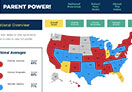
If, that is, Virginia’s fall this month to 39th nationally in the Center for Education Reform’s Parent Power Index and eighth-grade reading proficiency of less than 36 percent mean anything.

But contentment with the status quo within the Virginia General Assembly perpetuates those failures, said Kara Kerwin, vice president of external affairs for the D.C.-based nonprofit Center for Education Reform.

Virginia scores well on some national reports, such as the 2012 national report card by Education Week, which ranked Old Dominion schools fourth in the nation. But instead of relying on results such as reading proficiency, lawmakers look to reports like Education Week’s, which rely heavily on investments rather than outcomes to say Virginia schools are A-OK, Kerwin said.

“Really, the Legislature just failed to act on anything because they just said, ‘We’re fine, we’re number four.’”

That’s about what Delegate Bob Tata, retiring from the General Assembly after 30 years and thus, from his post as House Education Committee chair, told Watchdog.org.

“We have a pretty decent school system. One survey has us ranked fourth in the country,” Tata said.

But Kerwin said something is clearly awry when only one-third of eighth graders master reading proficiency.

CER’s Parent Power Index grades states on how much freedom they afford parents in the categories of school choice, charter schools, online learning, teacher quality and transparency. Virginia was ranked 35th in January of this year, but other states’ improvements have laid bare Old Dominion stagnation.

“Other states might have improved. Virginia hasn’t done anything,” Kerwin said.

The Virginia Association of School Boards did not return a request for comment on the Parent Power Index.

Virginia — with some of the strictest charter school laws in the nation and just four charter schools to serve the commonwealth’s 1.3 million K-12 students — almost automatically earns a poor ranking from CER, Kerwin said.

Parents’ ability to choose, Kerwin said, is one of the most important factors in student success.

“When parents can vote with their feet … we see all schools improve,” Kerwin said. “Without the power to make choices, parent involvement is meaningless.”

But, Tata said, parents’ ability to determine the course of their children’s educations isn’t the most crucial factor in academic success.

“Like everything else, it depends pretty much on money and where you live,” Tata said. “If you live in Fairfax County, I’d imagine the schools are pretty much excellent. … I think you could probably trace the education system pretty close to the dollar average that the parents make.”

But is it fair for a student’s relative success to depend on parental wealth and how much those parents are willing to pay in property taxes?

“Life is not fair,” Tata said. “I guess that’s a start. People are willing to pay more taxes in those areas,” like Fairfax County, he said.

But Kerwin said that line of thought is perpetuated by reports, like Education Week’s, which tend to rely on investments over results.

“It’s really based on inputs not outputs,” Kerwin said. “Virginia spends a lot of money — for what?”

Kerwin said case studies shatter the perception that more money directly translates to better schools.

“It’s not about how much money,” Kerwin said.

A study of Tennessee’s schools by the University of Memphis, published March 2012, concluded, “This research revealed that per pupil expenditure did not have a significant relationship to ACT scores or to the TCAP (Tennessee Comprehensive Assessment Program) writing assessment scores. An implication is that giving schools more money does not necessarily raise student achievement, but rather how the money is spent can raise student achievement.”

And University of Arkansas researchers in a yet-to-be-released report commissioned by the Walton Family Foundation found that District of Columbia Public Schools, which make up more than 40 percent of the District’s schools, receive 46 percent less funding than the District’s public schools.

What does make for effective schools, Kerwin argued, is parents’ ability to choose.

“What’s interesting about that though is that charter schools in the district are completely outperforming DCPS schools,” Kerwin said. “And it’s not about money. It’s about giving choice for quality schools.”

A Nation At Risk — 30 Years Later

A NATION AT RISK NO MORE – BY ANY MEANS NECESSARY
a manifesto by CER President Jeanne Allen

April 26, 2013 marks the 30 year anniversary of one of the education reform movement’s most influential reports, A Nation At Risk. With an unprecedented urgency, the 1983 report called for Americans to reverse the course of a crumbling U.S. education system plagued by “a rising tide of mediocrity that threatens our very future as a Nation and a people. If an unfriendly foreign power had attempted to impose on America the mediocre educational performance that exists today, we might well have viewed it as an act of war.”

Now, thirty years after this grave warning, we still have an education system where students graduate without even basic literacy skills. So where do we go from here?

The commission that wrote A Nation At Risk believed our educational woes could be solved if the “people of our country, together
with those who have public responsibility in the matter, care enough and are courageous enough to do what is required.” Education reform has become a commonplace term in American society, but what’s needed is for it to become a commonplace action. Let’s take action and answer this wake-up call poised to us in A Nation At Risk by vowing to no longer accept mediocrity in our schools, and together we can accelerate the pace of education reform.

In the News

‘Nation at Risk’ warnings about shortcomings in US education 30 years ago still resonate today
Washington Post, April 24, 2013

Quotables

“If there’s a bottom line, it’s that we’re spending twice as much money on education as we did in ‘83 and the results haven’t changed all that much.” —William Bennett

It Could Have Been My Boy

Founder and President of the Center for Education Reform reflects on the Boston tragedy in a Huffington Post piece:

The events of recent months tell us we must all do that, no matter how incorrect the social scientists believe such behavior to be. Every mother must ask herself — do I really know my child? Do I understand how he spends his time, what he needs, whether he is masking some hidden hurt? Do I know what the cause of his joy or sorrow is? Can I impact him now at 16, 18, or even 25? Am I willing to intervene to protect the other people around me, regardless of whether he’s my son or not? Mothers must take charge of the chaos our boys are creating around us.

Read the whole story here.

Funding Inequality for Students in Nation’s Capital

Report Emphasizes Persistent Funding Gap for D.C. Charter School Students

CER Press Release
Washington, D.C.
April 23, 2013

Students attending public charter schools in the nation’s capital are funded at almost 44 percent less than students in the District of Columbia Public Schools (DCPS) according to a recent report by the University of Arkansas.

The study, “Education’s Fiscal Cliff, Real or Perceived?” by leading researcher Larry Maloney, compares funding at traditional public schools to charter schools between 2007-2011. The data reveal a significant and persistent gap in per pupil funding for charter schools from federal, state and local sources.

The Center for Education Reform’s Annual Survey of America’s Charter Schools has found the same results since the 1998-1999 Academic Year. Most recent data prove that on average nationally, charter schools are funded at 68 percent of their traditional district public school counterparts. This figure does not include the capital funds for facilities that charters do not receive either.

“With 43 percent of DC’s students in these innovative public schools, demonstrating overwhelmingly better academic achievement, you’d think the nation’s leaders would demand equity,” said Jeanne Allen, president of the Center for Education Reform. “Instead these students, whose families chose to find a better alternative, are being penalized for seeking the American dream for their children.”

University of Arkansas looked at four other of the nation’s largest school districts -Newark, Milwaukee, Denver and Los Angeles – and found widespread inequity across the board. Their final report is expected to be released in the spring of 2014.

Newswire: April 23, 2013

Vol. 15, No. 16

BING. Two significant developments in the cause for equity and justice for kids happened over the past few days. First, a major report by the non-partisan University of Arkansas found that students in Washington, DC charter schools are treated to almost 44% less in funding than the traditional public school system receives. We’ve known this, of course, and have reported on it numerous times. Indeed the funding gap between charters and traditional public schools averages 30-40% nationwide, and that’s before you count the lack of facilities funds! With 43% of DC’s students in these innovative public schools, and overwhelmingly better academic achievement, you’d think the nation’s leaders would demand equity so that these students, whose families chose to find a better alternative to the traditional public schools, would not be penalized for seeking the American dream for their children.

BANG. Then comes the revelation (not to most of us toiling in the ed-reform vineyards for years) that African-American students benefit the most from school choice, as evidenced by their progress in college. The report by Harvard’s Paul Peterson says that African-American students in NYC who used the voucher to attend private schools are 24% more likely to go to college.

BOOM. Idaho Governor Butch Otter was not happy with the outcome of last fall’s ballot initiatives, which the union led to repeal his signature school improvement laws that would have paid teachers based on performance, phased out tenure, limited collective-bargaining, and expanded online learning opportunities. As a strong governor does, he worked with the legislature to revisit the issues and a new package was introduced and passed this week that requires a majority of teachers in support to open negotiations, limits teacher negotiations to one year and permits districts to address pay in emergency situations, two things not permitted under traditional collective bargaining contracts.

MUSIC TO OUR EARS. From the latest issue of Philanthropy Magazine comes tales of accomplishment from amidst the philanthropic community; a profile of the man who led Florida to bolster choices for tens of thousands of needy families; the story of where advocacy efforts first started (though some, like ours, were inadvertently left out of the narrative!); an introduction to a real users guide for Blended learning, insights into the thinking of major reform philanthropists and thoughts about what we are still missing from the funding spectrum. Engaging, thoughtful analysis, all of it, to be sure.

CORE-CONSPIRACY? A funny, tongue-in-cheek blog takes aim at those who believe that the Common Core State Standards are part of a vast government/corporate conspiracy to get into our children’s brains and dumb down America. Some of us have been doing this a long time and never ever seen an education conspiracy by left or right, other than the often unintentional but thoughtless conspiracy by the Education Blob to prevent school choice, accountability, and teacher quality measures to happen and bad schools to close. Those are conspiracies of long-seeded alliances, who think and act the same way because their power structure gave them the right to do so. One need not be a cynic to recognize how education has fallen apart under the “careful” hands of governments over the years. But that’s a side issue. The real important questions being raised in very intelligent and thoughtful circles are whether Common Core will have any effect on our schools, given that those who don’t like high standards to start — or consequences for failing to meet them — remain in charge of the very large education cartel that we have in this country. And if they result in everyone changing the materials they use but no one really rigorously following them, will we have wasted time and money that could have been spent on, let’s say, more flexibility for teachers in the classroom, teacher quality initiatives and school choice? Time will tell whether that — or infinitely low cut scores — will be the demise of the Common Core. It’s not a panacea, after all, and often the best-intentioned efforts are doomed in this system.

WE’RE HAVING A PARTY. Plan to join us for CER’s 20th Anniversary Conference and Gala Celebration in Washington, DC, October 9th. The conference theme, EDUCATION REFORM: BEFORE IT WAS COOL, will reintroduce to most and introduce to many the china-breakers and their efforts that paved the way for the cool kids of today. You won’t want to miss it. Details at https://staging.edreform.com/about/20th-anniversary/.