










Sign up for our newsletter

Callie Wendell: My 2013 Charter Conference Experience

On Monday, July 1st I was given the opportunity to help out CER at the National Alliance for Public Charter Schools Conference. Although I did not get to attend the exhibits, I was able to interact with a variety of people and get a feel for what exactly happens at the conference. While there I handed out tote bags to everyone that came to the conference (or at least attempted to hand them to everyone). One of the things that struck me was the variety of people that attended the conference. People came from all across the country. Some were dressed in business professional, while others were in more casual attire. All of these people were united under one roof for one reason: to learn about and support public charter schools.

The variety of people and the multitude of locations from which they came from is extremely symbolic of the charter school movement. Charter schools don’t just affect a certain group of people; they touch the lives of a plethora of people across the country. Everyone at this conference had felt the impact of charter schools on the public education system. For the most part, all of the people there believed that the impact was a good one. Some of them traveled great distances to show their support for charter schools and had a desire to gain more information about them along with presenting their own information. This shows the true power and support behind promoting the expansion of successful charter schools; the support is not constrained by a few elite but exemplified by people from across the nation with different stories and different backgrounds.

Though I was not at the conference long and did not get to hear any of the speakers the conference struck me. The simple action of handing out tote bags allowed me to interact with people from across the nation. People that came together for one reason and one reason only; people who had such strong feelings towards charter schools that they were willing to travel a great distance; people who cared about the U.S. public school system.

Callie Wendel is a rising senior at Lebanon Valley College majoring in History and Political Science. She is from right outside Philadelphia, and the Center for Education Reform is excited to have her on board as an intern this summer.

DC Vouchers: Success on All Fronts

The numbers are in from the 2012-13 school year, and parents with students in the DC Opportunity Scholarship Program are overwhelmingly satisfied with schools their children attend, as well as their children’s academic progress.

It’s not hard to see why parents are happy, with 97% of DC OSP students graduating from high school and 91% enrolling at a 2-or-4 year college.

Please see here for the complete Parental Satisfaction & Program Summary for the DC Opportunity Scholarship Program 2012-2013.

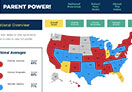
For more information on school choice, check out Facts on School Choice and the Parent Power Index.

Charting New Frontiers for Charter Schools

by Jeanne Allen
Huffington Post
July 3, 2013

As leaders of the charter school movement gather in Washington, D.C. this week for their annual meeting, they do so in a decidedly mixed frame of mind. Charles Dickens’ famous words in A Tale of Two Cities — “it was the best of times, it was the worst of times” — could never be more appropriate for this sector of American K-12 education.

On the one hand, charter schools are booming, with a wait list of parents nearly 1 million strong. They have proven their value, with the choice they offer students and their families contributing to higher teacher quality overall and greater transparency in the school districts in which they operate, leading to better educational experiences for U.S. students, with much still to be done.

On the other hand, charter schools are to some degree a victim of their own success, and most certainly they have become captive to high expectations. Just a week ago, a group called CREDO at Stanford University released its quadrennial study on charter school performance. It was research riddled with questionable assumptions — far from charter school performance gospel — but it garnered coverage, in The New York Times, Associated Press and elsewhere.

Indeed, it seems that everyone is eager to learn as much they can about charter school performance. The good thing is that charters have moved beyond curiosities; they are full-fledged players in our national quest to turn around what so many agree had become abysmal school performance and unreliable education outcomes.

At The Center for Education Reform, we are pleased and proud to see the success of charter schools. Our own founding in Washington, D.C. 20 years ago came just a few months after charter schools were born, in Minneapolis. Back then, Minneapolis and a few other urban school districts formed the charter school frontier, occasional outposts of good intentions in a sea of mediocrity.

Some charter schools, to be frank, were born out of desperation. Parents in certain cities were so frustrated with school performance that working in concert with us at the Center they led a revolution against the status quo. These grassroots efforts eventually pushed political leaders to aggressively launch charter schools, or at least to stand aside to allow them to be created.

We attribute part of our success to “Parent Power,” which means giving parents Access to quality educational Options and providing them with good Information to make smart decisions about their children’s education. Our Parent Power Index measures the ability in each state of a parent to exercise choices — no matter what their income or child’s level of academic achievement – engage with their local school and board, and have a voice in the systems that surround their child. The Parent Power Index is our vision for the next generation of “Parent Power.”

Of course, now that charter schools are turning 21-years-old, it’s only logical that they are maturing into young adulthood. In areas where charter schools are well-known and high-performing, an annual waiting list has become common, each year longer than the last. According to the National Alliance for Public Charter Schools, more than two-thirds of charters — 67 percent — across the nation reported having children on their waitlist, with an average waiting list of 214 students. A record 29 charter schools reported waitlists of 2,000 students or more for the 2012-13 school year.

As the Alliance reasoned last week, families who are faced with traditional public schools unable to meet their needs seek better options for their children by applying to public charter schools. And in urban communities that have few, if any, high-quality public school options, the demand for charters can be significantly higher than there are seats available. As a result, families often apply to multiple charter schools hoping to increase their odds.

But just as some 21-year-olds are late bloomers in their development, charter schools have been slow to blossom in certain communities in the U.S. The reasons for this are as varied as the communities they have yet to reach or where they have a very limited foothold. These are the new frontiers for charter schools and, in some ways they are the most exciting places for the charter school movement. That’s because they are beginning to write a new charter school narrative.

Until recently, the charter school story had been fairly straightforward. In poor-performing school districts with charter school options, parents were voting with their feet and sending — or at least attempting to send — their children to charter schools in their communities. This was a rational parent reaction to the decision before them. Since traditional public schools were not working to serve the needs of students, those responsible for the development of those students were logically looking to pursue options that will work.

Some communities, however, have been resistant to charter schools, period. This has been due, in many cases, to the power of entrenched political interests, who see charter schools as a threat to the status quo. When the status quo is viewed as an unqualified success, as many communities promote their school systems to be, then it is naturally difficult to change the course of school district policies to permit charter schools to be part of the education equation.

When a school district achieves a strong reputation, spurring parents who care deeply about their child’s education to move there, then the die becomes cast, seemingly forever. The imagery helps you see where the phrase “riding on a reputation” comes from.

Today’s generation of parents though, is far too savvy and discerning to allow any school district — or any individual school — to ride on a reputation. These parents were for the most part moving through the K-12 system as students themselves at the same time that the “Nation at Risk” report was issued, a seminal moment in the education reform movement. These parents experienced firsthand as children, therefore, what seemed to be the inevitable decline of American education.

Unlike their own parents, however, who seemed resigned to the decline of schools around them, or viewed school choice only through the prism of moving to a new school district, the current generation of parents is impatient and demanding for better school performance right in their backyard. These parents are pushing for better schools no matter where they live, in urban school districts traditionally perceived as weak or in suburban school districts traditionally perceived as strong. Even parents in rural areas are catalyzing change, and embracing online learning (sometimes through virtual charter schools) as an acceptable alternative.

This is the new charter school frontier: a geographically and demographically diverse group of parents, united in their commitment to better schools everywhere. There is no holding these parents down; they are on the march and will not be turning back. They are both inspired and inspiring, and that’s why we at The Center for Education Reform are working to ensure that the path to success is as straight and true as this new generation of “Parent Power” deserves.

Daily Headlines for July 3, 2013

NEWSWIRE IS BACK! Click here for the latest weekly report on education news and commentary you won’t find anywhere else, spiced with a dash of irreverence, from the nation’s leading voice in school reform.

NATIONAL COVERAGE

Arne Duncan praises, slaps charter schools
Washington Post Blog, July 3, 2013
Here is the text of Education Secretary Arne Duncan’s speech delivered at the 2013 convention of the National Alliance for Public Charter Schools, being held this week in Washington D.C.

Charter study uses wrong metric for high performing
Opinion
Twin City Daily Planet, July 3, 2013
In the last few days, the Center for Research on Education Outcome at Stanford University (CREDO), published a report detailing education outcomes for students in charter schools across 27 states (including MN), covering 95% of all students in charter education.

Growing and Replicating High-Quality Charter Schools
Commentary
Roll Call, July 1, 2013
As Congress looks to reauthorize the Elementary and Secondary Education Act in the coming weeks, lawmakers should recognize the growing bipartisan consensus that public charter schools play an integral role in the American education system.

A better way to train teachers
Op-Ed
Los Angeles Times, July 3, 2013
If America’s medical schools were failing to offer their students the academic content and practical experience necessary to provide high-quality healthcare, we would be outraged.

STATE COVERAGE

ALABAMA

‘What do you consider a failing school?’: Principal at one middle school says failing label doesn’t reflect school’s challenges, triumphs
The Birmingham News Blog, July 3, 2013
Having students who have been crime victims isn’t Nelson’s only challenge. A Title 1 school, last year 817 of the school’s 922 students had family incomes low enough to qualify for a free or reduced-priced lunch.

Judge denies injunction in Blytheville School Choice lawsuit
Blytheville Courier News, July 2, 2013
A federal judge denied a request from nearly a dozen Blytheville residents to allow their children to transfer out of the Blytheville School District for the 2013-14 school year.

DISTRICT OF COLUMBIA

Nathan Saunders, D.C. teachers union president, defeated in runoff election
Washington Post, July 2, 2013
Washington Teachers’ Union members voted Monday evening to unseat their incumbent president in favor of a candidate who promised to more forcefully challenge school system management.

Gray officials object to major elements of Catania’s education plan
Washington Post, July 2, 2013
Gray administration officials said Tuesday that while they broadly agree with some provisions in D.C. Council member David Catania’s education proposals that aim to improve student achievement across the city, they object to major elements of the legislation.

FLORIDA

Tiger Academy shows improvement in third-grade FCAT scores
Florida Times Union, July 2, 2013
In this year’s results, the YMCA charter school on the city’s Northwest side dramatically increased the percentage of third-grade students who scored proficient in math and reading. The school also substantially decreased the percentage of third-graders below proficiency.

Ending busing to choice schools affects many
Letter
Florida Today, July 3, 2013
I was wondering if the people who made the decision to cut bus service to Brevard schools of choice have given it any thought lately.

No promises from education commissioner on school grades
Miami Herald, July 2, 2013
Florida education commissioner Tony Bennett made few promises Monday after listening to a task force of superintendents push for adjustments that would improve this year’s school grades at the 11th hour.

HAWAII

Hawaii Charter Schools Now Tied to Performance Contracts
Civil Beat Blog, July 2, 2013
Hawaii’s 32 charter schools are now subject to school performance contracts that mark the first such agreements in the state’s history.

LOUISIANA

Department of Education reports continuing enrollment in Course Choice pilot
Times-Picayune, July 2, 2013
Enrollment in Louisiana’s Course Choice mini-voucher program continues to grow, with 1,500 students signed up thus far according to the state Department of Education.

Louisiana high school end-of-course test results rise slightly
Times-Picayune, July 2, 2013
Scores on Louisiana’s end-of-course exams, which determine whether students can graduate from high school, improved slightly in 2012-13 to what could be the high-water mark as the state prepares to roll out new, tougher tests.

MARYLAND

Don’t delay new Md. teacher evaluations
Opinion
Baltimore Sun, July 2, 2013
A recent article in The Baltimore Sun reported that the Maryland State Department of Education is considering another delay in the implementation of new teacher evaluations — or at least the stakes associated with them — until the Common Core has been fully implemented and teachers have adjusted to the new curriculum and assessment. I firmly believe that this is the wrong approach.

MASSACHUSETTS

Fall River schools now accepting applications for Innovation Academy
Herald News, July 2, 2013
Then, the school would continue to enroll 100 new seventh-grade students each year. At full enrollment, the academy would have students from seventh grade up to “13th grade.”

MINNESOTA

Charter school sues Minneapolis district over lease issue
Star Tribune, June 3, 2013
The North Side science charter asked a judge to bar the district from forcing it out of the Cityview building and poaching its teachers.

MISSOURI

St. Charles Co. legislator wants special session to undo or limit school transfer law
St. Louis Post-Dispatch, July 2, 2013
A state legislator from St. Charles County on Tuesday urged Gov. Jay Nixon to call a special session aimed at changing a state law allowing transfers of students from unaccredited school districts to other districts.

Broke KC charter school leaves teachers without final paycheck
The Kansas City Star, July 3, 2013
Teachers at the recently shuttered Derrick Thomas Academy charter school haven’t been paid, and no one seems to know when — or if — they ever will be.

NEW JERSEY

In Case of Big Yale v. Tiny Yale, Victor Kept the Name
New York Times, July 3, 2013
One educational institution is an august university spread across 835 acres, where thousands of students study everything from ancient philosophies to emerging technologies.

NEW YORK

Education advocates give New York state some F’s
Democrat & Chronicle, July 3, 2013
Education advocates handed out failing “grades” to the state Tuesday for some of its attempts at improving student outcomes.

Mayoral Candidates Respond to Klein’s Education Criticism
Wall Street Journal Blog, July 2, 2013
Former city schools chancellor Joel Klein’s speech Tuesday before charter supporters is intended to defend the Bloomberg administration’s practices and smack around dissenting candidates a bit.

NORTH CAROLINA

Green light for bill to allow charter schools to expand without State Board of Ed approval
Progressive Pulse, July 3, 2013
The House bill that was modified at the last minute to allow charter schools to expand without having to gain State Board of Education approval passed the Senate floor yesterday, 34-11.

OHIO

Cleveland Transformation Alliance promoting good schools to parents
Cleveland Plain Dealer, July 2, 2013
Mayor Frank Jackson and other city leaders want Cleveland parents to know they have many choices in deciding where they send their children to school.

OKLAHOMA

Common Core a conservative win for Oklahoma
Opinion
The Oklahoman, July 3, 2013
Outside groups have been spreading disinformation about the Common Core State Standards, standards that offer a powerful description of what students should know and be able to do at every grade level to stay on course toward college or the workforce.

RHODE ISLAND

R.I. education chief Gist asks parents to challenge schools
Providence Journal, July 3, 2013
State Education Commissioner Deborah A. Gist urged parents to look beyond their schools’ rankings and ask principals to spell out what they are doing to improve student performance.

TENNESSEE

Education reform should start by assessing students’ learning skills
Opinion
The Tennessean, July 3, 2013
Tennessee education reform is unlikely to reach its goals of a highly educated, career-ready workforce despite statements from educational and governmental leaders.

TEXAS

Charter school district adds new campuses in Brownsville, Harlingen
Brownsville Herald, July 3, 2013
After two successful years in the Rio Grande Valley, San Antonio-based Jubilee Academic Center is expanding its presence in Brownsville and Harlingen.

WISCONSIN

WEAC remains watchful for voucher accountability plan
Wisconsin Radio Network, July 2, 2013
As the voucher school system is expanding statewide, Republican lawmakers are drafting an accountability bill for those private schools. Meanwhile, the state’s largest teachers union remains watchful for this proposal.

ONLINE LEARNING

Maine tightens virtual charter school laws
Portland Press Herald, July 3, 2013
Among the specific requirements now required is weekly face-to-face time between students and instructors.

Proceed with caution on virtual charter schools
Editorial
Star-Ledger, July 3, 2013
There’s money to be made in online schools, and there may be a legitimate need for them: For a student who is bed-ridden, for instance. A dropout, teenage mother or victim of bullying who’d rather study at home.

Three more online schools coming to Ohio
Columbus Dispatch, July 2, 2013
The Ohio Department of Education has approved three new statewood e-schools that will be opening this fall.

Innovation key for Las Cruces schools
Albuquerque Journal, July 3, 2013
The changing educational model is a reflection of changing society, Rounds said, mentioning the growing number of viewers who record TV shows or watch them online rather than at the allotted broadcast hour. Technology is changing expectations, he said.

Newswire: July 2, 2013

Vol. 15, No. 26
Special Charter Conference Edition

While the NEA is having its annual conference in Atlanta, charter school leaders, teachers, and advocates (and even a few celebrities!) are coming together discussing how to keep the ball rolling on these innovative schools that have already helped move America forward.

From the social media airwaves, we can tell that the same old drones about needing more money are a main focal point of the union’s conference. There’s talk of storming castles, reclaiming professions and public education. Someone forgot to tell the NEA that charter schools are public schools. And, as Pitbull noted in the opening session, “Charter schools are here to stay.” (Yes, he may or may not have said “Dale” after that quote).

Here are a few quick highlights from the 2013 National Charter Schools Conference:

“Charter schools are energizing education in America,” says Pitbull. They respect teachers and give them freedom. To all the teachers in the room – “thank you, thank you, thank you.”

“People need to understand how important it is for all of our kids to get a world class education,” says Michael Lomax of UNCF. “It’s not just low-income kids that aren’t doing well.” He goes on to say that charter schools just need to keep “doing what they are doing” — weed out the bad ones; demand will build.

Howard Fuller energizing the crowd as always, urging the charter school movement not to become the bureaucracy it has been trying to get away from.

Joel Klein emphasizes poverty is not destiny, and education is the solution. “We will not fix poverty until we fix education.” His advice to politicians is courage, which means putting kids first and special interests last.

CER’s EdReform University – the nation’s first and only initiative to inform, educate, and activate those who don’t know much about the history of the edreform movement – was a hit at the charter conference thanks to fantastic edreform pioneer panelists such as: former Ohio state Representative Sally Perz, standards and charter policy expert Theodore Rebarber, former Florida state Representative Ralph Arza, California charter leader Mary Bixby, and CER’s own Kara Kerwin and Founder & President Jeanne Allen.

EdReform U contains hundreds of seminal documents from the founding of the charter school movement, so those unable to attend the EdReform U panel at the conference can enroll online as well as check out some of the highlights below!

Ralph Arza tells listeners to imagine scenes from “Saving Private Ryan” when you think of what pioneers of edreform have done, and calls upon reformers to arm themselves with data.

“I know charter school teachers and officials put kids first,” says Mary Bixby, who wants to see charter school policy that allows charter schools to be innovative, autonomous, and market-driven.

Sally Perz agrees when she was told “Ain’t nothing gonna happen in public education until we get some competition,” which is why she traveled far and wide to see how charter schools were working in other states so Ohio could model its law based on what works. She was told to “bring choice to education in Ohio, but don’t make any trouble.”

“Most policy people aren’t visiting schools in other states these days!” says CER President and Founder Jeanne Allen who recalls how she used to run into edreform pioneers in states that weren’t their home state all the time. She speculates that compromise, lack of diligence, and impatience are all reasons why this isn’t happening anymore. She also strongly encourages people to look at data on charter school closures which are not a new issue for the movement.

“Accountability needs to be primarily parent driven (outrageous situations aside),” Theodore Rebarber says, also noting how charter schools have opened doors for parent power. “We’ve still got a long way to go, but the value of looking back at history is that it helps us think about how we can move forward.” And to that we say Amen!

This study of charter school scores is flawed

by Jeanne Allen
Letter to the Editor
Pittsburgh Post-Gazette
July 2, 2013

It’s disheartening to read the June 26 headline “Study: Pa. in Bottom Three for Charter School Scores,” especially when the study is so flawed. The study, from a group called Center for Research on Education Outcomes, or CREDO, is anything but charter school performance gospel.

The reality is we cannot make conclusions about Pennsylvania charter schools or charters anywhere else without randomized control trials — the gold standard for research — that use actual student-by-student data over time.

The CREDO report, which produced some unfavorable figures for Pennsylvania charters, fails to use such methods. The report instead employs statistical gymnastics to make spurious comparisons of charter student achievement across state lines while altering data to ensure all students “start” at the same level.

Highly criticized by leading researchers and economists for failing the test of good research, CREDO results don’t accurately convey results of charter and traditional public schools. State-by-state and community-by-community analyses are the only real measures that offer validity for parents and policymakers.

We believe all schools, including charter schools, must be held accountable. The path to accountability must start with strong charter school laws, multiple and independent charter school authorizers, in addition to the highest academic and operational standards.

Daily Headlines for July 2, 2013

NEWSWIRE IS BACK! Click here for the latest weekly report on education news and commentary you won’t find anywhere else, spiced with a dash of irreverence, from the nation’s leading voice in school reform.

NATIONAL COVERAGE

Pitbull, rapper and charter-school advocate, gets the party started at education conference
Washington Post Blog, July 1, 2013
But he has signed on as a major backer of a new charter school in his old inner-city neighborhood — and if his unlikely keynote at the Washington Convention Center Monday was light on policy, it had a get-this-party-started appeal for his audience of a thousand-plus educators and wonks from across the country.

Parents revolt against failing schools
USA Today, July 1, 2013
In reality, trigger laws, which allow parents to intervene in a struggling school, are a lot more complicated and controversial.

Nation’s charter school waiting lists growing, report says
Baltimore Sun Blog, July 1, 2013
The number of families waiting acceptance into charter schools is nearing 1 million, according to a survey of charter schools across the nation, which showed a near 50 percent increase in the number of names on waitlists this year compared to the 2011-2011 school year.

Charter Schools: What Really Makes Them So Appealing?
Take Part, July 1, 2013
Parents across the U.S. are clamoring to get their kids into charter schools, but is this the way American education should be going?

Arne Duncan urged to intervene in Philadelphia school funding crisis
Washington Post Blog, July 2, 2013
Here is a letter that American Federation of Teachers President Randi Weingarten and historian/education activist Diane Ravitch just sent to Education Secretary Arne Duncan asking him to intervene in the crisis.

STATE COVERAGE

ALABAMA

New education standards factor in student race, economic status
Tuscaloosa News, June 30, 2013
Beginning this fall, Alabama public schools will be under a new state-created academic accountability system that sets different goals for students in math and reading based on their race, economic status, ability to speak English and disabilities.

CONNECTICUT

Supporters turn out for Vallas
Connecticut Post, July 2, 2013
Having lived in the Park City for a few years already, Florisca Carter did not enroll her children for public education when the time came because she wanted “better for them.”

FLORIDA

School turnaround under way for Daughtrey and Rogers Garden
Bradenton Herald, July 2, 2013
Turnaround plans for Blanche H. Daughtrey and G.D. Rogers Garden elementary schools have been approved by the state, and the schools are making improvements to avoid possible closure in the future.

Panel considers options for school grading changes
Tallahassee Democrat, July 2, 2013
School officials around the state have warned that raising the passing threshold for writing, coupled with a raft of other recent changes to the grading formula, could fuel a widespread drop in school grades — even in places where test scores improved.

The War of Common Core
Sunshine State News, July 2, 2013
While the state government keeps pushing the Common Core State Standards for Florida’s students, it’s causing both sides to weigh in on the positives and negatives of the education initiative, which is set to be fully implemented in all grades in the 2014-2015 academic year.

Charter reforms prompted by NorthStar High School failure signed into law
Orlando Sentinel Blog, July 1, 2013
Charter school reforms proposed in the wake of a more than $500,000 payout to the principal of the failed NorthStar High School are now law.

ILLINOIS

Chicago Public Schools Sound More Like Private Schools Commentary
Chicago Magazine, July 1, 2013
But something about the windup to the 2013-14 school year feels different: hints of a two-tier system, that will mean that public school students whose parents who can’t pay will get less.

INDIANA

Don’t put much credence in CREDO study results
Letter by Jeanne Allen
NW Times, July 2, 2013
While it’s gratifying to read the June 25 headline, “Nationwide charter school study finds overall performance improvement,” it’s also disconcerting. The study, from a group called CREDO, is anything but charter school performance gospel.

Pence names choice proponent to be education aide
Journal Gazette, July 2, 2013
Indiana Gov. Mike Pence says an education veteran “dedicated to bringing choice and opportunity to Indiana families” will be responsible for implementing his policies for K-12 and higher education.

KC STEMM Academy closes
Palladium-Item, July 1, 2013
The Kenneth A. Christmon STEMM Academy of Richmond closed its doors Monday after a last-ditch attempt to keep the charter school open appears to have failed.

Operators of takeover schools worry about funding
Chesterton Tribune, July 1, 2013
Private companies that were hired to run five Indiana schools taken over by the state for poor performance say they might not be able to continue because of funding concerns.

LOUISIANA

Teachers union sues state for $200 million; second $65 million suit possible
Times-Picayune, July 1, 2013
The Louisiana Association of Educators and several local teachers associations have filed a class-action suit charging that the state owes local school boards $199 million as a result of the Louisiana Supreme Court decision striking down part of the state’s voucher law.

MAINE

Maine bill would free school aid without approval by voters
Portland Press Herald, July 2, 2013
Democratic lawmakers are trying to rally support for a bill that would let Maine school districts spend $29 million that was included unexpectedly in the state budget without opening the polls to get voters’ approval.

MICHIGAN

School district crises outpace remedies under Mich. emergency manager law
Detroit News, July 2, 2013
The state’s controversial emergency manager law is proving too slow to deal with some school financial crises, a situation that has forced the Legislature to take increasingly drastic measures that it may expand in the future.

MISSISSIPPI

Naming charter school board leader, members a thorny issue
Opinion
Clarion Ledger, July 2, 2013
And now the wait begins. With the July 1 effective date for Mississippi’s expanded charter school law, the next step is to nominate seven members of the Charter School Authorizing Board.

NEW YORK

Candidates Called to Task on Schools
Wall Street Journal, July 2, 2013
Former New York City schools chancellor Joel Klein plans to insert himself into the mayoral race Tuesday in a speech that fiercely defends the Bloomberg administration’s school policies while accusing most candidates of a “complete lack of courage” on education.

NORTH CAROLINA

Class action suit filed against New Hanover school board
Star News, July 1, 2013
A new lawsuit alleges that the New Hanover County Board of Education and school boards across the state have violated charter school students’ constitutional rights.

OHIO

On the road to reform
Editorial
Columbus Dispatch, July 2, 2013
With the passage last week of House Bill 167, Ohio lawmakers have given voters in the Columbus City Schools the opportunity to bring historic reform to a district in dire need of it.

OKLAHOMA

Oklahoma to drop testing consortium, develop own tests, Barresi says
Tulsa World, July 2, 2013
State Superintendent Janet Barresi announced Monday that she is withdrawing Oklahoma from testing through a consortium of 20 or so other states to coincide with the new Common Core curriculum standards.

PENNSYLVANIA

This study of charter school scores is flawed
Letter by Jeanne Allen
Pittsburgh Post-Gazette, July 2, 2013
It’s disheartening to read the June 26 headline “Study: Pa. in Bottom Three for Charter School Scores,” especially when the study is so flawed. The study, from a group called Center for Research on Education Outcomes, or CREDO, is anything but charter school performance gospel.

CUSD looking to enroll new students
Delaware County Times, July 2, 2013
The Chester Upland School District is slated to close Main Street Elementary School and the Chester Upland School of the Arts unless the district increases its student enrollment by about 300 students.

Propel’s success
Letter
Pittsburgh Post-Gazette, July 2, 2013
The Post-Gazette’s recent coverage of a report on charter school performance (“Study: Pa. in Bottom Three for Charter School Scores,” June 26) left out a significant local angle.

TENNESSEE

School board struggles to find footing in post-Great Hearts reality
Nashville City Paper, June 30, 2013
Baptized in political controversy that spanned the better part of a year, members of the Metro Nashville school board are trying to reset the conversation.

UTAH

George Washington Academy named top school
St. George Daily Spectrum, July 1, 2013
Based on its students’ high academic achievement, quality education and strong mission statement, George Washington Academy in St. George has been named the school of the year by the Utah Association of Public Charter Schools.

VIRGINIA

Suffolk math teacher bonuses could add up
The Virginian-Pilot, July 2, 2013
Math teachers in the city’s three public high schools could earn as much as $5,000 in extra pay under a proposal the division plans to submit to the state.

McDonnell sketches next steps on school takeover law
Daily Progress, July 1, 2013
As legislation creating a statewide school division to take over failing schools hit the books in Virginia Monday, Gov. Bob McDonnell said the state would begin recruiting a director.

WISCONSIN

Finally, merit pay gets going
Editorial
Beloit Daily News, July 1, 2013
For years we have supported the notion of merit pay for educators as a way to improve the public school system. The concept generally ran into opposition across the country from teachers unions, which instead negotiated one-size-fits-all pay plans based on longevity and training. Those were leveling plans, in which the best teachers were paid the same as the worst teachers.

Walker says he’ll demand results from private school vouchers
Green Bay Press-Gazette, July 1, 2013
Gov. Scott Walker said Monday he will use test scores, graduation rates and other measuring sticks to gauge the success of an expanded private school voucher program in Green Bay and elsewhere.

ONLINE LEARNING

Schools focus on extended learning
Portsmouth Herald, July 2, 2013
The Exeter High School Summer Institute is an example of a growing trend in education; an Extended Learning Opportunity, or ELO.

Business interests influencing education laws in Virginia, report says
Washington Post, July 1, 2013
Education policies approved in Virginia over the past four years to establish virtual schools and give businesses tax credits for needy students to attend private schools are among many laws that have been promoted by a conservative advocacy group that represents business interests, according to a study released last week.

Planning for new education technology will be a challenge
Editorial
Jackson Sun, July 2, 2013
Jackson-Madison County school Superintendent Dr. Verna Ruffin moves into her new role as the head of our school system this week. We join with others in the community in welcoming her and offering support as she guides our school system and our students into the future. One of the biggest challenges she faces is to plan for our school system’s technological future.

Plans finalized for iCademy in Zeeland
Holland Sentinel, July 2, 2013
More plans have been finalized for iCademy Global, a nonprofit, cyber charter school set to open this fall.

Cambridge Lakes group withdraws virtual charter school plan
Northwest Herald, July 1, 2013
Northern Kane Educational Corp. has scrapped its plans to create a virtual charter school and avoided a debate with District 300 over the merits of a state prohibition on virtual charters.

3D virtual charter school trying to come to South Carolina
WPDE, July 1, 2013
A group called Noble Virtual School wants to bring a new, online, three dimensional charter school to South Carolina.

School technology program scheduled to get under way
Idaho State Journal, July 2, 2013
Officials representing 11 Gem State schools will begin the process of placing more technology into the classroom as part of the Idaho Technology Pilot Program of which the Idaho Legislature established earlier this year.

Charter students improve less at math

by Hailey Heinz
Albuquerque Journal
July 1, 2013

The math scores of New Mexico charter school students improved significantly less than the scores of their traditional school counterparts, according to a new national study that tracked average year-over-year gains from 2007 to 2011.

The study found no difference in the reading gains of charter vs. traditional public school students.

The findings were released Tuesday by Stanford University’s Center for Research on Education Outcomes, commonly called CREDO.

The study aims to control for demographic differences between charter and traditional school students. Specifically, researchers assigned each charter student a “virtual twin” student in a nearby traditional school, who is meant to be similar in every way except the choice to attend a charter. The “twin” is similar in ways like initial test scores, ethnicity and whether the student is low-income.

The progress of each charter student is then compared to the progress of his or her “twin.”

Researchers found New Mexico students’ reading progress was unaffected by charter schools. But in math, they found traditional school students gained the equivalent of 29 more days of learning than their charter school peers. According to the report, the days of learning are estimates based on statistical findings.

The report also examined the initial test scores of students who transfer to charter schools. Nationwide, the report found charter students had starting test scores below their statewide averages. But in New Mexico, the average charter school student starts with above-average test scores.

Nationally, the study found good news for charters, especially when compared to CREDO’s last study, released in 2009. That study found charter school students nationally underperformed traditional public school students. The latest study found charters nationally had improved to match traditional schools in math scores, and surpassed them in reading.

Bruce Hegwer, executive director of the New Mexico Coalition for Charter Schools, said New Mexico charters have also seen growth since the 2009 report. Specifically, the 2009 report showed New Mexico charters underperforming in both math and reading.

Hegwer, who had just received the 104-page report Tuesday, said it will probably give charters some good feedback.

“My initial thoughts are that I think there’s some valuable information in the report, and I think it kind of gives us some things to take a look at,” Hegwer said.

Hegwer also pointed out that some groups have disputed the report’s methodology and data collection practices. For example, the Washington D.C.-based Center for Education Reform, or CER, released a statement saying the report has “multiple shortcomings.”

“No matter how well-intentioned, the CREDO research is not charter school performance gospel,” said CER President Jeanne Allen. “Similar to its failed 2009 effort, this CREDO study is based on stacking mounds of state education department data into an analytical process that is decidedly lacking in rigor.”

Daily Headlines for July 1, 2013

NEWSWIRE IS BACK! Click here for the latest weekly report on education news and commentary you won’t find anywhere else, spiced with a dash of irreverence, from the nation’s leading voice in school reform.

NATIONAL COVERAGE

At Retooled Summer Schools, Creativity, Not Just Catch-Up
New York Times, July 1, 2013
According to the National Summer Learning Association, a nonprofit group, 25 of the country’s largest school districts — including Charlotte, N.C.; Cincinnati; Oakland, Calif.; Pittsburgh; and Providence, R.I. — have developed summer school programs that move beyond the traditional remedial model.

City to appeal Vallas bombshell
CT Post, June 30, 2013
The city attorney’s office confirmed Saturday that there will be a swift appeal to Friday’s decision by state Superior Court Judge Barbara Bellis to remove School Superintendent Paul Vallas because he is not qualified for the job.

Wendy Lecker: The hidden costs of charter schools
Opinion
Stamford Advocate, June 28, 3013
The verdict is in, and it is the same as four years ago. In updating its 2009 national study on charter schools, Stanford’s Center for Research on Education Outcomes (CREDO) reaches the same conclusion it did in its previous study: The vast majority of charter schools in the United States are no better than public schools.

Parents Revolt Against Failing Schools
Stateline, July 1, 2013
Versions of parent trigger laws have been proposed in at least 25 states and adopted by seven, according to the National Conference of State Legislatures. In real life, parent triggers have been attempted only a handful of times.

Stop the rush to the Common Core
Opinion
New York Daily News, July 1, 2013
The Common Core — effectively national math and English curriculum standards coming soon to a school near you — is supposed to be a new, higher bar that will take the United States from the academic doldrums to international dominance.

Future of Catholic Schools
Letter
New York Times, June 30, 2013
“Concern for Minorities as Catholic Schools Close” (news article, June 21) misses the mark in one important regard. Many of us who work in Catholic schools have more hope than despair, and we have reason to believe that the future of Catholic schools in urban communities looks less like hospice or retrenchment and more like transformation and urban renewal.

STATE COVERAGE

ARIZONA

Districts convert schools to charters for more money
Arizona Republic, June 30, 2013
Amid run-of-the-mill agenda items recognizing volunteers and approving playground renovations, the Paradise Valley Unified School District governing board last month quietly made a significant change: It converted one-third of its elementary schools to charter schools.

CALIFORNIA

At Crenshaw High, those left behind are skeptical of changes
Los Angeles Times, July 1, 2013
An overhaul meant to address poor achievement required teachers to reapply for their jobs. Opponents say officials wanted to create a more compliant faculty.

Charter schools, district failing at communications
Daily Democrat, June 30, 2013
An improved need for communication between Yolo County’s charter schools and those school boards that authorize them is needed, according to a study by the grand jury.

DISTRICT OF COLUMBIA

D.C. to overhaul ninth grade, separating out students who failed
Washington Post, June 30, 2013
D.C. Schools Chancellor Kaya Henderson plans to overhaul the city’s approach to ninth-grade education, separating out students who have already failed the first year of high school from impressionable incoming freshmen.

D.C. charter school leader wins national recognition
Washington Post, July 1, 2013
Elsie Whitlow Stokes Community Freedom Public Charter School opened in 1998 with 35 students in a D.C. church basement. Fifteen years later, it has become one of the city’s most sought-after and diverse charter schools, offering French- and Spanish-language immersion programs to 350 students in preschool through sixth grade.

Prince George’s approves charter school contract
Washington Post, June 28, 2013
The Prince George’s County Board of Education approved a contract Thursday night with a new charter school in Hyattsville after several members raised concerns about how students were selected for the program.

FLORIDA

New standards don’t make the grade
Editorial
Miami Herald, June 30, 2013
Too many students are being set up to think they are failures by the very people who say they are pushing students to excel. Their teachers will see their hard work in front of the class undercut. And parents will think, wrongly, that their children are attending substandard schools.

Lakeland’s Achievement Academy Expansion Could Double Enrollment
The Ledger, June 30, 2013
The Lakeland-based charter school serves youngsters ages 6 and younger who have a variety of learning and developmental disabilities, and it came close to expansion with the purchase in 2007 of 16 acres adjoining County Road 540A in the vicinity of George Jenkins High School.

GEORGIA

Cheating Case is Set to Proceed in Atlanta
Wall Street Journal, July 1, 2013
The conspiracy case stemming from one of the largest school-cheating scandals in U.S. history can go forward, a Georgia judge has ruled, dismissing defense efforts to get charges against 35 former educators thrown out or reduced.

INDIANA

Ball State defends spending on charter school oversight
NW Times, June 29, 2013
A state legislator from Gary questions whether Ball State University has fully used the money it receives to support charter schools for the funds’ intended purpose.

School voucher supporters praise program expansion that starts Monday
Evansville Courier & Press, June 29, 2013
Indiana’s school voucher program has taken a turn in the right direction, according to Lindsey Brown, executive director of School Choice Indiana.

LOUISIANA

Problems could have been caught
Editorial
Monroe News Star, July 1, 2013
When the state established the school voucher program that pays for students in failing schools to transfer to schools their parents choose, the state agreed to pay the same tuition at the new schools that nonvoucher students pay.

MAINE

Portland Adult Ed merits permanent home
Editorial
Portland Press Herald, July 1, 2013
This important link in our public education system should have the central facility it needs.

MASSACHUSETTS

20 years later — Charter public schools closing the achievement gap and effecting reform at district level
Opinion
South Coast Today, July 1, 2013
When Massachusetts’ landmark Education Reform Act was signed into law 20 years ago, attention was mainly focused on the massive commitment of state resources and the tough new accountability measures. The creation of charter public schools might have seemed almost an afterthought.

High school student decline a strain for Boston
Boston Globe, July 1, 2013
Boston public high school enrollment is on the slide, leaving nearly 3,000 seats empty and raising questions about possible school closures.

MISSISSIPPI

Mississippi leaders must name charter board members
Sun Herald, June 29, 2013
With the Monday effective date for Mississippi’s expanded charter school law, the next step is to nominate seven members of the Charter School Authorizing Board.

MISSOURI

In St. Louis, teachers union plays role in getting rid of bad teachers
St. Louis Post-Dispatch, June 30, 2013
Critics of tenure say it creates an untouchable class of teachers who can become an impediment to improving public schools.

NEW JERSEY

Amended Urban Hope Act Likely to Clear Way for Renaissance Schools in Camden
New Jersey Spotlight, July 1, 2013
Trimmed down to win needed votes, the bill to amend the controversial Urban Hope Act and open the way for a new breed of charter schools ended up passing with little drama in the state Legislature last week.

NEW MEXICO

PS misses chance to lead on teacher evals
Editorial
Albuquerque Journal, July 1, 2013
Albuquerque Public Schools is not only the largest district in the state; it is one of the largest districts in the nation. As such, it should be a leader in education reform, setting a standard for others to follow.

NEW YORK

New Charter High School Will Be Closed to Transfer Students
City Limits, July 1, 2013
The DOE is planting seeds for charters to expand in city schools even after Mayor Bloomberg leaves office. But some of the new resources will only be open to those who won charter lotteries in the early grades.

Waiting Lists for NYC Charter Schools Largest in Nation
Epoch Times, June 30, 2013
New York City has the longest wait list for charter schools in the nation, according to a new survey. In their annual assessment of wait lists for charter schools in the United States, the National Alliance for Public Charter Schools (NAPCS) found that there are far more kids trying to get access to a specialized school in New York City than any other city.

Only fraction of city schools producing bulk of students ready for college: report
New York Daily News, June 30, 2013
A report by the United Federation of Teachers shows that only 10% of city schools produce nearly half of the graduates considered ready for college.

NORTH CAROLINA

One charter board
Opinion
News & Observer, July 1, 2013
Sure, it’s hard to believe. In this no-holds-barred session of the General Assembly, with Republicans laying waste to Democratic programs and barreling on with curbs to regulation and cuts in education, compromise has seemed to be a word wiped from the GOP dictionary.

OHIO

Urban students flourish in Closing the Achievement Gap program
Akron Beacon Journal, June 28, 2013
Just inside the eastern edge of the Cuyahoga Valley National Park, a group of Akron students study the biotic integrity of Haskell Run, which flows west into the Cuyahoga River.

Ohio budget rewards low-performing charter schools
Akron Beacon Journal, June 29, 2013
The trend in Ohio has been to change school funding and teacher work rules to reward improved academic performance. That’s not the case for privately run charter schools in the $62 billion, two-year state budget passed last week.

Criticism abounds in Ohio charter school funding
Cincinnati Enquirer, June 29, 2013
Ohio’s charter schools are, in many ways, big winners in Ohio’s proposed biennial budget: The state’s charter schools will receive more money per-student than most traditional schools – in many cases, thousands of dollars more.

PENNSYLVANIA

Rescue plan for Phila. schools: Many ifs, but…
Philadelphia Inquirer, July 1, 2013
The $140 million package Gov. Corbett presented Sunday to rescue Philadelphia’s cash-strapped public schools has tentative written all over it.

KIPP school suppporters wonder about charter proposal
Philadelphia Daily News, June 30, 2013
With the school year over and Alexander Wilson Elementary officially closed, the question now is how long the building will sit empty.

RHODE ISLAND

4 new R.I. charter schools proposed for fall 2014
Providence Journal, July 1, 2013
Four new charter schools are in the pipeline, including two schools proposed by Providence school leaders, a Chinese immersion program, and a science and engineering-themed school in Newport.

TENNESSEE

Creating a world-class school system still is possible if the will is there
Editorial
Commercial Appeal, June 30, 2013
The face of public education in Memphis and Shelby County officially changes Monday when Memphis City Schools goes out of business and the new Shelby County unified school district takes over.

VIRGINIA

Plan for Norfolk charter schools at full throttle
The Virginian-Pilot, June 30, 2013
The School Board in two weeks is planning to vote on an ambitious plan to convert more than a fifth of its schools into charter schools.

WASHINGTON

Districts split over charter schools
Seattle Times, June 30, 2013
The three largest school districts in the state are taking different approaches on whether or not to authorize charter schools, approved by state voters in November.

ONLINE LEARNING

Decision to halt state’s first online charter schools draws criticism from parents, praise from polls
Star-Ledger, June 30, 2013
Lorna Bryant hoped to lead one of the only public schools in the state where elite young athletes, students with severe medical disabilities and victims of bullying could learn together in a nontraditional classroom — one where all the instruction takes place online.

Virtual school board treading lightly with K12
The Recorder, June 29, 2013
With Greenfield’s virtual school under new leadership come Monday, a five-member board of trustees will call the shots instead of the Greenfield School Committee. So, what does that mean for its future with for-profit education provider K12?

District to launch new virtual course options
Cherokee Tribune, June 28, 2013
Middle and high school students in Cherokee County schools will soon have more online credit options.

Education Reform University Launches with Hundreds of Seminal Documents from Founding of Charter School Movement

Initiative of Center for Education Reform Coincides with Annual Charter School Conference

CER Press Release
Washington, DC
July 1, 2013

As thousands of school leaders, educators, civic and policy representatives descend on Washington for this week’s annual charter school conference, The Center for Education Reform today released hundreds of documents relating to the movement’s founding. From meeting notes and minutes to legislative strategy papers and even e-mail communications with various education players over the years, the first and only repository of such history is now available at Education Reform University, a new initiative of the Center.

“The need for a real history lesson has been made clear time and time again in our work,” said Center President Jeanne Allen. “In fact, we’ve come to realize that the single largest impediment to lasting, substantive, structural educational improvement is the lack of common knowledge of what has come before. Making this library available to all begins to address this issue.”

Allen added: “As the old adage goes, those who don’t know history are doomed to repeat it. We believe education cannot succeed for every child until everyone involved truly understands how policies that exist today actually happened and leverages such knowledge to accelerate the pace of reform. Progress has been made to be sure, but not nearly enough.”

According to the Center, while 4th and 8th grade scores on the nation’s report card are up, student proficiency in the US among all SES groups remains unacceptably low. Turnaround efforts are often stymied in the face of iron clad teacher union contracts. Even modest performance pay measures pale in comparison to the real notion of merit pay first piloted in the 1990s. And while charter schools are making great progress in solving some problems, the Center estimates the nation could fill another 5,000 charter schools with students on waiting lists, and laments that far too many state laws are compromised by political bargains often made by supporters.

“Our work with legislatures nationwide reinforces the need for a comprehensive understanding of the history of education efforts that have tried and failed, and those that have the staying power to effect student achievement,” said the Center’s Executive Vice President Kara Kerwin. “That’s why Education Reform University is an exciting development for the entire education community, and why the launch of this library is so timely.”

In addition to the new library that will place new publications and media “on the shelf” daily, Education Reform University this fall will begin to provide online courses delivered by experts. In addition, new programs in conventional institutions of higher education will be available to students on a public policy or education track.

Tomorrow at 2:15pm, the Center’s leadership will provide a glimpse of what Education Reform University will teach through a panel featuring former lawmakers from Florida and Ohio, at the National Charter Schools Conference, Room 209 at the Walter E. Washington Convention Center in Washington, DC. More information is available here.