









Sign up for our newsletter

Survey: Parents want schools accountable, bad teachers fired

By Mary C. Tillotson, Watchdog.org

It shouldn’t come as a surprise that 86 percent of Americans support greater accountability in public schools.

Specifically, they support the ability to fire poorly performing teachers, according to a survey by the Center for Education Reform.

“That’s huge. There’s no other issue that 86 percent of the public can agree on,” said CER President Kara Kerwin.

According to the survey, 37 percent of respondents said public schools can fire poorly performing teachers and 54 percent said they could not.

Evaluations can be helpful to connect teachers with appropriate professional support, said Sandi Jacobs, vice president of the National Council for Teacher Quality.

“(Evaluations) can help us make all sorts of better decisions about how we assign teachers, how we target professional development so teachers are getting support, whether it’s a teacher who might be struggling who really needs intensive support, or a really good teacher who with some support could be a really great teacher,” she said.

“High-stakes testing” evaluations are often decried as unfair to teachers — students can have “bad days” on test days, or may be well-educated but have poor test-taking abilities — but “I don’t think anybody thinks that is fair. All the systems being developed are built on multiple measures,” she said.

Other measure include classroom observations that note whether the teacher asks critical-thinking questions and varies which students are called on. Preferably, multiple people, including administrators and highly effective teachers, would observe a teacher to mitigate the effects of an administrator’s personal feelings, she said.

Both schools and teachers need to be held accountable, Kerwin said. For schools, that doesn’t just mean charter schools.

“There’s a lot of hype: ‘We should close all these bad charters.’ Why aren’t we talking about closing or turning around all the schools?” she said.

Factors like parental satisfaction and financial health should be included in rating school quality, she said.

School administrators in private and parochial schools can fire teachers much more easily than public schools, she said. But all schools need to be able to fire poorly performing teachers, she said.

“It’s difficult because of current tenure laws, and the structure of collective bargaining and organized labor, in a profession that should be treated as professional, and not labor,” she said.

In a system where parents choose schools, accountability is built in.

“If schools aren’t performing, they won’t have kids in seats,” Kerwin said. “If parents aren’t happy, they won’t have kids in seats. If schools are underperforming, they’ll close down.”

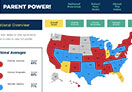
Many of those surveyed said their state legislators have the most say in education, but 69 percent rate their legislators as doing a fair or poor job, according to the survey.

Almost half — 46 percent — of parents surveyed said they needed more power in decisions about their children’s education. More than half of parents polled said they would move their child to a different school if the current school didn’t meet annual testing standards (67 percent) or if the child wasn’t being challenged (71 percent).

The poll of 1,000 adults was conducted by telephone in September and October. The survey has a margin of error of plus or minus 3.1 percent.  The full report can be read here.

Exceeding Expectations

The students at KIPP Delta Charter School in Arkansas receive their instruction out of trailers with fewer resources than most other students in the state. Of the entire student body, 88 percent are eligible for free or reduced-price lunches, and come from neighborhoods with a 40 percent poverty rate and above average crime numbers.

And yet, every single member of this year’s graduating class has been accepted into college, and the school ranks fourth in the state for academics by US News and World Report.

Currently, the K-12 charter school has over 900 students, who are receiving a positive educational experience they never would have obtained otherwise.

The charter school educators and administrators hold their students to high academic standards and expectations, firmly believing that given the proper chance, every student can learn.

There could be more outstanding schools like these provided state lawmakers strengthen the state’s D-rated charter school law .  Currently, only the State Board can approve charters, schools are subject to regulation and funding decisions by local entities, and there is a continuous cap on open-enrollment schools.

Arnez Orr, a KIPP Delta junior with a 3.7 GPA taking a multitude of Advanced Placement courses in addition to being in the school band, said he might want to be an architect after going to college.

Orr and his siblings are all receiving the same opportunity, and he is slated to be the second in his family to attend college behind his older sister.

“That’s what I’m going to do when I get older. Yes, it’s like already set in stone,” Orr said.

We believe him.

Postcards from the Past – No. 4

In 1999, a coalition of anti-reformers, including teacher unions, was temporarily successful in obtaining an injunction against Cleveland, Ohio’s opportunity scholarship program. At the time, the injunction unnecessarily caused uncertainty for approximately 3,800 low-income students and their families slated to benefit from having choices.

But they failed in the end, and Cleveland along with the rest of Ohio, now have wide ranging choice programs, making the Buckeye State one of the most versatile states in enacting parent empowering policies.

Today, over 31,000 students are attending a school of their choosing according to the Ohio Department of Public Education.

But as reformers know, the BLOB always creeps back, and this time it’s in North Carolina where the state teacher association has filed suit against the opportunity scholarship program that is so new, families have not yet even had the opportunity to apply. Scholarship applications are slated to be available starting February 1, 2014.

This latest attempt to curtail the availability of options is, “a vile attempt to breach the civil rights of low-income parents and students most in need of educational options,” according to CER president Kara Kerwin.

Let’s hope North Carolina’s Opportunity Scholarship program withstands this challenge, as other opportunity scholarship programs throughout the nation have, so that students most in need of educational options have a better chance at success.

New Lawsuit Challenges Constitutionality of N.C. Voucher Program

Katie Ash, Education Week

The North Carolina Association of Educators and the North Carolina Justice Center have sponsored a lawsuit challenging the constitutionality of a voucher program passed by the legislature earlier this year.

The lawsuit, filed Wednesday against the state, asserts that the public was not given enough time or opportunity to provide feedback about the program because it was attached to a large budget bill rather than passed as its own separate piece of legislation. It says that private schools that receive the vouchers are not held to the same standards as public schools, allowing them to be operated by “inexperienced and unaccredited institutions,” employ “unqualified and unsafe teachers and employees,” and “teach using haphazard and unproven methods,” among other problems.

The plantiffs also contend that the state’s constitution prohibits such a program. That document says that public funds “shall be faithfully appropriated and used exclusively for establishing and maintaining a uniform system of free public schools.”

The voucher program, which is set to begin in the 2014-15 school year, allows families who qualify for the federal free- or reduced-price lunch program to receive up to $4,200 per child for private school tuition. In subsequent years, families that earn up to 133 percent of the amount required to receive free- or reduced-price lunches will be eligible for the voucher program.

North Carolina Senate President Pro Tempore Phil Berger and House Speaker Thom Tillis, both Republicans, issued a joint statement denouncing the lawsuit, saying “not only are these left-wing interest groups fighting every attempt to improve public education, they now want to trap underprivileged and disabled children in low-performing schools where they will continue to fall behind their peers.”

The Washington-based Center for Education Reform, a pro-voucher group, has also released a statement condemning the lawsuit.

Kara Kerwin, the group’s president, said, “it’s disappointing to see a blatant effort to inhibit underserved students and their families who wish to seek out more and better educational opportunities.”

Daily Headlines for December 12, 2013

Click here for Newswire, the latest weekly report on education news and commentary you won’t find anywhere else – spiced with a dash of irreverence – from the nation’s leading voice in school reform.

NATIONAL COVERAGE

How ‘Common Core’ helps teachers
Opinion, New York Post, NY, December 12, 2013
There’s a new punching bag in education policy. Known as the Common Core, the new standards adopted across the country and in New York City classrooms this year have become a platform for opponents of school reform to sound off on everything else they dislike about the current education landscape, from teacher evaluation to testing.

Parents say they don’t need state test results
Column, Washington Post, DC, December 11, 2013
U.S. Education Secretary Arne Duncan had warned that California would be shortchanging students and their families if it held to its plan not to report school test averages next year. Almost everyone who responded to me said Duncan was wrong.

Secret policymaking on school reform is on the rise
Washington Post Blog, DC, December 12, 2013
Education reform policy around the country is increasingly being made in secret or without public input — and with a lot of private philanthropic money.

STATE COVERAGE

ARKANSAS

Beating The Odds: 100% of Delta charter school class accepted into college
KATV, AR, December 12, 2013
An Arkansas charter school is transforming an impoverished region of the state with one of the highest college acceptance rates in the state.

COLORADO

Lincoln Elementary School community optimistic about turnaround
Reporter-Herald, CO, December 11, 2013
Lincoln Elementary School students, parents and faculty members showed in force at Wednesday night’s Thompson School District Board of Education meeting to voice their support for the school, which is required by the Colorado Department of Education to submit a “turnaround plan” following years of declining test scores and a precipitous recent drop in enrollment after an attendance boundary change.

DELAWARE

Few show for Reach Academy parents’ meeting
WDDE, DE, December 11, 2013
Just three Reach Academy for Girls’ parents attended an informal meeting held for them in Wilmington Wednesday night.

DISTRICT OF COLUMBIA

Student turnover now part of D.C. schools report on data to assist comparisons
Washington Post, DC, December 12, 2013
The District’s Anacostia High School saw an enormous fluctuation in its student population in the 2012-13 school year, losing more than one in five students after the first month of school while gaining nearly twice as many during the school year. The enrollment swings left the school with a net student increase of 16 percent.

FLORIDA

A quality education for all public school students
Opinion, Miami Herald, FL, December 11, 2013
Educators, parents, students and community members in Miami-Dade and Broward counties are joining together to reclaim the promise of public education. This important effort is co-sponsored by the American Federation of Teachers and National Education Association and is a vital step forward for our schools in South Florida.

Hall leads country with fastest-growing charter system
Gainesville Times, FL, December 12, 2013
The Hall County School District is the fastest-growing in the country for public charter school students.

INDIANA

Governor lays out education agenda for state
Shelby News, IN, December 12, 2013
As he finds himself in the middle of a public rift with Indiana State Superintendent of Public Instruction Glenda Ritz, Indiana Governor Mike Pence unveiled his education policy during a speech Tuesday.

ILLINOIS

Mayor says ex-UNO chief was a ‘distraction’
Chicago Sun-Times, IL, December 12, 2013
Juan Rangel was a “distraction from the mission” of the United Neighborhood Organization and did the right thing by resigning as the clout-heavy organization’s chief executive, Mayor Rahm Emanuel said Wednesday.

LOUISIANA

Charter school companies want to add Shreveport campuses
Shreveport Times, LA, December 11, 2013
A Michigan-based charter school company and a Baton Rouge nonprofit want to open a nine-school network around Louisiana that includes two campuses in Shreveport.

King charter won’t move to Orleans school board governance
The Lens, LA, December 11, 2013
Dr. King Charter School isn’t going to switch to Orleans Parish School Board governance – at least not right now.

Tangipahoa board reject charter school application
The Advocate, LA, December 11, 2013
The Tangipahoa Parish School board on Wednesday rejected an application for a charter school in the parish, its third such rejection in a week.

NEW JERSEY

Rowan to offer spots for students with Camden academy partnership
Courier-Post, NJ, December 12, 2013
Future students of the KIPP Cooper Norcross Academy already have a leg up on the competition, thanks to a new partnership with Rowan University.

NEW MEXICO

Governor proposes pay hike for beginning teachers
Santa Fe New Mexican, NM, December 12, 2013
Gov. Susana Martinez is proposing a 10 percent salary boost for starting teachers and bonuses for educators who receive the highest ratings through the state’s new evaluation system.

School model defies race/income stereotype
Editorial, Albuquerque Journal, NM, December 12, 2013
So much for not being able to educate poor minority kids who are two grade levels behind where they should be. Cristo Rey, a network of independent Catholic schools, not only gets most of those students through high school, but all of those who graduate are accepted into college and 90 percent attend.

NEW YORK

Will de Blasio Choke Charters?
Column, Wall Street Journal, December 11, 2013
Income inequality is the Democratic Party’s new bumper sticker. And the newest driver of the party’s income-inequality election bus is New York City’s mayor-elect, Bill de Blasio.

NORTH CAROLINA

Durham home to eight of state’s 71 proposed charters
Durham Sun, NC, December 11, 2013
Eight of the 71 charter school applications received by the state Department of Public Instruction have come from applicants who hope to open charter schools in Durham in August 2015.

Durham home to eight of state’s 71 proposed charters
Durham Sun, NC, December 11, 2013
Eight of the 71 charter school applications received by the state Department of Public Instruction have come from applicants who hope to open charter schools in Durham in August 2015.

N.C. teachers group sues over private-school grants
Winston Salem-Journal, NC, December 12, 2012
The fight over public education North Carolina came to a head Wednesday when a group of public school advocates — including parents and teachers — sued the state over a controversial voucher program that would give public dollars to private schools in the form of grants for poor students.

Suit against vouchers is crucial for NC public schools
Editorial, News & Observer, NC, December 11, 2013
Another day, another lawsuit over a law passed by the Republican-led General Assembly. On Wednesday, a legal challenge was filed in Wake County Superior Court against a school voucher law passed earlier this year.

OHIO

More Than 31,000 Ohio Students Receive Private-School Vouchers
NPR StateImpact, OH, December 11, 2013
More Ohioans are opting to use school vouchers to send their children to private K-12 schools.

PENNSYLVANIA

Contract reflects ed-reform group’s rise to power in Philly
Philadelphia City Paper, PA, December 12, 2013
When Mayor Michael Nutter appointed Sylvia Simms to the School Reform Commission (SRC) in January, he lauded her as a “community leader, parent, former School District employee and graduate” who “understands from a grass-roots level how important it is to educate our children.”

Scavello: I called judge in charter school case
Pocono Record, PA, December 12, 2013
The charter school is challenging a vote by the state’s Charter Appeal Board to revoke its charter, a decision that reversed an earlier vote by CAB. The court issued a stay in the summer, allowing the school to open and operate pending resolution of the case.

Teach For America contract faces skeptical Pittsburgh School Board members
Pittsburgh Post-Gazette, PA, December 12, 2013
A Teach for America representative faced some pointed questioning by Pittsburgh school board members following a presentation on the school district’s plan to bring in up to 30 new teachers from the federal program next year to take hard-to-fill jobs at some of the city’s most challenging schools.

SOUTH CAROLINA

Thomas: Charter schools not a smart investment for S.C.
Column, The State, SC, December 12, 2013
A new report calling for South Carolina to increase the state’s investment in charter schools comes as the state still is struggling to recover from the economic downturn and continues to invest heavily in education reform driven by new standards and high-stakes testing.

TEXAS

Abbott, Davis Spar Over Public School Support
WOAI, TX, December 12, 2013
Education is the current battleground between the candidates for governor, as Republican Greg Abbott unveiled his education proposals during a stop at a San Antonio charter school, 1200 WOAI’s Stephanie Narvaez reports.

WEST VIRGINIA

State board works to clarify school calendar policy
Charleston Gazette, WV, December 11, 2013
State school board members unanimously approved a policy Wednesday they say is intended to give districts more freedom when designing a school calendar, but they said they’re worried there are still misconceptions among educators and parents about the bill’s requirements.

ONLINE LEARNING

Eye On Education: ‘Virtual High School’ Opens Doors To Students
WBZ-TV, MA, December 11, 2013
As part of a new series “Eye On Education,” WBZ-TV will be focusing on both technology and innovation in the school systems across the state.

‘Flipped’ classroom story sparks debate on teaching style
PBS News, December 11, 2013
The conversation on Facebook reveals both positive and negative reactions, with fans chiming in on the the pros and cons at the heart of today’s education practices.
Top of Form

Tim King, banned for life from running schools in Oregon, operates online school in Washington
The Oregonian, OR, December 11, 2013
Charter school founder Tim King, who is banned for life from running taxpayer-funded schools in Oregon, is clear to continue running a state-funded online school in Washington, that state’s director of online schools confirmed.

North Carolina Opportunity Scholarship Program Under Attack

Special Alert
Washington, DC
December 11, 2013

Kara Kerwin, president of The Center for Education Reform, issued the following statement in response to the lawsuit against the North Carolina Opportunity Scholarship Prorgram:

“In a vile attempt to breach the civil rights of low-income parents and students most in need of educational options, establishment interests in North Carolina filed a lawsuit challenging the constitutionality of the state’s new opportunity scholarship program, set to begin in the 2014-15 school year. Similar challenges in other states have consistently failed.

“It’s clear from the recent ‘national day of action’ that the establishment is starting to realize the American public favors choice and accountability for our nation’s schools, and they want power and options.   In fact, 74% of the American public supports school choice.

“It’s disappointing to see a blatant effort to inhibit underserved students and their families who wish to seek out more and better educational opportunities.”

What’s ahead for New York City charters?

Alison DeNisco, District Administration

New York City’s expansive charter school network may be in trouble. Mayor Bill de Blasio, who takes office this month, says he plans to charge charters rent for using space in school buildings and to stop new charters from opening. De Blasio says he will focus instead on improving traditional public schools, but the details of his plan for charters remain unclear.

The number of charter schools citywide grew under former Mayor Michael Bloomberg—from 17 in 2002 to 183 in 2013. About 70,000 of the city’s 1.1 million students attend charters, and an additional 50,000 currently in traditional schools are on waiting lists. Bloomberg also closed 140 traditional public schools, a move de Blasio plans to counter by preventing any more closures and creating an early warning system for schools before they are put on the state’s Persistently Low Achieving list.

Charter students outperformed students in traditional schools in math, but were slightly behind in English, according to 2012 state exam data. Charter students in every reported demographic group, including black students, Hispanic students, and English language learners, outpaced district averages in both subjects, according to the Department of Education.

About two-thirds of New York City charters are housed in public school buildings, and do not have to pay for rent, utilities, or safety services. This co-location is unique to New York because most charter operators nationwide pay rent to use public space, says Nina Rees, president and CEO of the National Alliance for Public Charter Schools. “The climate has been extremely receptive to attracting charter management organizations,” Rees says.

The savings on these costs for city charters is $2,712 per student, according to a 2010 analysis from the Independent Budget Office, a publicly funded agency that provides nonpartisan New York City budget information to the public and elected officials.

Advocates argue that since charters are public schools, they should be able to use public school space for free when available. “Paying rent will absolutely hurt them,” says Kara Kerwin, president of the Center for Education Reform. “These are public school students that should have access to facilities and equitable funding for their schools.”

Charters will have less money to spend on instruction if they have to pay rent, says James Merriman, CEO of the New York City Charter School Center. “Districts get a separate stream of facility funding—a combination of their local tax revenue and state aid,” which charters do not get, he says. “If charters have to spend funding on facilities, they are spending dollars that would otherwise go toward pedagogy and curriculum.”

De Blasio has not announced how much rent he plans to charge charters. “It would depend on the resources of the charter school or charter network,” he told the radio station WNYC in October. “Some are clearly very, very well resourced and have incredibly wealthy backers. Others don’t. So my simple point was that programs that can afford to pay rent should be paying rent.”

Daily Headlines for December 11, 2013

Click here for Newswire, the latest weekly report on education news and commentary you won’t find anywhere else – spiced with a dash of irreverence – from the nation’s leading voice in school reform.

NATIONAL COVERAGE

Charter schools surge in state, nation
San Diego Union Tribune, CA, December 10, 2013
San Diego Unified is experiencing more growth in charter-school enrollment than any other district in California — and the second-highest rise in the nation, according to a new report.

STATE COVERAGE

ARIZONA

3 Arizona schools expected to close
Arizona Republic, AZ, December 10, 2013
Three Arizona charter schools that received failing grades from the state likely will close by the end of the school year after receiving notice that the state charter board would revoke their charters.

CALIFORNIA

San Francisco school board votes on graduation rules
San Francisco Chronicle, CA, December 10, 2013
Students in San Francisco’s alternative high schools won’t have to complete the district’s new, more rigorous graduation requirements to get a diploma, the school board decided Tuesday night.

CONNECTICUT

ISAAC charter school’s scores on CMT tests win recognition
The Day, CT, December 11, 2013
The Interdistrict School for Arts and Communication (ISAAC), the free public charter school downtown, was deemed a school of distinction by the State Board of Education based on progress the school’s students showed on the Connecticut Mastery Test.

DISTRICT OF COLUMBIA

New Orleans leads nation in percentage of public charter school enrollment
Washington Post, DC, December 10, 2013
New Orleans led the nation last year as the city with the greatest percentage of students enrolled in public charter schools, followed by Detroit and the District of Columbia, according to a new survey released Tuesday by the National Alliance for Public Charter Schools.

FLORIDA

Days get longer for four Lee County Schools
News-Press, FL, December 11, 2013
Four struggling schools are getting a new start to the school day in the new year.

High teacher grades seem too good to be true
Editorial, Daytona Beach News Journal, FL, December 11, 2013
Florida teachers got high marks for the 2012-13 school year, but the grades were so good — compared to student performance — that some skepticism and concern on the part of taxpayers and parents are warranted.

MacDill charter plan needs work
Editorial, Tampa Bay Times, FL, December 10, 2013
The Hillsborough County School Board made the correct decision Tuesday in denying an application for a charter school at MacDill Air Force Base.

With charter enrollment surging, Miami-Dade public schools look to tighten the rules
Miami Herald, FL, December 10, 2013
As the Miami-Dade School Board looks to improve its grip on charter schools, a new national report shows that Florida’s vast network of independent schools is expanding perhaps faster than anywhere else in the U.S.

INDIANA

Indiana Governor Pence puts new emphasis on charter schools in education agenda
Courier-Journal, IN
December 10, 2013
Republican Gov. Mike Pence proposed a renewed emphasis on charter schools Tuesday, saying the state should supplement salaries for their teachers and make unused buildings available for the schools.

IOWA

Iowa teachers union seeks funding increases
Quad City Times, IA, December 10, 2013
Top officials in the state’s public teachers union said the state needs to lock in two years of 6 percent increases in school funding if it wants to help combat poverty in Iowa’s schools.

KENTUCKY

Charter Schools Issue Divides Ky. Chamber of Commerce Event
WKMS, KY, December 10, 2013
At a legislative event hosted by the Kentucky Chamber of Commerce, the divisive issue of charter schools and parent choice took center stage.

LOUISIANA

Brookings study ranks LABI as most influential, teacher groups as least in school vouchers debate
Times-Picayune, LA, December 10, 2013
State lawmakers and political insiders ranked the Louisiana Association of Business and Industry (LABI) as the most influential lobbying group in the 2012 debate over expanding school vouchers, according to a report released by the Brookings Institution on Tuesday.

MAINE

Maine education committee hopes to introduce school funding reform bill
Portland Press Herald, ME, December 11, 2013
Several lawmakers say they will push for a bill in the January session incorporating recommendations from a study on how the state funds public schools.

MASSACHUSETTS

Boston Teachers Union contests ratings
Boston Globe, MA, December 11, 2013
The Boston Teachers Union has filed a grievance with the School Department over its teacher evaluation system, asking school officials to rescind the “offending evaluations and improvement plans” and to stop discriminating against employees on the basis of race, gender, or age.

Education issues presented to transition team
Boston Herald, MA, December 11, 2013
About 200 students, parents and other children’s advocates last night pushed Mayor-elect Martin J. Walsh’s transition team to take steps to boost education in the city — suggesting more charter schools, more school buildings and more parent and student involvement.

Lowell charter school’s rebound on track
Lowell Sun, MA, December 11, 2013
The board is scheduled to act Tuesday on a recommendation from the state’s education commissioner that the school start offering seventh and eighth grade again, after a year without them.

Menino, misguided
Editorial, Boston Herald, MA, December 11, 2013
Perhaps we should have realized that Menino’s brief support for charter school expansion was halfhearted and opportunistic, now that he is back to reading from the script of anti-charter zealots who are willing to foreclose educational opportunities for kids in failing schools.

MICHIGAN

Michigan reform district could add schools as early as January
Detroit Free Press, MI, December 10, 2013
State Superintendent Mike Flanagan announced today that more failing schools will be placed into Michigan’s reform district in 2014, possibly as early as January.

More Detroit students attend charter schools than public schools
Detroit News, MI, December 10, 2013
Charter schools in Detroit have grown to the point that they educate more than half of the city’s children, according to a report released Tuesday by the National Alliance for Public Charter Schools.

NEVADA

Clark County’s charter schools continue to chart strong growth
Las Vegas Sun, NV, December 11, 2013
Clark County charter schools have among the fastest enrollment growth in the country, according to a national report released Tuesday.

NEW JERSEY

Charter school awaiting review
Courier-Post, NJ, December 11, 2013
One of two Camden charter schools placed on probation in the spring will receive its final review by the state Thursday.

NORTH CAROLINA

African-American leaders question change to Wake school board leadership
News & Observer, NC
December 10, 2013
African-American community leaders are demanding an explanation why Keith Sutton was replaced as chairman of the Wake County school board, but school board members continue to give few reasons for the change.

OHIO

Many fail third-grade reading test
Columbus Dispatch, OH, December 11, 2013
More than a third of Ohio third-graders failed the state reading test this fall, putting them at risk of being held back if they don’t improve their scores.

OKLAHOMA

In reform, real focus on needs on students
Commentary, Oklahoma Gazette, OK, December 11, 2013
Oklahoma’s education debate spends a lot of time on a few familiar subjects: education funding vs. tax cuts, vouchers and charters vs. traditional public schools and high-stakes testing vs. letting teachers teach.

SOUTH CAROLINA

SC lawmaker proposes performance-based teacher pay
WBTW, SC, December 10, 2013
A bill prefiled Tuesday in the South Carolina House would evaluate state teachers and base their salaries on how well their students are doing. Rep. Andy Patrick, R-Hilton Head Island, prefiled the bill after meeting with teachers, principals, and parents.

TENNESSEE

Metro challenges state formula for schools funding
The Tennessean, TN, December 11, 2013
The Metro Nashville school district has taken aim at the state’s level of education funding, arguing that Davidson County has been shorted millions of dollars and setting the stage for what could be a broad-based assault on state funding levels by districts all over the state.

With $2M investment, KIPP Nashville plans more charter schools
Nashville Business Journal Blog, TN, December 10, 2013
The Charter School Growth Fund-Tennessee, a public-private investment partnership that funds growth of charter schools, is investing $2 million in KIPP Nashville to support expansion, the organization announced today.

TEXAS

School Choices Are Growing In North Texas
KERA News, TX, December 10, 2013
With a surge of charter schools and the continued appeal of private schools, Fort Worth is meeting the competition head on. For the past few years, the school district’s been adding academic specialties at nearly every campus, It’s called the Gold Seal Programs of Choice.

WISCONSIN

Board considers new Janesville charter school
The Gazette, WI, December 11, 2013
Officials are planning to open a new charter school in Janesville next fall, but one school board member would like to nip it in the bud.

ONLINE LEARNING

Cyber schools give students additional opportunities
Opinion, Allentown Morning Call, PA, December 10, 2013
Alyssa Weaver is a poster child for the benefits of choice in public education. At the age of 12, she was diagnosed with a crippling case of scoliosis which, in decades past, might have brought her education and career aspirations to a screeching halt. But, thanks to the marriage of online education and public charter school, Alyssa, who lives in western Pennsylvania, had a life-changing option — cyber school.

Florida Virtual School offers flexibility for students who need it
Town Hall, FL, December 10, 2013
When Allie Schnacky, 13, was cast as Pippi Longstocking in a play, her public elementary school wouldn’t allow her to be absent as often as she needed to perform.

High School With No Walls Takes Shape
Wall Street Journal, December 10, 2013
New York City is planning to open a new high school next year—but it won’t have a gym, library, science lab or even a math classroom.

Pinellas board reluctantly OKs virtual academy
St. Petersburg Tribune, FL, December 10, 2013
Florida Virtual Academy at Pinellas County Charter School got the OK from Pinellas County School Board members Tuesday to become the school district’s first virtual charter school. But that doesn’t mean board members are happy about it.

Virtual school needs more accountability
Editorial, Rocky Mount Telegram, NC, December 10, 2013
Online education, like so many other facets of the Internet, is an evolving resource that promises to extend better classes and teachers to a much broader range of students.

Ingenuity Prep Public Charter School – A Name To Live Up To

By: Allysa Turner

Ingenuity Prep Public Charter School in DC opened its doors for the first time in August to 107 kids in grades PreK3-K. Out of all of the charter school visits I’ve done while being with CER, this one stood out to me in a way that the others did not. I have seen the inside of a single-sex school, a bilingual school and even a school that focuses on sustainability but Ingenuity Prep was the first school that I’ve seen to incorporate a classroom model that has three to four teachers at one time.

My first concern was that students at this age cannot possibly thrive without the familiarity of one, or maybe two, instructors and that three or four would be too hectic for their young minds in terms of transitioning from one teacher to another throughout the day and keeping focused. I was lucky enough to have my tour guided by co-founder and principal of the school, Aaron Cuny, and learn just why they prefer this model to another student-teacher ratio model. The classroom structure put in place at Ingenuity Prep has multiple lessons going on at one time with instructors that specialize in each lesson whether it’s math, reading comprehension or civic leadership. This model gives teachers less students at one time to provide more individualized attention to while at one time it provides the students with an instructor that excels in that particular lesson.

Besides providing their students with content-specialized teachers in the classroom, Ingenuity Prep promotes extended school days, which in turn makes for extended years. Over the course of a school year, Ingenuity Prep students benefit from thirty-three percent more learning time than students as neighboring District schools. I am personally all for extended school days because they give students a leg up in the amount of content they can get each day. The school also is the first in the District to open with a blended learning model, leveraging digital content to target students’ individualized learning needs and track development.

After visiting the school and being inside the classrooms, I can see just why Ingenuity Prep was named Ingenuity Prep. Being first to utilize a blended learning model in the District and having content-specialized teachers in the classrooms is really towards the students’ advantage. Even though the school is in its first year with plans to expand through high school, I have high hopes that they will continue to live up to their name with co-founders Aaron Cuny and Will Stoetzer’s strong foundation of unique ideals.

CER BOARD OF DIRECTORS ANNOUNCES TWO NEW MEMBERS

CER Press Release
Washington, DC
December 10, 2013

WASHINGTON, DC – The Center for Education Reform (CER) announces the election of Edward Fields, founder, president and CEO of HotChalk, Inc. and Dr. James Goenner, president and CEO of the National Charter Schools Institute to its Board of Directors today.

“Since its founding in 1993, CER’s Board of Directors has been actively engaged in the strategic direction of the organization serving as champions of our programs and activities,” said Kara Kerwin, CER president. “Fields and Goenner are two entrepreneurial thought leaders that complement the work of our very diverse board who are bound by a clear and unambiguous focus that underscores the bold, and sometimes controversial, work the Center performs.”

For over 20 years, Edward Fields has been a leader in developing education technology, particularly for students most in need of improved learning conditions. His experience and desire to make a positive impact enables Fields to comb through standards and data to provide effective learning tools for both students and educators. Under Fields’ leadership, HotChalk, Inc. has become one of the most successful start-ups delivering educational content and a learning management system specifically for K-12 teachers.

Dr. James Goenner is a National Charter Schools Hall of Fame inductee and a pioneer in independent charter school authorizing, which is responsible for a significant portion of the country’s most successful charter schools. Due in large part to Dr. Goenner’s prior leadership, The Governor John Engler Center for Charter Schools at Central Michigan University continues to be a national model.

“As the Center enters its third decade, the distinguished additions of Fields and Goenner to our leadership will no doubt bolster our efforts to effect meaningful change in schools across the country.” Kerwin said.

The election of Fields and Goenner come on the heels of CER founder and president emeritus Jeanne Allen’s transition to the Board. Allen continues to serve the organization as a Senior Fellow. For more information on CER’s Board of Directors visit https://staging.edreform.com/about/people/board-of-directors/.