









Sign up for our newsletter

PublicSchoolOptions.org Recognizes Outstanding Teachers

PublicSchoolOptions.org is hosting its 5th annual American Pioneer of Teaching Award contest to recognize outstanding teachers in non-traditional schools.

This award acknowledges top teachers who are pioneers in the field. These teachers take their craft seriously, and engage in innovative ways to reach their students and make a difference in their lives. Their passion and dedication truly makes a difference. If you are or know a teacher that sparks a love of learning in students at a charter or online school, visit PublicSchoolOptions.org to fill out a nomination form.

Public School Options will launch the 2014 American Pioneer of Teaching Award contest on Tuesday, April 1st and the winner will be announced on May 6th during National Teacher Appreciation Week and National Charter School Week.

Award recipients will receive a physical award and will be recognized by the National Coalition for Public School Options board of directors.

Cast your vote for outstanding teacher in a nontraditional school here!

Visit PublicSchoolOptions.org for more information!

Georgia charter school law earns a C

Savannah Morning News

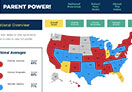
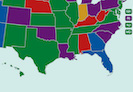
Georgia earned a C on the Center for education Reform’s Charter School scorecard.

Although the charter school advocacy group criticized Georgia for not having multiple and independent charter school authorizers, Georgia was still one point away from a B grade. Fewer than half of state charter school laws in the United States earned above-average grades in the Center for Education Reform’s annual rankings. Click here to see the full report.

Daily Headlines for March 25, 2014

Daily Headlines have moved! To get your daily dose of education of news, go to www.mediabullpen.com, where not only can you get the latest news of the day, but you can also have the latest news delivered straight to your inbox.

Click here for Newswire, the latest weekly report on education news and commentary you won’t find anywhere else – spiced with a dash of irreverence – from the nation’s leading voice in school reform.

March Madness in York, Pennsylvania

The term “March Madness’ often evokes thoughts of Cinderella storied basketball teams that beat the odds to make a successful run at glory, along with shining moments that completely change the dynamic felt by all the players involved.

But these principles can easily be applied to the developments of New Hope Academy in York, PA, when a recent school board meeting provided a moment more shocking than when the 14th seed Mercer upset number 2 Duke.

In what can only be described as a gutless move, the York County School Board motioned for police to escort New Hope performing arts director Cal Weary out, after refusing to acknowledge Weary because he apparently didn’t sign in to be recognized. So naturally, this somehow warranted police intervention.

“What I would have said to them is this — we are all part of the same community. All we want is fair representation,” Weary said following the meeting. “We’re asking for a seat at the table.” There’s a certain sadness to the silencing of the only side of the table calling for compromise and dialogue.

After refusing to hear from New Hope supporters throughout the meeting, Board member Margie Orr also refused to hear from students, claiming the Board is solely accountable to “taxpayers.” The revealing mindset that school officials aren’t accountable to the students they serve is nothing short of astonishing and appalling.

Since last year, New Hope has been embroiled in a fight to keep its school doors open in the face of local adversity, all the while boasting achievement data that shows remarkable gains posted by students coming from the traditional school setting.

The courts of Pennsylvania will now decide New Hope’s fate, and hopefully there’s room for one more Cinderella Story to beat the odds and show that they belong. New Hope Academy deserves many more shining moments.

Improve Maryland’s charter school laws

The Frederick News-Post Editorial Board

Since their 1991 beginning in Minnesota, charter schools have increasingly become an option for parents seeking an alternative to traditional public education.

From 1999 through 2011, according to the National Center for Education Statistics, charter school enrollment exploded — 340,000 students enrolled in 1999; a little over a decade later, more than 2.5 million children attend 6,400 charter schools across the U.S. Thousands of students are on waiting lists to attend these schools. California, D.C., and Arizona have led the country in forming the most charters.

But in Maryland, more than a decade on from passage of the Public Charter School Act of 2003, this alternative path to education appears to be floundering thanks to regulations that have landed the state failing grades in two recent assessments.

As a story Friday from News-Post education reporter Rachel Karas detailed, the Washington-based Center for Education Reform evaluated charter school laws in 42 states and the District of Columbia on their construction and implementation, and whether or not they lead to creation of multiple quality learning opportunities for children. Of those surveyed, Maryland ranked 39th with a D grade. In January, the National Alliance for Public Charter Schools named Maryland last out of 43 in its own ranking of charter school laws.

“With the length of the average charter school waiting list increasing to nearly 300 students, there absolutely needs to be a sense of urgency around creating strong charter school laws that will accelerate the pace of growth to meet demand,” said Kara Kerwin, president of the Center for Education Reform in a statement on the release of its report card, which awarded only five A grades. Nine were Bs, 18 were Cs, and 11, Ds and Fs.

Among the recommendations advocated for improving charter school laws are having a number of independent bodies that can approve charter school, rather than just Boards of Education, fewer limits on expansion, equitable funding and greater school autonomy.

Frederick County, which had the first charter school in the state, now has three — Carroll Creek and Monocacy Valley Montessori public charter schools (managed by Monocacy Montessori Communities Inc.) and Frederick Classical Charter School.

The state’s regulations are, according to Frederick Classical Charter School president Tom Neumark, “pretend charter school law. It’s a charter school law in name only.”

Nowhere has the road to establishing a charter school been longer or rougher than in Frederick County. It took four years for Classical Charter to win approval from the Board of Education, two years to establish the first, Montessori Valley. Yet, hundreds of residents are now applying for places through lotteries. In 2013, 965 applied for 98 openings at the two Montessori schools.

A 53-1 ratio seems like a pretty compelling message that some families in Frederick County want an alternative to traditional public school education.

That’s not to say charter schools are a panacea for the U.S.’s ailing education system. They have their share of controversies. But charter schooling works, and works well in several states, according to the Center for Education Reform rankings. Maryland would do well to study those states for ways to improve its charter school laws. In one case, it wouldn’t have to go far: Most highly ranked was neighboring D.C.


Since their 1991 beginning in Minnesota, charter schools have increasingly become an option for parents seeking an alternative to traditional public education.

From 1999 through 2011, according to the National Center for Education Statistics, charter school enrollment exploded — 340,000 students enrolled in 1999; a little over a decade later, more than 2.5 million children attend 6,400 charter schools across the U.S. Thousands of students are on waiting lists to attend these schools. California, D.C., and Arizona have led the country in forming the most charters.

But in Maryland, more than a decade on from passage of the Public Charter School Act of 2003, this alternative path to education appears to be floundering thanks to regulations that have landed the state failing grades in two recent assessments.

As a story Friday from News-Post education reporter Rachel Karas detailed, the Washington-based Center for Education Reform evaluated charter school laws in 42 states and the District of Columbia on their construction and implementation, and whether or not they lead to creation of multiple quality learning opportunities for children. Of those surveyed, Maryland ranked 39th with a D grade. In January, the National Alliance for Public Charter Schools named Maryland last out of 43 in its own ranking of charter school laws.

“With the length of the average charter school waiting list increasing to nearly 300 students, there absolutely needs to be a sense of urgency around creating strong charter school laws that will accelerate the pace of growth to meet demand,” said Kara Kerwin, president of the Center for Education Reform in a statement on the release of its report card, which awarded only five A grades. Nine were Bs, 18 were Cs, and 11, Ds and Fs.

Among the recommendations advocated for improving charter school laws are having a number of independent bodies that can approve charter school, rather than just Boards of Education, fewer limits on expansion, equitable funding and greater school autonomy.

Frederick County, which had the first charter school in the state, now has three — Carroll Creek and Monocacy Valley Montessori public charter schools (managed by Monocacy Montessori Communities Inc.) and Frederick Classical Charter School.

The state’s regulations are, according to Frederick Classical Charter School president Tom Neumark, “pretend charter school law. It’s a charter school law in name only.”

Nowhere has the road to establishing a charter school been longer or rougher than in Frederick County. It took four years for Classical Charter to win approval from the Board of Education, two years to establish the first, Montessori Valley. Yet, hundreds of residents are now applying for places through lotteries. In 2013, 965 applied for 98 openings at the two Montessori schools.

A 53-1 ratio seems like a pretty compelling message that some families in Frederick County want an alternative to traditional public school education.

That’s not to say charter schools are a panacea for the U.S.’s ailing education system. They have their share of controversies. But charter schooling works, and works well in several states, according to the Center for Education Reform rankings. Maryland would do well to study those states for ways to improve its charter school laws. In one case, it wouldn’t have to go far: Most highly ranked was neighboring D.C.

Since their 1991 beginning in Minnesota, charter schools have increasingly become an option for parents seeking an alternative to traditional public education.

From 1999 through 2011, according to the National Center for Education Statistics, charter school enrollment exploded — 340,000 students enrolled in 1999; a little over a decade later, more than 2.5 million children attend 6,400 charter schools across the U.S. Thousands of students are on waiting lists to attend these schools. California, D.C., and Arizona have led the country in forming the most charters.

But in Maryland, more than a decade on from passage of the Public Charter School Act of 2003, this alternative path to education appears to be floundering thanks to regulations that have landed the state failing grades in two recent assessments.

As a story Friday from News-Post education reporter Rachel Karas detailed, the Washington-based Center for Education Reform evaluated charter school laws in 42 states and the District of Columbia on their construction and implementation, and whether or not they lead to creation of multiple quality learning opportunities for children. Of those surveyed, Maryland ranked 39th with a D grade. In January, the National Alliance for Public Charter Schools named Maryland last out of 43 in its own ranking of charter school laws.

“With the length of the average charter school waiting list increasing to nearly 300 students, there absolutely needs to be a sense of urgency around creating strong charter school laws that will accelerate the pace of growth to meet demand,” said Kara Kerwin, president of the Center for Education Reform in a statement on the release of its report card, which awarded only five A grades. Nine were Bs, 18 were Cs, and 11, Ds and Fs.

Among the recommendations advocated for improving charter school laws are having a number of independent bodies that can approve charter school, rather than just Boards of Education, fewer limits on expansion, equitable funding and greater school autonomy.

Frederick County, which had the first charter school in the state, now has three — Carroll Creek and Monocacy Valley Montessori public charter schools (managed by Monocacy Montessori Communities Inc.) and Frederick Classical Charter School.

The state’s regulations are, according to Frederick Classical Charter School president Tom Neumark, “pretend charter school law. It’s a charter school law in name only.”

Nowhere has the road to establishing a charter school been longer or rougher than in Frederick County. It took four years for Classical Charter to win approval from the Board of Education, two years to establish the first, Montessori Valley. Yet, hundreds of residents are now applying for places through lotteries. In 2013, 965 applied for 98 openings at the two Montessori schools.

A 53-1 ratio seems like a pretty compelling message that some families in Frederick County want an alternative to traditional public school education.

That’s not to say charter schools are a panacea for the U.S.’s ailing education system. They have their share of controversies. But charter schooling works, and works well in several states, according to the Center for Education Reform rankings. Maryland would do well to study those states for ways to improve its charter school laws. In one case, it wouldn’t have to go far: Most highly ranked was neighboring D.C.

Md. Ranks Near Bottom for Charter School Laws

By Associated Press, Washington Post

FREDERICK, Md. — Maryland’s charter school laws are among the worst in the nation, according to two studies released this year.

The Washington-based Center for Education Reform and National Alliance for Public Charter Schools evaluated the content and implementation of charter school laws in 42 states and the District of Columbia.

In January, the National Alliance for Public Charter Schools named Maryland last out of 43 in its own ranking of charter school laws. The state dropped from 42 to 43 in the National Alliance ranking. The 2014 Center for Education Reform scorecard released March 17 showed that Maryland scored 39th — two places lower than in 2013.

Three public charter schools are now open in Frederick County: Carroll Creek Montessori, Monocacy Valley Montessori and Frederick Classical. Officials at the Montessori schools did not respond to a request for comment on the ratings.

Tom Neumark, president of Frederick Classical Charter School, said he is disappointed but not surprised that Maryland continues to worsen for charter schools.

“Charter schools are supposed to be independent, and that’s basically what Maryland law guarantees you don’t have,” he said.

The studies’ criteria for grading the laws included whether the state allows entities other than traditional school boards to independently create and manage charter schools, whether independent authorization actually occurs, how many new charter schools are allowed to open, how separation from existing state and local operational rules is codified in law, and various measures of fiscal equity.

States also earned or lost points for accountability and putting the law into practice, Center for Education Reform methodology said. Points were deducted if the law is not followed or charter schools are not being approved for arbitrary reasons not set in law.

Good charter school laws ensure freedom and funding, Neumark said, but Maryland’s do neither. Frederick County charter school teachers are employees of the local school system and are bound by union-negotiated contracts, rather than being employed directly by the charter school.

Giving the school system hiring, firing, legal and budgeting power over a charter school is unusual, Neumark said. Frederick Classical may next year gain more freedom to spend money as it sees fit, he said, instead of going through the school system’s long procurement process.

The lack of independent authorizers is one of the biggest problems because local school systems — currently the only bodies able to green-light charters — are “not interested in approving their competition,” Neumark said.

Frederick County Board of Education President Joy Schaefer is comfortable with the ability to work closely with those schools on a local level, she said. The relationship between charters and the school system is a work in progress, she added.

“We were the first in the state to have a charter school, so we’re always looking to improve our model,” she said. “We’re very lucky that we have charter schools with boards and leadership that is very collaborative.”

Schaefer declined to discuss the financial aspect because Frederick Classical is appealing the school board’s charter school funding formula.

Delegate Galen Clagett, D-Frederick, believes the law creates a suitable climate for running charter schools. School systems should be able to dictate much of what charter schools do because they are held accountable by public money, he said.

“I think they’re doing OK,” he said. “We can’t have people popping these things up anywhere. … You can’t make the charter school a private school, it’s a different animal.”

Neumark hopes the state legislature will overhaul the code governing charter schools as soon as possible.

“Maryland’s law is so out of the ordinary it’s not even funny,” he said. It’s “a pretend charter school law. It’s a charter school law in name only.”

Daily Headlines for March 24, 2014

Daily Headlines have moved! To get your daily dose of education of news, go to www.mediabullpen.com, where not only can you get the latest news of the day, but you can also have the latest news delivered straight to your inbox.

Click here for Newswire, the latest weekly report on education news and commentary you won’t find anywhere else – spiced with a dash of irreverence – from the nation’s leading voice in school reform.

Charter Schools in Wealthy Areas at Center of NYC Battle

By Laura Colby, Bloomberg

At Success Academy Union Square, a charter school in Manhattan, parents dropping off kindergartners one frigid morning include a radiologist with a Louis Vuitton bag slung over one shoulder and a fashion designer married to an investment banker. Some arrive in taxis.

Four of every 10 students at the school are poor enough to qualify for the federal lunch program, about half the New York City average. “This is a mixed-income school, which makes me happy,” said Paola Zalkind, Union Square’s principal, who greets each child with a handshake.

New York state law requires charter schools — publicly funded but privately run — to improve student achievement, especially among those “at risk of academic failure.” Still, Success Academy, the nonprofit that is the city’s biggest charter chain, is opening schools in wealthier neighborhoods like Union Square, where the median household income was $103,198 in 2012, about twice the city median, according to U.S. Census Bureau data.

The evolution of Success Academy illustrates a growing debate nationwide over charters serving higher-income families. California’s Bullis Charter School educates children of Silicon Valley entrepreneurs. High Tech High, based in San Diego, has created schools whose students come from diverse economic backgrounds, as do those at Rhode Island’s Blackstone Valley Prep Mayoral Academy, said Priscilla Wohlstetter, a research professor at Columbia University’s Teachers College.

Upscale Areas

As Success Academy opens in more upscale areas, the non-union chain has become a lightning rod for critics including the new mayor of New York, Bill de Blasio, touching off a battle that threatens the growth of Success and the charter movement in the city.

“They’re trying to find ways to increase test scores; that’s why they go into the wealthier neighborhoods,” said Jonathan Westin, executive director of New York Communities for Change, a membership and union-funded nonprofit that advocates for low-income families. “It’s a false premise and it gets away from what charter schools were supposed to be used for. Charter schools were supposed to help low-income communities.”

Founded by former city councilwoman Eva Moskowitz in 2006, the Success Academy group has outstripped traditional public schools on standardized tests. In mathematics, it says its schools delivered rates of student proficiency on state tests of 82 percent last year — versus 30 percent for all of New York City. Success gets five applications for every open seat, with students chosen by lottery. Donations from Wall Street hedge funds and others almost doubled last year to $23 million.

Space Denied

Mixing people from different economic backgrounds is essential to meeting her goal of excellence for all, Moskowitz said in an interview in her Harlem office, decorated with children’s artwork. “Thousands of kids are now going to failing schools,” she said. “It’s not as if New York is this high-performing educational system and is using its resources effectively.”

The most damaging blows to the charter schools and Success have come from de Blasio, a Democrat who served together on the city council with Moskowitz and took over as mayor in January. De Blasio had previously taken the position that charters with rich donors shouldn’t get space from taxpayers without paying.

“There’s no way Eva Moskowitz should get free rent, OK?” de Blasio said during his mayoral campaign.

In one of the new administration’s first actions, de Blasio’s schools chancellor Carmen Farina said she would move $210 million of funds that had been earmarked for charter school facilities to the mayor’s program to create universal pre-kindergarten.

Charter Suit

On Feb. 27, the city’s education department said it wouldn’t provide space for three of Success Academy’s proposed schools after reviewing previously approved expansion plans. No other charter schools among the 17 under review were denied accommodations. Success has appealed the decision to the state board of education.

Parents at one of the Success schools denied space sued the city this month, asking a federal judge to block the de Blasio administration’s action. Space can be a make-or-break issue for charter schools in New York, since their public funding doesn’t include money to buy or rent facilities.

“You can’t educate kids without real estate,” Moskowitz said. “We’re not going to allow anyone to throw our families off a cliff without a fight.”

Albany Rally

She responded to the mayor’s space decision by closing her schools for a day and busing children and parents to a pro-charter rally in Albany on March 4 in what she called a civics lesson. New York Governor Andrew Cuomo promised state support for charters at the rally.

Success Academy benefits from donations from hedge-fund managers including Third Point LLC’s Dan Loeb, who’s also chairman of the chain. In addition, Success gets money from the government for each student equal to about 70 percent of the roughly $20,000 allocated to regular public schools. Its 22 schools enrolled 6,700 students this year, up from 14 schools and 4,500 students a year earlier.

Five of the 22 schools, four of which opened in the last three years, are located in U.S. Census tracts with incomes above the city median. One is on the Upper West Side, where the median household made $109,313 in 2012.

Three of the nine new elementary and middle schools that Success planned for next year were to be located in affluent areas, before de Blasio’s real estate actions. Success also plans to open its first high school, in midtown Manhattan. Applications to charter schools are allowed from outside their neighborhoods.

Broken Shades

Success Union Square shares its building with Washington Irving High School, a traditional public school that has twice the percentage of students qualifying for the federal lunch program, a common measure of scholastic poverty. Success has bright, newly equipped classrooms, while many rooms in the high school have broken window shades and just one electrical outlet, according to Gregg Lundahl, a social studies teacher at Washington Irving.

“There’s a kind of bifurcation,” said Lundahl, a 25-year teaching veteran and leader of the local chapter of the United Federation of Teachers union. “It’s separate and unequal.”

“Nothing has changed” in Success’s mission, which is “to provide world-class education for kids at scale and improve public education at large so that all kids gain access to educational excellence,” Moskowitz said.

Success’s moves into affluent areas are part of an overall expansion of charter schools in New York, where their number grew from 17 to 183 during the 12-year administration of former Mayor Michael Bloomberg, founder and majority owner of Bloomberg LP, the parent of Bloomberg News.

Charitable Returns

Charter backers include Wall Streeters like Carl Icahn, who has started his own charter chain, and hedge-fund manager Stanley Druckenmiller.

“When it comes to return on a philanthropic dollar, few things beat supporting a high-performing charter school,” said John Petry, co-founder of Success Academy and the managing member of Sessa Capital, a New York hedge fund. “Unlike cancer research, where it’s hard to measure the impact of a donation, with education you can look at objective metrics such as test scores and see how well you’re doing.”

Charters are allowed in 42 states. They educated 2.3 million U.S. children in the 2012-13 academic year, tripling from a decade earlier. The average waiting list increased to 277 students per school from 233 in 2009, according to the Center for Education Reform, a Washington-area advocacy group.
Proficient Scores

Nationwide, the average charter school student gains the equivalent of eight more days’ worth of learning in reading over traditional public schools each year, according to a 2013 study from Stanford University’s Center for Research on Education Outcomes. In mathematics, there was no difference.

At the National Education Policy Center at the University of Colorado, director Kevin Welner said the overall results of the study showed charters and regular schools to be about the same. The eight days’ reading advantage, he said, wasn’t practically significant.

Success Academy says it is an outperformer. Its seven schools in Harlem and the Bronx that took state tests last year turned in scores well above their citywide peers. At its Bronx 2 academy, 97 percent of third-graders scored proficient in math, compared with 14 percent in the local city school district. On the English test, 77 percent were proficient at the Bronx 2 school, versus 12 percent in the local district.

Skimming Students

Some researchers say charters in New York skim the most motivated students because only the most involved parents care enough to apply — and because they have fewer troubled children. Success says its special-needs children are 15 percent of its enrollment, versus the 18 percent that the city reports for all schools.

English language learners, often students from immigrant families, are 11 percent, compared with 14 percent. Overall, Success says about three-quarters of its students qualify for the school lunch program, about the same as the traditional public schools, indicating similar levels of poverty.

Student suspension rates range from 14 to 22 percent at four Success schools in Harlem. The suspension rates are 6 and 7 percent in the two regular public school districts that include Harlem. Critics say Success weeds out the children who might bring down test scores.

High Attrition

Moskowitz “is able to push out kids she doesn’t want,” said Diane Ravitch, a New York University education researcher and author. “Her schools have a high attrition rate.”

Moskowitz has called the suspensions a school’s version of “time out,” conveying minimum standards of conduct.

Charters that share buildings with traditional public schools — as all 22 Success academies do — sometimes take resources from them, according to a report published last year by Westin’s Communities for Change. Public School 149 in Harlem lost a music room, a computer lab and a parent room to a Success Academy school in its building, said Barbara Darrigo, P.S. 149’s principal.

Ann Powell, a Success spokeswoman, said P.S. 149 “has 19 sections of students and 33 classrooms, so they have plenty of extra room.”

Moskowitz, who holds a doctorate in American history from Johns Hopkins University, founded the schools with Petry and Gotham Asset Management LLC’s Joel Greenblatt. The three met shortly after Moskowitz, a Democrat, lost a bid to become Manhattan borough president in 2005. The winner, Scott Stringer, was backed by the UFT union.


Moving Teachers

Success Academy students wear uniforms and attend school for extended days. The schools emphasize math, science and writing and require that parents read to their children each night. Turnover among the non-unionized teachers can be more than 50 percent a year, according to state reports on the individual schools. Success says that’s in part because it moves its teachers among its own network of schools.

In a news conference, de Blasio said his decision to deny Success space didn’t represent an anti-charter stance: Two of the proposed elementary schools would have been located in high schools, something that often makes parents of younger children uncomfortable. The third charter, a middle school, would have taken space from a public school in Harlem that serves special needs children.
Taking Space

“Why would you take space from some of the neediest kids in the city?” asked Principal Barry Daub, who said 36 special-education students would have been dispersed throughout the city, some needing long bus rides, if Success had been allowed to take over classrooms in his Mickey Mantle elementary and middle school in Harlem. A statement from Success said the student transfers would have occurred gradually.

The building, which also includes P.S. 149, already shares space with another branch of Success Academy, and Daub said he has had to shrink lunchtime at Mickey Mantle to 25 minutes to accommodate the charter school. Success has its own art room, while the art teacher at Mickey Mantle has none and must push an “art cart” from room to room, Daub said.

De Blasio has said last year in his campaign that he may charge rent on a sliding scale to charters that have the funds to pay. That position was backed in a paper released last month by the University of Colorado’s policy center, which cited Success Academy as a group with millions of dollars in assets.
Left Behind

While an economically diverse charter school can benefit students, it could also harm those left behind in regular public schools, said Erica Frankenberg, an assistant professor in the Department of Education Policy at Pennsylvania State University.

“It’s taking away the best and most advantaged,” Frankenberg said.

Success Union Square’s Zalkind sees it differently. “If you really want to close the achievement gap, you have to do socioeconomic integration,” she said. “Because to be successful, you have to be able to communicate with people who are not like you.”

Some of Success’s well-to-do board members and managers — including Moskowitz — send their own children to the schools. Moskowitz, a mother of three, earned $475,244 in the year ended June 2012, according a 990 tax filing — more than twice Mayor de Blasio’s $225,000 pay.

Much of Success’s philanthropy money goes to support an educational institute to train personnel, the creation of a proprietary school management software system and developing a curriculum for the new high school, according to Powell.
Knee Slapping

Some of it covers the schools’ first three years of operations, during which they generally have a loss, Powell said. Success’s schools each pay Success Academy Charter Schools Inc. a management fee. In the school year ended June 30, that sum was $2,029 per student, according to the schools’ independent auditor’s report.

Back in Union Square, Success kindergarten teacher Samantha Crane slaps her knees rhythmically, leading five-year-olds as they chant out the letters to spell “because,” ending with a fist-pump on the final “e.” In science class, the students learn about yeast and chemical reactions, bake bread and take a field trip to local bakeries.

When one child is called on, she has to wait to speak until all of her classmates show they are paying attention. “Lock and look at Rachel.” Crane says. “Three, two, one, go!”

In a science classroom in one of Success’s schools in the Bedford Stuyvesant neighborhood, a teacher tells two boys, “Stand still, hands at your sides. This is your warning.” When they don’t move quickly, principal Javeria Khan, a former compliance officer at Goldman Sachs Group Inc., has them stand by themselves for about half a minute, while the rest of the students move quietly to their desks. Children get rewards, in the form of smiley-face stickers, for good behavior, Khan said.

Some parents say they don’t mind the rules. “I went to Catholic school myself,” said Marina Eliasi, a stay-at-home mom whose daughter has done well at Union Square. “We chose it for the academics.”

Wyoming ranks low on accommodation of charter schools

by Leah Todd, Star Tribune

Wyoming’s charter school laws are among the most stringent in the United States, a new national report from the Center for Education Reform says.

That may be a reason that only four charter schools exist in the state, said Kari Cline, executive director of the Wyoming Association of Public Charter Schools.

Charter schools are independently run, publicly funded schools that operate under a contract, or charter, which establishes the school’s mission.

Such an agreement can allow charter schools to do things not done in traditional schools, Cline said.

Charter schools have grown steadily since the first charter school law was passed in the U.S. in 1991, said Alison Consoletti Zgainer, executive vice president of the Center for Education Reform and lead author of the report, which was released Monday.

The group advocates for laws that will accelerate the process allowing charter schools to gain approval in each state.

To the Center for Education Reform, strong charter laws allow more than one entity to approve a charter school, place few limits on a charter school’s expansion, fund charter schools equally and allow a charter school autonomy.

Wyoming passed its current charter school law in 1995. Under the law, only a local school board can authorize a new charter school.

Other states allow private organizations, a university or a state charter commission to approve charter schools.

“In order for more charter schools to open or for communities to embrace the possibility, we really have to address multiple authorizing structures,” Cline said.

Entities approving charter schools must be trained in what it takes to start a new school, she said.

“For us, it’s not about changing the law or the landscape to allow the proliferation of charters,” Cline said. “Because Wyoming is never going to be a Colorado, with hundreds of charter schools. Many of our communities don’t have that many students.”

In Colorado, 197 charter schools operate, according to the report. Colorado’s charter laws scored a B on the report, while Wyoming’s scored a D.

In Wyoming, charter school teachers must be certified, just as they must be at any other public school. Students at charter schools are required to take the same statewide tests as other public school children.

Charters in Wyoming are funded through the same school funding model as other public schools, according to the Wyoming Department of Education. The contract between a district and a charter can vary, however, resulting in some variation in charter school funding in the state.

The report scored Wyoming high in several areas, partially because the state does not place a limit on how many charter schools can operate in a district or statewide.

Overall, the organization ranked Wyoming’s charter school laws 40th in the nation.

‘A tough process’

Marcos Martinez spent 2 1/2 years forming PODER Academy, a college-readiness charter school in Cheyenne.

“It was a tough process,” Martinez, the school’s CEO, said. “The application is very detailed, and, you know, the application needs to be that way.”

The school opened in 2012 with 103 students in kindergarten through third grades. Martinez said the rigorous application process made PODER, which is a Spanish word for “to be able,” a better school.

“We took our time with it,” he said. “We had frequent talks with the district. I think that really helped.”

PODER Academy is the only charter school in Laramie County School District 1, a neighborhood district where children must attend the school closest to their residence. Parents support the school, he said. This year, 166 students are enrolled in kindergarten through fourth grades.

The group will soon apply to open a charter high school in Cheyenne, Martinez said.

Martinez said he sees two ways Wyoming can improve its charter school policy: create incentives for an already successful charter school to expand and replicate, and allow more than one entity to approve a charter school.

Spending more on Virginia students doesn’t mean they’re getting smarter

By Kathryn Watson, Watchdog

More money doesn’t necessarily translate to more successful, college-ready students.

A new study by the Cato Institute, a libertarian think tank in Washington, D.C., finds that, adjusted for inflation, per-pupil spending from 1972 to 2012 has soared 120 percent in Virginia.

But SAT scores have remained virtually stagnant. In fact, when adjusted for participation and demographics, Virginia’s SAT scores actually fell by 3 percent.

Virginia isn’t alone. Nationally, per-pupil spending has increased close to 200 percent, and school employment has increased nearly 100 percent since 1970. Reading and math scores of 17-year-old students on the National Assessment of Educational Progress have remained flat, the study found.

“There has been essentially no correlation between what states have spent on education and their measured academic outcomes,” wrote Andrew Coulson, director of Cato’s Center for Educational Freedom. Coulson conducted the study.

Of course, SAT scores aren’t everything. But Cato researchers argued the SAT is a mark of how well-read a student may be and whether he can think critically.

“While SAT scores are not a comprehensive metric of educational outcomes, the SAT measures reading comprehension and mathematical skills that are intrinsically useful,” Coulson wrote.

Delegate Steve Landes, chairman of Virginia’s House Education Committee, said it “does look as if both nationally and in Virginia student achievement is relatively flat in comparison with both state and local funds invested in K-12 education that have increased significantly over the same period. That is disappointing, and we will need to look at the study and results very carefully as we move forward in developing and reforming Virginia’s K-12 education system.”

International testing backs up that lack of correlation between more spending and success in critical cognitive areas.

The U.S. spends more per pupil than almost any nation, yet the U.S. was a miserable 36th in math, 28th in science and 24th in reading, according to the 2012 PISA assessment, ranking below countries such as Slovakia, Latvia and the Czech Republic.

It’s not news to Kara Kerwin, president of the Center for Education Reform, that more spending doesn’t equal better success.

“The conventional thought is if we just throw more money at the problem we will fix it and things eventually get better,” Kerwin told Watchdog.org on Wednesday.

What matters more than spending are parent empowerment, choice and competition, Kerwin said, who added that charter schools provide the best example.

“Charter schools see about 30 percent less funding than public schools, and yet they’re doing so much more with less,” Kerwin said. “And so, the establishment finds that threatening.”

The problem isn’t money. Rather, it’s that traditional public schools lack empowerment, choice and competition.

That’s why charters are outperforming their public school counterparts — charters are renewed annually on a performance basis, and they compete with public schools for students and success.

Competition from charters naturally challenges traditional public schools, Kerwin said.

Charters are just one piece of the school-choice puzzle, but they’re a big one. And once again, Virginia scored an F in the Center for Education Reform’s 15th annual ranking of state charter school laws, released this week.

With just one independent authorizer that can establish charter schools in Virginia, and just six charters, Virginia shares a failing grade with only Kansas and Iowa.

“I think the most important thing in Virginia and what has plagued the charter school sector is the fact that school boards think they have exclusive authority over education,” Kerwin said. “… Making a charter school have to go to a local school board is the equivalent of McDonald’s asking a Burger King to open.”

It’s exactly the kind of scenario Virginians have seen played out in battles like the one between the Fairfax County Public School Board and the Fairfax Leadership Academy, a proposed charter school for at-risk students that got a hearty endorsement from the State Board of Education. The local school board ultimately killed the project, and charter hopefuls had nowhere to turn.

States that thrive are those in which many groups can authorize charter schools, such as respected universities, Kerwin said.

Virginia doesn’t have to languish at the back of the pack in CER’s report forever, Kerwin said.

All it takes is one lawmaker — with the guts to stand up for choice and accountability — to file a bill that paves the way for more authorizers. That, Kerwin said, is the most important step Virginia can take to nurture student success with fewer dollars.