









Sign up for our newsletter

NEWSWIRE: April 1, 2014

Vol. 16, No. 13

NY APRIL FOOLS BUDGET? New York’s budget passed late Monday night, and it’s being billed as a “bold course” of action for charter schools. April fools? If only. The sad reality is that this budget is nowhere near bold because it neglects more than half of the state’s charter schools! Apparently many lawmakers who honed in on scoring political points in New York City’s charter school debate have never made the seven hour drive from Long Island to Buffalo, otherwise they’d know there’s a lot more to New York than just the Big Apple. Last night’s budget provides facility funding support only to new and growing NYC charters, allotting nothing additional for charters outside the City. Further, the maintenance of a charter per-pupil spending freeze while other school spending goes up represents yet another disparity for charter students statewide. Perhaps it’s a novel concept, but state policies are supposed to be state-based, and a student attending a traditional or charter school in Rochester should be treated the same as a student in Brooklyn.

TENNESSEE’S MULTIPLE FRONTS. Lawmakers might be upset that the Vols got knocked out of the NCAA tournament, but that’s no reason to carry the disappointment over into the legislative arena. In another moment of legislative disappointment, the Tennessee House pushed back a vote on allowing the State Board of Education to oversee and monitor charter schools in the event capable schools face local hostility and appeal. Although this was a temporary setback in the push to expand quality options for Tennessee students, today legislation passed the House education committee that would allow public-private partnerships within the state charter sector, vastly improving the potential for quality schools to gain a foothold in the Volunteer State. These efforts cobbled together represent a concerted move towards the ultimate goal of creating numerous quality learning opportunities for children.

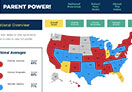
FIGHTING ILLINI. To say deep-pocketed unions and special interests have launched a full-frontal attack on Illinois charter schools would be an understatement. Multiple pieces of legislation are now gaining traction in Springfield, that aside from inhibiting choices for underserved students, weaken the already lousy charter policy environment in Illinois, indicated by its charter law grade of ‘D’ and low Parent Power standing. In addition to bills that would severely limit autonomy on how charter schools spend their funds, there are a litany of other proposals aimed at limiting the charter appeals process and subjecting charters to burdensome standards to which they’re already accountable due to existing legislation. Join thousands of others and make your voice heard to urge lawmakers to fight for charter school equity and survival.

MAINTAINING TRUE CHOICE. Robert Cane of Friends of Choice in Urban Schools (FOCUS), delivered a powerful warning of the potential derailment of the charter school engine driving education reform in the District of Columbia. Playing a prominent role in the DC charter landscape, Cane has learned that with all of the charter school successes embodied by student achievement, efforts to inhibit growth have always persisted. Whether it’s burdensome regulation and paperwork, or attempts to control charter school curricula or work rules, there have been and always will be threats to charter school autonomy, which is what allows educators to innovate and do what they do best. Recently, some 17,000 DC families enrolled in the District’s lottery in search of the best possible education for their young students. For these families and many others in need of better opportunities, it’s critical to stand firmly against efforts to co-opt the charter school movement.

DO YOU KNOW quality teachers in non-traditional schools whose passion and dedication to educating makes a difference on a regular basis? Who are we kidding, of course you do! Visit publicschooloptions.org to nominate that outstanding educator for the 5th Annual American Pioneer of Teaching Award, and the lucky winner will be announced May 6th. Go to PublicSchoolOptions.org for more information.


Budget Neglects More Than Half of All Charter Schools in New York State

Fundamental Flaws in State’s Charter School Law Must Be Addressed to Ensure Equity; Politics Do Not Trump Good Policy

CER Press Release
Washington, D.C.
April 1, 2014

The New York Legislature, together with Gov. Andrew Cuomo, crafted a budget passing late Monday night that financially favors a select few charter schools in New York City rather than giving charter schools – and the students they serve – statewide equitable treatment.

“Claims that the New York budget is exceedingly friendly to charter schools are little more than political spin,” said Kara Kerwin, president of The Center for Education Reform. “Some charters have been granted protections from opponents they surely deserve, and this is a good thing. But overall this budget creates a tiered system in its treatments of charter schools, and the fundamental funding inequity flaw in the state’s charter school law remains intact.”

The new state budget provides facility support that is limited to new and growing charter schools in New York City only. City schools in private facilities and all charter school students outside of New York City get nothing. This means that more than half of all public charter schools in New York state will receive absolutely no school facilities aid.

Additionally, the budget agreement contains an extension of a freeze in base per pupil aid for charter schools for another three years while spending on other public school students goes up, representing a distinct funding disparity for charter school students across the state.

“State policy needs to enact what’s best for all children, and the budget agreement passed Monday favors a select number of charter schools at the expense of many others,” said Kerwin. “Playing politics with schoolchildren as pawns like this is downright wrong and unacceptable.”

“An equitable budget treats a student in Brooklyn the same as a student in Utica or a student in Buffalo, regardless of whether they attend a charter or traditional public school,” said Kerwin. “To truly improve the quality of education in New York for ALL students, fundamental flaws in the state’s charter school law must be addressed rather than looking for band-aid solutions year after year. Ignoring funding inequities means more and better opportunities for underserved students will continue to fall prey to the whims of politicians.”

Tennessee’s Charter School Sector Would Benefit from Public-Private Partnerships

Performance-based accountability is the hallmark of charter schools and reforms aimed at improving student learning.

Unlike all other public schools, charters must be proactive in their efforts to stay open. They must set and meet rigorous academic goals, and actually meet or exceed their state’s proficiency standards. Unlike the traditional public schools that intentionally remain under the radar, charter schools operate under intense scrutiny from teachers unions, the media, and lawmakers. In states with strong charter school laws that allow for objective oversight, it is clear that performance-based accountability is working.

In the $607 billion enterprise that is the U.S. K-12 education system, public-private partnerships have played, and continue to play an integral role.

Tennessee’s charter school law currently prohibits the non-profit boards of charter schools to contract with education management organizations (EMOs) for services. This is a major flaw in the Volunteer State’s law that is way outside the norm of best practice from almost every other state. In fact, only 10 states of the 43 that allow for charter schools limit a school’s autonomy to contract with EMOs, and these states are among the weakest for charter school laws in the country.

There are over a dozen high-quality management firms that are driven by capital operating in the public charter school sector. They are building public-private partnerships whose bottom line is for the greater good of the public interest. Their entire business model is predicated on student outcomes. If it’s not, they will lose business.

One such EMO, Charter Schools USA (CSUSA) has achieved outstanding results with all students—particularly low-income and minority students—that are significantly higher than the average academic achievement results for such students in the states where CSUSA operates. In Florida, for example, where around 70 percent of CSUSA schools operate, Hispanic and Black students, English Language Learners (ELL), and students who are economically disadvantaged attending CSUSA schools outperformed the state average by 11 percentage points in reading, 7 percentage points in mathematics, and 6 percentage points in writing each year for the past 8 years. (CSUSA also continues to show higher performance than the state with White students, too, and CSUSA’s total student population outperformed the state average by 6 percentage points in reading, 3 percentage points in mathematics, and 6 percentage points in writing. As a district, CSUSA earned an “A” academic average for 6 out of the last 7 years from the Department of Education.

Ninety-six percent of students completing 8th grade at National Heritage Academies partner schools go on to graduate from high school, well surpassing the national average for low-income students (70 percent) and all students combined (83 percent). Additionally, 37 percent go on to graduate college with their bachelor’s degree or higher, nearly five times higher than the national average rate (8 percent) for low-income students (NCES, 2013).

By law, education management organizations may only contract with the non-profit governing board of a charter school. These are public schools that are held to the same state standards, open meeting laws, and transparency. Open-enrollment policies must apply, and students that attend charter schools, regardless of the tax status of the organization that manages it, do so by choice.

Education management organizations bring investment and capital to the communities they serve, creating jobs, innovation, and cost-saving strategies. Most assume great financial risk on behalf of their non-profit clients to build infrastructure and facilities in communities that in any other industry would most likely not be considered ideal or open to business. In fact, like most charter schools, even those in public-private partnerships, receive on average 30% less per pupil than their traditional school peers whose management has no accountability or incentive to improve student outcomes.

For example, National Heritage Academies (NHA) has invested over $475 million in the communities it serves, creating good jobs, and providing new opportunities for students. For each new school, NHA makes a multi-million-dollar upfront investment to cover construction and construction-related costs – the school itself does not pay anything, as the school’s facility is financed privately and with no taxpayer money. In building any new public charter school, NHA typically leverages millions of dollars in private capital to create a new or renovated facility, all at no cost to local taxpayers.

Lawmakers should seize the opportunity to open the doors to public-private partnerships for Tennessee’s charter school sector. Doing so is not only a best practice but an important step to ensure quality growth among charters. Education management organizations serving charter schools bring expertise, capital, quality service and tremendous job creation to the communities they serve.

Jalen Rose: More school choice is the remedy for educational ‘madness’

Jalen Rose, RedefineED

It’s that time of year again when basketball and brackets take center stage. This March Madness, we’ll be pulling for our favorite teams and celebrating the players for their hard work and commitment – both on and off the court. And, while we may have differences in our final bracket picks, we know one thing is certain: many of the players we’ll be cheering for are student athletes who were given the opportunity to earn a quality education based on their athletic talents.

Many of these student athletes come from challenged backgrounds – not much different than my own. As many know, I grew up in Detroit, but thankfully, I was both afforded opportunities to attend a great college as a result of my basketball talents.

While a select few are able to capitalize on their individual athletic skills, for far too many students that simply is not an option. Sadly, in the United States, too many children do not have these same opportunities due to gaps in their educational experience that lead to a lack of fundamental knowledge and skills – those same skills that are necessary to be accepted into college and to succeed in life.

That’s why as we focus our attention on March Madness, I  hope to shed a light on the true “madness” in this country – the fact that every 26 seconds a student drops out of school.

Far too many of our minority students are not receiving the education they deserve because for many, the idea of attending a quality school is simply unattainable. I believe that this is unacceptable.

To put it into perspective, an estimated 366,369 kids will drop out of high school while we watch the 63 games throughout the tournament.

This is madness.

Students in our country deserve more educational options. They deserve access to best school for their needs, no matter their family’s income, and no matter their race. I am committed to empowering parents with the ability to choose the very best school for their child.

Education inequality is everywhere. Children are trapped in schools that do not meet their needs, in which student bodies are determined solely based on a ZIP code. It is no secret that many of those children who struggle in failing schools come from minority or low-income families. The real tragedy is that a great school can be just around the corner or is a short drive away, but children are denied the right to attend a superior school in our current system.

Educational choice gives every child the opportunity to attend the school that works for them and provide them with the tools they need to succeed. Whether it is private, public, charter, virtual or homeschooling – tailoring a child’s education to their needs is necessary.

As an advocate for educational choice, I have seen the positive impact of choice on numerous families and children across the country. I have visited and met with students who had come from failing and underperforming schools, now succeeding at high quality private schools – all due to educational choice.

My commitment to improving the educational options for inner city children is what inspired me to open the Jalen Rose Leadership Academy charter school – to provide a quality educational option to students in Detroit.

This month, as we participate in the annual March Madness activities, we must not forget the true madness – that too many children are trapped in a school that fails to meet their needs.

And, just as we commit to our school during the tournament, we must come together and commit to the cause: Educational Choice Now. So every child, no matter their ZIP code, no matter their race, and no matter their parent’s income, can access a quality education.


Massachusetts charter school bill revived

Mary C. Tillotson, Watchdog.org

A Massachusetts charter school bill, thought dead, was revived Wednesday morning.

“We’re still hopeful we can work something out,” said Dominic Slowey, spokesperson for the Massachusetts Charter Public School Association.

The bill would expand the charter school cap, which would allow more students to attend charter schools, which are public schools run without many of the regulations imposed on traditional district schools.

Currently, 40,000 students are on charter school waiting lists, Slowey said, and 81 charter schools are open. In Boston, 17,000 of the 55,000 students in district schools are hoping for access to charter schools.

The bill had languished in the education committee, where members didn’t reach an agreement by the deadline, so it recommended the full Legislature not consider the bill. Leadership in the Legislature reversed the decision and sent the bill to the House Ways and Means committee. The bill must pass both houses and land on the governor’s desk by July 31, the end of the legislative session, to become law.

“The (charter) schools are demonstrably high-performing schools, proven successful in bridging achievement gaps,” said Jamie Gass, director of the center for school reform at the Pioneer Institute.

A Stanford study found that typical charter school students in Boston made significant learning gains beyond their peers in district schools. A school year in a Boston charter school effectively resulted in 12 months of additional reading learning and 13 months of additional math learning, the study found.

Slowey attributed charter schools’ excellence to the state’s high standards and tough process for authorization. Those wanting to start charter schools must show competence in running schools and managing finances.

“The standards and accountability in Massachusetts, if it’s not the best it’s certainly among the best,” he said. “Only highly qualified applicants get a charter, so we have a very good system here of weeding out applicants.”

Charter schools receive about 30 percent less funding per student than district schools, said Kara Kerwin, president of Center for Education Reform.

Critics argue that public charter schools drain money from district public schools, but Massachusetts’s “impact aid” program requires that the state pay a student’s per-pupil cost to the district during the first year that student attends a charter school. The district receives money for a student it is not educating — 100 percent the first year and 25 percent for several years afterward.

The state hasn’t been fully reimbursing over the past couple years, Boston.com reports, and the bill would have allowed the cap to rise as long as the state is fulfilling its reimbursement commitments.

The cap, which limits the number of charter schools that can open in the state and limits the funding school districts can allocate for charter schools, is one of the more onerous burdens in the charter school law, Kerwin said.

While Massachusetts’ charter schools perform well, the state was ranked 25th in the country for the quality of its law in CER’s rankings.

School Choice Caucus Meeting

Choice is something that we often take for granted until it is taken away. On some days, the biggest choices we make are what we’re making for lunch or whether we’re going to the gym, on other days, we make choices that can influence the rest of our lives. Parents’ choices not only influence their own lives but also the lives of their children, and that is exactly what the parents who spoke at the Congressional School Choice Caucus meeting on March 25th were fighting for: their ability to make the best possible choices for their children.

The meeting was hosted by Congressman Luke Messer (R-IN), founder and chair of the Congressional School Choice Caucus, and featured parents of children who participate in the D.C. Opportunity Scholarship Program (OSP). The goal of the caucus is to “expand educational freedom and promote policies that increase high-quality education options for all children.” The four parents who spoke at the meeting highlighted their own experiences with OSP and how it has positively impacted their children. Each parent shared their unique story, but the one common thread throughout the entire meeting was the value of their choice. Parents know how different each of their children are, so why should there be only one system that is perfectly suited to them? Education is not one size fits all.

Congressman Messer stressed his belief that every child should have the opportunity to walk into a classroom where they have a chance to learn, and that is exactly what each one of the parents in attendance wanted for their children. A mother of two who lives in Maryland said, “I wish that I didn’t have to ‘shop’ for schools. But I do and I will, because that is what’s necessary for my children.” Both of her children attend Center City Charter School, and she has found that, despite the vast differences in their learning needs, they are both in an environment that is allowing them to learn.

Though the school choice movement has been growing among the grassroots for some time, Congressman Messer believes that “there is a moment now, it’s time to bring the grassroots up to the federal level.” The stories of people who have directly benefitted from having the ability to choose the best education option for their children will bring people out of the statistics and show them the real-life positive impact that school choice has had on so many families. We need to continue empowering parents to make the best possible decisions for their children’s future.

Bethany Tietjen, CER Intern

Charters like mine need rent help

Matthew Levey, New York Daily News

As charter school founders go, founders like David Levin and Eva Moskowitz — with growing networks of many schools — are the exception.

I am, in some ways, more typical of the 183-school charter sector in New York City. I’m starting a school with a few Brooklyn parents, using my savings — no, I did not work at a hedge fund — and with little institutional support.

My three kids attend public schools. My wife teaches at a high school in Chinatown. I’ve seen firsthand where the system works well and where it doesn’t. And, inspired by schools like Success Academies, I want to increase opportunities for even more kids.

If the state approves our application, we’ll put our beliefs to the test in District 13 — which includes downtown Brooklyn, Fort Greene and Clinton Hill — starting in September 2015.

The big question is: Where will we go and how will we afford it?

For more than a year, Mayor de Blasio has railed against co-locating charters in public school buildings. His nixing of a space-sharing agreement for an excellent Success Academy school put that position under scrutiny; this week, de Blasio seemed to change course, saying he’ll place more charter schools in public buildings after all.

But my school still can’t count on free space. Which means we will need every dollar of public funding allocated to each student.

That’s why the state Senate’s plan to offer all city charter schools true funding equity — a counterweight to the mayor’s proposal to charge some charters rent — is critical.

The Senate would provide an allowance for rent to equalize charters’ per-student funding with what public schools receive. That would help homegrown schools like ours make a go of it, especially in our startup phase.

In our first year, we calculate that renting the space we’ll need will cost $525,000. And that assumes we find a generous landlord in Brooklyn. This is the equivalent of roughly 10 teachers.

In our second year, rent could rise to $854,000.

Those additional teachers could be used to further instruction. Alternatively, we could buy books and art supplies and pay for field trips with the money.

Rent would take nearly $3,500 of our $13,800 annual, per-pupil funding. That’s something traditional district schools aren’t on the hook for. Their buildings were constructed years ago and generally don’t “cost” the taxpayer anything but maintenance.

We’ll have to pay both.

Sure, we’ve thought of ways to make do if forced to pay. We’d contribute less to our employees’ retirement funds. Some staff, like our social worker and special-ed coordinator, would work part-time. But it’s possible the numbers just wouldn’t add up. Without space to start and grow, we’d disappoint hundreds of Brooklyn families that have expressed interest in our school.

Charter schools were envisioned as zones of experimentation, where new ideas could grow into best practices that would be shared across many schools.

That’s what we aim to offer. The neighborhood where we hope to open sorely needs innovation. Last year, just 39% of elementary students in this area passed their state tests.

Some question our focus on a comprehensive, international curriculum that builds background knowledge and cultural literacy. They say it won’t work.

We’ll see. Either way, our efforts will deepen our understanding of what works in education.

Too often, we reduce important questions of education policy to emotional appeals. Some seize on Moskowitz’s salary as supposed proof of everything that’s wrong with reform. Others see the dread hand of United Federation of Teachers President Michael Mulgrew in every failure of our district schools.

The truth lies somewhere in the middle. Innovation requires new entrants, willing to challenge existing beliefs — who constantly ask “Why?” when told “You can’t do that.” Who look at the long odds of a poor child from an immigrant home finishing college and say, “I’ll try.”

We want that chance.

Daily Headlines Have Moved!

Daily Headlines have moved! To get your daily dose of education of news, go to www.mediabullpen.com, where not only can you get the latest news of the day, but you can also have the latest news delivered straight to your inbox.


Click here for Newswire, the latest weekly report on education news and commentary you won’t find anywhere else – spiced with a dash of irreverence – from the nation’s leading voice in school reform.

Massachusetts Fails to Lift Charter School Cap

Politics Overcome Demand to Create Quality Schools

CER Press Release
Washington, D.C.
March 25, 2014

Kara Kerwin, president of The Center for Education Reform, released the following statement on the failure to lift the charter school cap in Massachusetts:

“It is extremely disappointing to see efforts to lift the charter school cap in Massachusetts come up short, and access to in-demand schools statewide fall victim to political interests.

“The fact that lawmakers could not reach a consensus on expanding a category of schools for which over 13,600 students are on waiting lists for should be very troubling to Massachusetts parents and students.

“Honoring a tired and unproductive system of reimbursement that actually enhances funding disparities overcame the need to foster quality schools for Massachusetts students most in need of educational choices.

“Strong charter school laws feature independent, multiple authorizers, few limits on expansion, equitable funding, and high levels of school autonomy. Currently, Massachusetts ranks 25th out of the nation’s 43 charter school laws, earning a grade of a “C.”

“Lifting the charter school cap in Massachusetts is integral in generating positive outcomes for students. It’s unacceptable that lawmakers continue to fail to acknowledge the positive effects of charters on student learning and today’s failure to address the demand for better schools is proof positive that the politics of it all trump what’s best for kids in the Bay State.”

NEWSWIRE: March 25, 2014

Vol. 16, No. 12

MARCH MADNESS IN YORK, PA. For many across the country, March Madness is viewed as a time full of Cinderella-storied basketball teams that overcome all odds, along with shining moments that shock and inspire. These sentiments are also present in the ongoing struggle of New Hope Academy in York, PA, where a shocking moment took place at a school board meeting. In deplorable fashion, the York County School Board felt it necessary to silence New Hope charter school supporters, even going as far as sending a police escort for New Hope’s performing arts director, who only wanted to call for increased dialogue and inclusiveness. Students were also silenced, because in the Board’s view, school officials are only accountable to the “taxpayer,” a startling mindset to have when student accountability should take priority above all else. This hostility is real, and the longer states like Pennsylvania hold off on fixing their law to embrace proven best practices like multiple and independent authorizers, this hostility will be here to stay.

MASKING MARYLAND CHOICE. Maryland has always been one of those states that receives heaps of praise in the education realm. However, as CER has pointed out in the past – here and here – and as a recent editorial reinforces, the praise prevents many from seeing how shortsighted Maryland actually is when it comes to meeting the growing demand for Parent Power. After noticing the dramatically low number of alternative education options statewide, it’s not difficult to see why some are calling Maryland’s charter law a law “in name only.” This is why it’s so critical lawmakers break through the hype and create the policy environment Maryland families deserve.

TENNESSEE ADVANCING, & NOT JUST IN NCAA TOURNEY. Last week, we were on the ground in Nashville to ensure the Tennessee Senate take a positive step by approving a bill permitting the State Board of Education to become a charter school sponsor after appeal.  But it’s not over yet, as the bill now goes to concur with its House counterpart, where legislators must remain vigilant in making sure this is not another exercise in legislative futility, an unfortunate characteristic of the Volunteer State. If this current effort results in passage and legislators can also commit to encouraging public-private partnerships as another means to improve schools statewide, Tennessee legislators will be on a path towards creating conditions in which charters and students can truly thrive.

SCORE ONE FOR ARIZONA PARENTS. Arizona parents who benefit from having more control over their child’s education obtained a key victory last week when the Arizona Supreme Court declined to weigh in on the legality of Empowerment Scholarship Accounts (ESAs), thereby upholding their constitutionality. The popular program is designed to give flexibility to underserved student populations who because of special needs or external circumstances, may not be equipped with everything they need to excel in a traditional setting. This ruling, combined with charter advocate Greg Miller’s re-nomination to the State Board of Education, will go a long way to meet the demand for more options, and proliferate choice and accountability-based initiatives such as ESAs to boost outcomes for students of all backgrounds.

A DECISION OF MASS PROPORTIONS. Today is the deadline for lifting the cap on the number of charter schools permitted in Massachusetts, and it’s still uncertain whether legislators will listen to the over 4,000 parents and students who have submitted letters attesting their support for schools that have given them incredible opportunities they would not have had otherwise. If letters don’t sway legislators, perhaps they’d be swayed by wait lists, where in Massachusetts there are over 13,600 applications for 2,200 charter spots, well above the national averageof 300. As much of the country remains gripped by March Madness, a lifting of the charter cap in Massachusetts could position the Bay State to become a rank-jumping sleeper pick in next year’s Charter School Laws Across The States: Rankings & Scorecard.

DO YOU KNOW OUR NEXT INTERN? The hunt for the next dream team of CER summer interns begins now! CER is looking for interns who want to gain knowledge about education policy and translate these ideas into action to create better opportunities in education. And don’t worry, we take interns from all schools, even schools that didn’t make it to the March Madness Big Dance this year. Click here to learn more and apply!