





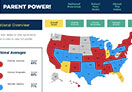




Charter schools receive significantly less per-pupil funding than traditional public schools, according to an April 2014 study from the University of Arkansas.
On average, charter schools receive 28.4 percent less for each student than their traditional counterparts, amounting to $3,814 less per year.
Over time, the funding disparity between districts and charter schools has increased by 54 percent in eight years, as charter enrollment has continued to grow.
Funding gaps vary from state to state, but researchers found that the gap is widest at the local level, where on average charter schools receive $1,780 per pupil from local sources, compared with $5,230 received by traditional schools.
Moreover, there is overwhelming evidence that state funding inequities are structural in nature, and charter funding can’t possibly be resolved without starting over.
These findings validate those from the 2014 Survey of America’s Charter Schools, which reported that charter schools receive on average 36 percent less revenue than their traditional school counterparts.
The University of Arkansas study is current up to the 2010-11 school year, and researchers collected, reviewed and audited financial statements from 30 states plus the District of Columbia.
Reviewing President Obama’s Education Budget
It is always interesting to see how the U.S. government divides its power between the state and federal levels. Though many of us have learned about the subject in theory, it isn’t always that easy to understand in practice. Attending the hearing of the House Committee on Education and the Workforce titled, “Reviewing the President’s Fiscal Year 2015 Budget for the Department of Education,” allowed me a glimpse into the often murky waters of federal education policy.
The hearing, chaired by Representative John Kline (R-MN), featured the testimony of Secretary of Education Arne Duncan, who answered questions from the representatives on the committee. Based on the questions and statements made, the disconnect that exists between the Republican and Democratic parties on education issues was very apparent throughout the hearing. After attending many events that featured speakers who focus on school choice and charters, I always wondered why there wasn’t more progress being made in education reform when there were so many passionate people supporting the cause. This hearing showed me both sides of the party lines on education issues as a whole and gave me a better understanding of how complex and multifaceted the subject of education reform is.
The differences between the statements made by the representatives on the committee and Secretary Duncan were vast, but all of them agreed that there needs to be change in the U.S. education system. The issues aren’t as simple as charter or public schools; Secretary Duncan agreed that there is a need for more high performing schools overall, it doesn’t matter if they are traditional or charter schools. The need to close the opportunity gap was a huge topic of discussion among the committee, but both parties had different opinions on what needed to be done to fix it.
Everyone is aware of the need for bipartisan cooperation in order to achieve progress, but neither side seems willing to budge. In order to solve the problems that exist in education today, it’s clear that there needs to be a shift between the party ideologies that are limiting the progress that can be made for America’s students.
Bethany Tietjen, CER Intern