










Sign up for our newsletter

New Report Grades State Tax-Credit Scholarships

June 27, 2014
by Joy Pullman, The Heartland Insitute

School Choice Today: Education Tax Credit Scholarships Ranking & Scorecard 2014 author, Brian Backstrom joins the podcast to discuss his analysis, why tax-credit scholarships are the most popular form of private school choice, and the top three ways states can improve their school choice laws. Listen here.

Drinking Rosés in Vegas, not Charter Kool-Aid

What do Provence Rosés, oyster farms, and the book, The Giver have in common? Besides being the subject of my Saturday morning reading in the Wall Street Journal, it would appear nothing. But as I stewed on the back and forth of popular and well regarded reformers over the last few days on the subject of whether Michigan charter schools are succeeding, and then, having arrived at the National Charter Schools Conference and heard more banter about alleged problems in charter schools based on reading newspapers rather than detailed knowledge, the connection between great wines, saving the oysters and a provocative book hit me: Most of us really do believe we are experts after reading second, third and fifth hand reports!

I could easily walk away from a blissful hour of reading the newspaper and claim expertise on how the perfect Rosé wine is built. I could also wax eloquently about the stupidity behind the government’s attack on an oyster farmer in Marin County, CA. I actually know a bit about oyster farms — my husband is a boater and I ran for office in a state where similar issues have been on the table. In fact, I feel empowered with this experience and now having read this one article, feel qualified enough to declare that the Obama administration is violating the farmer’s constitutional rights. Finally, I could believe that reading an article about The Giver, the book that controversially ignited a debate over what constitutes the good life, gives me enough authority to talk about the author’s conclusions that I don’t even have to read the book to sound halfway intelligent.

Indeed, I can be as limited and as narrow in my review of issues as some of our colleagues are when it comes to the very complicated, detailed and intensive study of education policy.

But I choose not to, because I don’t believe that passing judgment on issues that I have not studied in-depth is either useful or just.

Not so with my colleagues in education reform, who often read newspaper articles as empirical objectivity, like this past week when some attacked the Michigan charter school sector based on a series of news articles from the Detroit Free Press, hardly a bastion of objective expertise in education policy, and a group that has for two decades ignored journalistic integrity with biased and distorted coverage of charter school results.

In Friday June 27th’s Twittersphere a battle erupted over Michigan, after my colleague Kara Kerwin tweeted out CER’s press release to tell the story the Detroit Free Press refused to tell based on decades of expertise and analyses in the state. No sooner had that been tweeted, StudentsFirst’s Eric Lerum began boasting of his organization’s “F” ranking of Michigan based on the group’s two-year involvement in the state. Kerwin took him to task for his characterization, resulting in a series of tweets attempting to misconstrue her comments to suggest that CER stands for anti-quality. To the contrary, CER’s moniker since 1993 has been the pursuit of educational excellence.

Meanwhile that same day, in an article by longtime, education establishment journalist and reform naysayer, John Merrow (who generally condemns capitalism while hanging out in NYC’s Upper West Side’s swankiest places), wrote that the charter school movement is in the hands of groups like CER which according to him, adheres to free market principles, and nothing more. Never mind that free markets have nothing to do with CER’s mission (which I founded, so I sort of know) or that its Board’s diversity in politics, business and education is grander than the leadership behind most groups. Apparently, the notion that some bad schools produce bad results allows lots of people to make statements about the relative value of an entire state’s environment and about all of the individual actors in it as if they’ve actually engaged directly with them.

Like the producers of a great Rosé, or the oyster farm cultivator, or even the author of a great book, I’m a little defensive about the work I helped create. So forgive me if I have an attitude about the stupid things people say and do when it comes to education reform. For example, I can’t imagine why Greg Richmond of the National Association of Charter School Authorizers (NACSA), would agree to be interviewed by a guy who has spent a lifetime defending the BLOB and attacking charters, and not only support his characterization of CER but question its influence within the charter sphere:

“The CER is much less influential than it used to be. After two decades of experience, few people in the charter movement believe that choice and deregulation are guaranteed to produce results…”

What makes a person influential? It’s not being quoted in a 3rd or 5th source-removed article by a reporter who is not an expert in an issue area – and rarely has the time to be so. Influence comes from being an expert. Expertise comes from studying policy, seeing how policy works firsthand, visiting and knowing people who live it, assessing their experiences, and reading countless reports pro and con on a regular and ongoing basis, and checking and rechecking one’s understanding regularly. Experts are influential, and an organization is only influential when its people are experts.

The Center for Education Reform’s influence derives from its people, who are experts. These include staff, who even when new are expected to become experts quickly, but its Board and most importantly, its “constituents.” Organizations like the National Alliance for Public Charter Schools (NAPCS) influence by convening and assembling influential people and staff at all levels, amass expertise and seek to purposefully influence the state of the charter movement loudly and strongly with those myriad voices. Others exert influence by relationships. Influence is a commodity – if you have it, you can make change. NAPCS has it, KIPP has it, TFA has it, and CER has it.

The author of the article on fine Rosés is no expert. She told a story, limited by the facts she could muster or provide in a relatively short time and limited by her experiences. Has she ever had an Italian Rosé or talked to the vintners there who could show her a more refined process than any she’d seen in Provence? Probably no more than StudentsFirst’s Lerum has been to all the charter regions of Michigan, “tasted” their fruits, analyzed their data and talked to their creators! Yet both are having an influence on their chosen subject because they have a platform. Yet not all influence is positive. Just watch The West Wing.

Having a positive, lasting influence requires expertise, data, and a long view. CER has not only influenced a generation of thoughtful reforms but the dozens of organizations that have started as a result of its fight to put these reforms on the map! A great guy by every other measure, Richmond’s organization has influenced the creation of a highly bureaucratic and overly process-driven charter movement, putting state education departments and state-run commissions in the hands of people who never were and never will be education reform fans – and who believe that they, because of their positions, not the parents and the teachers closest to our kids are most qualified and best suited – with good information, transparency and high, clear standards – to make decisions and govern our schools.

That was the charter promise. Charter schools promised that they would do education better, with more focus on students, empowering parents to be part of the schooling process, and providing the conditions for real people – teachers and local leaders – to chart the course that they believe best emulates success for their students. It was thoughtful, hard work, and has been the single biggest factor in why this nation has spawned a generation of people who no longer take education for granted, and who saved it from the clutches of labor-focused, top-down, parent-hostile systems that once dominated the nation.

Today, even AFT president Randi Weingarten has to start her sentences with “we like choice…” even if it’s always followed by a “but…” Today, the national news leaders and the financially influential found and fund new school efforts. Today, Democrats and Republicans join hands in many (not all) aspects governing charter schools, a fact that CER prides itself on having nurtured years before a Democrat would publicly admit their support for alternative school options.

Though robust, well liked, and very mainstream, charter schools face enormous obstacles. Today the charter movement is facing headwinds from friends, along with air attacks from enemies. Some friends are more concerned with popularity than purpose. They fear negative headlines and quickly work to separate themselves from anything they fear might make them look like they are on the fringe. Just because a media outlet puts out an eight page spread masked as an exposé, doesn’t mean it’s accurate or that anyone whose kids are in charters really care what the media says.

This is just a fraction of the trouble that the charter sector faces as it convenes today in Las Vegas for the 14th annual National Charter Schools Conference, produced by NAPCS, whose leadership under Nina Rees is exceptional. Indeed though many will find much to celebrate this week, the very foundation of the charter schooling idea is threatened by a hodgepodge of advocates and opposition, and it’s no longer clear to most participants who is a qualified expert and who is not. It’s easier to embrace hollow statements about liking quality without actually doing the work necessary to get there or understanding the facts and being able to define success by the data you read not the newspapers you consume. Whether you will be in Vegas this week or are following from afar, please ask yourself why you are in this, what your role is, and whether you can “be inspired” by an “intentional” well-built Rosé rather than drink the Kool-Aid of misinformation about what is otherwise the greatest contributor to students’ educational success in more than a generation.


Michigan’s Charter Law Embodies Best Practices, Allowing Successful Schools to Thrive

How Lawmakers Can Recognize Best Practices, and Build on Them

CER Press Release
Washington, D.C.
June 27, 2014

The state of Michigan was one of the first in the U.S. to boldly embrace charter schools as a way to meet parental demand for more and better educational opportunities, introducing renewed accountability to the public system. Over twenty years later, Michigan’s charter school law continues to serve as a national model.

“Michigan’s charter law has many bright spots, allowing for an environment that fosters a vibrant charter sector where a number of quality schools can grow while still being held accountable for results,” said Kara Kerwin, president of the Center for Education Reform (CER).

Michigan is one of only five states to earn an ‘A’ on CER’s 2014 Charter Law Rankings & Scorecard. A key strength of Michigan’s charter law is that it allows for independent, multiple authorizers, permitting universities to oversee charter schools.

Universities like Central Michigan University (CMU) have the infrastructure and resources to properly act as managerial stewards of charter schools, leaving dedicated school leaders and teachers to focus on their top priority of helping kids learn. These same teachers can work under an independent employment structure and are rated on performance, honoring them as the professionals they truly are.

“Strong laws mean strong schools, which translate into greater outcomes for students who benefit from an environment that best fits their learning needs,” said Kerwin.

Statewide, 42 percent of Michigan charter schools outperform traditional public schools in math, and 35 percent outperform in reading. Annually, the typical Michigan charter student will make gains in math and reading equivalent to two additional months of learning compared to their traditional school peers. In Detroit, a city where it’s estimated that 47 percent of adults are functionally illiterate, annual learning gains for charter school students jump to three months.

“Lawmakers must focus on how to build upon Michigan’s successes, which have made it a shining example for other states to replicate,” said Kerwin.

“Rather than limit quality schools from expanding, policies must focus on lasting reforms that aid the ability of parents to decide the best possible educational opportunity that’s right for their child.”

Where is This Commentary Heading?

Amid the meandering paragraphs and lamentations about how the charter school movement has lost its way, The Center for Education Reform is trying to pinpoint where exactly John Merrow’s blog post went off the rails, and where it ended up.

It might’ve been when he said, “every Tom, Dick and Harry” have been able to open a charter school under a university authorizer.

Central Michigan University, one of the finest charter authorizing models in the country, has received 259 applications for charter schools in the past decade alone, with 22 (8 percent) of those actually becoming operational. So maybe Tom was able to run a charter school, but Dick and Harry weren’t.

But that can’t be right; there were six whole paragraphs before reaching that claim.

Unfortunately, it turns out this post was doomed from the outset, tanked by a weird analogy comparing nondescript signs for charter schools and restaurants.

This led to Merrow giving credence to Greg Richmond’s labeling of CER as the “leading voice of this free market philosophy” surrounding choice and charters.

Merrow and Richmond might be surprised in finding out that the CER offices do not have shrines dedicated to the likes of Friedrich Hayek and Adam Smith, and the organization as a whole does not have a strict ideological adherence to what Richmond calls a, “free market philosophy.”

Shockingly, Kara Kerwin does not wishfully ask every morning how to make the world a little more laissez-faire.

What CER does focus on is sound policy and Parent Power, knowing that quality charter proliferation can only go so far without strong charter laws on the books. This accounts for the 335 additional charter school campuses created in states graded “A” or “B” on the 2014 Charter School Law Rankings & Scorecard.

After two decades, charter schools continue to be “pockets of innovation,” (to use Merrow’s term) and can continue to be with the proper safeguards in place.

Accepting the premise that charters and the students they serve are set up to fail borrows talking points from the opposition, undermining the ability to create more educational options that parents so desperately need.

“Our Collective Challenge”

Wednesday afternoon at the American Enterprise Institute, Randi Weingarten, president of American Federation of Teachers, participated in a conversation on the role of teachers unions in public education. The event started with an introduction from Frederick M. Hess, director of education policy studies at AEI, and then Weingarten followed up with a keynote speech. The event concluded with a “conversation” between Hess and Weingarten and a Q&A with the audience.

Prior to becoming AFT President, Weingarten was an attorney, a teacher at Clara Barton High School, and President of the NYC teachers union, the United Federation of Teachers. She referenced her background as a teacher during the discussion: commenting on the excitement that her students experienced when they excelled.

Weingarten spoke on a variety of issues, ranging from the Vergara v. California decision, to Common Core debates, even to the new contracts for New York City teachers. Throughout the discussion, Weingarten returned to the idea that the current focus of public discourse is not conducive to improving education in public schools. She stated that she would not take part in the conversation concerning the validity of the existence of teachers unions. Instead of focusing on the contemporary value of unions, she deflected the attention stating, “All that energy that’s being used to argue about that is not being devoted to actually help children succeed.” Whereas Weingarten did mention a few successful AFT initiatives and partnerships, she did so with the assumption that she was delivering a huge “surprise” on the audience. She used the lack of knowledge of AFT’s current initiatives to support the idea that the argument over union relevance is unsubstantiated and irrelevant.

When it comes to unions’ roles in public education, it seems that Weingarten’s answer is that a collaborative effort between all stakeholders is necessary. Although true, it does not really answer the question. Weingarten provided a critique on what needs to be fixed in education policy, but in terms of union involvement her answer was unclear.

When the topic of teacher tenure policy arose, she commented on the Vergara ruling, saying that it “diagnosed the right problem, but came to the wrong solution.” She combated what she conceived to be popular opinion with a self-described “infomercial” stating, “No teacher wants an ineffective teacher in the classroom, “ and AFT “doesn’t believe tenure should be a job for life, or that tenure should be an excuse for managers not to manage, or a shield for incompetence.”

Instead of explicitly focusing on how unions are improving public education, Weingarten emphasized the need to focus on the students and the “collective challenge” of finding a way to turn around problematic schools and making them into institutions where instructors want to teach and students (and their parents) want to learn. This move shifted the focus from the AFT to an idealistic to-do list for education reformers.

Adiya Taylor, CER Intern


Questioning Support of Common Core

On June 18th, The American Enterprise Institute (AEI) hosted Randi Weingarten, the current president of the American Federation of Teachers (AFT). Engaging in a conversation with Frederick Hess, AEI’s director of education policy studies, Weingarten firstly shared with the audience that the need for debate—a dialogue with different people.

As it currently stands, the AFT union is comprised of about 1.5 million members including K-12 educators, administrators, and guidance counselors. According to Weingarten, unions are not monolithic. Members are not shy to share their opinions on what they may like or dislike concerning the education system. They engage in debate, or as Weingarten would say: “conversation.”

During her conversation with Hess at AEI, Weingarten spoke to an issue that has remained at the center of educational debate for more time than it should: Should schools keep or disregard the Common Core?

Although Weingarten did not reply with a resounding “yes,” her anecdote showcases that she is an advocate for the standards. Before Weingarten was a teacher, she served as a lawyer. With that professional backing, she can now confidently say that the Common Core would have helped far more than any tool could to teach students the importance of civics, the Bill of Rights, and things related to the American governmental system.

At Clara Barton High School, Weingarten notes that the majority of students were from African-American and Latino backgrounds; she remembered them hating her for the manner in which she taught. Weingarten then witnessed them engaging in debate and intellectual conversation and she watched their self-esteem grow. In her words, they went from an attitude of “no-no-no!” to a determination that exclaimed, “yes-yes-yes!” Weingarten believes that if we can get the strategies right on how to teach kids intellectually and the best way to overcome resistance, then kids will be able to “seize their lives.”

So, I ask myself the question: Should schools keep or disregard the Common Core? The Common Core should be kept only if it has the potential to be tailored to meet the learning needs of all the diverse populations represented by the students in this country. If the standards still allow for use of differentiated instruction, then that would be even better. If the Common Core is able to provide students with the equal opportunity to learn, comprehend, and put material into practice, then perhaps it could be beneficial. I am currently still at odds with the question myself.

Navraj Narula, CER Intern


California lacks education tax credit scholarship program, shortchanges students

Gridley Herald

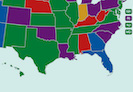
Parents in California do not have all available options to choose the best education for their child, according to a new analysis released by the Center for Education Reform, School Choice Today: Education Tax Credit Scholarships Ranking & Scorecard 2014. The first of its kind, the Education Tax Credit Scholarships Ranking & Scorecard 2014 is an in-depth analysis and state-by-state comparison of the 14 tax credit-funded scholarship programs currently in existence.

As of 2014, 14 states have enacted tax credit-funded scholarship programs, with half of those states enacting programs in just the past three years. Tax credit-funded scholarship programs now pay tuition for approximately 190,000 students, a school choice program participation level that is surpassed only by enrollment in charter schools.

“The key to truly transforming learning in the United States is by allowing parents a portfolio of educational options that aren’t restricted by zip code,” said Kara Kerwin, president of the Center for Education Reform. “It’s time for lawmakers to acknowledge the proven benefits of school choice, and tax credit scholarship programs are an important piece of the puzzle.”

“What the Education Tax Credit Scholarships Ranking & Scorecard 2014 reveals is that we need more states with strong laws, because strong laws facilitate greater participation in school choice programs,” said Brian Backstrom, lead researcher and author of the report and a senior advisor to CER.

“California would be wise to model tax credit scholarship legislation off of states like Arizona and Florida, both earning ‘A’ grades on the Education Tax Credit Scholarships Ranking & Scorecard 2014. There should be no excuse from California lawmakers to do what’s best for parents and students given the fact that we have powerful examples of what a successful tax credit scholarship program looks like,” said Kerwin.

“There absolutely needs to be a sense of urgency around creating more educational options for students and parents. Not only is the U.S. falling behind when it comes to student achievement on a global stage, but the U.S. Census predicts an influx of over 11 million school-aged children in the next 20 years. State lawmakers must act now to allow for new and innovative options in order to address this demographic reality and national security issue,” said Kerwin.

Kara Kerwin, president of CER, and Brian Backstrom, a senior policy advisor to CER and lead researcher and author of this report, are available for comment on the Education Tax Credit Scholarships Ranking & Scorecard 2014. Members of the media should contact CER Communications Director Michelle Tigani at 301 986 8088 or michelle@staging.edreform.com to set up interviews.

Alabama Accountability Act APTV

APTV

Christa Andrews, Alabama State Coordinator at BAEO, discusses CER’s ‘F’ grade on AL’s Tax Credit Scholarship program. Under the Alabama Accountability Act, low income students not in failing school systems can be considered for scholarships but only after families in failing schools are considered.

How Does Florida’s Expanded Tax Credit Scholarship Law Compare Nationally?

Arianna Prothero, Education Week

Although Florida has significantly raised the eligibility caps on its tuition tax-credit scholarships to include more middle-income families, it is still far from the most generous program in that regard nationwide.

Tuition tax-credit laws allow businesses or individuals to claim tax credits for donations made to approved scholarship organizations which then distribute money to eligible students. Opponents charge that such programs siphon money away from public schools and into private, religious schools.

‘Solidly Middle Class’

Starting in 2016, students from Florida households making about $62,000 a year (260 percent of the federal poverty level) will be eligible for tax-credit scholarships, although the amount of the scholarships will vary based on family income levels. Currently, Florida law caps the program at roughly $44,000 annually which is just below the median yearly household income of about $47,000 according to the most recent U.S. Census estimates.

With the higher income cap, the tax-credit scholarships have moved well into the realm of being a school choice policy for both low- and middle-income families.

“I would say $60,000 fits in the middle class,” said economics professor Sean Snaith with the Orlando-based University of Central Florida. “It’s not going to get you a house in Miami, but there are many areas, particularly rural, where that’s solidly middle class.”

This income-cap creep is not unpredictable. Many tax-credit scholarship and voucher programs start off serving disabled or low-income students and then expand, says Chris Lubienski an education policy professor at the University of Illinois Urbana-Champaign.

“It’s a foot-in-the-door strategy we’ve been seeing,” he says. “You start such a program for a […] population that is underserved, and then you start expanding from there.”

Low Caps, High Ranking

However, among the 14 states that have tax-credit scholarship programs, several set much higher income caps than Florida’s.

Brace yourself: We’re not done with the numbers yet.

For example, a family of four in Oklahoma has to make 300 percent or less of the eligibility level for the federal free and reduced lunch program, which is roughly $130,000 a year, to qualify for an education tax-credit scholarship, while in Georgia and South Carolina there is no income limit at all, according to data from the Center for Education Reform, a school choice advocacy and research group in Bethesda, Md.

“Florida’s previous eligibility level of 185 [percent of] the federal poverty rate tied the state for the most-restrictive participation limit,” says CER senior policy advisor Brian Backstrom. “The broader reach offered under the higher income-eligibility limit moves it only to 11th place out of the 14 states.”

Other areas of Florida’s law are more generous: The state has a system in place to automatically increase the number of available tax-credits by 25 percent if 80 percent of the credits are claimed in the previous year. Florida awarded 100 percent of its credits last year.

The CER recently awarded Florida an “A” for its tax-credit laws, ranking it only second nationally behind Arizona.

NEWSWIRE: June 24, 2014

Vol. 16, No. 25

For two decades, charter school leaders, parents and educators have forged ahead to deliver the promise of a better educational opportunity for our nation’s children in the face of relentless attacks. In light of a Detroit Free Press series calling for more charter school oversight, it has once again become necessary to set the record straight surrounding the high-demand schools that serve over 2.5 million students and counting. 

CHARTER SCHOOLS ARE PUBLIC SCHOOLS. Regular readers of Newswire are acutely aware of this fact, but it bears repeating amid recommendations for inordinate amounts of scrutiny that undermine charter schools. Increased accountability is one thing, yet those calls never seem to be echoed when it comes to securing equitable resources for charter students compared with their traditional school peers. Disproportionate treatment of charter schools allows opponents to perpetuate the mindset that charters are unwelcome outliers of the public system. More regulation in the name of oversight would misguidedly destroy the very autonomy and freedom families sought out in the first place.

CHARTERS ARE ACCOUNTABLE FOR RESULTS. The hallmark of charter schools is performance-based accountability. Through a wide range of management structures and mission statements, charter schools not only adhere to state standards, but are driven to deliver results knowing full well closure is a distinct possibility, and that families can vote with their feet by leaving the school at any point in time. It is for this reason that charter schools are accountable to families first and foremost. The research shows both in Michigan and across the states that charter schools deliver substantial learning gains in math and reading. Accountability in education can never be truly achieved without parental choice, and charter schools are just one way in a vast mixture of alternatives to deliver that promise.

CHARTER SUCCESS IS CONTINGENT ON STRONG LAWS. Of course, the laws and safeguards are one of the biggest determinants of whether or not charters function in an environment where they can thrive. Ethics regulations to which charter schools are already subject accomplish nothing to lift student outcomes and replicate existing laws that address malfeasance. Instead, charters operate best under independent authorizers, usually in the form of universities that have a vested interest in student success. Central Michigan University epitomizes the university authorizer model, equipped with the resources and infrastructure to hold educators and school leaders accountable, allowing it to oversee a large multitude of successful schools.

CHARTERS ARE UNDERFUNDED. On average, charter schools nationwide are underfunded by 36 percent less than traditional public schools. A major obstacle particularly in Michigan is a lack of dollars for charter school facilities, meaning dedicated operators often have to become creative and improvise to secure an adequate learning space for students. In some cases, this means partnering with organizations that make categorically high-risk investments into schools intended for underserved students. Not exactly the most surefire way to take care of the bottom line, but it’s achieved through increasing student achievement. The ability to do more with less public resources speaks volumes about the dedication of charter operators, and should open the door for a conversation about how these schools could serve even more students with funding equity.