









Jason Bedrick, Education Next
Though voucher programs tend to receive more attention, more than six in ten students attending private school through an educational choice program are using tax-credit scholarships. Nearly 200,000 students use tax-credit scholarships in 11 states, and three other states have recently enacted but not yet implemented scholarship tax credit (STC) laws. States looking to expand educational choice are more likely to adopt a scholarship tax credit because STC laws face fewer constitutional obstacles than government-funded vouchers and elicit higher levels of public support.
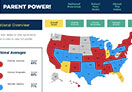
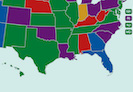
Policymakers should learn from the other states’ experience when designing their own STC laws. One useful new resource for such policymakers is the Center for Education Reform’s first-ever scorecard for scholarship tax credit laws. The CER report grades every state’s STC law (or laws) on an A-F scale based on their performance in four categories: Eligibility and Availability; Design of Credit and Scholarship; Autonomy; and Budget. The report also rates each state based on the number of participating students and the total amount of scholarship funds expended, but did not count these scores toward the main grade as participation and funding rates depend considerably on the age of the program.
The scorecard highlights the importance of good design. The best STC laws allow the widest participation without negatively affecting private school autonomy. Wide participation entails avoiding overly restrictive eligibility requirements for scholarship recipients and allowing the scholarship organizations to award scholarships that are large enough for low-income families to afford tuition. The CER report penalizes states that restrict new scholarships to students who are currently in a public school, who have special needs, or who come from very low-income families. States also receive lower scores for restrictions on the scholarship sizes below the lower of either $10,000 or parity with public school spending per pupil. Only Arizona receives full credit for its eligibility criteria while eight states receive full credit for their maximum scholarship sizes.
Ensuring sufficient funding requires a wide enough donor base, encouraging donations through credits that are as close to dollar-for-dollar as possible, and allowing substantial donations. CER scores each state for the types of taxpayers eligible to contribute (i.e. – corporations and individuals) and deducts points for credit values below 100 percent and for maximum donation sizes below $100,000 for corporations or $2,000 for individuals. Of the states with both a personal and a corporate income tax, all but three offer credits on both taxes. The STC laws in six states offer credits for 100 percent of donations to authorized scholarship organizations and eight states receive full credit for their maximum donation amounts.
On private school autonomy, however, the CER report does not go far enough. The report’s preface promises to hold states accountable for preserving private school autonomy:
Good state laws preserve the current level of autonomy enjoyed by private schools over their educational programs while they participate in the program. Other laws impose new restrictions on participating private schools as a condition of participation, including eligibility requirements, testing mandates, and educational content or course requirements.
In practice, though, the report appears to grade its Autonomy section on a somewhat lenient curve. First, preserving autonomy is not worth much relative to other sections in the report. States could only lose up to 10 points (a eighth of the total) for impinging upon private school autonomy and only Alabama loses more than three points. Though a recent Friedman Foundation report showed that Florida has the most regulated of all the STC laws—including a standardized testing mandate, licensure requirements, and copious paperwork—the CER report gives it a near perfect Autonomy score, deducting only one point for “other provisions that encroach on autonomy.”
Though the CER report deducts points for mandating a specific standardized test (such as the state test), CER gives full credit to states which mandate that schools administers one of the nationally norm-referenced (NNR) tests, such as the Stanford Achievement Test or the Iowa Test of Basic Skills. Mandating the state test is certainly agreater infringement on private school autonomy—essentially dictating what is taught when and how—but the NNR tests are not cost-free. Moreover, while most private schools already administer tests, some schools have a philosophy that eschews standardized testing. For these schools, the burden of imposing such tests far exceeds the cost in time and money.
Reduced private school autonomy may also mean reduced choices for students. As Matt Ladner has noted, regulations that impinge upon private school autonomy may reduce private school participation in the program. For example, Louisiana imposes the state tests on private schools accepting tax-credit scholarship students and fewer than one third of private schools are willing to accept scholarship students. By contrast, nearly 100 percent of private schools are participating in Arizona, which received high marks for autonomy in both the CER and Friedman reports.
Hopefully, future editions of CER’s scorecard will take a closer look at the effect of the regulations that some STC laws impose on schools, as well as clean up some minor scoring issues[*]. Nevertheless, it is important to keep things in perspective. Aside from Florida—which the Friedman report noted was an outlier—states’ STC laws tend to impose significantly fewer regulations on private schools than voucher laws. CER could have been tougher regarding school autonomy, especially on Florida and states that mandate NNR tests, but in general the high marks were warranted.
The Center for Education Reform’s scorecard is a significant contribution to our understanding about scholarship tax credits and it highlights the importance of designing them well. It should serve as a useful tool for policymakers when crafting new STC laws or amending existing ones.
Review: On the Rocketship
In March 2006, John Danner submitted a charter school application to the San Jose Unified School District, which was filed accordingly by school officials without much comment or fanfare, marking the first attempt to launch what would eventually become the Rocketship charter network.
This seemingly nascent moment however, doesn’t take place until pg. 54 of On the Rocketship: How Top Charter Schools Are Pushing The Envelope written by veteran reporter Richard Whitmire.
To borrow an Internet meme, one does not simply apply to open a charter school, as Whitmire makes abundantly clear in this story full of successes, failures and the culmination of distinct personalities that built Rocketship to what it is today.
Whitmire structures the book with short chapters, in which a different part of Rocketship’s development is told. The eclectic, almost lyrical descriptions of each personality in the Rocketship saga provide the book with a vital human element.
In each section there are brief moments, some more innocuous than others, that piece together Rocketship’s founding, and what drove Danner, Netflix CEO Reed Hastings, and other allies to send shockwaves through the American education system.
To be sure, the inspiring stories from Rocketship are characteristic of charter schools both large and small across the country, wherever an elevation of school culture positively affects students.
Arguably the book’s most heartwarming moment was the story of Daniella Martinez, a third grader reading at a first grade level, ambiguously labeled ‘special needs’ by the traditional school she attended prior to Rocketship. Upon first arriving to her new school, Daniella was understandably shy and rarely spoke. The Rocketship reading teacher had Daniella repeat three sentences: “I am smart. I am able. I will read,” creating an incredible turning point. The experience even galvanized Daniella’s mother Karen to become a parent leader and secure a better opportunity for her daughters that she never had.
Within just a few paragraphs, Whitmire captures the remarkably positive cultural shift that so many charter schools offer to students.
Of course, with Rocketship’s successes came setbacks. After bringing in Silicon Valley fixture Andy Stern to crack open the financial books, it became clear that the Rocketship rise would not be as meteoric as some would have hoped, and changes would have to be made to meet realities on the ground. Whitmire delves into much greater detail about Rocketship’s numerous challenges upon venturing out of San Jose.
Perhaps the book’s greatest strength is the intermittent presentation of enacted policies, speeches and announcements during Rocketship’s journey, providing a useful backdrop to the actions taking place in San Jose, Milwaukee, and elsewhere. Whether it’s a brief snippet about Race to the Top or Danner’s predisposition to enter jurisdictions with charter-friendly environments, Whitmire illustrates the importance of policy safeguards and strong laws that allow for quality charter growth.
Through the use of a single case study in Rocketship, Whitmire effectively issues commentary on the state of charter schools writ large, what’s working in districts nationwide, and how to truly make charters and the students they serve ready for liftoff.
On the Rocketship: How Top Charter Schools Are Pushing the Envelope is available here.