








Sign up for our newsletter

Mississippi ranks 20th in new education report

Mel Carlock, WTVA

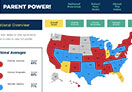
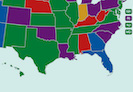
WASHINGTON (WTVA) — Mississippi ranks 20th on a new study looking at the amount of power parents are allowed to have by states when it comes to their children’s education.

The Parent Power Index was released Wednesday by the Center for Education Reform.

The report shows only six states ranked above 80 percent on the report.

The PPI is a web-based report card based on education polices.

The higher the grade, the more parents are afforded access and information about learning options for their children.

Mississippi’s score was 70 percent, enough to move the state 21 spots over the 2013 rankings.

Alabama ranks 47th on the report.

The PPI education scorecard reveals state summary data, while full state-by-state details, including methodology, can be found at parentpowerindex.com.

Education reform group ranks SD near bottom

Joel Ebert, Capital Journal

A new education report card released by a Washington, D.C.-based group that promotes charter schools has South Dakota ranking second to last in the nation. But critics of the organization say the state has nothing to fear and that South Dakotans should actually be proud of the poor score.

The Center for Education Reform released rankings on Wednesday which pegged the Rushmore state second-to-last in the country on what the organization is calling an “education report,” despite the fact that the methodology used did not include student test scores, graduation rates or other academic measures.

For the fifth year, the CER released the Parent Power Index, which measures the ability of a parent to exercise choices regarding their children’s schooling, according to the nonprofit’s website.

The power index ranks every state in the nation and gives points for different categories. Scores are generated by several factors, including whether or not a state has charter schools and quality teachers, and whether or not the schools in the state provide for online learning. The PPI index also factors in transparency and what CER calls the “parent trigger,” which is based on laws that provide parents and teachers opportunities to turn around failing schools.

Indiana had the highest score in the nation scoring a 90 percent out of 100, while Montana had the lowest. Most states did not score higher than 80 percent. The median score was 67.4 percent.

South Dakota earned a score of 56 percent, which is just behind Nebraska and North Dakota, earning it a ranking of 50 out of 51. The PPI includes the District of Columbia.

Last year, the CER ranked South Dakota 46th in the country and in 2012 it ranked 48th.

“Despite continuous efforts by some legislators, South Dakota is one of just eight states remaining without a charter school law,” the CER said in a news release. “With 36 governor races this November, including in South Dakota, it’s time enacting parent-empowering policies take front and center, especially when only 36 percent of Mount Rushmore State eighth-graders are proficient in reading and 38 percent are proficient in math. America’s future depends on states’ ability to enact good policy to accelerate the pace of education reform and grow new and meaningful choices for parents.”

The academic figures referenced in the news release pertaining to South Dakota were not considered in the PPI rankings.

When asked how the state could improve its rankings, executive vice president for the CER Alison Conseletti Zgainer said, “South Dakota could do anything. They have no charter school law, no private choice or tax credit programs available to families, their virtual learning options are limited.

Conseletti Zgainer said with the exception of parents who send students to private schools, South Dakotans have no options beside the public school to which they are assigned.

Critics of CER – which is partially funded by the Walton Family Foundation, an organization started by the owners of Walmart – say South Dakotans should actually be grateful for poor scoring.

“The people of South Dakota should feel great pride in receiving a low ranking from the Center for Education Reform,” said Rob Boston, communications director for Americans United for Separation of Church and State, which is based in Washington, D.C. “It’s a sign that people there have the innate wisdom to value their public schools.”

Boston said the CER is one of several groups in the United States working to privatize secondary education. The organization mainly promotes voucher plans while also advocating for charter schools, he said.

“The end game for CER and groups like it is to turn public education over to the for-profit sector,” said Boston, who is critical of charter schools. He said that most Americans rely on the public education system, especially in states like South Dakota.

“People living in states with a lot of rural areas and small towns rely on public schools even more because private institutions tend to be few and far between,” he said.

Conseletti Zgainer said charter schools can provide options for improving rural education. Although she did not offer specific details as to how, she said, “States that have a large number of rural students, like North Carolina, do in fact have charter school laws and have charter schools in rural communities.”

Best Of Both Worlds

Everyday we are inundated with technology. We wake up in the morning and watch television, we listen to the radio on the commute to school; but when we arrive to a traditional school, technology becomes a banned distraction entirely. As technology is enhanced, education has the opportunity to improve simultaneously. Blended learning is a unique method of teaching that combines in-person instruction with online learning. Instead of just throwing some iPads into a classroom, blended learning relies on the effective use of technology in which both students and teachers benefit. Websites like “Edmodo,” a teacher/student interaction page that resembles Facebook, and computers with required books already loaded onto them are small examples of technologies that make a real impact. Center School District Superintendent George Welsh said, “I foresee a time when technology will take the place of textbooks.” In the classroom and in the checkbook, the blending of online and site-based learning has the potential to completely change the way we approach education.

The Clayton Christensen Institute for Disruptive Innovation uses four primary blended learning models: rotation, flex, self-blend, and enriched virtual. Rotation model ensures that students switch between online instruction and in-class lessons. This method seems familiar to the structure of elementary classes in which there are always different stations for separate activities. An example of a rotation model-based setting is a “flipped classroom” where students learn lessons virtually and then apply them in class. Self-blend model involves students taking traditional courses at school and additional courses at home.

When I attended traditional high school a few years ago, many online classes were offered in addition to the required courses. This seems to be the most natural high school level implementation option for blended learning because it is not a major adjustment. Enriched Virtual model is simply when students take courses online and then meet with teachers as needed. Flex model is when an entire course is online and teachers are available for in-person support and tutoring. Blended learning tackles the issue of student achievement and having accessible teachers ensures clear student expectations and ownership of resources. In 2013, RAND Corporation researched the effectiveness of blended learning in an algebra class and found that those who spent 60% of the time in the classroom and 40% of the time on Cognitive Tutor software outperformed students in traditional setting.

Not only does blended learning keep students accountable, it also keeps teachers working their hardest to provide the best education. Teachers report that the online lecture is the easy part; the face-to-face aspect of lesson, however, is where the challenge lies. With less classroom time, teachers must plan purposefully to address exactly what they want the students to gain from the lesson. Blended learning demands the most from both teachers and students and causes individuals to work their absolute hardest.

The thing that fascinates me the most about blended learning is how well it contends arguments against virtual learning. Online learning critics often point at the discipline and time-management skills needed to achieve academic success, but blended learning ensures that students are accountable for their education. Meeting with a teacher face-to-face eliminates the idea that students will not aspire to their best on their own. People, especially children, thrive when they get to make their own choices. There is something compelling about having control of your own decisions, and blended learning ensures that students feel connected to their own educations.

Unraveling The Multiply Reinforced Orientation: School Choice And Peer Influence

Just like anything you choose to pursue in life, you are only as strong as your team of supporters. While programs with school choice programs are non-discriminatory, the inequity of the system goes deeper than simply sorting through options. The varying income levels that students come from make for a diverse but fragmented group of decision makers. In the process of choosing schools, there is a direct relationship between amount of directional support and income level. While advanced middle-class students are leaning on family and peer support, where are the school advisors to help those who lack foundational support at home?

Carolyn Sattin-Bajaj, author of Unaccompanied Minors, compiled interviews of 46 eighth grade students from IS 725 and demonstrates a fresh perspective on equity struggles and debates. The book paints a very realistic picture of the education system as a whole by honing in on personal narratives that establish what life is like for certain students and their families. Chapter four is an assessment of navigating the school choice system and essentially addresses the inequity in NYC high school choice as a rocky foundation of misconceptions and inaccurate assumptions. While school choice is designed to be a personal decision that allows students to pick a school based on their individual needs, family members and peers influence students the most.

The chapter begins by noting that generally, low-income Latino students at IS 725 seemed to be unclear about school choice direction, while middle-class Asian-origin students at IS 725 were reportedly adamant about the school selection search. Students on the advanced track conveyed extensive knowledge of different school choices and were very much aware of details, policies, and performances. Middle-class parents or guardians may be more inclined to send their children to college and therefore more willing to give substantive input about education choices. “Multiply reinforced orientations” sets the standard for where students feel they belong and distance low-income students from attending a high-performing school. While the decisions middle-class students in the gifted program make are attributed to “strategic choice,” the selections of low-income are chalked up to “passive choice.”

Interactions between peers during school days completely shape the way students learn and the choices they make on a day-to-day basis. On a very logistical level, if you surround yourself with people who are organized about school choice events and application requirements, by association you have the advantage of being informed. Students whose friends do not have an agenda for school searching are left to conquer the act of planning ahead alone. On an emotional level, students who have friends aiming for the highest performing schools and often share similar mindsets. Friends often share common interests or goals, so you tend to mimic their actions and decisions. Sattin-Bajaj noted that for low-income students, the decision is less about finding a school that will allow them to thrive, and instead keeping the safety net of people they know close to them. Often times, a student is the only person in his/her family attending school, friends become family and attending school with them becomes exponentially important.

The most frustrating aspect of this is that, generally, school faculty involvement just isn’t helpful. Advisors reassure the gifted students of their extensive knowledge and the immigrant students are told everything from their advisors and know nothing more. Advisors are helping the two extremes and are neglecting an entire misinformed student population. Bottom line: the students who need the help simply aren’t getting it.

School choice is an amazing program that endeavors to place students in programs where they will flourish. As Sattin-Bajaj states, “high school choice experiences and outcomes put into sharp relief the impact of differential access to supports and resources.” In order for all students to reap the benefits of this program, school faculty members need to monitor the progress of low-income students whose family may not be as accustomed to the school choice selection process. From the moment an application is sent in, to the time a confusing letter is delivered to their mailbox, low-income and minority students must have support through every step of the process to ensure that each student receives the highest quality education.

Brett Swanson, CER Intern

CER Statement on “Health of the Public Charter School Movement”

Laws Really Do Matter to Ensure Student Success

CER Press Release
Washington, D.C.
October 1, 2014

Kara Kerwin, president of The Center for Education Reform, issued the following statement on the release of “Health of the Public Charter School Movement: A State-By-State Analysis” from the National Alliance for Public Charter Schools (NAPCS) today:

“We applaud NAPCS for their continued leadership and stewardship in advancing the most promising public school reform of all time – charter schools. The critical ingredient for charters to thrive is a strong law, which fosters their success.

“In this report, NAPCS has gone from ranking highly states with poor charter environments, such as Maine, to evaluating all aspects of laws – including practice – and in so doing met our own standards, in part, by recognizing the District of Columbia as a robust charter sector.

“Since 1996, the Center has studied and evaluated charter school laws based on their construction and implementation, and whether or not they yield the intended result of the charter school policy, which is to ensure the creation of excellent and numerous learning opportunities for children.

“These annual charter law rankings have been borne out not only in theory but in practice. Strong charter laws feature independent, multiple authorizers, few limits on expansion, equitable funding, and high levels of school autonomy.

“By examining state charter sectors beyond the letter of the law, the National Alliance report places more value on whether families are actually accessing educational choices. This is the fundamental basis for the Parent Power Index (PPI), on which D.C. ranks fourth.

“While there are still significant differences between CER and NAPCS rankings, we welcome the increased scrutiny the National Alliance is giving to laws in practice and the increased debate and activity they have created surrounding charter schools.”

Education Report Card Reveals Most States Still Below Average

Indiana Remains Number One, While Mississippi Makes Most Progress

CER Press Release
Washington, D.C.
October 1, 2014

Just six states earn rankings above 80 percent when it comes to giving parents fundamental power over their child’s education, according to the fifth edition of Parent Power Index (PPI), released today by The Center for Education Reform (CER).

Parent Power Index is a web-based report card that evaluates and ranks states based on qualitative and proven state education policies. The higher a state’s grade, the more parents are afforded access and information about learning options that can deliver successful educational outcomes for their children.

“While it’s true some states have made progress, it’s not nearly enough to meet demand. Simply put, we need more learning options available to more families, and we need them fast,” said Kara Kerwin, president of The Center for Education Reform.

“Out of the over 54 million K-12 students nationwide, only an estimated 6.5 million students are taking advantage of charter schools, school choice programs such as vouchers or tax credits, and digital or blended learning models,” said Kerwin. ”With the United States’ school-aged population expected to grow at unprecedented rates in the next 15 years, how will our school system be able to meet demand when we already have wait lists for charter schools and oversubscribed scholarship programs?”

A median PPI score of 67.4 percent (Delaware) shows just how poorly most states have implemented policies surrounding charter schools, school choice, teacher quality, transparency, and online learning, the five main components that comprise state PPI scores. Mississippi, ranked 20, made the most progress, moving up 21 spots and breaking into the top 20 states after being in the bottom 11 states on previous analyses.

“With 36 governor races this November, it’s time enacting parent-empowering policies take front and center. America’s future depends on states’ ability to enact good policy to accelerate the pace of education reform and grow new and meaningful choices for parents.”

CER President Kara Kerwin and CER Executive Vice President Alison Consoletti Zgainer are available for comment on CER’s Parent Power Index. Members of the media should contact CER Communications Director Michelle Tigani at 301-986-8088 or michelle@staging.edreform.com to set up interviews.

The PPI education scorecard reveals state summary data, while full state-by-state details, including methodology, can be found at parentpowerindex.com.

This year’s Parent Power Index takes into account CER’s first-ever voucher and tax credit scholarship rankings and analysis, School Choice Today: Voucher Laws Across the States Ranking & Scorecard 2014 and School Choice Today: Education Tax Credit Scholarships Ranking & Scorecard 2014.

NEWSWIRE: September 30, 2014

Vol. 16, No. 38

EARLY DISMISSAL. Score one for Florida families after a judge threw out a lawsuit against the expansion of the highly rated tax credit scholarship program and the creation of personal learning scholarship accounts (PLSAs) for special needs students. Unfortunately, the tax credit expansion isn’t out of the woods yet, since the union can decide to rework the legal challenge if they so desire, and proceed with a separate lawsuit that seeks to eradicate the tax credit scholarship program entirely, alleging that public revenue is aiding sectarian institutions. Not only would this harm the nearly 60,000 students and counting who receive scholarships, but it would also negatively affect the nearly 1,000 special needs students slated to benefit from PLSAs, making this all the more unconscionable. And as for whether a legal battle like this makes sense to wage in the first place, look no further than New Hampshire, where the State Supreme Court upheld tax credit scholarships for Granite State students.

RALLYING FOR POWER. On Thursday, thousands of New York City parents will rally against the systemic failure of schools to #deliverthepromise of student success. The mix of families from charter and traditional schools is proof that parents are not narrowly advocating for a particular type of school, but rather a range of excellent choices to find the best learning opportunity for their child. And these choices are popular among parents and fiscally efficient, according to a new Friedman Foundation report which finds that school vouchers have saved taxpayers more than $1.7 billion since 1990, with nearly half of that coming from Florida’s McKay Scholarship for students with disabilities. Whether in New York, Florida, or any of the other 36 states holding gubernatorial elections this Fall, be sure you know where candidates stand when it comes to delivering real results for students.

CLIMBING IN COLUMBUS. The release of school grades in Ohio for the 2013-14 school year revealed a handful of Imagine Schools’ campuses that are proving to be successful learning alternatives for students in the Columbus-Groveport area. Two elementary schools in particular not only received As for value-added performance on their state report cards, but also outperformed their traditional district counterparts. The laudatory performances are not only reflective of Imagine Schools’ new academic framework that incorporates best practices, but also the students and educators who are making the most of their decision to be part of a learning environment that’s right for them. With the steady, continuous growth of charter school options nationwide, similar types of innovation, learning gains and cultures of high expectations are thankfully proliferating to meet parental demand. But if tomorrow’s Parent Power Index is any judge, there’s a lot more we could be doing.

ATLANTA’S CULTURE OF CHEATING. The trial of 12 former school employees in Atlanta – which doesn’t include those who have already arranged guilty pleas – is now in its second day, and has already featured heartbreaking testimony. An Atlanta student, now 17 years old, testified that her third grade teacher simply gave answers to test questions she didn’t know, without batting an eye. Imagine giving a struggling eight year-old student a false sense of accomplishment, only to have the rug pulled out from under her the following year. The prosecution is pursuing RICO charges, treating this string of cheating incidents as a widespread, concerted effort. Unfortunately, the problem of cheating is systemic and deeper than previously realized, which is all the more reason for greater accountability and transparency to prevent these issues from happening in the first place.

A UNITING VISION IN PHILADELPHIA. The growth and rise of charter schools in urban settings is well documented. But the achievements of many community-led charters that were the first to provide needed options for underserved families and students is often overlooked. One such urban charter school, founded by civil rights activist Walter Palmer, set out to change the landscape for disadvantaged youth 15 years ago, and created a path for many more charter schools not just in Philadelphia, but throughout the whole state. Palmer’s Leadership Learning Charter School ably served more than 1,000 students with enormous waiting lists for years, and was singularly responsible for ensuring equity funding for students across the city. Such legal challenges took a toll at the Palmer school, however, and putting students first, Palmer announced last night his intention to enter into negotiations with the highly successful and innovative Friendship Public Charter Schools to turn around a school that has seen recent academic and financial struggles. In a statement read to faculty and parents last night, Dr. Palmer, to his credit, put first the interests of the children his school serves and said, “Over the next ten days, we will be finalizing the details for our school and working with the district to align all of our needs. We strive to unite in a vision for the children and families in our community that will ensure the longevity of the school, it’s improved outcomes, and quality learning and leadership environment for years to come.” CER president-emeritus Jeanne Allen was on hand during the transition discussions and noted that “Without this collaboration between like minded organizations who recognize the importance of the community in forging school reform, and without the support of the District, and most especially Superintendent Bill Hite, this turn-around effort would not be possible. It’s a historic and highly valuable district-charter collaboration that is a model for other cities.”

IT COMES DOWN TO POWER AND CONTROL. The Louisiana Association of Educators sees a new opportunity to further deprive families of power and choice with a lawsuit filed attempting to strip funding from state-approved charter schools outside the Recovery School District (RSD). The basis of this lawsuit is that these charter schools receive public dollars from the same fund responsible for disbursing vouchers, which was deemed unconstitutional last year. Sadly, this is yet another veiled attempt at maintaining power and control over education funding under the guise of accountability. Union officials really should spare us their righteous indignation about publicly approved charter schools receiving resources to which the students they serve are fully entitled.

WHO’S GOT PARENT POWER? Find out tomorrow as CER releases the latest Parent Power Index (PPI), giving a nationwide picture of how much power parents truly have over their child’s education, and what actions are needed to expand access to school data and learning options. Important information for parents to take into account as they head to the polls in November, determining which candidates truly have student outcomes in mind!

Parent Power Index 2014 Scoring Rubric

The 2014 Parent Power Index (PPI) rankings are here! The 2014 rankings reveal that most states are still below average, and there is much work to be done when it comes to giving parents fundamental power over their child’s education.

The education scorecard below reveals state summary data, while full state-by-state details, including methodology, can be found at parentpowerindex.com.

Download or print your PDF copy of the 2014 Parent Power Index Scoring Rubric here.

New Tech Prep charter raises the bar on STEM

Deborah Simmons, The Washington Times

The first occurred several years back, when Mr. Hense discovered there were no D.C. license plates in a Northern Virginia parking lot filled with science and technology experts and other professionals.

That sight led to vision No. 2: Build a high-tech school for D.C. kids, and they will come.

Well, that vision will produce the first graduates of the Friendship Technology Preparatory Academy in 2015.

A ribbon-cutting ceremony for the brand-spanking-new schoolhouse was held Wednesday, and prior to that students attended classes in an adjacent school building. And what an eye-stunner the new building is. (Disclaimer: I served as emcee for the ceremony on Wednesday and toured the school.)

Every square inch of Tech Prep is state-of-the-art, focusing on science, technology, engineering and math (STEM) — including environmental science — as no D.C. school has done before it.

An $18 million price tag. Two biology labs. Two chemistry labs. A robotics lab. A rooftop greenhouse. Innovative teachers. Inquisitive students. Parent-infused leadership and faculty.

Even the kitchen facilities are top-notch.

While there’s no chalk dust flying about classrooms, the technology, whiteboards and projectors left more than one parent saying, “Nothing like when I was in school.”

This is what they want for their children, and their children deserve it: a high-quality teaching and learning environment.

Two generations ago, Tech Prep was unthinkable. D.C. had just gained home rule authority in 1974, and academic achievement was sliding while political one-upmanship was a sign of the times. By the 1980s crack and its senseless violence grabbed headlines while academics slid off everyone’s radar screens.

After the turn of the century, public schools had become warehouses, while charters began sprouting up everywhere and being maligned for competing. Sure, McKinley Tech was brought online, but today, as the city closes traditional schools for any drummed-up reason, charters surge ahead.

Indeed, Tech Prep is even located in an auspicious community — an up-and-coming neighborhood where mentally ill patients of St. Elizabeth’s Hospital, drug dealers, panhandlers and ne’er-do-wells used to ply the area because no one was watching.

Now its Southeast neighbors are the U.S. Coast Guard and the Department of Homeland Security, and IT industry projects are on the horizon. The potential for partnerships is high, and the location — near Metro stations, major roadways (I-295 and the Beltway) and a gateway corridor (MLK Jr. Avenue) — means transportation is a good draw as well.

Mr. Hense had that first vision that I mentioned.

TJ, as it is commonly called, just this month was named the nation’s best magnet school by Newsweek (again) and is a perennial high-ranking high school with U.S. News & World Report. TJ is a mecca for geeks and nerds, and we need to send up prayers that Tech Prep students and faculty do as well, if not better.

I got a glimpse of what’s going on in a Tech Prep robotics class, where teacher Joshua Brown, a Howard University grad with a bachelor’s in mechanical engineering, and several pairs of students were bent over texts and working with their hands. A student explained their assignment as I nodded and smiled — then giggled outside the classroom, thinking “The Big Bang Theory: Next Generation.”

To be sure, parents, faculty and other supporters need to flank Mr. Hense and Tech Prep right now. Anti-school choice and anti-charter elements are on the prowl this election year. They think charters take top-drawer students and money from traditional schools, and they say charters are winning the enrollment numbers race. Their goal is to strangle public charter schools with as much red tape as possible.

What they should realize is that Mr. Hense is showing them the way with Tech Prep, and that all charter schools ask for is a level playing field for charter students.

We’ll have to wait and see if Tech Prep makes the best-of lists in the next couple of years. What’s certain right now is that Tech Prep is a game changer, raising the bar on teaching and learning.

Indiana school voucher program grows

Tori Fater, Indiana Daily Student

Indiana’s school voucher program is expanding, with close to 30,000 student applications for Choice Scholarships this year.

More than 29,000 people submitted applications to enroll with vouchers during the 2014-15 school year, Department of Education Spokesman Daniel Altman said.

Not everyone who submitted an application is guaranteed a voucher, but the quantity of applications this year is still an increase over the close to 19,800 Indiana students enrolled using vouchers in the 2013-14 school year.

Through the program, parents can apply to direct a portion of the state funding that would pay for their child’s education to a school of their choosing instead. Some parents use the voucher funding to enroll their children at a private or charter school.

According to the Center for Education Reform, a pro-voucher organization, the number of students in Indiana’s voucher program has doubled each year since it was instituted.

Indiana’s voucher program was passed by the Indiana General Assembly in 2011. Conditions for eligibility are considered less strict than in other state programs, partly because students can be eligible whether or not they are currently attending a failing school, according to the Center for Education Reform.

According to the Indiana Department of Education, Indiana students ages five to 22 have several different claims to receive a voucher, including financial need, disability, attending a failing school or having received a voucher the previous year.

The CER recently named Indiana’s Choice Scholarships program the top state voucher program in the country for its flexible requirements and capacity.

CER Communications Director Michelle Tigani said she believes voucher programs allow parents to make the best decision about their children’s 
education.

“It means that private schools are no longer off-limits or out of reach for families who feel a private school would be best for their child,” Tigani said. “It provides access and opportunity for families.”

She said she believes the best voucher program would be available to all students in the state and would not have a cap own the number of vouchers that could be issued.

Vic Smith of the Indiana Coalition for Public Education, a nonprofit group against privatizing schools, disagrees.

“It takes away money from the public school,” Smith said.

An expansion of the program in 2013 meant students did not have to attend public school before applying for a voucher for private school tuition.

Smith said this meant 7,000 students who received vouchers last year were not transferring away from a public school but already attending private school.

“The savings to the state comes when students are at a public school and they transfer to a lower-cost private school,” Smith said.

In addition to this, the voucher program has received criticism because it indirectly provides some public funds to private schools that were founded on religious principles, according to an article published in the IDS in February 2014. Smith said that, in addition to the economic issues, this is why ICPE doesn’t support the voucher program.

“It’s not a choice that taxpayers should make, to provide a religious education,” Smith said. “We believe public schools are available for everybody and should be supported strongly so everybody can go.”

The Department of Education will release full numbers on the number of vouchers granted for the 2014-2015 school year in mid-October, Altman said.