






Sign up for our newsletter

NEWSWIRE: October 28, 2014

Vol. 16, No. 42

VOTE FOR EDUCATION. No, we aren’t getting a president this year, but midterm elections are a big deal, as they have the ability to put leaders in place who truly care about delivering the promise of an excellent education for all students. Unfortunately, as AEI’s Rick Hess points out in the Washington Post, candidates aren’t putting education front and center, “seriously ignoring an issue that affects 50 million kids.” Thankfully, Education50 does all the investigative work for you, so you know where all 36 gubernatorial candidates stand on education issues before you head to the polls. There’s also a toolkit to help you decide which candidates are for real reform in all other local midterm races. Eighty one percent of Americans think education is “extremely important” for elected officials to address; it’s time for voters to take action and seek out candidates that share their views in putting student results first, regardless of party or politics.

FIVE SIMPLE QUESTIONS. As voters try to spot the real reformers in the 36 gubernatorial races this fall – with the help of Education50 – it’s just as important to ask the critical questions of those running for school board seats. Sometimes, this means reassessing priorities, questioning the status quo, and asking the tough questions to truly determine what could be working better for students, and then letting the public know about it. Read the full guide here to see the list of questions to ask your school board candidates.

SLEEPLESS IN OLYMPIA. The Washington Supreme Court is hearing arguments today as to whether the voter-approved charter school law violates the state’s constitution. Last December, a county judge ruled that the law itself was in fact constitutional, hence the state’s first charter school opened in Seattle this fall. But that ruling also put into question whether state funds can be distributed to charters. Countless suits led by opponents have been waged and lost but over and over, charter schools have been deemed constitutional and we’re certain justice will prevail in this case once again. Charter schools ARE public schools, and undoubtedly should be funded equitably like all other public schools in the Evergreen State.

MAXIMIZING SCHOLARSHIP OPPORTUNITY. Pennsylvania is home to the greatest number of students taking advantage of a tax credit scholarship compared to any other state. And yet, only slightly more than half of available credits are actually claimed. Well state lawmakers hope to change that balance by passing an ‘open door’ mechanism between the two different tax credit scholarship program funds, decreasing the chance that funding for better opportunities go unclaimed and maximizing potential for use according to student need. Last year, just over 60,000 Pennsylvania students took advantage of this innovative resource, a substantial share of the 190,000 students nationwide. The bill now awaits Gov. Corbett’s signature.

INSTEAD OF BEAR HUG, OPT FOR HANDSHAKE. A new report from the DC Public Charter School Board highlights how successful charter schools are especially contingent on independent authorizers with a vested interest in a thriving charter sector. This report just happened to coincide with a déjà vu experience felt here at CER, upon hearing calls for more charter regulation and oversight all in the name of “transparency.” Particularly in Michigan, where legislation popped up using the biased Detroit Free Press series as a mandate for a moratorium on charter schools. These calls don’t differ all that much from the mid nineties, when leaders warned against the ‘bear hug’ of regulation that would convert charters from grassroots laboratories of innovation to the very schooling entities from which they seek to break away. Ah yes, everything old is indeed new again.

GRAND OPENING. To brighten your Tuesday, we wanted to point your attention to this video of the opening of SABIS International Academy in Trenton, NJ. A visual reminder of why parent choice is so important and why we need to elect leaders who will fight for it.

CELEBRATING EDUCATORS. As part of National Education Week, leaders will salute innovative approaches to K-12 education and you’re invited! It’s not too late to sign up for a complimentary luncheon and panel discussion set for Monday, November 10, 2014. Visit www.NationalEducationWeek.com to register.

5 Questions to Ask This Election Season

Education50 offers a toolkit on how to spot the candidate that’s truly focused on how to improve education for students. Joe Nathan, Director of the Center for School Change, offers some great advice on what specifically to ask school board candidates this #Election2014.


Here are five questions you might want to ask school board candidates or members running for re-election this fall. Because schools play a huge role in making communities attractive places to live and work, you might also talk with the other board members, whose seats aren’t up for election, about these issues.

–Are you committed to a yearly survey of families, students, graduates, community residents, faculty and staff about what they see as major strengths and shortcomings of the district and its schools? Are you committed to publicly sharing the results? This survey could cover many topics, from school safety to staff morale, whether families feel welcome and respected, and whether there is widespread understanding and agreement with key priorities for the district.

–Are you committed to yearly sharing the major ways you, as board members, evaluate the district’s (and individual schools’) progress? Part of this will be test scores and graduation rates. But there are many other measures that can be used, such as percentage of graduates who have to take remedial courses on entering some form of higher education, or strengths and shortcomings identified in the surveys mentioned above.

–What are your priorities for the district in the coming year? Why and how did you select these issues? No organization can do everything that it might like to do. So priorities must be established. Hopefully budgets are allocated to respond to the established priorities.

–What is your own experience with public education? (I’m indebted to St. Cloud Board Member Jerry Von Korff for this one.) How has your own experience influenced your work as a board member?

–Do you see yourself primarily as a representative of the community or as a representative of the school system? This is a key question. I’ve talked with many board members who start off seeing themselves as community representatives. But they come under great pressure to be spokespeople and advocates for the district. It does not have to be either-or. But the reason we elect board members is because we need them to represent us. This means sometimes questioning or challenging things that are (or are not) happening in the district overall or in some of the schools.

“Minnesota nice” sometimes hinders the kind of tough questions and concerns that need to be raised. But school board members need to blend praise for progress with a frank discussion of problems and priorities.

The goal of schools is not first and foremost to be an employer. Schools should be serving students, families and the broader community. But what employees, families, community residents and students think should be shared and used by effective school board members.

Understanding and using views, along with reviewing and using results, can help produce more successful schools.


Jacques: Slow down on charter school reform

by Ingrid Jacques
The Detroit News
October 24, 2014

Michigan charter schools are feeling a little picked on lately.

Since July, these public schools which educate about 10 percent of the state’s students have received nearly 100 percent of the criticism coming from Democratic lawmakers and other education leaders.

In recent months, Democrats have introduced three pieces of legislation that ultimately seek to limit charter schools and single them out for additional accountability and transparency when all public schools could benefit from more scrutiny.

And earlier this summer, state Superintendent Mike Flanagan put 11 of the state’s 40 charter authorizers on notice, jeopardizing their ability to charter any future schools.

The common thread behind all this action against charter schools stems from a detailed series of media reports that came out in June.

Lawmakers and other leaders quick to jump on the anti-charter bandwagon should take a breather considering a report released Monday that analyzes the reporting and finds it falls short.

The Media Bullpen, the independent news branch of Washington, D.C.-based Center for Education Reform, took a close look at data and came to very different conclusions about the health of Michigan’s charter school community. The center works to promote school accountability and choice around the country.

“Michigan spends $13 billion of taxpayers’ dollars on K-12 public education, yet not a single traditional public school has been closed by the Michigan Department of Education or a Michigan school district for academic reasons,” Kara Kerwin, Center for Education Reform president, said in a statement. “Michigan’s charter school closure rate is 22 percent, while the national charter school closure rate is 15 percent. The fact that Michigan has one of the highest charter school closure rates in the nation shows that authorizers in the state take accountability and the public’s trust to educate students to their fullest potential very seriously.”

The analysis also found:

  • “Charter schools performed academically an average of 4 percentage points better than the average traditional public school.”
  • “Michigan’s charter school law has strict transparency provisions that require charter schools to publicly report their charter contract; board members’ terms, policies, meeting minutes and agendas; and budgets approved by the board.”
  • “The charter school sector in Michigan is strong and meeting the demand of parent choice. State law allows for a diversity of providers, educational approach and increased instructional time.”
  • “Charter schools in Michigan are prohibited from hiring anyone to work in the school that has a potential conflict of interest or relationship with a board member of the school.”

That sound like considerable oversight.

Yet earlier this week, House lawmakers Sarah Roberts, D-St. Clair Shores, Ellen Cogen Lipton, D-Huntington Woods, and others announced legislation that would “create transparency and accountability standards for charter schools, charter school authorizers and the for-profit educational management organizations that contract to run many charter schools.”

Roberts and Lipton also recently introduced a bill that would place a moratorium on all new charter schools and ultimately close many more.

Clearly, charter supporters in Michigan applaud the Media Bullpen report and feel unfairly attacked by charter detractors in the state.

“Politicians in Lansing used the [media] report to introduce legislation and take other actions that would greatly harm the progress we’ve made with charter schools,” says Dan Quisenberry, president of the Michigan Association of Public School Academies. “I would hope those politicians take the opportunity to reconsider what they’ve done.”

While there is room to improve charter schools in Michigan, it should be a part of a broader discussion to raise the bar for all schools.

Ingrid Jacques is deputy editorial page editor of The Detroit News.

How I Learned Not to Hate School

By Deisha Merriweather
Wall Street Journal
October 22, 2014

By the time I was in the fourth grade, I had been held back twice, disliked school, and honestly believed I’d end up a high-school dropout. Instead, three months ago, I earned a bachelor’s degree from the University of West Florida in interdisciplinary social science with a minor in juvenile justice. I am the first member of my family to go to college, let alone graduate. But this didn’t happen by chance, or by hard work alone. It happened because I was given an opportunity.

The difference maker was a scholarship that allowed me to go to a secondary school that was the right fit for me. I was lucky to be raised in Florida, home to the nation’s largest tax-credit scholarship program, a “voucher” program that helps parents pay for private schools. Here’s the cool part: The scholarships are financed entirely by charitable contributions, which are offset by tax credits. So public funds are never touched. The program is serving 67,000 students this fall. Like me, all come from low-income homes. Most are black or Hispanic. And the evidence from rigorous studies shows that, like me, most of them were failing in public schools but are thriving in private schools.

Despite these facts, last month the Florida School Boards Association and the state’s teachers unions filed a lawsuit to kill the tax-credit scholarship program. Should the suit succeed, nearly all the 67,000 low-income students in the program will no longer be able to afford their schools. Most will be forced to attend the same public schools that failed them in the past. Although 40% of Florida’s K-12 students are now enrolled in something other than zoned schools—in magnet schools, for instance, or career academies—the only program the state’s unions and school boards are trying to eliminate is the one reserved for low-income students.

Florida leads the nation when it comes to how well low-income fourth-graders can read. Yet being No. 1 still means that only 27% are proficient. I don’t know why anyone would want to end anything that can better those numbers. But I would hope people who care about disadvantaged children would pause to hear stories like mine.

I grew up with my biological mother and we moved around constantly. This really took a toll on my grades—Ds and Fs were the norm. My poor grades and the fact that I was two years older than most of my classmates angered and embarrassed me. I was “disruptive” and fought with other students. Teachers tried to help, but nothing they did seemed to work. I felt no matter how hard I tried, the results would be the same. Learning became a nightmare—a punishment for being a child.

In the sixth grade I began living with my godmother, who thought it was important that I change schools. She knew of a local private school with an excellent reputation, Esprit de Corps Center for Learning in Jacksonville, Fla., but we couldn’t afford the $5,200 annual tuition. That’s when a friend told her about Florida’s tax-credit scholarship program, which enabled me to attend Esprit de Corps—and changed my life.

At Esprit de Corps, making honor roll is expected and academic success is celebrated. This environment was very different for me. But something clicked. My grades and self-confidence rose. I believed I could succeed and people there believed the same. Learning was no longer a nightmare, but a gift I greatly appreciated. I worked hard. In the end, I graduated with honors.

And yet, that’s not the end. A different school didn’t just make dreams come true for me. It allowed me to have dreams I didn’t know I could have. Last summer, after graduating from the University of West Florida, I volunteered at an orphanage in the Dominican Republic, where I learned firsthand about that country’s social-welfare system. This spring, I plan to continue my education at the University of South Florida, in its joint master’s program in social work and public health.

I’m not sure which professional road I will take. I have options now. But whatever it is, I know I want to create opportunities for children to have a shot at a bright future. Just like I had.

Haven’t we been here before?

By Kara Kerwin

I’m either experiencing severe déjà vu or history really does have a way of repeating itself. A lot of education reformers think the battle is won, and continue to celebrate the notion that charters are widely accepted and no longer controversial. The problem is, they are wrong.

Today, not only are opponents creating confusion among the public in making spurious apples to orange comparisons that reformers often validate, reformers themselves are demanding more “transparency” by the government and what they are getting as a result is more bureaucracy.

It has been an interesting week in education reform and I’ve witnessed this phenomenon pan out in just the past few days. There was the National Association of Charter School Authorizers (NACSA) annual conference in Miami. Legislation popped up in Michigan using the biased Detroit Free Press series as a mandate for a charter moratorium. And a fairly disingenuous campaign was launched by the Ohio Education Association to discredit the state’s charter schools. All supposedly to answer the battle cry for “accountability” and “quality.”

Then there was a very thoughtful debate at the American Enterprise Institute (AEI) yesterday discussing “What now for the Common Core?” at which point the very politically diverse group all agreed on one thing… The feds should have stayed out of it and we should caution against overregulating. All of these events got me to thinking (a dangerous thing I know) but in this Throwback Thursday piece co-authored in 1997 by CER founder Jeanne Allen and her then compatriot Checker Finn, they cautioned against the “bear hug” of government on charters, and other such things.

Everything old is indeed new again!

From the EdReform University Vault
As the piece ran in the Weekly Standard back in 1997


Candidates are studiously ignoring an issue that affects 50 million kids

Rick Hess, Max Eden
Washington Post
October 22, 2014

Education, the polls say, is a perennial worry for voters. More than three-quarters of the public give America’s public schools a “C” or lower; 58 percent think K-12 education is on the wrong track; Gallup found earlier this year that 81 percent of Americans called “extremely important” for the president and Congress to address. And this year has brought plenty of education news to worry over: the Common Core Standards in math and English that became a matter of heated national debate this year; President Obama’s $70 billion proposal to expand pre-K; New York City Mayor Bill De Blasio costly pre-K expansion in the Big Apple; and the Vergara lawsuit in Los Angeles, where a state judge ruled that California’s teacher tenure system violated the rights of low-income and minority students. Given all this tumult, which of these reforms are Republican and Democratic candidates for governor or the U.S. Senate most aggressively championing this fall?

The answer: none of them.

A systematic analysis of campaign Web sites for the 139 major party candidates for governor or U.S. senator (there is no Democrat running for the Kansas Senate seat) shows that most hopefuls have little to say on any of these pressing questions.

Topics familiar to education reformers seem foreign to sitting and aspiring governors. Only three Republican gubernatorial candidates mention teacher tenure reform on their Web sites, while not a single Democratic candidate does. Just three out of 35 Democratic candidates mention the bipartisan cause of charter schools; perhaps even more surprising is that barely one-third of the Republicans do. In fact, just four Republicans gubernatorial candidates suggest that money should follow students to the school of their choice. Even on bread-and-butter topics, discussion is sparse: Only one gubernatorial candidate in 10 mentions community colleges, while just three out of 70 mention that they should be helping more students to graduate from high school.

On the Senate side, things are much the same. Only one candidate for the U.S. Senate even alludes to teacher tenure, and only two mention high school graduation rates. Despite the efforts of organizations such as Democrats for Education Reform, no Democratic senate candidates mention charter schools. And for all the talk about preparing a 21st century workforce, only five Republican candidates talk about improving science, technology and math (STEM) education.

When it comes to the Common Core, the fact that so few candidates take a stance on the issue is glaring. Opposition to the Common Core may be a rallying cry for Tea Party conservatives, but less than one-third of Republican gubernatorial candidates criticize it. Democratic candidates favor the Common Core two-to-one — among the only three who ventured to express an opinion.

For all the talk about national pre-K, only 16 out of 69 would-be senators and 17 out of 70 gubernatorial hopefuls even mention it, and support for it skews overwhelmingly Democratic.

The one subject on which candidates reliably have something to say makes them sound like holdovers from the 1990s. Just over half the candidates for governor — for whom K-12 and higher education will prove to be the largest budget item — call for increasing education funding. This includes almost 55 percent of Republicans and fewer than 50 percent of the Democrats.

But even the calls for more funds tend to sound like he-said-she-said bickering rather than a real debate over priorities in an era of tight budgets. Rick Snyder, the Republican governor of Michigan, boasts that he increased funding by $660 per pupil, while his Democratic opponent, Mark Schauer, alleges that Snyder made “deep cuts” and vows to restore the funds. Rick Scott, the Republican governor of Florida, claims a $2.3 billion increase in state education funding, whereas his Democratic opponent, Charlie Christ, claims that Scott has cut spending. Pity the voter without an accounting degree who has to make sense of all this.

Politicians often campaign on promises and then struggle to keep them once in office. When it comes to education, in this election it seems that politicians aren’t even bothering to take a stance on the current reform debates. So, despite the buzz around education reform, there’s little reason to expect significant policymaking in the next two years. Ultimately, this shows that it will take more than a handful of high-profile stories on each coast to affect a sea change in education across the country.


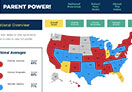
Check out CER’s interactive web-based voter’s guide, Education50, to find out where state governor candidates stand on education reform!

NEWSWIRE: October 21, 2014

Vol. 16, No. 41

TAKING ON THE FREE PRESS. Readers with no background who read the Detroit Free Press State of Charter Schools series would think charters are unaccountable for results while consuming $1 billion in public funds, even though the state of Michigan spends $13 billion on K-12 public education, and not a single traditional public school has ever been closed for academic reasons. The bias is bad enough, but what’s even more concerning is that the respected news organization reprinted the series, omitting pro-charter opinion pieces and letters to the editor, and sent it to state lawmakers in order to blatantly influence state politics. To counter this agenda-driven reporting, The Media Bullpen investigated the most egregious claims and statements made by the Free Press in this special report.

PILOTING CHOICE. A state senator from Western New York is floating a pilot voucher program for low-income students in Buffalo, on top of renewing calls for a tax credit scholarship program currently stalled in Albany. Currently, tax credit-funded scholarship programs pay tuition for approximately 190,000 students nationwide, a school-choice program participation level that is surpassed only by enrollment in charter schools. Additionally, more than 100,000 students across the U.S. are using school choice vouchers to attend the private school of their choice. The introduction of multiple programs to help New York families speaks to the importance of having a vast array of learning avenues so it’s truly possible for parents to find something that best helps their child excel educationally. We’re glad to see state leaders stepping up to focus on real results for students, and hope the upcoming elections result in more leadership focused on true education reform that creates more and better learning opportunities for parents and students.

‘REY’ OF HOPE. At all levels of government, there is a familiar effort to frame the urgent need to improve student outcomes through the lens of breaking the cycle of poverty through education. But few initiatives epitomize this mission better than the 28-school Cristo Rey Network, designed to give low-income students real opportunity. A combination of per-pupil spending efficiency, parental engagement, high expectations, and an innovative work-study program enables access to this unique educational experience. But the external dimension is the presence of available funds through voucher programs, which currently exist in one form or another in just 14 states plus the District of Columbia, according to CER’s first-ever Voucher Laws Across the States Rankings & Scorecard. It’s critical that more lawmakers realize the potential school choice has in not only putting power in the hands of parents, but breaking the cycle of poverty in the process.

BIG SPENDERS. The two largest teacher unions in the nation plan on spending upwards of $80 million during the 2014 campaign season in attempts to influence elections. That’s a pretty big chunk of change to combat declining membership rates, innovation that brings more accountability, and the incremental migration of K-12 education outside their purview. After seeing millions of parents vote with their feet in pursuit of alternative educational choices for their kids, status quo defenders would prefer not to see the same trend occur at the ballot box. It’s part of the reason why CER produced Education50, so voters have the information they need to know how gubernatorial candidates feel about the real solutions to improving education, and who among them has the best possible chance of recognizing the integral role they can play in bringing positive reform for their younger constituents.

14 DAYS. That’s how much time you have left to figure out where candidates stand on critical education issues such as teacher quality, school choice, and charter schools. As a potential voter, it’s important to make sure you have all the available facts and analysis on gubernatorial candidates and beyond before voting. Click here to find your state and see if you can spot a candidate with a real shot at making substantive reform possible.

New Report Slams Detroit Free Press on Charters

By Gary Naeyaert
Great Lakes Education Project
October 20th, 2014

National media watchdog group says Detroit Free Press series is only 10% reliable; criticizes paper for engaging in partisan political activity.

Lansing, MI – According to a special report released today by The Media Bullpen©, an independent editorial project of the Center for Education Reform, the June “investigative” report by the Detroit Free Press on Michigan’s charter schools left much to be desired in terms of accuracy and journalistic independence.

The Media Bullpen conducted a thorough analysis of the 8-day, 42-article series based on its reliability, objectivity and whether the full context of the issues were presented. They examined the most egregious statements from all articles in the Free Press series regarding achievement, authorizers and accountability, approvals, education service providers, funding and student demographics. The report concludes the Detroit Free Press failed to take “journalistic integrity and impartiality seriously,” and ascertained that only 10% of the content was reliable.

“Being truthful and objective only 10% of the time just isn’t good enough for our children,” said Gary Naeyaert, Executive Director of the Great Lakes Education Project, a non-partisan organization promoting quality choices in public education. “Michigan’s parents and families deserve better than partisan political attacks masquerading as journalism,” he continued.

Through its investigation, The Media Bullpen© also discovered that the Free Press reprinted the series, intentionally omitting any counter editorials from charter school operators, parents, authorizers, and supporters that originally ran over the summer. On September 18, 2014, every legislator in Michigan received the reprint from the Free Press, which happened to be the very same day legislators opposed to charter schools introduced legislation to place a moratorium on these innovative public schools.

“The fact that this series failed to present all sides of the story is troubling enough,” said Kara Kerwin, CER president. “But what’s even more concerning is that a news organization that is supposed to educate the public and lawmakers by presenting fair and balanced information unethically used this so-called ‘investigative’ series to engage in state politics in a really blatant way.”

Click HERE to download Measuring the Reliability of the Detroit Free Press: State of Charter Schools, a special report of The Media Bullpen.


AppleTree Early Learning PCS Visit

This past Friday, I had the pleasure of attending a tour of AppleTree Early Learning PCS Southwest with the First Fridays program. The morning began with my own hopeless attempts to find the school, as phone maps have clearly not updated their charter school location system. After many circles around the block, two students, clad in uniforms and backpacks, finally flagged me down. They greeted me with smiles and high fives and we all entered the school together; from that point on, my experience at Apple Tree was nothing short of friendly and enthusiastic. It became evident that the teachers, students, and parents all share an overwhelming pride in the school and everything that it stands for.

As a charter school serving many families of Ward 6, AppleTree Early Learning PCS Southwest’s mission is to close the achievement gap for those who need it most. The School operates under the Every Child Ready model, which essentially tells teachers what to teach and how to teach it. This straightforward method helps teachers instruct with intention. Through ECR, teachers test students five times a year and use that data to create small groups with specific purposes. During the time I spent in the classrooms, I noticed that one of the teachers would call out a few names and have a private lesson at a table with a few students struggling with the same issue. ECR ensures that teachers are instructing with a target in mind and that each student’s needs are being addressed.

What I noticed most during the tour was the focus on the blend of structure and free choice. Even though the students are young and their activities seem trivial, every decision they make has purpose. They choose where they play during centers, but they learn patience, teamwork, and manners. In “dramatic play centers,” students focus on a play center and learn vocabulary to supplement the activity. One classroom, for example, was playing in an area designed to mimic a post office. Upon asking a few of the students what they had learned from the unit, and one boy giggled and told me, “letters don’t just fall from the sky.” Dramatic play is simple and fun, but the designated vocabulary resonates with students and gives them a strong foundational understanding of culture and society. It was impressive to watch students interact freely within the system of a strictly regulated class schedule.

While it is important to have students thriving classroom settings, it is crucial to provide parent services that support in-class development. AppleTree parents are sent home with weekly newsletters about school happenings, and are provided with information of each unit. These practices keep parents in the loop and allow them to use proper vocabulary that will ensure that students are learning both in and out of the classroom. AppleTree provides all day learning services, and with parental support, students can continue their lessons even at home.

During the panel that followed the tour, one attendee posed the question, “So, where is AppleTree going?” The answer? Forward. The school is partnering with Democracy Prep Public Schools, where it will provide coaching and assessment support. AppleTree is very content with the ages it currently supports and does not plan to extend. Their focus is on vertical alignment; if they can prepare kindergarten teachers to better receive students, and if they can start young students off on the right foot before kindergarten, they can close the achievement gap before it even begins.

Brett Swanson, CER Intern

Biased Reporting Fails to Meet Standards of Journalism

Special Report finds The Detroit Free Press Only Ten Percent Reliable on ‘State of Charter Schools’

CER Press Release
Washington, D.C.
October 20, 2014

Measuring the Reliability of the Detroit Free Press: State of Charter Schools, released today by The Media Bullpen©, found the major news outlet to be only ten percent reliable in its June 22-29, 2014 series on charter schools.

The Media Bullpen© – an entirely separate, editorially independent news arm of The Center for Education Reform (CER) – analyzed the 8-day, 42-article series based on its reliability, objectivity and whether the full context of the issues were presented. This special report found the Detroit Free Press failed to take “journalistic integrity and impartiality seriously.”

Through its own investigation, The Media Bullpen© also discovered that the Free Press reprinted the series, intentionally omitting any counter editorials from charter school operators, parents, authorizers, and supporters that originally ran over the summer. On September 18, 2014, every legislator in Michigan received the reprint from the Free Press, which happened to be the very same day legislators opposed to charter schools introduced legislation to place a moratorium on these innovative public schools.

“The fact that this series failed to present all sides of the story is troubling enough,” said Kara Kerwin, CER president. “But what’s even more concerning is that a news organization that is supposed to educate the public and lawmakers by presenting fair and balanced information unethically used this so-called ‘investigative’ series to engage in state politics in a really blatant way.”

“Contrary to the Free Press’ claims, Michigan spends $13 billion of taxpayers’ dollars on K-12 public education, yet not a single traditional public school has been closed by the Michigan Department of Education or a Michigan school district for academic reasons,” noted Kerwin. “Michigan’s charter school closure rate is twenty-two percent, while the national charter school closure rate is 15 percent. The fact that Michigan has one of the highest charter school closure rates in the nation shows that authorizers in the state take accountability and the public’s trust to educate students to their fullest potential very seriously.”

Measuring the Reliability of the Detroit Free Press: State of Charter Schools examines the most egregious statements from all articles in the Free Press series regarding achievement, authorizers and accountability, approvals, education service providers, funding and student demographics.

Download or access the Special Report from The Media Bullpen© here.