






Sign up for our newsletter

Possible Comeback for No Child Left Behind

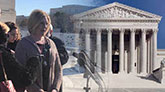
Sen. Lamar Alexander (R-Tenn.), incoming chairman of the Senate committee on education, says his top priority is fixing the No Child Left Behind (NCLB) law that has been in limbo since it came up for renewal in 2007.

Since that time, the Obama administration has been issuing waivers to states from some of the law’s requirements, on the condition that states adopt college and career ready standards such as Common Core, as well as teacher evaluation plans.

Alexander wants to limit federal regulations that govern schools, but acknowledges the political reality that Congress will have to pass a compromise that has a chance of getting President Obama’s signature.

In 2013, there were conflicting proposals from the House and Senate on how best to update the federal role in education.

According to a Center for Education Reform analysis of both proposals, neither vision presented the right amount of carrot and stick to hold states accountable for receiving federal funds, and more focus on educational choice was needed.

These are the area’s best school districts

By Chris Quinn
My San Antonio
November 30, 2014

Education analyst group Niche has looked at public school districts in San Antonio, Bexar County and surrounding counties and ranked them by order of proficiency in several key categories.

The districts were graded on the following: academics, health and safety, teacher quality, diversity, facilities and resources, extracurricular activities and sports.

The group’s findings resulted in this list of the 50 best school districts in our area.

The ratings were part of a larger list that ranked 8,738 school districts across the country. According to the Center for Education Reform, there are a total of 13,588 public school districts in the U.S.

You can read more about the rankings and the methodology used at www.niche.com.


Guest Op-Ed: Separate Fact from Fiction on Charter Schools Issue

By Kara Kerwin
Leader/Observer
November 19th, 2014

Too few of our modern-day state leaders appreciate the absolute role they must play in bringing about substantive change in America’s schools.

Even with more than half of states electing reform-minded governors who have either proven to be champions of reforms during their tenure or have run on platforms that don’t shy away from being vocal about putting parents and students first, it’s imperative all leaders come to appreciate good governance and reach across the aisle for the sake of children.

After all, it’s how some of the boldest reforms were born, such as charter schools in Minnesota in 1991.

Charter schools educate over 2.5 million students nationwide today, yet despite the fact that 42 states and the District of Columbia have charter school laws, the reality is that charter schools are expanding in low numbers still in many states as demand for educational options increases, as the average charter school wait list has grown to nearly 300 students.

State leaders are the key to improving education and creating an environment that will allow charter schools to meet the growing demand for excellent educational options. It’s imperative that newly elected leaders understand what education reforms like charter schools are, and what they aren’t, as myths and misinformation continue to plague media coverage and permeate public psyche.

One of the most common misconceptions is that charter schools are privately funded institutions. A 2013 survey from the Center for Education Reform (CER) found that only 20 percent of Americans correctly identified charter schools as public schools.

Charter schools are in fact independent public schools that are held accountable for student results. And, they do this with 36 percent less funding compared to their traditional public school counterparts.

Another common falsehood is charter schools “cream” students, when the reality is a majority of charter school students are non-white, or minority students. According to CER’s 2013 Survey of America’s Charter Schools, only 45 percent of charter students are white, while 52.5 percent of public school students are white.

Additionally, 61 percent of charter schools serve a student population where over 60 percent qualify for free and reduced lunch.

Perhaps the biggest myth charter schools face today is that they aren’t accountable. This couldn’t be further from the truth.

Unlike all other public schools, charters must be proactive in their efforts to stay open. Calls for more charter regulation and oversight in the name of “transparency,” even from fellow colleagues in the education reform community, are misguided, as charter schools actually have more oversight and evaluation than traditional public schools because of their contracts with authorizers.

Over-regulating charter schools would convert charters from autonomous, grassroots laboratories of innovation to the very schooling entities from which they seek to break away. The hallmark of charter schools is autonomy and performance-based accountability.

It’s crucial that even those who support charter schools remember this, and don’t fall prey to letting a few bad apples result in loving charter schools to death via unnecessary regulations.

Nearly 20 percent of all charter school closures occur because a school failed to meet acceptable student performance levels according to CER’s “State of Charter Schools: What We Know – And What We Do Not – About Performance and Accountability.”

In Michigan, for example, 22 percent of charter schools ever opened have been closed, far out-pacing the national charter school closure rate of 15 percent.

Finally, the importance of a strong charter school law cannot be understated in creating a vibrant charter school sector. Strong laws generally consist of multiple and independent charter approval bodies known as authorizers, no caps on the number of charter schools allowed, operational and fiscal autonomy, and equitable funding.

In states with multiple and independent authorizers, stronger, more objective oversight is used to ensure that successful charter schools remain open and those that fail to perform are closed. States with multiple authorizers were home to nearly 80 percent of the nation’s 5,400 charter schools in 2010-11.

With over 1 million students on charter school waiting lists nationwide, demand for charter schools is clear. In fact, 73 percent of Americans support the concept of charter schools.

After over 23 years of seeing these autonomous public schools in action as viable educational alternatives for children, it’s imperative newly elected leaders separate fact from fiction when it comes to charter schools, and educate their colleagues in state legislatures to ensure that myths and misinformation does not get in the way of uplifting educational opportunities for America’s children.

Read more:Leader-Observer – Separate Fact From Fiction on Charter Schools

Indiana Accelerates School Choice Vouchers

In only four years, Indiana’s school voucher program has become the largest in the nation, with the capability to reach 29,146 students statewide, according to a new report from the Friedman Foundation.

While the progress is impressive, it should be noted that 21,304 seats went unused during the 2013-14 school year and only 33% of Indiana private schools are enrolled in the voucher program.

While Indiana is number one in Parent Power, the high amount of unused seats speaks to the importance of program implementation so opportunities are accessible to families.

School choice should be marketed towards parents to ensure widespread availability, along with fewer regulations that could deter families from enrolling and threaten school autonomy.

CER’s School Choice Today: Voucher Laws Across the States 2014 provides an up-close analysis of voucher programs and their impact based on eligibility requirements, participation, design, and preservation of autonomy.

The rankings show out of the 14 states and the District of Columbia that have voucher programs, three earn A’s – one of which is Indiana — three earn B’s, seven earn C’s and two earn D’s.

NEWSWIRE: November 25, 2014

Vol. 16, No. 46

THANKSGIVING. As families across the country prepare to have turkey, watch football and count their blessings, we at CER have a short list of what we’re thankful for this holiday season.

turkey-hands-100

While we must work to accelerate the pace of reform, we’re thankful for more choices in more states, as more families continue to be able to find the best learning option for their child.

A study out of Florida found that four in ten students in Duval County attend a school of choice. This shows how Florida continues to be a leader in delivering Parent Power by continuing to create ways for families to access better options. That’s what happened with Denisha Merriweather, who thanks to a tax credit scholarship went from dreading school to making the honor roll and ultimately putting her on a path towards a master’s degree. ALL children deserve the same opportunity regardless of where they live, and we won’t stop until that happens.

We’re thankful for the rise in classroom innovation and technological advancements that are helping kids learn.

Last week, 300 educators came together to learn best practices in implementing technology in the classroom from Franklin Academy High School in Wake Forest, NC. “AWESOME! Great presenters and I came away with many ideas to try with my students.” “This presentation was fun and entertaining; a great introduction to meaningful apps for students!” These were just some of the testimonials from the conference held last week in North Carolina. As conference attendees will surely attest, there’s no denying the burgeoning role of technology in the classroom. It’s for this reason that resources like CER’s Digital Learning Toolkit ask how technology is helping students, and why we can’t just magically say, ‘innovation’ and act like technology on its own is doing something. 

We’re thankful for the truth tellers, who combat efforts of misinformation that aim to preserve the status quo.

In the quest to hit the gas pedal on creating more and better opportunities for students, it’s just as critical to check the blind spot for attempts to roll back Parent Power. Separating fact from fiction was most recently necessary yet again in Michigan, where charter schools continue to fight strong opposition. In fact, Michigan’s charter sector is one of the strongest in terms of holding schools accountable for student results, and schools receive positive guidance from independent, knowledgeable authorizers. As charter school enrollment and wait lists continue to grow, it’s imperative that the American public knows what charter schools are and what they aren’t, as myths and misinformation continue to plague media coverage and permeate public psyche.        

We’re thankful for increased information and transparency.

Thousands of District of Columbia parents attended ‘EdFest‘ this past weekend, an informative public schools fair where parents could learn about different public school options. Both charter and traditional schools put out pamphlets, displayed school colors and discussed with parents why their school might present the learning fit for their child. These types of events have been held in the past, but this year marked a positive change with the inclusion of traditional public schools, highlighting the charter ripple effect that occurs when parents are given options.

We’re thankful for all of you who continue to support @edreform.

Hashtag Grey Sun 2After the turkey leftovers are stowed away, CER and groups around the world are turning their attention to #GivingTuesday, an online fundraising effort taking place just five days after Thanksgiving. CER’s #GivingTuesday goal is to raise money to accelerate the pace of reform so that we can deliver on the promise that EVERY child can learn. Click here to find out how you can give back on #GivingTuesday! 

#GivingTuesday isn’t the only way to make sure all children have access to education options that work best for them. If you’re a federal employee, you have a special opportunity to ensure all children have access to opportunities that best meet their needs by giving to CER via the Combined Federal Campaign (CFC) of the National Capital Area. Click here to learn more or share this opportunity with someone you know in the federal government!

Tennessee ranks No. 28 on education report card for parents

Staff Reports
The Lebanon Democrat
November 21st, 2014

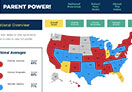
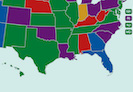
WASHINGTON – Tennessee ranked No. 28 out of all U.S. states and the District of Columbia when it comes to giving parents fundamental power over their child’s education, according to the fifth edition of Parent Power Index, released recently by the Center for Education Reform.

While only six states earn rankings above 80 percent on PPI, Tennessee scored 66 percent.

Parent Power Index is a web-based report card that evaluates and ranks states based on qualitative and proven state education policies. The higher a state’s grade, the more parents are afforded access and information about learning options that can deliver successful educational outcomes for their children.

“While it’s true some states have made progress, it’s not nearly enough to meet demand. Simply put, we need more learning options available to more families, and we need them fast,” said Kara Kerwin, president of the Center for Education Reform. “Out of the [more than] 54 million K-12 students nationwide, only an estimated 6.5 million students are taking advantage of charter schools, school choice programs such as vouchers or tax credits, and digital or blended learning models. With the United States’ school-aged population expected to grow at unprecedented rates in the next 15 years, how will our school system be able to meet demand when we already have wait lists for charter schools and oversubscribed scholarship programs?”

A median PPI score of 67.4 percent (Delaware) showed how poorly most states have implemented policies surrounding charter schools, school choice, teacher quality, transparency and online learning, the five main components that comprise state PPI scores. Mississippi, ranked 20th, made the most progress, moving up 21 spots and breaking into the top 20 states after being in the bottom 11 states on previous analyses.

“With 36 governor races this November, including in Tennessee, it’s time enacting parent-empowering policies take front and center, especially when only 33 percent of Volunteer State eighth graders are proficient in reading and 28 percent are proficient in math,” Kerwin said. “America’s future depends on states’ ability to enact good policy to accelerate the pace of education reform and grow new and meaningful choices for parents.”

The PPI education scorecard can be found at parentpowerindex.com.

This year’s Parent Power Index takes into account CER’s first-ever voucher and tax credit scholarship rankings and analysis, School Choice Today: Voucher Laws Across the States Ranking and Scorecard 2014 and School Choice Today: Education Tax Credit Scholarships Ranking and Scorecard 2014.

The facts on charter schools

By Janine Yass
Philadelphia Inquirer
November 24th, 2014

The 40,000 students on charter school waiting lists in Philadelphia have high hopes as the School Reform Commission starts to review new applications for the first time in seven years.

More than 40 nonprofit charters submitted applications on behalf of tens of thousands of families; many of these families have been kept at bay for years while demanding better educational opportunities for their children. They are hoping that their voices will finally be heard.

The discussion about charter schools is filled with politically charged rhetoric, is rarely about what parents want, and is almost never about individual schools’ results. So as the School District gears up to review the new charter applications, let’s hope they look at the facts:

Fact 1: Many charter schools are doing a far better job educating the students who are the most challenging to educate. Out of 194 public schools in the city with student populations that are at least 80 percent economically disadvantaged, only 17 are “on the right track,” according to the most recent Pennsylvania School Performance Profiles. Out of those, 12 – more than two thirds – are charter schools.

Fact 2: Charter schools are serving about one-third of students citywide but are only costing taxpayers about 29 percent of the district’s overall budget. In fact, charter schools only get about 75 cents on the dollar for each student compared with what traditional public schools receive per child. These schools are not only doing a better job for our children; they’re doing it more cost-effectively than the traditional system.

Fact 3: Last year, the district spent a whopping $140 million on schools that scored below 40 on the most recent School Performance Profiles. These are schools that are simply not meeting the needs of students and their families by any measure. It is outrageous to tell parents that we just can’t afford to educate their children when there are outstanding schools and leaders ready, willing, and able to get the job done.

The budget crisis has made things more difficult for everyone. All public schools – charters included – have felt the pain of budget cuts and spiraling pension and health-care costs. But the choice could not be clearer: In a budget-constrained environment, do we continue spending a mountain of money on schools that have not delivered results for decades (since long before charter schools or that other often-cited bogeyman blamed for school problems, standardized tests)? Or, do we invest those dollars in growing what we know is working right now for families?

The SRC has an opportunity to end the practice of denying families what works in order to prop up schools that have never met the needs of their students.

It’s not surprising that hundreds of parents rallied recently in front of the School District’s headquarters to thank the SRC and the legislature for accepting new charter applications. Over the past seven years, those parents have been told to wait. And wait. And wait some more – while we spend dollar after dollar on schools that aren’t working.

For the first time in nearly a decade, we have a chance to replicate great charter schools like KIPP, Mastery, Esperanza, Boys Latin, Freire, and others. For the sake of those families, and our city, let’s not miss this opportunity.

Janine Yass is a board member of the Philadelphia School Partnership and vice chair emeritus of the Center for Education Reform in Washington


Joy Pullmann says Scott Walker couldn’t get legislature to significantly expand school choice

By Dave Umhoefer
PolitiFact Wisconsin
November 21st, 2014

Gov. Scott Walker’s re-election on Nov. 4, 2014, drew plenty of love from conservative commentators bullish about his chances to make a splash in the 2016 presidential race.

“The Nation Needs President Scott Walker in 2016,” shouted a headline over a story by Richard Cromwell in The Federalist, an online magazine.

But not everyone on the right was leading cheers.

Same magazine, different take: “Winning Re-Election Doesn’t Mean Scott Walker Is Ready For 2016.”

The author of that Nov. 11 piece is the managing editor of the magazine, Joy Pullmann, an education researcher at the conservative Heartland Institute based in Chicago.

Pullmann has dogged Walker on several issues, including what she views as his belated shift to oppose the Common Core state standards for schools.

One week after Walker topped Democrat Mary Burke, Pullmann — a former teacher and self-described “born and raised Wisconsin farm girl” — again was talking down Walker’s accomplishments.

She argued his moves to boost private schools with public money, cut taxes and all but end public-sector collective bargaining were half measures. Aside from going after public employee unions, she argued, Walker has been too nice and too passive.

In particular she cited “a pitiful 500-student increase to Milwaukee’s voucher program, the nation’s oldest, because Walker couldn’t get his own party members to back a real expansion despite full control of Wisconsin’s legislative and executive branches.”

She added:

“Whoop de doo. In Indiana, Mitch Daniels’ voucher program is approaching 30,000 students two years after opening. He knew how to work with his legislature — and they ain’t any less ornery and squishy than Wisconsin Republicans.”

Did Daniels — a Walker favorite who served two terms as governor ending in 2013 — spectacularly outdo Walker on school vouchers despite favorable political conditions for the GOP in Madison?

At first glance, the programs appear pretty similar.

Wisconsin currently pays for 29,683 students to attend non-public schools. In Indiana, the figure also tops 29,000.

But most of the growth in the Wisconsin program long pre-dates Walker, while Indiana has surged to Wisconsin’s level in just four years. Daniels won passage of the program in 2011, the same year Walker’s first term began in Wisconsin.

In Wisconsin, vouchers were born 25 years ago through a Milwaukee-only program. It was a pioneering effort nationally in the use of public tax dollars to enable parents to send their children to private and/or religious schools.

It was under Walker that the program expanded beyond Milwaukee, to more than 25 municipalities.

But Pullmann alludes, accurately, to the fact Daniels was able to get vouchers approved statewide right from the get-go, while Walker settled for a gradual and limited expansion even with a Republican-controlled Legislature and a 2012 recall win under his belt.

She misstates some facts and undersells Walker’s record on vouchers, though, in saying he won a mere “500-student increase to Milwaukee’s voucher program.”

Walker did cap the increase at 500 additional students in 2013-’14.

But that cap of 500 students is old news; the statewide limit went up to 1,000 new students for 2014-’15.

Also left out of the equation are earlier expansions on Walker’s watch. Walker lifted Milwaukee’s 22,500 enrollment limit in 2011. He also signed the expansion of the program to Racine in 2011-’12.

All these moves combined to allow more than 5,000 new students into the program annually, 10 times the amount Pullmann credits him for.

By contrast, Indiana went from 0 to more than 29,000 in four years. The program there was capped at 7,500 its first year and at 15,000 in its second, but now has no cap. Wisconsin’s program outside Milwaukee and Racine is still capped at 1,000 students, though Walker and legislators have signalled they want to raise that limit in the next term.

Voucher advocate Kara Kerwin, president of the Center for Education Reform, said Pullmann was right to describe Walker’s approach as incrementalism compared to the Indiana experience.

But “Indiana was in a different position because others had already paved the road,” Kerwin said. Both states fared very well in the Center’s 2014 state scorecard on voucher plans.

Indiana ranked #1 (“a universal voucher program open to all students across the state and no limit on the number of vouchers that can be awarded.”)

Wisconsin tied for #2 (“a much-restricted statewide program, both in terms of income eligibility and number of available vouchers.”)

Finally, the political front.

Walker faced the reality that some GOP senators balked at expanding the program beyond Milwaukee and Racine. He proposed a cap, but one that would expire; legislators made the 1,000-student limit indefinite.

We asked Walker press secretary Laurel Patrick why the Republican governor proposed a cap on out-state enrollment.

“Our office worked with the Legislature and this was the avenue that had the most support, especially due to concerns about funding and the capacity for expansion,” Patrick told us.

Our rating

Pullmann wrote  that Scott Walker “couldn’t get his own party” to back more than a 500-student increase in Milwaukee’s school choice program, but in Indiana, “Mitch Daniels’ voucher program is approaching 30,000 students two years after opening.”

She’s on target on the basic notion of Indiana’s speed vs. Wisconsin’s gradualism, but leaves out or muffs some important details.

We rate her claim Half True.

Yanking Schools Into 21st Century”: President Obama’s ConnectED to the Future Initiative

On Wednesday, President Obama spoke to an audience of 110 superintendents from across the nation to address closing the technology gap. In “ConnectED to the Future,” Obama reiterated the five-year plan to have 99% of students connected to high-speed Internet. In the President’s remarks, he called upon the teachers and administrators to get on board with the focus on the future. Students are already more technology savvy than most adults, so it is time to reach them at a level that ensures that they are learning in circumstances in which they are comfortable and excel the most.

The President addressed many different ways to approach achieving the initiative of technology heavy education. For one, the FCC has doubled its investment in broadband for schools in an effort to connect more than 15,000 schools and 20 million students to high-speed Internet. The government is also releasing an infrastructure guide to help districts make the best decisions, according to resources, and a checklist to encourage turning tools into practice for students. This initiative is exciting because it transcends the idea of government-oriented education and instead requires cross programming across the board to get the job done. It requires more than just policymakers in Washington; technology companies are chipping in to ensure that classroom software is up to date, parents are signing up to learn to use the technology that their students will have access to, and superintendents are signing pledges to move their districts towards this time of change.

Another inspiring prospect of education reform that the President addressed was that of free advanced placements assessments. Obama noted that the districts that offered those classes for free saw improving results and better college-readiness. As someone who has benefited from this notion first-hand, I could not agree more. My high school was unique in the area because it was one of the only schools that offered AP courses for free and included innovative technology. Both of these newly implemented aspects of AP courses made students more motivated to do well and also made the course accessible to those who would have been discouraged from the class had there been a cost.

Achievement gaps are created by opportunity gaps, which coincide with economic gaps, all of which cannot properly close without addressing the increasingly widening digital gap. While technology can increase opportunities for students, it’s important to note that technology alone will not solve our nation’s student achievement woes, but rather the thoughtful implementation and infusion of technology as a tool for learning. Students are growing up in an age where they have their social lives digitally at their fingertips, and educational opportunities should be up to par with that level of accessibility. As the President stated, “In a country where we expect free Wi-Fi with our coffee, the least we can do is expect that our schools are properly wired.” Instead of harping on the negativity of technology-based learning, it is time for schools to be “yanked” into the 21st century.

– Brett Swanson, CER Intern

Guest Editorial: Why 2014 Election Results will Affect Education

By Kara Kerwin
Tacoma Weekly
November 19, 2014

There’s a reasonable tendency among Americans to view the education of their kids as an exclusively local issue and distinct to their communities. After all, school buildings are constant fixtures in neighborhoods, sports teams play crosstown rivals and the vast majority of public students still attend schools based solely on zip code.

However, the innovations and flurry of activity that take place in classrooms and communities are guided by the state level policies that govern them, which is why the 2014 gubernatorial election results matter, and could potentially mean substantial improvements to student learning.

A national analysis found that more than half of governors hold encouraging views or have proven track records on promoting the types of choice and accountability measures that will lift student outcomes and give more power to parents in the educational process.

Post-election media reports signaled an overall victory for candidates with fresh ideas on how to make education the great equalizer.

This means that if there are meaningful shifts in policy that facilitate excellent schools, they’re likely to originate from the statehouses and governors’ mansions.

These governors and governors-elect understand that schools cannot be properly held accountable for results if parents don’t have the choice to look around them and find the best educational fit for their child. And the teachers that work hard day in and day out should be rewarded for performing well and going the extra mile for kids.

They appreciate that some students need an alternate environment to master course content, and want to expand charter schools to operate alongside traditional schools, with the necessary autonomy for teachers to cater to particular learning needs.

What remains to be seen is whether state executives and lawmakers appreciate the urgency for action and that the status quo isn’t working for every student. Less than 40 percent of America’s fourth graders can read and do math at proficiency according to national assessments, and eighth graders aren’t faring much better.

At the high school level, the average scores on the SAT remained flat for the sixth year in a row, and only 43 percent of test takers this year met the college readiness benchmark.

Currently, 14 states plus the District of Columbia make school vouchers available to families, with a lesser number of states containing charter school laws that aren’t just in name only, but equitably fund charters and allow for the autonomy they need to truly thrive.

For these reasons, in addition to the principle that parents should have more say over what happens with their child’s education, this election cycle must serve as the catalyst for change to an education system in need of a shakeup.

Because American voters chose to elect real reformers, innovations that have been gaining traction in statehouses could soon become realities. A full one-third of states are currently considering some form of school choice legislation, ranging from creation of new programs to strengthening ones in existence. Now that the voters have done their part, it’s now up to elected officials to finish the job.