








Sign up for our newsletter

Kara Kerwin: Status Of The Charter School Movement

Heather Kays
The Heartland Institute
December 12, 2014

Heather Kays of the The Heartland Institute discusses the status of the charter school movement with Kara Kerwin, president of the Center for Education Reform. Kerwin dispels common myths regarding charter schools and addresses recent attacks made against charter schools across the nation.


Gift Guide: EdReform’s Best Book Bets

The holiday season is upon us, and we’ve got the perfect gift ideas for your favorite education reformers – or those who you want to become one! Check out all of the page-turners out this year that are sure to be a hit for someone on your list:


Education Refrom-Before it was Cool Education Reform: Before It Was Cool – The Real Story and The Pioneers Who Made It Happen
Edited by Jeanne Allen


No Struggle No ProgressNo Struggle No Progress: A Warrior s Life from Black Power to Education Reform
By Howard Fuller with Lisa Frazier Page 


Lessons of HopeLessons of Hope: How to Fix Our Schools
By Joel Klein


A Light Shines in HarlemA Light Shines in Harlem: New York’s First Charter School and the Movement It Led
By Mary C. Bounds, with foreword by Wyatt Tee Walker


BlendedBlended: Using Disruptive Innovation to Improve Schools
By Michael B. Horn, Heather Staker, Clayton M. Christensen 


On the RocketshipOn the Rocketship: How Top Charter Schools Are Pushing the Envelope
By Richard Whitmire


The Evolution and Revolution of DC Charter SchoolsThe Evolution & Revolution of DC Charter Schools: A Transformation of Public Education in Washington, DC
By Josephine C. Baker

Viewpoint: The voting booth affects the classroom

By Kara Kerwin
Pensacola News Journal
December 13, 2014

There’s a reasonable tendency among Americans to view the education of their kids as an exclusively local issue and distinct to their communities. After all, school buildings are constant fixtures in neighborhoods, sports teams play crosstown rivals and the vast majority of public students still attend schools based solely on ZIP code.

However, the innovations and flurry of activity that takes place in classrooms and communities are guided by the state-level policies that govern them, which is why the 2014 gubernatorial election results matter, and could potentially mean substantial improvements to student learning.

A national analysis found that more than half of governors hold encouraging views or have proven track records on promoting the types of choice and accountability measures that will lift student outcomes and give more power to parents in the educational process.

Post-election media reports signaled an overall victory for candidates with fresh ideas on how to make education the great equalizer. This means that if there are meaningful shifts in policy that facilitate excellent schools, they’re likely to originate from the statehouses and governor’s mansion.

These governors and governors-elect understand that schools cannot be properly held accountable for results if parents don’t have the choice to look around them and find the best educational fit for their child. And the teachers who work hard day in and day out should be rewarded for performing well and going the extra mile for kids.

They appreciate that some students need an alternate environment to master course content, and want to expand charter schools to operate alongside traditional schools, with the necessary autonomy for teachers to cater to particular learning needs.

What remains to be seen is whether state executives and lawmakers appreciate the urgency for action and that the status quo isn’t working for every student. Less than 40 percent of America’s fourth-graders can read and do math at proficiency, according to national assessments; and eighth-graders aren’t faring much better.

At the high school level, the average scores on the SAT remained flat for the sixth year in a row, and only 43 percent of test takers this year met the college-readiness benchmark.

Currently, 14 states plus the District of Columbia make school vouchers available to families, with a lesser number of states containing charter school laws that aren’t just in name only, but equitably fund charters and allow for the autonomy they need to truly thrive.

For these reasons, in addition to the principle that parents should have more say over what happens with their child’s education, this election cycle must serve as the catalyst for change to an education system in need of a shakeup.

Because American voters chose to elect real reformers, innovations that have been gaining traction in statehouses could soon become realities. A full one-third of states are currently considering some form of school-choice legislation, ranging from creation of new programs to strengthening ones in existence. Now that the voters have done their part, it’s now up to elected officials to finish the job.

Kara Kerwin is president of The Center for Education Reform in Washington, D.C.

NEWSWIRE: December 9, 2014

Vol. 16, No. 48

UNAPOLOGETICALLY OUTCOMES FOCUSED. For the past 18 years, CER has evaluated charter laws based on practices that don’t just sound good on paper, but have been proven to expand educational options in states such as Michigan, the District of Columbia, and Indiana. Unfortunately, and to the detriment of students, others have a different way of doing things, choosing to focus entirely on inputs and then chastising states that don’t abide by a strict set of lawmaking standards, regardless of real conditions on the ground. Quibbling over regulations without actually considering whether they affect student achievement and school accountability ultimately fuels the side in favor of constraining – not improving – the charter sector. State policy must focus on outcomes as well as the inputs so that charters don’t become the very things they sought to fix.

REFRAME AND ACCELERATE. At a discussion last week on how to make education work for all students, respected education reform leader Howard Fuller said the question we should be asking of kids is not “how intelligent are you?”, but rather “how are you intelligent?”. It’s exactly this sort of reframing that needs to be applied when thinking not only about charter school laws, as mentioned above, but about our school system as a whole if we want our kids, and our country, to be successful. Parents need access to an array of outstanding learning options, and with the U.S. Census predicting an influx of school-aged children over the next ten years, this only makes more urgent our mission to accelerate the pace of reforms that allow for kids to explore exactly just how they are intelligent.

PHILLY POSSIBILITIES. Philadelphia families will have several upcoming opportunities to voice their support for new public education options now that the City of Brotherly Love no longer has a cap on public charter schools. In the next two weeks, the School Reform Commission will be considering dozens of new charter school applications and in the interest of transparency, will be doing so in hearings open to the public. Visit  PhillySchoolChoice.com to find out when these hearings are happening, and what you can do to show your support for these viable school options that are so critical for students who are in need of a new learning environment.

SURVEY SAYS: MORE CHOICES.  Two recent surveys present clear evidence that parents want options. The most recent coming today from BAEO, revealing between 47 and 61 percent of Black voters polled in five southern states indicating they wouldn’t send their children to their assigned public schools if they had a choice. Another recently released survey of parents in eight different cities reveals that parents want more options to get the best education for their child but more must be done to help them navigate what’s available. Interestingly, more than half of parents in all but one of the cities reported sending their child to a school of choice. True, eight cities encompass a large swath of families, but this is dwarfed by communities across 50 states both urban and rural that lack access to a diverse portfolio of learning options.

PARENTS ON DEFENSE. Florida is a state that ranks high in Parent Power, with parents utilizing education options such as tax credit-funded scholarships, personal learning scholarship accounts, and charter schools. Now, a judge has ruled, and rightly so, that parents have standing to be defendants in a lawsuit that aims to strip scholarships for students with special needs. For the 2014-15 school year, the scholarship program has the capacity to support 1,800 special needs learners, and as noted in CER’s report tens of thousands of Florida students benefit from tax credit scholarships. This is a positive development in an otherwise unfortunate legal process, because now parents have the opportunity to literally defend their child’s right to access what they need to receive an excellent education.

ONE MORE WEEK! If you’re a federal worker, there’s still one more week to make your mark in edreform through the Combined Federal Campaign, a cost efficient and employee-focused way for federal workers to contribute to the betterment of student opportunities. Click here to learn more.

First Fridays Tour Of Capital City PCS

My Friday morning journey to Capital City Public Charter School (PCS) was filled with transit catastrophes and rainy weather, but when I entered the school, all negativity melted away when I was met with a warm atmosphere and welcoming faculty. The school building itself is massive, since all grades learn in the same building, but a student named Avery was sweet enough to walk me to my starting point of the tour. Capital City uses a hands-on learning approach, which is evident by the project-based learning model implemented in all classrooms. In fact, expeditionary learning is quite literally built into the framework of the school because in 2011, the seventh and eighth grade students created and published goal books for environmentally friendly buildings and presented their findings to the school board. Students really do become advocates, an initiative that is important to the social curriculum of character development that Capital City PCS values.

Capital City PCSThroughout my tour, I saw the hands-on learning approach put into action with projects starting with preschoolers learning about ants, up to high school students presenting research on healthy lifestyles. Research, fieldwork, and findings were all posted on the walls of the school and students were participating in curriculum based on that topic. In a fifth grade classroom I sat in on, they were discussing their unit about the Constitution and Bill of Rights and they were highlighting important points and making comprehensive explanations for younger grades. They also reflected on their “Day Without Rights” experience and spoke about how laws were important in order to cultivate a safe and free society. At Capital City, in order for students to move onto middle school and later, graduation, they must present a packet of lessons they have learned to a board made up of community members. In this presentation, they address things they did well on in research, things they could have done better, and fascinating things they found out about themselves and their peers along the way. This type of reflection is unique and so important in an academic setting, and Capital City works hard to make that a major part of the curriculum.

Capital City PCS has the highest percentage of students currently enrolled in college from the class of 2014 of any DC high school. This parent-founded school strives to challenge every single student and does so by making every student an advocate. The research skills that the students learn through long-term projects shape their character and prepare them for the rigor of higher education. The school recognizes that education is not one-size-fits-all, and instead works to accommodate and challenge the students on their individual levels. In a curriculum that focuses on building independence and character, the students really do act as workers with teachers as coaches.

Brett Swanson, CER Intern

Urban Parents Are Exercising Choice, But Want More Options

A new survey from the Center on Reinventing Public Education found that some cities are making progress in expanding educational choices for families, but more guidance is needed for parents to navigate through what options are available for their children.

Researchers surveyed parents in eight cities: Baltimore, Cleveland, Denver, Detroit, Indianapolis, New Orleans, Philadelphia and the District of Columbia. Indianapolis was the only city where less than half of parents reported sending their children to a non-neighborhood school.

However, 25 percent of all parents reported struggling to get the necessary information to choose a school that best fits the learning needs of their child.

Education Week’s Arianna Prothero noted some significant differences between cities, including DC parents being six times more likely than parents in Philly to claim their schools were improving.

Eight cities no doubt covers a large population, but there are 50 states with communities both urban and rural that do not enjoy a diverse portfolio of learning options that parents can choose from.

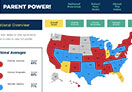
With less than half of states performing well on The Parent Power Index there is still a lot of work to do in states so parents have the best possible access to making sure their child is in the learning environment that’s right for them.

Leadership and voice: Two New Orleans schools illustrate the promise and perils of charter schools

By Eric Schulzke
Deseret News
December 4th, 2014

This story is part of the Deseret News National Edition, which focuses on the issues that resonate with American families.

Lauren LeDuff was a junior at Warren Easton High School in New Orleans when Hurricane Katrina flooded the city in August of 2005. Fleeing with her family, she finished the school year as a refugee in Houston, returning to Warren Easton for her senior year.

She returned to a transformed school.

The entire first floor of the 100-year-old massive three-story brick building had been gutted by water and mud. Half the building was still unusable when school began in the fall of 2006. Sawing and hammering echoed from downstairs and lunches were brown bag or delivered pizza.

But that was not all: The school’s name and mission had changed. Now it was Warren Easton Charter High School. It had a new principal, Alexina Medley, who was making sweeping changes. Uniforms, strict rules and an innovative program to get its students career- or college-ready followed.

The changes at Warren Easton so inspired LeDuff that she vowed to become a teacher and return to her alma mater.

“I told Ms. Medley before I left she’d need to fire somebody to make room for me,” said LeDuff, who now teaches English and communications at Warren Easton.

She was kidding, of course. No one was fired for her.

But in theory, it was possible. Like most charter schools, the new Warren Easton has no teacher unions and answers to no school district. Instead, it has its own charter with the state and its own school board that grants the principal sweeping authority to shape budgets, curriculum and mission, and to hire and fire staff.

It seems to be working at Warren Easton. With a charismatic and collaborative leader, morale of staff and teachers appears to be high, and the high-poverty student body is performing well on graduation and standardized test measures.

Not every charter school manages its autonomy so well, however. Critics point to less successful examples, including Ben Franklin Charter High School across town in New Orleans. There, they say, staff decisions were arbitrary, pay scales murky and morale poor and teacher turnover is high. Alleged mismanagement at Ben Franklin recently led its teachers to unionize.

These two schools represent each side of a double-edged sword: The charter school reality that the freedom to innovate also contains the power to mismanage or destroy. What makes charters exciting is dynamic possibility for leadership to change staff, refocus and create a new mission, but that dynamism comes with risk.

Charter schools are now a permanent and growing part of the American educational map. From school years 1999 to 2011, the percentage of public schools that were charters rose from 1.7 to 5.8 percent.

In urban schools serving underprivileged students, charters are disproportionately common. All of New Orleans’ public schools are now charters, while over half of Detroit students and roughly 45 percent of those in Washington, D.C., attend charters. These cities are leaders but not outliers: Many major urban areas are now upward of 20 percent charter.

As the charter trend expands, there is friction over how the schools are governed. Ben Franklin remains a rarity in its recent unionization. In 2012 just 7 percent of charter schools were unionized, down from 12 percent in 2009, according to the Center for Education Reform.

Critics argue that without strong teacher input, reflected in unions or some other institutional security, teachers and the schools will be at the mercy of bad leaders. Others argue that reverting to the fetters of traditional schools would squelch innovation, that real change requires strong leaders who take risks and that teacher voice can be respected without sacrificing bold leadership.

Fixing Virginia’s charter-school law

By Jeanne Allen
Washington Post
December 4th, 2014

The challenges of the Middleburg Community Charter School, described in the Dec. 2 Metro article “Charter school caught in local-state muddle,” are typical of a charter-school law that imposes non-performance inputs that have no impact on student achievement, such as a principal’s license that demonstrates process accomplishment instead of experience and success. No successful enterprise succeeds in hiring leaders based on what’s on paper. Virginia’s educators should embrace innovations that put performance-based accountability ahead of bureaucracy and paperwork.

The majority of the nation’s 6,400 charter schools succeed because they are clustered in states or jurisdictions, including the District, where freedom and accountability for results trump emphasis on licensure. We discourage exceptional individuals from entering education by imposing well-meaning but irrelevant requirements that have no effect on education. Anyone can obtain a piece of paper saying he or she has accomplished something; only the best can get results that students deserve.

The Center for Education Reform has spent 10 years fighting for a meaningful charter-school law in Virginia. The few charters there are regularly tortured by bureaucratic meddling and eventually fold as a result. Meanwhile, in the District, a vibrant environment exists for innovative schooling, demonstrating what success looks like when properly implemented.

There are no constitutional barriers to opening up such communities of learning in Virginia, only attitudinal barriers.

Jeanne Allen, Washington
The writer is a senior fellow and president emeritus at the Center for Education Reform.

State Education Policy Should Focus on Outcomes, Not Inputs

Critical Analysis of New Report on Charter Schools

CER Press Release
Washington, D.C.
December 4, 2014

Kara Kerwin, president of The Center for Education Reform (CER), issued the following statement in light of the release of “On the Road To Better Accountability: An Analysis of State Charter School Policies” from the National Association of Charter School Authorizers (NACSA) today:

“Indeed, one of the most critical ingredients for charter school success is a strong charter school law. However, in analyzing the strength of charter school policies, it’s vital to understand and take into consideration how provisions play out on the ground. Despite NACSA recognizing ‘policy alone does not make great schools,’ this report relies heavily on the organization’s own model.

“It is indeed fact that NACSA’s suggested standards are heavily focused on inputs and paperwork, and there is no evidence in any one state that adopting NACSA standards have any bearing on student success and ensuring a robust charter sector to meet educational needs.

“For instance, Washington State earns a full 30 out of 30 points in NACSA’s latest analysis, yet there is only one charter school in existence in the entire state. Thus, it’s nearly impossible to responsibly evaluate whether or not this policy is truly working for students, which is why Washington State earns a grade of “C” on CER’s 2014 Charter School Law Rankings & Scorecard.

“Strong charter laws feature independent, multiple authorizers, few limits on expansion, equitable funding, and high levels of school autonomy. In fact, states with charter school laws graded “A” or “B” saw 355 new charter school campuses, whereas states with laws graded “D” or “F” saw just 13 new charter campuses in 2012.

“The District of Columbia, Michigan and New York (all of which have proven models of high-quality authorizing), faired poorly in NACSA’s report simply because these states have not ‘adopted’ or contracted with NACSA to implement its recommended standards in authorizing. Yet, all three boast major gains in student achievement, have higher closure rates for charter schools than the national average, and have demonstrated proven approaches to ensuring the highest levels of accountability.

“Since 1996, CER has studied and evaluated charter school laws based on both construction and implementation, and whether or not they yield the intended result of the charter school policy, which is to ensure the creation of excellent and numerous learning opportunities for children.

“Whether or not the point scale in this particular analysis makes sense – which the reports own findings admit to – is not the issue. We respect our colleagues’ opinions, but there is a major difference between fact and opinion. It is time to put an end to the continued rhetorical war that is leading to the centralization of charters, endangering them in becoming the very same thing the principles of choice, accountability and autonomy sought to fix.”

To learn more about CER’s state rankings and model legislation, please visit:
https://staging.edreform.com/issues/choice-charter-schools/laws-legislation/

NEWSWIRE: December 2, 2014

Vol. 16, No. 47

#GIVINGTUESDAY is finally here. Although you probably know that from the flood of emails in your inbox today. We can’t help but take part in #GivingTuesday because we think giving parents fundamental power over their child’s education is the most important work on earth. With your help, The Center for Education Reform will continue to lead the fight on ensuring more education options in more communities for more families. Make your contribution here so parents and lawmakers are in the know about what it takes to expand new learning opportunities to students regardless of zip code or background. Thank you for your support!

THE BUTCHER, THE BAKER, THE ED REFORM MAKER. Not one month after Charlie Baker is elected governor of Massachusetts, and he’s starting to receive calls to improve education, particularly for underserved Bay State students. Good thing too, seeing as a state 30th in Parent Power provides limited school choice, with the state’s first virtual school authorized just last year. Baker has vowed to eliminate the cap on number of charter schools allowed, and says, “school choice… should not be a partisan issue.” No it shouldn’t, and nationally parent choice is actually a tri-partisan issue. Efforts last year to lift the charter school cap came up short in Massachusetts, but bold leadership from the state executive could be the difference maker.

CHOICE DOES NOT END WITH STUDENTS. When charter schools establish themselves in communities, they present a new option not only to students, but also to teachers who want to help incoming classes. Chicago first grade educator Erin Fergus explains why she chose a charter, and how it was a conscious decision because of a shared belief in the mission to close the achievement gap in the Windy City. It’s sometimes forgotten that environments that provide autonomy are empowering not only to students who can now learn in new ways, but also to teachers who can innovate and cater to student needs. And just like the families and students who chose a charter learning environment, teachers want to be there and the results speak for themselves.

IDAHO PLUGS IN. In terms of creating the conditions necessary for choice and innovation in recent years, everything has been coming up Idaho. As many as 35 Idaho districts contain teachers who are implementing blended learning in the classroom, helping 3,000 students use technology in a way that helps mastery of content as opposed to what CER’s toolkit cautions against: using computers for computers’ sake. With the guidance of Idaho’s statewide Digital Learning Academy, tried and tested learning models are being used that allow for instant feedback and personalized instruction in the event a student requires more follow up beyond the online lesson plan. What’s more, blended learning in Idaho is a way for principals to use teaching personnel more efficiently so kids are still getting the help they need. It’s these types of commonsense solutions that should have Idaho climbing the Parent Power ladder for years to come.   

THE BEST OF BOTH WORLDS. It’s refreshing to hear educators call for an end to arguing over ‘charter’ vs. ‘traditional,’ in favor of learning what works from both models and applying it to classrooms. In St. Paul, Minnesota, public educators are doing just that. Higher Ground Academy (HGA) is a K-12 public charter school that serves a 95 percent low-income student body with the highest percentage of low-income students of any school statewide to be proficient in math and reading. Now, HGA collaborates with several other inner-city schools to exchange best practices, and increase the number of students taking college credit courses. Without a doubt, a ripple effect is always going to be more positive than a single splash.

CALLING ALL FEDERAL WORKERS. Those who work for the federal government are able to get into the spirit of #GivingTuesday in their own special way to help lift student outcomes via the Combined Federal Campaign (CFC), through which The Center for Education Reform has been awarded a “Best in America” seal, given to only two percent of charities nationwide. Click here to learn more. The deadline to give via the CFC campaign is December 15th!