









Sign up for our newsletter

State of the Union Wish List: 2015

Tonight, President Obama will deliver the State of the Union address. The 2014 State of the Union focused on new expectations and opportunity for students, early education, and making college more affordable. It’s likely President Obama will discuss reauthorization efforts of the Elementary and Secondary Education Act (ESEA), also known as No Child Left Behind (NCLB), in addition to his recently announced plan to expand access to community college.

While that’s all well and good, here are a few of the themes we hope to hear in tonight’s SOTU, as these are the things that will truly drive change in our schools and enable all children access to an education that delivers the promise of student success:

1) Parent Power: President Obama last year told the story of New York student Estiven Rodriguez, the son of a factory worker who couldn’t speak a word of English at age nine, but worked hard and found out he was going to college. These student-centered anecdotes are no doubt inspiring, but so is the role that parents play in the education of their children.

Whether it’s the Arizona mom of a child with special needs who can now use an Education Savings Account (ESA) to obtain critical resources, or the Indiana family who because of a voucher can send their child to a better school, there are many stories of student success that happen because parents are able to choose the learning environment that enables their child to succeed.

2) Innovation: Millions of Americans will be celebrating innovation at over 11,000 events nationwide next week’s National School Choice Week and while its a tall order to expect an explicit mention of charter schools, vouchers or any other school choice avenue, we hope President Obama at least appreciates the challenges that come with both a new century and ever-changing student population. In this context, it would be heartening to hear reference to innovations that are adapting to the growth and diversity of school-aged children.

3) Federal accountability: The ESEA reauthorization process is in full swing, and competing visions on how to properly restore the federal role in education are coming in from all angles.

Accountability means requiring states that use federal dollars to develop high standards, teacher quality, and charter reforms that preserve school autonomy. The feds should expect results, but it’s equally critical that federal desires do not impede the Parent Power policies already taking hold at the state level. Lawmakers must also remember that accountability goes both ways, and the feds would do well to take their role seriously as data aggregator and watchdog so parents get a true sense of how schools are doing.

As usual, Michelle Obama is sure to host a variety of upstanding citizens from all walks of life, but here are some who would sit in CER’s version of the FLOTUS box:

  • David Hardy, CEO of Boys’ Latin Charter School, an institution that serves as a beacon in North Philadelphia and has provided an educational lifeline to young men in need of a rigorous learning environment.
  • Julie Collier, a tireless parent advocate from California who helped found a charter school that best fit the learning needs of her son, after being told by a traditional school teacher, “There’s nothing we can do for you.”
  • State Representative Marcus Brandon, a proud, progressive Democrat from North Carolina who strongly supports the newly created Opportunity Scholarship program, and school choice in general as a way to change the status quo and reverse current injustices in education.
  • Denisha Merriweather… or any student, who now has a brighter future thanks to school choice, especially since the National School Choice Week kickoff happens this Friday in Jacksonville, Florida.

NEWSWIRE: January 20, 2015

Vol. 17, No. 3

IN PURSUIT OF EQUITY. The Center for Education Reform, together with allied organizations, filed an amicus brief in support of a lawsuit that intends to bring equitable funding for District of Columbia charter schools. The lawsuit, filed in July 2014, takes a bold stand against the persistent funding inequity that undercuts charter educators’ ability to provide the best possible learning environments. In 1995, the D.C. School Reform Act passed by Congress required the District to institute a public charter school program, but also required a per-student funding model that applies equally to ALL public schools. So far, that hasn’t happened and D.C. charters have lost out on as much as $770 million since FY 2008. This lawsuit seeks to change that by making the case that it’s unacceptable to inequitably fund 45 percent of the District’s public school population.

STATE OF THE UNION. Tonight President Obama will deliver the State of the Union address, and is expected to discuss what it will take to improve education nationwide. That being said, it’s likely the recent community college announcement and ESEA reauthorization will both get mentions. While it’s wishful thinking to expect an explicit endorsement of school choice policies like charters or vouchers, hopefully President Obama will touch on themes related to Parent Power, innovation and accountability. Whether it’s the Arizona mom of a child with special needs who can now use a savings account to get critical resources, or an Indiana family using vouchers, there are a litany of inspiring stories that highlight the positive results of allowing parents a choice in education. Click here to read CER’s full SOTU wish list, along with who would sit in our version of the FLOTUS box.

BUILDING BOOST. Governor Rick Scott recommended in his state budget $100 million for Florida charter school construction and maintenance. Great news, as charter school leaders are no strangers to funding shortfalls when it comes to facilities. CER’s charter closure report reveals many charters actually start out at a deficit due to a lack of facility funds, and nearly 42 percent have closed because of financial deficiencies. The solution requires a change to state law, so charters don’t have to depend solely on the budget proposals of reform-minded state executives.

CHOICE ON GEORGIA’S MIND. Within just a few hours – yes hours – on January 1, the Peach State tax credit scholarship program reached its $58 million cap for the year. Georgia’s program receives a B on CER’s tax credit scholarship rankings and scorecard, and its biggest weakness is that there are too few credits available to meet demand. Last year, 13,285 students obtained scholarships, representing just one percent of the Peach State’s total age 5-17 population. Between the short time it took to reach the program cap and a poll showing two out of three Georgia voters support school choice, families are sending a loud and clear message that they want more education options.

NATIONAL SCHOOL CHOICE WEEK IS ALMOST HERE. Just a few more days until it’s time to break out the yellow scarves for National School Choice Week, when families nationwide will celebrate how they have benefitted from choosing education. Click here to find an event happening in your state, and don’t miss the kickoff happening Friday, January 23 in Jacksonville, Florida!

Sen. Dick Brewbaker says charter schools bill undergoing revisions to get advocates on board

Mike Cason
AL.com
January 16th, 2015

MONTGOMERY, Alabama — State Sen. Dick Brewbaker, a Republican from Montgomery who has advocated for school reforms for years, said he is working with others to revise a charter school proposal in preparation for the legislative session.

Charter school legislation was a high priority for the Republican-led Legislature in 2012 but did not pass.

Brewbaker said he won’t file a bill this year until he has all the advocates on the same page.

The session starts March 3.

Charter schools are publicly funded schools that aren’t bound by the rules and regulations of traditional schools. Instead, they are governed by a charter that spells out their purpose and goals.

“It’s just a way to put a lot of flexibility into public education that traditional schools don’t have,” Brewbaker said.

Forty-two states allow charter schools, according to The Center for Education Reform.

Brewbaker said there’s ample evidence that innovation is needed in public education.

Last month, the state Department of Education released statewide results of tougher standardized tests Alabama students took for the first time last spring.

Students in grades 3-8 took the ACT Aspire tests in reading and math.

Tests showed that fewer than half were on track to be  ready for college in both subject areas at almost every level.

Brewbaker said charter schools are not a “silver bullet” but can be part of the mix in improving education.

“Charters are a way to get different sets of eyes looking at these problems,” he said.

He said the bill will be limited in scope and would probably allow the creation of 10 charter schools a year over a five-year period statewide.

Brewbaker said they would be run by a nonprofit organization under rules spelled out in a charter that would have to be approved by a local school board or a statewide board.

They would receive public school tax dollars in amounts based on their enrollment.

The Alabama Education Association has been an opponent of charter schools.

In an email today, AEA Executive Secretary Henry Mabry said the organization supports improvements in public education and would be open to discussions this year.

“We look forward to reviewing what Sen. Brewbaker has to offer during this upcoming session, and we hope to be given the opportunity to have our comments heard as this legislation is considered,” Mabry said.

Brewbaker said another group, School Superintendents of Alabama, was most instrumental in blocking the charter school legislation in 2012.

Eric Mackey, executive director of the SSA, said the group, which represents 137 local superintendents, had concerns about the 2012 legislation but ultimately supported it, with reservations, after some changes were made.

Mackey said the SSA and other groups have been involved in discussions about this year’s version.

He said it’s important that a charter school plan be limited in scope and that charters be written to target a specific need.

“In states where you see hundreds of charter schools, a large number, often the majority are underperforming,” Mackey said.

Brewbaker acknowledges that results of charter schools have been mixed. He said charters that aren’t achieving their goals within four years should be closed.

But Brewbaker also said he can’t understand “defense of the status quo, especially some systems that clearly need to take a fresh look at what they’re doing”

Sen. Quinton Ross, D-Montgomery, said he could not comment specifically on Brewbaker’s legislation, but said he generally opposes charter schools.

Ross said local school systems can already apply for waivers from some state laws and policies to develop flexible programs that fit their own needs. That was part of the Alabama Accountability Act, passed in 2013.

Brewbaker said he’s not seeing many school systems take advantage of flexibility waivers.


Julie Collier: Parents need more school choice

Julie Collier
Orange County Register
January 16th, 2015

Parents should be the final decision-makers when it comes to where their children are educated.

Although California does give parents some choice – on paper, at least – beyond settling for a failing public school, the reality is that exercising those options is much more difficult than it ought to be. A handful of states offer parents a wide range of choices for schooling their children, including publicly funded voucher programs and tax credits. For a variety of reasons – teachers union’ opposition mainly – private school choice has yet to take off in the Golden State.

We do have some public school choice. Open enrollment and inter-district transfer laws provide some families with an escape route from failing schools. But many families continue to miss out, forced to settle for mediocrity when their children deserve excellence.

Charter schools offer a ray of hope. California, in fact, leads the nation with more than 1,100 charter schools serving some 520,000 students statewide. Just over 49,000 new students enrolled in a charter school in 2013-14, according to the California Charter Schools Association. But as robust as the Golden State’s charter school sector may be, CCSA also points out that an estimated 50,000 children languish on waiting lists.

The California Teachers Association and its allies peddle the myth that charter schools are “private” schools that serve only to enrich their operators – not true. Charter schools are public schools. Although they have more autonomy than traditional public schools, they must still abide by the same education policies. And charter schools receive considerably less state funding.

Charter schools are also under constant pressure to deliver high academic performance. Unlike traditional public schools, which can fail students for decades without consequence, charter schools may be shut down if they do not provide a quality education for their students.

Quality education is a rare commodity. California sits near the bottom in every measure of student achievement in America, and has for decades. California’s fourth-graders rank 47th in the country in reading and math, according to the latest National Assessment of Educational Progress. Our eighth-graders are slightly better, placing 42nd in reading and 45th in math. The achievement gap between California’s white students and their black and Hispanic peers is also wider than the national average.

Failing our students is an embarrassment and a disgrace that every parent needs to confront. But unless you can afford private or parochial school tuition, practically every child in every ZIP code is at risk for failure in California. Children living in low-income and minority neighborhoods are the most at risk.

State and local education officials often talk up high standards and accountability. But it’s difficult to have accountability when state and local laws make it impossible to evaluate teachers based on student success.

School choice is better than any accountability system devised by state and federal bureaucrats. When parents have the freedom to vote with their feet, schools can step up and improve what they have to offer, or go out of business. Parents and taxpayers shouldn’t have to foot the bill for failure year after year and decade after decade.

With the new legislative session now under way in Sacramento, parents need to keep a sharp lookout for bills that are student-focused, not union-focused. We should be actively researching who supports child-centered reforms and who is working to shore up the status quo.

We need legislation that provides more equitable funding for charter schools. We need to guard against union-sponsored legislation that would gut the state’s Open Enrollment Act, which lets parents send their children to a higher-performing school if their neighborhood school happens to be on the list of 1,000 the state identifies as “low-achieving.”

Our children’s education can no longer be a spectator sport. National School Choice Week, which runs Jan. 25-31, is the ideal occasion for California parents to speak up for greater choice for all children.

Take time to celebrate educational choice for your child – then insist on having more. School choice is the ultimate expression of parent empowerment.

Julie Collier is the founder and executive director of Parents Advocate League, a grassroots parent-empowerment organization dedicated to ensuring a quality education for all students.

Kennedy-King vision found in Indy school

By Kevin P. Chavous
The New Pittsburgh Courier
January 18th, 2015

In the spring of 1968, while growing up in Indianapolis, my mother scooped up me and my three younger siblings and told us that she was going to take us to hear the next president of the United States speak. It was a misty, overcast night but I was excited to go – even if I had to stand in the rain.

When we arrived at the near northeast park, the mainly African-American crowd was buzzing with expectation.  Though just 11 years old, I knew that this was a big deal.  Soon, Robert Kennedy and his staff arrived at the park.  But they didn’t look happy.  We were about 30 yards away and I could see the tension on the faces of Kennedy and his team.  I sensed something was wrong. From the very beginning, they did not look like they were at a presidential campaign rally.  Finally, Bobby Kennedy stood on the back of a truck and announced to all of us that Martin Luther King, Jr. had just been assassinated in Memphis.

The crowd, including my mother, all began to gasp, scream, then cry.  As sad as I instantly felt, I was determined not to cry. I wanted to be strong. I do remember thinking, however, as the light drizzle fell on my face, it would help to camouflage my tears – but I did not cry.

As people were dealing with the shock, some of the folks in the back were getting agitated.  I could feel the anger rising. Bobby Kennedy then gave one of the most famous speeches in American political history.  He quoted the poet, Aeschylus; talked about the need for love, not hate and then calmed the crowd in a way no one else could do by letting them know that he understood how they felt – especially since, as he said,  “a white man killed my brother”. With each word he spoke, you could feel his anguish, his agony and his compassion.

That night, nearly every major American city burned in rioting because of the anger over Dr. King’s murder.  All except Indianapolis.

Bobby Kennedy did what no other White man in America could do that night: he connected with an African-American crowd in a way to dissuade them from striking out because of Dr. King’s death. A surreal spiritual energy descended on us all during that intense emotional moment.  For those of us watching and listening to him, Bobby Kennedy was no longer a White man talking to Black folks; he was a man who had lost a loved one to a senseless act of violence consoling a group of people who had just lost a loved one to another senseless act of violence.  We were all connected through our humanity.

I thought of that night during a recent visit to my Indianapolis hometown. I was visiting the Oaks Academy, a private pre-K-8 elementary school located just 5 blocks from the park where Bobby Kennedy gave his now legendary speech.

The school is one of a kind. 97% of the 600 plus kids are proficient in both reading and math. Indeed, the school’s scores are among the best in the state. 50% of the kids are on free or reduced lunch. Almost 60% of the Oaks students are recipients of scholarships from the Indiana Opportunity Scholarship Program.  But here is the really remarkable thing about Oaks Academy: the other 50% of the kids come from middle class to upper middle class families. In fact, some of the wealthy parents drive from as far away as Carmel, a well-to-do suburb, to enroll their kids in the school.

The Head of School Andrew Hart, works hard to keep the racial and socio-economic balance of the school in place.  His waiting list consists of equal parts poor kids and kids from wealthy families.  Both groups benefit from the socialization experience of being exposed to someone from a totally different world. For instance, Mr. Hart shakes his head when talking about how extremely different Christmas break is for his kids.  One set of kids may go to Vail to ski over the break, while another group of kids have the primary responsibility of taking care of and watching their younger siblings.

How does Oaks do it?  “It helps that most of our kids enroll at our school in pre-K and remain here until they are ready for high school,” say Andrew Hart. “So all of our kids and their families feel like they are part of a community. The kids all grow up together. And all are close, irrespective of their backgrounds.  They are connected through their shared experience at our school, through our values and our humanity.”

Today, with America’s schools more segregated than when the1954 Brown v Board of Education Supreme Court decision legally struck down the practice of ‘separate but equal,’ it is exceedingly rare to see a school with such a diverse socio economic mix of students. It is more rare to see a school community so dedicated to preserve that mix.

When I left the amazing Oaks Academy, I drove by Martin Luther King Park, where I witnessed history that tragic night in 1968. As I glanced at the memorial located on the spot where Bobby Kennedy spoke, I thought about both Kennedy and King’s dream of a colorblind society and the irony of how that society is more evident at the tiny elementary school down the street than in most places in America.

The Center for Education Reform Files Brief in District of Columbia Education Lawsuit

Suit Supports Funding Equity for All D.C. Public School Students

Press Release
Washington, D.C.
January 20, 2015

The Center for Education Reform (CER), together with Black Alliance for Educational Options (BAEO), Friends of Choice in Urban Schools (FOCUS) and the National Alliance for Public Charter Schools (NAPCS), filed an amicus brief Friday, January 16 with the United States District Court for the District of Columbia, Case No. 14-cv-1293-TSC, in support of a lawsuit aimed at securing equitable funding for public charter school students.

In the brief, the amici curiae state that the defendants are wrong to argue that they have the authority to amend or repeal the District of Columbia School Reform Act of 1995 simply because the Act is directed exclusively to the District. The School Reform Act passed by the U.S. Congress required the District to not only institute a public charter school program, but also to institute a per-student funding model that applies to all public schools equally.

The lawsuit, filed in July 2014, alleges that each year the D.C. government has shortchanged charter schools by $1,600-$2,600 in per-pupil funding on average, accumulating to an outrageous $770 million since FY 2008.

“It’s simply unacceptable to underfund D.C. public charter schools, which serve 45 percent of all public school students in our nation’s capital” said Kara Kerwin, president of The Center for Education Reform.

NEWSWIRE: January 13, 2015

Vol. 17, No. 2

CARROTS, STICKS & CONGRESS. While expressing optimism and touting areas of agreement, Education Secretary Arne Duncan acknowledged there are competing visions for how best to reauthorize the Elementary and Secondary Education Act (ESEA). Rather than compete between those nostalgic for local control and those who want a clearly defined federal role, why not forge a new course of action that incorporates the best of both worlds? It’s easier to talk about inputs and the resources the federal government will pump into states than it is to talk about what outputs students are getting in return for those investments. The federal government can’t control what goes on in every classroom, but states should be held accountable for whether plans to increase standards, teacher quality and choice actually move the needle on student achievement.

GOVS DOING THEIR PART. As the feds debate ESEA reauthorization, the nation’s governors are laying out their visions for education at the state level. Arizona Gov. Doug Ducey, one of many reform-minded governors according to CER’s Education50 analysis, rightly said that improving student outcomes, “can and should unite us,” while emphasizing parental choice coupled with accountability. Hopefully there will be more state executives who act on the rhetoric of their state of the state addresses, and take the lead in advancing reform principles.

ONE SIZE FITS ALL? NOT EXACTLY. Doing his part to dispel the myths surrounding charter schools, Joe Nathan, former educator and now director of Minnesota-based Center for School Change, discusses how blanket statements applied to charter schools simply don’t pass muster. Some have tried to advance notions that charter schools are not innovative, not part of the public system and can be lumped together as a monolithic sector of education. But the fact is that there are all kinds of charter schools because there are all kinds of kids with different learning needs. This realization requires educators to think outside the box, and structure a school to meet unique demand. As a result, charters vary widely in philosophy, focus and approach, translating into increased student success. CER’s law rankings show what’s necessary for state policy to support educators in their missions to build the most effective schools possible, whatever that may look like.

COMMUNITY COLLEGE, CHARTER STYLE. President Obama recently announced an initiative to make community college more accessible. What people may not realize, however, is that charter schools have actually been taking the lead on this for years now, offering chances for students to get a head start on obtaining college credit. In fact, last week’s Newswire featured a dual partnership program in St. Paul allowing charter students to get a leg up on higher education. Additionally, the GEO charter network in Indiana graduated five students who earned an Associate’s Degree before even receiving a high school diploma! These types of programs – especially for students from disadvantaged backgrounds – are transforming higher education from a pipe dream into a reality.

UNDER CONSTRUCTION. There’s currently a proposal in Maryland to create an additional charter authorizer in Frederick County aside from the local school board. Regular readers of Newswire are familiar with the shortcomings of Maryland’s charter law, but not as much as Maryland charter educators and Old Line State parents, who live in a state that earns 60% in Parent Power. In states with strong laws, charter leaders are entrusted to manage their own staff, customize course content, and adapt to the learning needs of their student body. Marylanders are simply asking for the same courtesy.

ADVANCING THE MOVEMENT. In a panel discussion with Rep. Luke Messer, leader of the Congressional School Choice Caucus, Lindsey Burke of Heritage and Don Soifer of the DC Public Charter School Board, CER’s very own Kara Kerwin discussed how to advance the school choice movement in the U.S. Whether it’s the tax credit scholarship program in Florida or Education Savings Accounts (ESAs) in Arizona, Kerwin highlighted how parents actively seek out education options when choices and data become accessible. As Parent Power continues to gain traction in statehouses, it’s critical that choice proponents in Congress stay the course to add to this progress.

In Economics, Right and Left a Matter of Education

By Leslee Kluba
January 12, 2015
The Tribune Papers

John Stossel recently appeared on the Fox Business channel in an Uncle Sam suit, throwing money out of a wheelbarrow to illustrate the absurdity of ObamaCare’s risk corridors. It was as funny as his famous video wherein he smashed cars sarcastically claiming Cash for Clunkers was good for the economy.

Stossel’s book, No, They Can’t: Why Government Fails – But Individuals Succeed proved fun reading as well. Anybody acquainted with fiscally-conservative economics would find nothing new but the clear and clever writing style. Stossel breezes through concepts like the tragedy of the commons, the Laffer curve, Smith’s invisible hand, Bastiat’s broken windows fallacy, market distortions, unintended consequences, opportunity costs, etc. in a manner that might even convince some die-hard progressives.

Stossel, who left a life of accolades from the neoliberal media, claims, “Milton Friedman once called me ‘that rare creature, a TV commentator who understands economics, in all its subtlety.’ I loved that quote. But it’s one of the few things Milton got wrong.”

Stossel drives home the fact that the differences in economic philosophy, as embraced by the major political parties, are a matter of education. Youthful hipsters, looking for a quick fix without much thought will gravitate toward one party. Those who have been around, making a habit of studying histories, public policy, and economics, gravitate toward the other. So much for thinking globally.

Lots of folks, even those in high stations, don’t know what an economy is. In simple terms, it is the production, trade, and consumption of goods and services in a particular region. It is not, as Stossel notes, “a machine that needs jump starting. The economy is people who have objectives they want to achieve.”

Missing in many modern discussions of economics is the concept of trade. Stossel illustrates this with somebody buying a cup of coffee. Both the buyer and seller say thank you because both acquired something they value more than what they surrendered. If the price weren’t right, the transaction would not occur in a free market. Even anarchists agree coercion, fraud, and theft are aberrations to be dealt with when resorted to in a free market.

Yet, low-information economists like to argue against capitalism. They believe prices are arbitrary, that employers can pay those they hire whatever they demand. They are like the child who thinks money is available in infinite supply. free from the banks; and they continually fall for government’s deceptive claim of creating wealth by printing more money, borrowing, or taxing.

The world has no shortage of essays on why price controls on anything from wages to housing tend to further disadvantage the populations they’re supposedly designed to serve. Stossel told how the ADA made people with disabilities “walking lawsuits” waiting to happen in the eyes of potential employers.

Stossel himself used interns to do things his former employers couldn’t justify in their budgets. It gave college kids valuable, real-world experience. Then, the Labor Department decreed he could only have interns if their labors supplied “no immediate advantage.” The department, in fact, said it would be even better if Stossel’s work “may be impeded” by having them around.

The word “cause” in government has long been a double-entendre. Traditional causes, like helping needy families, as well as causes like padding the bottom line of the failing business of campaign supporters, or saving the habitat of rare salamanders, give government an excuse to grow, or in other words, transfer funds and resources out of the productive sector. But in government, job security is achieved by never solving problems, justifying never-shrinking budgets, and adding underlings.

Returning to the basic definition of an economy, the problem is obvious. Except in socialist states where it actually owns businesses, government produces nothing. It only forces the redistribution of resources. Arguments about optimal resource placement are obviously bogus, but when government moves things around, it necessarily introduces market distortions.

Undistorted pricing gives buyers, sellers, and potential buyers and sellers information about what people really want and need. Tampering with the data by fixing prices fogs the landscape leaving traders less satisfied than they could have been. It also introduces inefficiencies, as bureaucrats must be hired, managed, given digs, and equipped.

The 99 Percent were not upset with the free market; rather, they mislabeled crony capitalism. Stossel describes how government helps make business look ugly to the low-information crowd. “The more power we give government to control businesses, the more businesses seek to control government. Instead of obsessing about inventing better products, they obsess about getting cozy with politicians and regulators. They invest in people who are clever at manipulating rules.”

In free markets, everything is for sale but government. In market economies, ideas that don’t work or are unpopular for other reasons can’t find enough buyers to support their production. Through bailouts and “economic development incentives,” bad products get foisted on people as competition is undercut. Stossel says of the Chevy Volt, “Such boondoggles exist only because of fat government favors, uh, I mean subsidies. Wait, no, silly me. ‘Investments’ is the euphemism du jour.”

Stories of exchanges of campaign contributions in return for regulation and certification programs that discourage lateral-entry competition are abundant. Stossel describes Las Vegas’ limousine licensing as a “shakedown operation” for campaign funds. Monopolies can’t exist for long without the help of government favors, and technological innovation is impeded when connected corporatists get their friends in Washington to support their ideas beyond their natural life cycles.

It is not difficult for the cronies to get useful idiots to campaign on their behalf. If protester can make a big enough scene, the media will then pitch-in for the cause because hysteria makes good copy. The line the cronies fed the 99 Percent was that banks and other industries needed bailouts because the fat cats’ greed ran rampant with deregulation. In one of many “give me a break” moments, Stossel counters that President Bush, who caught the blame, “spent more money on regulation and hired more new regulators than any president before him.”

Thanks to lobbyists, who prefer to keep business afloat more through the force of government than an innovative research and development department, “Congress creates, on average, one new crime every week. Federal agencies create thousands more – so many, in fact, that the Congressional Research Service itself said that merely counting them would be impossible. State and local bureaucrats create their own sets of crimes on top of that.”

Outside of industry, the younger crowd likes to grow government by entrusting it with social problems. This sanitizes charity by leaving assistance in the hands of credentialed bureaucrats doing a job. Is it any wonder caseloads grow as the afflicted won’t look into the eyes of those who sacrifice as a vote of confidence in their potential?

But to paraphrase Mitt Romney, “Government is people, my friend.” It’s a bunch of people who are cute enough to win popularity contests. There is no reason to believe they are more immune to “chronic government problems, like waste, bribery, corruption, regional favoritism, bailouts for the politically connected, and so on.” But the beat goes on, and the beautiful ones stay relevant by making up more rules and “staffing up” an increasingly complex public sector.

Stossel quotes Jeanne Allen of the Center for Education Reform as saying attempts to make the nation’s monopoly on education more efficient and impactful, “have run ‘smack into federations, alliances, departments, councils, boards, commissions, panels, herds, flocks, and convoys that make up the education industrial complex, or the BLOB. . . . Not really a wall – they always talk about change – but more like quicksand, or a tar pit where ideas slowly sink.’”

Although he admits understanding less about military operations than economics, he faults the government for throwing money at nation building in Iraq. Four hundred tons of shrink-wrapped $100 bills were tossed about like footballs and distributed to anything that could make an application. One example of a grant recipient was a guy with a “security” dog that laid down when people approached.

Government leaders tell the people their doings are transparent, but published budgets have vague captions for line items with values that rhyme with “Ashevillian.” Stossel quips none of them are labeled, “Pilot Program for Oppressing Common People While Spending Huge Amounts on Holiday Parties and New Office Furniture.” It is very difficult to pinpoint waste, but everybody knows it’s there.

Government toys with members of the public too busy or too frightened by obfuscation and insults to do the math. A famous game is presenting analyses that only mention pros for a project and no cons against it. Another is speaking of “cuts” which, in government jargon, mean reductions in wish lists rather than last year’s appropriations. “The government’s budget,” he says, “has little to do with bookkeeping, cost-benefit analysis, reality, or even sanity.”

In light of all this, Stossel asks why we are trusting the federal government with healthcare. First of all, ObamaCare is insurance, not healthcare. Second of all, “One of America’s biggest healthcare problems is not that 48 million people lack insurance – it’s that 250 million Americans have too much of it.” He says providing coverage for sniffles and tummy aches is like having automobile insurance that pays for gasoline and oil changes. Among a host of other problems is loss of liberty.

The national debt is so large, it is only discussed in terms of abstractions, like which planet the dollar bills needed to pay it off, stacked end to end, would be nearest. Worse than the annual deficits are the compounding entitlements of Social Security and Medicare. They’re pyramid schemes made unsustainable by their initial actuarial assumptions, which are deemed a third-rail for anybody seeking re-election. Arguments that seniors are only taking out what they put in are false. On average, they’re getting back about three times what they contributed.

In recent years, America has been slipping in the Economic Freedom Index published by the Heritage Foundation and the Wall Street Journal. Bill Beach of the Heritage Foundation explained, “Our spending has been excessive. We have the highest corporate tax rate in the world. Government takeovers of industries, subsidizing industries, . . . these are the kinds of moves that happen in third-world countries.”

Claims that soaking the rich as government grows unchecked can fix the problem have long since been debunked. Stossel shows that since 1945 government revenues have remained pretty much between 17 and 20 percent of GDP, even though tax rates on America’s top producers have ranged between 40 and 90 percent.

Ideas that America’s most productive can be taxed to a pulp view people as pawns devoid of survival instinct. The rich always hire accountants to find loopholes or lobbyists to make them, or else they will just relocate. The Donald described tycoons as “international people. Whether they live here or live in a place like Switzerland doesn’t really matter to them.”

In order to avoid rioting or other internal chaos, the government pretty soon will have to take serious action. Leaders just need to put country before re-election and make the tough decisions about which programs will be cut.

Puerto Rico’s governor Luis Fortuno started by cutting his own salary. Then, he privatized what he could. To stimulate the economy, he cut corporate taxes from 35 to 25 percent and reduced personal income taxes. According to Stossel, “Fortuno’s cuts haven’t made him popular. He may save Puerto Rico’s economy, but most voters don’t yet understand that it’s a good thing when fewer people work for the state. It’s just not intuitive.”

A bigger hurdle is educating the public. Stossel notes, “Obama today is not all that out of step with the way most Americans think.” As proof, this edit made it to the final printing. Can you identify the changed word?

“Economics is complicated. That’s one more reason to be grateful for the Constitution: In its relative simplicity, its rules keep government within bounds, so that we need to engage in elaborate number crunching to try to prove that the bureaucrats’ pet programs will bring us to financial ruin.”


Reformers Must Focus on Statehouses

By Rishawn Biddle
January 12, 2015
Dropout Nation

Today’s speech by U.S. Secretary of Education Arne Duncan on reauthorizing the No Child Left Behind Act, along with the entire circus over the latest efforts to pass a new version of the federal education law, have certainly garnered plenty of attention from Beltway school reformers and other policy wonks. But as your editor has noted over the past few months, the chances of a No Child reauthorization becoming reality are as likely as they were two years ago. That is, none at all. After all, Duncan and the Obama Administration have issued calls for reauthorizing No Child at various points over the past six years, as have Republicans and Democrats on Capitol Hill. Yet as Duncan’s speech shows, the president will not sign any reauthorization that doesn’t preserve his legacy on education policy, a demand by which congressional Republicans won’t abide. So the latest hub-bub will be as meaningless as all the sound and fury signifying nothing that has happened over the past eight years.

This isn’t to say that there aren’t some positive things coming out of all the otherwise-useless action. Education Trust and a cadre of civil rights groups (including the United Negro College Fund and NAACP) deserve praise for issuing a statement today calling for a reauthorization of No Child that effectively keeps in place the Adequate Yearly Progress provisions that have shined light on the consequences of the nation’s education crisis on children from poor and minority households. Given the collapse of the Campaign for High School Equity (which once served as the convening body for civil rights-based reformers) and the efforts by the National Education Association and American Federation of Teachers to co-opt such groups by peddling a version of accountability that lets states, school operators, and adults off the hook for failure, Ed Trust deserves praise for rallying so many civil rights players to stand up for our most-vulnerable children.

But if reformers are looking to actually advance systemic reform, they need to spend less time in the Beltway and more in the nation’s statehouses, where much of the action on education will play out. Especially with a cadre of new governors and legislators taking office, along with issues that intersect with education such as criminal justice reform on the agenda, reformers should use the time now to pass meaningful legislation that will help all of our children.

There are plenty of reasons for focusing on the states beyond the stalemate inside the Beltway that has been the norm for the past four years and will remain so for the time-being. One lies with the Obama Administration’s No Child waiver gambit, which has allowed 40 states and the District of Columbia to ignore No Child’s accountability provision. As Dropout Nation has reported ad nauseam over the past four years, the administration has engaged in an exercise of shoddy policymaking that has damaged systemic reform by encouraging traditionalists in states such as Texas and California to weaken and ditch accountability altogether. Just as importantly, the waiver gambit reaffirms the role of states in structuring education without holding them accountable for how they spend federal dollars (or for providing them with high-quality teaching, curricula, and school options); this includes the administration’s move through the waiver process to bless implementation of Plessy v. Ferguson-like proficiency targets that allow districts and other school operators to effectively ignore poor and minority students.

For the few states that haven’t been granted a No Child waiver, there’s the matter that the federal law itself. Contrary to arguments offered up by traditionalists and conservative reformers looking to ditch No Child, the law did little to expand the federal role, and actually confirmed the role of states as the controlling entities of public education within their respective boundaries. States may be required to improve graduation rates and test scores — including the aspirational goal that all students are proficient in reading, math and science by 2014 — but they are given plenty of leeway in developing their own solutions in order to achieve them. Because of this flexibility, which states have figured out how to game since No Child signed 13 years ago, reformers in states still under its provisions must work as hard as in waiver states to advance systemic reform.

Certainly No Child and the waivers are two reasons why reformers must focus on states. But not the only ones. There’s the battle over implementing Common Core reading and math standards will continue apace, especially in states where Republican-controlled legislatures are under pressure to halt that work from movement conservatives opposed to them. Certainly reformers who back the standards are heartened by Wisconsin Gov. Scott Walker’s latest flip-flop from demanding the halt of implementation to giving districts a choice on continuing the work (which they will all likely do). But with Tennessee Gov. Bill Haslam, a once-strong backer of Common Core, already calling for a review of them, and Louisiana Gov. Bobby Jindal continuing his presidential ambition-motivated effort to stop implementation, reformers must work hard to keep them on the books.

Another fight will be over expanding school choice. In Massachusetts, a years-long battle over eliminating a cap on expanding public charter schools will become even more heated thanks to incoming Gov. Charlie Baker, who has signaled that he will support reformers on this issue through his appointment of former New Schools Venture Fund boss-turned-federal education official Jim Peyser as the state’s new superintendent. In Maryland, the small cadre of reformers there (including the Old Line State branch of 50 CAN and the Center for Education Reform) are looking to rewrite the state’s charter school law, which favors districts at children’s expense. And in Connecticut, Parent Power activists are looking to revise the state’s Parent Trigger law, building upon the petition model that has worked well in California.

But the battles extend beyond education. The uproar over the murders of black men such as Michael Brown and Eric Garner by police officers are leading criminal justice reform advocates to push legislatures and governors to enact new policies, including the creation of independent prosecutors for cases involving cops as well as the rewrite of use-of-force laws that allow rogue cops to get off scot-free. Concerns over the virtual insolvencies of public defined-benefit pensions are spurring pension reform activists to action; this will include efforts to pass laws that will move teachers and other civil servants into hybrid plans that feature aspects of defined-contribution plans along with a defined-benefit component with a guaranteed savings rate. On these and other issues, reformers can easily team up with advocates on those issues to address the matters that affect our children inside and outside of schools.Then there are other battles. In New York, Gov. Andrew Cuomo, emboldened by winning a second term without backing from the AFT’s Empire State affiliate, will likely team up with Republicans in control of the state senate to push to improve an array of reform measures, including a further revamp of the teacher evaluation system. There’s also Indiana, where the two-year-long battle between reformers on the state’s board of education and Supt. Glenda Ritz will likely come to a head with efforts in the state legislature to make the latter’s job a gubernatorial appointment as well as Gov. Mike Pence’s plan to clarify state law by allowing the body to appoint its own chair instead of having Ritz at its helm. [Modifying and restructuring governance of state education systems will likely be on the agenda in other states as well.] And back in the Bay State, advocates for ending the overuse of harsh school discipline will likely leverage a report released last week by the Lawyers’ Committee for Civil Rights and Economic Justice to push legislators to go their way.

These fights matter because states are the battlegrounds from which reform efforts, especially at the federal level, are ultimately won or lost. Starting with 1960s, when NEA and AFT affiliates successfully convinced states to pass state laws forcing districts to bargain with them, states began reaffirming their constitutionally-mandated role overseeing and structuring public education. This continued into the 1970s, when school funding lawsuits and property tax reforms such as California’s Prop. 13, forced states to become the single-biggest source of funding for public school systems. By the end of that decade, southern governors and chambers of commerce successfully launched a wave of curricula standards, standardized testing regimes, and teacher quality efforts that would be at the heart of the school reform movement of today.

The policy wins in one statehouse end up being reflected in other statehouses. Why. Contrary to the longstanding argument by some that states are laboratories of democracy in which innovation is the norm, legislators and governors often duplicate efforts undertaken by counterparts elsewhere. This is because states differ little when it comes to the challenges they face on education and other issues. It is one reason why the American Legislative Exchange Council (with its success in developing model legislation passed in statehouses) has emerged as a leading policymaking force on the national level — and why progressives are trying to duplicate those efforts through the State Innovation Exchange. It is also why NEA and AFT affiliates, which have long-understood the importance of working statehouses, are stepping up their efforts on that level to preserve their influence.

Particularly when it comes to education, policy initiatives end up becoming embedded in federal law. This is because the federal government ultimately amplifies education policy decisions made at the state level, especially by those reform-minded governors and legislators (along with reformers) who also seek help from the federal level to beat back opposition to their efforts by entrenched traditionalist interests. If not for the reform efforts of governors at the end of the 1970s, there would be no A Nation at Risk. If not for moves by Florida and Texas during the 1990s, No Child wouldn’t have even become reality.

This is even clear now in discussions over revamping No Child; proposals by congressional Republicans to voucherize Title 1 funding originate from the passage of school voucher initiatives in states such as Indiana and Louisiana, while the Obama Administration’s initiative on reducing the overuse of harsh school discipline result in part from efforts by activists in states such as Maryland. When reformers succeed on the state level, they can then advance policy changes on the federal level that can, in turn, bolster existing efforts as well as move states bereft of strong reform constituencies.

Simply put, reformers must focus less on the bluster surrounding No Child reauthorization and more on what will (or won’t) be passed during state legislative sessions this year.

This starts with building stronger ties to chambers of commerce and other institutional groups who are as concerned as reformers about the consequences of the education crisis. It also takes embracing a bipartisan approach that accepts the reality that battles over reform have far less to do with political ideologies than with the power relationships that often exist at the state level. This includes building stronger ties with advocates on other issues that affect education; this includes criminal justice activists, who can help address overuse of out-of-school suspensions that (along with low-quality teaching and curricula) make schools way-stations into prisons for so children from poor and minority households. It involves long-term cultivation of grassroots support critical to making passage and implementation of reforms a reality. This must also include continually making the case to governors and legislators on why advancing reform matters — and holding them accountable when they go the wrong way. Finally, it means developing model legislation that reform-minded legislators and governors can build upon in their own policymaking work.

Sure, some attention should be paid to a No Child reauthorization that won’t likely happen. But a greater focus on statehouses will actually do more on the policy front for our children.

A Tale of Two Rankings

Education Week released today its annual “Quality Counts” report, with a focus on early education. While the report does its due diligence and is incredibly comprehensive, it unfortunately misses the mark in terms of criteria, focusing on some not-so-important inputs that don’t ultimately determine student success.

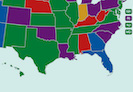
This is the very reason CER created the Parent Power Index (PPI), a report card based on qualitative and proven state policies. The higher a state’s grade on the PPI, the more parents are afforded access and information about education options that can deliver successful outcomes for their children.

Low On Inputs, High on Parent Power

Aside from considering NAEP scores, the “Quality Counts” rankings focus on educational inputs, downplaying the progress made by states through meaningful reforms.

One such input is funding, which is why states like Massachusetts, Connecticut, Maryland and Virginia, find themselves in the top tier of the “Quality Counts” report.

States such as the District of Columbia, Arizona, Idaho and Louisiana, which lead the pack on PPI, find themselves towards the bottom of the “Quality Counts” rankings.

For example, the District of Columbia places 38 on this year’s Quality Counts, but ranks 4 in Parent Power. The #4 PPI ranking is due to a policy environment that prioritizes school choice, teacher quality and data transparency. And judging by significant improvements on state assessments in recent years, students have been the primary beneficiaries of this policy environment.

By contrast, Maryland places third on “Quality Counts”, but drops a whopping 40 spots on the PPI. The Old Line State offers little in the way of public or private choices, and its charter school law is essentially one in name only. In 2014, Maryland test scores dropped to their lowest point in seven years.

If state officials are fortunate enough to see a high “Quality Counts,” ranking, hopefully they check the PPI before resting on their laurels.