









Sign up for our newsletter

Jacques: Busting the charter school myth

By Ingrid Jacques
The Detroit News
April 3, 2015

John Rakolta Jr. recently accompanied a Detroit mother and her two children on their journey to school.

The CEO of Walbridge and a co-chair of the Coalition for the Future of Detroit Schoolchildren wanted to see for himself what challenges families face each day. It floored him.

This family’s day starts at 6:15 a.m. They walk seven blocks to the nearest bus stop and wait 30 minutes. After a 10 minute bus ride, they walk five blocks and wait another 30 minutes for the second bus. The mother then walks her children to their respective schools.

“I get to Florida faster than they are able to get to school, and that’s the truth,” Rakolta said Monday during the coalition’s presentation of its recommendations.

This daily commute takes about two hours, each way. Just hearing about it sounds exhausting. But it’s what this mother, and many parents like her, are willing to do to get their children to schools they trust.

This particular mother sends her kids to charter schools. More than half Detroit’s children now attend charters. Most charter schools can’t provide transportation, so it’s up to parents to find a way there.

The fact they go to such great lengths is a powerful testament to the value of these schools. Parents who are disappointed with Detroit Public Schools are making choices based on a variety of factors, from better academics to school culture and safety.

All those reasons have merit.

That’s why this coalition’s cautions about charter schools seem misplaced. In its report, the 36 members of the coalition highlight what they found to be an unbridled charter environment, with a dozen charter authorizers running schools in Detroit. Tonya Allen, CEO of the Skillman Foundation and a co-chair of the coalition, blamed the density of school choice for the academic struggles of Detroit students. The coalition concludes the number of players contributes to poor coordination of schools and “no accountability.”

On the accountability front, that’s simply not true. Most charter authorizers are doing a good job regulating themselves and the markets they serve. As Jared Burkhart, executive director of the Michigan Council of Charter School Authorizers, points out, in the past five years, there has only been a net increase of seven schools in Detroit.

The coalition also points to the need for more quality and transparency of charter schools. But the state charter council has already sought that on its own. Burkhart and his members are spearheading an accreditation effort that would make Michigan the first in the country to put its charter authorizers through rigorous scrutiny.

One of the state’s largest authorizers, Grand Valley State University, just completed the process through the Georgia-based AdvancED. And other authorizers are lining up to do the same.

The national group Center for Education Reform gives Michigan’s charter school law an “A” grade. And after the coalition’s report, the center warned of adding “additional layers of bureaucracy with regards to the opening, closing, and renewal of charter schools.”

And Stanford University’s Center for Research on Education Outcomes studied the performance of charters in 41 urban areas, including Detroit, and found students are gaining more than two months additional learning in a year than are their traditional public school peers.

Charter schools are also playing a significant role in encouraging middle-class families to stay in Detroit.

The Best Classroom Project, a grassroots group, has brought more than 300 Detroit parents together on a mission to find good kindergarten programs in the city. Many of the schools that have stood out to these families are charter schools.

While there is certainly room for improving charter schools, they have done much to offer better school choices in Detroit — and they shouldn’t be hampered in that work.

Ingrid Jacques is deputy editorial page editor of The Detroit News.

Maryland Students Deserve a Break

by Jeanne Allen

When governors win historic elections, one expects legislators to not only respect such a mandate but to try to work collaborate on changes that help those for whom adults should work the hardest, and that’s our kids. Such expectations for Maryland, however, seem sadly out of reach right now. This week, the Maryland Senate Education, Health & Environmental Affairs Committee took up Governor Larry Hogan’s very modest proposal to amend the state’s charter school law, in order to increase quality educational opportunities for students who currently have no options other than their assigned school, which may not fit their needs. Yet rather than even debate the need for more and better choices, this allegedly thoughtful body ignored his proposals altogether and actually took action to make Maryland’s education law less accountable to parents and taxpayers! They did so by removing the advisory role of the State Board of Education and by taking any authority away from charter school principals to choose their own staff!

This was news to many legislators with whom advocates spoke this week. Indeed even the Governor’s own staff seems to believe that they have made progress. That’s because there has been little time given to actually understanding how charter school laws are supposed to work and a lot of time given to listening to mythology and misinformation about this very successful education reform that has helped 42 other states and The District of Columbia transform schooling for all types of children, particularly the poor and disadvantaged among us.

The reality is that a charter school law that permits school districts to dictate the terms under when and how a new public school is formed and control all of its hiring, curriculum decisions and funding is not a charter school law at all. It’s simply a suggestion that school boards consider doing things a little differently, if they want. The problem is that while well meaning individuals run and win school board elections all the time, just being a board member, or hiring smart people to run a district, doesn’t make them education experts. Experts are the teachers who have trained and studied what works for children, the principals who can show accomplishment with the least well-off students and those with the most complications, and the parents closest to the kids who may not know about teaching school stuff but certainly know what works best for their kids.

This is the genesis of charter schooling, and it is the reason thousands of ordinary people across the state were buoyed by Larry Hogan’s promise when he ran for office to improve the state’s education system so that all children, not just those fortunate to live in good school communities, can have access to better education. In fact, Governor Hogan has affirmed time and time again that he won’t accept a bill that rolls back the clock, and that provides no additional support for families who struggle to do the right thing for their kids. That’s why many are mystified that many alleged charter supporters claim that recent action is a step forward, when it is definitely many steps back.

They may not understand that there is data to support the development of strong laws; data that shows student achievement is strong in strong law states. Strong charter school laws give teachers the freedom to negotiate their own contracts with the charter school governing board, and they establish fair and equitable funding. Equally important is the need to alleviate the potential for arbitrary and capricious decisions by some school districts that don’t understand or are afraid of change by allowing charter applications to be reviewed by the State Board of Education on appeal.

Either Maryland has to go forward or stop and engage in a factual discussion about how various provisions in law result in various practices. Doing nothing is better than doing something bad, particularly when the record is clear that this Legislature will never permit this issue to be brought up again once it has had its day in the state house. Maryland may be unique, but lessons learned from other states and communities are powerful guides for the future. Staying the course is not acceptable. Moving backwards is insane. Citizens must hold their government to account for its legislative and spending decisions and give Maryland students a break. The best and most immediate way to do that is to enact a new charter law, now.

Jeanne Allen is Senior Fellow and president emeritus of The Center for Education Reform.

Maryland Senate Panel Undermines Governor’s Education Plan

CER Press Release
Washington, D.C.
April 1, 2015

The Maryland Senate Education, Health and Environmental Affairs Committee voted 10-1 on Tuesday in favor of a bill that will have little to no impact on ensuring the success of charter schools in the state as intended by the Governor’s original, modest proposal.

“The Governor’s mandate to change Maryland lost ground when the Maryland Senate Committee ignored the science of good policy and the potential impact of charter schooling across our state,” said Kara Kerwin, president of CER.

“Maryland’s charter school law is one of the worst in the nation,” said Kenneth Campbell, Activist, Founding Board Member and Immediate Past President of Black Alliance for Educational Options (BAEO). “And the problem isn’t the people in the system, but rather the structure and policies of the system itself that do not work best for students and deny parents freedom and access to effective public education options.”

The original proposal to amend Maryland’s charter school law would have allowed charter schools greater freedoms with regard to personnel, and allowed the State Board of Education to make binding decisions regarding charter school application appeals.

The bill now heads to the full Senate for consideration this week.

My Introduction to CER

By Magana Kabugi
CER Intern

Based on personal experience, education has always been more than merely an important and necessary aspect of my personal development; it’s been a crucial tool in helping me to understand who I am and what I can be.

My parents home schooled me and my younger brother from kindergarten to the twelfth grade. Homeschooling enabled us to explore subjects such as African and African-American studies that we wouldn’t have been able to probe as intensively in a more traditional school setting. Because my educational opportunities weren’t limited to one or two options, I discovered new interests and received many incredible opportunities. I developed attachments to the works of authors such as Howard Thurman, Paule Marshall, Ernest J. Gaines and Ngugi wa Thiong’o. Drawing on my love of literature, I created a local nonprofit called The Reading Workshop, which instills a love for learning and reading in school-age children. Contrary to common misconceptions of home schooled children not being as academically prepared as their public or private school counterparts, I received my undergraduate degree in Literature from American University.

Just as the homeschooling option opened innumerable doors for me, I believe that widening a child’s education options can expand opportunities for them and broaden their horizons. For this reason, I have begun working at the Center for Education Reform.

Although I only just started today, I have already met many dynamic people and have been working on several engaging projects. This is the first exclusively education-focused internship I’ve had, and I’m looking forward to the work I’ll be doing over the next few months.

NEWSWIRE: March 31, 2015

Vol. 17, No. 13

CHANGE MARYLAND. As regular Newswire readers know, efforts to strengthen Maryland’s F-graded charter school law are facing major headwinds, and time is running out before the legislative session ends on April 13. Just today, the Maryland Senate Education Committee voted in favor of charter school legislation that would set back charter schools in Maryland, dismantling proposed changes to the original legislative proposal from Governor Hogan that would increase operational autonomy for charter schools, create a binding charter application appeal process, ensure equitable funding, and give teachers more input over who represents them in employment issues. These changes gut many of the original bill’s key provisions so much so that Activist, Founding Board Member and Immediate Past President of Black Alliance for Educational Options (BAEO) Kenneth Campbell, made a trip to Maryland to educate lawmakers and the public about the importance of parent choice, especially for low-income and working-class Black families in the Old Line State.

Take action to let elected officials know that charter schools deserve equitable funding and true autonomy so they can improve education for all Marylanders!

BUDGET BATTLE. Details have begun to emerge about what a New York State budget might look like for the upcoming fiscal year. State aid to schools would be contingent upon locally approved teacher evaluation systems, which must follow new guidelines drafted by the State Department of Education. A late-night agreement Monday between Gov. Cuomo and legislators could also mean state receivership of five Buffalo schools if academic performance doesn’t turn around this coming school year. Missing from budget talks, however, is the Education Investment Tax Credit, which would create scholarships for low-income students. But Newswire remains hopeful that Empire State lawmakers will continue to lead on expanding access to education options that serve as a lifeline for students and families across New York. 

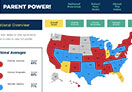
SCHOOL CHOICE UPTICK. The 2014 elections saw an influx of both reform-minded governors and legislators, and now we’re seeing the results, as leaders are feeling emboldened and acting on a mandate to increase choice and accountability in education. Lawmakers are looking to states such as Florida and Arizona that rank high in Parent Power, to see what policies they too could be implementing, such as tax credit-funded scholarships and education savings accounts (ESAs). This year, as many as 34 states are considering the creation or expansion of school choice programs. Thankfully, reporters like Caroline Porter at the Wall Street Journal are taking notice, and elevating the voices of parents such as Taryn Webb of Milwaukee, who says, “Money for public schools is important…but what’s important to me is the education my child receives. I want my child to learn and be equipped so they can grow up to be upstanding citizens.”

MISSISSIPPI VICTORY. Kudos to Mississippi lawmakers, who last week flexed some of that school choice momentum muscle happening in statehouses nationwide by passing an Education Savings Account (ESA) program for students with special needs. In the program’s first year, up to 500 parents will be able to access funds designated for their child’s education and direct those funds towards services such as tutoring and therapy so their child’s learning needs can be met more effectively as they see fit. A much needed program, as just 23 percent of students with disabilities in Mississippi currently graduate high school on time, compared with 75 percent of students overall. The ESA program builds on the voucher program available to Mississippi students with dyslexia and speech/language issues, and is another positive step for special education and Parent Power.

ASU + GSV SUMMIT. Next week from April 6-8, all the biggest names in education reform will gather at the ASU + GSV Summit to discuss everything from digital learning, college readiness and equality of opportunity. Click here for more information.

CER Statement on Detroit Coalition Report

CER Press Release
Washington, D.C.
March 31, 2015

The Center for Education Reform (CER) today released a statement in response to a proposal announced yesterday by the Coalition for the Future of Detroit School Children:

“The Detroit Coalition’s report calls for changes to ‘make quality schools the new norm’ for the Michigan city. While CER agrees that accountability and standards are vital for all schools, it’s important that steps taken do not dismantle Michigan’s A-rated charter school law,” said Kara Kerwin, president of CER.

“There’s room for improvement when it comes to ensuring the law is implemented as intended, but charter school authorizers in Michigan, recognizing their responsibility to uphold the highest level of accountability, are working on a groundbreaking accreditation process.”

“A few bad actors should not distract from the fact that Michigan’s truly independent authorizers are a model for charter school authorizers throughout the nation. Michigan has one of the highest charter school closure rates nationwide at 22 percent.”

“It would be remiss to undermine this sort of accountability and add additional layers of bureaucracy with regards to the opening, closing, and renewal of charter schools.”

Ohio Legislature looks to increase accountability for charter schools

By Rachel Mullen
Watchdog.org
March 30, 2015

Charter schools are an important part of the school choice movement. Unfortunately, as with any of these entities, some game the system.

These unethical and wasteful schools taint the entire education reform movement. Ohio is no exception to this. The Center for Education Reform recently gave Ohio’s Charter Schools a grade of “C.”

Dave Yost, the Auditor of State, has taken an aggressive stand towards cleaning up wasteful charter schools, making them more accountable to the taxpayers. The auditor has demanded repayment of nearly $300,000 from two charter schools.

Sunrise Academy, a chartered Islamic school in Hilliard will need to repay $198,746. Those funds were attributed to an instructor hired to teach non-English speaking students. However, this instruction was never provided to the students.

Wendy Marshall received $88,750 in tax dollars to open the Directional Academy in 2013. That school never opened after accepting the funds. Yost is demanding they be returned to the state.

House Bill 2 is a charter school reform bill now being considered by the Legislature. It is co-sponsored by Majority Whip Mike Dovilla and state Rep. Kristina Roegner. The bill was written to increase accountability, transparency and responsibility in Ohio’s charter schools. Yost testified before the House Education Committee earlier this month regarding this bill.

His testimony focuses on possible abuses and closing those loopholes. One of those issues is truancy. If a student is truant, the school should withdraw him. Funding is based upon a 105 hour clock, allowing a student to miss a month of school and the school would still be receiving payment from the state.

“If the student misses 104 hours, then shows up for a single day, the student gets a new 105-hour clock. The school is not required to withdraw the student and they continue to receive funding as if the student hadn’t missed a day of school. That means that it is possible for a student to show up for as few as 10 days of school and receive funding for an entire year.”

Yost also suggests placing liens on school buildings in the event that a charter school fails soon after opening its doors. Under the current system, if a school fails quickly, the school still ends up with a building paid for by the taxpayers.

 “Currently, because of short investment horizons, facilities are often funded by front- loaded leases that use a high proportion of revenue in early years to retire the debt over a short amortization. Then, if the school fails, the realty company, often controlled by the management company, owns the building.

It is worth recognizing the interest the state has in that building – but for the state funding, the building would not have been acquired. Education of our children ought not be a back-door means to acquire real estate. “

Student transfers are not currently tracked well. If a school cannot locate the student identification number, it creates a new one. Allowing the Ohio Department of Education to use the identity of the student would cause more accountability. Privacy is not a concern as the state already has this information.

“The State funds students based on attendance, and as my office’s work has amply demonstrated over the past several years, the “honor system” used in Ohio is open to abuse.

During interviews, we have discovered that schools will often generate a new SSID for a student when they have difficulty finding that student’s previously assigned SSID. In 2012-13, we discovered multiple SSIDs for the same student, which wreaks havoc on efforts to track student transfers between schools.

The simple solution is to follow the example of every other state in the Union, save one, and allow ODE to know the identity of the student behind those numbers. We are one of only two states that hamstring our Department of Education like this. It will increase the accuracy of our data, prevent funding errors and make sure that children don’t fall through the cracks. “

The school choice movement allows families the opportunity to determine which education is best suited for their children. But, like any school, charter schools need to be accountable to the taxpayers. Closing loopholes for abuse of state resources emboldens the movement as it increases confidence from the public.

Teacher Freedom

Research and Data on Teacher Freedom

Teachers are interested in initiatives that advance their careers and explore innovative pay raises:

  • 60% of teachers supported a North Carolina bill that proposed an 11% pay raise in exchange for giving up traditional tenure, according to the AAE 2015 National Member Survey. 71% of those surveyed are interested in a hybrid teaching role that would encompass teaching in the classroom part time with additional leadership roles in a school/ district.
  • Collective bargaining and labor reforms are also considered by AAE member teachers: 64% of those surveyed would prefer to negotiate their own contract so that they can negotiate a salary and benefits package that best suits their lifestyle.
  • For most working Americans, the amount of money they take home each year is directly correlated with their on-the-job performance—results reap rewards. In a statewide poll, Californians believe teachers’ salaries should be determined by the same standards.

Traditional teacher unions show signs of strain, losing members and money, as December 2013 Politico article highlights:

  • The National Education Association has lost 230,000 members, or 7 percent, since 2009, and it’s projecting another decline this year, which will likely drop it below 3 million members. Among the culprits: teacher layoffs, the rise of non-unionized charter schools and new laws in states such as Wisconsin and Michigan freeing teachers to opt out of the union.
  • The American Federation of Teachers has been able to grow slightly and now represents 1.5 million workers — but because many new members are retirees or part-timers who pay lower dues, union revenue actually fell last year, by nearly $6 million, federal records show.

Teacher Freedom highlighted in the Survey of America’s Charter Schools 2014:

  • Charter schools are based on the idea that freedom from constraining work rules and contracts, as well as district regulations provides an opportunity for higher performance and school success. Most charter laws do not require schools and employees to participate in unionization and collective bargaining, although the weaker laws do treat charter school teachers virtually the same as traditional public school teachers.
  • While the overwhelming majority of charter schools have been non-union since the early days of the charter movement, the small percentage that were unionized appear to be declining as a share of all charter schools. This number has dropped by five percentage points from 2009 (12%) to 2012 (7%), and many of these schools are in states where union membership is required by law. At the same time, the percentage of charter schools implementing skill-based and performance-based staff contracts has increased by eight percentage points for the former and 18 percentage points for the latter.

Anecdotes on Teacher Freedom

“MI teachers Accuse Union of Deception and Intimidation”, reports a November 2013 Detroit News article.

“On the eve of the Legislature’s Thanksgiving break, three teachers went before a Senate committee to accuse their union of deception and intimidation.

‘I just felt I needed to say something because I felt there was something unfair going on,’ said Novi special education teacher Susan Bank regarding her unsuccessful effort to stop paying dues under the state’s new right-to-work law to the Michigan Education Association. ‘People are very intimidated by union goings-on.’

Her testimony at the Nov. 13 meeting came during the first of several right-to-work-related hearings slated for a new committee whose chairman said will explore other issues but is vague about what they will be.”

Charter Teachers on Unionization according to an April 2009 New York Times piece:

“I saw early on that the union was not, in my opinion, looking to have amicable conversations with the administration. We were being encouraged to be even more miserable, and if I can avoid misery, I want to do that.” Kashi Nelson, teacher at KIPP AMP, NY

“We were totally caught off guard, and our feeling was that we are happy at our schools and we don’t need someone to step in on our behalf.  You feel like you have two parties who are freely communicating, so why would you want a third person to come in for that?” Matt Hureau, teacher KIPP Academy, NY

Rose Mary Grant: R.I. foolish to harm charter schools

By Rose Mary Grant
Providence Journal
March 29, 2015

As the debate about charter school funding continues at the Rhode Island State House, a narrow focus has been placed on the financial impact of charters on the traditional public schools.

It is clear that the review of the funding formula and the decisions made moving forward could significantly alter the landscape for charter schools. However, what has not been brought to the table at these hearings is the impact that undermining charter schools could have on the State of Rhode Island.

The CREDO (Center for Research on Educational Outcomes) Report, published by Stanford University in 2013, ranked states based on the growth performance of charter schools in reading and math as compared with students in traditional public schools.

The study used an approach in which a “virtual twin” was constructed for each charter student by drawing on the available records of traditional public school students with identical traits and identical or very similar prior test scores who were enrolled in traditional schools that the charter students would have likely attended if they were not in their charter school. Factors included in the matching criteria were: grade level; gender; race/ethnicity; free or reduced-price lunch eligibility; English language learner status; special education status; and prior test score on state achievement tests.

Rhode Island charter schools clearly led the pack in growth rates and impact on performance. The report equates growth rate with extra instructional days.

On page 63, the report explains reading growth and states: “Especially of interest are those states such as the District of Columbia (72 additional days learning) and Louisiana (50 additional days) that have above-average charter effects and below-average NAEP [National Assessment of Educational Progress] scores. Rhode Island has the strongest charter effect in reading at 86 additional days of learning.”

On page 64, a similar pattern is noted in math growth. “The average charter impact in math for students in the District of Columbia is equal to 101 additional days of instruction; in New York City, the amount is 94 additional days, and in Rhode Island, it is 108 additional days of learning.”

How ironic is it that the state with very weak laws in place to foster the growth and development of charter schools has charters that are leading the nation in outcomes?

The Center for Education Reform Report on Charter Laws this year gave the State of Rhode Island a grade of D for charter school laws. “Rhode Island has a very weak charter law across the board. Only the state can approve charter schools, there is a cap on the number of charters.”

Clearly, it is time for Rhode Islanders to understand that this is not an argument of charters versus traditional public schools. It is not about who wins and who loses. All of Rhode Island loses if we cut funding to the very schools that are nationally recognized as outperforming their counterparts across the country.

Rhode Island’s economy and workforce are dependent on high-quality education. Businesses will not move into a state if they know that their prospective employees will question the educational options for their children. Likewise, Rhode Island will not grow its own workforce by cutting funding to high-performing schools.

With statistics showing that minorities are struggling, schools with higher outcomes for Hispanic and black students are critical to building the Rhode Island economy. Rhode Island urban charters are the schools doing that heavy lifting and closing the gaps for minority students.

Changing the funding formula to harm charter schools would not only hurt those schools, but also hurt job development, employment, the housing market and business stimulation and growth in the state.

How shortsighted Rhode Island would be to ignore the national data available to us as we make critical decisions about the future of our state. How will national leaders and funders look upon a state that chooses to ignore the impartial evidence based on solid outcomes and decrease funding to the charter schools that are leading the nation in outcomes for our minority student population?

Survey Finds Minnesota Charter School Laws Second-Strongest In Nation

KFGO
March 28, 2015

ST.PAUL (MNN) – Minnesota was the first state in the nation to introduce charter schools, and a new review shows the state’s laws governing them are second-strongest in the nation.

Minnesota’s charter school laws get an “A” on the report from the Center for Education Reform, in part because charter schools are funded through the state, the same way public schools get much of their operating money.

Minnesota also gets high marks for the level of autonomy that charter schools have at the state and local levels, and because teachers have the freedom to participate in a union and are covered by the state’s retirement system. There are 158 charter schools in Minnesota.