









Sign up for our newsletter

Nation’s Report Card Indicates Less Than 30 Percent of U.S. Students Proficient In History, Geography, Civics

CER Press Release
Washington, D.C.
April 29, 2015

The Center for Education Reform (CER) released the following statement on the 2014 National Assessment of Educational Progress (NAEP), also known as the Nation’s Report Card, History, Geography, and Civics scores released today:

“It’s astounding that not even one third of our nation’s eighth graders are proficient in subjects that are vital to our nation’s founding and democracy,” said CER President Kara Kerwin. “In U.S. history, just 18 percent of students are at or above proficient, with 27 percent at or above proficient in geography and 23 percent at or above proficient in civics.”

“Since student achievement in these subjects was last measured in 2010, scores have remained stagnant. It’s unacceptable that in four years we’ve made no progress in dramatically changing what learning and successful outcomes look like for our children.”

“Until we take bold steps to empower parents and accelerate the pace at which they have access to opportunities that allow their children to thrive, we will not be able to move our nation forward.”

Despite minority student success, charter school segregation narrative continues

by Yaël Ossowski
Watchdog
April 28, 2015

At the recent Education Writers Association national seminar in Chicago, a small breakout session asked the following question: Is school choice a tool for opportunity and equity, or further segregation?

Following the latest negative spin on charter schools around the country, it seems most education journalists decidedly choose the latter.

“If you’re an education writer and aren’t covering segregation in schools, I’d ask you why,” said Nikole Hannah-Jones, winner of the EWA award for best education reporting, in her acceptance speech.

Her comments echo the controversial study released by Duke University researchers in conjunction with the National Bureau of Economic Research earlier this month, which claims charter schools in North Carolina are further segregating public schools and leaving minority students behind.

The Washington Post says this is proof white parents are using charter schools to “secede” from the traditional public system. But the figures show otherwise.

According to Watchdog.org reporter Moriah Costa’s report on Washington, D.C. schools, charter schools in the nation’s capital have 78 percent black students, a full 10 percent ahead of normal public schools.

And it’s not just in Washington, D.C.

The Center for Education Reform’s 2014 Charter School Survey finds charter schools serve more low-income students, more black and Hispanic students.

“Charter students are somewhat more likely to qualify for Free and Reduced Lunch due to being low-income (63 percent of charter students versus 48 percent of public school students), to being African-American (28 percent of charter students versus 16 percent of public school students) or to being Hispanic (28 percent of charter students versus 23 percent of public school students),” says the study.

Even applied locally, charter schools provide more academic results to a more diverse student body.

A March 2015 study from the Center for Research on Education Outcomes, an institute hosted at Stanford University, examined 41 different metropolitan school districts and recorded a higher level of academic growth in kids who attend charter schools.

“Our findings show urban charter schools in the aggregate provide significantly higher levels of annual growth in both math and reading compared to their traditional public school peers,” claims the study.

That includes metros such as Atlanta, Boston, Chicago, Denver, Detroit, Indianapolis, Memphis, Milwaukee, Minneapolis, New Orleans, Phoenix and Washington, D.C.

“Across all urban regions, Black students in poverty receive the equivalent of 59 days of additional learning in math and 44 days of additional learning in reading compared to their peers in traditional public schools,” write the authors.

That’s 48 extra days of math learning and 25 additional days of reading learning for Hispanic students.

In a provocative 2009 study, entitled “Do charter schools ‘cream skim’ students and increase racial-ethnic segregation?”, researchers from Mathematica Policy Research at Vanderbilt University couldn’t document any proof of segregation in charter schools.

“We find little evidence that charter schools are systematically creating greater segregation,” said the researchers. In addition, they found that students who transfer to charter schools receive better test scores once they begin in their new schools, not before.

That puts down the claim that charter schools are only recruiting amongst the best students and leaving poor-performing kids behind, a charge often cited by public school activists and teachers unions.

The most vociferous reactions to the claims of charter school segregation have come from black leaders in the charter school movement.

“Nonsense,” said David Hardy, CEO of Boys Latin of Philadelphia Charter. “Poor public schools do more to increase segregation than any charter,” he told Watchdog.org. Hardy’s school population is made up of approximately 97 percent black students.

Darrell Allison, president of Parents for Educational Freedom, a North Carolina-based charter school organization, blasted the claims as “false and disingenuous.” He points to figures which show charter schools in the Tar Heel State have a student population with over 30 percent while traditional public schools have only 26 percent.

Considering the facts, the notion that charter schools are further segregating minority students seems to be without support. Whether that will inform the arguments of charter school and school choice opponents is still to be determined.

Watchdog.org reporters Evan Grossman, Moriah Costa, Mary Tillotson, and Paul Brennan contributed to this report.

Newswire: April 28, 2015

Vol. 17, No. 17

CHOICE IS POWER. This editor of Newswire had the pleasure to sit down with a mom yesterday to talk about her son’s education and the impact making a choice has had on his life. Barbara left D.C. in the mid-90s to escape the violence and chose to move to suburban Virginia to give her kids a fighting chance. Her youngest son was struggling in a big suburban school, where the achievement gap is only growing among white and black students. She decided to move back to D.C. recently because she has witnessed how school choice has changed her community for the better, and now her son is thriving and has aspirations for college. Congress passed the controversial D.C. School Reform Act in 1996 to bring dramatic change to the nation’s capital and #edreform has done just that. Barbara said that “people aren’t inherently bad, but they make bad decisions when they have no choice in the matter.” She noted the people in her community haven’t changed since the mid-90s, but school choice has empowered them to make better decisions and aspire for something greater. The nation is watching Baltimore clean up from yesterday’s destruction caused in large part by young schoolchildren that have no choice in a city where violence looks a lot like D.C. did twenty years ago. Meanwhile, advocates continue to battle the status quo in Annapolis who believe “small progress” and a political win are more important than taking the bold and controversial steps as D.C. once did to empower parents in Baltimore and throughout Maryland.

FUNDING FIASCOS. In Connecticut, lawmakers are toying with children’s futures by eliminating funding for two already approved charter schools, Capital Prep Harbor School in Bridgeport and Stamford Charter School for Excellence. Dr. Steve Perry, an edreform advocate known for speaking up on behalf of students’ needs, told the Hartford Courant he still plans to open the Bridgeport school despite the most recent version of the budget that eliminates funding, as he’s received over 600 applications for 250 seats. Sadly, money promised to charter schools is no guarantee in D.C. either. Mayor Muriel Bowser is taking away $4 million that the D.C. council and former mayor had said would go to two charter schools, forcing D.C. International Public Charter School to push back expansion, which means restricting options for parents and students. From Connecticut to D.C., it’s time to stop balancing budgets at the expense of our kids.

CHOICES. In North Carolina, one of CER’s first interns and sponsor of the state’s Opportunity Scholarship Program, Rep. Rob Bryan, heard from hundreds benefitting from the ability to choose an educational environment that best meets unique individual learning needs. Unfortunately, not too long after this press conference, North Carolina’s westward neighbor Tennessee put the brakes on a voucher program that would’ve given Volunteer State students similar choices and education opportunities because of a number of amendments that came up that “warranted further discussion.” At least Tennessee lawmakers were able to approve the Individualized Education Act, however, creating an Education Savings Account (ESA) program for children with special needs. Once this legislation is signed into law, Tennessee will become the fourth state with an ESA program, following in the footsteps of Arizona, Florida, and Mississippi.

OKLAHOMA, O.K.! Okay indeed, as the Sooner State now has a law on the books that allows for charter schools statewide. Before this welcome update to the state’s C-rated charter school law, an unlimited amount of charter schools were only allowed in large urban areas such as Oklahoma City and Tulsa. An unlimited amount of charters were also allowed in districts that had a school on the school improvement list, but that’s currently less than one percent of all districts (21 out of 521 districts). Thankfully, adults in Oklahoma are starting to realize that #ParentPower is essential for all parents, not just those who live in certain districts, and every single family deserves the opportunity to find the best educational fit for their children’s unique learning needs.

PULITZER. What if you received more than $600,000 a year as superintendent for a school district of fewer than 7,000 children? The Daily Breeze, a California newspaper, won the Pulitzer Prize for Local Reporting for uncovering that funding folly and more in the Centinela Valley Union School District. The superintendent has been fired, and the nomination letter notes that both the FBI and the Los Angeles County District Attorney’s office have launched ongoing criminal investigations thanks to the more than 50 stories uncovering this corruption. We can’t help but wonder how a certain news outlet in Michigan reacted to not winning a Pulitzer for their “investigative” (read: biased) multi-day series on charter schools in the Great Lakes State. Kudos to these California journalists for sticking to the facts while uncovering this horrendous misconduct.

National charter schools advocate wants Hogan to veto charter bill

by Ovetta Wiggins
Washington Post
April 27, 2015

A national charter advocacy organization wants Maryland Gov. Larry Hogan (R) to veto a bill passed by the General Assembly that would change how charter schools operate in the state.

The bill originally was pushed by charter advocates because it would have given charter operators greater authority and was a way to increase the number of such schools in the state. But it was significantly watered down as it made its way through the legislature.

Kara Kerwin, president of the Center for Education Reform, sent a letter to Hogan last week asking him not to sign the bill.

“The Public Charter School Improvement Act of 2015, no longer reflects the bold change your original proposal envisioned and will do nothing to improve the state’s already ‘F’ graded charter school law,” Kerwin wrote. “In fact, some of the provisions are a step backwards.”

There was no immediate comment from Hogan.

The governor’s original bill made sweeping changes to the state’s charter law, giving schools the ability to hire and fire teachers, doing away with a requirement that charters fall under state collective bargaining rules and giving charters more say over who can attend.

The amended bill does not change hiring rules, but it does provide some leeway on enrollment. It also offers some flexibility regarding certain state educational requirements for high-performing charter schools that have been in existence for at least five years, are in good financial shape and have a student achievement record that exceeds the local school system’s. Those charters would be exempt from specific requirements about scheduling, curriculum, and professional development.

Kerwin said the bill would prohibit online charter schools, which are operating in 29 states across the country. She said it also gives the state Board of Education less power.

“If this is signed into law, Maryland will be the first state to roll back its charter law, which isn’t good for the movement,” Kerwin said.

Kerwin said even one of the most promising elements of the bill, providing some charters with more flexibility, could prove to be a problem. Instead of those charters being able to negotiate throughout the term of the charter to make operational changes, the bill makes all negotiations subject to a legal agreement, Kerwin said.

Not all advocates agree with Kerwin. Jason Botel, executive director of the pro-charter group Maryland CAN, said the bill is a “good step in the right direction” and added that he looks forward to the bill being signed.

“This is a building block to build more improvements in the future,” Botel said.

But Kerwin said if Hogan signs the bill it could impede future efforts for reform.

“We know there will not be another at-bat to try to bring meaningful change,” Kerwin said.

Support Edreform When You Shop Amazon!

You Shop. Amazon Gives!

All you have to do to is go to smile.amazon.com and select The Center for Education Reform (CER) as your charitable organization of choice, and continue shopping as you would normally!

Every effort helps when it comes to ensuring ALL of our children have access to learning opportunities that deliver the promise of an excellent education.

Wait, how exactly do I select CER as my charitable organization of choice?
1) Shop AmazonSmile.com. Login with your Amazon account information, or create an account.
2) Select The Center for Education Reform as your charitable organization.
3) Shop as you would on Amazon!

Amazon Smile picWhat is AmazonSmile?
AmazonSmile is a simple and automatic way for you to support CER every time you shop, at no cost to you. When you shop at smile.amazon.com, you’ll find the exact same low prices, vast selection and convenient shopping experience as Amazon.com, with the added bonus that Amazon will donate 0.5% of your purchase price to CER.

Which products on AmazonSmile are eligible for charitable donations?
Almost all of Amazon products are available for AmazonSmile! You will see eligible products marked “Eligible for AmazonSmile donation” on their product detail pages.

Where will your donation go?
Donations from AmazonSmile will help CER…

  • Give children access to learning environments that best meet their needs
  • Empower parents to make educated decisions about schools
  • Inform and arm grassroots organizations on the ground
  • Bring ideas to states and engage policymakers for reform


More Answers to FAQs on AmazonSmile here!

Baltimore Scholarship Success

Low-income high school students in Baltimore, MD who received private school scholarships were more likely to graduate high school and enroll in college than their traditional public school peers, according to a new study from the Friedman Foundation for Educational Choice.

The Achievement Checkup: Tracking the Post-Elementary Outcomes of Baltimore Need-Based Scholarship Students,” examined the Children’s Scholarship Fund Baltimore (CSFB), which disburses need-based scholarships to low-income students in grades K-8 to attend the school of their choosing, with the ultimate goal of improving educational attainment and outcomes for these students.

Using survey and school data, researchers found a 97 percent high school graduation rate among students who accessed CSFB scholarships, compared to the 50 percent Baltimore public graduation rate among low-income students.

When it comes to higher education, 84 percent of CSFB recipients reported enrolling in college, compared a college enrollment rate that ranges between 44 and 61 percent for low-income Baltimore students.

Initiatives that allow parents greater freedoms in choosing the best educational environment for their children are getting results not just in Baltimore, but throughout the nation.

For more on this study, check out the blog Breaking Down “The Achievement Checkup”

Related Resources:
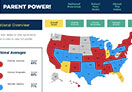
Maryland’s Parent Power Index


NEWSWIRE: April 21, 2015

Vol. 17, No. 16

NECESSARY VETO. Just last week, the Maryland General Assembly rammed through the last of 2015 legislation, including a badly maimed charter school bill that will only harm Maryland’s already suppressed charter sector. Maryland’s political obstacles are no secret to even the most casual observer, but that’s no reason to sign legislation for the sake of signing legislation, especially when it will deter, not encourage charter school expansion. Communities like those in Montgomery County face persistent achievement gaps, and this bill does nothing to help mitigate them. For all these reasons, Gov. Hogan must veto Senate Bill 595 and try again next session.     

Tell Governor Hogan to veto Senate Bill 595, which would make Maryland the first state to move backwards on charter schools.

MOBILE INTELLIGENCE. After reading the letters to the editor section of the Baltimore Sun, hopefully readers also saw a commentary on the relationship between the ability to learn and the education reform movement. Research demonstrates the capacity of humans to become smarter through learning and hard work, and that intelligence is not immovable from cradle to grave. However, the top-down system we have today doesn’t acknowledge this mindset, treating schools as a constant and teachers as expendable even though they are anything but. This is exactly why CER firmly believes we must accelerate the pace of reform so more kids have access to more opportunities that realize their capacity to learn.

COME TO THE LIGHT. Like moths to a bug zapper, union protests continue to move predictably and without reservation against school improvement. Clearly the litany of school choice legislation signed in recent weeks has not shaken their resolve in protecting the status quo. This time, legal complaints have been leveled against the plan in Camden, NJ to turn around five chronically failing schools using a ‘renaissance’ charter model. Still, Camden Superintendent Paymon Rouhanifard is moving ahead with the conversions, rightfully insisting that there has been significant public input, and the renaissance schools are intended to serve the Camden community. Across the country in California, legislative action is underway to undo Vergara momentum in the form of bills that reduce the probationary period before teachers receive tenure in small districts and loosen state requirements for evaluation systems. These efforts will be introduced to the zapper soon enough.

MYTHS REAPPEAR. Once again, inaccurate claims against charter schools are presented without a wider contextual knowledge of data, this time in North Carolina. Thankfully, reform advocates on the ground reacted quickly to dispel myths. What many media forget to report is the fact that the process for enrolling charter students in North Carolina and elsewhere requires random lotteries, not cherry-picking. And to the claim that charters aren’t accessible to disadvantaged kids because they don’t have to provide transportation, the media forgets that North Carolina charter schools receive on average 17 percent less per-pupil funding than traditional schools, making operational services related to facilities and transportation that much more difficult to provide. Meanwhile, a study shows that NC charters produce 14 additional NAEP points in reading and math than traditional schools, per $1,000 invested per-pupil. Bottom line: if charter schools are to operate at full strength and responsibly meet parent demand, they must be supported by strong laws at the state level.

LOOMING LEGACY. Legacy Charter School in Greenville, SC has a waitlist of over 650 students. In order to at the very least meet the demand of 20 more students to bring enrollment size on par with other campuses in the County, Legacy educators petitioned the local school board, but were denied. Bear in mind this is a charter school that recently had to apply for a Title I adjustment due to an increase in the number of students both with disabilities and who are English Language Learners. Although South Carolina’s charter law allows independent authorizers, only one university is in the process of opening a school, making charters largely subject to local school boards. This has turned out to be a disaster in Maryland, and shouldn’t be an example for other states to follow.     

AFC POLICY SUMMIT. The American Federation for Children’s National Policy Summit is setting up shop this year from May 18-19 in the Big Easy to bring together policymakers and advocates on educational choice. Check out the latest speakers, and click here to register.

Legislation only hurts charter schools

By Kara Kerwin
The Baltimore Sun
April 20, 2015

As one of “those charter advocates” mentioned in The Sun’s editorial regarding charter schools (“Better than nothing,” April 17), I strongly disagree with the conclusion that Gov. Larry Hogan should sign the horrendous charter school legislation passed by the General Assembly.

Senate Bill 595 is a giant step backward and actually decreases the likelihood that more innovative charter school opportunities will be able to open in Maryland. In addition to removing the State Board’s check and balance authority over charter applications, charter operators will be subject to an invasive funding study, requiring more time, money and red tape. Every single operational aspect of running a school will be subject to negotiation, often with a hostile school board, for a charter school that’s supposed to be autonomous.

I have no illusions about Maryland’s political roadblocks, but that’s no excuse to sign a bill that will only harm the state’s already suppressed charter sector. In fact, signing this legislation will make future improvements to the state charter law that much more difficult. Governor Hogan must veto this bill and renew good-faith efforts to bring about meaningful change for Maryland students.

Kara Kerwin, Washington
The writer is president of The Center for Education Reform.

Parents want choice in Montgomery County

By Kara Kerwin
Washington Post
April 17, 2015

While I’ve lived in this area for only five years, my family is rooted in almost every corner of this state — from the Eastern Shore to Hagerstown, from Baltimore to Bethesda. I’ve spent my career counseling thousands of parents and lawmakers across the country to bring about much-needed change in their communities, and now I’m desperate to bring change to my own back yard.

With about 150,000 students, Montgomery County is one of the largest school districts in the country, and it is only getting bigger — actually bursting at the seams. The solution always seems to be to remodel or add mobile classrooms. What we need are more schools — of choice.

We have a growing achievement gap, especially between poor and minority students and white and Asian students. This is uncomfortable for most in my community because Montgomery County Public Schools is not serving all its students well. Gov. Larry Hogan’s (R) original proposal to expand charter schools would have been a boost for my community and would have helped ensure that achievement is possible for all.

Charter schools started in Minnesota in 1991 because educators and parents believed there were more solutions, programs and ideas that even the best school districts could use. The early supporters of the charter school idea were especially concerned about the schools that were not working for most children and about which poverty had become the excuse for failure. Teachers wanted more autonomy to teach, parents wanted more options for their students, and most believed that status quo of the school district model of governance needed serious restructuring.

It was about empowerment then. It still is.

The data on student progress and achievement in charter schools demonstrate the power of autonomous schools that create personalized learning environments for students, are open by choice and are held accountable for results.

Before the Maryland Senate gutted it, Hogan’s proposal would have made three significant changes that, while modest, are important for improving opportunity for parents and creating school environments for teachers and communities to thrive.

First, the charter school governing board should be able to make decisions that matter most for student success. Our local school districts are not equipped for school-based budgeting, decision-making and personnel decisions that are critical to the charter school concept and seek to attract talent outside of traditional education.

Contrary to a campaign launched by the Maryland State Education Association that scared teachers at charter schools, Hogan’s proposal would empower teachers to make a choice. All teachers still would be a part of the state’s pension program.

Second, clarifying the state board of education as the authorizer on appeal is a minor but significant improvement for Maryland’s charter law. The state can act as a critical check and balance when districts and charter schools clash. This necessary route of appeal with a binding decision is missing from the existing law. Charter schools across Maryland have had to sue to receive a more equitable share of funding, have had to close because of conflicts with union-opposed extended-day instruction and have discouraged other applicants from opening.

Demand for charter schools far outstrips supply with more than 12,000 students on waiting lists in Maryland, and adding schools can be an effective strategy for dealing with the public system’s challenges. Providing the state board with the authority to issue a binding appeal decision will give voices to thousands of parents and educators across Maryland vying for alternatives.

Last but not least is the need for more equitable funding for Maryland’s public charter school students. The proposal would validate the importance of equity for every public school child and public school program, whether charter or traditional. Charter schools receive no facilities funding, thus making the inequitable funding even more dramatic.

Success is possible for every child, but the governor should veto the legislation the General Assembly passed and work with lawmakers to return to a plan that will create more effective public school options for Maryland children.

The writer is president of the Center for Education Reform, which advocates for the creation of charter schools.

Charter volleyball in North Carolina

By Eddie Goodall
EdNC
April 16th, 2015

As the head of the NC Public Charter Schools Association, I read charter news alerts daily from all over the country. Lately, I cannot help but see volleyball as a metaphor for the controversies surrounding charter schools in the press. I read about those I see as “digging” to save a point about our schools; those content to just ‘keep the ball in the air” or “set others up”, and always a contingent wanting to “spike” the ball down.

The “diggers” are generally those in the profession of running charters already, i.e. those “on the ground.” They easily know more about charters than the other groups combined. These are the charter principals, dedicated board members, teachers, and, too often overlooked, the parents. Also included is the charter-knowledgeable business community that has become an integral part of the schools’ success. The charter management or support groups like KIPP, Charter Schools USA, National Heritage Academies, and the Challenge Foundation have brought different combinations of synergy, substance, skill, and scale to our movement.

Let’s skip those who would spike charters altogether if given the chance.

Then we have those, generally supportive, in the middle who keep tossing the ball around. They often open their comments by, “I support charter schools, but…” From there you can choose from a myriad endings. One of the more common finishes is “but only quality charters.” To those of us in this business that is what we imply when we say the word “charter.” There is no record of anyone who publicly supports creating poorly performing charters.

Twenty years ago this past Sunday, a bill was filed in the North Carolina house that would pass a year later as the “Charter School Act of 1996.” In the first years following the 2011 removal of the charter ceiling of 100 schools, the arguments against charters centered on their re-segregating schools, underperforming academically, taking money from public schools, and an assortment of other complaints. That noise has muted as facts slowly assuaged much of the public’s concern about the expanding schools of choice. Today, expansion or growth of charters, for-profit charter management companies (EMOs), and charter financial accountability have taken center stage as the most chronicled and debated issues.

Growth

Let’s look at the first of these, the growth of the charter school movement. There has been tremendous institutional pressure on the State Board of Education (SBE) and the NC Charter Schools Advisory Board (CSAB) to slow the post cap growth of charters. That pressure began working before the Charlotte charter failures of 2014. After a fast track cohort of about a dozen charters that opened in 2012, approximately fifty were approved and opened in 2013 and 2014 amidst some closings, to bring us to about 148 today. So, percentage wise, a 48 percent increase is significant to the Office of Charter Schools (OCS), the state’s division of DPI responsible for the oversight of the schools. It was also an ominous sign to those unsupportive of charters.

The pressure to slow growth worked, with fewer schools now opening in 2015. Applicants have been hit with new fees, requirements to have all board members have criminal background checks (local school boards are not required), extensive notarized legal and financial reviews by professionals even before submission of the application, and an accelerated (by nearly three months) application filing deadline.  The Center for Education reform, in its 2015 State Rankings and Scorecard of Charter School Laws, said NC’s Advisory Board “has slowed down the growth of charter schools in the Tar Heel State, with only 15 percent of applications being approved recently, one of the lowest approval rates in the state’s history. The process of opening charters continues to remain restrictive and the state’s leadership has not been strong advocates for opening more charters.”

Let’s look at the facts. First, there has actually been no appreciable growth in charter schools in North Carolina when adjusted for the state’s population. Parents, the customers, see no change. Why? Because when the first charters opened in 1997 there were only 7.5 million people in our state and today we approach 10 million, a 33 percent increase. So, 100 charters in 1997 equates to 133 today. So with only 148 schools currently the real rate of growth has been under 1 percent!

What are the solutions to growth resistance?

First, let’s quit tossing the ball around. Those equipped to make a difference should go to the net. They include education policymakers, the SBE, the Advisory Board, as well as the state legislators. The charter sector has to grow to satisfy the demand for parents and to continue stimulating meaningful change within the district schools.

The SBE should explicitly advocate for charters and solicit charter founders using its influence and constitutional authority. The advisory board is already charter knowledgeable with its members positioned within the sector. It believes in what charters are accomplishing and members work many underappreciated hours. However, it can and should become a more vocal advocate for charter education also by valuing the substance of the applications over form, allowing more vocal applicant  participation in the interview process, and treating charter applicants as customers.

Legislators thought lifting the cap was the end. It was the beginning. Republican voices who championed charters when I was a state senator have quieted. Many may have less appetite now for the movement as evidenced by their burdening all charter boards with a new $50,000 escrow requirement, including the especially vulnerable new applicants, who typically have no money. The NC Constitution reads, “The General Assembly shall provide by taxation and otherwise for a general and uniform system of free public schools…” Is the $50,000 even constitutional? Public charters should be funded by public dollars.

Republican lawmakers need to go much further than just undoing the damage done. They need to redefine the funds that local school districts are supposed to more equitably share with charters as well as provide charters the chance to share in lottery capital funds, and much more.

The governor’s office now, with two positions open, has the opportunity to appoint a single member from the charter community to the 11 charter-less member State Board of Education.

The first two are covered. The real answer to where growth is going rests with that third leg.

Education Management Organizations (EMOs)

So, if halting charter growth is in the news every week, EMOs, the for-profit companies providing substantial education management services for nonprofit charters, make the pages daily. These companies manage seventeen charters in North Carolina, about 11 percent of the schools. EMOs have different models but basically provide differing layers of services and products, including staffing, for charter boards of directors, in exchange for fees.

They bring professional expertise, capital, and academic programs with proven track records. They use the strength of their leveraged buying power and installation of effective systems, including refined curricula and training. They are actually no different than all the other vendors of any school district or state. They do what school districts do. They have a Superintendent (CEO), hire teachers and administrators, buy buses, textbooks, curricula, classroom supplies, furniture, computers, etc. They then deliver these to students, packaged in an expected quality education experience for the student and parents.

Other for-profit vendors such as Pearson, Staples, HP, Microsoft, and Houghton-Mifflin only provide parts of the education delivered by districts. EMOs therefore are the largest threat to local school boards because they can do the job and in a scale that would reasonably frighten any competitor.

What are the solutions to EMO resistance?

First, policymakers should look at results of the schools managed by EMOs. Superior academic results are the objective. We know aggregate costs are controlled for the NC taxpayer because the EMO-contracted charter gets the same allocation of per-pupil finding as the other charters.

In the first five authorizing cycles of charters, the advisory council/board has internally struggled mightily with the very different looking governance models of small, “organic” or home grown charters, versus the larger corporate formation of EMO supported charter applicants. The boards were caught in the conundrum of, as Jim Collins would write, the tyranny of the “or” versus the genius of the “and.” The boards were battling a non-existent wall between the two, almost exclusively denying charter contracts to the EMO contracted applicants.

That page may have turned as the current advisory board, with several years of results to look at, can now see schools like Langtree Charter and Cabarrus Charter, both opened and served by Charter Schools USA in 2013, excelling. Thus, today we should realize that charters do not all have to be packaged in the same wrapper. There can be some large, some small, those EMO operated and those with no extensive corporate professional management services.

Policymakers and those in the General Assembly should keep the eye on the target, what is best for parents and children, and authorize and support EMOs if and when they deliver. It should be pointed out that EMOs, like charters, should not be pigeon-holed. Some EMOs may be good for our students and others may not.

So, for those who have tossed the ball around and deferred decision making regarding EMOs, please acknowledge that the “for-profit,” red-herring argument by the “spikers,” is the structure of almost all the local  school boards’ and NC Department of Public Instruction’s vendors. Amidst the call for more details of the EMOs’ internal records, it would be ridiculous for us to assail all the vendors and request all their records. Once obtained, what would we do with them anyway? The data could be used to compare operating costs between the EMOs and the local school districts. Local school boards, watch what you wish for!

Public Charter School Financial Accountability

Now, if growth is in the news every week and EMOs every day, then charter financial accountability, our final subject, is both in the news and in the legislature! There are bills filed by Democrats to require charter board members or employees who have authority to “maintain or expend funds” to be personally liable for all the debts of the charter. There is resistance by Republicans to remove a Democrat sponsored provision, mentioned earlier, that slipped into the budget bill last year, one that will cost our schools and applicants $50,000 each (almost $8 million) in cash or borrowing power.

But taxpayers are not liable for unpaid charter debts. The state pays the schools a per-pupil allotment and that’s it, the spigot shuts off. When StudentFirst closed and reported $600,000 in debt, the news reports failed to tell readers that that debt was borne by the school’s board of directors.

Let’s look at the genesis of the issue. StudentFirst, Concrete Roses, and Entrepreneur High, all of Charlotte, failed in their first year and closed in 2014, along with Kinston Charter, an older charter. Since then, but with less controversy, the State Board has or is in the process of closing more charters under rigorous policies initiated or applied after the cap was removed in 2011. The three Charlotte charters above had fatal commonalities: they were approved too close to the schools’ opening (StudentFirst in January preceding opening and the other two in March preceding opening, thereby missing all those applying to schools of choice in the first quarter of the year), they had boards of directors that appeared to be less involved with the creation of the schools, they received state money only a few weeks before opening, and they had difficulties finding facilities.

Kinston Charter’s closing will not be discussed here, other than pointing to its precipitous decline in enrollment, but solutions for the “next Kinston” will be offered below. After the Kinston debacle our Association’s Board of Advisors, wanting to take a position on the closing, adopted this statement:

So, when schools fail we all want to know why. And by the way, some will fail.

Then what are the solutions to balance the need for financial accountability with the charter’s ability to effectively function?

This advice is for those in policymaking who have the authority to make changes now. It is also for legislators who should seek out data, pay attention to those in DPI involved in protecting the public dollars, and heed the charter voices, the “diggers.” They should not succumb to the political pressure to do something for the sake of doing something, a legislative occurrence not unknown. It is in the interests of charters, more than any other group, to help create real and effective financial accountability. It has to work so that the public maintains confidence in the schools.

The most underreported news is what accountability already exists. Below I have listed some, not all of what oversight is in existence today:

  1. SBE policy TCS-U-006, Policy for charter schools on financial and governance noncompliance, including Cautionary, Probationary, and Disciplinary Noncompliance, applied when charters fail to report required information including any financial, personnel, or student information requests, show signs of financial insolvency or weakness, receive a non sufficient funds notification, have a material adverse audit finding, and fail to have staff attend mandatory financial training; with non-resolved accumulation of the above leading to sanctions up to immediate freezing of assets and referral to the SBE for revocation
    What do you think?
  2. Terms of the charter contract or agreement involving board and staffing relationships and noncompliance as referenced in 1 above
    What do you think?
  3. Required levels of fidelity bonding of officers of no less than $250,000
    What do you think?
  4. Provision that “No indebtedness of the charter shall constitute indebtedness of the state of North Carolina” and all contracts with vendors shall so state; debt of charters is not debt of the public
    What do you think?
  5. Criminal background checks for those charter board members and staff handling finances
    What do you think?
  6. Termination of charter upon the failure to meet generally accepted standards of fiscal management or violation of law
    What do you think?
  7. Unannounced site visits by the State Board of Education
    What do you think?
  8. Application of the DPI Charter School Financial Performance Framework
    What do you think?
  9. Open Meetings and Public Records laws
    What do you think?
  10. Conflict of Interest policies regarding finances approved by the SBE
    What do you think?
  11. Rigorous requirements for new charters including criminal background checks for all board members, financial reviews by a CPA firm for all board members and attested by notarization
    What do you think?
  12. Reporting requirements established by the State Board of Education in the Uniform Education Reporting System
    What do you think?
  13. Annual financial audits by a firm approved by the Local Government Commission
    What do you think?
  14. Civil and criminal sanctions upon employees or board members committing fraud or gross negligence, including personal liability to the schools for damages.
    What do you think?

Here are the next steps. There was a short time frame from approval to opening for the failed charters. Currently, the schools opening in 2016 will be approved by August 15 of this year. So that systemic weakness has been patched. Schools now opening next year will have a full year, including the longer enrollment application window, to attract students.

Next, all the aforementioned schools received their state funding in three large chunks in accordance with the State Board of Education’s “Allotment Policy.” A new charter, with 300 students approved in the charter contract, has access to 34% of that funding in its first month, even if actual enrollment is only 100. The school can draw down $408,000 when it was entitled to only $136,000! The adjustment to reduce the overpayment is not made until November, based upon the first month’s average daily membership, or ADM. Charters like those that failed were in too much trouble by the second apportionment of state dollars. Rather than get any funds back, they should have never been released in the first place.

A second issue is that the Integrated Solutions Information System or “ISIS” mandated accounting system only reports cash basis transactions. DPI has real time access to those transactions. However, the failed charters accumulated debt that was not visible to DPI. An analogy is that DPI was handed the school’s bank statement but never asked for the credit card statement. Even though the charter is funded with a defined and finite amount, and the debts do not belong to the taxpayer, we can react faster to mitigate charter losses and threatened closures if we know a charter is overspending, including its borrowing.

In summary, those in positions to impact public policy affecting charters should take bold steps to:

  1. Stimulate and implement charter growth,
    What do you think?
  2. Support all types of charters, including EMOs, that effectively improve the quality of the charter movement, and
    What do you think?
  3. Collaborate to help DPI get its oversight calibrated to better match tax dollars going out with real enrollment and to get more current access to the charter “credit cards.”
    What do you think?

So, it’s time to quit tossing the ball around. Let’s get it over the net, match!