







Sign up for our newsletter

Technology: The Great Equalizer

I have been involved with special education in some capacity for my entire life; I grew up with a cousin born with Down syndrome. I have seen my Uncle and Aunt move school districts for better access to special education programs, as well as have been an observer in his special education classroom at one of the premiere high schools in the nation: Westlake High School located in Westlake, Texas.

Visiting his special education classroom in 2010 enlightened me to the challenges that special education educators face on a daily basis. There is usually one teacher surrounded by a multitude of students each with a different disability, whether physical or mental. Realistically, one teacher cannot sufficiently address the demands of several students at once. One solution to this problem is the use of technology in the special education classroom to not only address the unique needs of each student, but also eliminate the segregated nature of the classrooms between special and general education.

Although I am behind the times and prefer print materials to digital materials, it became evident that technology is the tool to aid students with disabilities after hearing several special education educators’ talk about the influence of technology in aiding student’s success. All the panelists, who each worked in a different content area and with different student demographics, discussed the importance of individualized instruction for students with disabilities; technology is the key to personalized instruction for students with physical or mental disabilities. Because these students think and act differently, each student will not and can not thrive under the same model of education; therefore providing the classrooms, educators, and students with technological tools that aid success, special education students are receiving a top notch education amongst their general education peers.

Although I never followed through on my visit to my cousin’s school, my personal interactions with my cousin show the heightened use of technology in his education. He was given an iPad through his school, which he uses for both academic and personal use. This iPad has helped him with digital, print, and auditory literacy in that he can read books, watch educational videos, and speak to animals on his iPad. These apps give him the tools to better his speech and language capability, which aids his ability to communicate effectively with others who are not attuned to his individual disabilities.  My cousin’s interaction with technology in his classroom attributes truth to the anecdotes and ideas posed and discussed by the panelists today; utilizing technology for special education students provides them with the resources to succeed at the same level as their general education peers. Although the tools and resources might differ between the two groups, it cannot be detested that each group is succeeding at the same level in the classroom.

Elizabeth Kennard, CER Intern

Comparing Traditional and Public Charter Schools

There are many aspects of schools to compare or how one school is different from another. I recently conducted a survey about how traditional public and public charter school students and staff feel about all aspects of their school. The purpose of the survey was to analyze the opinions in both schools. The results showed different trends in the relationship between students and staff of traditional public schools and public charter schools.

In traditional public schools students tended to be closer to their teachers. Most teachers who were working at regular public schools had been working there for at least 5 years or more, which would help build relationships with students. The survey also reveals that students at traditional public schools are taking rigorous classes but not more than public charter schools. In public charter schools, students tend not to be as close the teachers. César Chávez Public Charter School hires new teachers almost every year, so it would be evident that students aren’t as close because of the changes made every year.

Even though there are many differences, students in both schools didn’t give a correct definition of a public charter school. The charter school students were closer to the definition of course, but still not quite correct. The students in each school also agreed that their school was better than the other. But who wouldn’t say their school isn’t better; it’s ok to be biased sometimes.

As I wrapped up my survey, I began to look at what the public charter school and traditional public school teachers said about the schools. All the teachers said almost the same thing, the school is good overall but attitude and behavior need to improve in some areas.

The survey was a success and I got great results. It was very interesting sending surveys online and networking with people I don’t usually talk to.

Tre’Von York, CER Intern

NY education receives mixed reviews in ‘Parent Power Index’

By Nicholas C. Fondacaro
Watchdog.com
June 17, 2015

As a parent, would you rather raise your kids in a state known for its iconic skyline, or a state that has become an education icon? Parents in New York have to make that choice.

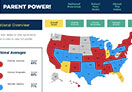
The Center for Education Reform has released a report about school systems in all 50 states called The Parent Power Index (PPI). The index allows parents to see where their state ranks in terms of educational choice, transparency, and teacher quality. The report ranks New York at 18th place. The position could be worse, but it could also be better.

The PPI finds that New York is a mixed bag when it comes to education.

On the one hand, New York’s charter school law is something other states should emulate. The state has a “high-quality” authorization process made up of a many independent authorizers and “strong accountability.” This authorization system goes all the way up through their higher education system, the State University of New York (SUNY).

But the report also pointed out, “New York’s charter sector has received a lot of print as of late. But a recent lawsuit has pointed out some of the deficiencies in the Empire State’s law that despite its model actions in authorizing”

Last year, charter schools in New York City came under fire when Mayor Bill de Blasio tried to force charter schools out of the buildings they co-utilized with public schools. The New York Post reported:

“Fulfilling a campaign pledge to limit charter expansions within public-school buildings, de Blasio revoked approvals granted last year by the Bloomberg administration to two new Success Academy schools and to a third that planned to expand.”

But since then, the state government has come down on the side of the charter schools. Later that spring, Gov. Andrew Cuomo signed a budget bill that had provisions to protect charter schools in NYC. The city has two options when dealing with space for charter schools: “It can hand over free space in public or private buildings, or give the schools money to find their own space,” the New York Times reported.

The report also notes that around 50,000 families are still on waiting lists in NYC, because of an arbitrary cap on the amount of charter schools that are allowed to operate in the state (460). This is in contrast to Indiana–number 1 in the report–which has lifted all the caps on charter schools permitted in the state.

The report discusses how teacher quality is handled in New York.  Forty percent of a teacher’s evaluation is based off of “objective evidence of student learning.” Teacher pay and compensation and seniority are also topics covered by the PPI:

Seniority, not performance, is considered during layoffs. Although New York teachers can receive compensation for working in high-need schools or subjects, the state does not support enhanced compensation for work experience, and districts are not discouraged from setting salary schedules based solely on seniority and advanced degrees.

Again, this is in contrast to Indiana. Performance is not only a reason for dismissal but it can be a factor when layoffs are considered. Decisions on a teacher’s tenure status can be decided on by performance.

New York’s record on transparency also received mixed reviews from the PPI. Similar to Indiana, the report praises the state’s customizable report cards (data on all the schools) for being user friendly and having “a wealth of information,” although the sheer amount of data can be “almost overwhelming.”

However, the PPI is critical of New York because it holds school board elections at odd times, April or May, as opposed to with other elections in November. Indiana on the other hand, holds 274 of its school board elections in November, “ensuring parents know when to cast their vote.”

The PPI is designed to give parents a comparative tool to see where their state ranks and how they can improve. Indiana may not the Empire State, but it is turning into a destination for all the right reasons.

Reflecting On Education for All

“We have not even come close to tapping the potential of this country”, said Michael Crow, President of Arizona State University (ASU), at the first annual The Atlantic Education Summit this week. Educational opportunity was the common theme during his talk, and Crow spoke passionately about his university’s attempts to shift what education means in the United States. The skyrocketing cost of college tuition was discussed as an economic, cultural, and psychological barrier keeping many people from pursuing higher education. Crow and ASU are working relentlessly to restructure education for the changing face of America. As an undergraduate student, the panel was an inspirational look into improving educational access.

Touching on college rankings, Crow discussed how schools are not ranked on outcomes like student learning, critical thinking skills, real-world experience, and character development of those who graduate. Instead, school rankings are based inputs such as the caliber of admitted students. College admissions are not an apples-to-apples game, and Crow encouraged high school students not to take these types of college rankings to heart. Instead, Crow suggested high school students apply to college based on which schools offer programs they are passionate about at a price that fits their needs.

The second half of the session focused on the unique partnership between ASU and Starbucks, and the opportunities it creates for Starbucks employees to go back to school for free. For Mary Ham, a Starbucks manager and single mother in Virginia, the program is a life changing opportunity. She spoke of her desire to continue to excel and set an example for her children. The crippling effects of accumulated student loans were also discussed during this part of the panel. The solution that ASU and Starbucks offer is giving adults a debt-free way to return to school – a promising model for many Americans families.

I hope more people learn about this opportunity and take advantage of a chance to go back to school debt-free, and more universities follow ASU’s lead in implementing these types of educational opportunities. When Mary Ham spoke of the encouragement she received from her ASU counselors, I was reminded of my own faculty advisors who have guided me during my undergraduate career. These types of resources are invaluable, especially for nontraditional or economically disadvantaged students. Though education for all is a tall order, with programs like that implemented by ASU, it is an attainable goal for creating more educational opportunities and helping people achieve their full potential.

Emma Dodson, CER Intern

Pennsylvania leadership holding back ‘parent power’ in education

By Jana Benscoter
Watchdog.com
June 16, 2015

Pennsylvania ranked 14th in the 2014 Parent Power Index, The Center for Education Reform determined.

According to the nonprofit organization, Parent Power Index is a web-based report card that evaluates and ranks states based on qualitative and proven state education policies. The higher a state’s grade, the more parents are afforded access and information about education options that can deliver successful educational outcomes for their children.

The nonprofit does not score state education laws as “good” or “bad.” It calculates which states have multiple policies that allow a maximum number of parents educational choices. The index has been offered since 1999.

Factors that determine each state’s grade assessed, include: charter school opportunities; school choice options; teacher quality; transparency; online learning; parent trigger laws (the ability to turnaround a a failing school); Governors; and media reliability. Based on those factors, the organization gave Pennsylvania a 74 percent, or a “C.”

In a statement, President of The Center for Education Reform Kara Kerwin said, “While it’s true some states have made progress, it’s not nearly enough to meet demand. Simply put, we need more learning options available to more families, and we need them fast.”

When the index was released, Kerwin noted that “Out of the over 54 million k-12 students nationwide, only an estimated 6.5 million students are taking advantage of charter schools, school choice programs such as vouchers or tax credits, and digital or blended learning models.”

“With the United States’ school-aged population expected to grow at unprecedented rates in the next 15 years, how will our school system be able to meet demand when we already have wait lists for charter schools and oversubscribed scholarship programs?”

Pennsylvania earned higher marks for its Educational Opportunity Scholarship Tax Credit. The credit for students in low-performing districts, and the Educational Improvement Tax Credit Scholarship for low-income families, both allow for students attending Pennsylvania public schools to have the opportunity to attend private school, the Center reports.

Combining both offers over 60,000 students opportunities, which shows the state permits some choices among traditional public schools, but state law restricts such choice within other districts. The Center pointed out that districts are not required to participate, limiting parents’ options.

A wrinkle in earning a higher overall mark in the index is leadership. The Center reported, that for more than four years, Pennsylvania has unsuccessfully been able to improve and expand the state’s charter law. Many districts oppose charter schools, and withhold needed resources as a condition of their oversight. Gov. Tom Wolf, a Democrat who began his term in January, said he does not want any new charter schools.

“The law has little hope of improving in the near future with the election of a new governor who has repeatedly opposed school choice,” according to the Center. “The School Reform Commission of Philadelphia, for the first time in seven years, was forced to accept and approve charter applications. Thirty-nine applied, and only five were approved in early 2015. Yet, 40,000 students remain on waiting lists in just that city alone.”

The top 15 states with the highest marks, despite most not surpassing 80 percent:

1) Indiana
2) Florida
3) Arizona
4) District of Columbia
5) Georgia
6) Utah
7) Louisiana
8) Ohio
9) Wisconsin
10) Minnesota
11) Oklahoma
12) Colorado
13) Michigan
14) Pennsylvania
15) South Carolina

CER Board of Directors Announces New Member

CER Press Release
Washington, D.C.
June 17, 2015

The Center for Education Reform (CER) announces the election of Dennis Cariello, a seasoned education lawyer and shareholder at Hogan, Marren, Babbo & Rose, Ltd. to its Board of Directors today.

“Dennis Cariello brings a lot of passion to CER’s diverse and accomplished Board,” said Kara Kerwin, president of CER. “In addition to representing parties on numerous ground-breaking approaches in higher education, his commitment to equity and giving parents fundamental power over their child’s education has been demonstrated time and again lending his legal expertise to charter schools and other schools of choice in a pro-bono capacity.”

With more than 15 years of experience, and having served at the U.S. Department of Education as Deputy General Counsel for Postsecondary Education and Regulatory Services and Deputy Assistant Secretary for Enforcement in the Office for Civil Rights, Cariello has developed a diverse national law practice that provides a wide range of services to colleges and universities, student lenders, education investors, and education technology and service providers alike.

“It’s clear from Dennis’ accomplishments that he is committed to ensuring all students have access to excellent education opportunities and that our education system adheres to policies that guarantees that as a basic right for our nation’s future leaders, our kids,” said Michael Moe, Co-Founder of Global Silicon Valley Partners and Vice Chairman of CER’s Board of Directors. “Dennis’ leadership and experience will be an asset to advancing the strategic priorities of the organization.”

For more information on The Center for Education Reform’s leadership and Board of Directors visit https://staging.edreform.com/about/people/board-of-directors/.

Newswire: June 16, 2015

Vol. 17, No. 24

VIRTUAL POWER. And no, we’re not talking in hypotheticals here, but about the real power of online learning to close the achievement gap. One of the nation’s largest providers of online education, K12 Inc., released data revealing three of its biggest managed online virtual charter academies, Arizona Virtual Academy, Georgia Cyber Academy, and Texas Virtual Academy, are making progress when it comes to narrowing the gap between poor and non-poor kids, as defined by free or reduced-price lunch (FRL) status. And not to mention, these schools also serve larger percentages (62 percent to be exact) of economically disadvantaged students compared to their state average or even the national average of 50 percent. Although there are some instances where achievement gaps remain between FRL-eligible and non-eligible students, FRL students are still making important gains – it just means their peers are too. Just goes to show what the power of choice in education can to do improve education for ALL of our kids.

MORE CHOICES NEEDED. The state with one of the worst achievement gaps in the nation and ranks #39 on CER’s Parent Power Index, Connecticut, released a 41-page report evaluating its “choice programs,” which it defines as public charter schools, interdistrict magnet schools, and the Open Choice program, based on student achievement on state tests. The Connecticut State Department of Education report reveals mixed results, along with data indicating that having choices does indeed improve outcomes for students. The problem, however, is that the kinds of choices Connecticut parents are afforded is severely limited, as there are no vouchers, tax credit scholarships, or Education Savings Accounts, and the state’s D-rated charter school law prohibits growth. It’s time for Connecticut leadership to step up to the plate and give parents a portfolio of options to be able to choose the best fit for their child.

POLICY MATTERS. Last week, the Louisiana legislature voted to fully fund the state’s scholarship program. Great news that lawmakers continue to push for what’s in the best interest of our kids, but now it’s time for them to go further and make changes to this C-graded voucher program and solve funding issues so kids’ futures aren’t held in the balance each year, hoping for funds to be reappropriated. In order to accelerate the pace of education reform, we must truly understand the importance of good policy. And it’s clear that Louisiana’s policy could be improved to meet the parental demand that exists, with more than 13,000 Louisiana students applying for a voucher for the 2014-15 school year and 7,632 using the voucher to enroll in a school of choice.

COURT BATTLES. Last summer, CER condemned the directive from the Tennessee Education Commissioner to un-enroll 626 students from the Tennessee Virtual Academy (TNVA), denying them their school choice rights. Legal battles have been waging since then, and thankfully, news came last week that TNVA will be allowed to remain open, as a Davidson County Chancery Court ruled in favor of TNVA families wanting another option for their children. Meanwhile, elsewhere in the South the status quo is fighting hard to prevent parents from having options. In Florida, the teachers union filed an appeal to fight the state’s tax credit scholarship program despite a judge throwing out the lawsuit. In North Carolina, the State Supreme Court still has yet to rule on the constitutionality of the state’s voucher program, which was allowed to serve students this year. And in Washington, D.C. today, oral arguments took place in the U.S. District Court on the District of Columbia’s motion to dismiss the case brought against them for chronically underfunding charter schools. If District Judge Tanya S. Chutkan allows the case to proceed to the merits by failing to grant the District’s motion, it could make a huge difference to the 45 percent of District students who attend charter schools, which have been shortchanged by $770 million in funding since FY 2008.

SCHOOL’S IN SESSION. It’s the start of summer for most, but not for the 30 ‘students’ from a diverse array of backgrounds and organizations throughout the U.S. who have been selected to join the first EdReformU™ History of Charter Schools course, an advanced program created to help students achieve knowledge of the genesis of charter school laws, how the varying policies were first enacted and the impact of one state upon another and on communities within and across state lines. Visit university.staging.edreform.com to learn more and apply for future programs this fall.

#NCSC15. The National Charter Schools Conference is less than a week away! CER is excited to be on the ground in New Orleans from June 21-24 with educators, advocates, service providers, and leaders all working to make a difference so that more kids have more access to public charter schools that deliver the promise of an excellent education for all students. Let us know you’re there by tweeting @edreform! Can’t wait to see you in the Big Easy!

Online Charter Schools Closing Achievement Gap for Low-Income Students

K12 Inc., America’s leading provider of K-12 online school programs, released a new report showing three of its largest managed online charter schools — Texas Virtual Academy (TXVA), Arizona Virtual Academy (AZVA), and Georgia Cyber Academy (GCA) — are making progress on closing the achievement gap between economically disadvantaged and not disadvantaged students.

The full report can be found here.

“For the 2013-2014 school year, K12 reported that its network of schools enrolled a higher percentage of economically disadvantaged students than the national average,” said Dr. Margaret Jorgensen, K12 Chief Academic Officer. “K12-managed schools are working to close the achievement gap, and in this report we look at three cases where schools are closing the gap between students eligible for free or reduced-priced lunch and those not eligible. In other instances, we observed that students who were eligible for either free or reduced price lunch are achieving higher percentages at or above proficiency on state tests, while others who were not eligible for subsidized meals were making even greater gains in proficiency.”

“Our commitment at K12 is to serve all students, regardless of their academic or socioeconomic circumstance,” said Mary Gifford, Senior Vice President of Education and Policy. “We recognize that many of the schools we serve have a higher population who come from low-income households than the national average.  We are pleased that the instructional programs and wrap around family support services we are providing at these schools are demonstrating positive results.”

Texas Virtual Academy: In Reading, comparing TXVA students enrolled 3 years or more to those enrolled less than 1 year, proficiency percentages increased with longer enrollment for Free Lunch Eligible students by 20 percentage points, for Reduce-Price Lunch by 18 percentage points, and for Not Eligible by 15 percentage points. Notable at TXVA is the impressive improvement in Mathematics for each category of students enrolled 3 years or more, with 74% of students eligible for Free Lunch reaching proficiency, 81% of students eligible for Reduced-Price Lunch reaching proficiency, and 94% of students Not Eligible for subsidized meals reaching proficiency.

Arizona Virtual Academy: In Reading, proficiency percentages increased for AZVA in all free or reduced-priced lunch (FRL) groups. The gap between Free Lunch Eligible and Not Eligible narrowed from 17 percentage points for students enrolled less than 1 year, to 15 percentage points for students enrolled 3 years or more. In Mathematics, compared to students enrolled less than 1 year, AZVA students enrolled 3 years or more achieved higher proficiency percentages across all FRL groups.

Georgia Cyber Academy: In Reading, compared to students enrolled less than 1 year, GCA students enrolled 3 years or more achieved higher proficiency percentages, except for students eligible for Reduced-Price Lunch Eligible. The overall proficiency percentage of students eligible for Reduced-Price Lunch enrolled 3 years of more remained high at 95%. In Mathematics, compared to students enrolled less than 1 year, GCA students enrolled 3 years or more achieved higher proficiency percentages in all FRL groups.

The report concludes that AZVA, TXVA, and GCA continue to narrow the gap between students who are economically disadvantaged and those that are not, while simultaneously raising the achievement levels of all free or reduced-price lunch groups in both Reading and Mathematics. The three K12-managed schools have improved student performance as measured on their state test year over year.

This K12 report is a third in a series of white papers highlighting K12 partner schools and programs that have demonstrated improved results and raised student academic achievement. Other reports include: Louisiana Virtual Charter Academy: A Success Story, Prepared for Launch and Success at New Mexico Virtual Academy, in addition to K12’s annual 2015 Academic Report.

EdReformU™ Second Semester Now in Session

Foundational Charter School History Program Launched This Week

CER Press Release
Washington, D.C.
June 16, 2015

Thirty students from throughout the U.S. and a diverse array of backgrounds and organizations have been selected to join the first History of Charter Schools course, an advanced program created to help students achieve knowledge of the genesis of charter school laws, how the varying policies were first enacted and the impact of one state upon another and on communities within and across state lines. Students will acquire an understanding of the vast and unique political atmosphere of charter school policy, and be prepared to accomplish the creation of maximally effective charter school laws.

EdReformU™ operates much like a MOOC, using the QLearn Mobile technology platform created by Qualcomm for the nation’s leading universities, but provides opportunity for live collaboration and interaction with professors. It is led by CER Founder and president emeritus Jeanne Allen, who currently serves as Senior Fellow and Dean of EdReformU™. Classes are hosted as well by adjuncts of education reform.

“By using history as a guide, the possibilities to accelerate the pace of education reform, particularly charter schools, are endless,” said Allen.

The History of Charter Schools is a particularly important course. Despite the more than 20 years success of charter school laws as the first fundamental structural change made in the operations of public education since the creation of the common school, charter school policy suffers from legislative misunderstanding and implementation confusion.

The mission of EdReformU™ is to inform, educate and activate students in the history of the education reform movement. Participants will learn from the context of those early education reform experiences, which actually repeat themselves year after year, often unbeknownst to those involved.

This course follows the foundational education reform course, The Decline and Fall of U.S. Education, which will be repeated in the fall. Over time, EdReformU™ will offer multiple programs to educate a number of different kinds of individuals in the history, context and systemic changes needed to allow entrepreneurial people and their ideas to impact the education of young people.

Accomplishment in the eight-week course will be recognized with a certificate. To learn more about EdReformU™, go to university.staging.edreform.com. To get on a list for future application periods, contact apply@staging.edreform.com.

Getting Education Bills to the Finish Line

CER interns had the chance to tune in to a Brookings Institution webinar entitled “Getting Education Bills to the Finish Line”, and listened to former Capitol Hill staffers tackle the issue of reauthorization of the Elementary and Secondary Act (ESEA) and the Higher Education Act (HEA).

During the webinar, the failure to reauthorize ESEA was attributed to the introduction of the No Child Left Behind waivers, while failure of HEA was attributed to an abundance of policy proposals and executive orders, like giving letter grades to college institutions.

The overall consensus of the panel was that these bills needed to be updated to currently reflect education of today and the future. Some pointed to the separation of the branches of government and the non-alignment of the political parties as the reason these laws haven’t been updated. Panelists recalled their time in the Senate when legislators only wanted to be involved with the Executive Branch if it was an election year. The fact is there is not a bill that combines both the views of the Democrats and the Republicans, so anything passing is highly unlikely.

It was clear that education has become some sort of a “political football” that will be one a large factor in the upcoming presidential campaigns. Although the Obama Administration tried to pass these education bills, they failed because “shooting at POTUS is more popular than working with him”.

The panelists then took a vote on which bills they thought could hypothetically pass, and the results were mixed: reauthorization of HEA was unlikely, ESEA was 75% maybe/yes, and a proposed standardized higher education bill was a definite no.

I believe that both the House and the Senate need to put aside political agendas and focus on what’s important: THE CHILDREN. They need to figure out exactly what the problem is with the failing education system and figure out a solution. Reauthorization is needed for both bills, but there needs to be quality improvement on both that provide tangible results.

Rahdaysha Cummings, CER Intern