









Sign up for our newsletter

Nation’s Only District-Level Voucher Program Ruled Unconstitutional

CER Press Release
Washington, D.C.
June 29, 2015

The Colorado State Supreme Court in a 4-3 vote today ruled the Douglas County Choice Scholarship Pilot Program unconstitutional.

“While the program was limited, only serving 500 students, it’s extremely disappointing that this option is no longer available to parents as a means for them to choose the best education for their child,” said Kara Kerwin, president of The Center for Education Reform.

The program was set up to allow parents to choose where 75 percent, or approximately $6,000, of the district’s per-pupil funding should be sent as a scholarship to a non-religious or religious private school of their choice.

Although the court decided that voucher opponents lacked standing to challenge the Choice Scholarship Pilot Program under the Public School Finance Act, it ruled the voucher program violated the state’s Blaine Amendment provisions, which place constitutional restrictions on aid to religious schools.

The program has been tied up in legal challenges since its creation in 2011. Opponents prevailed in their initial challenge, but the Colorado Court of Appeals overturned the ruling, upholding the constitutionality of the program in late February 2013.

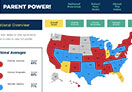
“With a Parent Power Index score of 76 percent, Colorado still has a long way to go in meeting the demand that exists for parents to be able to choose from a portfolio of education options,” said Kerwin. “While the state does permit parents to choose among traditional public schools within the state if there’s room, it’s essential Colorado create more avenues so more parents are able to access excellent learning environments of all kinds. We stand with Douglas County leaders and parents who will continue to fight for parent choice in education by asking the U.S. Supreme Court to consider this case.”

In 2002, the U.S. Supreme Court in the Zelman v. Simmons-Harris case ruled that the state of Ohio was within its constitutional power to enact a school choice program for Cleveland children.

Douglas County Colorado’s Choice Scholarship Program Ruled Unconstitutional

The Colorado Supreme Court today ruled the Douglas County Choice Scholarship Pilot Program unconstitutional, meaning district families will no longer be able to use this program as a means to access education that best meets their child’s unique individual learning needs.

For a full rundown, visit the Friedman Foundation for Educational Choice here.

Entrepreneurship as Innovation in Education

When I heard the word entrepreneur, the field of education was quite possibly the last thing that entered into my mind. To me, an entrepreneur was always someone who created a new business against a great deal of resistance from outside forces. Think Mark Zuckerberg and Facebook or Steve Jobs and Apple. I never before thought of classroom teachers as entrepreneurs. However, I realized today that teachers are entrepreneurs in every sense of the word thanks to the research presentation held by AEI entitled “The State of Entrepreneurship in K-12 Education.” Teachers work in a variety of ways to ensure that every student who enters their classroom leaves as something more than they were. The goal of every teacher is for students to leave their class more enriched and engaged than they were when they entered.

I would argue that teachers want innovation in their classrooms beyond just an iPad or laptop given to every student. Teachers need more support than that. On one hand, technology can provide that innovation if it is made in a way that supports both the teacher and the student. However, when teachers are unable to access this technology because of slow broadband, limited/no Wi-Fi or impossible to remember passwords, the technology becomes more of a head wind than a tail wind, to use the analogy that was repeated throughout the conference. Tail winds are things that create more “smooth sailing” for teachers, whereas head winds are the issues they are coming up against. For example, school choice can be seen as a tailwind because parents and students are finally able to make their own choices about where they want to attend school. On the other hand, one head wind can be the restrictions currently being placed on teachers that prevent them from having full autonomy over their classrooms and therefore limiting their ability to experiment with new ways of teaching.

The innovations happening in schools today are only the beginning. Parents have more choice than ever before to get their children the best possible education they can. The responsibility now lies on the next generation of teachers and teacher preparation programs. These programs hold the ability to change the way teachers are educated and in turn, change the face of the education system across the nation. In a dream world, for example, every teacher prep program would educate their students on how to find the best apps to provide them with the best resources in their subject field. These teachers would then be able to apply these skills that they’re constantly learning and re-learning to have the greatest impact on their students. It is the next generation of educators who can have the greatest influence on the next generation of students.

Ciara O’Sullivan, CER Intern

Leading The News: 25 Years of Education Coverage

Where’s the first place you would go to hear updated information on education? What’s the source that you trust the most? What was the last educational topic you heard about in the media? These are all questions that were raised by educational advocate Andrew R. Campanella in his report Leading The News: 25 Years of Education Coverage.

Campanella analyzed the coverage of K-12 education in the media over the last 25 years, and he found that education coverage is declining, with only 4 percent of Americans saying that education was the most important topic to them in 2014.

Local television is where I hear about education the most and it’s my go-to source, and also my most trusted source, coinciding with what others said in the report. Campanella found that local coverage of education is on the rise. In fact, he saw that the highest percentage of mentions of education-related stories focus on sports. The report found that 13.6 percent of local, regional, and state coverage focuses on athletics. Sports are an attention grabber and local news stations know that sports are more interesting for some than hearing about stories that focus on curriculum, budgets or reforms that may have taken place. Unfortunately, focusing on sports takes away from teaching the general public about those important issues in education that affect how their children are learning.

The study also revealed that when education is mentioned in articles, they are almost always focused on a specific policy. In my personal experience, one of the few policies that I have seen written about frequently in news articles is No Child Left Behind (NCLB). NCLB is the “poster child” for education and it’s pushed heavily almost everywhere, and if you were a millennial child you experienced it first hand.

Campanella uncovered that education funding and school choice remain the most covered policies. Last year, these two topics received two and a half times more coverage than the coverage received by an additional 10 educational policies combined. With the opening of many charter schools, online schools, and other alternative methods, I can see why these two topics are emerging ahead of the others.

It’s interesting to see how K-12 education coverage has changed over the past 25 years. With CER being around for the majority of that time we have examined many of the issues around education. With school choice being the top priority, it is great to see how this has become one of the prevalent topics in education today. It has been a long road to even opening the discussion on the topic, so I would like to think of this report as being a milestone in the education reform movement highlighting how the work of CER and other reform organizations have changed the discussion around education.

Rahdaysha Cummings, CER Intern

My First Day

As I approach my final year at Wake Forest University, I reflect on the amazing opportunities I have been given and the wonderful education I have been lucky enough to receive. It was not until my sophomore year however, when I took a class on the policy of public education, that I realized just how fortunate I was. After taking this course both my interest and curiosity were piqued and my passion for education reform ignited. I learned about the educational gaps all over the country and became more and more appalled by the inequality in education opportunities.

I have always been a believer in the American dream and a supporter of the notion that with hard work anything is possible. However, it became increasingly clear to me that the idea that I had always believed in and held close is being threatened by lack of opportunity and equality.

At CER I hope to gain a wider understanding of the various kinds of education and school choice and learn about policies that work to close the equality and achievement gap. Even after one day, I can already see that I am surrounded by experienced professionals who are dedicated to, and passionate about, education quality and equality. I am looking forward to what my time at CER will bring!

Madeline Ryan, CER Intern

NEWSWIRE: June 23, 2015

Vol. 17, No. 25
Special Charter Schools Conference Edition

Team @edreform is on the ground at the National Charter Schools Conference in New Orleans, where school leaders, educators, parents, and activists are discussing how charter schools can provide a “Chance For Every Child,” the theme of this year’s gathering. A fitting one too, given the fact that New Orleans, post-Katrina, is now 100 percent public charter schools.

Pass rates for minority and low-income students have doubled since charter schools became the norm in New Orleans, and graduation rates have gone from 55 to 75 percent.

But it shouldn’t take a hurricane for our school system to change so that more parents have the power to choose an education that best fits their children’s needs. Although charter schools have grown at a steady, linear pace, it’s vital we continue conversations that help us understand what it takes to accelerate that pace, and accelerate it quickly, in order for charter schools to play an even bigger role in meeting the demand that exists for more excellent education options.

Here are a few highlights so far from the 2015 National Charter Schools Conference:

Nina Rees, president of the National Alliance for Public Charter Schools, calls on charter schools to #LeaveNoSeatBehind by backfilling and enrolling students at all grade levels, as there are over 1 million kids on charter school waitlists across the country.

“Charter school reforms in New Orleans have worked. End of story.” – Louisiana State Superintendent of Education John White, challenging the rhetoric that still exists in many media reports on charter schools today. “Charter schools are at the heart of rebirth and creating a chance for every child.”

“There are kids out there like me who need you, and they too can go to Harvard or whatever school will rock their world” -Actress Ashley Judd, speaking about the power of education in her life.

Edreform pioneer Deborah McGriff, accepting her induction into the National Alliance for Public Charter Schools’ Hall of Fame, emphasizes that we must empower parents and community leaders, and continue to fight for bolder changes for our kids.

Charter schools should focus on responsibility before accountability, because then accountability takes care of itself, notes Jim Goenner, President and CEO of National Charter Schools Institute and CER Board Member during his session, Authorizers: Change Agents, Market Makers, and Forces of Quality.

FOR THE LATEST CONFERENCE QUOTES, PICS and updates be sure to follow the hashtag #NCSC15 on Twitter, and the handles @edreform, @chartercon, @CERKaraKerwin and @JeanneAllen.

Charter schools provide choice, high standards

by Jim Horne
Sun Sentinel
June 18, 2015

As someone who has spent more than three decades working in both public and private sectors to improve the lives of Florida’s families, it’s impossible for me to sit idly and let rhetoric trump reality in recent Sun Sentinel coverage of the Palm Beach School District’s war on charter schools.

At the heart of the legal battle the district has mounted against one charter school applicant is this notion that charters must prove they are “innovative” and different from traditional district school programs. District officials aren’t necessarily concerned about “innovation,” but instead are threatened by competition from charter schools and the fact that 19,000 students over the past five years have opted to make a choice. This debate is about power and control and the district’s ultimate goal to take parents back who have fled and deny them their rights to choose the best fit for their children.

School districts by nature are conflicted when it comes to approving charter schools because they view new schools — charter schools — as competition and a drain on their finances. That’s why strong charter school laws, such as Florida’s, set provisions that prevent these conflicting interests from getting in the way of what’s best for our children, such as an appeal process to the state Board of Education when a charter school feels it was unfairly denied.

It’s a pretty simple premise. Parent choice in and of itself is one of the most promising and proven innovations in our great state. Further, state law demands public charter schools be held to the same or even higher standards, assessments and grades as district-managed public schools.

If charter schools fail to meet the terms of their agreement, they are closed. When is the last time you heard a district school was closed for poor performance? Never! As the recent coverage in the Sun Sentinel has demonstrated, charters also operate under heightened scrutiny by the media, general public and even our elected officials. Unfortunately for the majority of students in Florida, traditional public schools do not face the same circumstances.

Palm Beach County’s justification for denying South Palm Beach Charter School is that it’s no different or better than what they offer. To demand charters be innovative is to assume that charters and district schools are on equal footing from the beginning. We know that isn’t true. On statewide metrics, charters perform better and provide solid academic results. Forty-one percent of Florida charter schools earn an “A” compared with 34 percent of traditional public schools according to the Florida Department of Education.

Consider that the South Palm Beach Charter School partnered with Fort Lauderdale-based Charter Schools USA, which manages 48 schools statewide, 18 of which earn “A” grades. If you take all CSUSA Florida schools as a network, they exceed net proficiency growth rates of every district in which they operate.

Both the legal challenge and the changing of Palm Beach County School Board policy to tighten rules for charters are clear signals the district is looking to protect the status quo. When districts lose students to charter schools, they see it as a loss in funding, despite the fact they’re no longer responsible for educating those students. In fact, districts actually end up with more per student money for the students they have, despite the fact they have lost students to charters due to increasing parent dissatisfaction.

That dissatisfaction is visible in the nearly 100,000 students on charter school wait lists in Florida annually. Most of these students are from low-income families and are desperately seeking a chance to escape their assigned schools, discrediting the notion that charter schools cherry pick students. Parents of all types of children are choosing charters because they offer something new or different, and that in and of itself is “innovation.”

The goal of charter schools isn’t simply just to be different, but to be better. And indeed, the data reveal charter schools get results. If they do not, they are closed. At the end of the day, requiring one to be “innovative” is a subjective excuse that’s a result of fear that when given a choice, parents choose something different than the school assigned by their ZIP code.

Jim Horne is the former Florida commissioner of education and also served in the state Senate. Horne is the chairman of the Florida Charter School Alliance.

Local battles for charter schools continue in California

by Alice Salles
Watchdog.com
June 22, 2015

While education reform efforts remain strong at the local level in the face of legislation threatening the very existence of California charter schools, the authorization of new charter schools at the local level remains restrictive.

Under state law, only local or county school boards are allowed to authorize the creation of new charter schools. As the Center for Education Reform reports, restrictive authorization rules in California force charter schools to cluster in very few districts where reform is welcomed. As a result, 158,000 California children remain on waiting lists. For Kern County students who reside in Tehachapi, Calif., moving to a charter school has just become a little more difficult.

According to Tehachapi News, the local school district board has denied a charter petition proposed by Steve Henderson’s Flex Academy. Claiming Flex hadn’t “pass[ed] the necessary requirements,” the Tehachapi Unified School District Board of Trustees voted on May 26 to not allow the group to establish its charter school in the region.

With two locations in California, San Francisco Flex Academy is California’s first full-time hybrid school, which blends online learning with traditional classroom education.

Concerns raised by Superintendent Susan Andreas-Bervel involve the petitioner’s lack of documentation on “how they would handle special education students or the new Common Core program.” But that’s not all.

In the proposal, Flex Academy uses ‘California’ before Flex. To Nick Heinlein, the chief administrator of business for TUSD, naming the public charter ‘California Flex Academy’ and having it located within the boundaries of Kern County indicates the group doesn’t want to focus on Tehachapi. According to TUSD, the board members were also unsatisfied with the proposal’s budget numbers and “concerns” about qualified staff members.

Based on what Friedman Foundation’s John Merrifield has written, education regulations like those in California put unnecessary pressure on educators, and as a result, teachers are more concerned about pushing children to do better in standardized tests than actually teaching them.

From the glowing reviews Flex Academy has received, the charter appears to be a strong applicant for authorization.

To a Flex Academy teacher, the school is important to the community because it “offers each student an individualized education that meets the needs of every kid in the classroom.” To a parent whose son has a learning gap, Flex Academy is important because it offers great support to all of its students:

The teachers were enthusiastic and also were advisors for the various clubs and extracurriculars. The hybrid learning concept is fabulous, particularly if your child is highly focused and motivated, as they can move ahead. Some of my son’s classmates graduated early or had extensive credits due to this. The fact that the school can cater to a myriad of abilities is what makes the school great—support where you need it, great advancement for the student who wants it.

To another parent, “[San Francisco] Flex lives up to its name—it is flexible in a way a lot of public schools aren’t.”

However, the school has also received sharp criticism for using public funding to cover marketing costs in other states.

According to the California Charters School Administration, school districts often fail to evaluate charter petitions on merit. In a statement sent to Watchdog, CCSA’s spokesperson said that “even though California law requires every school district to use the same criteria to evaluate the strength of each new charter petition, political and financial motivations prompt districts to deny charter petitions, even strong applications, from highly capable school operators.”

CCSA says that if Flex Academy believes it was treated unfairly, it still has some recourse; petitioners must appeal to the Kern County Superintendent’s Office. If the county schools office grants the organization a charter, California Flex Academy would be California’s third full-time hybrid K-12 school.

The ability of strictly local or county school boards to authorize charter schools is a drawback that charter schools in Indiana, for instance, do not have to experience. In Indiana, charter schools can be authorized by the executive of a consolidated city or the governing body, state educational institutions that offer four year baccalaureate degrees, nonprofit colleges or universities, or the Indiana Charter School Board. Flexibility has helped Indiana to become the number one state in the Center for Education Reform’s Parent Power Index.

While California Flex is the latest to have its petition denied by TUSD, Inspire Charter School recently withdrew its petition prior to meeting with the board. According to Heinlein, the staff had already indicated that it would reject the petition prior to the meeting.

Idaho education system eclipsed by neighbor to the south

by PG Veer
Watchdog
June 18, 2015

The Center for Education Reform recently published its annual “parent power index,” a web-based report judging how accessible information on education is for parents in every state. This year, Idaho took the 19th spot in the ranking. It is superior to all of its neighboring western states but Utah, which ranks at number 6.

This relative counter-performance shouldn’t come as a surprise. Indeed, Idaho charter schools are underfunded compared to their Utah counterparts, which receives some money from property taxes. In addition, Utah charter schools have the option of opting out or the state’s retirement system, unlike charter schools in Idaho.

Online education is also lagging behind, unlike Utah.  As reported earlier, while the state improved accessibility to online classes, Idaho virtual schools are financed according to student success rather than per-pupil as public schools are; and Internet speed is still deficient. We will see next year if House Bill 643 improved that deficiency, along with Senate Bill 1091, which creates an online course portal.

Idaho is also stuck with antiquated policies when it comes to teacher quality. The National Council on Teacher Quality’s annual report states that for Idaho’s “exiting ineffective teachers,” “a last hired, first fired layoff policy is prohibited during reductions in force; however, performance is not considered in determining which teacher to lay off.

And while some schools allow feedback on teachers, those who “receive unsatisfactory evaluations are not placed on structured improvement plans.” Idaho does not even have performance pay; instead all teachers –with minor local variations– are on the same scale based on seniority and higher education attainments.

Teacher quality is much higher in Utah. Teachers who receive poor Bevaluations are placed on an improvement plan, their salary is adjusted to their evaluation result starting the following school year, and “performance is the top criterion for districts to consider when determining which teachers to lay off.”

Fortunately, not everything is so dark for Idaho in the PPI. As in Utah, Idaho allows parents to send their children to any school in the state if there is room available. Also, the schools’ report cards rated “helpful, easily accessible, well organized, and offer parents an overall school performance rating.” The School Choice Division even offers information on non-traditional options like charter and home schools. However school elections, unlike Utah, are dispersed through the year rather than being in-sync with the November cycle.

Idaho can do much better when it comes to empowering parents for their children’s education. If everything remains the same then it’s likely that Nevada, with its recent universal school choice law, will even outrank Idaho next year.

All Great Things Come to an End

It’s amazing how time flies. Just two months ago I was being interviewed for a position at the The Center for Education Reform (CER) and now it’s my last day as an intern. I’m really going to miss walking in every morning and greeting the wonderful staff. When I walked into the office for the very first time I didn’t know if I should be terrified of the amount of work I’d be given or about the amount of things I had to present to the organization when I was finished. Everything was great overall in the end though.

In my time here at the CER, I worked on several projects. I wrote blogs, updated articles in the databases, researched K-12 facts to update the organization’s website, and I even conducted my own survey. All of these projects helped my develop my critical thinking skills and conducting my survey helped me network with people I don’t usually talk to. I think I have really grown while working at this organization. I’m very proud of myself and the work I contributed.

The Center for Education Reform helped me analyze the issues surrounding education reform. It is sad to know that education is one of the most underrated issues in society today. It is very important to inform parents and school about opportunities that can further their child’s learning. I will be sure to let parents in my community know there are better schools in D.C. besides the traditional public schools and they will get great results in their child’s learning progress. It worked for me so I don’t see why it wouldn’t work for them.

I have enjoyed my time here at CER. I’m shocked that it’s already over. Or am I dreaming? No I’m awake because that pinch actually hurts! These few weeks taught me so much and I gained a lot of experience. I thank the CER staff and interns for advice, motivation, knowledge about the organization, and last but not least the food. I wish CER the best in all upcoming events and their research. Who knows the next time I come it could be for good.

Tre’Von York, CER Intern