







Sign up for our newsletter

EdNext Releases 2015 Poll

In its latest annual public opinion poll, Education Next reveals high levels of support for education reform policies nationwide. In addition, new data on the acceptability and usage of educational choices paints a clear picture of parental demand for school options.

The poll finds that more than a quarter of parents with school-aged children have previously taken advantage of, or are currently using, an educational option alternative to a traditional public school.

Although slightly down from 2014 results, support for charter schools remains high and is still double that of the opposition. Participants in the survey also responded with higher support for charter schools after the definition of charter schools was provided.

Other popular school choice programs garnered high levels of support as well. Education tax credit scholarships for low-income children commands a clear majority of support at 55 percent. In regard to school choice vouchers, minorities are the strongest supporters, with 65 percent of Hispanics and 58 percent of African Americans in favor of school vouchers, and less than 20 percent of each of these subgroups in opposition to vouchers.

A majority of Americans still support treating teachers like professionals with merit pay, and equally oppose teacher tenure.

Implementation of online and digital learning in classrooms also has high levels of support. For example, 55 percent of African Americans believe that students should spend at least 45 percent of their school day utilizing digital learning and receiving individualized instruction on a computer.

It is clear that education options and programs that allow parents to choose the best fit for their child’s academic needs are in high demand.

Click here for an interactive view of the full data released by Education Next.

NEWSWIRE: August 25, 2015

Vol. 17, No. 33

BACK TO SCHOOL. As many students and teachers – and undoubtedly parents! – celebrated the #FirstDayofSchool yesterday, we can’t help but think about the number of parents and students who still don’t have access to excellent schools. With just six percent of the total K-12 school-aged population taking advantage of choice programs, and states barely scratching the surface when it comes to offering parents real power over their children’s education, the need for more and better learning opportunities is now. As National School Choice Week President and CER Grassroots Advisory Board member Andrew Campanella said:

Parent Power means “every child has the opportunity to achieve his or her American Dream.”


And as Families Empowered Founder & Executive Director and CER Grassroots Advisory Board member Colleen Dippel said, Parent Power is not a fictional tale created by policy wonks in Washington, D.C.

“In just the city of Houston alone, 37,000 applications for 2,000 spots. As a parent myself, if I were one of the 35,000 parents on waitlists and I had to sent my child back to a failing school, that would sure make me feel powerless.”

Influencers “treat our families as if they are not in charge of their own children,” said Democracy Prep Public Schools CEO and CER Grassroots Advisory Board member Katie Duffy. “I think that’s a huge mistake.”

The power to make a conscious decision about “what you want and what you value for your own kids [is] something every parent should have.”


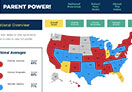
Hear more from people on the ground across the nation about why parent power is important, and check out the newly designed Parent Power Index to see how your state stacks up and what you can do to get more #ParentPower in your community.

NASHVILLE NEEDS MORE. Two KIPP charter schools in Nashville were denied based on concerns about the fiscal impact of the schools on the district and “perceived practices” of the schools, and because KIPP Nashville still has open seats to fill in some schools. However, an analysis reveals that the schools would actually be an investment for the district and not have a negative impact on the district’s budget. KIPP Nashville applied based on what the district said it wanted in 2013, which is schools serving high-needs areas, but now has suddenly shifted its position. According to the latest state test results, the Nashville Metro Public Schools district has fewer students at proficient or advanced in all test categories compared to statewide averages. A tragedy to think about when that number is a mere 39 percent of Nashville 3rd-8th graders at proficient or advanced in reading, and 47 percent at proficient or advanced in math. Meanwhile, KIPP Academy Nashville was recently recognized by Gov. Haslam for being in the top five percent in growth in the state. As Nashville mayor Karl Dean points out in The Tennessean, Nashville will never have enough KIPPs or enough of any other excellent charter schools until every single student has the chance to attend a school that puts them on their own personal path to success. Unfortunately, this isn’t the first time Nashville has shown its aversion to charter schools either. In 2012, Great Hearts Academies had to cease its efforts to open a school in Nashville after the city refused to comply with the state’s orders to allow the school to operate. Schools being denied regardless of the merit of their application happens far too often, and in 2014, the Tennessee legislature passed a much-needed binding appeal for the State Board of Education when districts like Nashville unfairly deny choices for students. While the school board has already said it would challenge the new law, there’s no doubt that KIPP Nashville would prevail in its appeal to provide an excellent option for Music City’s families. Until that happens, the question shouldn’t be “When is enough enough?”, but rather “How can we have more of these sooner?”.

NEW SHERIFF IN TOWN. Serving our Children has been named by the U.S. Department of Education as the organization that will now administer scholarships under the D.C. Opportunity Scholarship Program (DC OSP). Despite attempts by the Obama administration to undercut this program, which serves families with an average annual income of $22,000 or less, the DC OSP has been a lifeline for the students it serves. Ninety percent of DC OSP students graduate from high school, compared to D.C.’s overall graduation rate of 62 percent. Not only that, but the program boasts a 95 percent parental satisfaction rate. Talk about #ParentPower! Let’s hope leaders in our nation’s capital recognize the tremendous power of this program to transform students’ lives, and expand the program beyond where it is now, as no new students are allowed to enroll despite it being authorized by Congress until 2016 because of funding neglect.

BEHIND THE PDK/GALLUP POLL. After 47 years, the Phi Delta Kappa International poll in conjunction with Gallup on “The Public’s Attitudes Toward the Public Schools” continues to suffer from loaded questions that lack the ability to derive valid answers about how Americans truly feel about education reforms today. For instance, a question about vouchers implies that they come at the cost of the traditional public school system. Not only is this not true, but it also suggests that parents seeking options outside of their zoned schools are suddenly not part of the public. Perhaps the most interesting thing about this year’s poll, however, is its agenda-driven message that “testing doesn’t measure up for Americans,” when in fact the results indicate that populations who typically aren’t afforded choices support school choice and high standards in education, and believe measures like testing are an important factor in determining school quality and improvement. It’s critical that the voices of parents and community leaders across the nation vying for more #ParentPower in and among schools, and need for laws that truly make this possible, especially for those who have none, are not overpowered by special interest groups that continue to promote status quo interests above all else.

#EDlection2016 BEGINS. CER was on the ground last week in New Hampshire as six presidential candidates shared their views on education. A refreshing focus as education unfortunately doesn’t make the cut as a headliner topic during election cycles. We’ve got a recap of candidates’ views here, and will continue to keep you posted as the 2016 election draws closer with CER’s Education Fifty, your #EDlection headquarters dedicated to providing you, the voter, with the information that can best inform your vote, ensuring meaningful changes to our educational system are realized.

Karl Dean: Never enough great schools in Nashville

by Karl Dean
The Tennessean
August 24, 2015

“When is enough enough?”

That question was posed during the Metro school board’s meeting Tuesday night before the board voted to deny KIPP Nashville’s charter applications – applications that were recommended for approval by the district’s charter review committee.

It’s a question worth considering.

When will we have enough KIPP in Nashville? When will we have enough of the tireless efforts of Randy Dowell and his devoted team of school leaders, teachers and staff members? When will we have enough schools in our city successfully getting our youngest citizens to and through college?

KIPP has been part of the fabric of Nashville for more than a decade, changing the lives of some of Nashville’s most at-risk students. Kids like LaTrya Gordon, who attended seven other public schools before finding the academic environment she needed at KIPP Nashville, where she thrived.

As is true for all KIPP students, KIPP’s commitment to LaTrya didn’t end with eighth grade. During high school, her former KIPP teachers helped her navigate challenging housing circumstances so she could support her family.

Now a rising junior at Belmont University, LaTrya drives her brother to first grade at KIPP Kirkpatrick before interning at KIPP Academy Nashville, where she dedicates her time to helping the next generation of KIPP students succeed.

LaTrya’s story is not an anomaly. Just a few months ago, Gov. Bill Haslam recognized KIPP Academy Nashville as a Reward School for once again being in the top 5 percent in growth in the state.

Their scholars posted the school’s best reading and science results ever. KIPP Nashville Collegiate High School’s students posted growth scores in English and Algebra last year that were in the top 4 percent in the state.

And all of this happened in academic environments that can only be described by anyone who has walked into a KIPP school as joyful and inspired.

KIPP isn’t just serving Nashville well. More than 6,000 KIPP alumni are enrolled in colleges across the country today.

With former KIPP students graduating from college at a rate higher than the national average and five times higher than other low-income students, KIPP Nashville is part of a national team that is literally changing lives throughout the United States. Cities around the country would give anything to have KIPP serving students in their communities.

And KIPP is not the only public charter school providing Nashville’s most challenged students a high-quality option. Nine of the district’s highest-performing middle schools last year were charter schools, including KIPP. These schools are doing amazing work.

So to the question of when is enough enough, I would say this: Nashville will not have enough KIPP – or enough of any of our other high-quality charter schools – until every single child in the city has the same opportunity that LaTrya had.

All children should have access to an education, whether it’s at a charter school or a traditional public school, that puts them on the path to a future they once thought beyond their reach.

Until then, the question shouldn’t be, “When is enough enough?” The question should be, “How can we have more of these, sooner?”

Our city’s families deserve nothing less.

Karl Dean is the sixth mayor of the Metropolitan Government of Nashville and Davidson County.

First Day at CER

As I approached the doors of suite 705, I was not exactly sure what to expect. This organization, CER, seemed so small in comparison to something so big – the gap between high-quality and low-quality schools, the gap between education policy and what is actually happening inside of the schools, and the endeavors to empower parents through choice of school for their children. There are so many issues and ideas that CER is working toward, that I couldn’t help but think that I would be quite overwhelmed.

Being from Buffalo, one must be quite naive if he or she isn’t appalled and saddened by the public schooling in the city. However, upon further research, I very soon realized that it is organizations such as The Center for Education Reform that intend to solve these issues (the differences between education quality throughout America, the gap between education policy and practice, etc …) as well as educate the general public on education policy and the reality of education among many cities. As soon as I entered the doors of CER, I quickly realized that although this organization is taking on such a large issue — education quality — there is nothing to be overwhelmed or worried about. The staff is friendly, warm, and extremely helpful, and they all seem to care very much about their work from what I can see. I am so happy to be a part of an organization such as this because although I am only one person and CER is only one organization, slowly but surely we can improve education equality and quality.

I hope to gain many skills at CER. I have never worked in such a small, formal (yet still very laid back and calm) office, but I hope to really thrive. Through doing research and analysis at this internship, I hope to feel accomplished and have a sense of fulfillment and satisfaction that my work, slowly but surely, will help to reform the education system in the long run. Every little bit of work matters, so I am looking forward to seeing how my work will help contribute.

I am so thankful to have been offered this internship; I am so excited to learn about this topic more, work with kind people, and gain formal work experience. I am looking forward to being inspired by my fellow workers and interns, and hope to in turn inspire some of them as well! I am truly fortunate to be working for CER — a small but powerful nonprofit with a big issue to tackle.

I am so happy to be interning at CER this fall and I am looking forward to seeing what comes next.

Gianna Manzella, CER Intern

PDK/Gallup Results Reveal Need for Parent Power

Behind Agenda-Driven Results Is Need for School Choice and High Standards in Education

Phi Delta Kappa International in conjunction with Gallup released their 47th annual poll for 2015 on “The Public’s Attitudes Toward the Public Schools.”

This year’s survey, which continues to suffer from biased and misleading questions as it has in years past, focuses heavily on testing, with the takeaway being “testing doesn’t measure up for Americans.”

However, a closer look at the data reveals populations typically underserved by the traditional school system favor high standards and choices when it comes to their child’s education.

TESTING: Blacks and Hispanics are more likely than whites to say that standardized testing is an important factor in improving schools and determining school quality. Fifty-seven percent of blacks say parents should not opt-out from having their children take standardized tests, and 75 percent of black respondents and 65 percent of Hispanic respondents would not excuse their child from testing, compared to 44 percent of whites.

CHOICE: Nearly two thirds of Americans support parents selecting any public school within their district, and 64 percent of Americans support charter schools. However, CER’s Survey of America’s Attitudes Towards Education Reform reveals support for charter schools increases to 73 percent when survey respondents are provided the definition of charter schools.

The PDK/Gallup poll reveals just 31 percent of Americans support “allowing students and parents to choose a private school to attend at public expense,” more commonly known as vouchers.

However, using the phrase “at public expense” creates the illusion that parents who are seeking choices outside of the traditional public education system are not part of the “public,” and incorrectly implies that choice programs are a financial strain when the reality is they typically do more to educate students with less money.

BOTTOM LINE: Poll results from an organization that represents status quo interests should not overpower voices of parents on the ground in communities that simply want more and better education options for their children.

“Since I live in South Central, I don’t have a choice between a good school and the best school. I had a choice between the worst schools and a good education all around,” said Jesus Andrade of Los Angeles, California, who has two sons attending public charter schools, in the 2015 PDK/ Gallup poll results report.

Jesus’ sentiment is one echoed by many parents across the nation, and is why CER continues to advocate for more Parent Power in education, and created its new and improved Parent Power Index, so parents and community leaders can have more control in and among schools, creating laws that truly provide increased power, particularly to those who have none.

EDlection Chatter Begins: Candidates Talk Prominent Education Issues at New Hampshire Education Summit

The New Hampshire Education Summit, hosted by The Seventy Four and the American Federation for Children, provided a rare opportunity to hear about six presidential candidates’ views about education reform in a more in-depth and focused way, as education is sadly not usually the headline topic during election cycles. Below are some thoughts on their interviews:

Jeb Bush

Since Jeb Bush has spent much of his hiatus from elected office in the education reform world, it was unsurprising that he gave a true wonk’s performance during yesterday’s summit. The former Florida governor talked about his record in Florida, touting his reforms such as A-F school grading, merit pay for teachers, the voucher program (stuck down by the Florida Supreme Court), and the largest tax credit scholarship program in the nation, which CER ranked near the best in the country last year. He pointed to the innovative Florida Virtual School, and the potential shift towards content-mastery rather than seat time as a measurement for educational attainment. The governor also pointed to the results of his reforms, including an increase in NAEP scores and narrowing of achievement gaps between racial and socioeconomic categories.

Gov. Bush said he was “tired” of hearing people blame poor academic achievement on “the circumstances of life” rather than on a failed system.

Florida ranks #2 on CER’s Parent Power Index.

Carly Fiorina

Because her private sector background differs from those of the other candidates at the summit (all current or former governors with concrete education records to point to), Carly Fiorina took the opportunity to introduce summit attendees to her education reform principles. She focused on the purpose and necessity of an excellent education system for the United States, both as a republic and in global competition.

Fiorina pointed to the importance of character and other non-academic factors. Interestingly, many charter schools and turnaround operators point to their ability to build a high-achieving culture and how this often ties to academic success.

Fiorina spoke encouragingly about charter schools and other innovative options, dispelling the myth that more spending means higher achievement. She also stressed the importance of innovation, saying it is “the coin of the realm in the 21st century.”

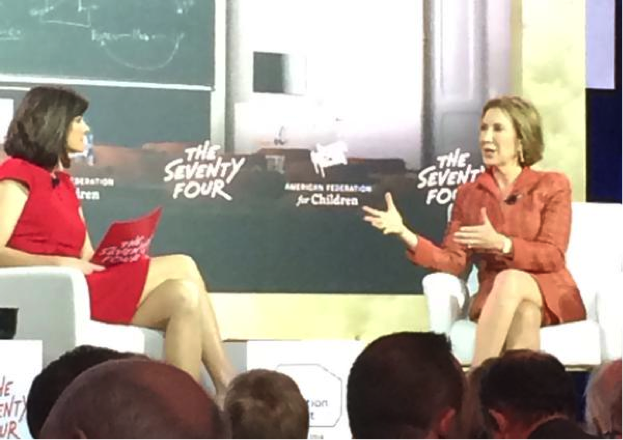
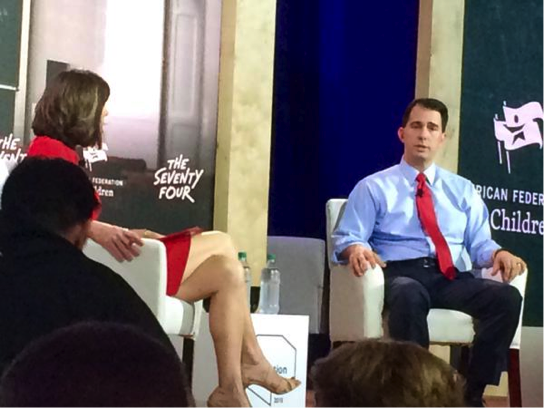
Carly Fiorina discusses innovation in education with Campbell Brown at the New Hampshire Education Summit.

Carly Fiorina discusses innovation in education with Campbell Brown at the New Hampshire Education Summit.


John Kasich

Ohio Governor John Kasich also touted his school choice record. He pointed out the successes of the Cleveland voucher program, and stressed the need for accountability in the charter sector and among authorizers. However, the governor was not clear about what he meant by more accountability – did he mean transparency and accountability to parents for all schools? Or did he mean more bureaucratic accountability by re-regulating charter schools and making it more difficult for them to open and operate? We sure hope it’s not the latter!

Gov. Kasich also criticized “last in, first out” teacher layoff policies, saying that they deprive students of some of their best teachers.

Gov. Kasich urged the audience to “shake things up.” “We cannot worship at the altar of the status quo,” the governor proclaimed.

For more on Gov. Kasich’s views on education issues, visit Education 50.
Ohio ranks #8 on CER’s Parent Power Index.

Scott Walker

Wisconsin Governor Scott Walker is known for his tough stances against unions, including the teacher’s unions, and he continued on that theme during the summit, discussing the “barriers” put in place by unions that prevent kids from getting an excellent education. He also told the history of the groundbreaking Milwaukee voucher program – the longest-running private school choice program in the country – and how it has expanded under his tenure as governor. School choice, said Gov. Walker, is an “economic and moral imperative.”

For more on Gov. Walker’s views on education issues, visit Education 50.
Wisconsin ranks #9 on CER’s Parent Power Index.

Gov. Scott Walker discusses education with Campbell Brown at the New Hampshire Education Summit.

Gov. Scott Walker discusses education with Campbell Brown at the New Hampshire Education Summit.


Bobby Jindal

Louisiana Governor Bobby Jindal followed Governors Bush and Kasich in highlighting the school choice successes in his state. Gov. Jindal echoed CER’s sentiments that it shouldn’t take a hurricane or other horrific disasters to break open monopolies in the education system, pointing to New Orleans, now nearly all charter schools, and Louisiana’s voucher and tax credit programs as proof of his school choice bonafides. We were happy to hear Gov. Jindal clearly state where he thinks real accountability lies, when he announced “the best accountability system is parents!”

While Louisiana has indeed been a school choice leader, we would have liked to hear Gov. Jindal address the lack of options outside of New Orleans, as well as the low school participation rates in the state’s private school choice programs.

Gov. Jindal closed his interview by saying if he could snap his fingers and change a single thing in the education system, it would be to have dollars follow the child, because doing so would create pressure for excellence.

For more on Gov. Jindal’s views on education issues, visit Education 50.
Louisiana ranks #7 on CER’s Parent Power Index.

Chris Christie

New Jersey Governor Chris Christie championed reforms like a longer school year, and higher use of technology during his turn in Campbell Brown’s hot seat.
“Parents deserve more choice,” said Gov. Christie, “and kids’ priorities should be placed ahead of the comfort of adults.” Despite these strong words and reiterating his sentiment that the teacher’s unions deserve “a punch in the face,” Christie criticized Jeb Bush for saying he wouldn’t work with teachers’ unions, implying that the reality on the ground means that reformers must sometimes compromise with union leaders to get some reforms through.

Gov. Christie closed by pointing out that wealthy families already have school choice, and families of all incomes should be able to choose the best educational options for their children, not just families like Christie’s.

For more on Gov. Christie’s views on education issues, visit Education 50.
New Jersey ranks #32 on CER’s Parent Power Index.

Thank you to The Seventy Four and the American Federation for Children for putting together the summit, and to all six candidates for sharing their education visions.

As the 2016 election gets closer, CER will continue to keep you informed about where candidates stand on education issues, so that when it comes time to head to the polls, you know which candidates are the most likely to make policy decisions that empower parents by giving students choices.

Special Parent Power! NEWSWIRE: August 18, 2015

Vol. 17, No. 32

INFORMATION IS POWER. Everyone knows that parents can make great choices when they have good information and an opportunity to use it. That opportunity is only available in states and communities that permit a wide variety of options to parents. Since 1993 CER has been advocating for increased Parent Power!, and analyzing the data and policies that make the most number of choices available to the most number of parents. Later this week, CER will be revealing the new and improved Parent Power Index(c), 2015, a central repository to learn how states are doing providing Parent Power! and specific steps they need to take to increase it. We’ve made the PPI tools mobile, more user friendly and parent approved! Be sure to stay tuned at www.staging.edreform.com for the big reveal on Thursday, August, 20.

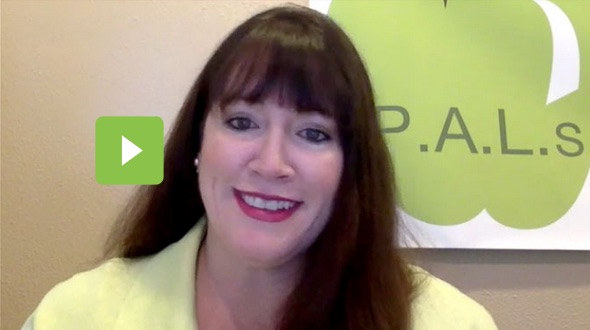
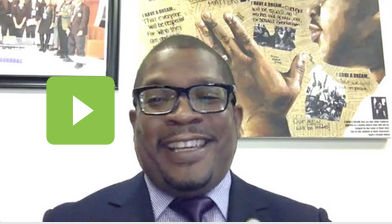
WHAT IS PARENT POWER? Dr. Marco Clark, Founder and CEO of Richard Wright Public Charter School in Washington, D.C., and Julie Collier, Parents Advocate League Founder & Executive Director and CER Grassroots Advisory Board member, are just two of many Edreform superstars that sat down with CER to provide insight on the importance of Parent Power!:

“When IJulie Collier PPI 2015 hear parent power it gives me hope. Once parents are informed, they are definitely a force to be reckoned with.” –Julie Collier


Screen Shot 2015-08-18 at 11.02.26 AM“Empowering them gives them a voice. When you empower parents, their voice becomes stronger.” – Dr. Marco Clark


MORE POWER PLEASE. As a debate over the constitutionality of Washington State’s charter school law remains in the works, all eight charter schools opening this year are filled to capacity, reports the Seattle Times. The Evergreen State permits just up to 40 charter schools over a five-year period according to the C-rated charter school law created in 2012. With an overall Parent Power Index grade of 68 percent – which by the way is a ‘D’ according to most U.S. school report cards! – it’s no surprise parents are scrambling to take advantage of the charter schools, as they really aren’t afforded any other options when it comes to choosing the best education for their child.

POWER OF VIRTUAL SCHOOLING. North Carolina parents have a new option for their children this school year: virtual charter schools. Parents in the Tarheel State have been able to take advantage of brick and mortar charter schools since the late 90’s, but the fact that one of the state’s first virtual charter schools has already met the arbitrary cap of 1,500 students and has a wait list points to the fact that the state must continue to grow options in order to meet parent demand. Thankfully, the school voucher program just recently survived a legal challenge in the State Supreme Court, so a certain segment of parents meeting income requirements will have access to vouchers that can open up the doors to private school as an option for their child.

#EDlection2016 AND PARENT POWER. Will #ParentPower be at the center of the education debate? By now it should be clear that the need for more parent power is not limited to one community, city, or state, and CER hopes that candidates in New Hampshire this week tackle this issue head on. The first of two Education Summits sponsored by The Seventy Four with the American Federation for Children and the Des Moines Register will feature candidates Bush, Christie, Fiorina, Jindal, Kasich & Walker on August 19 at 8:50am EST as they discuss K-12 education in America. Before the debate, see where governors stand on vital reform issues at Education Fifty, your #EDlection headquarters, dedicated to providing you, the voter, with the information that can best inform your vote, ensuring meaningful changes to our educational system are realized. Tune into the debate on August 19 live here, and follow the conversation on Twitter at @Edreform and #EDlection2016.


Philanthropy makes up small portion of D.C. charter schools budget

By Moriah Costa
Watchdog
August 17, 2015

Only six percent of funding for D.C. charter schools comes from private contributions, disproving claims that significant philanthropic contributions gives charter schools an advantage over traditional public schools.

A report released by the D.C. Fiscal Policy Institute earlier this month found the majority of funding for charter schools comes from the D.C. government. The report is in line with other studies, including a 2011 analysis from the University of Arkansas that found nationally, traditional public schools often receive more money on average than charter schools.

“I think it’s one thing about where people say the funds come from and it’s another thing to look where the actual money comes from, so I don’t think this is all that surprising if we looked across in other states,” said Alison Consoletti Zgainer, executive vice president of the Center for Education Reform. “I think it’s just the rhetoric of charter schools being supported by philanthropy is louder than what the reality is.”

Zgainer said a 2010 survey her organization conducted found that only 8 percent of funding for charter schools came from private philanthropy. The findings were not published.

The D.C. Fiscal Policy Institute did not respond to a request for comment.

About 44 percent of D.C. students are enrolled in a charter school. Both charter schools and traditional public schools receive funding per student. The report found that charter schools spent an average of $14,639 per student in fiscal year 2014. That’s in line with district schools, which received an average of $14,497 per student. Charter schools also receive an additional $3,000 per student for facilities, while district schools receive long-term building funds from the D.C. capital budget.

Of the 60 charter schools, 21 were high-performing financially and seven were deemed low and inadequate. Eighteen schools were operating at a deficit, but seven of those were closed or are closing with the rest being monitored by the charter school board.

The report also found that charter schools spend an average of 61 percent of their budgets on personnel, while 11 percent is spent directly on students.

The study was based on data from the Financial Audit Review, released annually by the D.C. Public Charter School Board. The review does not reveal which charter schools are low or high-performing.

The study’s authors recommend the board rank schools based on financial performance, similar to how schools are currently ranked based on academic performance.

IN OTHER NEWS: Parents of children with autism found school, thanks to school choice

Charter school finances have come under scrutiny recently after two lawsuits alleged that for-profit management companies diverted millions of dollars of public money for personal gain. The two schools, Options Public Charter School and Community Academy Public Schools, were given favorable financial reviews. The board said it was because current law prevented it from accessing financial records of the companies. They are working with the D.C. Council to pass legislation that would require management companies to reveal its finances, but it would only apply to three charter schools in D.C.

Most schools in D.C. are run by nonprofits.

Fact-Checking Charter School Philanthropy

Myths and misinformation still permeate the discourse about charter schools, especially when it comes to funding, with charter school critics erroneously accusing the charter sector of being controlled by the purse strings of “evil private interests.”

The D.C. Fiscal Policy Institute (DCFPI) investigated the finances of public charter schools in the District of Columbia, and set the record straight in an August 2015 report that analyzed the annual D.C. Public Charter School Board’s Financial Audit Review (FAR). Chief among the findings was that 82 percent of funds allocated to public charter schools come from the local D.C. government, 10 percent of the revenue comes directly from the federal government, and only six percent of their funds comes from private philanthropy.

In its look into charter school finances, DCFPI further found that the majority of D.C. charter schools received less than $500 per student ($377 per student was median amount) from philanthropic sources.

Yet, little more information can be derived from the report due to the structure of the FAR. DCFPI contended that the D.C. Public Charter School Board’s yearly fiscal reporting on philanthropic revenue “is broad, thus requiring stakeholders to contact each individual local education agency for more detailed information.” This means it is difficult to know the exact breakdown of philanthropic funding of charter schools in D.C. The report recommends including an itemized summary of these funds, like the share of private foundation grants, parent fees or PTA fundraising, in the FAR each year.

What we do know is that certain charter schools receive much more than $500 per student and some receive much less. Of the 60 charters analyzed, 38 of them received less than $500 per pupil. Charter schools run by well-known organizations or that have been in D.C. for a longer period of time, such as KIPP DC receive a much larger piece of the philanthropic pie, accounting for close to $17 million in revenue and about $4,600 per pupil. These larger charter networks also have senior staff devoted to fundraising, where the smaller start-up charter schools are doing the best with what they have to educate their kids due in large part to the overall charter funding inequity in D.C.

Until there is more transparency, there will be no way of knowing just how much of the six percent of philanthropic support comes from private foundations for each charter school. However, it is worth noting that a large share of that portion of philanthropic support, particularly for the local, mom-and-pop charters, comes from the surrounding community – the parents. Bake sales, school sporting events, and PTA fundraising could represent a large piece of the pie, meaning “philanthropy” is not just defined by large special interest groups.

Other key findings in this report include data on charter school expenses. Not surprisingly, 61 percent of spending is on personnel expenses, with the next highest percentages of expenditures being occupancy expenses like utilities and maintenance at 17 percent, and direct student expenses at 11 percent. The charter schools that spend the most money in D.C. do so because they serve large populations of English Language Learners and students with special needs.

The full PDF report can be found here.

NEWSWIRE: August 11, 2015

Vol. 17, No. 31

CATHOLIC SCHOOL COMEBACK. According to a new report from Faith in the Future, the Archdiocese of Philadelphia will have happy news to share with Pope Francis when he comes to visit in September. Philadelphia Catholic schools are projecting a growth in the number of students they serve, and the high school system, previously in deficit, is now reporting a surplus in funds, which are being reinvested back into the schools. Catholic schools have been suffering nationwide for years because of a changing education marketplace, but this report sheds light on how Faith in the Future believes they are “successfully creating a new operating model to increase educational opportunities, enhance the quality of education in Catholic schools, and demonstrate how private sector solutions can leapfrog even the most innovative charter school reforms.” Indeed, a welcome development not only for Philly, where the people in charge seem to be interested in limiting options, denying 87 percent of the latest charter school applications, but a welcome development for Catholic education as a whole, as research has shown these schools not only have impact on student outcomes, but the neighborhoods and communities they serve.

CHARTER POWER. The number of charter schools in Baton Rouge, Louisiana has doubled in just three years, with four new schools opening this month, reports The Advocate. Great news, since while 100 percent of students in New Orleans attend charter schools, districts outside of the Big Easy tend not to encourage or promote the creation of charter schools. As the tenth anniversary of Hurricane Katrina approaches, hopefully districts across Louisiana will start to take notice just how much charter schools have helped changed student outcomes in New Orleans. But changes can’t rely on people who are in charge in those districts – strong policy must be part of the equation. Louisiana’s C-rated charter school law should be stronger to help empower all families in the Bayou State choose the best education for their kids.

MONEY MYTHS. A report out by the D.C. Fiscal Policy Institute helps dispel the misconceptions about charter school funding in the nation’s capital. Critics have long claimed that private philanthropy has played a major role in the success and sustainability of the charter sector sometime referred to as the “evil, private special interests.” However, this new report reveals only six percent of funds for D.C. charters come from private sources (mostly parent bake sales), averaging less than $500 per student annually. The fact is public charter schools are funded at approximately 36 percent less than their traditional public school counterparts, and even D.C., which has an otherwise strong charter law, comes up short for charters, which is why schools here are in the midst of a suit for equity for all kids.

GOODBYE SUMMER INTERNS. As parents and students across the country are gearing up for back to school, so too are CER’s summer interns. And while we’re sad to see them go, we know they’re heading back to their institutions of higher education armed with the knowledge, information and data about the kinds of reforms needed to ensure all parents have access to options that deliver on the promise of an excellent education for children. How do we know this? We’d tell you, but they tell it better in their own words on CER’s blog, Edspresso, where they have their own Intern Corner. Here are a few excerpts:

I was immediately struck by the CER logo, most specifically by the sun. It was fun, something a little different. However, as time went on, I learned just how much the sun embodies CER’s mission and work. [My experience at CER] allowed me to see that education is not limited to a traditional public school setting but rather that every child is unique and as a result every child has a right to his own choice of school. Education is the great equalizer; this is something we must cherish as well as protect. The sun can never set on education reform until every parent has a choice so every child has a chance.”
Read the full post here

“How was your summer working at the National Education Association?”
“Great, except I spent my summer working at The Center for Education Reform.”
This small conversation with my dad parallels a prominent aspect of the Education Reform movement: the power and importance of knowledge and information. …One of the most important things I learned was that this movement would be nothing if parents and community members were not accurately informed about their options of education for their children.

“The words I have heard on an almost daily basis, ‘The work in this movement is never done’, inspire me to continue work with the education reform movement long after I exit the office of CER for the final time this summer.
Read the full post here

We’re thankful for our interns’ hard work and dedication, and are excited to see what they will to do help advance education reform in the U.S. And we’re excited to get our Fall 2015 interns, so if you fit the bill or know someone who does, be sure to apply today!

PARENT POWER. As another CER intern wisely noted reflecting on her summer, it’s vitally important for parents to have options, but just as important for parents to have access to information about options. This is why CER’s Parent Power Index is getting a makeover with new data and tools, so parents can more easily navigate (and go mobile too) and see just how much – or – little power their state affords them. Stay tuned!