









Sign up for our newsletter

The Judges Who Stole School Choice

A court rejects a voter-passed charter law in Washington state.

Wall Street Journal
Review & Outlook
September 7, 2015

Eight new charter schools in Washington state opened this fall, but on Friday the state Supreme Court delivered a grim surprise by overturning the state’s charter law. Welcome back to the public school monopoly, kids.

The 6-3 ruling is as politically driven as it is overreaching and legally flawed. In 2012 voters approved a ballot initiative sponsored by Bill Gates and others that authorized up to 40 charter schools over five years. The law requires that charters receive per-pupil funding equal to that of traditional public schools and that taxpayer dollars follow the student.

The education axis of unions and administrators struck back in a lawsuit claiming that charters violate constitutional limits on funding for “common schools” (public schools). They also claimed charters aren’t accountable to local voters.

In fact, charters are far more accountable than traditional public schools. Charters must submit detailed applications to a state commission explaining, among other things, their curriculum, standards and plans for special-needs students. They must also submit to a public forum—i.e., a union beating. They provide annual performance reports, and the State Board of Education can sanction charters that fail to achieve their objectives and close those in the bottom quartile of public schools. Only the lowest 5% of traditional schools must propose corrective plans.

So it’s ironic that the majority cites a 1909 state Supreme Court ruling that “common schools” must be “subject to and under the control of the qualified voters” who “through their chosen agents” can “select qualified teachers, with powers to discharge them if they are incompetent.” According to the majority, charters are not “common” or accountable because their boards aren’t elected by voters—even if the law establishing them was.

The reality is that local school boards are responsible mainly to unions thanks to collective bargaining. Tenure protections all but guarantee incompetent teachers lifetime job security. Because charters are liberated from state tenure and collective-bargaining, they can dismiss lousy teachers.

The liberal majority’s real concern is preserving the union monopoly. Thus the court bars charters from tapping $2 billion in funds that the state constitution specifically restricts to so-called common schools. But the intent of this constitutional provision was to prevent the legislature from siphoning off designated education funds for other programs. Charter schools are public schools too.

The majority also blocks charters from accessing the state’s general fund because, lo, the restricted revenues come out of the same pot. Yet many education programs such as community college tuition for high school seniors are financed out of the general fund. By the majority’s logic, all of these programs are unconstitutional—and so is every other program that draws money from the general fund.

The ruling leaves 1,200 kids now attending charters in the lurch. Democratic Governor Jay Inslee hasn’t offered a solution, but the legislature needs to reconvene to pass a stopgap. In any event the liberal Justices should be held accountable for their political ruling in next year’s judicial retention election.


CER Condemns WA Charter Ruling, Urges Supporters To Take Action

CER Joins Local and National Leaders in Condemning Washington Supreme Court Charter School Ruling

On Friday, September 4, 2015, the Washington State Supreme Court ruled charter schools unconstitutional on the basis that public charter schools are not “common schools” because they are not overseen by local school boards, and thus cannot receive public funds.

“Since the news broke of the extremely politically controlled court’s decision, we’ve been in contact with local and national leaders and join them in condemning the court’s decision against this voter-approved public charter school law, calling on Governor Jay Inslee to hold a special session to address this ruling,” said CER President Kara Kerwin.

“Thankfully, the 1,200 students enrolled in public charter schools are back in school today,” continued Kerwin, “and local leaders on the ground are doing everything in their power to ensure there is no disruption in schooling for these public charter school students.”

“The fact that the state’s eight public charter schools were filled to capacity indicates the desire from parents to have alternative options like public charter schools. Action must be taken immediately to ensure these options continue to be available for students and families,” said Kerwin.

TAKE ACTION NOW to #SaveWAcharterschools: http://p2a.co/savewacharters

For more information and updates, see the Washington State Charter Schools Association’s Q&A: Supreme Court Ruling on Charter School Law


share-on-facebook-buttonCLICK TO FACEBOOK: TAKE ACTION NOW! Ask @GovInslee to #SaveWAcharterschools http://p2a.co/savewacharters #WeStandWithParents @WA_Charters @charteralliance


tweet_3CLICK TO TWEET: TAKE ACTION NOW! Ask @GovInslee to #SaveWAcharterschools http://p2a.co/savewacharters #WeStandWithParents @WA_Charters @charteralliance

Teachers at Grand Center Arts Academy move to unionize

by Elisa Crouch
St. Louis Post-Dispatch
September 2, 2015

Teachers at Grand Center Arts Academy gathered at an undisclosed location Tuesday and started down a road that staff at only one other charter school in the city has attempted in more than 15 years. They moved to unionize.

The St. Louis chapter of American Federation of Teachers announced Wednesday morning that the “overwhelming majority” of the 64 eligible teachers and staff had signed union authorization cards. Teachers are partnering with AFT Local 420 in hopes of quickly negotiating a contract with the school’s governing board.

Grand Center Arts Academy is a performing arts middle and high school in Grand Center, around the corner from the Fox Theatre. It’s one of five charter schools that make up Confluence Academy, a cluster of charter schools whose campuses are scattered throughout the city. Grand Center Arts was opened under its own charter. Teachers want to maintain the school’s independence from others in the Confluence cluster.

“We look forward to having a voice in decisions that are made regarding our students learning environment,” said Fredrick Warren, a science teacher at the school.

By the end of the work day Wednesday, union officials had not received a response from Confluence.

Charter schools are tuition-free public schools that operate independently of school districts. There are 32 operating in St. Louis. Some proponents say they need autonomy for success — freedom from regulation, red tape, and often, union contracts.

The Missouri Charter Public School Association has never taken a position for or against unionization.


NATIONAL PUSH

Nationally, unions don’t have much of a foothold in charter schools. The percentage of unionized charter schools dropped to 7 percent in 2012 from 12 percent in 2009, according to the Center for Education Reform, a research and advocacy group based in Washington.But in the past year there appears some recent momentum toward charter school unionization. Efforts to organize in Chicago and Detroit charter schools have been successful. Teachers are pushing to organize a Los Angeles–based charter school chain that’s within the nation’s second-largest school district.Unlike district schools, teachers at charter schools usually work with little job security and on year-to-year employment agreements. It’s an arrangement that gives administrators more freedom to make mid-year staff changes and respond to student needs without having to increase staff pay.

Read the rest of the article here.

NEWSWIRE: September 1, 2015

Vol. 17 No. 34

PROFESSIONALISM PREVAILS. Teachers are growing increasingly dissatisfied having to join a group that doesn’t always align with their personal beliefs, particularly when it comes to the workplace and reform, according to the Association of American Educators’ (AAE) latest survey about the workplace and pension policies. Representing views from teachers in every state, the survey finds that 70 percent of AAE members support Worker’s Choice, a proposed policy that would allow a teacher to opt-out of the bargaining agreement in their district and negotiate their own salary and benefits. While traditional teacher unions would have the public believe otherwise, it’s clear that teachers are growing in their support for more commonsense policies that allow for greater professionalism when it comes to their ever-so-important jobs of educating our nation’s future leaders.

CHARM CITY NEEDS CHOICE. What’s the one aspect of the urban condition that has changed little in Baltimore but has the potential to transform a person’s life and livelihood and change communities?, asks CER Board Chair Frank A. Bonsal III in the Baltimore Sun. Answer: Education. Of all Maryland’s 24 school districts, Baltimore City spends at or near the top per student, yet just 16 percent of 8th graders and 14 percent of 4th graders are proficient in reading. Charter schools are helping, but improving Maryland’s charter school law could help them do more. Newswire readers remember Maryland’s Governor Hogan tried to get legislation passed that would improve the state’s charter school law, but it was ultimately gutted and passed by the legislature. Conflicted adults must recognize the system we’ve created for our kids is a hard-wired infrastructure born from decades of political wranglings, far from the innovative and pathbreaking mindset of the visionaries like the Calvert family and others who helped paved the way for Maryland in the 1630s. To bring immediate progress when it comes to educational equity, it’s time to create the conditions that allow for ALL Marylanders to have choices among excellent schools; school choice must be part of Maryland’s future.

CHOICE AND ACCOUNTABILITY. Parents want both when it comes to their child’s education, so naturally it’s what we hope to hear when it comes to candidate hopefuls’ education platforms. Presidential candidate Jeb Bush’s views on education came under the microscope in the Tampa Bay Times, with the critique that the former Florida Governor is for choice, but not when it comes to testing. CER senior fellow and president emeritus Jeanne Allen is quick to point out, however, that the two are not contradictory. In fact, the status-quo, agenda-driven PDK/Gallup poll results indicate that for parents who have historically been underserved by the traditional school system, both choices and standards are important, and testing is an important indicator for assessing how well their children and schools are doing. Seventy-five percent of black respondents and 65 percent of Hispanic respondents would not excuse their child from testing, compared to 44 percent of white PDK/Gallup poll respondents. Bottom line is that choice and accountability are vital, and the two go hand in hand.

SHOULDN’T TAKE A HURRICANE… to create all-choice districts, CER President Kara Kerwin told the Washington Examiner last week as the nation remembered the tenth anniversary of Hurricane Katrina. As the nation reflects on how much progress New Orleans has made in education, some fail to give credit where credit is due, and that’s to school choice and the unsung heroes that went above and beyond the red tape to get kids learning as soon as possible after the storm. Kerwin recalls the tremendous efforts of these people after Katrina to rethink, reshape, and reform business as usual, and the tremendous resistance that was met even then, as CER put pressure on the on the U.S. Department of Education, state governments and municipalities to send relief and revamp policies to help kids. But persistence paid off, and helped improve education outcomes in New Orleans. It’s time to take these lessons and apply them across the country; “Families want the freedom to choose, and they surely don’t need a hurricane to make it happen. It’s time…to answer their call.”

NASHVILLE UPDATE. Three charter school operators have officially filed appeals in Music City, with two from KIPP, one from Rocketship Education, and one from The International Academy of Excellence. What happens next is the State Board of Education will review the schools’ applications, schedule public hearings and make a decision within 60 days. Currently, the board is scheduled to make decisions on applications during their meeting on October 22. If you remember from last week’s Newswire, the State Board’s decision is now binding thanks to an update to the law in 2014. We’re certain these opportunities to provide excellent education options to Nashville families will prevail, and stand with operators who won’t stop in their mission to make sure every child has a choice. KIPP Nashville Executive Director Randy Dowell hits the nail on the head, saying, “Until every kid has multiple school choices that are great, we feel the need to keep working and to keep going with this process.”


Teachers Support Professionalism: AAE 2015 Workforce & Pension Policy Survey

While the traditional teachers union would have the public believe that all teachers share the union’s views, teachers are becoming increasingly dissatisfied by having to join a group that does not always align with one’s individual and personal beliefs, particularly when it comes to workplace decisions and reform.

Results from the Association of American Educators’ 2015 Workforce & Pensions Policy Survey, a survey taken by nearly 700 teachers from all 50 states, indicate that AAE teachers are growing in their support of commonsense reform and professionalism.

Some results from the survey include:

  • 98% of teachers agree that “Membership in any education association should be entirely voluntary and no union fees should be paid as a condition of employment in any school.”
  • 70% of AAE members support Worker’s Choice policy, a new proposed policy that would allow a teacher to opt-out of the collective bargaining agreement in their district and negotiate their own salary and benefits package.
  • 72% of teachers disagree with policies that retain teachers solely on seniority.

CLICK HERE FOR THE FULL SURVEY.

Baltimore needs school choice

by Frank A. Bonsal III
Baltimore Sun
August 30, 2015

Nearly a half-century after local and national uprisings around the passing of Rev. Martin Luther King Jr., what is the one aspect of the urban condition in Baltimore that has changed too little but can transform a person’s life and livelihood, and ultimately his or her community?

Education.

Consider Victor Hugo’s words: “He who opens a school door, closes a prison.” Annually, Maryland spends nearly three times the amount to incarcerate a person ($38,000) than to educate that same person ($14,000). Of all Maryland’s 24 school districts, Baltimore City spends at or near the top per student, yet just 16 percent of 8th graders and 14 percent of 4th graders are proficient in reading.

The good news is that Maryland’s few charter schools have already played a significant role in transforming children’s lives. Maryland charter schools outperform their public school peers in several categories: Roughly 70 percent of them have better reading scores for 8th grade African-American students than their traditional counterparts; 59 percent have better 8th grade reading outcomes for low-income students; and these results occur with nearly 30 percent less funding.

The history of U.S. charter schooling is best explained by experts and co-navigated with organizations that have the value-added data chops, networks and scar tissue to induce change as situations warrant. The Center for Education Reform (CER) was founded in 1993 as a pioneering D.C.-based nonprofit, the first of its kind to actively advocate for and inform on behalf of educational equity across the U.S. Twenty-two years later, as chairman, I am proud of the work we do. In 2015, we noted that D.C., Minnesota, Indiana, Michigan and Arizona are the top five “governing bodies” for charter schools based on key metrics: number of independent authorizers, density of allowed schools by cap, operational autonomy and effectiveness, funding equity, and implementation effectiveness. By these measures, Maryland has the third worst charter law in the country.

Gov. Larry Hogan made a valiant effort to change state charter law in his first legislative session, and I enthusiastically laud him for standing up a strong but fair charter bill — one that was subsequently gutted and passed by the legislature. It is a small first step, and not, we all hope, a slippery slope. Many constituents in Maryland will say that we have some of the best public schools in the nation. We do, but we also have some of the worst, and that’s where we must focus if we truly want to have an excellent and diverse education ecosystem.

As a multi-generational Marylander, the state is in my heart and soul, and I want nothing more than for all of its citizens to thrive. My purpose has been in education and entrepreneurship; I work to make a difference for the millennials and grow the region’s startup community, particularly in education technology. It is unbelievable to me that we are unable to pass simple, fair, wholly emancipated charter school legislation that will allow more opportunities for more kids.

Maryland’s origins date back to the 1630s, when the Calvert family and other forthright visionaries paved the way for a startup civilization, determined to build a new and better future.

It worked. Statehood and a new country were formed, and land was even availed for our nation’s permanent capital. Continuous improvement and a permeable system of checks and balances are critical to a thriving citizenry, a representative republic. A healthy government, then, must serve the people, all people, not necessarily a lopsided political whimsy. When a long-controlling government system has built up and hard-wired infrastructure, people and processes, the system too often cannot get out of its own way, cannot bear the load of decades of political wranglings to do the right thing.

One possibility for us conflicted adults is to listen to and position millennials at the fore. One compelling example is a project partnership between the Living Classrooms Foundation and Towson University’s WTMD entitled “Believe in Baltimore.” We must envision the future for the urban millennial — if not all of Maryland’s children—and back into revolutionary solutions. And school choice must be part of that solution and vision for the future in order to make immediate progress in educational equity.

Frank A. Bonsal III is founding director of entrepreneurship at Towson University, an education technology investor and chairman of The Center for Education Reform. His email is fbonsal@gmail.com.

Choice and Accountability

Letter to the Editor
Tampa Bay Times
August 28, 2015

Parents don’t back Bush’s test emphasis | Aug. 25, column

Choice and accountability

As is evident in the annual PDK/Gallup poll, parents increasingly want school choices and are skeptical about the need for all the tests their kids are seemingly forced to take. Those two concepts, however, are not contradictory, as John Romano seems to suggest in an ineffective critique of former Gov. Jeb Bush’s education successes.

Most polls confirm that parents want both choice and accountability, the two most important tenets of education reforms that have been credited with turning around a stagnant achievement gap nationally and in the 20 or so states that like Florida adopted such measures in the late 1990s.

State tests that provided the basis for parents, teachers and schools to assess their progress launched the nation into a new era of informed decisionmaking. But it’s not those tests that Romano is complaining about, it’s the 90 percent of tests that are created by schools and districts as defense mechanisms to “prove” to taxpayers that the state tests were flawed and who have created the insanity that is now causing a vocal minority to demand the baby be pitched with the bathwater.

Bush, like Ronald Reagan in the 1980s and Bill Clinton in the 1990s, is committed to state-based accountability systems which reveal when schools and districts succeed, or fail. Such data is critical to making all schools work better for all children.

Jeanne Allen, senior fellow, The Center for Education Reform, Washington D.C.

Answering the call…

The nation will never forget watching the levees break, the fear and pain on the faces of the people trapped, the destruction, countless lives lost too soon. Ten years ago to the date, a storm, an act of God, broke down almost every system and structure that was supposed to keep the great people of New Orleans safe.

There is no question that those systems and structures were severely flawed and broken before the storm. But one in particular – the traditional public schools – literally had tens of thousands of students falling through the cracks. Before the storm, every effort to bring substantive reform to education was fought and defeated by special interests. At the time, CER was intricately involved with the dozen or so folks locally trying to bring about substantive change.

When news of Hurricane Katrina hit, we were all glued to our televisions in horror, outraged that Americans were suffering because of it. There’s a lot of speculation as to the reasons why – flawed government, brutally failed efforts to evacuate – the list goes on.

On August 29, 2005 I made a phone call. What about the hundreds of families of the dozen or so charter schools we personally knew and worked with – were they safe? Dr. James (Jim) Geiser, the former director of Louisiana Charter School Association, now Senior Program Consultant at University of Georgia, answered the call!

Jim and several charter leaders and families made it to Baton Rouge. If my memory serves me right, a charter operator in Louisiana’s state capital gave them refuge.

I’ll never forget Jim’s words, “It’s all gone… You can’t even imagine the destruction. We’re desperately trying to find students and their families to make sure they are safe.”

I could hear the pain in his voice while he was multitasking to figure out accommodations for those seeking a place to lay their heads that night.

It was the next statement out of Jim’s pained heart that very few know about, but set in motion the transformation and reformation of schooling in the Big Easy that so many celebrate today [paraphrased]:

“School has started, we have to do something. These children can’t wait, and we need to bring them a sense of stability… They’ll lose years of learning, our city can’t survive without our future… can CER help us get trailers, educators down here, or online?… Can the business community help?… I KNOW the charters can do this quickly but they’ll need cover/new laws… What about all the kids spread out across the country now?… What can we do to make sure they are getting a great education?”

Answering that call wasn’t easy, it took a village. Charter schools in California, Idaho, Pennsylvania, Florida, and countless of other states were offering any open seats they had to evacuated students. A Los Angeles school had ten spots open in 3 different grades, while in Florida, there were 1,500 seats available across 23 schools.  Mike Feinberg, co-founder of KIPP, was fought with resistance to open a school in New Orleans before the storm. Post-storm, they opened KIPP New Orleans West College Prep in Houston for all the displaced families.

Two amazing and unsung heros, Tom and Carolyn Crosby, got to work right away. Despite extreme obstacles – not because of Katrina but because of the laws in place -their school, the International School of Louisiana, was the first to open on October 31, just 63 days after the storm, and four weeks before any traditional public school.

At CER we answered thousands of calls from families displaced from the storm, and found them opportunities to not let their children’s thirst for knowledge and learning be stunted as the adults and systems tried to figure it out. CER also became relentless in leveraging its network of reformers and leaders to not only bring some sense of stability back to New Orleans families, but rethink, reshape and reform business as usual.

CER recognized its policy acumen could help, so we put pressure on the U.S. Department of Education, state governments and municipalities to send relief. Thousands of pages of emails and information in our archives document efforts to allow the McKinny-Vento Homeless Assistance Act to apply to all displaced children wherever they ended up, and weigh in substantially to create the Recovery School District. The resistance, even among would-be friends was astounding.

The confabs of organizations operating today supporting school choice, opening or funding schools, would never have been possible without the dedicated, yet controversial, work of people like Jim Geiser and The Crosby’s supported by CER to get policy in place.

St Joan of Arc LA gradTen years later, we remain a quiet, but persistent advisor. That is intentional. People locally, need to drive REAL change and they have. There are still limitations to Louisiana’s choice programs that this die-hard reformer would like to see codified in law.

Ten years later I can rest a bit easier knowing 100 percent that parent choice and dedicated leaders transformed New Orleans from the ground up. But that still doesn’t mean I’ll sleep well. High school graduation rates have jumped by ten percent, and college entry rates by 14, but there’s still so much work to do and so much to defend. There’s been a lot of investment of time, money, and policy work in New Orleans since the storm to give parents a voice and a choice. There have also been a lot of attempts to break it down.

Families want the freedom to choose, and they surely don’t need a hurricane to make it happen. It’s time we learn from New Orleans and answer their call all across our great country.

Kara Kerwin
President

It shouldn’t take a hurricane to create all-choice school districts

by Jason Russell
Washington Examiner
August 28, 2015

About a decade ago, Louisiana officials decided to take over all but a few of New Orleans public schools in the wake of Hurricane Katrina. From the start, then-Gov. Kathleen Blanco, a Democrat, was determined to turn the city into an all-choice school district. Blanco wanted open enrollment across the system, without neighborhood zones, and for government funding to follow students to their school of choice.

From an academic standpoint, the takeover was clearly justified. Two out of every three students attended a failing school. Students struggled to meet college readiness benchmarks on the ACT.

Today, every family has a say in where their child goes to school. Nine out of 10 public school students have chosen a charter school. Students are noticeably outperforming the pre-hurricane results. Only 7 percent of students attend a failing school. Three out of four students graduate, which is right in line with Louisiana’s statewide rate. ACT results are much closer to the state average.

Read the rest of the article.

Opposition Launches Legal Challenge to Nevada’s New School Choice Program

CER Stands With Parents in Nevada ESA Lawsuit

News Alert
August 27, 2015

The American Civil Liberties Union (ACLU) is challenging Nevada’s newly created and not even yet implemented Education Savings Account (ESA) program.

The ESA program was created in 2015 by Nevada lawmakers with the intention of giving nearly all parents a choice in how to use education funds best in order to fit their child’s unique individual learning needs. Set to begin in January 2016, a parent could use a portion or all of their child’s education funding towards private school tuition or tutoring services, for example.

“It’s sickening that a group with the slogan of protecting individual rights and liberties is in fact doing the opposite and challenging a program that would give parents the freedom to exercise their right to ensure their child gets the best education possible,” said CER president Kara Kerwin (@CERKaraKerwin).

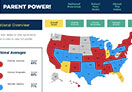
“Most states in the U.S. earn a grade of D when it comes to empowering parents,” Kerwin said, referring to CER’s Parent Power Index. “Nevada lawmakers understood they were putting the interests of parents and students first by enacting this ESA program, and we stand with them and Nevada leaders and parents in this lawsuit brought on by a group clearly only interested in protecting the status quo.”

There have been many lawsuits to school choice programs across the U.S. since the first was created in Milwaukee in the early 1990s, and they’re typically brought on by BLOB (“Big Learning Organization Bureaucracies”) groups intending to protect the traditional education establishment as it stands. History has been on the side of parents and students however, with the most notable case being in 2002 when the U.S. Supreme Court in the Zelman v. Simmons-Harris case ruled that the state of Ohio was within its constitutional power to enact a school choice program for Cleveland children. Arizona, the first state with an ESA program, survived a legal challenge based on the same grounds as the current Nevada lawsuit to its ESA program in 2013.