










FOX News JOURNAL EDITORIAL REPORT
February 11, 2017
Center for Education Reform founder Jeanne Allen responds on ‘Journal Editorial Report’
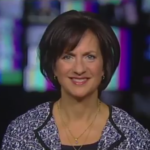
This past weekend, on the Journal Editorial Report on Fox News, CER CEO Jeanne Allen unpacked the real reason behind the ferocious opposition to now-Secretary of Education Betsy DeVos. Here’s the video:
Also this past weekend, Jeanne appeared on Fox 5 News on the Hill. Here’s the Facebook Live video she did afterward:

DeVos debacle on Senate floor comes to a close, ESSA regulations to rollback, teacher freedom sees another day in court, and threats to digital learning access — all this and more in this week’s Newswire.
WHILE YOU WERE SLEEPING. Senate Dems talked about DeVos all night? No, that’s not what we’re talking about. While you were sleeping on your comfy Posturepedic mattress, about 15 million children in poverty were probably not sleeping, and their parents were probably worried about whether they could make a future for their children, and what they’d be like if they did not get a great education (which they don’t, if you read the Nation’s Report Card). Want to talk for 24 hours? That’s what the subject should be. Why don’t we educate everyone? It’s not money, and it’s not because we don’t have enough union rules to go around. It’s because we limit the ability of our best educators and administrators to do their jobs, and as they’re working overtime to address challenges, we limit the ability of parents to find schools that can address their children’s biggest needs, in real time. That’s why the path to innovation is opportunity and why we call on our nation’s leaders to get over this partisan bickering and bring real changes to American public education.
ESSA REG ROLLBACK. Perhaps the most important federal work at hand is starting over with the rules governing the Every Student Success Act, which the House is moving to do as you read this. The Congressional Review Act permits Congress to repeal regulations older than 60 days, which is the case with the Obama ESSA regs. Most education leaders and reformers are in unique agreement that the regs were an overreach and that the intent of the law was violated by numerous dictates created in them. This is why our recommendations for the Trump Administration’s first 100 days are so important: they outline a path forward for lawmakers on this topic.
TEACHER FREEDOM. Teachers faced a setback in March of 2016 when the supreme court ruled issued a tied decision in the case of Friedrichs v. California Teachers Association. Most concede that had the late great Antonin Scalia been present, more teachers would be well on their way to enjoying the critical freedoms they need to be the professionals they deserve to be. The tied decision left in tact mandatory agency fees and union membership. But now there’s another chance to bite the apple. A band of concerned teachers has filed another suit in their local district court to try to overturn the Friedrichs decision. We will be watching closely the upcoming case of Yohn v. California Teachers Association.
DIGITAL ACCESS THREATENED. Given the critical need to ensure all student are able to access 21st century learning technologies (but most are still restricted to 20th century classrooms), we were struck by the ridiculous move by the new FCC chairman to reverse funding to expand broadband access to students who have little. Not only does access to digital learning technologies expand the potential for school choice that the Trump Administration has vowed to support, but it also helps with expanding infrastructure in rural communities and putting people to work. Again, for a primer on why this is important, check out CER’s 100 Days report to help expand education in rural communities.

By Jeanne Allen
Education Week
February 6, 2017
Regulations are strangling the charter sector.
Panic struck the education establishment over the election of President Donald Trump and his selection of school choice advocate Betsy DeVos for U.S. secretary of education. There was fear that she would preside over a dramatic expansion of nontraditional forms of education, including charter schools. But even senators who opposed DeVos’ nomination concede that charters have become mainstream in the education world. While charters’ continued expansion is important, it’s also clear that their progress has come at a price. Charters are suffering from regulatory strangulation — not from foes, but from so-called friends. As a devoted advocate of charter schools, DeVos, once confirmed, could make her most important contribution to education by restoring sanity in charter school policy.
Charter schools began as a state effort to disrupt districts’ exclusive franchise over education. Since the first charter school law was passed in Minnesota a quarter-century ago, this school choice option has united people from diverse backgrounds and lifestyles who have wanted more personalized and innovative public education to meet student needs in ways that traditional public schools have often failed to do.
Between 1991 and 1999, Democrats and Republicans joined forces to enact charter school laws in 35 states and the District of Columbia. It was the beginning of a competitive environment that shook the education establishment. In fact, the rise of charter schools mirrors disruptive innovation, a term coined by the Harvard Business School professor Clayton Christensen. The theory explains how technology allows for the creation of better services, which eventually replace those of well-established competitors. Traditional public schools, for example, are focused on low-risk, sustainable improvements. They lost their dominance in the market to cutting-edge charters that worked to transform labor, capital, materials, and information to better meet consumer needs.
For more than 2.5 million students in almost 7,000 schools, 43 states, and the District of Columbia, charter schools have ignited innovations in how education is delivered, measured, and structured, by lengthening school days, emphasizing project-based learning, and using new and creative models for classroom management. That traditional public education has adopted many of the same notions first tried in charters is cause for celebration. The more established innovations become, the greater their impact. But charters also run the risk of losing the very conditions that made them able to innovate in the first place.
That is the precarious position in which the charter sector finds itself today. The operational freedom initially afforded to charters through law, in exchange for performance-based accountability, caught a regulatory fervor that its own advocates invited. Charters are slowly morphing into bureaucratic, risk-averse organizations fixated on process over experimentation. Such organizational behavior is called isomorphism, allowing once-innovative organizations to resemble those they disrupted. The root cause has been a regulatory push of laws at both the state and federal levels. These have empowered state agencies to micromanage everything from the approval to the authorization of charters. Some call it accountability. Others know it better as bureaucracy.
Sociologists Walter W. Powell and Paul DiMaggio discuss the effect of isomorphism on systems of organization in their 1991 book The New Institutionalism in Organizational Analysis. They argue that “once a field becomes well-established … there is an inexorable push toward homogenization.” In charters’ case, the push toward regulation was a result of stinging critiques in both the media and research, often from inconclusive data.
The critiques of charters are spearheaded largely by a 2009 report from the CREDO Institute, an independent research group at Stanford University, which found that nearly half of charter schools nationwide had academic-performance results that were no different from those of public schools. The group’s report produced the famous and frequently quoted (but incorrect) finding that charter schools do no worse or better than regular public schools and resulted in widespread calls to close charter schools, without third-party vetting of the data. Ultimately, this response started the path toward increased regulation and the stifling of innovation for charter schools.
Even leading advocates of charters, such as the National Alliance for Public Charter Schools and the National Association of Charter School Authorizers, have embraced misleading data points about charters and have begun to allow bureaucratic forces to strangle the charter sector’s innovation. They increasingly advocate one-size-fits-all charter laws and accountability systems. State legislators adopt education laws that are rife with top-down compliance, discouraging the growth of new charter schools.
That’s where the next education secretary could turn the key to reverse this isomorphic trend, starting with gutting the regulatory requirements of the once-simple federal charter-grant program and repealing a bevy of nonregulatory guidance that restricts how states do business. But the new secretary must also be discriminating in personnel selections; even the most prominent leaders in the charter sector have isomorphic tendencies. If charter schools do not reject isomorphism, they will cease to be the laboratories of innovation that made them successful in the first place and will instead become part of the education establishment they were once built to reject.
Jeanne Allen is the founder and CEO of the Center for Education Reform. She was a senior official in the U.S. Department of Education from 1983 to 1988, during the Reagan administration. Follow her on Twitter at @JeanneAllen.

She brings a new and valuable perspective.
WASHINGTON, DC (February 6, 2016) — Jeanne Allen, the founder and CEO of the Center for Education Reform, today issued the following statement:
The ongoing protests over Betsy DeVos demonstrate a decades-old controversy among education leaders — is it better to have someone who has been inside traditional public education, or someone has watched and participated from the outside?
Because the Center for Education Reform has always sought to ensure the adoption of innovation and policy changes that deliberately upset the status quo, we believe Betsy DeVos will make a fine Education Secretary. She brings a new and valuable perspective that would benefit American families and children. We also understand the concerns that have been raised, but do not believe those should disqualify her from the important role of leading a national commitment to making all schools work for all children.
The real issue at hand is not about the Secretary of Education at all, but the clear and present crisis in education and the lack of opportunities that exist for so many families who struggle against the inertia of a stagnant and 20th century system. While the world is filled with 21st century technologies, most schools still deliver lessons as if they were using the McGuffey Reader.
American education is struggling. Recent scores from the National Assessment of Educational Progress show that considerably fewer than half (40%) of America’s fourth graders are proficient in math. Even fewer (36%) are proficient in reading. In fact, less than half of students at all grade levels are proficient in any of the nine curriculum areas studied.
We have a steep hill to climb, and it’s important that we put politics behind us and take the right road to get to the top.

The past few weeks of national obsession with what should have been a simple appointment has distracted too many from the business of educating kids. While the Senate HELP committee today voted to send Betsy DeVos’ nomination for U.S. Secretary of Education to the Senate floor, there are plenty of other educational challenges it’s time for the media and advocates to turn their attention to:
NYC CHARTER CAPS. NYC is close to hitting its limit on charter schools, and Gov. Cuomo wants to lift the cap to expand opportunities for more students. Of course, anti-charter Mayor DeBlasio is fighting back. Know the facts about charter schools as we watch this battle play out.

LACK OF CERTIFIED TEACHERS IN DETROIT… Where’s the buzz on that? While the New York Times was working overtime to convince Americans that Detroit charter schools are bad (and that DeVos has something to do with that), they missed this story.

MISGUIDED PREFERENCE IN DC. In DC, a misguided mayor has proposed a ‘walkability’ preference for charter schools – meaning preference would be given to elementary school children living half a mile from the school starting in 2018. Unfortunately, this undermines the concept of choice.

…And don’t forget, more clips can always be found at CER’s Media Bullpen!

EDITOR’S NOTE
From Michelle Tigani, Communications Director: This is my final gig as Newswire editor, as I will be taking on a new professional challenge starting Feb. 6. If you know of some communications professionals dedicated to parent power, be sure to send them CER’s way!

Opening Doors to Opportunity for More Students and Families
FOR IMMEDIATE RELEASE
January 25, 2017
WASHINGTON, DC — The following statement was issued today by Jeanne Allen, founder and CEO of the Center for Education Reform, regarding the Creating Hope and Opportunity for Individuals and Communities through Education Act (S. 235) introduced today by US Sentaor Tim Scott (R-SC). The CHOICE Act would provide educational opportunity for more than 6.2 million low-income students, students with disabilities, and students from military families.
“The CHOICE Act is a fantastic proposal to provide greater educational opportunity to families and students most in need.
“Whether they be the thousands more who want school choice in DC, the military families who are always relegated to the closest — but not necessarily the best — school for their kids’ needs, or the millions of students with special needs for whom the cookie cutter model of education doesn’t work, there is no question that success in enacting the CHOICE Act would transform lives for many.
“I am thankful our nation’s children have champions like Senator Scott — who introduced this bill today — and the seven other Senators who composed the CHOICE Act. This legislation is a tremendous start to going bold on education innovation and opportunity and redefining Washington’s role in the First 100 Days.”
A ‘coding error’ helped justify a punitive new education regulation.
Wall Street Journal
Review & Outlook
January 22, 2017
President Trump has promised to restore trust and accountability in government. How about auditing the Education Department? During its final days the Obama Administration slipped the news that its College Scorecard repayment rates were inflated, and on closer inspection the mistake doesn’t look innocent or innocuous.
In early January the department disclosed that it had discovered a “coding error” that incorrectly computed College Scorecard repayment rates—that is, the percentage of borrowers who haven’t defaulted and have repaid at least one dollar of their loan principal. The department says the error “led to the undercounting of some borrowers who had not reduced their loan balances by at least one dollar.”
The department played down the mistake, but the new average three-year repayment rate has declined by 20 percentage points to 46%. This is huge. It means that fewer than half of undergraduate borrowers at the average college are paying down their debt.
The rest have either defaulted, sought forbearance or enrolled in income-based repayment plans, which are causing many borrowers who are only making minimum payments to owe more debt due to accrued interest. These income-based repayment plans allow borrowers to reduce their loan payments to 10% of their discretionary income and discharge their remaining debt after 20 years (10 if they work for government or a nonprofit).
Last month the Government Accountability Office (GAO) projected that loan forgiveness for borrowers enrolled in the plans could cost upward of $108 billion. GAO rapped the department for underestimating the costs due to “insufficient quality controls” and “unreasonable assumptions.” It’s possible the putative “coding error” is connected to this ill-management.
The other scandal is that the Obama Administration used the inflated Scorecard repayment data as a pretext to single out for-profit colleges for punitive regulation. The punishment was tucked into a rule finalized in October allowing borrowers who claim their college defrauded them to discharge their debt. It requires for-profits in which 50% or fewer borrowers are paying down their principal to post the equivalent of a surgeon general’s warning in all promotional materials.
When proposing the regulation, the department claimed that its analysis of Scorecard data showed that a large number of for-profits have repayment rates below 50% while very few public or nonprofit schools do. The department said it would not be fair to “burden” public and nonprofit colleges with a regulation that would apply to so few. Yet based on the updated data, 60% of two-year public colleges and nearly all historically black institutions have repayment rates below 50%.
Marc Jerome, president of for-profit Monroe College in the Bronx, discovered the Scorecard rate inflation last August. In several emails to Education officials, he urged the department to hold off on finalizing the regulation. If the regulation were applied evenly, a large number of nonprofit and public institutions would fail to meet the standard. But then the justification for the department’s selective regulation of for-profits would vanish.
The department finalized the regulation in October anyway, perhaps anticipating a Hillary Clinton victory that would allow the repayment inflation game to keep going. Yet now it’s taking credit for discovering and fixing the Scorecard error that likely would have been uncovered by the new Trump Administration.
This combination of cynicism and incompetence is what made the Obama Administration’s regulatory machine so destructive. One of the biggest messes it leaves behind is the government takeover of student loans that is likely to saddle taxpayers with hundreds of billions in losses. The Trump Administration now has to begin the cleanup job.
Congress ought to use the Congressional Review Act to overturn the latest rule, while new Secretary Betsy DeVos will have to recruit a top-flight finance executive to do a top-to-bottom review of student-loan records for other goofs or deceptions. Then lay out the real facts to the American public as soon as possible.
By Corinne Lestch
EdScoop
January 23, 2017
The Center for Education Reform is urging the Trump administration during its first 100 days to redirect spending, reimagine teaching, increase school choice and make higher education more accessible and innovative.
The pro-charter school group presented its agenda this month for an Education Department under President Trump – citing spending, teaching, higher education and educational choice as pillars of growth and reinvention for the new administration.
The group makes a number of recommendations, including making greater use of technology to access teachers in other states and countries.
In terms of federal spending, the group advises that a new commission be established to determine how every dollar is spent on education, and how it helps students achieve.
CER also floats the idea that the teaching profession could be opened up to “subject matter experts,” or underemployed individuals who need jobs and could create a much-needed stopgap to the national teacher shortage. The CER’s report foresees a shortage of 100,000 teachers by 2020.
According to the report, “there is an abundance of individuals seeking employment in positions offering lower wages, fewer benefits and less security as a means of survival.”
If education stakeholders were open to reviewing and changing teacher licensing requirements, trained and credentialed former manufacturing and technology workers could potentially fill open jobs in schools as teachers and mentors.
“Today’s students need an education rooted less on theory and more on hands-on experiential education,” the report notes. “The gateway to a meaningful education for many students could be provided by a legion of former employees in technology and manufacturing fields.”
The report poses another solution to this issue by making use of technology to access teachers in other states and countries.
“A great math teacher in Singapore could address a math teacher deficiency or absence via a cheap or free Zoom videoconference,” the report states.
A different higher-ed market
The report says higher education should also be retooled, from exorbitantly expensive institutions of learning to a nontraditional education “market” featuring new online schools and competency-based boot camps that teach particular skills. The report says colleges and universities are stifled by strings attached to federal grants, and should be open to allowing students to follow a more unconventional path.
“Hundreds of thousands of credible universities have created and offer online classes to students unable to afford college,” according to the report. “Efforts to award credit for proven mastery in those classes are often scoffed at, and federal funds do not flow to students who might take on numerous courses at once, but go instead to institutions that do not want to accept such classes for fear of losing money.”
The report notes that these issues should be debated during the reauthorization of the Higher Education Act this year. “There should be ways by which the federal government can recognize alternative higher education delivery and the accumulation of real coursework and mastery,” according to the analysis.
According to the agenda, the federal government should also prioritize and expand support for digital education by partnering with agencies that oversee telecommunications and transportation to “drive the digital super highway further into rural communities and thus permit them to access the best of education that currently escapes their remote areas, via technology.”
The report’s authors implore the Trump administration to redefine permissible use of federal funds to include nontraditional programs like the ones they outlined. While specific education initiatives remain unclear under Trump, his pick for Education secretary, Betsy DeVos, she said repeatedly in her confirmation hearing this week that she believes important issues should be left up to states and “locales,” not the federal government.
Jeanne Allen, founder and CEO of CER, said it is imperative that Trump uses his first 100 days in office to set a framework for how the federal government will steer education dollars and programs to schools.
“This is an historic opportunity for the Department of Education to redefine the focus and effectiveness of the federal government’s role in education,” Allen said. “‘The First 100 Days’ lays out an assertive plan of action that can truly launch a revolution in education.
“To that end, we respectfully urge the Trump-Pence Administration to use its first 100 days to launch initiatives that will serve as the basis for programs that provide students with access to truly exceptional education at all levels, and that will pave the way for the U.S. to begin to realize a fair return, in terms of value, on its enormous financial investment in education.”
Reach the reporter at corinne.lestch@edscoop.com and follow her on Twitter @clestch and @edscoop_news.