








Sign up for our newsletter

BEYOND THE FIRST 100 DAYS; CER REVIEWS TRUMP ADMINISTRATION’S ACTIONS

On eve of July 4th holiday, it’s time to “Let Freedom Ring”

WASHINGTON, DC (June 29, 2017) — The release today by CER of Beyond the First 100 Days: Transforming government’s role in education is a review of progress to date, a reiteration of its January, 2017 recommendations to the Trump Administration, and an extension for completion of the work that must be performed.

Said CER Founder and CEO Jeanne Allen, “As we say in the introduction, we prefer a model that achieves competency over just measuring time on task, so we’re giving the Administration an extension. It takes time to transform education to impact greater educational opportunity and personalization for all students.”

The report urges the Administration to be bold and consider what’s possible when taking control of a $70 billion agency – and the other several agencies that touch education – and encourages a more sweeping approach to its action. “It’s not just about a school choice program, or increased charter school funding, or small innovation grants,” Allen said. “It’s about dismantling the top-down mandates and arcane characterizations of schools that created the need for the micro schools, innovative charters, competency-based programs and innovative higher education offerings in the first place.”

“We said at the outset that this is an historic opportunity for change and that remains true,” Allen said. “And there’s plenty of time to accomplish great things, but it will take focus and commitment, which is what Beyond the First 100 Days is all about: providing recommendations that add substance, energy and direction to the Administration’s efforts to overhaul the federal role in education and bring real change.”

CER first issued its agenda, titled The First 100 Days: The path to going bold on education innovation and opportunity, in January just as President Trump was taking office.  Since then some recommendations on the agenda have been taken up, but many have not yet fully been reached or pursued. (Beyond the First 100 Days’ introduction includes a scorecard that rates the Administration’s action on issues so far.)

The agenda remains an important guide, Allen explained, offering ideas for action that will result in making personalized learning a reality for millions, ensuring quality teaching, access to innovative and relevant higher education opportunities, and new choices throughout the nation.

“As we look toward the historic 4th of July holiday, we need to remember that the freedoms our Founders fought for are just as critical in education as they are in our day-to-day lives,” said Allen. “We all hope this effort will serve as a call to ‘Let Freedom Ring’ for all learners, at all levels.”
Contact: Tim Sullivan, Chief Communications Officer
202-750-0016 | tim@staging.edreform.com

Beyond the First 100 Days: Transforming government’s role in education


Beyond the First 100 Days: Transforming government’s role in education 

A reiteration of its January, 2017 recommendations to the Trump Administration, and an extension for completion of the work that must be performed.

Read & download the PDF here

Supreme Court Decision in Trinity Lutheran v. Comer is a Significant Victory for School Choice

(Washington, D.C.)—In a 7-2 decision today, “the U.S. Supreme Court delivered a victory for the First Amendment’s guarantee of religious freedom for religious schools,” said Jeanne Allen, Founder and CEO of Center for Education Reform.

Trinity Lutheran had been denied state funding for a playground surface solely because its school is a religious one. The court’s 7-2 decision in Trinity Lutheran v. Comer finds that “the exclusion of Trinity Lutheran from a public benefit for which it is otherwise qualified, solely because it is a church, is odious to our Constitution all the same, and cannot stand.”

The Supreme Court declared that Trinity Lutheran is a “clear infringement on free exercise,” and that Missouri’s denial of funding for the school was unconstitutional.

Like many states, Missouri added a “Blaine Amendment” to its constitution in the 19th Century. In its publication Mandate for Change, CER explained that “Blaine Amendments, adopted as a result of anti-Catholic fervor in the late 1800s, prohibit the use of state funds at ‘sectarian’ schools. The wording of many of the Blaine Amendments exceeds the language of the United States Constitution. The lingering impact of these amendments has been credited with stopping school choice from becoming a reality in many states.”

Although the Court did not take the opportunity to review the constitutionality of Missouri’s Blaine Amendment, it was firm and clear that “denying a generally available benefit solely on account of religious identity imposes a penalty on the free exercise of religion.”

Allen said that CER “will work to ensure that there will be other opportunities for the court to review the constitutionality of Blaine Amendments and pave the way for parents to decide the best educational opportunities for their children, be they private, religious or public in nature.”

Contact: Tim Sullivan, Chief Communications Officer

Monday, June 26, 2017 (202) 750-0016 | tim@staging.edreform.com

Gov. Scott Ushers in More Opportunity, More Equity for Kids Signing HB 7069

(ORLANDO, Fl. June 14, 2017) In an historic win for kids, Florida Governor Governor Rick Scott today signed HB 7069, providing more and better opportunities to thousands of children throughout the state, particularly the most vulnerable.

With schools unevenly funded and resources rarely flowing to the classroom directly as is normally intended by law, HB 7069 boldly directs more federal funds to where students choose to attend school. Prior to this, the spending of federal funds was largely at the discretion of school districts, even if students are attending other public schools, like charter schools, which are governed publicly but independently of districts in most cases.

Florida’s charter schools not only outperformed their traditional public school peers on state exams in 65 out of 77 comparisons but have narrowed the racial achievement gap. Charter school students learned more from one year to the next in 82 of 96 comparisons that focused on learning gains. In 20 out of 22 comparisons, charters had smaller achievement gaps in math, English and social studies between white students and their black and Hispanic peers. More than 60 percent of Florida charter school students are minority, which is higher than the state average of 53 percent.

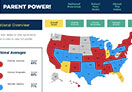
“Florida has led the way for parent-centered opportunities for students,” said CER President Jeanne Allen. CER’s Parent Power Index ranks the Sunshine state #2. “Governors like Rick Scott and state leaders like Speaker Richard Corcoran are shining lights for greater educational opportunity for kids, flexibility for educators,” added Allen. “We hope others will follow their lead.”

Common Ground interview with Jeanne Allen

Bill Walton sits down with Jeanne Allen, Founder & CEO, The Center for Education Reform, to discuss options for improving the nation’s education system.

https://vimeo.com/223697623/6aee6e71b8


William Walton Interview with Jeanne Allen: Options for Improving the Nation’s Education System.

Why most teachers get a bad deal on pensions

State plans create more losers than winners, and many get nothing at all.

States and school districts spend more than $50 billion each year on teacher pensions, the keystone in teacher compensation packages. In theory, they provide a generous and secure pot of gold at the end of a teacher’s career, which serves as an incentive to stay on the job. But in reality, they fail to deliver on both of those promises. Read more at EducationNext…

Newswire: June 13, 2017

WE HAVE MET THE ENEMY AND HE IS US.  As the school choice and charter school movements have evolved, or mutated, two camps have emerged: one that relies on bureaucracies and officialdom to decide what educational options are best for kids, and one that relies on innovators and parents. The former sounds A LOT like the status-quo-education-establishment arguments that have been reform’s bane from the beginning.  The latter sounds like, well, one of the core principles on which reform was founded. That rift is laid bare in the latest work from CER — Charting a New Course:  the Case for Freedom, Flexibility, and Opportunity Through Charter Schools.  A collection of essays by eight education experts, the book compares the approaches of the two main groups in the charter-school world and is this summer’s must-read.  Download your copy here.

A WELL-RECEIVED RECEPTION. Several hundred charter school leaders came together at CER’s Salute to Charter School VIP reception held in Washington, DC during National Charter Schools Week. In addition to a lot of meeting, mingling, and networking, (and marveling at the spectacular views from the roof-top venue) guests got to hear from and meet Secretary of Education Betsy DeVos, Capitol Hill education leader Congressman Paul Mitchell, President of the Jack Kemp Foundation Jimmy Kemp, and, lending an international flair to the festivities, First Counselor for Consular and Social Affairs at the Italian Embassy, Catherine Flumiani .


WHERE HAVE WE HEARD THIS BEFORE?  Every year the National Charter Schools Conference helps raise awareness of, and strengthen support for charter schools. It’s a conference tradition that the Secretary of Education offers remarks to the assembled and this year was no exception, although the message from Secretary DeVos was a little more pointed than some may have expected. “I suggest we focus less on what word comes before school…and focus instead on the individuals they are intended to serve,” DeVos told an audience of 4,500.  “We need to get away from our orientation around buildings or systems or schools and shift our focus to individual students. Charters alone are not sufficient. Private schools alone are not sufficient. Neither are traditional schools. That’s OK. Let’s humbly admit this fact and realize no top down one-size-fits-all approach will give children a world-class education.” (See item one: “We have met the enemy and he is us.”)

Charting a New Course The Case for Freedom, Flexibility & Opportunity Through Charter Schools

Download the PDF here


Contributions to this publication were made from transcripts of remarks presented at EdReform: Revived, hosted by the Center for Education Reform, Washington, D.C., November 23, 2016.

There Are Two Ways to Reform Education. This New Book Explains Why Only One of Them Will Succeed.

June 12, 2017

WASHINGTON, DC— If education reformers are honest with one another, we must admit that our efforts have a hit a wall, according to a new book published today by the Center for Education Reform. The hard reality is, more was accomplished in the first nine years of the movement than in the past 16.

Charting a New Course: The Case for Freedom, Flexibility, and Opportunity Through Charter Schools presents a collection of essays by eight education experts. The book compares the approaches of the two main groups in the charter-school world: those who want to empower bureaucrats and politicians, and those who want to empower parents. The essays were edited by Jeanne Allen, of the Center for Education Reform; Cara Stillings Candal, of the National Academy of Advanced Teacher Education; and Max Eden, of the Manhattan Institute.

The first school of reformers — those who want to empower bureaucrats and politicians — make decisions on the basis of standardized test scores. As a result, which schools can open and which must close are the exclusive province of spreadsheets.

On the other hand, the second school of reformers trust parents more than they trust bureaucrats. They want to see a more open and dynamic system, where educational entrepreneurs are free to introduce schools and strategies and parents are free to decide which facilities are best for their children.

“Once upon a time, education reform reflected revolutionary change,” said Jeanne Allen, the founder and chief executive of the Center for Education Reform. “Today, ed reform has become synonymous with the status quo. There’s little urgency, too many excuses, and too few entrepreneurs.”

As our new book demonstrates, there’s only one way to guarantee kids a better education,” continued Allen. “And that’s to embrace innovation and opportunity as the central tenets of our system. Anything less, and our own children will be writing the same eulogies and calls for action 20 years from now.”