






Sign up for our newsletter

Newswire September 5th, 2017

REINVENT IT. A lot of people still don’t know that the #edreform movement is supported by a varied group of actors: From researchers to practitioners; and, thought leaders to parents. Since its inception, the cause of school choice, in particular, has been a mutual affinity among left, right, center and none of the above.  That’s why David Osborne’s latest contribution to the story of what and why we must reinvent education is a critical read.

First off, Osborne makes a compelling argument about what reinvention of education actually is and why it is critical. Second, by using charters as a lens about how to recreate the governance and incentives of education, Osborne is one of the few in the influencer class that actually recognizes that some comparisons of averages is meaningless in the presence of varying factors guiding each charter law.  As Osbourne writes, “…[W]hen it comes to charter schools, ‘average’ has little meaning, because the 43 states (and the District of Columbia) with charters all have different laws.” 

Each school is highly dependent on a startup tapestry, with unique operational and renewal processes that have become more complex over time, and have often been misapplied by human elements. (But that’s another story and one we have covered in Charting a New Course).

END OF AVERAGE. All the talk about misunderstanding averages reminds us: If you haven’t read “The End of Average” by Harvard Professor Todd Rose, run, don’t walk, to your nearest bookstore or visit Amazon.com. You can also learn more about  Rose’s work by visiting Center for Individual Opportunity.

STUCK IN AVERAGE? Both Osborne and Rose in their own way make the case against using snapshots, incompatible data and assumptions about average trends. The authors of two articles published today in the Washington Post and the New York Times would benefit a lot by reading the works from Osborne and Rose.

First, an op-ed authored by longtime ed reform opponent, Tom Toch, takes the DC Opportunity Scholarship Program (DC OSP) to task for failing to meet Toch’s idea of success. Conveniently, Toch ignores parental support for the program, and while criticizing DC OSP, he disregards any of its successes as insignificant in size. But here are the undeniable facts: Nearly 90 percent of all DC OSP students graduate from high school and an estimated 90 percent of those graduates go on to attend college.

Meanwhile, Mark Binelli uses the New York Times to recycle a variety of falsehoods and misrepresentations to attack charter schools in Michigan. Like many critics of education reform, Binelli writes from a silo, disregarding the failure, corruption and existing struggles present in the traditional system – and in the case of his story, Detroit public schools. Instead, Binelli selectively picks and chooses which schools to highlight, while not sharing with readers that Detroit’s public charter school students far outperform their peers in the city’s traditional public schools. Furthermore, the data continues to pile up from MSTEP, U.S. News & World Report, Stanford University, and Temple University finding the highest performing high schools in Michigan are charter schools. Finally, like many of his peers in the anti-ed reform community – Binelli ignores the fundamental flaw in his argument – charters depend on parents making a choice, and overwhelmingly, more and more parents in Michigan are choosing charter schools over the traditional school because they’re tired of the broken one-size-fits-all model.

25 YEARS: CELEBRATING THE FIRST CHARTER SCHOOL: The Twin Cities Pioneer Press celebrated the 25th birthday of the nation’s first public charter school. City Academy opened as one school with only 100 students and so began a movement spirited by innovation, customization and personalization. Today there are 7,000 charter schools serving more than 3 million students nationwide. At CER, we are proud to have been championing and fighting for the expansion and growth in the charter movement, and we celebrate the achievements of City Academy and all operators of parent power working to serve the needs of every child.

OPINION JOURNAL: Jeanne Allen, CER’s founder and CEO, joined the Wall Street Journal’s Mary Kissel on Thursday to discuss the ramifications of Illinois’ education funding compromise. Signed into law last week by Governor Bruce Rauner, the new law creates the state’s first private school choice program, increased funding for public charter schools, support for teacher pensions and funds traditional public schools. The compromise demonstrates that even in the darkest of blue states, education reform remains a bipartisan issue.

                                                                           ####

AND IN CASE YOU MISSED IT.  Log onto EdReform.com for the latest on the AFT Chronicles or the ongoing effort by African-American leaders to show they have a different point of view on educational opportunity than many established organizations who claim to represent their views.

Newswire August 29th, 2017

MAKING LINCOLN PROUD.  Tomorrow, August 30, Governor Bruce Rauner (R-IL) could sign into law new path-breaking legislation creating the state’s first tax credit scholarship program, part of the state’s new education funding bill.  The $75 million tax credit scholarship program could serve as many as 20,000 students and will be the nation’s largest first-year school choice program.  Designed to help low and working-class families, the program is a result of a bipartisan compromise and demonstrates that even in the darkest of blue states, legislative leaders, with strong leadership from the Governor, can produce real results for kids.

CER’s Jeanne Allen issued the following statement: 

“Illinois joins dozens of other states that have put partisanship aside to address the needs of thousands of students. Gov. Rauner, Speaker Madigan, Majority Leader Cullerton, and Republican Leaders Durkin and Brady all deserve applause for their leadership and commitment to children.”

IL Secretary of Education Beth Purvis applauded the General Assembly, saying, 

“Today the Illinois General Assembly passed historic education funding reform that will ensure that Illinois public schools are adequately and equitably funded.  In addition,  this legislation — which is a direct result of Governor Rauner’s School Funding Reform Commission —  provides school choice in the form of equitable funding for charter schools and tax credit scholarships.”

For more information about the program, contact our friends at OneChanceIllinois


IN LINCOLN’S OWN WORDS.

“Upon the subject of education, not presuming to dictate any plan or system respecting it, I can only say that I view it as the most important subject which we as a people can be engaged in. That every man may receive at least, a moderate education, and thereby be enabled to read the histories of his own and other countries, by which he may duly appreciate the value of our free institutions, appears to be an object of vital importance, even on this account alone, to say nothing of the advantages and satisfaction to be derived from all being able to read the scriptures and other works, both of a religious and moral nature, for themselves. For my part, I desire to see the time when education, and by its means, morality, sobriety, enterprise and industry, shall become much more general than at present, and should be gratified to have it in my power to contribute something to the advancement of any measure which might have a tendency to accelerate the happy period.”

– March 9, 1832, First Political Announcement

ANNUAL ATTITUDES.  Sadly Lincoln’s sentiment is not the theme of the 2017 PDK Poll of the Public’s Attitudes Toward the Public Schools, the headline of which is, “Academic achievement isn’t the only mission” of public schools.  If you take the questions and answers literally, Americans do indeed appear united in numerous ways in their belief that schools must prepare students more fully and broadly for life.  But while that’s the theme, it’s not at all clear from this poll that they reject the value of knowledge as important for that preparation.

CER Special Report: Understanding the 2017 PDK Poll


Read CER’s Special Report on the PDK poll to learn more about how to make sense of the latest in public opinion, and what you need to know to help all students learn, in the words of Honest Abe, to “duly appreciate the value of our free institutions.”

AND IN CASE YOU MISSED IT.  Log onto EdReform.com for the latest on the AFT Chronicles or the ongoing effort by African-American leaders to show they have a different point of view on educational opportunity than many established organizations who claim to represent their views.
CER Response to 49th Annual PDK Poll

August 28th, 2017

Statement from the Center for Education Reform

A Special Report issued today by the Center for Education Reform critiquing the annual PDK poll on the public’s attitudes toward the public schools finds poll questions remain highly misleading, the public’s attitudes highly mixed, and perhaps most important and least prevalent in the PDK report, that one’s own experiences highly influence what they want for theirs or others’ children.

“While PDK is a widely respected organization dedicated to supporting and advocating for the traditional public education system, and its annual survey a good opportunity to take the public’s temperature, it nevertheless fails to reflect the reality in American education,” said CER Founder & CEO Jeanne Allen.

“And that reality is that fewer than 60 percent of our nation’s students lack proficiency in core subjects,” added Allen.

CER’s Special Report details the often cumbersome and confusing PDK questions which tend to reinforce the organization’s mission while ignoring the broader challenge – that millions of US children are failing an education that can provide them an opportunity to participate in the future.

To read CER’s report click here.

###

On September 26th, Jeanne Allen will participate on a panel sponsored by PDK reviewing the poll results at the National Press Club’s Holeman Lounge, beginning at 9:00 a.m.

For additional details on this and the poll, please visit http://pdkintl.org.

Newswire August 22nd, 2017

JUSTICE FOR ALL – A MESSAGE FROM CER’S DIRECTORS.

Since 1993, the Center for Education Reform (CER) has worked to advance a bold agenda to help our nation’s children achieve the education they deserve.

We fight hard and relentlessly for parent power because we know that education not only paves the way for everyone to participate in the future, but it’s a critical antidote to ignorance, to racism, to hatred. Education of the mind encompasses history, education of the soul encompasses the virtues of compassion and courage.

As tragic national and international events swirl around us, we believe the most important role CER can play is to address the shortcomings of education in this nation, for all learners, at all levels. There is inequity in our educational system, and no matter what solution you believe works best, it is the cause of many of our biggest challenges.

The entire education reform movement was born out of this knowledge –  that education is the key to helping our young people achieve civilized, productive lives in which they can live peacefully and freely, pursuing their own ambitions, and that we must do whatever it takes, with urgency to get them the schools that will help them achieve exactly that.

As we watch our most precious resources go back to school, we recommit ourselves to excellence, equity and justice for all.

OF ANNUAL POLLS. OF ANNUAL POLLS.  Lots of news about what Americans think. First, Education Next released is annual poll on education issues, which you can find here, and which we reflected on here: “The EdNext Poll: The Case for a Moral Imperative”

Then the Gallup Organization released another poll with many questions they’ve asked before on education (read our statement here). Among them was whether or not Americans are satisfied with the quality of education our students receive. A majority remain dissatisfied with education in general but not their own. They also believe private and charter schools work better for kids than public schools (though it would have helped to distinguish between charters and traditional public schools since charters are public… but we digress…). The poll is chock full of interesting tidbits but the bottom line is data is more important than opinion and the data still shows us lagging dramatically. More on that and polls, coming soon.

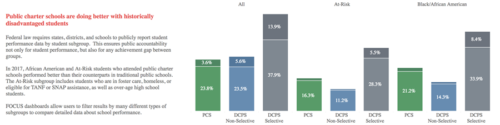
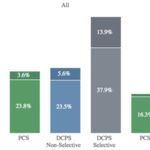
VERY COOL FOR SCHOOL.  Friends of Choice in Urban Schools (FOCUS) has introduced an updated dashboard tool that includes 2017 results on the Partnership for Assessment of Readiness in College and Careers (PARCC) Assessment. The tool is not just a number-cruncher’s dream, it’s an incredibly useful resource for the non-data-philes among us since it allows one to filter results by sector, school, year, grade, and subgroup and actually understand the meaning behind the numbers.


DC SCHOOLS DO BETTER.  Ten years after Michelle Rhee took DC by storm and united with civic and community leaders to add performance to the DC union contract, DC schools are showing progress on the same assessments. Much more needs to be done, of course, but giving credit where credit is due, the moral of the story so far is that systems can improve their lot for all kids if they challenge the status quo.

CER & RANDI IN THE NEWS – AGAIN.  AFT’s Randi Weingarten just won’t give up. Rather than apologize for her racist rant at this summer’s AFT convention earlier this summer she continues to promote her alternative version of history. It is clear that she is making a calculated effort to twist the debate over educational opportunities in ways that are not only dishonest and distasteful, but destructive. When Weingarten first delivered her remarks in July, CER called her out, and called for her resignation. Last week we took her to task again in The Wall Street Journal, under the headline “Randi Weingarten’s Racial Demagoguery.”

New Gallup Poll Reinforces Need for School Choice

August 21, 2017

Statement by Jeanne Allen, Founder and CEO

Gallup International released its education poll on Monday, August 21, which found overwhelming support for private schools over traditional public schools, 71-44 percent respectively.

Jeanne Allen, CEO and founder of the Center for Education Reform commented on these results, pointing out that the latest Gallup results demonstrate a need to have a broader discussion about how to best serve individuals students:

Monday’s results are startling and demonstrate the need to ensure more students have access to additional education options. Once again, Americans are not satisfied with a one-size-fits all, 19th century approach to educating our children.

They know all children are wired uniquely, and they want opportunities to determine how best to serve their children.  Data from NAEP and PISA continue to validate shortcomings of our traditional education system and the latest Gallup adds to a long series of indications that the public knows we can do better as a nation, and that the best education for each child often varies dramatically from what is provided in the mandated school zone.

With the annual back to school ritual upon us, it’s time for a much broader national discussion, away from the teachers’ unions us-vs-them mentality. In a day and age when we have unprecedented access to knowledge and innovative solutions across the globe, it’s sad that each year our nation harbors a uniform school system that relegates most students to a school in their neighborhood, regardless of whether it works for the child.

The American appetite for innovation and opportunity exists in education as it does for every other sector.

It’s time to demand that we provide our school leaders the flexibility from contracts and labor demands to deliver the best, and to permit a wide variety of new learning opportunities – whether private, charter or other – to work to meet the needs of all kids. Not only does the public want it, but it’s the right thing to do.

The Gallup survey found overwhelming support for private schools over traditional public schools; with 71 percent of respondents saying private schools provide an excellent/good education while only 44 percent said the same of public schools.

Further, the Gallup poll found support for private schools and dissatisfaction with traditional public schools was bipartisan, illustrating the serious and all-encompassing concern with the nation’s traditional public school system.

Positive Rating of U.S. School Types by Party ID

                                                                Republican         Democrat

Independent private schools:                    76%                           68%

Parochial/religious schools:                       71%                           56%

Charter schools:                                        62%                          48%

Public schools:                                          39%                          48%

Newswire August 15th, 2017

In a statement released earlier today, a comparison was made between Education Next polling data from 2015 and 2016, which showed public support for charter schools remaining consistent from one year to the next, and questioned news reports to the contrary. The data covered in media reports, however, compared 2016 polling information to 2017data and were correct.  We apologize for the misinterpretation and any confusion that it caused.  We’ll be back to you with more on this later.  We now return you to our regular programming.

ILLI-NOISE. In case you haven’t been following the up-and-down, give-and-take, who-hit-John-back-and-forth that is the debate over school funding in the Land of Lincoln, suffice it to say that the Governor and legislature have been at loggerheads over the issue for quite some time. (The State Senate just overrode the Gov’s veto.) Here’s a thought that would make a positive change: a tax-credit scholarship program that would provide a state tax credit to individuals or businesses for donations made to authorized organizations. Those organizations then would use the money to fund tuition scholarships for eligible students to attend a school of their choice.

OLD-FANGLED. We tend to think of a lot of opportunities for alternatives to traditional schooling to be forever “new,” and it tends to be a surprise when something like a virtual school celebrates a milestone for longevity. So join us in congratulating Florida Virtual School (FLVS) on its 20th anniversary (the appropriate gift is china). Launched in 1997, the school has 1,400 certified instructors and offers a catalog of 150 courses to students from high school down through elementary. Congratulate, too, one of the school’s original instructors, Jennifer Whiting, who started as a chemistry teacher and now serves as FLVS’ chief technology innovation officer.

NEW-FANGLED. But lest we become blasé about all the cool stuff that keeps popping up in the ed-tech world, we give you “Freshman Year for Free,” an online offering of 40 courses from New York City’s Modern States Education Alliance. The program is designed as an alternative approach for students to earn traditional academic credits through the Advanced Placement or College Level Examination Program exams, administered by the College Board. But, in a nicely egalitarian touch, anyone who wants to use the courses can. “If you have a mobile phone, you can get a full year of credit,” says Steven B. Klinsky, who calls the effort “a private-sector approach to solving a social problem.”

Randi Weingarten’s Racial Demagoguery

The op-ed below by Jeanne Allen appeared in the Wall Street Journal print edition on August 17th, 2017.

Randi Weingarten, the leader of the American Federation of Teachers, has insulted millions of students and families. In a speech at a union conference last month, Ms. Weingarten claimed that the school-choice movement has its roots in 1960s-era racism. Charter schools and vouchers, she asserted, “are only slightly more polite cousins of segregation.”

This is a blatant attempt to rewrite history. The modern education-reform movement was originally propelled by African-Americans and progressives. Fannie Lewis, a Cleveland councilwoman and grandmother, fought for the Cleveland Scholarship Program that was enacted in 1995. Polly Williams, a Wisconsin state representative, helped push through Milwaukee’s early school-choice program in 1990.

Williams, a Democrat and former Black Panther, found few allies for school choice among her natural constituencies. But she firmly believed something had to be done to help children in failing schools. So she joined a diverse coalition, including conservative Gov. Tommy Thompson, to launch the Milwaukee program, which is still running strong more than 25 years later.

Ms. Weingarten must know these facts, because they have been exhaustively chronicled. Yet she actively hides and obfuscates this history. What’s really motivating her over-the-top rhetoric? The answer lies in the numbers. While thousands of children are on waiting lists for charter schools, the AFT’s membership is in decline. As the union’s head count drops, so does its political clout.

Figures compiled by union-watcher Mike Antonucci show the seriousness of the situation Ms. Weingarten faces. The AFT routinely claims it has 1.6 million members, but that number, Mr. Antonucci says, “is not strictly accurate.” Here’s his math: He cites U.S. Labor Department filings that show the AFT reported 1,544,143 members last year. More than 600,000 of them belonged to affiliates that are merged with the National Education Association, the other big American teachers union. Although both the AFT and NEA count these people as full members, the two unions must split their dues.

Mr. Antonucci further says that nearly 357,000 AFT members are retired, meaning they pay no dues. Another 330,000 members work only part time. “The bottom line: AFT’s 1.6 million members equate to a dues-paying equivalent of 854,000 full-time employed teachers,” he writes.

Ms. Weingarten likes to style herself as a defender of the urban poor, but her recommendations for education tell another story. Her primary concern seems to be self-preservation. But the biggest threat to her power and position won’t be from the Trump administration or school-choice advocates. It will be from AFT members who recognize that she’s undermining the union’s credibility for her own gain.

Ms. Allen is the founder and CEO of the Washington-based Center for Education Reform.

The EdNext Poll: The Case for a Moral Imperative

Poll

By Jeanne Allen

In the wake of the national disgrace known simply on social media today as #Charlottesville, and in the face of so many students and families being ill-served by our public institutions (the least of which is public education), it’s hard to get worked up about polling data that shows mixed and, in some cases, declining public support for the very reforms intended to expand effective education to more students — particularly students of color. But worked up we were at the Center for Education Reform (CER) when by 7 am on the day of its release, we began to analyze the results of the annual Education Next poll. By mid-day, we’d issued a statement showing that the news reports figuratively declaring the death of charter schools were wildly exaggerated.

But we made a big mistake. We were comparing the wrong years. And as the founder and CEO of the institution that helped start the charter-school movement, I’m responsible and accountable for the work we do, and it wasn’t good. Our friends at the AP and Politico were right in their coverage, and now, given some time to reflect on the findings of the Education Next poll, there is much more to say.

First, I am gratified that EdNext has conducted these surveys in recent years. CER conducted survey research annually for nearly 15 years, and they were a bear to manage. EdNext’s poll is balanced and reliable. That said, the only role for public-opinion polls in education reform is to diagnose whether the public’s perception is itself balanced and reliable, and to learn exactly what it is that their opinions are based on.

On the issues of charter schools and voucher/scholarship efforts that we believe provide the most immediate relief and support to parents, the results of public opinion are mixed. But the most troubling results relate to the respondents’ perceptions on charter schools. The EdNext poll finds only 39% of respondents support charter schools when the schools are defined as “publicly funded but not managed by local school board … expected to meet promised objectives … but exempt from many state regulations.” Fully 25% have no opinion, and 36% oppose. What, you might ask yourself, and why? Before one can diagnose that, consider some contrasting findings.

An AP-NORC Center for Public Affairs Research poll in April 2017 found that 47% of respondents favor more charter schools as defined as “public schools that function independently of local school district control, while only 23% oppose. 30% have no opinion.” And those who don’t believe they have enough options support charter schools at higher rates.

However, we are surveying a nation where most people are still largely unaware of what a charter school is. In the AP-University of Chicago poll, “58% of respondents say they know little or nothing at all about charter schools and 66% report the same about private-school vouchers.”

According to EdWeek’s Ariana Prothero, in writing about the 2014 annual PDK poll, “48% of respondents said charters were not public schools and that they could teach religion, while 57% believe charters could charge tuition and 68% think they can select their students based on ability.”

Ten years ago, CER’s survey research found that only 20% of respondents correctly identified charter schools as “public” schools when asked to pick from a list that also included private, religious or parochial, and magnet schools.

In the past decade, despite more laws, approximately half of all Americans know what a charter school is on a good day, and that number swings depending on what is asked and when.

This is perhaps the most troubling data to come out of polls. For all the laws, the work, and the effort, we not only have confusion in the marketplace, but also a perceived sense of negativity by some measures of public opinion.

Charters were called the “grassroots revolt” by Time in 1994, as well as the most bipartisan education effort by Education Week. They’ve been applauded by both Republican and Democratic Presidents and lawmakers. Advocates seized on changes in state capitals that were ripe for education reform (not unlike today), and real strides were made.

But today, while there remains a strong, grassroots component to the movement, much of its energy has dissipated and progress has slowed dramatically. The reality is that more was accomplished in the first nine years of the education-reform movement than in the past 16. So what happened?

To be sure, the strategy and tactics of charter opponents — relentlessly portraying the reform movement as rich, separatist corporatists who want to privatize our public schools — have had an impact. And their inflammatory attacks continue to skew perceptions and warp the debate (see American Federation of Teachers president Randi Weingarten’s ugly characterization of choice as a form of racism).

But another part of the problem can be traced to a split within the charter community itself. Instead of being bold in supporting and promoting the true role and value of charter schools, too many leaders in the community have been timid. While some held tightly to the philosophical principles and distinguishing characteristics that are the foundation of the charter movement — independence, innovation, and entrepreneurship — others worked to move charters into the mainstream, adopting policy positions designed to avoid controversy, broaden support from the establishment, and make charters “more acceptable.”

The retreat from the philosophical front lines of the charter fight has blurred the public’s perception of what charters are — in some cases they’re being described as “public school-light” — and, as importantly, what they can be for children, parents, and communities. That, as much as anything, is one of the biggest reasons for the muted public response found in the EdNext poll.

We have talked about this a lot since CER did a refresh in 2016, most notably in the manifesto we released entitled The New Opportunity Agenda. We have also pointed out, in op-eds and reports, how regulatory barriers to charter growth have caused a backlash in states.

Public opinion, of course, is only as good as the information the public receives and only matters if it impacts the flow of good education to all kids — most of all those who are disenfranchised. Doing what is right is always more difficult that doing what is popular. That the tide of public opinion seems to have turned is a wake-up call, but it in no way suggests or signifies that we should slow down. On the contrary — doing what is right and just for the millions of students who are stuck in failing schools with no opportunity to participate in the future is a moral imperative.

Jeanne Allen is an entrepreneur, an innovator, and a leader. Her entire career has been devoted to education reform, and, as a result, she is the most recognized and respected expert, thought leader, speaker, and writer in the field. She founded the Center for Education Reform in 1993 and leads the nationwide fight to ensure that the bedrock of U.S. schooling is innovation, freedom and flexibility. She’s active on Twitter, at @JeanneAllen.

National Review Randi Weingarten’s History Lesson: School Choice Helps the Poor

This op-ed by Jeanne Allen appeared in National Review on July 27, 2017.

Newswire August 8th, 2017

EVERYTHING YOU ALWAYS WANTED TO KNOW ABOUT OPPORTUNITY’S OPPONENT….but were afraid to ask. The NAACP’s report on charters has set off a firestorm of criticism from charter leaders across the country. CER directors Donald Hense and David Hardy released as statement decrying the association’s conclusions, saying it put the association “…sadly, and uncharacteristically, on the wrong side of history.” They weren’t alone in their criticism. See what others had to say here:

CHARTERS HELP DC STUDENTS SUCCEED. D.C. Association of Chartered Public Schools has added its voice to the choir of organizations speaking out against the NAACP’s recent report painting charter schools as inappropriate academic options for minority students. As they point out, prior to the establishment of the charter school movement in the 1990’s, only 50% of African American students graduated from high school on schedule. Today, 73% of African American students attending charter schools graduate on time versus 62% in traditional public schools.

OPPONENTS OF OPPORTUNITY TARGET ARIZONA. Save Our Schools Arizona now has 100,000 signatures of registered voters exceeding the 75,321 needed to stop the expansion of the state’s Empowerment Scholarship Program. The expansion which would enable 30,000 of Arizona’s 1.1 million public school students to join the program by 2022 is scheduled to take effect on Wednesday August 9. Save Our Schools may be saving “schools”, but in doing so, they are limiting Arizona children’s opportunities to attend the schools which best meet their individual needs.

SAY CHEESE! School Choice Wisconsin (SCW) and Wisconsin Institute for Law & Liberty have released a new study which shows that schools participating in Milwaukee Parental Choice Program (MPCP) have improved their accountability as it relates to academic performance, fiscal management and school safety. Consequently, more parents are gravitating to the schools with most solid and most transparent accountability measures.

AND, ON THE LEFT COAST, PERSONALIZED LEARNING IS THE NEW FEATURE IN TEACHER TRAINING Northern California based Summit Learning has launched the first teacher-in-residence program dedicated to personalized learning. The teaching residents will spend four days a week working alongside a teacher in Summit’s eight middle and high schools located in Sunnyvale, Redwood City, El Cerrito/Richmond, San Jose, and Daly City.