









Sign up for our newsletter

Newswire October 24th, 2017

Last Thursday, CER celebrated its 24th year of fighting for kids and families with a reception at our Washington office and a roundtable discussion of the past, present and future of education. The evening featured an all-star cast of some of the most notable edreform voices in the nation:

John Engler, the Chairman of the National Assessment Governing Board and the former Governor of Michigan

Kevin Chavous, an author, attorney and national edreform leader

Donald Hense, the founder and chair of Friendship Public Charter Schools

Michael Moe, the founder of GSV and GSV Asset Management

Chris Whittle, the founder and CEO of Whittle Studios

Jeanne Allen, the founder and CEO of CER

Each of these panelists offered insights, opinions, and perspectives on the state of education in America. We’re including a few excerpts below. If you want more, check out the full video on Facebook.

CER Reception 1


Jeanne Allen: Leadership Means Doing More Than Preaching to the Choir

We start with a national conversation about leadership — how can we compel, join and engage people throughout the country? Not just politicians, not just people on one side of the political spectrum, but by really going to the ground where people live and breathe. We want to bring together those who don’t normally come together.

CER Reception 2


John Engler: Everyone Needs Their Own Individual Work Plan

40% of students don’t go to college. And of the 60% who do, half don’t graduate. That leaves 70% of Americans who need workforce skills. But to our detriment, we’ve deemphasized skills-based and technical training.

That needs to change. We have to create alternative paths to career training. Like IEPs for every student, we should have Individual Work Plans to help every person prepare for their future choices.

CER Reception 3


Michael Moe: Want to Participate in the Future? Become a Lifelong Learner

More and more people aren’t participating in the future because they don’t have the knowledge and education. Technology and automation are increasingly eating away at jobs. Human capability is on a linear growth curve, but technology is on an exponential curve. Soon, technology is going to replace the technologists.

In the new world, we have to become lifelong learners. Technology can democratize access to learning. Educational entrepreneurs create weapons of mass instruction. Knowledge will increasingly be the currency that allows you to participate in the future.

CER Reception 4


Donald Hense: Friendship Charter Schools Graduate 95% of Students

When we opened the first Friendship school, the high-school graduation rate in D.C. was about 50%. In the 20 years since, the total graduation rate here has become about 60%. What made the difference? Charter schools. The Friendship schools that I operate have a graduation rate of over 95%.

CER Reception 5


Chris Whittle: What Should a Modern School Look Like?

I attended my first reform conference in 1968, and when you look at where we’ve come over 49 years, you’d have to say, We can do a lot better.

We’ve advanced the ball, and there’s now a reform industry that future leaders can build on. But we need to consider what we’re achieving with students over their early 15 years — from pre-school though 12th grade — and contemplate what a new modern school should look like. Let’s make sure we have the basics — reading and math skills — which will get children off to a much better start than they get now.

CER Reception 6


Kevin Chavous: How Do You Get Students to Succeed?

Part of the challenge we have in building a learning culture is to make it relevant to every single American school-aged child, as opposed to trying to fit a circle in a square. This idea of motivating students and inspiring them — getting a student to believe in himself or herself — is still the essence of the teaching and learning experience that leads to better outcomes for kids.

When great principals are asked, “Why do your students succeed?” there’s a common answer: Because we inspire them to learn.
Fixing Schools Means Overcoming the Education Establishment

The op-ed below written by Center for Education Reform CEO and Founder Jeanne Allen appeared in the Washington Examiner on October 23rd, 2017.   

“How can we, through a variety of efforts, whether it’s through technology, innovation or policy, have an equal opportunity for everyone to participate in the future?” Those were the words of Silicon Valley entrepreneur Michael Moe, and it was the central question addressed by Moe and the nation’s leading education innovators and thought leaders on the occasion of the Center for Education Reform’s 24th anniversary last week. These individuals, diverse in race and ideology, are unified in their focus and their work.

Their conclusion? Education must be rooted in rigor assuring high levels of literacy and numeracy, be broad in scope, personalized, and accessible beyond ZIP codes and traditional schooling lines. “The way to have better outcomes for all kids is to meet them where they are and inspire them,” said former D.C. City Councilman and author Kevin Chavous, rather than the current system that requires them to sit still, be directed by teachers still trained the way they were 50 years ago, and not provide them with an education that truly meets their own way and interests in learning.

Former Gov. John Engler, R-Mich., who this month took over the reins as chairman of the National Assessment Governing Board, which conducts national assessments and publishes “The Nation’s Report Card,” kicked off the evening’s discussion. Engler’s biggest concern is with the nation’s inadequate reading scores and its multiplier effect on an individual student’s long-term growth.

According to its latest assessment of reading levels, only 9 percent of fourth graders reached the level of “advanced” in reading, only 27 percent are proficient, and a combined 64 percent are basic or below basic. That’s in fourth grade.

These troubling figures nearly mirror the NAEP scores from two years prior, and they’re almost identical when U.S. students are measured in eighth grade (4 percent advanced, 31 percent proficient and 64 percent basic or below basic). In other words, the U.S. education system has flat-lined from year to year and between grades.

Consider that an estimated 40 percent of students will enroll in a two- or four-year college, but more than 60 percent of those students will need remedial courses, and only 59 percent of first-time college students will graduate within six years.

Engler encouraged the education reform community to eliminate the stigma attached to skilled technical and manufacturing jobs, and the pathways to those careers.

For years, the mantra in education was preparing and ensuring every student would enroll in college, but the evidence is clear, both in terms of student debt, remedial rates, and college dropout rates that the nation is failing to ensure that a majority of students will be prepared for education and for life. While we must work to resolve these issues for young students, we must also address the single biggest issue facing our economy – millions of jobs that don’t have workers and workers without the skills and lacking basic literacy necessary for many jobs. The fastest growing sectors in the U.S. economy are technical and manufacturing jobs that require high technological literacy, not to mention a wholly different approach to schooling.

A study by Deloitte estimated the U.S. economy will create 3.5 million manufacturing jobs in the next 10 years.

Secretary of Labor Alexander Acosta told a gathering at the U.S. Chamber of Commerce last week that an estimated 6.2 million unfilled jobs include a high percentage of skilled manufacturing positions that rely on employees having advanced training and technological know-how that yesterday’s manufacturing positions did not require.

As our conversation at CER made evident, more needs to challenge the status quo in order to improve our nation’s education system. Doing so requires a relentless pursuit of ensuring that innovation and education opportunity are infused throughout all of education, and that we must provide diverse offerings for students to pursue multiple pathways to master basic subjects and become college or career ready.

Chris Whittle, an education entrepreneur who started the first public-private partnership in education, founded the internationally recognized Avenues Schools and now has launched Whittle School & Studios, said the modern school should help every student master the basics and identify the area(s) every student is good at.

Whittle impressed the importance of helping students achieve their unique long-term goal, and more importantly, the vital role a school can play in enabling a student to succeed for the rest of their life. Whittle added, “If a school can help you find that, that school helps you find something else that’s even more important, which is confidence…”

Today, the education system silos students throughout their schooling lives to the detriment to students and our nation’s success. Those silos are supported and protected by hundreds of separately regulated and restricted funding streams, processes and rules that mandate arcane behaviors that no longer recognize how students learn, how teachers might better teach, how schools may be constructed, and how technology and knowledge might be better utilized and transmitted.

In the next 24 years, we need to break down these silos. We must move away from the us-versus-them mentality perpetuated by the education establishment (namely, teachers’ unions, school board associations, and other entities that profit off the antiquated one-size-fits-all approach to education). The need to eradicate silos doesn’t end there. As a country we must also eliminate the mentality that education should be delivered by fixed grade levels, that 8th grade or 12th grade has an objective definition, that primary and secondary education should be separate from post-secondary.

The Center for Education Reform is committed to a future for education that centers on the individual needs of the student, from kindergarten through adult life. This nation must ensure that learners at all levels have what they need to access the American dream. That doesn’t require more funding; it requires different approaches that embrace the truly American idea of freedom at the core.

The full discussion referenced in this piece is available here.

Newswire October 17th, 2017

IN PRAISE OF ELI BROAD. Much has and will continue to be said about the contributions of Eli Broad to the cause of great education for kids. Many have praised his support of charter schools, his efforts to help Los Angeles (in particular to recruit and elect pro-reform candidates to the board and other positions) and, of course, his continual financial support of myriad efforts to improve the public good.

Less discussed, however, is the gradual but clear recognition that the public education system Broad once sought to improve is broken. Indeed, investing in disruptive innovations, like charter schools and personalized learning approaches, is far more likely to gain traction for kids in the short and long term than trying to turn around a union-dominated behemoth. While he’s retiring from active work, we hope Eli will help convince his fellow philanthropists to take risks and stand up to adults, on behalf of students.

IF YOUR TEACHER LOOKS LIKE YOU… Then it means you’re likely to do better in school — particularly if you’re a black student. So say NPR, Black Male Educators, Jersey BAEO and others.

Of course, if we care about this fact, then we have to be serious about how to ensure that more students of color become educators. That starts, first, with giving them a great experience in their own school, and second, by getting them excited about a career in teaching.

Much can be and has been written on this subject, but on the point of giving students a great education to start — well, let’s just say the controversy around simple things like educational choice are the subject of misguided documentaries, pronouncements against edreform from national organizations like the NAACP and more.

The data on this subject should compel union-loving politicians and the ed-establishment elite to do everything they can to stop over-labeling black kids who weren’t taught to read as “special needs,” and to start advocating for choice and innovation.

BACKPACK FULL OF CASH. While we continue to fight with our friends who produced the Matt Damon-narrated film that distorts most of our efforts and motives, we must again remind our followers that we wholeheartedly celebrate the “backpack full of cash” metaphor. Every child should be worth the same amount of money, and every school should vie for the privilege of educating our children. Want to get funded? Let parents decide who gets their backpack.

Put another way: Parent power is critical to advancing the needs of kids. In fact, that was the focus this past weekend of the Black Male Educators Convening, and it’s the focus of every committed edreformer. It turns out that business is pretty passionate about the issue, along with Jersey BAEO and many others.

EDUCATION, JOBS, THE ECONOMY AND APPRENTICESHIPS. On Monday, Labor Secretary Andrew Acosta visited the U.S. Chamber of Commerce. He met with business, industry and government leaders, from the local, state and national levels, all of whom are eager to find a new path to close the #skillsgap and ensure that the six million jobs available today find occupants who have, or can develop, the skills they need.

Whether you start at the tail end of schooling or the beginning, it’s clear that traditional approaches to education (e.g., the traditional agrarian public-ed system) are not only failing to prepare students to be exceptional academically; they’re also failing to expose them to the potential of a rapidly changing world. The Chamber’s latest talent pipeline initiative is promising. Learn more here.

Education, Workforce and Apprenticeship Tax Credit – Summary

October 2017

Education, Workforce and Apprenticeship Tax Credit Act

Proposed Bill Summary

As the President and the U.S. Congress focus on tax reforms to help stimulate private sector job creation, there is an urgent need to ensure the preparation of current and future workers for the changing demands of the U.S. economy.

Newswire October 11th, 2017

BACKPACK FULL OF CONTROVERSY.  Or hypocrisy, as the case may be. In an interview with a group shooting a documentary that was allegedly taking a look at the progress of education reform, our CEO Jeanne Allen explained the value of having money follow kids, which can create a path to equity for all children and ensure that schools have to demonstrate success in order to attract families. Imagine, she said to the filmmakers, that all of “Our children have a backpack full of cash and schools should vie for the privilege of having that backpack turned over to them.” As she explains in the Huffington Post, they deliberately took the phrase out of context and it’s now the title of the film, which is narrated by Matt Damon, no less. It’s been covered by the Hollywood ReporterUSA Today, and others. But there’s more to the story…

#EDUCATEMATTDAMON.  Never content to let the great work of millions of people over the past 25 years be tarnished, CER has launched a campaign to help educate the Hollywood star, who has his own share of controversy these days in the press. On social media and the web, and across the media we are offering real lessons that might help Matt Damon realize that he’s on the wrong side of the issue, and has been duped by people who paid for the movie (which includes the American Federation of Teachers, among, no doubt, others like it.)

Help us Educate Matt – Send your stories here and we’ll publish them on our website and send them to him – yes to him! – to help him learn that if he joins rather than fights us, he’ll be not only among the ranks of people like John Legend, Jalen Rose, PitBull, Andre Agassi and more but the millions of parents who have found new opportunities for their kids and the systems and schools that have gotten better in numerous cities in response.

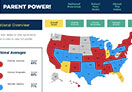
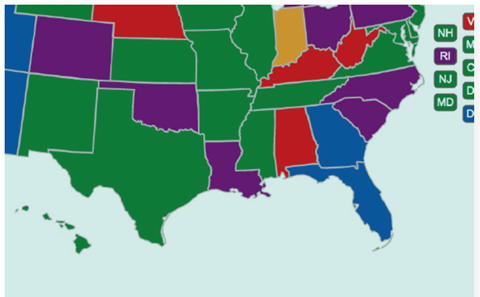
WHITHER PARENT POWER?  It’s out and the news is not good for most parents. CER’s 2017 Parent Power! Index, assessing parental influence in K-12 education, finds the nation at a paltry 63% average for Parent Power!, and most states have barely passing grades.  As per usual, Florida, Indiana, and Arizona lead the pack while North Dakota, Nebraska, and Alaska bring up the rear. Lots in between have little to show for efforts to give parents power, and we know that parent engagement is the key to most educational milestones in our children’s lives. So come on, let’s step it up. Learn more here and find out how.

A BIG WIN IN THE BIG APPLE.  A major breakthrough in teacher education and charter schools happened today when “the SUNY Board of Trustees Charter Schools Committee approved a hotly contested proposal allowing some charters to create their own, in-house teacher certification programs.”  The unions are balking, including Randi Weingarten who has tweeted her opposition and knows that this path-breaking idea sets a precedent for change that will accrue to the greater good in NYC and elsewhere.

UNCF FELLOWS.  Please consider joining us in hosting one of the fabulous Walton-UNCF K-12 Education Fellows. The program places juniors from historically black colleges and universities, innovative partners in K-12 education. We’ve had four and our 2017 fellows had the opportunity to deepen their exposure to education reform by working in a variety of functional capacities including policy research, media relations, and fundraising. Visit our website to learn more!

CER & The Walton-UNCF-K-12 Education Fellowship – A Partnership Worth Celebrating

Successful organizations pride themselves on having strong partnerships. At the Center for Education Reform, we are particularly proud of our relationship with The Walton-UNCF K-12 Education Fellowship Program – a leadership and talent development initiative aimed at building a robust pipeline of high-achieving African-Americans engaged in education reform in America.

The United Negro College Fund (UNFC) is the nation’s largest scholarship-granting organization for students of color, awarding $100 million to more than 10,000 students annually. In this collaboration The Walton Foundation, UNFC recruits juniors from historically black colleges and universities to participate in the program and serve eight-week- long paid internships with innovative partners in K-12 education located in the District of Columbia, New York, Boston, New Orleans, Atlanta, Indianapolis, Memphis, and Nashville.

CER founder Jeanne Allen first became aware of the program at a book-signing reception for education reform advocate Dr. Howard Fuller, when she asked UNCF’s Senior Director of Student Professional Programs Taliah Givens “Why don’t we have a fellow?” Following that encounter, Taliah worked quickly to put a fellow in place, and, since then, CER has hosted four UNCF fellows over the past three years.

The 2017 fellows, Najma Calhoun and Janeal Hightower Fordham, had the opportunity to deepen their exposure to education reform by working in a variety of functional capacities including policy research, media relations, and fundraising. Their capstone project included conducting research and writing interview summaries for an upcoming publication on charter school over-regulation. They also participated in our “Salute to Charters” event where they had the chance to engage with charter school leaders from around the country and meet Secretary of Education Betsy DeVos.

As the UNCF recruits candidates for its newest group of 34 juniors, CER looks forward to welcoming new fellows this summer. According to Director of Administration, Leonora Cravotta, “The UNCF fellows who joined us last summer were hard workers with strong writing and analytical skills and a desire to learn. They were great additions to our office and we’re very excited about hosting members of the 2018 class.”

For more information about hosting a UNCF fellow, please email waltonfellowship@uncf.org or visit https://www.uncf.org/walton.

CER Releases Parent Power Index 2017: National Index Finds Florida, Indiana, Arizona Lead in Education Opportunity

WASHINGTON, DC  —  The Center for Education Reform (CER) released its 2017 Parent Power! Index (PPI), the nation’s foremost study of a parent’s ability to exercise educational options for their children.

The Index scores each state, along with the District of Columbia, from 0-100. This year’s leaders are Florida, Indiana, and Arizona, while those with the least parent power are North Dakota, Nebraska, and Alaska.

“When it comes to the education of their kids, every parent deserves robust opportunities to control the education of their youth, and access to full transparency of information to allow them to be informed consumers,” said Jeanne Allen, the founder and chief executive of the Center for Education Reform. “Every state should want to score an A on the Parent Power! Index.”

The Index gives parents an interactive tool to discover whether their state affords them due power — and, if not, what they can do to get it. Similarly, the Index helps legislators and policymakers understand how their state stacks up nationally, and how to improve their ranking.

Among the Index’s findings this year are these disappointing statistics:

Only 1 in 3 states offer a significant number of charter-school opportunities. Only half of all states provide parents the opportunity to choose a school for their children. Less than half of all states fail to make their education data transparent and accessible.

For more information visit staging.edreform.com.


                                                               State Spotlight: 


Highest-Performing:

#1 Florida—89.2%

Florida, ranked first, has a multitude of opportunities for parents including a scholarship program in which over 130,000 students participate, and a relatively strong charter school law. Although the state doesn’t offer a parent trigger, it ranks high in providing parents power.

Score breakdown:

School Choice: 95%
Charter Schools: 82%
Online Learning: 95%
Teacher Quality: 88%
Transparency: 60%
#2 Indiana—89.1%

Indiana ranked second due to the state’s robust efforts to offered education opportunity. Parents have a great amount of power through a statewide program, offering numerous choices, more digital-learning opportunities than most states, and has a considerable record of teacher quality measures.

Score breakdown:

School Choice: 88%
Charter Schools: 92%
Online Learning: 82%
Teacher Quality: 85%
Transparency: 80%
#3 Arizona—89.0%

Arizona scores third on the Parent Power! Index. The state affords parents a number of broad opportunities to make choices, including, one of the nation’s strongest charter-school laws. Parents can easily find information about all education opportunities, vote for school-board members during general elections, and have easy access to report cards.

Score breakdown:

School Choice: 95%
Charter Schools: 92%
Online Learning: 78%
Teacher Quality: 72%
Transparency: 80%

Lowest-Performing:

#49 Alaska—18.0%

Alaska, ranked 49th, offers very limited power to parents, a weak charter school law that limits authorization to school districts.​

Score breakdown:

School Choice: 0%
Charter Schools: 0%
Online Learning: 62%
Teacher Quality: 62%
Transparency: 80%​
#50 Nebraska—14.0%

Nebraska scores second to last, 50th, on the Parent Power! Index. The state does not provide opportunities for parents to make additional choices for parents outside of their traditional, zoned district. Report cards are difficult to understand, and the state has low teacher-quality measures.

Score breakdown:

School Choice: 0%
Charter Schools: 0%
Online Learning: 0%
Teacher Quality: 65%
Transparency: 0%
#51 North Dakota—13.0%

North Dakota, ranked 51st, earned the title of the state where parents have the least amount of power. This lack of power has catastrophic effects on the students. North Dakota needs to rethink its entire approach, and consider implementing changes to give parents the power and tools to reform education.

Score breakdown:

School Choice: 0%
Charter Schools: 0%
Online Learning: 0%
Teacher Quality: 65%
Transparency: 0%

####

October 10th, 2017

For more information please contact Tim Sullivan at (202)-750-0016 or tim@staging.edreform.com

Exclusive: Allen Pushes Back Against Matt Damon

In case you missed it, Jeanne Allen was featured yesterday in an exclusive  Hollywood Reporter story about her efforts to stand up to the opponents of education opportunity and Hollywood’s Matt Damon. While being interviewed for a new anti-school choice documentary, Allen used the phrase the filmmakers ended up using for the title of their movie, BackPack Full of Cash.

As Allen told THR , “”It was a shock to see them cunningly and deliberately cut my quote to serve their own purpose,” Allen says. “We always have to fight people who are, frankly, uneducated about the issue. If I could show Matt Damon what we actually do, and the options kids can have so they don’t have to go to failing schools, he’d be a supporter.”

A little disingenuous film won’t stop us.  Join our efforts to fight for education innovation and opportunity in US education.  Call us at 1-800-521-2118 or connect with us on Facebook and Twitter to find out how.

10-5-17

######

Memo to Media: U.S. Supreme Court Case Holds Promise for Teacher Freedoms

From: Jeanne Allen, founder & CEO, the Center for Education Reform

Re: U.S. Supreme Court case holds promise for teacher freedoms

10/04/2017

Leaders of organizations and schools across the education reform arena are enthusiastic that on Thursday, September 28, the Supreme Court of the United States (SCOTUS) agreed to hear arguments in Janus v. AFSCFME. The case was brought forth by Mark Janus, an Illinois Department of Healthcare and Family Services public employee who believes that forced unionism and the mandatory paying of fees violates his First Amendment rights. A favorable outcome in Janus could pave the way for a loosening on the stranglehold of other public sector employees compelled to pay mandatory union fees. Public school teachers, in particular, stand to benefit from the freedom that would allow them to make their own decisions as to whether or not they pay union dues and fees. 

TOP 5 TAKEAWAYS IF SCOTUS RULES IN FAVOR OF JANUS:

  • Free millions of workers – public school teachers included – from compelled association––a clear violation of the First Amendment
  • Millions of workers will no longer be compelled to pay union fees when opting out of union representation
  • In addition to more take-home pay, teachers will have more freedom to innovate when opting out of mandated association with teachers’ unions
  • A pro-Janus ruling will have no impact on the ability for unions to organize and function
  • The union-employee relationship should improve as unions will demonstrate their value to existing and future members

The case has been winding its way through Federal courts since early 2015 and was stayed pending an outcome in Friedrichs v. California Teachers Association, a case that was deadlocked 4-4 after the tragic passing of Justice Antonin Scalia. While the Janus case was initially dismissed by U.S. District Court after that Friedrichs ruling, the employees, backed by the National Right to Work Foundation, appealed to the 7th U.S. Circuit Court of Appeals in October 2016 which, as expected, upheld the lower court’s decision – paving the way for an appeal to the U.S. Supreme Court. On June 6, 2017, a petition for Writ of Certiorari was filed and later accepted by SCOTUS. Now the 40-year old ruling in Abood v. Detroit Board of Education which created the current system allowing mandatory fees paid to public unions could very well be overturned.

It’s important to note that the case started with an executive order issued by Illinois Governor Bruce Rauner, who sought to abolish mandatory collective bargaining pending review of its constitutionality. Since 2012, six states have passed laws strengthening workers’ rights and freedom from having to pay mandatory union fees. What is most notable is at least three of these states are “blue-to-purple” states with historic ties to organized labor, including Michigan, Wisconsin and West Virginia. Following these laws, teachers’ union membership dropped 20% in Michigan and 58% in Wisconsin. More state policymakers throughout the country are focused on the upcoming Janus case review. With teachers’ union-driven pension rules and union-backed laws that protect uniform pay scales, eschew performance pay and mandate teacher tenure, the elimination of mandatory fees could impact the unions’ ability to wage political battles to defend their turf and oppose proposals that put student achievement and parental choice at the center of every education improvement effort.

CER believes that the Janus case holds great potential for employees and could dramatically improve union-employee relationships. Overturning Abood will allow for teachers to associate as they see fit, providing teachers more freedom and independence to better serve their students. This will not bar union organizing but ensure unions prove their value to each member. Unions should celebrate the opportunity to prove their value to employees rather than relying on mandatory fees.

Instead, it is evident by the recent teachers’ union attacks on education reform that the unions fear the freedom Janus may bring to teachers, particularly as their funds are declining. Randi Weingarten, president of the American Federation of Teachers, the nation’s second-largest teachers’ union, has also scoffed at the idea that teachers are entitled to the same First Amendment rights as other employees.

Historically, public support for mandatory agency fees is low, and most Americans are unaware that teachers are pressured to join unions and forced to pay union fees even when they decline to join. A June 2017 survey by Education Next found that teachers oppose mandatory fees 47% to 44%, while the general public is 44% to 37% opposed.

As the public’s attention turns to Janus v. AFSCME, it is important to note that this case is bigger than one public employee or one union – this case could improve the learning experience for students by dramatically empowering teachers nationwide, and change the course of American education.

Members of the media interested in writing about this in any aspect, CER’s team can provide insights and commentary, and connect reporters with parents, teachers and those on the ground who will be most affected by the outcome of the case.

MEDIA CONTACTTim Sullivan, Chief Communications Officer
tim@staging.edreform.com | (443) 532-2445

###### 

Newswire October 3rd, 2017

BLACK COLLEGES & CHARTER SCHOOLS. In opeds appearing around the country, Johnny C. Taylor, Jr., CEO of the Thurgood Marshall College Fund says HBCUs are intricately connected to the movement for better opportunities for students and opposition from groups like the NAACP and the AFT aren’t helpful whatsoever. “Better parental choices are, frankly, a matter of life or death for many of our country’s Historically Black Colleges & Universities. And the only way to impact that is to ensure that high-quality secondary school choices abound and that parents are aware of the options that exist to help them take their families out of traditional district schools that have long failed their precious youth.” More at the CER Voices of Color, Voices for Opportunity page and here .

UNCHAINED MELODY. Yesterday was “Cut the Red Tape” day in Washington. We participated at the White House kick-off hosted by VP Mike Pence. No matter where you stand politically, you’ve gotta give this Administration credit for its honest efforts to trim back the regulatory briar patch that entangles us all. The Council of Economic Advisors has issued a nifty report on the subject, “The Growth Potential of Deregulation”. We voted “yes” on ending bureaucracy and made our feelings on the subject known last January in our own nifty little report, “The First Hundred Days: The path to going bold on education innovation & opportunity”. Among the recommendations – a commission to explore opportunities to send funds to states to use on innovative, flexible learning arrangements. We recommended the ED Feds also “review all federal regulations and the thousands of non-statutory guidelines that are essentially bureaucratic dictates accumulated over time, governing the distribution of state and local funds such that states might feel free to do as the law intended, but that federal policy was created to obscure.” They have indeed undertaken that process. A report that promises to identify bureaucratic offenders with a recipe for change is expected by year’s end.


A REAL STEM-WINDER. In another White House-driven initiative, last week the President sent an official memorandum to the Secretary of Education; subject:  “Increasing Access to High-Quality Science, Technology, Engineering, and Mathematics (STEM) Education.” The memo directs the Secretary to make STEM education “…including, in particular, computer science,” a priority, and to take it into account when awarding grant funds. The initiative has a goal of devoting at least $200 million in grant funds to the effort per year beginning in FY ’18, which began October 1. Exactly when these funds kick-in and how to go about getting them is not yet known, and we’ll let you know more as soon as we can find someone with some answers. In the meantime, all innovators, charters and innovative districts within the sound of our voice, should be working up grant proposals NOW!

DON’T MISS OUT. EDTECH NY IS ON THE HORIZON. New York Ed Tech WeekThe Global Education Innovation Festival, is coming up December 18-20, and you may want to make plans to attend while early-bird tickets are still available. Join great people, important topics and informative speakers (including CER’s own Jeanne Allen). It is really a must-attend year-end event. Produced by StartED, Ed Tech Week facilitates some of the most impactful and memorable ed-tech experiences of the year, bringing together more than 200 companies, 200 investors, and 1,500 attendees which includes technology innovators, early-stage investors, EdTech entrepreneurs, media representatives, policymakers, corporations, educators, and students.