










Sign up for our newsletter

Newswire – January 17, 2018

Martin Luther King Jr.

Martin Luther King Jr.

SPOTLIGHT ON… EDREFORM HISTORY

What Would Dr. King Say? It’s a week when history is very much on people’s minds. For starters, MLK Jr. Day reminded millions that the struggle for freedom and equality continues. As LEAP Innovations’ CEO Phyllis Locket puts forth, If Dr. King were alive today, “He would look for fairness and find inequity in funding. He would look for hope and find inequity in student achievement. He would challenge us to work harder, rise above our differences and march forward together.” In the incredibly thoughtful and forward-looking piece, Phyllis reminds us that expecting great results when we believe we can educate all students with the same uniform approach is shortsighted.

Don’t Know Much About? Meanwhile, after the thousands of forums, remembrances and celebrations ensued around the country, Washington, DC was the site of some talking-heads discussions around whether we’ve progressed educationally as a nation. At AEI, pundits and politicians debated the merits of the signature education efforts of the Bush and the Obama Administrations (as if they were interrelated vs. cumulative and reflective of the times — and the needs of those times). Education Secretary Betsy DeVos took to the stage to argue that neither No Child Left Behind (NCLB) nor Race to the Top accomplished the promised successes, because Washington doesn’t have the answers: “NCLB did little to spark higher scores. Universal proficiency, touted at the law’s passage, was not achieved. As states and districts scrambled to avoid the law’s sanctions and maintain their federal funding, some resorted to focusing specifically on math and reading at the expense of other subjects. Others simply inflated scores or lowered standards.”

True, some say, but what of the enormous changes it spurred in parents’ behaviors when they learned they could hold their schools to account? Suddenly parents had “rights” under a federal law — rights that caused them to ask questions, seek options and helped 12-15% increases in charter school enrollments nationwide.

35 Years Since a Nation at Risk. Assuming you know all about it (and if you don’t, here’s your very own copy), the nation has come a long way in changing the conventional notion of schooling: correcting a generation of mythology that once posited that districts were superior to parents when it comes to educating kids, dispelling the notions that poverty was an excuse for failure, and that just requiring certain subjects to be taught would result in mastery, and on and on. To be sure, progress is slow, but it’s been steady, and the last 35 years have seen schools closed for failing for the first time in history, while whole communities choose to find other schools (Detroit and DC come to mind), because there were other schools to be chosen.

One-hundred-eighty years of uniform, top-down schooling will take a few more years to bust — that is, if we’re willing. And on that note, we were interested to see the Reagan Institute is planning a 35th anniversary review of A Nation at Risk in Washington, DC. Details are forthcoming. Meanwhile, here’s your own personal library of various revisits to A Nation at Risk that we and others have conducted over the years.

It all underscores that no one effort — be it federal, state or local — is enough. They are all necessary to stem the tide of failing, or mismatched, or underachieving, or irrelevant, or mediocre, bureaucratic schools and systems!


CURRENT EVENTS

The nation is pumped for National School Choice Week, which will take place from January 21 – 27. A special double edition of Reality Check with Jeanne Allen will feature Voices of Opportunity — parents, teachers, leaders in the field and advocates — and will be available on January 22.


DID YOU KNOW?

According to the Washington Post’s Jay Matthews, an Education Trust study of 1,876 literacy assignments in 6 urban middle schools revealed that 18% required no writing at all; about 60% demanded only some note-taking, short responses or a sentence or two; 14% required students to write a single paragraph, and only 9% went beyond that. Almost no U.S. high school students are required to do long research papers, except students in private schools or public schools with International Baccalaureate programs.


TELL US YOUR STORY!

Is your state or city missing a big piece of the puzzle? Are you involved in an effort to make significant changes? Maybe you’re running a school. Maybe you’re driving change in your school or community and have hit a roadblock. The bottom line is that no effort is too small.

Share with CER how you are helping deliver the promise of an excellent education for all children. Together we can show how innovative education opportunities are bettering students’ lives.
Newswire – January 9, 2018

SPOTLIGHT ON… Maryland

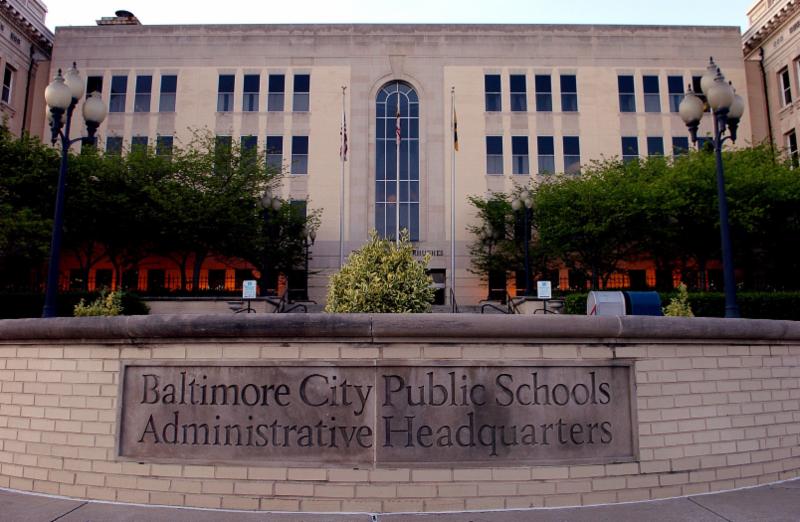
Turn up the Heat. We are asking the same question that you are — why are there ANY schools in Baltimore not being heated? Unexpected and frigid temperatures aside, old boilers and pipes in schools have been anticipated for years. Eight schools remained closed Monday, and the Governor announced $2.5 million for repairs – on top of the already $24 million the city gets from the state ($12,000 per student annually) – and that he’d investigate mismanagement. The city says it’s underfunded. Yet, a look at the data on student achievement compared to funds spent suggest that all of whatever funding they have has its issues reaching the kids. Baltimore is also plagued with a union that stages sick outs and schools where teachers fail to report to class.

Business as Usual. Another year, another superintendent. The past 12 years have seen 5 superintendents in Baltimore City. It’s not the pay, which most recently was $287,000. It’s not the cause, which is vital. So it must be the politics, the treatment the vested interests that get to great people once they’ve taken the job. Or the untenable position they find themselves in. Take Dallas Dance, who by all accounts was an incredibly insightful superintendent. Some in the community – and the press – made a big deal of his involvement with Ed-Tech companies, claiming he had conflicts. Anyone engaged in education leadership may, along the way, actually work for or advise businesses in their products and services. Do we really expect educational leaders to forgo any livelihood outside of education administration? Dance was also criticized for spending lots of time out of the state. Where else do you think people learn how to make Maryland better for kids? (No wonder the city can’t heat its schools). The measurement should be whether your leadership is great for kids, period. American business is the foundation of American prosperity, folks. We should want leaders with business acumen. Speaking of which…

Innovation Shows the Way. A host of organizations in and around Baltimore are models. There’s the Towson University Incubator which has grown to be the most active edtech hub in Maryland, with support of over 30 companies, 80% in edtech. You can run over to the offices of Educate, Inc. and learn about how personalized learning closes gaps for kids. There’sCalvert Education, offering a time-tested, proven curriculum and all the tools and support necessary to ensure homeschool success; and Connections Academy up the road, delivering virtual learning programs that offer students everything they need to reach their highest potential. Dozens of active engaged citizens and philanthropists are shelling out time and money.And Johns Hopkins Ed School has become a thought leader, and certainly some of the city’s charter schools could show the district a thing or two. If only…

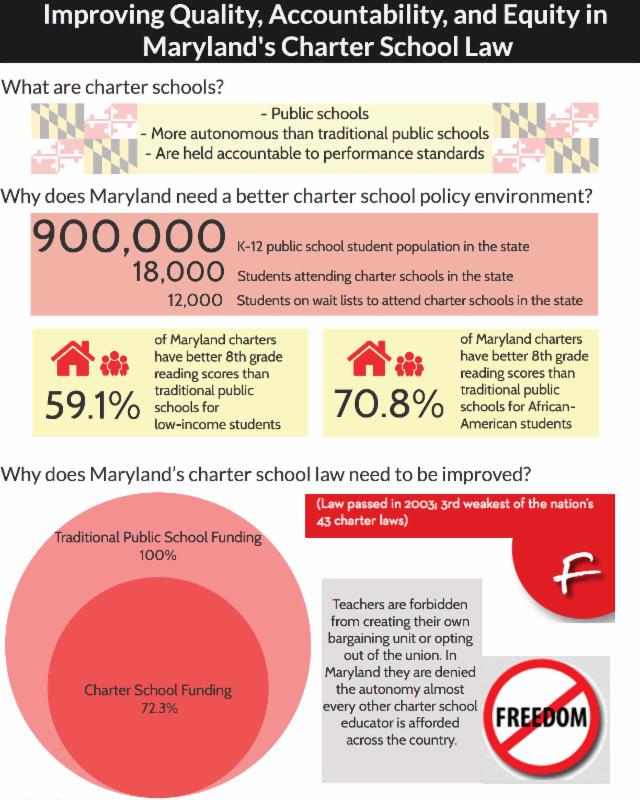
But About That Charter Law. Maryland’s law consistently ranks low on national rankings, most notablyours! It’s very much a law in name only these days, vesting power in charter-resistant school districts to control just about everything that could possibly occur in the schools. Baltimore escaped some of this hostility in the early days of the 2003 law because it had enlightened leaders at the time – and help from groups like ours. But since then, expansion in Charm City and throughout the state has been fraught with union and district hostilities. Despite a “friendly” state board, no additional innovations in chartering have occurred during the Hogan years. Despite that, the US DoEd just awarded $17.5 million in public charter grant funds to the state from a program that the likes of former Sen. Joe Lieberman advanced to help incentivize new schools and seats for kids. Such opportunities come so seldom anymore. Will those who dare to dream for kids please stand up? If the recent heat-gate didn’t compel the legislature to expand opportunities for kids, let’s hope the esteemed body will act now.

(*Graphic c. 2015 — MD Charter Law Ranked #42 in CER’s 2017 PPI Rankings and Scorecard


CURRENT EVENTS
  • Rural America’s Day CER urged the president to keep education front and center in the administration’s Rural Prosperity Plans.
  • Read All About It Voices of color, voices for opportunity continue to speak out. Sylvia P. Simms, executive director of Educational Opportunities for Families’ op-ed ran in today’s Philadelphia Inquirer.


DID YOU KNOW?
  • Baltimore City already spends $15,564 per pupil, the fourth highest per student out of the 100 largest school districts in the nation, according to the U.S. Census Bureau.
  • Annually, Maryland spends nearly three times the amount to incarcerate a person ($38,000) than to educate that same person ($14,000).
  • Of all Maryland’s 24 school districts, Baltimore City spends at or near the top per student, yet just 16 percent of 8th graders and 14 percent of 4th graders are proficient in reading.


TELL US YOUR STORY!

Is your state or city missing a big piece of the puzzle? Are you involved in an effort to make significant changes? Maybe you’re running a school. Maybe you’re driving change in your school or community and have hit a roadblock. The bottom line is that no effort is too small.

Share with CER how you are helping deliver the promise of an excellent education for ALL children. Together we can show how innovative education opportunities are bettering students’ lives.

CER URGES PRESIDENT TO KEEP EDUCATION FRONT AND CENTER IN RURAL INITIATIVE

FOR IMMEDIATE RELEASE
Monday, January 8, 2017
 CONTACT
Christina Mazzanti, Dir., Communications
(202) 750-0016
CER URGES PRESIDENT TO KEEP EDUCATION FRONT AND CENTER IN RURAL INITIATIVE

Statement by Jeanne Allen in response to President Trump’s Rural Prosperity Plans

(Washington, D.C.) – Today President Trump announced an initiative to achieve prosperity for rural America by advancing innovation and technology in these challenged communities. While this is promising news, education opportunity must be the foundation if the new initiative is to succeed.

The Administration’s focus on 5 areas have a natural education connection: 1) e-connectivity for rural America, which must include incentives for creating new rural education initiatives; 2) improving quality of life–will only be achieved when the quality of education improves; 3) supporting a rural workforce–again, requiring new pathways to education and training to attract and prepare workers; 4) harnessing technological innovation–an absolute must for 21st century learning; and 5) economic development–which can only be achieved, and maintained, with a well-educated and well-trained workforce.

In its First 100 Days, and since, CER has urged the Administration to boldly consider efforts to bolster the use of existing and expected federal funds to create the potential for expanded, personalized learning that employs 21st century technologies. We’ve recommended the use of new infrastructure dollars to support public-private partnerships that will drive the creation of new schools, connected by new roads and new digital pathways, that can encourage more education for learners at all levels. This would not only dramatically improve the quality of education in rural America, but increase options and opportunities for learning, which spurs the economic growth the president is hoping to achieve and entices people to stay, or move to these improved communities. We all know that great education is at the heart of vibrant communities. With an expanded focus on providing more and better learning opportunities for all students, an expanded economy will follow.

CER Urges President to Keep Education Front and Center in Rural Initiative

Statement by Jeanne Allen in response to President Trump’s Rural Prosperity Plans Announced today at American Farm Bureau Federation’s 99th Annual Convention.


(Washington, DC)January 8, 2018 – Today President Trump announced an initiative to achieve prosperity for rural America by advancing innovation and technology in these challenged communities. While this is promising news, education opportunity must be the foundation if the new initiative is to succeed.

The president’s 5 proposed areas of focus have a natural education connection e: 1) e-connectivity for rural America—which must include incentives for creating new rural education initiatives; 2) improving quality of life—will only be achieved when the quality of education improves; 3) supporting a rural workforce—again, requiring new pathways to education and training to attract and prepare workers; 4) harnessing technological innovation—an absolute must for 21st century learning; and 5) economic development—which can only be achieved, and maintained, with a well-educated and well-trained workforce.

In its first 100 Days, and since, CER has urged the Administration to boldly consider efforts to bolster the use of existing and expected federal funds to create the potential for expanded, personalized learning that employs 21st century technologies. We’ve recommended the use of new infrastructure dollars to support public-private partnerships that will drive the creation of new schools, connected by new roads and new digital pathways, that can encourage more education for learners at all levels. This would not only dramatically improve the quality of education in rural America, but increase options and opportunities for learning, which spurs the economic growth the president is hoping to achieve and entices people to stay, or move to these improved communities. We all know that great education is at the heart of vibrant communities. With an expanded focus on providing more and better learning opportunities for all students, an expanded economy will follow.


Jeanne Allen is Founder and CEO of the Center for Education Reform and a noted authority on ed tech. 

CONTACT: Christina Mazzanti, CER Director, Communications Christina@cer.com 202.750.0016

Newswire – January 3, 2018

HAPPY NEW YEAR! As we gear up for another year of creating great opportunities, working to allow innovation to flourish in education and quality school options to expand across the country, we pause briefly to look over our shoulder at some of the highlights from 2017. We kicked off the year by advising a new Administration how to forge a new path to make education great again. “The First Hundred Days – The Path to Going Bold on Education Innovation and Opportunity,” carved out clear expectations to the newcomers to town, and we’re gratified that by Spring some of CER’s recommendations were put in place as the DoEd began to pare back the federal regulatory briar patch and reorient the department’s focus to highlight key innovations from K-20, most recently highlighting some of the nation’s most effective personalized learning advocates at Secretary DeVos’ innovation summits.

IN JUNE, we shook up the edreform community with “Charting a New Course. The Case for Freedom, Flexibility & Opportunity Through Charter Schools” which in turn has shaken up policymaking and put the charter blob on notice that getting in the way of innovation and opportunity will no longer be tolerated. In July, we went to war with AFT president Randi Weingarten calling her out for her characterizing charter advocates as racists, and shortly after that, we called out the NAACP – and organized our Voices of Color, Voices for Opportunity campaign – to challenge the association’s unfortunate and unjust opposition to charters.

COME FALL, we found ourselves in conflict with actor Matt Damon who, as narrator of the union-backed, propaganda-ridden “Backpack Full of Cash” did a hatchet job on charter schools. We were also hard at work on policy matters promoting personalized learning, advocating for innovation in rural education, and developing a tax credit proposal to help support apprenticeship and workforce training.

AND AS A HOLIDAY PRESENT to all those who care about education reform, we launched a weekly podcast. It’s called Reality Check with Jeanne Allen – because when it comes to what’s in the news about education, everyone needs a Reality Check!

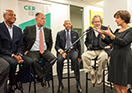
NOW, AS 2018 BEGINS, we would pause for a breath, but we don’t have time. Next week we travel to the Hill to serve on a panel discussing a New Opportunity Agendafor 2018. Organized by #EdTaxCredit50 Coalition, and moderated by its Executive Director, Thomas Carroll, the panel will feature: Jeanne Allen, Founder and CEO, Center for Education Reform; Lindsey M. Burke, Heritage Foundation’s Center for Education Policy; Robert C. Enlow, President, EdChoice; and William A. Estrada, Esq., Director of Federal Relations, Home School Legal Defense Assn. Details: Jan 11, 8:30 am-10:00 am, 300 First St, SE, Washington, D.C.

SPEAKING OF UPCOMING EVENTS. National School Choice Week kicks off January 21st and runs through the 27th. For those of you who’ve been trapped in a cave since 2011 and are unaware of this annual extravaganza we’ll tell you that, last year alone, the week spawned 21,392 events in all 50 states, saw 16,786 schools participate, was endorsed by 713 elected officials, and generated more than 9,000 positive news stories that reached 222 million Americans. In addition to spreading the word about the benefits of school choice the week provides schools, individuals, and organizations with the opportunity to celebrate the benefits of school choice. You can find out more at www.schoolchoiceweek.com. Better yet, get involved!

AND IN A FINAL NOD TO THE YEAR JUST PASSED. We’ve mentioned NY EdTech Week before and will put an exclamation point on the end of last year by saying “If you missed it in 2017, DON’T MISS IT IN 2018!” It’s a fantastic gathering that this past December featured such luminaries as Basis Founders Olga and Michael Block, Success Academy’s Eva Moskowitz, College Board chief David Coleman, and Constitution Center’s Jeffery Rosen. Check out our panel with the latter two and all the excitement you missed by following @NYEDTECHWEEK And watch that space for information about this year’s opportunity to engage with some of the brightest most innovative folks in the ed tech community.

COMING UP NEXT WEEK. Reform & Resolutions. Until then, stay warm, and Happy New Year!

Newswire December 19th, 2017

The Education Grinch Who Stole Christmas — Or So They Try

A special holiday Newswire!

The parents and teachers they wanted reform.
They looked for solutions to break from the norm.
They wanted things better, that’s why they were fighting,
to make sure their kids would learn reading and writing
and science and math and history too
for everyone’s children, not just a few.

But the Blob and its Grinches, they hated reform.
“Imagine,” they sniffed, “trying to break from the norm.”
“Standards, and charters, and school choice and such.
This edreform nonsense is much, much too much.”

“Who are they, these people, this reform-minded crew,
who think they know better than us what to do?
We’ll fix them, we’ll teach them, we’ll show them who’s boss.
We’ll make doubly sure that they suffer a loss.
We’ll stop all their harping and carping and cries
we’ll tell all the people their numbers are lies.
We’ll say that they’re wrong and, without hesitation,
we’ll say that they’re out to destroy education.

“We’ll say that their efforts are all out of place,
that options and choosing are just about race,
that charters in cities all over the nation,
are simply a ruse to promote segregation.

“Oh, we’ll offer solutions, the people will buy them,
We’ll say ‘give us money, and more time to try them.’
‘Yes, we’ve spent decades, and trillions in cash,
But with a few trillion more, you’ll see changes at last.’

And for those who ask questions or say it’s a waste,
with great condescension, they’ll be put in their place.
We’ll stop the reformers, we’ll stop them, we will.
Because, after all, we’re the kings of the Hill.

So the Blob and its Grinches embarked on their task
to make sure that all things reform finished last.

But the parents and teachers and grandparents too,
went on with their work, they knew what to do.
The Blob might have money and power and might
but that didn’t mean that they knew what was right.

And no matter the odds, or how long it might take,
the reformers were steadfast: a difference they’d make.
They wouldn’t be quiet and they wouldn’t give in
and whenever they lost, they would just start again.

They offered suggestions and wrote legislation
and some ran for office (to the Blob’s consternation).

“We’ll stop these reformers” the Blob-Grinches blustered
“and what we can’t stop we will just filibuster.
We’ll do all we can, oh we’ve got a few tricks,
after all it’s our business to play politics.”

“Against the reformers we’ll spend, spend galore,
and for those who are with us, we’ll spend even more.”

We’ll finance elections, and fund our proponents
We’ll launch a campaign that will smear our opponents.

But the parents and teachers and grandparents too,
just smiled at the Blob, because everyone knew
that for all its millions and for all its might,
the Blob could not manage to carry the fight.

And for all their ranting and raving and storm
they’ve really done nothing to stop edreform.

Newswire December 12th, 2017

KEEPIN’ IT REAL! Tired of conversation/confrontation/conflict over education-related issues that quickly escape the gravitational pull of reality? The Center for Education Reform proudly presents Reality Check with Jeanne Allen, a podcast hosted by CER Founder & CEO Jeanne Allen and is a production of National Review Online. The program debuts todaywith fearless civil rights leader and school opportunity advocate, Howard Fuller. The topic: dissecting the recent AP “analysis” of a report that claims “US charter schools put growing numbers in racial isolation” For education matters that matter to you – get a Reality Check!


THIS JUST IN. A great guy and education reform pioneer has just been nominated to serve as Assistant Secretary of the Office of Elementary and Secondary Education at USDoEd. Frank Brogan is most well known for his leadership in helping then Governor Jeb Bush enact the A+ Accountability bill as Florida’s Education Commissioner, and then became Lieutenant Governor after a successful career as an educator and district leader. Since then he’s been a University president and chancellor of Pennsylvania’s state higher education system and retired earlier this year. Welcome back to the fray, Mr. Assistant Secretary (pending confirmation, of course).


PROSPERity IS JUST AROUND THE CORNER. Amidst the doom and gloom analyses of just how the proposed tax overhaul is going to crush higher ed students, comes the Promoting Real Opportunity, Success, and Prosperity through Education Reform Act (HR 4508). Ed & Workforce Committee Chair Virginia Foxx says “No Americans—no matter their walk of life—can afford for us to simply reauthorize the Higher Education Act (HEA). They need us to reform it.”


SEGREGATION? WE DON’T THINK SO. Hundreds have accurately and forcefully pushed back on the Associated Press“analysis” of charter school data and the errant conclusion that they constitute a re-segregation of American schools. The latest is a compelling piece titled “Charters Didn’t Cause Segregation. They’re a Solution for Its Victims.” Here’s the lead: “Of all the injustices in contemporary American society, perhaps the most grotesque is the system that ties education to neighborhoods that are segregated by race and class.” It’s a compelling, well written piece. Take the time to read it.


PIRLS OF WISDOM…OR NOT SO MUCH. The latest Progress in International Reading Literacy Study (PIRLS) came out last week and as is often – much too often – the case with such assessments, U.S. performance is found lacking. What do Moscow City, the Russian Federation, Singapore, Hong Kong and Ireland have in common? They ALL have higher reading proficiency than the U.S.! This should be a wake-up call, but sadly, the nation just keeps hitting the snooze button and pulling the covers up over its head.


LAST CALL! NY EdTech Week fires up next Tuesday with a cast of thousands, including Basis Founders Olga and Michael Block, Success Academy’s Eva Moskowitz, College Board chief David Colemand and more. Hosted by NYU Steinhardt and produced by StartEd, the conference is an unparalleled gathering of entrepreneurs, education leaders, investors, industry executives, learners, and researchers – all driven by the ideas, innovation and technology that advance learning outcomes. This is one Tech conference not to be missed!
PS: National School Choice Week – The countdown is on. Only 40 days until NSCW 2018! Get your SCW scarves out and shine a spotlight on effective education options for every child.

U.S. Fourth-Graders Lag Behind Other Countries In Reading Statement by Jeanne Allen, Founder and CEO, the Center for Education Reform

The latest report on the deteriorating condition of U.S. fourth-graders’ reading proficiency is infuriating and depressing but a trend that is not at all surprising. The Progress in International Reading Literacy Study (PIRLS) has been administered every five years since 2001 and the fact that, as U.S. News reports, “Reading comprehension among fourth-grade students has flat-lined” over the intervening 16 years, should be a wake-up call to all parents, educators, policymakers and legislative leaders at all levels of government.
These stagnating comprehension results are made even worse by the proficiency advancements of countries that were once our peers or those that fared worse than the U.S. just a few years ago.
This report points to the very real and very pressing need for increased innovation, opportunity and options in education to ensure that all American students can compete, and succeed in life – as a matter of personal accomplishment and as a matter of global competitiveness.
Our nation is falling behind and our children are being left behind. This trend cannot continue.

Newswire December 6, 2017

THEY SAY SHOWING UP IS HALF THE BATTLE.  Research suggests that finishing high school is key to future success. But we’re still not ready to cheer the notion that rising high school graduation rates are an indication of great progress in education because other data – about what kids actually know and can do at each level – is still sorely lacking. Graduation rates are relatively subjective. We’re glad things are looking better, but whether and where that is actually resulting in better educated students is debatable.

DON’T BELIEVE EVERYTHING YOU READ IN THE NEWSPAPERS.  In case you missed it – and, given the timing of its release, it seems to have been designed so that you would – the AP filed a story over this past weekend concluding, based on an “analysis” of data, that charter schools are racially isolated. We put quotes around analysis because aside from the story being outrageously inaccurate, it’s also lacking in data integrity, reflects no understanding of variations in charter laws or of local context, and is otherwise wholly lacking in any kind of critical thinking. It’s a stunningly irresponsible piece of journalism that took extremely complex data and tried to simplify a picture of more than 7,000 schools in thousands of communities in 43 states whose laws are as different as snowflakes in where and how they permit charter schools. It’s shocking, especially when more than 50 percent of students in traditional public schools lack proficiency and charter schools are providing children of greatest need with the only choices they’ve ever had. Hence, the well-deserved and welcome firestorm of criticism the story has generated.

AND… Before you shrug off the AP story as simply bad reporting, or a hatchet job on charter schools (both of which happen to be true) remember that this is the type of information that worms its way into the public record and eventually becomes “fact” in the ongoing discussion/debate/argument over charters and other opportunities and options for learning. The story has already been dissected to apply its “findings” to Ohio and Michigan charters and is likely to keep popping up, a la whack-a-mole, for months (and possibly years to come). So this is probably not the last time you’ll hear from us on the subject.

THE 411 ON 529.  With the new 529 rules contained in the Senate Tax Reform bill having weathered the gauntlet of review and revision that is the legislative process, it’s now on to committee for the reconciliation process (which is often more like an ugly divorce trial than an effort to reach a harmonious middle ground…but we always hope for the best). The good news is, the revisions have gotten this far and, when all is said and done, will probably survive in some form or fashion in the final bill. The bad news is…well, this is a rare instance where, at the moment we have no bad news to report. The revisions are not the end-all-and-be-all – there are still ideas afoot for expanding opportunities though the tax code, and those remain on a list of action items for 2018 – but as we look to the close of 2017, we can at least say, “so far, so good.” (If you can look past the spin and editorial comment, this isn’t a bad WaPo piece on the ed-related items in the Senate tax bill.)

THINK GLOBALLY, ACT LOCALLY.  While at its heart, education reform will always be a grassroots movement, embracing innovation and harnessing technology as means for improving education opportunities and options has become a worldwide undertaking. Hence last week’s Global Education Summit held in Beijing. With the theme of “Global Technology Advancing Education,” the meeting brought together more than 300 education and technology leaders to discuss issues related to connecting China’s education to the world and bridging the education of today to that of tomorrow. A Who’s Who of the education and tech world were in attendance – including CER Board Members Michael Moe and Chris Whittle – as well as former President Barack Obama. It was an exciting event that spoke to the reality of today’s challenges and of the need to accelerate the pace of change here in the U.S.

AND SINCE WE’RE SCALING SUMMITS: The 10th Annual ExcelinEd National Summit on Education Reform was held last week in good old Nashville, Tennessee, USA. While our good friend and long-time ally in education reform, Gov. Jeb Bush, attracted most of the headlines – along with EdSec Betsy DeVos (who, frankly, did a great job sticking to her guns as an advocate of substantive reform) – the meeting featured 13 in-depth strategy sessions designed to engage, educate and inspire attendees to do big things to help students in their states. If you didn’t make it this year, plan to attend next year. It’s a valuable experience for individuals and for maintaining momentum in the movement.

Newswire November 28th, 2017

AND NOW, A WORD FROM OUR SPONSOR: IT’S GIVING TUESDAY — GIVE OPPORTUNITY! For nearly 25 years, the Center for Education Reform has fought to bring innovation and opportunity to education. It’s important work, which wouldn’t be possible without the support of donors from all regions of the county and all walks of life.

CER’s unique and revamped approach to fusing innovation and opportunity in our aggressive advocacy to the media and to lawmakers has achieved enormous progress, despite well-funded and increasingly aggressive opposition from teachers’ unions, the education establishment and defenders of the status quo. We’ve been a respected leader and unifying force for an extraordinary national effort that reaches lawmakers on Capitol Hill and in key battleground states.

We’ve achieved lasting support for the critical idea of a scholarship tax-credit initiative that would not only help young students but also provide older students with apprenticeships and skills training. We’re collaboratively promoting personalized learning, which puts mastery of subject matter, not time on task, at the center of the learning process. And we’re developing a model rural-education initiative that can be replicated from state to state to bring innovation and choices to people who have little of either.

On this Giving Tuesday, please consider joining us in our efforts to work to ensure that all children receive the education they need to succeed in life and achieve the American Dream.

No donation is too small. We literally can’t do it without you.

LET THEIR VOICES BE HEARD. By now it’s clear to pretty much everyone that the education establishment and its allies and hangers-on have embarked on a campaign of using race as a wedge to divide the edreform movement and discredit the opportunities and options offered by charters. It’s a nasty campaign that requires a robust response, which is why last fall CER moved quickly to marshal a truth squad.

Called “Voices of Color, Voices for Opportunity,” this project rebuts various myths and untruths through the opinion pages of leading news organizations. The latest voice to be heard: Sonia Park, executive director of the Diverse Charter Schools Coalition. Read her op-ed in RealClearEducation: “Charter Schools Do Not Further Segregation.”

IF YOU HURRY, YOU CAN STILL MAKE IT. The ExcelinEd 10th Annual National Summit on Education Reform is coming up… this Thursday! More than 1,000 education leaders from across the nation attended last year’s summit, and this year’s gathering in Nashville promises to be equally popular.

The National Summit, ExcelinEd’s flagship initiative, convenes the nation’s leaders in education policy to share what works, what doesn’t and what’s next in education. It provides state and local policymakers, education leaders and advocates with comprehensive information on evolving laws, new trends, successful policies and the latest innovations that are transforming education for the 21st century. Be there! And if you can’t, make plans now for next year.

BROADENING THE TAX REFORM DEBATE. Nobody said the tax overhaul was going to be easy, or that reform would be accomplished in a day. But no matter what finally happens during this legislative session, or how slowly the wheels of change may turn, an important conversation has started — including this letter to the editor of the New York Times by CER’s CEO Jeanne Allen. Jeanne calls for tax credits to support community-based apprenticeship initiatives, career and technical education, workforce development and educational preparedness.

TO INFINITY AND BEYOND! An op-ed by the Dean of the School of Engineering and Applied Science at Washington University in St. Louis — “Stop Talking About the Need for Computer Science and Start Teaching It” – makes a compelling case for what we have been advocating for years: that education, in regard to what’s taught and how it’s taught, must move into the 21st century.

Dean Block writes, “At a time when computers increasingly control every aspect of our daily lives — both on the job and at home — the lessons we teach students must adapt to where the world is going, not where it has been.” We couldn’t have said it better ourselves.