


Sign up for our newsletter

Step One: Spot the Real Reformer

Calling All Advocates
by Fawn Johnson
National Journal
September 10, 2012

Politicians love to say the word “education,” but when it comes to actually doing something about it, outside forces must do the pushing. That is the lesson I learned from the political conventions that took over the airwaves and newsrooms in the last two weeks.

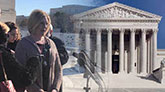
Former District of Columbia Schools Chancellor Michelle Rhee is one such outside force. She was at both the conventions with the same message, which she outlined for me when I sat down with her in Tampa where Republicans gathered. “There is a huge possibility for both parties to say, ‘OK on this issue, because it has to do with our kids, we can disagree about taxes and everything else, but let’s choose this issue that we can show the American people that we can come together,'” she said.

More from that interview here.

Rhee’s grassroots education group StudentsFirst screened Won’t Back Down, a movie about two mothers who take on a failing inner-city public school, for delegates and convention guests.

BELL, a nonprofit summer and after-school learning provider, was another outside force. “I probably lost 10 pounds of perspiration,” said vice president of schools Joe Small about his two days manning a booth at CarolinaFest, an outdoor carnival of good causes–and bands–organized by the Charlotte host committee for the Democratic National Convention. (The Republican convention did not have a similar exhibit space.) In Charlotte, BELL highlighted the benefits of summer learning for at-risk youth, showing the impact its summer programs have made in a low-income district in the city. Small said the reaction from delegates and visitors alike was, “Wow. How do we bring this back to our community? How do we replicate a Bell program?”

These are just two groups that I happened upon in my wanderings. There were dozens of other education-oriented groups at the conventions. (More of them were at the Democratic convention, in part because many such groups are overtly Democratic.) The American Federation of Teachers and the National Education Association sent delegates from several states. NEA President Dennis Van Roekel even sat in Vice President Joe Biden’s sky box during a tribute to the late Sen. Edward Kennedy, D-Mass. Democrats for Education Reform held an “education town hall” in Charlotte that included the famous Newark mayor Cory Booker.

For groups like these, having a presence at a national convention is just like advertising. The more attendees see a slogan or logo, the more likely it is that the topic will bubble up in other areas. Political parties welcome this, assuming they agree with the message. They need backup, just like they need people to wave signs during convention speeches. There is no shortage of advocates for education, but herding them in the same general direction is a daunting task. “People have to strap in for the long haul and understand that it’s not just one or two things that you can change that will change the system, but it’s an entire paradigm shift,” Rhee said.

So, advocates, there is almost no disagreement that the country’s schools need to improve, but polling shows that education is not “top-tier” for voters. How do you raise awareness? What can you do to make sure a consistent message gets out? How do you handle the areas where you disagree? Is Rhee right in saying that part of the trick is converting the local battles into a national narrative? Or do you need a bunch of local, grassroots groundswells to provoke changes in individual communities?

Response – Step One: Spot the Real Reformer
by Jeanne Allen
September 12, 2012

You all have asked the right question … “Politicians love to say the word ‘education,’ but when it comes to doing something about it… outside forces must do the pushing. … what is the trick to provoking change in individual communities? ’”

Education reform is indeed driven by the grassroots. It’s always been that way, and it’s a great movement for that reason. Education reform was “postpartisan” before postpartisan was cool! There are lots of effective strategies and tactics (and some not so much), but one thing allreformers must be able to do is to understand what constitutes real reform.

There is a moment when parents or other would-be reformers join forces with elected officials. Say, there is xx legislation to be passed, or it’s time to implement accountability measures, or they need a better charter law. What happens at that moment? Politicians, as you point out, do indeed like to use the word “education.” The elected have gotten very savvy, and most of them know how to pay lip service to education reform … how to sound like a real reformer. But this has led to an all-too common scenario: people at the grassroots have a passionate desire to work for fundamental changes to ensure a better education for their children. They find a politician to work with, someone who says all the right things. But the end result is a toothless and ineffective piece of legislation, worse than nothing. All because they hitched their wagon to the wrong star – or to mix metaphors, they got taken in by a wolf in sheep’s clothing.

So how can the grassroots discern who are the real reformers? As part of CER’s Taking America Back to School on Education Reform campaign, we developed a tool that helps people figure it out. The Field Guide to Education Reform has a fun, tongue-in-cheek tone, but its content is actually quite serious. We think the Field Guide can help parents (and voters!) separate the “talkers” from the “doers” by giving them questions to ask, and telling what to look and listen for as politicians talk about education.

So look out faux reformers! An informed grassroots and electorate is your worst enemy!

CER Taking America Back to School on Education Reform

August 20, 2012

CER President Jeanne Allen explains why CER is Taking America Back to School on Education Reform.

Newswire: June 12, 2012

Vol. 14, No. 24

CORBETT’S CRUSADE? Many are asking the big question- how is it that a candidate who ran and won on making school reform his first priority hasn’t been successful in achieving real reform since he’s taken office? Meanwhile, the Governor has weighed in on the debate on online schooling, criticizing the notion that online schools should be well-enough funded to provide choices that hundreds of parents use and demand. For almost 18 straight months the Corbett team has permitted the Republican House to ignore SB 1, a pathbreaking school choice bill that passed last year. Then, an effort to improve the state’s charter law to incorporate higher education in authorizing has been stalled by the status quo supporting school districts. The Governor is now taking aim at cyber charters as if cutting their funds will close the state budget gap. As Governor Corbett himself said at a school choice forum during the campaign, good education is the key to economic solvency. The Pennsylvania House adjourns June 30 but there is still time to do a real reform package, if the will is there.

“TEAR DOWN THIS WALL.” Today is the anniversary of the famous Reagan challenge to Gorbachev at the Bradenberg Gate, calling on the Russian leader to destroy the Berlin Wall that separated a country and kept half in abysmal conditions. How fitting that a similar wall holds back kids in the U.S. from social justice parity and, in Pennsylvania and elsewhere, stands as tall and solid as it was when many who were elected and promised to fight the status quo two years ago.

SWIFT BOAT OF REFORM. With far too many schools drowning academically, especially in Detroit, no wonder parent trigger is winding its way through the Michigan Legislature in order to make swift changes to boost achievement. Critics fire off that parent trigger is a draconian move that thwarts real progress to be made in the schools. The point they miss is that students just don’t have the time to wait around until adults work through the bureaucracy, bear a teacher strike, or deal with ineffective after ineffective school leader to come up with a solution for failing schools. A trigger says, to lift from the 1976 film Network, “I’m mad as hell, and I’m not going to take this anymore!” A perfectly fitting response for a parent whose child doesn’t have time to waste getting a dead-end education.

MODELING CHARTERS. The Faison K-5 school in Pittsburgh, Pennsylvania’s, Homewood neighborhood was failing to provide adequate, let alone exceptional, education opportunities for its students. Just to illustrate, in 2007, 95 percent of fifth-grade students fell below proficient in math and 88 percent in reading. This year, though, Faison is looking to turn itself around, with a teacher-led drive to bump up achievement. And who did they look to for a model? The John B. Stetson Charter School in Philadelphia. At first a small group from Faison visited Stetson, but soon after brought a larger group to view how the charter, located in a similarly disadvantaged community with kids who previously struggled to learn, created an environment that encouraged and inspired success. Charter success breeds success, even among traditional public schools when they have thoughtful leaders.

INVESTING IN REFORM. Bond investors are careful to analyze financial and operational assumptions of any investment before they jump in. So their increasing willingness to back charter schools is another indication of a reform that is here to stay.

SAVING CATHOLIC SCHOOLS. Catholic schools, most known for their dazzling success with inner-city students, are making a comeback as vouchers edge into the education scene. St. Stanislaus, for example, in East Chicago, Indiana, had enrollment jump nearly 40 percent in 2010 due to the state’s voucher program. Nationwide, the dip in enrollment of Catholic schools is slowing, showing “signs of growth even in cities without vouchers.” It’s no coincidence that Indiana, the state with the most expansive voucher program, also shows the most dramatic enrollment increases in Catholic schools. But, as the Wall Street Journal notes, Catholic schools in states without vouchers can benefit from wealthy Catholic business leaders who donate to keep the school up and running. Catholic schools nationwide certainly fill a niche, provide an environment conducive to learning at high levels and offer values, religious or not, that allow all students to feel safe, act responsibly and with care in the classroom.

UNION BEHAVIOR. Success for the Chicago Teacher’s Union is not assessed these days by improving student math skills and more, but by reaching the magic 75 percent figure in a vote to authorize a strike. The authorization vote is the first step for the union to call for a strike vote in the fall, should contract negotiations hit an impasse. An impasse is likely, since the union has batted heads with Mayor Rahm Emanuel and his plan to lengthen the school day, install teacher evaluations with teeth and pass tenure reform. It’s not that Emmanuel’s proposals are particularly bold, either. Student growth will count for a mere 15 percent of a teacher’s evaluation in year one, increasing to only 25 percent by year five. But as CER’s Jeanne Allen says in the Tribune, Emanuel has been “clear that notions like ironclad tenure and seniority should not be a proxy for a teacher’s performance.” Still there’s no guarantee he’s willing to fight them to the finish line, but at least it’s a start.

STRIKES COST. Teachers on strike cost, not only in days students loose in learning, but in real dollars. In Pennsylvania’s Neshaminy school district, teachers went on strike, although returning a day later due to a judge’s order. There may still be a risk that a strike goes into effect and, if they do, just as in Chicago, an increase in the average salary and benefit cost per teacher may just knock a fatigued economy into a flatline. Taxpayers for a Fair Neshaminy School Budget recently put together a chart that shows exactly how much the true cost is of teachers in that district. Of course, paying well for top teachers is essential, but in Neshaminy just as in Chicago, there is no guarantee that money goes for excellence nor that the union is considering, at all, the fiscal responsibility of the state.


K-12 Facts

Updated as of December 2019

1) SNAPSHOT OF U.S. STUDENT ACHIEVEMENT 

2) SCHOOLS 

3) 
ENROLLMENT

4) TEACHERS 

5) STUDENT-TEACHER RATIO 

6) 
EXPENDITURES 

7) SALARIES AND WAGES 

8) 
FUNDING

Snapshot of U.S. Student Achievement:

NATION’S REPORT CARD:

Scores from the most recent National Assessment of Educational Progress (NAEP), better known as the Nation’s Report Card:

    • 4th Grade Proficiency
      • Math - 41% students proficient
      • Reading - 35% students proficient
    • 8th Grade Proficiency
      • Math – 34%  students proficient
      • Reading – 34%  students proficient

(National Assessment of Educational Progress, 2019)

ACT:

On the ACT, 36% test takers did not meet any of the four benchmarks. The percentages of graduates meeting the ACT College Readiness Benchmarks in math and English are the lowest they’ve been in 15 years.

(The Condition of College and Career Readiness 2019)

ACHIEVEMENT GAP:

Scores at or above proficient among subgroups:

    • 8th Grade Math
      • White: 44%
      • Black: 14%
      • Hispanic: 20%
    • 8th Grade Reading
      • White: 42%
      • Black: 15%
      • Hispanic: 22% 

(National Assessment of Educational Progress, 2019)

HOW U.S. STUDENTS COMPARE INTERNATIONALLY:

According to the Program for International Student Assessment (PISA), out of 34 countries, the U.S. ranks:

    • 30th in math
    • 8th in reading
    • 11th in science

1 out of 5 of American 15-year-olds scored so low on the PISA test that it appeared they had not mastered reading skills expected of a 10-year-old. The U.S. spends more per student than other countries on education, but that spending does not translate into better performance. 

(Program for International Student Assessment, 2018)

Schools:

TOTAL NUMBER OF PUBLIC SCHOOL DISTRICTS:  approx. 13,600

(Education Data: 2019)

PERCENTAGE OF STATES WITH ELECTED SUPERINTENDENTS (versus appointed or recommended): 26%

(Education Commission of the States: 2017)

TOTAL NUMBER OF PUBLIC SCHOOLS: 98,277

  • Elementary: 66,758
  • Secondary: 24,040
  • Combined: 6,788
  • Other: 691 

(Digest of Educational Statistics: 2017, Table 105.50 )

TOTAL NUMBER OF CHARTER SCHOOLS: 7,000

(The National Alliance of Public Charter Schools: 2018)

 TOTAL NUMBER OF PRIVATE SCHOOLS: 32,461

  • Elementary: 20,090
  • Secondary: 2,845
  • Combined: 9,526

(Private School Universe Survey: 2017-2018, Table 1 )


TOTAL NUMBER OF CATHOLIC SCHOOLS: 6,289

  • Elementary: 5,092
  • Secondary: 1,197

(NCEA The Annual Statistical Report on Schools, Enrollment, and Staffing: 2019)


Enrollment:

TOTAL K-12 ENROLLMENT: 56,600,000

  • Public: 50,800,000
  •  Private: 5,800,000

(NCES Fast Facts: 2019-2020

TOTAL PUBLIC SCHOOL ENROLLMENT: 50,800,000

  • Elementary: 34,100,000 
  • Secondary: 15,300,000

(NCES Fast Facts: 2019-2020

TOTAL CHARTER SCHOOL ENROLLMENT: 3,200,000

(The National Alliance of Public Charter Schools)

TOTAL PRIVATE SCHOOL ENROLLMENT: 4,898,154

  • Elementary: 2,169,867
  • Secondary: 808,599
  • Combined: 1,919,688

(Private School Universe Survey: 2017-2018, Table 1 )

TOTAL HOME SCHOOL ENROLLMENT:1,642,027 or 2.56% of America’s school population

(HomeSchoolConnect:2017-2018 )

TOTAL CATHOLIC SCHOOL ENROLLMENT:  1,789,363

  • Elementary/ Middle: 1,239,449 
  • Secondary: 549,914 

(NCEA The Annual Statistical Report on Schools, Enrollment, and Staffing: 2019)

 TOTAL FULL TIME ONLINE SCHOOL ENROLLMENT: 297,712 Students 

TOTAL BLENDED LEARNING ENROLLMENT: 132,960 Students 

(National Education Policy Center: 2019)


Teachers:

 TOTAL PUBLIC SCHOOL TEACHERS: 3,200,000

(Fast Facts: Teacher Trends 2017)

TOTAL CHARTER SCHOOL TEACHERS: 218,000

(Digest of Educational Statistics: 2017, Table 209.21)

TOTAL PRIVATE SCHOOL TEACHERS: 491,000

(Digest of Educational Statistics: 2017, Table 208.20)

 TOTAL CATHOLIC SCHOOL TEACHERS: 146,620

  • Elementary: 101,485
  • Secondary: 51,804
  • Combined: 153,289

(National Catholic Education Association, 2018)


Student-Teacher Ratio:

PUBLIC SCHOOL STUDENT-TEACHER RATIO: 16.1:1

PRIVATE SCHOOL STUDENT-TEACHER RATIO: 12.2:1

(Digest of Educational Statistics: 2017, Table 208.20)

CATHOLIC SCHOOL STUDENT-TEACHER RATIO: 12:1

(National Catholic Education Association, 2018)


Expenditures:

TOTAL PUBLIC SCHOOL EXPENDITURES: 705,558,501,000

  • Current Expenditures: 620 Billion
  • Instruction: 378 Billion
  • Administration: 47 Billion
  • Plant Operation: 57 Billion
  • Other School Services: 138 Billion
  • Capital Outlay: 58 Billion
  • Interest on School Debt: 18 Billion

(Digest of Educational Statistics: 2018, Table 236.10)

AVERAGE DISTRICT PUBLIC SCHOOL PER PUPIL EXPENDITURE: $12,201 

(US Census Bureau: 2017)

AVERAGE PUBLIC CHARTER SCHOOL PER PUPIL EXPENDITURE: $7,131

(The Center for Education Reform, Survey of American Charter Schools: 2014)

AVERAGE CATHOLIC SCHOOL PER PUPIL EXPENDITURE

  • Elementary: $5,936
  • Secondary:  $15,249 

(National Catholic Education Association, 2018 )

AVERAGE PRIVATE SCHOOL TUITION: $10,676

  • Elementary: $9,638
  • Secondary: $14,522
  • Combined: $24,160

(Private School Review: 2019-2020)

AVERAGE CATHOLIC SCHOOL TUITION: 

  • Elementary: 4,841
  • Secondary: 11,239

(National Catholic Education Association, 2018 )


Salaries And Wages:

PUBLIC SCHOOL ADMINISTRATORS:

  • Superintendents: $104,980 

(Bureau of Labor Statistics, Occupational Outlook Handbook: 2018)

SCHOOL PRINCIPALS:

  • Salary: 95,310 / year 

(Bureau of Labor Statistics, Occupational Outlook Handbook: 2018)

PUBLIC SCHOOL PROFESSIONAL PERSONNEL:

  • Counselor: $56,310
  • Librarian: $59,050
  • Social Worker: $49,470

(Bureau of Labor Statistics, Occupational Outlook Handbook: 2018)

AVERAGE TEACHER BASE SALARY:

  • Elementary School: $57,980
  • Middle School: $58,600
  • High School: $60,320

(Bureau of Labor Statistics, Occupational Outlook Handbook: 2018)

PUBLIC SCHOOL SUPPORT STAFF SALARIES:

  • Secretaries: $38,880
  • Accounting Payroll: $70,500
  • Teacher Aides: $26,970 

(Bureau of Labor Statistics, Occupational Outlook Handbook: 2018)

HOURLY WAGE RATES:

  • Cafeteria Workers: $12.12
  • School Bus Drivers: $16.56

(Bureau of Labor Statistics, Occupational Outlook Handbook: 2018)


Funding:

TOTAL FUNDING OF PUBLIC EDUCATION: 664 Billion

  • Federal: 56 Billion (8% of total)
  • State: 309 billion (47% of total)
  • Local: 299 billion (45% of total)

(Digest of Education Statistics: Public School Revenue Sources, 2018)

John Paul II Catholic High School announces tech-adventurous funding-raising goal of $99,000 via Crowdtilt

For Immediate Release:
March 16, 2012
Contact: Serena Moyle
(850) 509-4021


John Paul II Catholic High School announces tech-adventurous funding-raising goal of $99,000 via Crowdtilt as part of $676,000 May 1 goal

TALLAHASSEE, FL – Sister Ellen Cronan, Principal of John Paul II Catholic High School in Tallahassee, Florida, considers it her duty to be technologically current with the social media that her students use on a daily basis. This tech-savvy principal of the only Catholic high school within a two hour radius of the capital city, announced today that Crowdtilt – http://tilt.tc/jp2 — the newest resource in online fundraising, will be used to raise $99,000 by April 9, Easter Monday, for her school.  Crowdtilt, a social media platform which converts pledges to dollars once the tipping point or goal is reached, will take Sr. Ellen’s goal to a national audience.

Sr. Ellen Cronan shared, “In concert with my board of directors, we’ve decided that the big and caring hearts across the entire Catholic community, across the United States and abroad, should know about our goal and be energized to give at http://titl.tc/jp2 during this Lenten season.”

It has been an extraordinary few months for Sr. Ellen. Ever since the school’s birth in 2001, the diocese has generously supported the school through its growing years. Now the time has come for John Paul II to take on the challenge of becoming fully self-funded. In January, the school’s board of directors embarked on the herculean goal to raise $676,000 and to increase enrollment by 9% by May 1st.   To date the school has raised $451,000.   If the school is successful with Crowdtilt, they will still have another $125,000 to raise in the last three weeks of April which they plan to do through second collections at local churches and other more traditional fundraisers.  Of course, the beauty of Crowdtilt is that people can continue to donate even after we reach our tilt goal, right up until the end of the campaign.

“Our situation is one that is faced by too many Catholic schools throughout the nation,” Sr. Ellen said, “Catholic schools have established a standard of academic excellence and service for generations of students, Catholic or not.  Unfortunately, we can no longer assume that Catholic schools will always be here. We realize that in order to provide Catholic education it is necessary to chart a new course based on financial independence. This new model challenges all supporters of Catholic education to step forward with generous support.”

Board Chair Eric Grant stated that, “We came into this effort with a purpose:  We believe that a Catholic education should be available to all families regardless of financial ability, ethnicity, or religious affiliation. In the past three months, through the incredible generosity of our local community, we’ve raised $451,000 and increased enrollment for next year by close to 10%.  We have been truly blessed. ”

“When we meet our Crowdtilt goal,” Mr. Grant continued, “we will be another step closer to ensuring our tuition rates stay affordable and we continue to provide one of the best educations this city has to offer.  By using Crowdtilt we will expand our circle of friends to include Catholic alumni nationwide who know the power of a faithful education, and who will be willing to help us successfully complete this campaign.”

The Crowdtilt Campaign’s first viral effort will be to promote “Pot O’ Gold Day” urging friends and family to donate $17.00 on March 17, St. Patrick’s Day.  School families and alumni  are urged to share the campaign via email, text, Twitter, LinkedIn, and Facebook to friends and colleagues.

One of the most fervent supporters and founders of John Paul II is the Most Reverend John H. Ricard, SSJ, Bishop Emeritus of Pensacola-Tallahassee, who, when he learned of the campaign remarked:  “Catholic education has, for generations, been a path to success and achievement for Catholic families and others who have sought a quality education for their children.  It is a very important means of reinforcing our belief in the Gospel and endowing future generations with the lessons of faith. With this new fundraising goal in mind, the current board of trustees of JPII shares the vision of the founding families of the school.  I hope and pray this mission will continue to bear fruit.”

John Paul II (www.jpiichs.org) is a fairly new Catholic high school founded in 2001 in Florida’s capital city.  Already the school has produced alumni that make the Catholic population proud, including graduates at Duke University, Boston College, Columbia, the United States Naval Academy and many other prestigious schools.  The school is led by the Sisters of theApostles of the Sacred Heart of Jesus and touts a 100% graduation rate and SAT scores higher than any public school in the city.

National Charter School & Enrollment Statistics 2011-12

Download or print your PDF copy of National Charter School & Enrollment Statistics 2011-12

Multiple Charter School Authorizers Primer

Download or print your PDF copy of Multiple Authorizers Primer

Digital Learning Toolkit

This toolkit that arms online learning supporters with The Facts About Digital Learning, fights common myths about online learning, and provides suggestions for Informing Your Community, Communicating with the Media.

Download or print your PDF version of Digital Learning Toolkit

Just the FAQs—School Choice

Federal Accountability

Juan Williams serves as a Fox News political analyst, a regular panelist on Fox News Sunday, and as a regular substitute host for The O’Reilly Factor. In addition to prize-winning columns and editorial writing for The Washington Post, he has also authored six books.

Federal Accountability – Juan Williams – CER-Mandate-2009