









Sign up for our newsletter

Daily Headlines for October 15, 2012

Want to Ruin Teaching? Give Ratings
New York Times, NY, October 15, 2012

AS the founder of a charter school network in Harlem , I’ve seen firsthand the nuances inherent in teacher evaluation. A few years ago, for instance, we decided not to renew the contract of one of our teachers despite the fact that his students performed exceptionally well on the state exam.

Transforming Our Schools
New York Times, NY, October 14, 2012

When President George W. Bush signed No Child Left Behind into law, few would have predicted that the next decade of education policy would unfold into a disaster of epic proportions. The law was based on a flawed concept of a “good education” — high scores on standardized tests.

Movie Doesn’t Do Turnaround Schools Justice
USA Today, October 14, 2012

‘Won’t Back Down’ fails to show collaboration, which has made school turnaround efforts in Massachusetts successful.

Schools Dilemma For Gentrifiers: Keep Their Kids Urban, Or Move To Suburbia?
Washington Post, DC, October 14, 2012

He set out to learn as much as he could about the risks and benefits of socioeconomically diverse schools, where at least 20 percent of students are eligible for the federal free or reduced-price lunch program. And then he wrote about it.

Mitt Romney’s Finally Loving Massachusetts
Boston Globe, MA, October 15, 2012

That’s not to say that Romney deserves no credit on education. Among other things, he did laudable work beating back a legislative attempt to ambush the state’s charter-school movement. Massachusetts ’ success in education reform proves the need for constant commitment and vigilance, something that governors from Weld to Patrick — including Romney — can cite with pride.

Nat’l School Choice Week Kickoff Coming to AZ
Southeast Valley Ledger, AZ, October 15, 2012

The kickoff for National School Choice Week 2013 will be held at the Phoenix Convention Center on Jan. 25, 2013, bringing together thousands in support of the idea that parents have a right to choose how their children are educated and its all thanks to EDUPRIZE Schools charter school.

FROM THE STATES

CALIFORNIA

Rich Siblings Spend Big Bucks To Affect California Education Funding
Washington Post Blog, DC, October 14, 2012

The Munger siblings vs. California Gov. Jerry Brown: Here is this week’s case study in our continuing look at how billionaires (and millionaires) are throwing around their money to drive education reform.

Futuristic Rocketship Schools Redefine Teaching
USA Today, October 14, 2012

While it shares a lot in common with many privately run, but publicly funded, charter schools, Rocketship defies nearly all the conventional wisdom about how an urban elementary school should operate. For one thing, students spend as much as two hours a day one-on-one with a computer, learning virtually all of their basic skills through games.

Charter School Upheld In 1st “Parent Trigger” Law Test
San Diego Union-Tribune, CA, October 14, 2012

A San Bernardino County school district must immediately comply with a previous court order allowing a parents group to convert a failing elementary school into a charter, a Superior Court judge ruled Friday in a case seen as an important test of California’s “parent trigger” law.

COLORADO

Douglas County Starts New Teacher Pay Plan
Denver Post, CO, October 15, 2012

The Douglas County School District ‘s new pay-for-performance pilot program — using market-based pay and a rigorous evaluation approach — has begun.

Denver’s 3B Unfairly Favors Charters
Denver Post, CO, October 13, 2012

On Nov. 6, Denver voters will make a decision on whether or not to support two initiatives put forth by the school board. On Aug. 23, I voted in favor of the mill levy, Initiative 3A, since the funds will go directly to the classroom and give our teachers a badly needed cost-of-living salary increase. But I cannot support Initiative 3B, a $466 million bond.

DISTRICT OF COLUMBIA

D.C. Students Test ‘Teach To One’ Learning System
Washington Post, DC, October 14, 2012

It might seem to be a less-than-realistic plan: Put nearly 200 preteens in one large classroom space and expect each of them, with the help of laptops and a few teachers, to learn math at his or her own pace.

FLORIDA

Education Panel Gives Recommendations Similar to What Governor Vetoed
The Ledger, FL, October 14, 2012

When Gov. Rick Scott brushed aside intense lobbying from state universities and vetoed a tuition increase earlier this year, he created a blue ribbon panel to identify ways to make the state’s higher education system more efficient.

As Charter School Enrollment Rises, Debate Intensifies
Herald Tribune, FL, October 14, 2012

She enrolled him halfway during the school year at Imagine School at North Port , the largest charter school in Sarasota County . Since then his grades have rebounded, she said.

New Charter School May Open In Flagler County
Daytona Beach News-Journal, FL, October 14, 2012

A new middle and high school geared toward helping nonnative speakers learn English may open in Flagler County.

Results Mixed On Teacher Incentives
News Press, FL, October 14, 2012

Will performance pay help reform schools? So far, experts say the verdict on teacher pay for performance plans is they don’t work and are usually changed or abandoned.

Criticism Follows Florida’s Race-Based Student Achievement Goals
Miami Herald, FL, October 13, 2012

The state Board of Education approved a new six-year strategic plan with student-achievement goals that vary based upon race, income, disability and English proficiency.

GEORGIA

Local or State Control?
Marietta Daily Journal, GA, October 13, 2012

Support for and opposition to the proposed Constitutional amendment regarding charter schools on the Nov. 6 ballot is nearly equal among Cobb’s government leaders. But in somewhat of a surprise, the Marietta-based Georgia Tea Party now supports passage of the amendment.

Barge: Charter Proponents’ Goal To ‘Silence’ Opposition
Daily Tribune News, GA, October 14, 2012

Earlier this month State School Superintendent John Barge was advised by Attorney General Sam Olens to remove statements in opposition of the state’s charter school amendment referendum after an Atlanta attorney argued it was unlawful for Barge to post the comments.

Charter Amendment Would Tilt Power To State
Athens Banner-Herald, GA, October 14, 2012

The debate over a proposed constitutional amendment that would expand state influence over charter schools has been fierce, complete with lawsuits. But the details can get lost in the back-and-forth.

Georgia Charter Schools: Dream Or Nightmare?
Columbus Ledger-Enquirer, GA, October 13, 2012

The contrast in views of Georgia ‘s charter school amendment is not as much like night and day as like a nightmare and a dream. Here’s the amendment opponents’ nightmare:

State Meets Race To The Top Deadline
GPB, GA, October 15, 2012

October 15th is the deadline for Georgia to turn in its revised Race To The Top proposal for teacher evaluations. The federal government had threatened to pull 33 million dollars in funding after the state changed its proposal.

ILLINOIS

Mostly High Marks For New CPS Chief
Chicago Tribune, IL, October 14, 2012

One of the first calls Barbara Byrd-Bennett made after being tapped as the new chief of Chicago Public Schools was to teachers union President Karen Lewis.

Chicago Schools Names ex-DPS Official To Top Spot
Detroit News, MI, October 15, 2012

As former Detroit Public Schools leader Barbara Byrd-Bennett begins as CEO of Chicago Public Schools, local officials predicted Sunday that she will do well as head of the nation’s third-largest school system.

INDIANA

Fort Wayne Schools Battling Student Exodus
WDRB, IN, October 13, 2012

An Indiana school district is taking steps to ward off competition from private and charter schools.

Time To Halt Bennett’s Ambitions
Fort Wayne Journal Gazette, IN, October 14, 2012

Indiana public schools are struggling under the leadership of Tony Bennett, superintendent of public instruction. His unproven experiment in school choice and privatization has strained local districts at the very time they’ve needed the support and resources of a strong Indiana Department of Education.

School Vouchers Enable Families To Have Choices
Indianapolis Star, IN, October 13, 2012

Dan Carpenter’s Oct. 7 column, “Making tithes of taxes,” questions whether the use of vouchers by parents in religious schools is constitutional. In the case of the U.S. Constitution, the answer has already been given; Zelman v. Harris upheld the constitutionality of educational choice/tuition assistance in an Ohio case that included religious schools.

IOWA

Education Task Force Is On Track
Quad City Times, IA, October 15, 2012

So who should be paid more? The software developer who comes up with a whiz-bang instructional program, or the classroom teacher who presents it every day to students in the classroom? How about the computer programmer who keeps the classroom PC network running? Should she be paid more than the teacher who works directly with kids on that same computer system?

LOUISIANA

Voters To Cast Ballots On School Term Limits
The Advocate, LA, October 15, 2012

After years of off and on debates, voters in most school districts will decide on Nov. 6 whether to limit local school board members to 12 consecutive years of service.

Court Battle Set For Louisiana School Reform, As Teachers Union Square Off Against Gov. Bobby Jindal
Daily Caller, DC, October 14, 2012

The survival of school choice in Louisiana is at stake in a court battle that pits education reformers against teachers’ unions.

MICHIGAN

Uncertainty Surrounds EM Ballot Proposal
Detroit News, MI, October 15, 2012

When voters are asked in November whether to repeal the state’s controversial emergency manager law, they’ll be deciding more than the future of the legislation.

MISSOURI

Teacher Union
Columbia Tribune, MO, October 13, 2012

Columbia Public Schools teachers voted narrowly to be represented by the Columbia Missouri National Education Association, a branch of the national union known for aggressive collective bargaining.

NEW HAMPSHIRE

Charter School Supporters Say They’ll Turn Out in Force at State Board of Education Meeting in Concord
New Hampshire Union Leader, NH, October 15, 2012

Close to 100 charter school advocates are expected at the state Board of Education meeting this week, hoping to sway officials to reconsider a moratorium on new school applications. But the board’s chairman says no new schools will get the green light until 2013 at the earliest.

The Truth About Charter Schools
Concord Monitor, NH, October 15, 2012

Truth must be told. The New Hampshire Department of Justice reiterated to the House members that one Legislature cannot bind the actions of a future Legislature. Every representative and senator knows that by heart.

NEW JERSEY

Ringwood, Lakeland High School In Wanaque To Share New Teacher Evaluation Method
Suburban Trends, NJ, October 15, 2012

The school districts of Ringwood and Lakeland Regional High School (LRHS) have agreed to enter into a consortium to share the costs and services of a vendor that will train them to perform educator evaluations using a state-approved method.

NJ Parents Filing Petition For Better Education
Philadelphia Inquirer, PA, October 15, 2012

Three parents with children in the Camden school district are planning to file legal papers demanding their children get a better education.

NEW YORK

A Textbook Failure of Leadership
New York Daily News, NY, October 14, 2012

As education advocates begin to sketch their ideas for the next mayor, one of the loudest voices belongs to the United Federation of Teachers.

Upper West Side Parents Prepare For Rigorous K-6 Application Process
Columbia Daily Spectator, NY, October 15, 2012

As high schoolers around the country fine-tune their applications to Columbia , Upper West Side parents are preparing for another grueling application process: getting their kids into kindergarten.

Extend School Day In City Classrooms
Rochester Democrat and Chronicle, NY, October 13, 2012

Rochester schools chief Bolgen Vargas often insists, “Our children can learn.” Few disagree. It’s just that too often students aren’t learning in city schools.

NORTH CAROLINA

Reformer, Educator Vie To Lead North Carolina’s Schools
News & Observer, NC, October 15, 2012

North Carolina voters will decide whether the state superintendent of public instruction for the next four years should be an educator.

PENNSYLVANIA

Chester Community Charter School Investigation Closes
Philadelphia Inquirer, PA, October 14, 2012

The Pennsylvania Department of Education has closed its investigation of the Chester Community Charter School, formally ending an inquiry that began in July 2011 and at one time focused on suspected testing irregularities at 48 school districts and charter schools across the state.

State Changes Charter School PSSA Score Rules Without Federal Go Ahead
Lehigh Valley Express-Times, PA, October 13, 2012

A switch in the way Pennsylvania measures charter school compliance with federal math and reading benchmarks means it’s now easier for charters than traditional public schools to meet standards.

For Now, Charter Approval Isn’t a Pennsylvania GOP Priority
Pittsburgh Post-Gazette, PA, October 15, 2012

Republican legislative leaders have agreed to set aside a controversial measure that would make it easier for charter schools to form, instead focusing on other regulatory changes this week in final votes before the election.

Charter School Funding Bill Could See Vote This Week
Pottstown Mercury, PA, October 14, 2012

With Pennsylvania state legislators entering their final scheduled week of voting, a bill looking to reform how charter schools are funded may see the light of day.

Charter School Proposals Should Be Shot Down
Delaware County Daily Times, PA, October 13, 2012

Talk to anyone in education circles in this state, and the conversation quickly turns to two topics.
Tongues are usually wagging about funding, which seems to decline every year, and charter schools, which increasingly are being blamed for part of that fiscal dilemma.

TENNESSEE

Nashville School Officials Consider Hiring Freeze
Knoxville News Sentinel, TN, October 15, 2012

Nashville school officials are facing a loss of $3.4 million after school board members rejected a charter school proposal. They say a partial hiring freeze is one option for absorbing the loss.

TN Won’t Budge On $3.4M Sanctions Against Metro Schools
The Tennessean, TN, October 14, 2012

Metro school officials are hoping the Tennessee Department of Education abandons plans to withhold $3.4 million from the district after its rejection of Great Hearts Academies’ charter proposal last month, but the state seems undeterred for now.

WASHINGTON

Charters Divert School Funds
Spokesman Review, WA, October 14, 2012

The Washington Supreme Court, in the McCleary decision, ruled that the Legislature has been significantly underfunding our public schools. The court even retained jurisdiction to ensure progress toward full funding. Ask any legislator and they will tell you that full funding of our schools will take years to achieve.

Parents, Others Weighing Pros, Cons Of Charter Schools
Everett Daily Herald, WA, October 15, 2012

Jessie Atkins needed more information about the pros and cons of Initiative 1240, which would establish public charter schools in the state.

Voters Can Choose A Forward Path On Education Reform
Seattle Times, WA, October 13, 2012

Washington state’s education system must change partly by stick and potentially by choice, writes Times editorial page editor Kate Riley. Once such choice would be approval of the charter-school initiative on the Nov. 6 ballot.

The Times Recommends Initiative 1240 — Add Charter Schools To The State’s Education-Reform Agenda
Seattle Times, WA, October 13, 2012

Voters should approve Initiative 1240 and add charter schools to the mix of innovation and reform finally taking hold in Washington state.

WYOMING
Public Schools Not Students’ Only Option
Wyoming Tribune Eagle, WY, October 14, 2012

There are about 690 “hidden” students in Cheyenne . Primarily in the elementary grades, these kids aren’t homeschooled, but they also aren’t members of a traditional public school system. The district only keeps the numbers of homeschooled students, administrators said.

ONLINE SCHOOLS

Florida Virtual School Growing
Tampa Tribune, FL, October 15, 2012

More students apparently are learning the value of the way of life in the school without walls. The virtual school that offers more than 120 free online classes had about 25,000 more students at the end of the last school year than it did the year before.

Virtual Schools Work
Commercial Appeal, TN, October 14, 2012

I read with interest your Oct. 7 article “Lack of educational choice is ‘old school’ for Memphis-area students,” which highlights Tennessee ‘s new online school. As a parent of two happy Tennessee Virtual Academy (TNVA) students, I am grateful for this important public school option.

Milwaukee Area Schools Lose Students While Virtual Charters Gain
Journal Sentinel, WI, October 14, 2012

More than half the school districts in the four-county Milwaukee metro area saw enrollment decreases at the start of this school year, according to data released by the state last week that provides a preliminary count of kids in public schools this year.

Character Education Partnership: Developing Leaders of Integrity Forum

“Developing Leaders of Integrity” is the theme of Character Education Partnership’s annual conference this year. The forum is the place to go if you want to explore strategies and solutions that transform schools into schools of character.

The 2012 forum will be held in Washington, D.C. from November 1-4. The main forum events will take place on Friday, November 2 and Saturday, November 3, but there are more than a few interesting workshops and tours before the main events begin. These range from a workshop about how youth journalism strategies can greatly enhance the service-learning experience and academic outcomes to an educators tour of Mount Vernon that includes a presentation by Dr. Peter Henriques from George Mason University, an expert on George Washington.

Character Education Partnership is offering scholarships to DC-area educators (MD, VA, & DC) who wish to attend the conference.

Please see CEP’s website for more details on this great event!

Yvonne Chan’s charter school empire flourishes in Pacoima

by Barbara Jones
Los Angeles Daily News
October 10, 2012

Her empire stretches from the aging Vaughn Elementary School at one end to the state-of-the-art Global and Green Generation campus at the other.

In between lies a primary center, a middle school, a campus for senior high students and a half-dozen lots where Yvonne Chan dreams of building high-tech learning academies.

It’s been nearly 20 years since Chan transformed LAUSD’s failing Vaughn Elementary into the nation’s first independent conversion charter, a move she parlayed into a thriving network of charter campuses serving 2,400 students in preschool through 12th grade.

Chan envisions her schools, known collectively as the Vaughn Next Century Learning Center, as a hub for the Pacoima community and the anchors of an education and economic corridor stretching along six blocks of Herrick Avenue. It’s a dream she is pursuing with the same single-minded determination that has won her acclaim and brought her students academic success.
“Never allow `no’ to get in the way,” she said during a recent tour of the campuses.

Chan’s newest enterprise is the so-called 3G campus, an architectural wonder that opened this fall and serves 500 second- and third-graders.

Small clusters of students are taught in sprawling classrooms without walls – “These have `me space’ and `we space,” Chan said – with arts and technology integrated into the curriculum. The lessons are taught by teams of teachers and are infused with elements from countries and cultures from around the world.

Off the front lobby is a well-equipped auditorium/theater and space where a library and a coffee shop will soon be completed – all to be open to the Pacoima community.

“Yvonne has completely transformed the neighborhood,” said LAUSD board member Nury Martinez, who grew up in Pacoima and now represents the area.

“She is a pioneer of education reform in Los Angeles. More importantly, she did it with very little help and support from folks at the district who didn’t think she could do it.”

At Vaughn, youngsters begin learning computer skills at the primary center, while those in high school take college-prep classes and study Mandarin – Chan’s native language and one of four in which she’s fluent.

She wants her graduates to be able to compete on the global economic stage, to be supervisors in the factories where all of those “Made in China” products originate.

She’s also established an exchange program with dozens of high-ranking civic and government leaders in China. About 50 Chinese students come to Pacoima for two, two-month periods each year, living with Vaughn’s teachers and bonding with its students in exchange for what Chan termed a “donation” to the school.
Those same Chinese leaders then play host when Chan takes all of her teachers and a select group of high school students on an annual expense-paid trip to Asia.

“She’s one of our most important pioneers,” said Jed Wallace, president of the California Charter Schools Association. “Yvonne has brought a great spirit of innovation and entrepreneurship that is contagious. When you look at Vaughn, you see what’s possible.”

Chan is known in educational circles for being forward-thinking yet practical, such as establishing school-based health clinics and performance-based pay for teachers long before those issues became part of the national dialogue.

She bargained and bartered for materials and services, then plowed the savings back into her operation, which now has assets of nearly $100 million.

She used cash prizes from the Milken Educator Award and other honors she received to leverage grants and bonds, invested in Wall Street, and snapped up neighboring properties when the housing crisis hit.

It’s on these lots where Chan plans to expand her enterprise even further.

While Los Angeles Unified and other districts plan to create STEM centers for science, technology, engineering and math studies, Chan has proposed facilities that incorporate those subjects and an arts component. What she’s dubbed STEAM academies are included in the application she’s compiling for the renewal of her five-year charter in 2013.

The application also includes a track record of her progress at Vaughn, which draws its students from the impoverished neighborhoods of Pacoima, San Fernando and Sylmar.

The school’s Academic Performance Index has climbed nearly 200 points over the last decade and is expected to top 800 for the first time this year. The learning academy’s attendance rate averages 98 percent, while its high school graduation rate is just shy of its 90 percent goal.

“Yvonne is an example of what’s possible in terms of trying to serve all students,” said Jose Cole-Gutierrez, who heads the district’s Charter Schools Division.

“Whether you agree or disagree with her, she’s always trying to be creative and solution-oriented. She’s always trying to push the envelope.”

Chan, now 68, shows no sign of slowing down. She’s tapped into her pension as an LAUSD employee, and is working for $1 a year as founding principal of the learning center and chief of its nonprofit fundraising arm.

She’s a regular visitor to the classrooms of the various campuses, urging preschoolers to dream of college, encouraging second-graders to think creatively, imploring high schoolers to work for a better life.

“If you put kids first,” she said, “miracles happen.”

Rocketship Redefines Teaching, Gets Top Results

“Futuristic Rocketship schools redefine teaching”
by Greg Toppo
USA Today
October 14, 2012

So far the results are promising: Rocketship students score among the top performers on standardized tests.

Luis Zepeda is relentless.

The fourth-grader, his dark hair cropped close, has been staring at a computer screen for close to 20 minutes, trying again and again to solve a devilish little puzzle built around rectangles’ axes of symmetry.

Two friends appear, offering unsolicited advice and urging him to try their solutions. Nothing works, and their teacher, who could offer help, is nowhere in sight.

“This one’s hard,” classmate Brian Aguilera says. Zepeda keeps trying. Finally, after 15 minutes’ more work, he cracks the puzzle. His reward: another, harder puzzle.

Another morning in Learning Lab at Rocketship Si Se Puede Academy, a 3-year-old charter school built on a sliver of city-owned land in the shadow of the I-680 off-ramp. Si Se Puede — Spanish for “Yes It’s Possible” or “Yes We Can” — is part of a tiny chain of schools set to expand nationwide.

While it shares a lot in common with many privately run, but publicly funded, charter schools, Rocketship defies nearly all the conventional wisdom about how an urban elementary school should operate. For one thing, students spend as much as two hours a day one-on-one with a computer, learning virtually all of their basic skills through games.

Most Rocketship teachers are young and inexperienced, and the vast majority attended Ivy League or other top colleges. Rocketship recruits heavily from Teach For America — a high-profile program that matches college graduates with high-needs schools — and pushes teachers to become principals after just a few years in the classroom.

But perhaps the most striking difference is what’s about to happen: The chain is small, with only seven schools, but by the end of the decade, its founders want about 2,000 schools in 50 cities, serving 1 million students. That would make Rocketship nearly as large as New York City schools, the USA’s largest district.

Rows of desktop computers

At a time when standardized testing is as contentious as ever, Rocketship has doubled-down on testing, using it as a signpost for teachers, not a Scarlet Letter. Guided by test scores, teachers outsource basic skills instruction to a series of computer programs, most of which are digital games.

As students log on in the computer lab, they access what amounts to an individualized skills plan, the day’s instruction based on assessments that adjust to their performance.

“You lose kids when either they don’t understand or (say), ‘I know this,'” said Andrea Chrisman, a fourth-grade math and literacy teacher.

The Learning Lab holds 130 students and it’s nearly always full. Once students squeeze into their chairs and pint-sized headphones, the room takes on the hushed air of a study hall during final exams, with each student working at his or her own pace.

Most kids seem smitten with ST Math — it’s what Luis Zepeda was playing as he worked through the axes-of-symmetry puzzle. Developed by a Santa Ana, Calif., non-profit called the MIND Research Institute, the series of games is widely known by its mascot, JiJi the penguin. When kids get a correct answer, the program quickly builds a roadway or removes an obstacle, letting JiJi pass wordlessly across the screen. There are no prizes, no fanfares, no cheers. It’s just JiJi appearing and disappearing. “It’s almost Zen-like in its simplicity,” said Principal Andrew Elliot-Chandler.

The game grew out of MIND co-founder Matthew Peterson’s ideas around “math without words” for kids with language deficits. “Your reward is that you solved the puzzle,” he said.

That’s key to the school’s success, teachers say, because improving basic skills here leaves teachers to do what they love best: Teach big ideas.

As her students clicked away on games one recent morning, Chrisman strolled into the Learning Lab with a paperback copy of the children’s novel Island of the Blue Dolphins under her arm. “I don’t have to spend my time teaching homophones,” she said. “If a computer can do that, I can talk about themes in books.”

Training ground for students, principals

So far the results are promising: Rocketship students score among the top performers on standardized tests. Learning Lab also helps Rocketship balance its books in an unusual way. By hiring non-certified instructors to supervise lab sessions at about $15-$16 per hour, each school saves about $500,000 per year.

A school might have four first-grade classes but need only three rotating certified teachers. The savings go into higher teacher salaries, training, a longer school day, an assistant principal and academic dean — luxuries for schools whose students are virtually all low-income.

Rocketship’s ambitious expansion plans also dovetail with co-founder John Danner’s ideas on career paths. A Silicon Valley entrepreneur who made his fortune with NetGravity, a company that pioneered Internet advertising, Danner, 45, taught high school briefly in Nashville while his wife taught at Vanderbilt Law School.

After a year, he asked his principal what he’d need to do to become a principal, too. “She said, ‘You need to work really hard for 10 years and then do this-and-that,’ and I was like, ‘Wow, that’s not really aligned to what I want to do.'”

Now running what amounts to his own school district, Danner envisions a “big farm system” for Rocketship principals. He wants to grow it quickly so that it will push its best young teachers into administrative roles at new start-up schools.

Jeffrey Henig, who studies school choice, privatization and the politics of urban education reform at Columbia University’s Teachers College, said it’s an open question whether Rocketship can sustain such a model over the long haul.

Innovative groups such as Rocketship and Teach For America “have proven that they can attract a lot of young, eager people when they’re young and eager,” he said. “But one of the big question marks is whether this is creating a professional structure that will hold people and satisfy people, where they can stay in it once they themselves decide to have families and kids.”

Henig said Rocketship’s fast-track career ladder is attractive to Teach For America, which for two decades has wrestled with retention problems. Many of their young teachers “don’t necessarily want to stay in teaching” after their two-year, Peace Corps-like assignment in a struggling urban or rural school, he said.

“This gives them the chance to say, ‘Come do the Peace Corps in the trenches, but then there’s another step if you want to move up the ladder,'” he said. “So I think it’s potentially a marriage of convenience for the two of them — whether it’s good for the rest of us is the big question mark.”

Rocketship’s expansion also is wrankling a few neighbors, who say its local growth is coming at the expense of neighborhood public schools. The push is generating “a grass-roots uprising of the community,” said Brett Bymaster, who lives near a San Jose elementary school slated to compete with Rocketship. “They have engaged in very aggressive recruiting, which has broken a lot of relationships in the community,” he said.

Santa Clara County school board president Joseph DiSalvo said Rocketship’s well-organized parent group has made for raucous school board meetings. “I can see how others see it (as) less than positive,” he said.

A former teacher and principal, DiSalvo said he supports the expansion, but isn’t sure if Danner’s “farm system” is sustainable over time. “It’s brilliant, and it’s something the traditional public world, where I came from, could learn from,” he said. “We put a lot of leaders in positions that fail because it’s so difficult.”

He supports Rocketship’s overall approach, calling it “an exceptional learning environment” for low-income kids. But he said he’s concerned that the chain gives short shrift to foreign languages and the arts.

He also worries that children’s gains might not stick once they get to middle school. “I want to know how they’re functioning once they leave the Rocketship environment.”

Charter School Success

Throughout the media, a statistic is often repeated that suggests charter school achievement is “mixed” and that only 1 in 5 charter schools actually perform well. This started in June 2009, when The New York Times published a report on a study by a small research center out at Stanford University, whose press releases for each of the 15 states studied said that charter schools usually did no better or worse than traditional public schools. It’s been repeated by everyone from Joe Scarborough to Education Secretary Arne Duncan. The problem is that it’s not even remotely true.

Here are some resources that indicate charter schools are succeeding:
Fact-Checking Charter School Achievement:
Fact-Checking Charter School Achievement documents the true achievement of charter schools, a reform celebrated daily in more than 5,000 schools in 40 states around the country.

How NYC Charter Schools Affect Achievement
This report shows that NYC charter school students will learn more over time than those students who remain in conventional public schools.

DC Charter Scores Prove Success
Results from an accountability system fashioned by the DC Public Charter School Board show superior gains in charters versus traditional public schools. The system also notes schools that, according to the data, either need to buck up or be closed, which is something that this independent authorizer is willing to do.

Democracy Prep Wins Big:
The U.S. Department of Education awarded Democracy Prep Charter School a $9.1M dollar expansion grant to open and turnaround 15 new schools across Harlem, NY, Camden, NJ, and other high-need communities. The most recent NY progress reports affirm Democracy Prep’s place as the highest performing charter management organization in NYC over the past 5 years.

You can find more on school choice and charter school success on the Choice & Charter School Achievement page and the Choice & Charter School Research page.

Model Legislation for States Grounded in Experience and Practice

Report Reveals Need for Improved Education Laws

CER Press Release
Washington, D.C.
October 15, 2012

Today the Center for Education Reform (CER) released its much anticipated Model Legislation for States which illustrates a need by a majority of states to overhaul their laws governing charter schools.

More than half of states received a C or below on CER’s annual report card of charter school laws in April 2012, indicating a critical need for a clear and concise definition of what constitutes an effective charter school law. The Essential Guide to Charter School Lawmaking – Model Legislation for States is based on 20 years of experience working with charter school leaders, policymakers and legal experts and reflects what actually works – and what doesn’t – when it comes to ensuring sound charter school policy. This roadmap for advocates and policymakers focuses on the four critical components of strong charter laws: Independent and Multiple Authorizers, Number of Schools Allowed, Operations and Equity.

“Charter schools – public schools, open by choice, accountable for results and free from most rules and regulations that stifle progress in traditional schools – are permitted in 41 states and the District. This model legislation is not just for the nine states that have yet to adopt a charter school law, but for all states to use to amend weaknesses in their laws that limit these important educational options for kids,” said Alison Consoletti, CER’s vice president of research.

In addition to language that states can adopt when strengthening their charter school law, the report also highlights the work of several “exemplary states” including Michigan, New York, Indiana, Minnesota, Arizona, Florida, Missouri and the District of Columbia whose laws have created robust and highly accountable charter school options for parents and children.

“Having a law on the books just for the sake of saying ‘we have a charter law’ is no longer acceptable,” said Consoletti. “We know from decades of analysis that great charter schools come from strong laws. Demand is high. Lawmakers need to act to meet the needs of their students.”

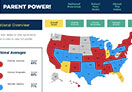
Additional state-by-state research and analysis can be found at the Parent Power Index©.

**Get the Model Legislation for States report here**

The new US visa rush: Build a charter school, get a green card

by Stephanie Simon
Reuters
October 12, 2012

It’s been a turbulent period for charter schools in the United States, with financial analysts raising concerns about their stability and regulators in several states shutting down schools for poor performance.

The volatility has made it tough for startup schools to get financing.

But an unlikely source of new capital has emerged to fill the gap: foreign investors.

Wealthy individuals from as far away as China, Nigeria, Russia and Australia are spending tens of millions of dollars to build classrooms, libraries, basketball courts and science labs for American charter schools.

In Buffalo, New York, foreign funds paid for the Health Sciences Charter School to renovate a 19th-century orphanage into modern classrooms and computer labs. In Florence, Arizona, overseas investment is expected to finance a sixth campus for the booming chain of American Leadership Academy charter schools.

And in Florida, state business development officials say foreign investment in charter schools is poised to triple next year, to $90 million.

The reason? Under a federal program known as EB-5, wealthy foreigners can in effect buy U.S. immigration visas for themselves and their families by investing at least $500,000 in certain development projects. In the past two decades, much of the investment has gone into commercial real-estate projects, like luxury hotels, ski resorts and even gas stations.

Lately, however, enterprising brokers have seen a golden opportunity to match cash-starved charter schools with cash-flush foreigners in investment deals that benefit both.

“The demand is massive – massive – on the school side,” said Greg Wing, an investment advisor. “On the investor side, it’s massive, too.”

Two years ago, Wing set up a venture called the Education Fund of America specifically to connect international investors with charter schools. He is currently arranging EB-5 funding for 11 schools across North Carolina, Utah and Arizona and says he has four more deals in the works.

And that’s just the start, Wing says: “It’s going to be explosive.”

CREDIT CRUNCH

The charter school movement is somewhat controversial. Critics – led by teachers’ unions – contend they divert much-needed funds from traditional public schools. Still, they have proved quite popular and now educate more than 2 million children in the United States.

Charter schools are publicly funded but privately run, sometimes by for-profit companies. They receive taxpayer dollars to educate each child who enrolls. Yet in most states, they get little or no public money to build classrooms, libraries and other facilities.

Well-established and successful chains of charter schools, such as KIPP, Green Dot or Achievement First, receive hefty support from philanthropic foundations and private donors. The chains can also tap into financing provided by an array of for-profit and non-profit investment funds created for that purpose.

But the charter school movement also includes hundreds of small, one-of-a-kind schools, often started by parents seeking a different educational environment for their children. Those mom-and-pop startups have always had a hard time securing funding to build their schools. Many have had to make do with makeshift classrooms in strip malls or church basements.

And lately, experts say, the credit crunch has worsened.

“It’s a hard go,” said Eric Hall, an attorney in Colorado Springs who advises charter school boards.

Last month, Fitch Ratings warned it was likely to downgrade bonds backed by charter schools because the sector is volatile and the schools are highly leveraged. Such risks mean charter-school debt is typically considered speculative, rather than investment grade, said Eric Kim, a director at Fitch Ratings.

Meanwhile, the IRS has signaled it plans closer scrutiny of charter schools’ tax-exempt status if they rely on for-profit management companies to provide their classroom space and run their academic programs, Hall said. He sent his clients a long memo this summer warning that the stepped-up IRS oversight could put some at “significant risk.”

If that weren’t enough to make investors wary, several well-known charter schools have run into significant legal and fiscal hurdles in recent months.

Missouri regulators shut down six campuses run by Imagine Schools, one of the nation’s largest for-profit charter chains, because of poor academic performance. A judge in California ruled that Aspire Public Schools, a large non-profit chain, hadn’t secured the proper approval for six of its schools and would have to get permission from local boards of education to continue running them. Local officials yanked the charter of a high-achieving middle school in Georgia over concerns about mismanagement.

All told, about 15 percent of the 6,700 charter schools that have been launched in the United States in the past two decades have since closed, primarily because of financial troubles, according to the Center for Education Reform, which supports charter schools.

This fall alone, more than 150 established charter schools didn’t open their doors to students.

Such volatility “will spook people, no doubt about it,” said David Brain, chief executive officer of Entertainment Properties Trust, which has historically owned movie theaters but branched out to invest in charter schools, including the six that were shuttered in St. Louis.

Brain said the closures did not affect his company’s bottom line and he remains convinced charter schools are a profitable sector. But even he’s not ready to start backing untested startup schools.

Charter school administrators say they know that wariness all too well.

“Until you get that charter renewal that says you’re doing good things” – typically after five years in operation – “banks won’t even talk to you,” said Hank Stopinski, principal of the Health Sciences Charter School in Buffalo. Without foreign investment, he said, “we would not have been able to do this project.”

RECESSION-PROOF

The EB-5 program has drawn sharp criticism in the past. Some immigrant investors have lost both their money and their shot at U.S. citizenship when their American partners proved inept or corrupt. In the United States, critics have questioned the value of trading visas for scattershot investment.

Yet interest is surging. In the first nine months of this year, the government approved 3,000 petitions from foreigners seeking to participate in the program – nearly twice as many as were approved all last year, according to the Department of Homeland Security.

Charter schools have become particularly trendy because they are pitched as recession-proof.

An investor forum in China last spring, for instance, touted U.S. charter schools as a nearly fool-proof investment because they can count on a steady stream of government funding to stay afloat, according to a transcript posted on a Chinese website.

Arizona educator Holly Johnson, who runs three charter schools and plans to open a fourth next year, said she couldn’t believe how easy it was to secure $4.5 million in funding from abroad.

“We didn’t have to do anything at all,” she said, other than open her schools to potential investors. They didn’t ask many questions, she said. Their concern was more basic: “They wanted to come over and make sure it was real.”

INNER SATISFACTION

Eager to join the rush, Ali Faisal devoted a day this week to touring charter schools in Arizona.

Faisal, 37, is a Pakistani citizen who now lives in Calgary, Canada. He runs a technology consulting business that works with oil and gas companies and says he is eager to expand to the United States. He figures the best way to do that is to get a green card.

And the best way to do that, he said, is the EB-5 program.

Participants can get a temporary visa by investing $500,000 to $1 million in a federally approved business. If the business creates or preserves at least 10 jobs in two years, the investor and his immediate family are eligible for permanent residency in the United States.

“It’s a much easier path,” Faisal said.

He decided to put his money in a charter school, he said, because that way he felt he’d be serving society as well as helping himself. The schools he saw impressed him with their rigorous science curriculum and he said he hoped his investment would help nurture a new generation of American entrepreneurs.

“Investing in some type of hotel,” Faisal said, “will not give me that inner satisfaction.”

Daily Headlines for October 12, 2012

Obama, Romney Have Similar Basic Views On Education
Los Angeles Times, CA, October 12, 2012

Both candidates want test scores to be part of teacher evaluations, support extra pay for effective instructors and back the growth of charter schools. One difference is Romney’s support for vouchers.

Report: High School Initiatives Yield Collegiate Gains
Chicago Tribune, IL, October 11, 2012

Getting admitted to a top university isn’t enough. For many students, finishing the mission and getting a degree requires a variety of initiatives, from a rigorous high school curriculum to more advisers, according to a new report released Thursday by the National School Boards Association.

How Tougher Classes In High School Can Help Kids Make It Through College
Christian Science Monitor, MA, October 11, 2012

Some 40 percent of students are failing to graduate from college in six years. A study calls for higher-quality college prep, with more advanced math, advanced placement classes, and better advising.

Experts’ Views About Obama And Romney On Education
Los Angeles Times, CA, October 12, 2012

The following are edited excerpts from telephone interviews and email exchanges with leading education analysts, writers and researchers regarding the policies and positions of the presidential candidates.

The New US Visa Rush: Build A Charter School, Get A Green Card
Reuters, October 12, 2012

It’s been a turbulent period for charter schools in the United States , with financial analysts raising concerns about their stability and regulators in several states shutting down schools for poor performance.

FROM THE STATES

CALIFORNIA

Chico Unified School District Finding Ways To Work With Charters
Chino Enterprise Record, CA, October 12, 2012

Since they were first created 20 years ago, charter schools and traditional districts have found themselves in a sometimes uncomfortable relationship.

L.A. Schools Improve By State Standards, Not Enough By U.S. Yardstick
Los Angeles Times, CA, October 12, 2012

Just like across California, campuses are at their highest-achieving level yet, but they aren’t keeping pace with rapidly rising federal targets.

Innovative Charter School Mixes Languages, Gets Results
San Diego Union Tribune, CA, October 11, 2012

This linguistically rich scene is common at Chula Vista Learning Community Charter, a K-9 school that attributes its well above-average test scores to two distinct practices: throwing English learners and native speakers into the same class (called two-way immersion), and dividing instruction equally between English and Spanish (the 50-50 model).

District Data Show Some Growth In Closing Achievement Gap In Berkeley Schools
Daily Californian, CA, October 11, 2012

Newly released Berkeley Unified School District statistics reveal slight to moderate improvement in closing the districtwide achievement gap, though not all of the yearly target goals have been met.

In California Schools’ Test Scores, State Sees Success While Feds’ No Child Left Behind Act Sees Growing Failure
Mercury News, CA, October 12, 2012

California schools continued their steady gains in achievement, and for the first time more than half of them met the state’s target score, according to California ‘s annual index of school achievement released Thursday.

COLORADO

Charter School Community Meetings Planned
Post Independent, CO, October 12, 2012

A series of information meetings in each of the three Roaring Fork School District Re-1 communities will give the public an opportunity to learn about and comment on a new charter school proposed to be located in Glenwood Springs.

DISTRICT OF COLUMBIA

How To Waste $500,000+ In Education Funds
Washington Post Blog, DC, October 11, 2012

The following press release from the D.C. Office of the State Superintendent of Education (OSSE) landed in my e-mail box with this headline: “Charter School Consortium Selected to Measure Student Growth, Inform Teacher Instruction.”

FLORIDA

Classical Preparatory School To Try Again For Charter Status
The Tampa Tribune, FL, October 12, 2012

A proposed charter school that plans to provide students with a classical education goes before the Pasco County School Board on Tuesday.

Winner May Make Difference In New Laws
News Chief, FL, October 12, 2012

The race isn’t likely to end Republican control of the state Senate, but the winner in the newly created District 14 could be the deciding vote on bills that narrowly lost in the Senate in the last legislative season.

GEORGIA

New Charter Schools For Tybee, Savannah Approved
Savannah Morning News, GA, October 12, 2012

Young minds wishing to explore the seas or relive history through a lost language are in luck.

Vote ‘No’ On Charter School Amendment
Cherokee Tribune, GA, October 12, 2012

Make no mistake — Amendment No. 1 (also known as HR 1162 and the Charter School Amendment) is definitely not about supporting charter schools in Georgia .

Status Quo Isn’t Working, So Let’s Try Charter Schools
Rockdale Citizen, GA, October 12, 2012

I just had to write to the Citizen regarding Brad Smith’s recent viewpoint on the upcoming charter school vote in November. I am sure that Mr. Smith is a hardworking, well-meaning board member, but when do we stop going with the flow and try something different?

Don’t Deny School Choice
Augusta Chronicle, GA, October 11, 2012

It is appalling, and quite possibly illegal, how the public education establishment has fought to prevent Georgians from having more educational choices for their children.

Foes Of Charter School Issue Say New Poll Shows 52% Against
Atlanta Journal Constitution Blog, GA, October 11, 2012

Polls by interested parties must always be taken with a grain of salt – but they are not always something to dismiss out of hand.

Charter Amendment Opponents Speak At Forum
Times-Georgian, GA, October 12, 2012

Local opponents of the charter school amendment spoke at a forum held by the League of Women Voters last night, informing voters of the reasoning behind their opposition.

IDAHO

Idaho Seeks Parent, Teacher Feedback On Ed Reform
Idaho Statesman, ID, October 12, 2012

While campaigns on both sides gear up for a vote on the Students Come First laws, the State Department of Education is asking stakeholders across Idaho to help gauge the new laws’ effectiveness.

Foes Of Luna Laws Outspend Backers
Idaho Statesman, ID, October 12, 2012

Opponents of Superintendent Tom Luna’s 2011 education reforms reported raising through Sept. 30 more than twice as much as the reported effort of supporters of Propositions 1, 2 and 3.

ILLINOIS

Jean Claude Brizard out as CPS Chief
Chicago Tribune, IL, October 11, 2012

Chicago Public Schools CEO Jean Claude Brizard is out, to be replaced permanently by the school system’s chief education officer, a spokeswoman for Mayor Rahm Emanuel said Thursday.

Charter Expansion Could Include Turnarounds, New Operators
WBEZ, IL, October 12, 2012

Big changes are coming to Chicago public schools, and it’s more than just recess and a longer school day.

INDIANA

FWCS Talks Of Outfoxing Competitors
The Journal Gazette, IN, October 12, 2012

The school in the Fort Wayne Community Schools district that lost the most students to vouchers received an A under the state’s accountability rating.

IOWA

Iowa Educators Propose Higher Pay For New Teachers, Career Tier System
Altoona Herald, IA, October 12, 2012

Higher starting teacher salaries, a yearlong residency program for new educators, and expanded roles for veteran staff are key components of a $150 million school improvement proposal released Thursday by the state’s Task Force on Teacher Leadership and Compensation.

KANSAS

Candidates Talk Vouchers At USD 501 Forum
Topeka Capital Journal, KS, October 11, 2012

Shawnee County candidates for the Kansas House, Senate and Kansas State Board of Education gave their thoughts on school vouchers at a forum Thursday night, three days after a Republican committee chairman said they were sweeping the nation.

LOUISIANA

Educators Tout Another Option For Parish Students
The Daily Advertiser, LA, October 12, 2012

A group of local citizens are making a push to open a tuition-free, public charter school in north Lafayette by the beginning of the 2014-15 school year.

MASSACHUSETTS

Blackman Deal Shows Best Motives
Gloucester Daily Times, MA, October 12, 2012

The many critics of Gloucester’s Community Arts Charter School who might have questions the motives behind Tony Blackman’s exit from the executive director’s post sure didn’t find any smoking guns within the separation agreement reached between Blackman and the school’s Board of Trustees.

School, And Mayoral, Choices
Jamaica Plain Gazette, MA, October 12, 2012

The new school choice proposals for Boston Public Schools have become a battleground of mayoral ambitions. That’s not just good theater. It’s a good thing for the city and its students.

Not as Simple as A-B-C
Coulter Press, MA, October 12, 2012

It seems like alphabet soup, but, the vocabulary of education has changed recently, especially when it comes to measuring progress.

MICHIGAN

Most Parents Don’t Think DPS Is The Best Option For Their Children, Seek Alternatives
Detroit News, MI, October 12, 2012

Families in Detroit are fed up with poorly performing schools. And that dissatisfaction is driving an explosion of new charters and other options in the city as parents have chosen alternatives to Detroit Public Schools. Most residents believe DPS isn’t the best option for learning in the city.

MINNESOTA

Mpls. North High Is Reborn
Star Tribune, MN, October 11, 2012

New principal and staff must remake the school while competing with a nearby charter school that has a similar mission.

MISSISSIPPI

Parish School Board Says No To Charter School
Natchez Democrat, MS, October 12, 2012

The Concordia Parish School Board adopted Thursday a resolution opposing the granting of a charter for the Delta Charter School in Ferriday.

NEW HAMPSHIRE

Charter School Supporters Urge State To Lift Moratorium
Hampton Union, NH, October 12, 2012

Charter school supporters intend to be vocal about the state Board of Education’s recent moratorium.

NEW JERSEY

Principal Evaluation Mandate Will Put Administrators Under Microscope
New Jersey Spotlight, NJ, October 12, 2012

Some districts question the wisdom of rolling out new systems while teacher evaluation just getting underway

NEW YORK

What The UFT Owes New York’s Kids
New York Daily News, NY, October 12, 2012

There is a serious lesson to be learned from the United Federation of Teachers Charter School’s dismal ranking on its report card. That being:

South Buffalo Charter School Featured in TIME Magazine
WGRZ, NY, October 11, 2012

The students and two of their teachers were featured in Time Magazine, for a series of creative and informative videos they write, produce and upload, that help make classroom learning more fun.

NORTH CAROLINA

Multiplying Math-Science Success For Urban Kids
Charlotte Observer, NC, October 11, 2012

Take a charter school where low-income African American students shine at math and science. Add a university that specializes in urban education.

OHIO

Superintendent Evaluation Process Varies
Oxford Press, OH, October 12, 2012

While Race to the Top and other education reform movements are putting an emphasis on teacher and principal evaluations, there is no uniform method for evaluating superintendents.

OKLAHOMA

School Grades
Tulsa World, OK, October 12, 2012

Gov. Mary Fallin and a growing number of legislators say they support action by the state Board of Education that delayed approval of a controversial A through F grading system for local schools and school districts.

TENNESSEE

Everyone, Including Metro, Seems To Want School Choice. The Problem: Busing
Nashville Ledger, TN, October 11, 2012

If nothing else, the push to bring Great Hearts Academy to Nashville was a conversation starter for competition and choice in the Metro school marketplace.

VIRGINIA

Parents Voice Concerns On Charter School Plans
Fairfax Times, VA, October 12, 2012

Opponents and supporters of a proposed charter school for at-risk students spoke before the Fairfax County School Board on Tuesday night during a public hearing on the alternative school’s application.

ONLINE SCHOOLS

Online School Provides Path To Success
ABC News4, SC, October 11, 2012

Challenges are mounting in our school systems. Bullying, peer pressure, distractions, learning disabilities. Those are just some of the reasons students can fall behind their peers.

Enrollment Increases At St. James Virtual School
Daily Comet, LA, October 11, 2012

Enrollment in St. James Parish’s online Virtual Academy not only has increased rapidly since its July opening, but school officials are fielding phone calls from parents outside the parish who are interested in the program.

Experts’ views about Obama and Romney on Education

by Howard Blume
Los Angels Times
October 12, 2012

The following are edited excerpts from telephone interviews and email exchanges with leading education analysts, writers and researchers regarding the policies and positions of the presidential candidates.

Michelle Rhee

Chief executive, StudentsFirst; former chancellor, District of Columbia Public Schools

Both support expanding educational options for families. President Obama did this, for example, by encouraging states to get rid of unnecessary caps on public charter schools through Race to the Top [grants]. At the same time, Gov. Romney supports dramatically expanding choices parents can make about where to send their kids to school. But he doesn’t tie that increased flexibility to strong rules ensuring any school — private or public — that takes the public funds will be held accountable for student learning.

Jonathan Kozol

Author whose books about education include “Death at an Early Age” (1967) and “Savage Inequalities” (1991). His new book is “Fire in the Ashes.”

As we saw in Wisconsin, there is a constituency out there that would like to do away with public-sector unions. The teachers are the loudest of those unions. Romney could not do away with teachers unions, but I think he will do his very best to move us in that direction.

President Obama simply wants to challenge the teachers unions to be more flexible in their demands but obviously recognizes they have a useful role in our society.

I regret the President’s apparent willingness to continue relying on standardized exams in evaluating teachers because I think it’s a simplistic way of judging what happens in the classroom and excludes so many aspects of a good education that are not reduceable to numbers.

The President recognizes that a demoralized teaching force is not going to bring passionate determination to the education of children — no matter how you measure them, castigate them or properly criticize them.

Jeanne Allen

President, Center for Education Reform, based in Washington, D.C.

A Romney administration would likely leave the regulating to the states, where it belongs. This becomes the huge distinction between the candidates—on charters, on teacher issues, on testing. Obama believes government should lead, and if the states aren’t doing something he’ll step in.

Romney’s impact would be felt much bigger and broader than the current administration’s impact. Today you can get more money by promising to behave. Romney’s approach would likely be very different: his incentives for choice…; his fight with labor; his attempt to reopen the higher education lending market.

Obama should be calling the unions to the carpet, and instead [Education Secretary Arne] Duncan is sending platitudes about getting along and collaborating. That’s because they promised the unions they would work with them and need the unions. Romney has no such allegiance.

Gary Orfield

Professor, UCLA Graduate School of Education; co-director, the Civil Rights Project at UCLA

The Obama administration should have fought harder to continue the economic stimulus in education for at least another year or two. Without it things in schools and colleges would have been far worse.

My reading is that Romney is profoundly skeptical about the value of federal funds and thinks they do no good.

A Romney administration would obviously bring deep cutbacks in virtually all areas of domestic spending.

The Chicago teachers strike is a reflection of the fact that teachers have been pushed too far for too long and are particularly incensed on the overly assertive (and intellectually indefensible) use of test scores to evaluate individual teachers. Romney’s very hostile reaction toward the teachers and the Obama Administration’s straddle show the difference.

Diane Ravitch

Education historian and blogger whose books include “Death and Life of the Great American School System” (2010).

Both support charters, which is privatization, and which do not get better test scores than public schools.

Both support test-based evaluation of teachers, which has never been shown to accomplish anything other than to demoralize teachers.

Both support carrots (merit pay) and sticks (closing schools like shoe stores that don’t make a profit). Merit pay has been tried again and again for nearly a century. It never works.

Both emphasize test scores as the measure of good education, which they are not.

Neither talks about the impact that poverty has on children’s readiness to learn.

Three big differences:

1. Romney supports vouchers; Obama does not.

2. Romney embraces privatization; Obama has offered only half-hearted support via privately managed charters.

3. Romney wants to give the student loans back to the banks and provide no help for college students drowning in debt. Obama took the program away from the banks and understands that students need financial aid. All the talk about boosting college-going rates is hollow, if students can’t pay for it.

Dream Vice Presidential Debate Questions from Education Reformers

by Jeanne Allen
October 11, 2012

As I wrote last week, the first Presidential debate was a pleasant surprise from my perspective as a veteran education reformer accustomed to sitting through years of debates, listening to candidates talk about important issues like the economy, jobs, and national security with barely a mention of the building block for the solution to all of those problems – EDUCATION.  It would be wonderful to hear from the Vice Presidential candidates on the issue, since both have had occasion to vote or otherwise stake out positions on education reform, and it would be helpful to hear their positions laid out more specifically.

Below are a few of the questions we would ask the Vice Presidential candidates, as well as some additional information that might provide context for debate viewers in the event these questions are raised.

Question 1: FOR VICE PRESIDENT BIDEN.  Governor Romney has proposed allowing federal money allocated for students most in need, students who are typically stuck in failing schools, to follow them to schools of choice where those programs currently exist at the state level. What is your position on this and in general, how do you now feel about providing poor children the choices you and the other candidates have been afforded?

Once upon a time Vice President Biden parted company with his party to vote to authorize a school choice program for the District of Columbia, twice, a program President Clinton vetoed.  Others, such as Senators Lieberman and Landrieu were also early supporters.  In this Administration, however, the same program was zeroed of the budget — twice — and only restored after pushing and no-holes barred deal making by the House leadership.  It would be worth knowing how the VP could explain why he let this happen.

Question 2: FOR CONGRESSMAN RYAN. You voted for HR 1, The No Child Left Behind Act, which authorized a federal accountability system that has had a strong impact on states and local community behaviors, much of which you support. Today the Obama Administration has issued waivers to the program in the absence of it lacking renewed authorization or changes that both sides may want. What is your view of the House’s position today on NCLB?

The Congressman’s support for NCLB is well known, and Governor Romney has been positive in the past as well.  But the leaders of today’s House of Representatives have taken the position that the act was too top heavy, and they’d prefer local control again. That kind of control — in which school boards, school districts and teachers unions dictated local policy that protected their own interests and masked school failure behind bad data and no transparency — was the root cause of NCLB being enacted.  The Rs have shifted. Wonder how Congressman Ryan squares his previous support with his colleagues — and with the Duncan waivers.

Question 3: FOR VICE PRESIDENT BIDEN.  In the first presidential debate President Obama seemed to be reading off the latest poll results when he offered smaller class sizes and said he’d invest more in education to solve its problems. What is the Administration’s evidence for smaller class size impact and how much money is your administration planning to spend on helping schools lower class size? Where is the evidence that additional spending on more programs will result in student achievement gains?

The notion of class size reduction really does contradict other policies the President and his education leadership team endorse. The structural changes in education that have been created by NCLB or incentivized for some states by Race to the Top are about choice and accountability, which are outputs, not inputs. In fact the only group that pushes lower class sizes are the teachers unions, as they see it as a labor issue, not as an education issue.  Will anyone in the media ever be brave enough to tackle that sacred cow with the current Administration?

Question 4: FOR CONGRESSMAN RYAN.  You and others in your camp have said that there are not many fundamental differences on education between Romney-Ryan and Obama-Biden.  What are the similarities and what are the differences?

Reformers are split on this issue. On one hand, President Obama and many of his colleagues talk about charter schools, performance pay and other long-time reforms that teachers unions are against. On the other hand, the level and intensity of such laws is rarely discussed. There are good charter laws and bad ones, there are very small pilots aimed at helping pay teachers for performance and then there are whole, state-wide laws.  It’s hard to believe that a Romney-Ryan ticket would see enormous similarities. Are the differences there, or is it a matter of not wanting to look like they are against a popular set of initiatives if they started splitting hairs?

Question 5: FOR VICE PRESIDENT BIDEN.  You and the president boast about your signature education program, Race to the Top, and suggest it had a major impact on state and local reform, including the comment made at the last debate that RtTT led to adoption of 43 new laws.  What are those laws — can you name them? — and what do we know today about their impact on student achievement?

While RtTT created a lot of noise, the jury is still out on its impact.  Many of the states that adopted reforms and applied for funds were well on their way to doing so before the Administration created the program. Even a few states that used the carrot of more federal money in a recession and ended up adopting programs (Delaware and Tennessee, for example) are not sure of the impact yet.  But 43? That’s a stretch. Let’s find out. Will Biden be able to name the states or their reforms? How about just a few?

Question 6: FOR BOTH.  How do you distinguish between the work of rank and file teachers, and the work of the teachers unions? What would you say to the union leadership about their positions on school choice, charter schools, performance pay, online learning? What would you say to teachers individually about your respective Administrations?

Congressman Ryan hails from the state where the teachers unions were in the lead in attempting to recall Governor Scott Walker. Doing so would have caused a roll back not only of collective bargaining reforms but of charter school and school choice programs.  Is he willing to say boldly that he believes unions are a problem and risk offending teachers who might be discouraged by such comments? VP Biden has always been endorsed by the teachers unions but has supported charter schools and even a modest school choice program (see Question 1). With a few minutes of questioning, we might get to the heart of whether he believes the teachers unions are making a positive impact — or are obstructionist.

###

For more on where Romney and Obama camps stand on critical education issues, head over to our Education and the Presidential Candidates page.