









Sign up for our newsletter

Why DC Can’t Read

It is just weeks away from the 30th anniversary of A Nation At Risk, and we are STILL struggling with what to do with kids who can’t read. Really?

Read more in the Washington Post article “States draw a hard line on third-graders, holding some back over reading”.

Quality Teaching Trumps Common Core

Successful school leader and one-time CER awardee Deborah Kenny of Village Academies makes the case for good teaching as the key to triumphant kids, not standards alone.

Read her Op-Ed about how the Common Core is affecting how schools handle young children here.

AFT President Randi Weingarten Arrested

Randi Weingarten, president of the American Federation of Teachers, thinks jail is apparently the way to show her displeasure with Philadelphia schools closing.

What happened and what she had to say, here.

Daily Headlines for March 12, 2013

NEWSWIRE IS BACK! Click here for the latest weekly report on education news and commentary you won’t find anywhere else, spiced with a dash of irreverence, from the nation’s leading voice in school reform.

NATIONAL COVERAGE

AFT’s Weingarten On Why She Got Arrested, ‘The Gall’ Of Reformers, Etc.
Washington Post Blog, DC, March 12, 2013

American Federation of Teachers President Randi Weingarten was arrested last week in Philadelphia while protesting a hearing of the School Reform Commission that voted to close 23 public schools. Here’s a Q & A with her about why she went to Philadelphia, what teachers are worried about, and more.

Report: Half Trillion Needed To Update Schools
Associated Press, March 12, 2013

America’s schools are in such disrepair that it would cost more than $270 billion just to get elementary and secondary buildings back to their original conditions and twice that to get them up to date, a report released Tuesday estimated.

FROM THE STATES

ALABAMA

Scofield Responds To Alabama Education Association’s ‘Betrayal Ad
Sand Mountain Reporter, AL, March 11, 2013

State Sen. Clay Scofield, R- Red Hill, recently found himself in the crosshairs of an ad placed by the Alabama Education Association, which claimed he betrayed his constituents with his support of the recently passed Alabama Accountability Act.

Alabama School-Choice Decision as Theater of the Absurd
National Review Online, March 11, 2013

No claim was too ridiculous. But farce doesn’t seem to capture what happened last week in Alabama.

ALASKA

Bill Increases Time Required For Teacher Tenure
Alaska Public Radio, AK, March 11, 2013

Public school teachers might have to wait a couple years longer to acquire tenure rights if a bill proposed in the Alaska House is passed.

CALIFORNIA

Parent Group Receives Proposals To Remake Failing LAUSD Elementary
San Bernardino Sun, CA, March 11, 2013

A group of Los Angeles parents who successfully invoked a state law to take over their failing school have received four proposals on how to remake the school, including one from the Los Angeles Unified School District.

Educators Gathering For Charter School Confab
San Diego Union Tribune, CA, March 12, 2013

Educators from across the state are in San Diego this week for the 20th annual California Charter School Conference.

DISTRICT OF COLUMBIA

KIPP DC Proposes New High School in Southwest Washington
Washington Post, DC, March 11, 2013

One of the District’s highest-performing charter schools is proposing to build a high school on public land in Southwest, drawing mixed reviews from those with a stake in that part of the city.

35% Of Gates Foundation Scholarships Go To Friendship Charter Students
Washington Examiner, DC, March 11, 2013

More than 300 District public school students have received full college scholarships for next year through the Bill and Melinda Gates Foundation.

GEORGIA

‘Parent-Trigger’ Bill Bad For Schools
Savannah Morning News, GA, March 12, 2013

House Bill 123, which passed the House and is now awaiting a Senate hearing, is aptly nicknamed the “parent-trigger” bill because it may “trigger” anything from the firing of a principal, switching faculty all over the place or (the real reason) so that a public school could be converted to a charter school.

Byron Council Votes To Transfer Building For Proposed Charter School
Macon Telegraph, GA, March 12, 2013

City Council voted unanimously Monday to give a former elementary school building the city owns to a group working to start a charter school in Byron.

Deal, NAACP In Heated Talks Over DeKalb School Board
Atlanta Journal-Constitution, GA, March 11, 2013

A meeting between Gov. Nathan Deal and leaders of several civil rights organizations took a fiery turn on Monday during discussions on whether Deal should be specifically seeking black candidates to replace DeKalb County’s ousted school board members.

ILLINOIS

A Promise Worth Breaking
Chicago Tribune, IL, March 10, 2013

Chicago Public Schools officials are trying to unload 24 school sites that have been vacant at least 10 years. Soon, they’ll likely have a lot more properties to move in their vast real estate portfolio.

CPS Changing How It Gives Money To Schools
WBEZ, IL, March 11, 2013

Chicago Public Schools is fundamentally changing how it will fund schools next year—giving principals the power to decide how many teachers to hire and what programs to offer.

INDIANA

School Choice Advocates Step Out
The Journal Gazette, IN, March 12, 2013

Supporters of alternatives to traditional public education took to the Statehouse on Monday to encourage lawmakers to continue the fight for school choice.

Gov. Mike Pence: Indiana Needs More Education Reform
Indianapolis Star, IN, March 11, 2013

Indiana needs to keep pushing for more education reform to build on the momentum of the past two years, Gov. Mike Pence told a Statehouse education reform rally on Monday.

MAINE

Portland Charter School Sues Its Founder
Portland Press Herald, ME, March 11, 2013

he board of Portland’s first charter school is suing fired founder John Jaques, demanding that he turn over all school property that he still controls online.

MARYLAND

Montgomery County Report To Focus On Progress In Narrowing Achievement Gap In Schools
Washington Post, DC, March 12, 2013

The Montgomery County Council will be receiving an update on how well county schools are narrowing the achievement gap.

MICHIGAN

Michigan Education Panel Outlines School Reforms At Pioneer High School Event
Ann Arbor News, MI, March 12, 2013

A forum at Ann Arbor’s Pioneer High School to discuss the future of public education in Michigan drew a standing-room-only crowd of nearly 300 people Monday night.

Detroit School Board Seeks Contempt Order Today Against Roberts
Detroit News, MI, March 12, 2013

The Detroit Board of Education is asking a Wayne County judge on Tuesday to hold Emergency Manager Roy Roberts in contempt of a court order that requires both the board and Roberts to work cooperatively in operating Detroit Public Schools.

MINNESOTA

Charter Schools For ‘At-Risk’ Kids: What Are Fair Standards?
MinnPost, MN, March 11, 2013

The school is one of about 25 charter high schools in Minnesota that serve academically at-risk students. This can mean students who are behind in credits, perform well below their grade level, have dropped out of or been expelled from school, are pregnant, have mental health problems or — an increasing problem since the recession — are homeless.

MISSISSIPPI

Miss. House Rejects Appointed Superintendents Bill
Clarion Ledger, MS, March 11, 2013

House members want Mississippians to keep their elected school superintendents.

NEBRASKA

National Common Core Academic Standards Get A Closer Look From State
Omaha World Herald, NE, March 12, 2013

Nebraska’s refusal to adopt the Common Core academic standards in math and language arts could cost students, teachers and taxpayers as 45 other states press full steam ahead to implement them, some educators say.

NEW JERSEY

Matter of Principals: School Administrators Also Getting New Grading System
New Jersey Spotlight, NJ, March 12, 2013

Revamped evaluations, which don’t apply only to teachers, prompt questions from principals association about criteria

Poll: N.J. Teacher Evaluations Too Heavy On Testing
Daily Record, NJ, March 12, 2013

Readers overwhelmingly said they think the state is relying too heavily on standardized testing in its newly proposed plans for assessing the state’s educators, but most also said the evaluations should include test scores, according to a New Jersey Press Media online survey this month.

NEW YORK

Panel Rejects Proposal to Stop School Closings
New York Times, NY, March 12, 2013

A city panel on Monday night rejected a proposal to stop city-mandated school closings in a tense, often raucous meeting, effectively putting any hopes of reversing Mayor Michael R. Bloomberg’s education policy into the next mayor’s hands.

NORTH CAROLINA

N.C. Charter School Review Board May Be Cut
News & Record, NC, March 12, 2013

The 15-member group that reviews state charter school applications could soon be disbanded. Senate Bill 10, or the Government Reorganization and Efficiency Act, would eliminate a host of state boards and commissions, including the Charter School Advisory Council.

For Better North Carolina Schools, Link Teacher Pay To Effectiveness
News & Observer, NC, March 11, 2013

Thirty years after being warned that America is “A Nation At Risk,” our schools are still not where they need to be. Gov. Pat McCrory says the school system is broken. Teachers complain that they are disrespected and underpaid. Parents wonder whether their kids are getting the education they need for a global economy.

OREGON

Kids Unlimited Charter School Hangs in the Balance
KOBI-TV, OR, March 11, 2013

The Kids Unlimited Charter School, which would serve vulnerable kids in the community, has been five years in the making. But now, there are concerns about a potential conflict of interest.

PENNSYLVANIA

Parents Tell School Board They Plan To Open A Charter School
Sun Gazette, PA, March 12, 2013

Southern Tioga School District board members got an earful from a large contingent of Liberty area residents upset that the board closed their school and will bus their children to North Penn in the fall.

Charter School Controversy Here
Lancaster New Era, PA, March 12, 2013

The School District of Lancaster school board is expected to vote March 19 on whether to approve a charter school application that has generated a lot of hard feelings.

ASD Denies Elderton Charter School’ Application
The Kittanning Paper, PA, March 12, 2013

The Armstrong School District Board of Directors formally voted 8-1 to deny the application of the founding board members to create Everlasting Elderton Charter School.

Pa. Must End ‘Double Dip’ Reimbursement Of Charter School Pension Costs
Allentown Morning Call, PA, March 11, 2013

As our school districts prepare their budgets for next school year, we must account for cyber charter school tuition payments for students who do not attend district schools that divert significant resources from our budgets. When it comes to cyber charter school tuition, our school districts and taxpayers are overpaying these schools, and we must address this issue now.

TENNESSEE

Charter School Authorizer Debate Begins To Heat Up
The Tennessean, TN, March 12, 2013

Both supporters and naysayers of a statewide charter school authorizer are taking their pleas to the streets and asking for support.

Memphis Board Members To Consider Cutting Seniority Pay For Teachers
Commercial Appeal, TN, March 11, 2013

School boards for years have affirmed the value of seniority and advanced degrees by paying teachers more for both. Next week, the board is expected to approve policy changes to ditch them both except for math and science teachers.

TEXAS

Texas Tutoring System Provides A Lesson In Dysfunction
Star-Telegram, TX, March 11, 2013

As with many good intentions, No Child Left Behind meant well with its tutoring mandate: low-income students at consistently struggling schools are eligible for tutoring paid by federal funds.

Teachers Rally In Capitol Over School Reform, Funding, Vouchers
Houston Chronicle, TX, March 12, 2013

Hundreds of Texas public school teachers, rallying Monday at the Capitol, left state lawmakers with some homework for the rest of the year’s legislative session: Allocate more money for schools. Require less testing. And say no to vouchers.

UTAH

Left Behind
Salt Lake Tribune, UT, March 11, 2013

But, despite problems with No Child Left Behind, the concept of leaving no child behind as state lawmakers divvy up revenue for public education is well worth keeping in mind. Some education bills under discussion as the legislative session winds down have lost that focus.

WISCONSIN

Every Child Deserves A Great School
Baraboo News Republic, WI, March 12, 2013

If you’ve been listening to the arguments offered by supporters and opponents of Wisconsin’s school voucher program over the years, you’ve probably noticed each side has a very different focus. Supporters speak up for poor kids. Opponents speak up for the public school system.

A Crash Course On The Constitutionality Of School Choice
Wisconsin State Journal, WI, March 12, 2013

Now that Gov. Walker has announced plans to expand the school choice program, we are hearing gravely intoned “concerns” about the program’s constitutionality. These are expressed, not as claims that school choice violates the state or federal constitution, but as the vague raising of “questions” and identification of “issues.”

State Withholding About $1.3 Million From 5 Milwaukee Voucher Schools
Milwaukee Journal Sentinel, WI, March 11, 2013

Five private schools in Milwaukee’s voucher program are operating on fumes this semester as the state Department of Public Instruction continues to hold back about $1.3 million in payments to them.

ONLINE LEARNING

District 304 Holds Hearing On Virtual Online Charter School
Kane County Chronicle, IL, March 12, 2013

What if they gave a party and the guest of honor did not show up? That is kind of what happened Monday at Geneva School District 304’s public hearing on an application to establish an online charter school: Virtual Learning Solutions, which made the application, was a no-show at the hearing.

La. Online Program Chooses To Register
The Advocate, LA, March 12, 2013

Despite legal questions the state is taking applications for online and other courses that will be offered by private firms and colleges, state Superintendent of Education John White said Monday.

Virtual Schools Respond
Albuquerque Journal, NM, March 11, 2013

The basic quarrel is whether charter schools should be able to contract with for-profit companies to provide fully online curriculum. Opponents of such schools say that New Mexico law does not allow for-profit entities to manage charter schools, and that these online companies are essentially managing the schools. Proponents say the charters are locally managed by their governing boards, and the online companies are just providing curriculum, like any for-profit textbook publisher.

Can’t Read? Can’t Move on to 4th Grade

“States draw a hard line on third-graders, holding some back over reading”
by Lyndsey Layton
Washington Post
March 10, 2013

A growing number of states are drawing a hard line in elementary school, requiring children to pass a reading test in third grade or be held back from fourth grade.

Thirteen states last year adopted laws that require schools to identify, intervene and, in many cases, retain students who fail a reading proficiency test by the end of third grade. Lawmakers in several other states and the District are debating similar measures.

Not every state requires retention; some allow schools to promote struggling readers to fourth grade as long as they are given intensive help.

Advocates of the new tough-love policies say social promotion — advancing students based on age and not academic achievement — results in high-schoolers who can barely read, let alone land a job or attend college. Literacy problems are best addressed at an early age, they say.

Critics say the policies reflect an accountability movement that has gone haywire, creating high-stakes tests for 8-year-olds. The child, not the school, bears the brunt of the problem, they say, pointing to research that shows that the academic benefits of repeating a grade fade with time while the stigma can haunt children into adulthood.

“This is completely unsettling. I’m concerned about a number of those legislative initiatives,” said Shane Jimerson, a University of California at Santa Barbara professor who has studied retention for 20 years and found that, from a child’s perspective, being held back is as stressful as losing a parent.

“This is deleterious to hundreds of thousands of students,” he said. “But children don’t have a voice. If you were doing this to any group that had representation, it would not be happening.”

Third grade has become a flashpoint in primary education because it’s the stage when children are no longer learning to read but are reading to learn, educators say. If children haven’t mastered reading by third grade, they will find it hard to handle increasingly complex lessons in science, social studies and even math.

In large urban districts, retention policies can affect a large share of third-graders. In the District last year, for example, almost 60 percent of third-graders were not proficient in reading, according to the city’s standardized tests.

“It’s been that way for a long time,” said D.C. Council member Vincent B. Orange (D-At Large), who is proposing a third-grade retention law that would apply to traditional and charter schools. “And we have to try something different. There has to be a full-fledged assault on the problem in the classroom.”

In some places, retention has morphed from an educational issue into a political fight.

Tony Bennett, Indiana schools superintendent, lost his elected position in November to Glenda Ritz, a teacher who ran because she was angered by Bennett’s third-grade retention policy.

“It was the final straw,” said Ritz, adding that her state should emphasize reading as early as kindergarten and help struggling readers well before third grade. She wants to stop retaining children based on standardized test scores.

Bennett, meanwhile, became state education commissioner in Florida, where the third-grade retention policy has served as a model for other states.

Ending social promotion has become so popular in some policy circles that Virginia Gov. Robert F. McDonnell (R) boasted to a recent meeting of the National Governors Association that he had accomplished it, though Virginia’s laws actually fall short.

“We essentially put an end to social promotion in third grade by major new third-grade reading incentives,” McDonnell told a panel of other governors on Sunday. “I mean, we just do a disservice to these young people, we all see it in our schools. If they get passed along to eighth, ninth grade, it contributes to the drop-out rate if they’re not able to read.”

Virginia requires school districts to identify struggling readers by third grade and provide intensive help. But students do not have to pass a reading test to progress to fourth grade, and schools are not required to retain third-graders who are weak readers.

Literacy is a struggle for many U.S. children, with 33 percent of all fourth-graders nationwide reading below basic levels in 2011, according to federal data. For minorities, the picture was worse: Half of black and Hispanic fourth-graders were below basic in reading.

Children who don’t read proficiently by third grade are four times more likely to drop out of school than those who read well, according to a recent study by the Annie E. Casey Foundation.

A matter of debate for more than a century, decisions about whether to hold back a child usually have been made by teachers and principals in consultation with parents.

But in an accountability era ushered in by the 2002 No Child Left Behind law, the new retention policies offer little wiggle room. Decisions are based on test scores, not the subjective judgment of teachers and administrators. Parents have little recourse. And individual students bear the impact, as opposed to an entire school being sanctioned for failing to perform.

The new approach began in earnest in 2002 in Florida under then-Gov. Jeb Bush (R), who promoted an education strategy that also featured private-school vouchers, data-based assessments for schools and teachers, charter schools and online learning.

Mary Laura Bragg, who ran Florida’s third-grade retention program under Bush, said it forced elementary schools to get serious about literacy. Principals moved their best teachers to kindergarten and first and second grades, she said. Schools sought state funds for diagnostic reading tests and other help.

“I saw a sea change in behavior,” Bragg said. “It’s a shame that it was the threat of retention that spurred these schools into doing what they should have been doing all along.”

A study that tracked third-graders retained in Florida found that they showed significant academic gains in the first two years, but those effects faded over time. Still, fewer students have been retained each year since the policy took effect, which suggests the emphasis on early reading is having an impact.

After leaving office, Bush created the Foundation for Excellence in Education to promote his education policies across the country. The foundation, which reported more than $9 million in revenue and assets in 2011, has lobbied and provided technical and strategic help to state officials and lawmakers who want to adopt third-grade retention laws.

Bragg, now a policy director at the foundation, is in frequent contact with lawmakers and education officials across the country. “Our mission is to help spread reform state by state, and a K-3 reading policy is one of those that states are very interested in,” she said.

In Ohio, Gov. John Kasich (R) signed into law the Third Grade Reading Guarantee, which says that starting this year, third-graders who fail a statewide reading test won’t be permitted to enter fourth grade. Similar laws are rolling out in Indiana, Iowa, New Mexico, Tennessee and Colorado.

Most policies require that schools evaluate children as early as kindergarten and notify parents if their child is below grade level. Schools are required to create a plan for each student and provide intensive reading tutoring, summer reading programs or other help. Most states make exceptions to the retention policy for English language learners, students with disabilities or children who have been previously retained.

Retaining a student can be expensive. In addition to providing additional coaching during the school year and summer programs, districts essentially must add another school year to a child’s academic career.

Paula Peterson, principal at Charles Fairbanks Elementary in Indianapolis, said she’s seen children slump under the weight of Indiana’s new law, which took effect last year.

“The children all knew if you didn’t pass, you weren’t going on,” she said, adding that children who failed last spring’s test were demoralized. “A lot of them gave up. They weren’t trying to do any work. The attitude was, ‘What’s the difference? I failed.’ ”

Of 64 third-graders tested last spring, 29 did not pass. After exemptions were granted, 12 children were held back. Seven of those children did not return to Charles Fairbanks Elementary in the fall; the school is in a high-poverty neighborhood where children are frequently moving in and out, Peterson said. That left five students to repeat third grade.

“I know there has to be accountability,” she said. “But I have a problem with anything that hinges on one picture, on saying that one quick snapshot means anything. One test and everything hangs on the balance.”

Cameron Flint, 9, is intensely aware that she must pass the third-grade reading test this month at her school in Evansville, Ind.

“She talks about it, she’s even cried,” said her mother, Bobbie Flint. “She says things like, ‘I hope I go to fourth grade with all my friends.’ ”

Even though she is an honor-roll student, Cameron finds reading difficult and doesn’t perform well on tests. Her teachers notified Flint at the start of the current school year that Cameron was at risk of being held back.

“I freaked out,” said Flint, who learned that Cameron was almost a full grade behind her peers and is mildly dyslexic. Flint hired a tutor and says her daughter has made progress.

“I feel confident she’s going to pass that test,” Flint said. “But I still feel these tests aren’t fair. It’s good to know where your child stands. . . . But let’s not go so far as saying we’re going to retain your child, and you have no say. Don’t threaten my child and her educational career because of one test.”

Worries about stressed-out children are misplaced, Bragg said.

“The pressure shouldn’t be on the kids, it should be on the adults,” she said.

Ralph Smith, managing director of the Campaign for Grade Level Reading, a collaboration between political, education, philanthropic and business leaders to improve literacy, said the country shouldn’t be arguing about social promotion vs. grade retention. If teachers and schools performed well, the debate would be moot, he said.

“Adults should just do what they should be doing, which is to identify the challenges that kids face and respond to those challenges early,” he said.

McDonnell achieves mixed results in trying to reform Virginia’s schools

by Michael Alison Chandler and Fredrick Kunkle
Washington Post
March 10, 2013

Robert F. McDonnell ran for Virginia governor promising to reform public schools by offering parents more accountability and better teachers and giving them greater school choice by growing the state’s tiny list of charter schools.

In his final push in the General Assembly this year, McDonnell (R) backed successful bills to bring Teach for America to Virginia, give grades to schools using A through F report cards, fine-tune a voucher-like program to help poor students attend private schools and institute a state board that would take over chronically underperforming schools.

But on some signature issues, he fell short of his promise to transform public education, reformers said. His initial attempt to make it easier to fire teachers was defeated, and his plan for performance-based pay was only partially funded. Statewide, there still are only four charter schools.

His overall record has alarmed many of Virginia’s Democratic lawmakers and educators, who say a shift toward private alternatives could undermine the state’s public schools. But nationally, reform activists say they are frustrated that despite an explosion of education innovations during the past four years, Virginia still lags behind other states.

Jeanne Allen, president of the Washington-based Center for Education Reform, called Virginia “a black mark for the movement” and McDonnell’s leadership “extremely disappointing.”

But the governor’s calls for change seemed misplaced to many Virginians, who are proud of their school systems, their early adoption of rigorous academic standards and their high national rankings. Education Week placed Virginia No. 4 in the nation this year for its overall student achievement and education policies — an accolade often cited in Richmond. Some argued that what the schools need are more resources to better achieve standards already in place; Virginia ranks 38th in the country for its share of per-pupil funding.

“When you have the fourth-ranked education state, it’s an uphill battle to educate folks on something completely different,” said Javaid Siddiqi, Virginia’s deputy secretary for education. “But there is a significantly different conversation happening around charter schools and [public education] than there was” four years ago.

The lack of urgency is fueled by nationally renowned suburban school systems that largely foot the bill for local schools and “do not like being challenged” as well as an overall climate where people “want to focus on things that are going well,” said Andrew Rotherham, an education consultant and former member of the state Board of Education.

Less often noted are trouble spots. Only one in five African American eighth-graders, for example, scored proficient or better on a national mathematics test.

McDonnell’s administration ran counter to reformers early in the governor’s term. The federal government’s 2010 Race to the Top competition sent dozens of states scrambling to adopt national academic standards or education policies that link teacher evaluations to test scores.

The governor was initially enthusiastic about the president’s reform agenda, but after Virginia came in 31st out of 41 states in the first round, he pulled out of the running, citing excessive “federal mandates” and state standards that were “much superior” to proposed national standards.

McDonnell struggled early on to gain traction with his plan to expand charter schools. He proposed giving the state Board of Education authority to approve charter applications, shifting that exclusive power from local school boards, which historically have been unreceptive.

The proposal failed, as did efforts to amend the state constitution to make it easier for other governing bodies to oversee local schools.

Instead, Virginia created an advisory committee on the state board to offer an initial technical review of charter applications and a chance to strengthen them before local school boards cast the final vote.

Siddiqi said the administration had to overcome confusion and misinformation among school leaders about what publicly funded charter schools are and how they might be helpful.

“That mountain was one we did not fully appreciate or anticipate,” he said.

As a result, state Education Secretary Laura Fornash said, the administration has worked to promote school choice in different ways.

McDonnell made way for virtual schools to grow in Virginia by allowing public schools to contract for online programs and pushing a requirement that all high school graduates take at least one online course.

In 2012, the General Assembly also approved a voucher-like program, modeled after similar efforts in Florida and Pennsylvania, that would give tax breaks to businesses and individuals to help fund private school tuition for poor children.

The plan to use tax money for private schools was hotly contested by teachers unions and many Democratic lawmakers.

Also controversial was McDonnell’s plan to create a state-level board that would take over persistently low-performing schools. The “school board in the sky,” as opponents called it, could hand over management to a charter operator or university. The proposal, borrowed from a similar approach in Louisiana, passed narrowly this year but was only partially funded. It will probably be subject to a lawsuit.

Although some national reformers wonder whether the plans will have a sizable impact, many Democratic lawmakers in Virginia said the plans signal a troubling shift.

“There’s no doubt this is a major change,” House Minority Leader David J. Toscano (D-Charlottesville) said. “We’re moving more to private initiatives and private alternatives to public education. At the same time, we’re moving toward more state control of education.”

Democrats also fought hard against the governor’s initial efforts to roll back job protections for teachers. McDonnell made an unsuccessful attempt last year to abolish due process for teachers facing termination.

This year, he came back with support from the teachers union and won passage of a less radical bill that pushes back a teacher’s probation from three years to five, part of his original plan, but preserves due process. The bill clarifies that a teacher can be recommended for dismissal after one unfavorable evaluation.

His early advocacy for performance pay finally resulted in a $15 million optional grant program passed this year, although only about $5 million was set aside in the budget.

Many critics said a challenge for McDonnell’s reform package overall was an unwillingness to put enough resources behind new initiatives, a holdup that will make it difficult for them to succeed.

Allen said reform-oriented investors and entrepreneurs have been watching Virginia since McDonnell was elected to see whether it might be a promising place to work. But she said that lately they have been saying, “Oh my gosh, it probably won’t change anytime soon.”

Daily Headlines for March 11, 2013

NEWSWIRE IS BACK! Click here for the latest weekly report on education news and commentary you won’t find anywhere else, spiced with a dash of irreverence, from the nation’s leading voice in school reform.

New Front in Charter Schools
Wall Street Journal, March 11, 2013

Massachusetts lawmakers are considering eliminating a cap on the number of charter schools that can operate in the lowest-performing school districts, including here in the capital city.

States Draw A Hard Line On Third-Graders, Holding Some Back Over Reading
Washington Post, DC, March 10, 2013

A growing number of states are drawing a hard line in elementary school, requiring children to pass a reading test in third grade or be held back from fourth grade.

The Education Reforms We’ve Been Arguing About? Mostly, They Go Nowhere.
Washington Post, DC, March 10, 2013

Those of us arguing about the latest reforms — rating teachers by student test scores, switching to the Common Core standards, opening more charter schools — should read Cuban’s masterful book, “Inside the Black Box of Classroom Practice: Change Without Reform in American Education.” He listens and watches quietly in classrooms. He sifts through the research. Then he reveals how little the reforms have added, no matter what their promoters or critics say about them.

FROM THE STATES

ALABAMA

Vouchers: It’s Our Money
Decatur Daily, AL, March 10, 2013

Legislators, consumed with the desire to keep HB84 secret, failed to get the input they needed to create a bill that benefits the state. It drains money from the Education Trust Fund and funnels it to private entities. Some in Alabama resent their tax dollars going to public schools. They may find they are even less comfortable financing the schools allowed by HB84.

How The HB84 Private-School Tax Credit Could Affect Alabama Families
Anniston Star, AL, March 10, 2013

Jan Hurd has been waiting a long time for Alabama to set up a school choice program.

CALIFORNIA

Local Families Try Their Luck In Charter School Lottery
Lodi News Sentinel, CA, March 10, 2013

Inside were the names of 230 children. There was little conversation as the minutes ticked toward 9 a.m. when a volunteer would begin to call out names. A class list printed on five huge sheets of paper was tacked on the far wall. More than half the class was already full from students with family at the school. Only 29 places remained for the parents who filed in, filling the air with tension.

Charter District Outgrowing Space
San Diego Union-Tribune, CA, March 10, 2013

Popular charter schools run by Dennis “Coach” Snyder on the northeast side of the city are experiencing growing pains.

The Wrong Fight Over Schools
Los Angeles Times, CA, March 11, 2013

The politics of education need to shift from who controls governance to building the system’s capacity.

FLORIDA

Should School District Save Charter Schools?
Palm Beach Post, FL, March 11, 2013

As they discussed the fates of three struggling charter schools last week, an interesting — and to some, surprising — debate erupted among Palm Beach County School Board members over the district’s responsibility to help quasi-public schools when they’re faltering.

For Escambia Students, School Choice No Longer Limited By Location
Pensacola News Journal, FL, March 11, 2013

Next school year, Escambia County parents will have more choices where to send their children to school.

Educated, Informed Choice Is Vital
News Chief, FL, March 11, 2013

The hundreds of millions of dollars that are being funneled into private, for-profit programs would surely help fix our public schools.

Schools Chief Warns That Plan To Give Parents Power In School Turnarounds Is Flawed
Palm Beach Post, FL, March 8, 2013

A controversial “parent trigger” plan to let parents take over failing schools is on the fast track, but Education Commissioner Tony Bennett cautioned lawmakers this week that the proposal gives the state too much power and creates too much red tape for parents.

Don’t Pull The Trigger
Miami Herald, FL, March 11, 2013

Daniel Shoer Roth’s March 7 article, Deadly trigger for public schools, hits the mark — privatization of public institutions for private profit.

GEORGIA

DeKalb School Superintendent Addresses Dunwoody Concerns
Atlanta Journal-Constitution, GA, March 11, 2013

This is what DeKalb school district Interim Superintendent Michael Thurmond signed up for.

Newton Charter School To Close After This Year
Newton Citizen, GA, March 9, 2013

Officials with the Georgia Department of Education notified the Challenge Foundation last month that the school’s petition would be submitted to the state board of education with a recommendation for denial, according to NCSS.

IDAHO

Charter Schools Are Public Schools But Founding, Funding Are Unique
Idaho Reporter, ID, March 10, 2013

Since authorized for creation by the Legislature in 1998, Idaho has been home to 44 charter schools with a handful coming and going since then. There are currently 40 charter schools in the state.

ILLINOIS

Charter Schools Could Unionize
Chicago Tribune, IL, March 10, 2013

The United Neighborhood Organization, one of the largest charter networks in the city, is allowing teachers at its 13 charter campuses to unionize.

49th Ward Residents Ask Alderman To Oppose Charter Schools
Chicago Tribune, IL, March 11, 2013

Hundreds of North Side residents are asking their alderman, Joe Moore, to publicly oppose the opening of future charter schools in Chicago’s 49th ward.

INDIANA

Charter School HAST Exceeded Expectations
Northwest Times, IN, March 11, 2013

If you’ve read any of my previous columns, you’ll know I’m no friend of public education. I used to have the same attitude toward charter schools.

Study: Charter School Students Learning More
South Bend Tribune, IN, March 11, 2013

An average Michigan charter school student will learn more in a year than his or her public school peer, according to a new report by Stanford University’s Center for Research on Education Outcomes.

LOUISIANA

New School Policies Face Uncertain Future
The Advocate, LA, March 11, 2013

Already under one cloud, the future of sweeping changes in Louisiana public schools faces more uncertainty after a state district court judge tossed out a law that makes it harder for teachers to earn job security.

Choice Still On Table; Leave It To The Parents
American Press, LA, March 9, 2013

The deadline passed last month for local non-profits, public agencies and colleges to grant charters to Louisiana schools. Curiously, there were no takers.

Charter Review Team On County Schools Agenda
Shreveport Times, LA, March 9, 2013

Rutherford County board members will be asked this week to approve a review team to assist in evaluating charter school applications.

MAINE

Portland Charter School Flap Exposes Structural Flaw
Maine Sunday Telegram, ME, March 9, 2013

When charter schools are attacked for taking money away from public schools, we always hear the same response: Charter schools are public schools.

MASSACHUSETTS

Bold School Choice
Boston Herald, MA, March 11, 2013

Boston’s new school assignment plan, if approved by the School Committee this week, won’t resolve the angst of every Hub family who must endure the current, nearly universally-disdained process. In a system with 57,000 students and 128 schools there are simply too many competing interests to achieve assignment nirvana.

MICHIGAN

Schools Wrong In Skirting Right To Work
Detroit News, MI, March 11, 2013

As the days shorten before Michigan’s new right-to-work law takes effect late this month, a growing number of school districts and public universities are doing everything in their power to circumvent it.

MISSOURI

Will School Turnarounds Continue After The Federal Money Has Dried Up?
St. Louis Post-Dispatch, MO, March 9, 2013

Before Cornelius Green arrived at Fanning Middle School, principals spent their days holed up in the office.

MONTANA

Opponents Rip Into School-Choice Tax Credit Measure
Montana Standard, MT, March 9, 2013

State Deputy Superintendent of Public Instruction Dennis Parman didn’t mince words Friday when he blasted supporters of this session’s major bill creating tax credits to help finance scholarships for kids attending private schools in Montana.

NEBRASKA

Achievement Gap Still Tests OPS
World-Herald, NE, March 11, 2013

If you want to see progress in closing the achievement gap, check out Miller Park Elementary in north Omaha.

NEW JERSEY

Tenure Reform
The Record, NJ, March 9, 2013

WHEN LEGISLATION was passed and signed last summer reforming teacher tenure in New Jersey, both Democrats and Republicans hailed the move as a landmark achievement. Even the New Jersey Education Association was on board, having temporarily put aside its antipathy to the Christie administration.

NEW YORK

Why More Charters Need To Close
New York Daily News, NY, March 10, 2013

The United Federation of Teachers has finally gotten a taste of how hard it is to run a successful charter, with state authorities giving the East New York school only two years to improve.

Queens Parents Council Says No Room For New Charters In Overcrowded District 24
New York Daily News, NY, March 11, 2013

Community Education Council District 24 is opposed to using public school building space for charters; District encompasses Corona, Middle Village, Elmhurst

Rational Decisions and Heartbreak on School Closings
New York Times, NY, March 9, 2013

When it comes to school closings, the arguments may make sense on paper, but the reality is much messier.

NORTH CAROLINA

Drain – Low Teacher Pay Puts State’s Future In Doubt
Fayetteville Observer, NC, March 11, 2013

Few things are beyond dispute, but this comes close: North Carolina will never become a mecca for top-flight teachers if teacher pay remains just four slots out of last place.

STEAM Academy In Finance Trouble
Winston-Salem Journal, NC, March 11, 2013

A Winston-Salem charter school is once again in hot water with the State Board of Education.

Lottery For Future Charter School?
Shelby Star, NC, March 10, 2013

Leaders overseeing the organization of Cleveland County’s first charter school approved a lottery system Sunday that will help determine which applicants will attend the new school when it opens this August.

OHIO

Charter Schools Fail To Make Grade
Youngstown Vindicator, OH, March 11, 2013

When charter schools burst on Ohio’s education scene about 15 years ago, proponents claimed they could educate at-risk kids better — and more cheaply — than traditional public schools.

Race to Top Grants Not Worth Costs, Officials Say
Columbus Dispatch, OH, March 10, 2013

Requirements tied to federal Race to the Top education grants have become more work than the money is worth, some Ohio school districts say.

OKLAHOMA

School Success Is No Embarrassment
The Oklahoman, OK, March 11, 2013

In Oklahoma City, Tracy McDaniel is principal of KIPP Reach College Preparatory charter school. More than 90 percent of the school’s students are minorities and 83 percent are poor enough to qualify for free or reduced lunch.

PENNSYLVANIA

Level Field For Schools
Scranton Times-Tribune, PA, March 11, 2013

Charter schools are favored by the Corbett administration and many lawmakers as an effective means of alternative education, 16 years after they first were authorized by state law.

Recent Pennsylvania Legislation Overhauls Charter School Funding
Pittsburgh Post-Gazette, PA, March 11, 2013

A new legislative session in Harrisburg has brought a renewed effort at charter school overhaul.

City Schools Need To Adapt To Competition From Other Institutions
Philadelphia Inquirer, PA, March 11, 2013

THE DEED is done. Amid some of the most well-orchestrated and well-attended protests from parents and activists in recent history, the School Reform Commission last week voted to close down nearly two-dozen schools and consolidate a dozen others.

Abiding Anxiety Of School Lottery
Philadelphia Inquirer, PA, March 10, 2013

To go to Rosa, students have to enter a lottery. There is no way to bolster an application – students are selected at random. No preference is awarded to students who have a sibling at Rosa, although the district permits twins to apply together.

Admission to Pittsburgh’s Charter, Magnet Schools Becomes Difficult
Pittsburgh Post-Gazette, PA, March 11, 2013

For parents looking for a creative, outdoorsy education for their future kindergartners — with beautiful food in a beautiful building — the Environmental Charter School seems like a dream. Increasingly, it’s nearly an impossible one.

TENNESSEE

Charter Review Team On County Schools Agenda
The Tennessean, TN, March 9, 2013

Rutherford County board members will be asked this week to approve a review team to assist in evaluating charter school applications.

Haslam’s Limited Voucher Plan Is Best For Students
Knoxville News Sentinel, TN, March 10, 2013

A bill in the Tennessee Legislature backed by Gov. Bill Haslam that would establish a school voucher program in the state has met with resistance from an unlikely source — the governor’s fellow Republicans.

Williamson Schools Chief Warns That Charters, Vouchers Could Lower Home Values
Tennessean, TN, March 8, 2013

If state legislators agree to expand the charter school and voucher systems in Tennessee, property owners in Williamson County will likely see a decline in the value of their home, according to the director of the county school system.

TEXAS

Texas Senate’s Education Chairman Pushes Bills On School Vouchers, Abortion, Lobbyists
Dallas Morning News, TX, March 10, 2013

Senate Education Committee Chairman Dan Patrick knows the power of volume. A radio station owner with a long career as a talk show host, the Houston Republican is trying to reshape Texas classrooms in the name of “school choice.”

Doing a Texas Two-Step Around Education Reform
Wall Street Journal, March 10, 2013

Watering down new high-school graduation standards will shortchange students, employers and the country.

UTAH

Voucher Backers Manhandle Education
Salt Lake Tribune, UT, March 9, 2013

Educators concerned about a bill they feel would ensure all public schools in Utah would get a failing grade under the new formula to evaluate student progress recently asked its sponsor, Sen. Stuart Adams, R-Layton, to come off the Senate floor and explain the measure.

VIRGINIA

McDonnell Achieves Mixed Results In Trying To Reform Virginia’s Schools
Washington Post, DC, March 10, 2013

Robert F. McDonnell ran for Virginia governor promising to reform public schools by offering parents more accountability and better teachers and giving them greater school choice by growing the state’s tiny list of charter schools.

A Republican That Virginia Educators Like
Roanoke Times, VA, March 11, 2013

The Virginia Education Association and state Republicans have not exactly been best buds in recent years. The GOP-controlled House of Delegates’ obstinate refusal to raise revenue has hit schools particularly hard. Tack on measures that divert funding away from public schools and hit teachers’ pocketbooks, and resentment blooms.

WEST VIRGINIA

National Teaching Corps Remains Hurdle In Tomblin’s Education Reform
Charleston Daily Mail, WV, March 11, 2013

Much of the vitriol surrounding Gov. Earl Ray Tomblin’s education reform bill concerns Teach For America, a national nonprofit that recruits college graduates to teach in high-need areas.

WISCONSIN

Are School Vouchers The Answer?
Wausau Daily Herald, WI, March 10, 2013

Gov. Scott Walker’s proposal to expand the state’s school voucher program, a policy by which the government subsidizes the cost to parents of sending kids to private schools, inspired conversation among Daily Herald Media readers.

ONLINE LEARNING

Closing Of K-8 Cyber School Leaves An Opening For Others
Boston Globe, MA, March 11, 2013

Online education suffered a glancing blow recently when the Greenfield School Committee decided to close the state’s first and only cyber school. The demise of the Massachusetts Virtual Academy will create a temporary vacuum, but also open a new opportunity for the state’s energetic education-reform community.

31 On Track To Graduate From Virtual Academy
Reading Eagle, PA, March 9, 2013

The Brandywine Heights School Board has learned that the district’s virtual academy this year expects to graduate 31 seniors of a total 92 regular-education students enrolled.

Virtual Charter Schools Offer A New, Innovation Option For Education
Gaston Gazette, NC, March 8, 2013

With all the discussion of reforming the education system in North Carolina, I decided to take a look at a one prospect that has been making waves over the last year or so and that idea is virtual charter schools.

Lawrence District Testing ‘Blended Classroom’ Model To Provide More Flexibility, Learning Opportunities
Lawrence Journal World, KS, March 11, 2013

Flores is one of several teachers in the Lawrence school district taking part in a field test of a relatively new learning model called a “blended classroom” — so named because it blends traditional teacher-led instruction with individualized online activities that students can work on at their own pace, from anywhere they can get an Internet connection.

Lawmakers Look At Virtual Charter Schools
KRQE, NM, March 10, 2013

Some New Mexico lawmakers are trying to put the brakes on virtual charter schools, but some students say this is their best option for getting an education.

Study: Charter school students learning more

by Celeste Bott
South Bend Tribune
March 11, 2013

An average Michigan charter school student will learn more in a year than his or her public school peer, according to a new report by Stanford University’s Center for Research on Education Outcomes.

The study found that students from Michigan charter schools learn an average of two month’s more of math and reading per academic year.

Twenty-seven percent of the state’s charter school students are from Detroit, and Detroit charter school students gained up to three months’ worth of additional education, it said.

Charter schools are publicly funded but can be privately run. They were established in part so that individual schools could have more independence over curriculum and teaching staff.

Margaret Raymond, director of the center, praised Michigan’s charter school practices, especially given problems that districts like Detroit face.

“These findings show that Michigan has set policies for charter schools to produce consistent high quality across the state,” Raymond said. “The results are especially welcome for students in communities that face significant education challenges.”

It is the center’s first in-depth study of charter schools in the state. A total of 85,650 students attend 276 charters in the state. For the study, 61 schools were too small to be analyzed, resulting in a total study sample of 212 charters.

Not all of the findings were favorable to the alternative public schools, however.

For example, 14 percent of Michigan charter schools showed below average growth and achievement, and 25 percent of students perform below average in math.

Devora Davis, a co-author of the report, attributed those conflicting numbers to the use of averages — there are both struggling charters and high-performing charters that distort the data.

The poor performances are offset by the growing proportion of charters with high-level achievement, Davis said.

“Should these trends continue, the share of schools which currently lag the state averages would be expected to decline,” Davis said. “These absolute improvements are within sight in Michigan.”

Stanford’s earlier national study in 2009 was heavily criticized by the Center for Education Reform — based in Washington, D.C. — for its use of inaccurate state data.

According its president, Jeanne Allen, the new study done in Michigan and a similar one done in New Jersey use an improved methodology.

“In these state-level studies, it appears that the inclusion of a wider range of students and more school-level data were used to identify and compare individuals to their ‘traditional public school’ counterparts,” Allen said.

Doing so provided a more realistic view of students, and therefore, more credible results, she said.

Other experts are still critical of the study.

For instance, Amber Arellano, executive director of the Royal Oak-based Education Trust-Midwest, said that the use of averages in the study actually hides more accurate results, and she called for more government accountability for charter quality.

“The study’s focus on average charter student learning gains masks some great disparities in Michigan charter performance,” Arellano said. “Some charter schools are doing well and should be recognized for that.

Other criticisms included the study’s failure to account for the more than 30 new charter schools that opened this fall, or the more than 20 percent of previously established charters whose schools were too small for CREDO’s study standards, as well as the fact that most charter high schools weren’t studied at all.

Michael Van Beek, director of education policy for the Mackinac Center for Public Policy in Midland, said that it was important to remember that many students attending charter schools are among the poorest in the nation.

“Based on the well-established relationship between test scores and student poverty, one should expect most Michigan’s charter public schools to score below the state average since they serve a higher portion of poor students,” Van Beek said.

“The Stanford study says 70 percent of charter public school students qualify for a free or reduced-price lunch compared to 43 percent in conventional public schools,” he said.

New Front in Charter Schools

by Jennifer Levitz
Wall Street Journal
March 11, 2013

While other states also have weighed lifting caps, charter advocates point to left-leaning Massachusetts as a somewhat unlikely model for the movement. “This demonstrates that charter schools are a viable reform,” said Nina Rees, president of the National Alliance for Public Charter Schools, a nonprofit aimed at advancing the movement. “If it can happen in Massachusetts, it can happen anywhere.”

Charter schools receive public funding but, unlike public schools, employ mostly nonunion teachers and have autonomy in school districts, which allows them to set their own conditions, such as longer school days. They have long been embraced by Republicans for introducing choice in education, but have been assailed by some teacher unions and others as hurting traditional public schools.

The Massachusetts legislation to end the cap was proposed by Democrats, state Sen. Barry Finegold and Rep. Russell Holmes. It would abolish all caps on charter schools and charter-school spending in 29 low-performing school districts, including Boston.

The 107,000-member Massachusetts Teachers Association is likely to oppose the bill, said union president Paul Toner. Under state law, schools’ funding is linked to the number of attending students, so charter schools divert much-needed funds from traditional schools, he said.

While some say capping the number of charter schools controls the quality of education, others say the caps are arbitrary and limit opportunity. Nationally, about 20 states have laws limiting the expansion of charter schools, according to the Center for Education Reform, a group that advocates for charter schools. Hawaii, Idaho and Missouri lifted caps last year.

Massachusetts’ current limit on charter schools statewide is 120, with 76 now in operation. State law also caps districts’ net school spending on charter tuition to 18% in underperforming districts and 9% in others. Statewide, charter groups say there are 45,000 applicants on waiting lists, though that number may include students who apply to multiple schools.

Mr. Finegold, the bill’s sponsor and the son of public-school teachers, said his motivation sprung from conversations with parents in Lawrence, part of his district northwest of Boston, where the struggling school district was taken over by the state in 2011. The state has since brought in charter operators to run two low-performing schools, and parents told him, “we’d be out of here” had that not happened, Mr. Finegold said. “One thing I don’t think people realize—charter schools are keeping a lot of the middle class in cities,” he said.

A coalition of charter advocates, charitable leaders and business groups—including the Pioneer Institute, a free-market Boston think tank—are pushing for the bill. But it has plenty of critics. The popular liberal Massachusetts blog Blue Mass Group wrote recently that Mr. Finegold “throws away his political future,” having “taken the lead for school privatization.”

In the Democratic-controlled legislature, the prospects for the bill, which was only recently unveiled, aren’t yet clear. Gov. Deval Patrick, a Democrat and supporter of charter schools, declined to comment on the legislation. His point person on the issue, Mitchell Chester, the state’s commissioner of elementary and secondary education, said he would consider raising the cap, but perhaps in three years. Massachusetts is now adding new charter schools “incrementally and in a way that makes sense,” Mr. Chester said.

Because other states look to Massachusetts—where students overall routinely rank at the top of national and international tests—for lessons on academic achievement and innovation, the Bay State’s policies on charter schools are being followed closely, former Florida education commissioner Gerard Robinson told charter advocates gathered in Boston recently.

Nationally, charter schools are educating more than 2.3 million students in the 2012-13 school year, 275,000 more than last year, the largest single-year jump since the movement began 20 years ago, according to the National Alliance for Charter Schools.

More than 31,000 Massachusetts students attend charter schools, an increase of 20% in the past four years. Parents like Tori Willis, a widow who moved her 17-year-old son, Asante Sandiford, from a traditional Boston public school to City on a Hill charter school three years ago, are drawn to the focus on college preparation and manners. Asante must tuck in his shirt, and he shakes hands with the headmaster each day.

Unlike many other states, advocates say, Massachusetts’ governance system designates state education officials as sole authorizers of independently run charter schools, overruling local mayors and unions.

“We set a high bar for what it takes to get a charter. We watch them closely, and we exit those charters that don’t measure up,” said Mr. Chester, adding that the state has had to close a few.

The majority of Massachusetts charter schools are high-performing, with many surpassing their districts in terms of student achievement, said Mr. Chester.

Massachusetts ranks its schools from Level One, the highest, to Level Five based on academic achievement, graduation and dropout rates. This year, 59% of charter schools in the state were Level One, compared with 31% of non-charter schools.

In a move being watched nationally, Massachusetts has begun enlisting its best charter-school operators to help turn around several struggling traditional public schools. Typically, charter operators open new schools from scratch, Mr. Chester said.

“If you can’t use this state as a point for lifting the cap…I don’t know what else you can use,” said Ms. Rees, of the national charter-school alliance.

Daily Headlines for March 8, 2013

NEWSWIRE IS BACK! Click here for the latest weekly report on education news and commentary you won’t find anywhere else, spiced with a dash of irreverence, from the nation’s leading voice in school reform.

Parent-Driven Education Gains Ground in States
Health Care News, March 6, 2013

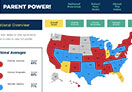
Ten states rank a cut above the rest in offering parents extensive opportunities to control their children’s education, according to the 2013 Parent Power Index from the Center for Education Reform.

Advocacy Group to Monitor Reform Efforts in Public Schools
New York Times, NY, March 8, 2013

Diane Ravitch, the historian and former assistant education secretary who has become an outspoken critic of those who favor high-stakes testing, tenure reforms and other controversial measures aimed at the public schools, has joined with other education advocates to form a group that will grade and endorse political candidates.

Neovouchers: The Debate Continues
Washington Post Blog, DC, March 7, 2013

Generally speaking, Americans know what vouchers are. Cleveland and Milwaukee have had conventional voucher plans for decades. Ballot initiatives to institute conventional vouchers have been voted on (and, I believe, always defeated) in many states. But most of us know little or nothing about neovouchers.

FROM THE STATES

ALABAMA

Tax Credits, Vouchers A Mixed Bag
Dothan Eagle, AL, March 7, 2013

How the Alabama Accountability Act was passed has become a subject for heated debate and litigation. Its impact on education and student outcomes if it survives is also controversial, as there is a mixed body of research concerning the effectiveness of similar policies throughout the country.

Tax-Credit Bill Poses Threat To Public Schools
Decatur Daily, AL, March 8, 2013

The bill — stalled in litigation, but probably not for long — allows the roughly 80,000 students in 202 “failing” public schools to transfer to private schools. Every student who transfers would reduce the Education Trust Fund by $3,500. A scholarship fund of $25 million also comes from the ETF.

House Speaker Mike Hubbard Says School Bill Needs Changes, But Not Enough To Risk Killing It
The Birmingham News, AL, March 7, 2013

Speaker of the House Mike Hubbard today said there are changes needed in a controversial school choice bill but not enough to risk “killing the bill” if it is brought back before lawmakers.
Hubbard said he had talked to Gov. Robert Bentley about possible changes.

CALIFORNIA

Charter School Piques Parental Interest
Tracy Press, CA, March 8, 2013

Parental interest is gaining momentum for River Islands Technology Academy even as the board of trustees overseeing the project works out the new charter

FLORIDA

Controversial ‘Parent Trigger’ Bill Gets First Nod
Miami Herald, FL, March 7, 2013

A bill that empowers parents. A bill that hands public schools over to private interests. A red herring. No matter what you think of the so-called parent trigger proposal, one thing was made clear Thursday: The bill will be among the most contentious of the Legislative session.

GOP Clears First Step in Push for School Fixes, Accountability
Sunshine State News, FL, March 8, 2013

Another year, another highly-charged debate over educational accountability. The same players are arranging themselves around the same board. The number on the bill has changed, but not much else, with Republicans and conservative groups pushing for reforms versus Democrats and liberal groups opting for status quo.

Report: Charter Schools Out Perform Traditional Public Schools
News-Press, FL, March 8, 2013

Charter schools outpace traditional public schools according to a report from the Florida Department of Education.

Charter Schools Operate At The Expense Of Public Schools
Miami Herald, FL, March 8, 2013

The first Florida charter school opened in Miami in 1996 with fewer than 100 students. Today, there are more than 47,000 students attending charter schools in Miami-Dade County

IDAHO

Charter School Funding Bill Reviewed By Senate Committee
Idaho Reporter, ID, March 7, 2013

The Senate Education Committee Thursday got its first look at a bill to improve the finances of the state’s charter schools. House Bill 206, which passed in the House of Representatives earlier this week, would provide an increase of state funds for charter schools to spend to fund their facilities.

ILLINOIS

Fewer schools will mean larger classes and more controversy for CPS
Chicago Tribune Blog, IL, March 8, 2013

But that’s an inconvenient truth for Chicago Public Schools officials as they push ahead with plans to close up to 80 elementary schools said to be underutilized, and to transfer the affected students to nearby, better-performing schools.

INDIANA

Only Indy’s Charter Schools Receive Tax Subsidy
Indianapolis Star, IN, March 8, 2013

In his March 6 My View, John Mutz discussed the idea of mayoral charter schools paying a nominal administration fee authorized by state law. Unfortunately, he mischaracterizes the concept and omits important information about the proposal pending before the City-County Council.

IOWA

Senate Version Of School Reform Bill Advances
Des Moines Register, IA, March 8, 2013

The Iowa Senate advanced its version of Gov. Terry Branstad’s education overhaul package Thursday, offering an expansive take on reform that runs counter to the Republican House’s minimalism.

KANSAS

Hensley: Charter School Bill Unnecessary
Topeka Capital Journal, KS, March 7, 2013

Sen. Anthony Hensley, D-Topeka, a teacher, said Thursday that a bill to overhaul Kansas’ charter school system wasn’t necessary.

KENTUCKY

Poll: 72 Percent of Likely Kentucky Voters Support Charter Schools Bill
WFPL, KY, March 7, 2013

Seventy-two percent of likely Kentucky voters favor legislation to allow persistently low-performing schools the ability to become charter schools, according to a poll released Thursday by charter advocates.

LOUISIANA

Jefferson Parish Schools Seeking Private Operator To Run Alternative High Schools
Times Picayune, LA, March 7, 2013

Siting declining enrollment and lackluster results in both academic performance and behavior, the Jefferson Parish School Board approved a plan by Superintendent James Meza to seek private operators to run its two alternative schools as early as next fall.

Proposal: All Of Lycée’s Board Members Must Reapply If They Want To Stay Past June
The Lens, LA, March 8, 2013

Parents and teachers who want new governance at the embattled Lycée Français de la Nouvelle-Orléans charter school may soon have their wishes granted.

MAINE

LePage Bringing National Teaching And Learning Experts To Maine For Education Summit
Bangor Daily Herald, ME, March 7, 2013

School choice and education reforms championed by former Florida Gov. Jeb Bush will get top billing later this month at an education summit set up by Gov. Paul LePage.

MASSACHUSETTS

Charter School Results Too Good To Ignore
Boston Globe, MA, March 8, 2013

ENTICED BY federal Race to the Top dollars, Massachusetts passed an important education reform law in 2010. But now, with that legislation in place, policymakers seem to lack the appetite for another round of significant change.

MINNESOTA

Close Poor Performing Charters To Create Better Choices For Low-Income Kids
Twin City Daily Planet, MN, March 7, 2013

A bi-partisan bill is making its way through the Minnesota legislature to close the state’s persistently lowest performing charter schools. The effort is not led by charter school opponents but by charter supporters, who believe that the charter sector holds tremendous promise to help close the nation’s and Minnesota’s appalling achievement gap.

MISSOURI

School Voucher System Would Help Kids More
St. Louis Post Dispatch, MO, March 8, 2013

Your editorial March 6 (“Schools v. Children”) implored the Missouri Supreme Court to enforce its ruling from 2010 that allows children from bad school districts to attend neighboring districts that have accredited schools.

NEW JERSEY

Hebrew Charter School: East Brunswick Officials Using Taxpayer Dollars To Derail Expansion
Star-Ledger, NJ, March 7, 2013

Town officials are waging a taxpayer-funded campaign to derail a Hebrew charter school’s expansion, the school said in a complaint to the state attorney general and Education Department.

Winslow Charter School To Fight N.J. Nonrenewal
Philadelphia Inquirer, PA, March 8, 2013

The Institute for Excellence Charter School of Winslow Township has known for a week that the New Jersey Department of Education will not renew its charter for the fall.

NEW MEXICO

Commission’s Appeal Of Charter Schools The Right Move
Taos News, NM, March 7, 2013

In what is said to be an unprecedented move, the state Public Education Commission is going to court to challenge a decision allowing two new charter schools, including one in Taos.

Let’s Not Fund Any More Charter Schools’
Taos News, NM, March 7, 2013

Matthew Van Buren’s recent article on the Public Education Commission’s appeal of Secretary-designee Hanna Skandera’s decision regarding a Taos charter school’s application is a welcome report on current issues and personalities.

NEW YORK

N.Y. Schools’ Teacher-Eval Costs Outpace Federal Grants
Journal News, NY, March 7, 2013

New York’s small-city, suburban and rural school districts expect to spend an average of $155,355 this year to implement the state’s new teacher and principal evaluation plans, a report Thursday from the state School Boards Association found.

NORTH CAROLINA

Charlotte Charter School Can’t Open Because Of Plagiarism Allegation
Charlotte Observer, NC, March 7, 2013

Cameron Creek Charter won’t be allowed to open in east Charlotte this year, based on accusations that it cut and pasted large parts of its application from another Charlotte proposal.

Bill Would Give School Ownership To County Governments
News Observer, NC, March 7, 2013

A bill introduced in the state Senate Thursday would allow county governments to take ownership, construction and maintenance of schools away from school systems.

Charter School Application Raises Questions
Lexington Dispatch, NC, March 7, 2013

Students in Davidson County already have several educational options: traditional public schools, Yadkin Valley Regional Academy (geared to science, technology, engineering and math), Davidson Early College (where students graduate with college credits), religious schools, private schools and home schools.

NORTH DAKOTA

When A Waiver Isn’t A Waiver
Bismarck Tribune, ND, March 8, 2013

No Child Left Behind took Americans to school and taught us our schools, teachers and students are failing. The proof, we are told, can be found in the results of standardized tests. This is despite that North Dakotans take pride in their schools, believing they do a good job.

OHIO

Charter Schools Decry Kasich’s Proposed Funding Reduction
Columbus Dispatch, OH, March 8, 2013

Charter-school supporters like to tout that the privately operated, tax-funded schools do more to improve student achievement with less money than traditional public schools.

OKLAHOMA

Another Assault On Public Schools
Tulsa World, OK, March 8, 2013

Don’t be fooled that the so-called “parent trigger” bill that passed the Oklahoma Senate 30-2 this week and is headed for the House is all about reform.

PENNSYLVANIA

Philadelphia Officials Vote to Close 23 Schools
New York Times, NY, March 8, 2013

Officials on Thursday night approved closing 23 public schools, about 10 percent of the city’s total, largely backing a plan by the school district to erase a huge budget deficit and reduce the number of underused schools.

Armstrong School District To Decide On Charter School’s Fate
Pittsburgh Tribune Review, PA, March 7, 2013

It’ll be a tale of two schools on Monday evening when the Armstrong School Board is faced with decisions about its soon-to-be built high school in Manor Township and the proposed Everlasting Elderton Charter School.

SOUTH CAROLINA

School Choice Works
Greenville News, SC, March 8, 2013

It should come as a surprise to no one that informed lawmakers would look to school choice as an effective tool to improve education. After all, school choice is the most rapidly expanding education policy in the nation.

TENNESSEE

Teacher’s Union Concerned Over Vouchers
Murfreesboro Post, TN, March 8, 2013

As lawmakers in Tennessee consider a couple of proposals on school vouchers, the state’s teachers are urging rejection over a variety of concerns.

WEST VIRGINIA

Tomblin’s Revised Education Reform Bill Gives Concessions To Teachers
Charleston Gazette, WV, March 8, 2013

A revised version of Gov. Earl Ray Tomblin’s education reform bill is expected to include major concessions to teachers who have railed against the legislation in recent days.

WISCONSIN

Scott Walker’s Voucher Proposal Divides Parents Of Special-Needs Students
Journal Sentinel, WI, March 7, 2013

The story of Miriam and children like her is at the heart of a $21 million proposal in Gov. Scott Walker’s state budget that would allow 5% of kids with disabilities in Wisconsin to attend private or public schools outside their home districts on a taxpayer-funded voucher.

ONLINE LEARNING

Parents Trying To Save Massachusetts Virtual Academy
WGGB, MA, March 7, 2013

Parents disappointed that their children’s school is closing addressed a Greenfield School Sub Committee Thursday night.The Massachusetts Virtual School is shutting down at the end of June because of a new state law.

Schools May Get Windfall: Cyber Reform Measure Would Redirect Funding To Local Districts
Tribune Democrat, PA, March 7, 2013

Public school districts may finally get help in their struggle to recapture some of the money that has followed students who choose to enroll in charter schools rather than attend the local bricks-and-mortar school system.

Charter Schools Hope To Expand
Janesville Gazette, WI, March 7, 2013

Two Janesville charter schools would expand next fall if the Janesville School Board agrees.

Flipped Online Classrooms: Homework In Class, Lectures At Home
St., Louis Post-Dispatch, MO, March 8, 2013

Just five minutes into his morning organic chemistry class, associate professor Mike Lewis is in full swing, scribbling what looks like a series of hieroglyphs across a large screen projected at the front of the room.

Online Charter Schools Must Take Students
OPB, OR, March 8, 2013

Oregon’s board of education told the state’s own online charter schools Thursday that they have to accept students, even if they’re coming from districts having labor problems.

Flipped Classrooms Turning Tradition On Its Head
San Diego Union Tribune, CA, March 7, 2013

A growing number of teachers nationwide are challenging a long-held educational tradition by asking their students to watch recorded lectures at home and do their homework in class.