








Sign up for our newsletter

Why Des Moines Can Be a Model for Urban Schools

By Matt Vasilogambros and Mauro Whiteman
National Journal

A majority of students are minorities. Poverty rates are going up. Refugees speak 100 different languages and dialects. And despite all this, the school district is seeing gains.

National Journal recently visited Des Moines to see how an increasingly diverse population—a majority of public-school students are now minorities—and booming economic development have changed this once-sleepy town. In the coming weeks, Next America will publish a series of stories about the reality of 21st-century Iowa.

DES MOINES, Iowa—Parju Rai finishes her quiz on integers with ease, putting her pencil down as Amelia Mieth, an eighth-grade teacher, calls time. Rai and her family arrived in the United States just two months ago from a refugee camp in eastern Nepal. But you wouldn’t know it from her comfort level in the class. She doesn’t speak much English, but she understands the universal language of math. “She knows exactly what she’s doing,” Mieth says in her Amos Hiatt Middle School classroom on the east side of town.

But Rai doesn’t stand out among her peers. Of the 28 students in her math class, only four are white. The others are a mix of Asian refugees, Latino immigrants, and African-Americans. It’s a representative sample of a classroom in Iowa’s capital city.

The majority of the 33,000 students in the Des Moines public schools are minorities, and they have been for the last several years. Whites make up only 45 percent of classrooms here, and the rest includes a growing number of Latinos (24 percent) and Asians (7 percent), and a steady number of African Americans (18 percent). The student population is the result of demographic trends that have reshaped Des Moines over the past couple of decades—as white families moved to the suburbs, Iowa’s open-door refugee policy and plentiful unskilled labor jobs made way for more ethnic newcomers.

It’s clearly a diverse student body, but it’s also a disadvantaged one. Two constant challenges facing the school district are poverty and English language skills. Even so, the district is experiencing some surprising academic successes that could make it a national model for other urban districts.

Superintendent Tom Ahart doesn’t sugarcoat the obstacles: “We really have an uphill battle.” While just 33 percent of students qualified for free or reduced meals in 1993, that number is up to 73 percent today. A majority of schools, in fact, give all students free breakfast and lunch. And poverty is not a problem that’s going away—the rate is even higher for the kindergarten cohort, and enrollment continues to rise. Urban-core poverty in Des Moines is comparable to Detroit or Philadelphia, Ahart contends.

Meanwhile, refugees from all over the world continue to arrive in the public-school system here, bringing with them more than 100 different languages and dialects. The language barrier at home can be quite acute. According to Urban Institute data from 2011, Iowa ranks fifth for the share of children of immigrants who live in homes that are “linguistically isolated,” meaning that there is virtually no one older than 14 in the household who speaks English well. This makes it difficult for parents to communicate with school officials and also limits their ability to help with their child’s classwork.

But despite these challenges, Des Moines public schools seem to be closing the achievement gap across most levels. Test scores and graduation rates are improving. Since 2009, the four-year graduation rate has risen nearly 7 percentage points to just over 79 percent. The graduation rate for black students at the comprehensive high schools (not including the special-education and alternative schools) is just 5 percentage points lower than that for white students, at 81 percent. The dropout rate for Des Moines high school students has also declined since 2009. The district saw gains in statewide proficiency test scores at every grade level in math and reading except in 11th grade reading. And African-American students saw the largest increase in reading and math scores for grades three through five.

How does this demographically disadvantaged school district continue to improve?

Part of it has to do with the culture. Take North High School, which was at the bottom for Iowa in all test scores five years ago, hovering around 40 percent across all levels. It sits in one of the poorest neighborhoods in Des Moines, where many students spend nights working late or essentially parenting their younger siblings. Teachers, knowing this, excused students from academic obligations. North was an afterthought, and the school looked like it, too, with no air-conditioning and rundown classrooms.

Then the school got a new administration, new expectations, and new digs. The district cleaned house and installed different administrators, who immediately addressed what they saw as a systematic failure in the relationship between students and teachers. “We understand these hardships,” explains Michael Vukovich, the current principal, “but in order to break these cycles of poverty in our community, we have to educate our kids and get them to college and get them degrees.”

“You can’t do that by letting them sleep in class,” says Vukovich. “You can’t do that by giving them packets of work instead of teaching material. We can’t control some of the things that these kids endure when they leave our building. But when they’re in, we can hold them to these expectations.”

For teachers, it meant coaching so they could improve. For the building, it meant $14 million in renovations, installing air-conditioning and modernizing. They also used new grants to provide all students with their own laptop—today, students are assigned individual iPads. Add to that a new dress code for students and teachers, the elimination of in-school suspensions and detentions, and a strengthened effort to quickly clear the hallways between classes, and the school’s transformation was underway.

Last year, the school hit 58.3 percent proficiency in reading—almost a 20-point increase. Five years ago, there was one Advanced Placement class with 11 students. Now, there are 12 with 600 total enrollments. North High School started offering AP Spanish to students for the first time last year. Eight students chose to the take the test, and all eight passed and earned college credit.

But Des Moines can’t address all of its challenges without putting heavy resources into its growing English Language Leaners program. Since the fall of Saigon in 1975, refugees have flocked to Iowa. But the situation is different now then it was 40 years ago, says Vinh Nguyen, one of those refugees from Vietnam, and the current ELL program coordinator for the district.

In the mid-1970s, there were just 300 students in the ELL program, speaking Vietnamese, Cambodian, Laotian, Hmong, and Tai Dam. Today, the program serves 6,100 students (20 percent of all Des Moines public-school students), who speak more than 100 languages and dialects. That number grew rapidly just in the past decade, as there were just 26 languages in 2001. Back in the 1970s, the federal and state governments provided ample resources for refugees. That assistance is scant today. Back then, students came to the U.S. knowing how to read and write in their native language. Many students today come illiterate in their native language.

“Every time we have a new population, I sit back and learn about that population and figure out ways to work with them and learn about their community,” says Nguyen, who came to the U.S. in 1983. “As soon as I get a good hold of it, a new population comes in. My job is never done.”

At its most basic level, ensuring that these students understand English starts with ELL teachers like Margaret Peterson, who works at Greenwood Elementary School. Some of her students have a good foundation of literacy. Some do not. Some quickly learn to speak a new language. Others need more time. But she has to teach all of them together, despite their backgrounds.

“Everyone always asks, ‘Do you speak all of those languages?’ And my answer is always, ‘How did you teach your own children when they started?’ ” she says. “For a teacher to sit and talk about vowel sounds to someone from Somalia makes absolutely no sense to them. You have to simplify everything.”

The number of ELL students will continue to rise; 26 percent of kindergartens are in the program. And these students, too, have to take the statewide standardized tests like everyone else, even though the students are not yet fully proficient when they exit the program. Despite this, 37 percent of ELL students were proficient in reading in last year’s statewide exams, a jump of 19 percentage points from the year before. And it takes an effort from teachers outside of the ELL program (Mieth, a math teacher, decorates her classrooms with vocabulary words and requires written-out answers on homework.)

School officials argue that legislation stands in their way of making truly substantial progress. Last year, 40 Des Moines schools were deemed “in need of assistance” by federal government standards. At the state level, they’re advocating for a change in the way resources are allocated to school districts. At the federal level, they see No Child Left Behind and subsequent tests as archaic and unable to measure progress. But that doesn’t mean Ahart is not pleased with his district’s progress.

“Despite some real state policy issues that get in the way of us doing the best job that we could, you can get the job done if you really believe the kids are capable,” Ahart says. “As simple and Pollyanna-ish as that sounds, it’s really the fundamental thing we need to remember. Kids are capable. We need to hold the bar high, and not sell any of the population short.”

Urban schools across the country struggle with adversities such as poverty and basic language skills, but this school district in Central Iowa seems to be on the right path, despite growing diversity.

Stephanie Stamm contributed to this article.

Politico’s Morning Education: Movers and Shakers

By Caitlin Emma
Politico
October 9, 2014

MOVERS AND SHAKERS
The Center for Education Reform has elected new officers to its board of directors: Frank Bonsal III, former director of entrepreneurship at Towson University, will serve as chairman; CEO of GSV Capital Michael Moe was elected vice chair; Managing Director of BMO Capital Markets Susan Wolford will serve as treasurer; and Friendship Public Charter Schools CEO Donald Hense was elected secretary.

The Center for Education Reform Elects New Officers to Board of Directors

CER Press Release
Washington, D.C.
October 8, 2014

The Center for Education Reform (CER), the organization which strives for educational excellence and stands for increasing parent choice by increasing alternative school providers, elected new officers at its annual board meeting this week, in addition to refreshing its membership with the election of David Hardy, CEO of Boys’ Latin of Philadelphia Charter School.

Hardy is a nationally recognized authority on charter school education and school facility financing. In 2005 he had the vision of starting an all-boys charter school to address the unique academic and social needs of urban boys. By 2008, Hardy had led the total transformation of a former Catholic school and church into one of the most modern, state-of-the-art school facilities in the region.

“I’m honored to have David Hardy join our Board of Directors, and so excited to be part of an organization that is represented by such a diverse and accomplished group of individuals working toward elevating the conversation and securing an opportunity for every child to learn no matter what the delivery mechanism,” said CER President Kara Kerwin.

The new CER Board of Directors leadership is:

  • Frank Bonsal III of Baltimore, MD was elected Chairman. Bonsal is a former educator, EdTech investor and the Director of Entrepreneurship at Towson University.
  • Michael Moe of Menlo Park, CA was elected Vice Chair. Moe has served as Treasurer of the organization for the past three years. He is the co-founder and CEO of GSV Capital.
  • Susan Wolford of Princeton, NJ was elected Treasurer. She is Managing Director of BMO Capital Markets.
  • Donald Hense of Washington, DC was elected Secretary. He is the founder and CEO of Friendship Public Charter Schools.


“CER is in the opportunity business,” says Jim Goenner, CER board member and the President and CEO of the National Charter Schools Institute. “We’re in the business of better education for kids, parents and country. And our board reflects that.”

More information about the organization, our board and staff can be found at staging.edreform.com.

Governors, Candidates Evaluated on Education

Educationfifty.com Provides Public with Critical Analysis

CER Press Release
Washington, D.C.
October 8, 2014

Education50, launched today by The Center for Education Reform (CER) is an interactive web-based voter’s guide designed to empower the public with information to sort through the campaign rhetoric when it comes to education reform issues like charter schools, school choice and teacher quality.

“With 36 gubernatorial races this November, and growing impatience with state elected leaders when it comes to education issues, it is important that the American public have a tool to determine whether those seeking to be the next chief executive of their state are truly committed to ensuring better student outcomes or merely paying lip-service to maintain business as usual,” said Kara Kerwin, president of The Center for Education Reform (CER).

According to a recent survey conducted by CER in launching its Campaign for Education Reform in advance of the 2014 mid-term elections, 86 percent of Americans support greater accountability in our schools. Additionally, two-thirds (65 percent) rate their state elected officials as “fair” or “poor” when it comes to education issues.

“Too few of our modern-day state leaders appreciate the absolute role they must play in bringing about substantive change in America’s schools. Bold reforms were once a result of strong governors who knew it was their job to educate their colleagues in the legislatures and convene deep discussions, often putting partisanship aside,” Kerwin stated. “It’s as if there’s been a retreat from that kind of leadership and governance, and in 2014 it’s critical that we keep education reform front and center.”

In addition to the gubernatorial races, Education50 provides data on all 50 governors and those candidates seeking the mayor’s office in the District of Columbia. Education50 provides toolkits like “How to Spot the Real Reformer”, addressing many hot topics from the Common Core and standards to funding and curriculum, and also has tools to access state-specific data and stats.

“At a time when fewer than 40 percent of our nation’s eighth graders can read, add and subtract at basic proficiency, we must resolve to make education the most important issue when we head to the polls this November and elect governors who have a real sense of urgency when it comes to our schools,” Kerwin continued.

The ‘Bargain’ – Responding to An Attack on The Nation’s Charter Schools

On Sunday October 5, 2014, Washington Post reporter Valerie Strauss launched a series of attacks on charter schools relying heavily on biased and inaccurate data. Claiming that the “Charter school ‘bargain’ was a raw deal” and stating “concerns are rising as the number of charters overall is increasing.”

The allegations that charters are “stunningly opaque…and turning out to be anything but accountable” are misguided and misinformed. The Center for Education Reform would like to separate fact from fiction:

1. Performance-based accountability is the hallmark of charter schools and reforms aimed at improving student learning. Unlike all other public schools, charters must be proactive in their efforts to stay open. They must set and meet rigorous academic goals, and actually meet or exceed their state’s proficiency standards. Unlike the traditional public schools that intentionally remain under the radar, charter schools operate under intense scrutiny from teachers unions, the media, and lawmakers. In states with strong charter school laws that allow for objective oversight, it is clear that performance-based accountability is working.

  • States with strong laws help to create the highest-quality charter schools. In states with multiple and independent authorizers, stronger, more objective oversight is used to ensure that successful charter schools remain open and those that fail to perform are closed. States with multiple authorizers were home to nearly 80 percent of the nation’s 5,400 charter schools in 2010-11.
  • Independent charter authorizers play an essential role in the health of the charter school movement. Independent authorizers hold charter schools accountable, and these schools generally are more academically and operationally sound. An authorizer other than a local school board has granted over 60 percent of charters across the country.
  • States with charter school laws graded “A” or “B” saw 355 new charter school campuses, whereas states with laws graded “D” or “F” saw just 13 new charter campuses.
  • In 2011, of the approximately 6,700 charter schools that have ever opened in the United States, 1,036 have closed since 1992. That means 15 percent have closed for cause. While a closure rate of 15 percent is nothing to boast about, it is still lower than the small business failure rate and dramatically higher than the percentage of conventional or traditional public schools ever closed.
  • Nearly 20 percent of all closures occur because a school failed to meet acceptable student performance levels (18.6 percent). Many assert that charter laws are only working when schools are closed for failing in their mission to educate kids. But the reality is that operational and financial deficiencies are apparent far before any academic assessments can be meaningful. Approximately 42% of charter schools close for financial reasons, mainly driven by low student enrollment or financial inequities.


2. Education can be for students and for-profit. Education management organizations not only bring capital and investment to communities they serve, but they help assume financial risk on behalf of their non-profit partners, and make up for the funding inequities charter schools face compared to their traditional public school counterparts. In fact, their entire business model is predicated on student outcomes; if it’s not, they will lose “business.”

  • Charter schools receive on average 36 percent less per pupil than their traditional schools whose management has no accountability or incentive to improve student outcomes. Not only do education management companies bring investment and capital to communities, but they also assume great financial risk on behalf of their non-profit clients to build infrastructure and facilities in communities that in any other industry would most likely not be considered ideal or open to business.
  • Ninety percent of charter schools that fail because of financial reasons are independent, grassroots startups. These startups lack connections to the money and power that often and generously are a factor in the more successful networks, whether from taxpaying companies or 501(c)(3) organizations. Education management companies bring investment and capital to the communities they serve, creating jobs, innovation, and cost-saving strategies.
  • Results-driven business models can transform the lives of children. In Florida, for example, the Ft. Lauderdale based Charter Schools USA oversees 38 charter schools in the Sunshine State, and as a network, exceeded the state’s average proficiency rate in math, science, reading and writing. Over 70 percent of Charter Schools USA schools earned an “A” or a “B” on the state grading system, with 90 percent maintaining or improving their grade from the previous year.


3. Narrowing in on a few bad apples and cases of mismanagement without focusing on the bigger picture surrounding these instances leaves out critical context. Too often, these bad apples that fail to produce audits, pay vendors, or conduct basic, required oversight processes is a sure sign that whoever is in charge is not capable of leading a strong organization, or perhaps that the board is not focused on its duties and responsibilities. Weak charter school laws also are contributing factors to these instances, as they do not create the best environments for charter schools to thrive.

  • It is said that a few bad apples shouldn’t spoil the bunch. But indeed the fact that nearly a quarter of all closed charter schools closed because of ethical violations makes a big impression on advocates and opponents alike. Fully 24 percent of all charter schools that are closed do so for reasons related to administrator or sponsor misbehavior. Sponsors of these schools may deliberately misspend, misrepresent, or refuse to hold the charter school accountable to its contract.
  • While the research shows that ineffective schools first demonstrate their ability to remain viable within the first couple of years, far before signs of academic trouble, the bad apples often stay around longer than that. This is because state actors often cannot determine the cause of failure. But when truly independent, sound authorizers have the authority and accountability to properly monitor their portfolio of schools, charters that show any sign of potential “mismanagement” are caught early and addressed in periodic reviews.
  • Pointing to a few bad apples takes away from the fact that more parents want choices, with the length of the average charter school wait list growing to nearly 300 students in 2012.
  • In the 2013-14 school year, 600 new public charter schools opened their doors to an estimated 288,000 additional students, meaning now more than 2.5 million students now attend nearly 6,500 schools nationwide. Over the past 10 years, charter school enrollment has risen by 225 percent and the number of new schools has risen by 118 percent.
  • In York, Pennsylvania, where people are petitioning against the charter school takeover, it was discovered that information was actually being blocked from the community, as the district was encouraging the public to attend a rally against the charter school takeover rather than the information session the night before the rally. The reality is that when given accurate information about public charter schools, Americans are 73 percent in favor of them.
  • While mismanagement and cases of fraud exist in every sector, a University of Arkansas study reveals that charter schools are generally good stewards of public money, using public dollars far more efficiently than traditional public schools. For every $1,000 invested, eighth grade charter students achieved on average an additional 17 points in math and 16 points in reading on the National Assessment of Educational Progress (NAEP), more commonly known as the Nation’s Report Card.


4. There’s no question academic performance is the most important factor in whether a charter school succeeds or fails. But how that performance is determined and by whom – and whether the performance of every child can influence whether a parent retains a critical choice of a school that is working for their child – is often ignored in today’s debate.

  • Before Hurricane Katrina hit New Orleans in August 2005, 78 schools were deemed as failing. Now, only nine schools in New Orleans are deemed failing according to ratings released in October 2013.
  • From 2005 to 2011, the percentage of New Orleans students scoring proficient went up from 35 percent to 56 percent. That’s a 21 percent jump in achievement in a six year time period. Comparatively, during that same timeframe, statewide proficiency for Louisiana students went up only eight percent.
  • The Louisiana CREDO study results indicate Pelican State charter school students learn more in a school year than traditional students. The study also separately analyzed New Orleans students – where the majority of Louisiana’s charter students are located– concluding that over a six-year period, charter students gained four months more learning in reading and five more in math. Findings also suggest that charter school students displayed learning gains regardless of whether or not they attended a school under the auspices of a Charter Management Organization, or CMO.
  • Dr. Caroline Hoxby’s report on New York City charter school achievement uses the gold standard of research methods, “comparing lotteried-in students to their lotteried-out counterparts.” Results from the study found that a student who remains in a charter school through eighth grade will score 30 points higher in math than a student in a conventional New York City public school.


With over 1 million students on charter school waiting lists, what’s clear is that strong laws and strong authorizers really do matter.

Strong state charter laws and strong authorizers give schools a better chance at success because they hold them accountable and can offer them services and management tools to succeed. They require annual reports on finance, achievement and operations, but they don’t overburden schools with reporting so they can concentrate on educating children. That’s the real story that should be told.


Montana Ranks Last for School Choice

Alan Wagmeister, KULR8.com

BILLINGS – Montana gets an “F” on a certain report card, and it’s not the kids, it’s the parents access to choice.

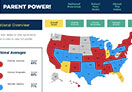
According to the Parent Power Index put out by the Center for Education Reform, Montana finished dead last for parents’ ability to make choices and be involved in school.

The only item available to parents are a public school choice program which would allow kids to attend other public schools in the state if there is space. The only problem is most schools are over capacity. Unless of course you wish to home-school or send your kids to private school.

Montana is also one of only 8 remaining states that do not allow charter schools.

The report also says the state recently adopted teacher evaluation requirements, but are considered weak.

Wyoming only fared a bit better at 40th in the nation.

NEWSWIRE: October 7, 2014

Vol. 16, No. 39

THE ‘BARGAIN’. On Sunday October 5, 2014, Washington Post reporter Valerie Strauss launched a series of attacks on charter schools relying heavily on biased and inaccurate data. Claiming that the “Charter school ‘bargain’ was a raw deal” and stating “concerns are rising as the number of charters overall is increasing.” The allegations that charters are “stunningly opaque…and turning out to be anything but accountable” are misguided and misinformed. The Center for Education Reform has a guide to help advocates speak up in fighting the misinformation that continues to pervade.

THE FREEDOM TO CHALLENGE. It’s not everyday a group of sixth graders are asked to draft an essay and speech for a state level event on Constitution Day. But Challenge Charter School in Arizona was the only elementary school in the entire state to be recognized for the highest level of Excellence in Civic Engagement by the AZ Department of Education. So, the school saw the essay and speech contest as a good way to find a student representative for the awards ceremony. It’s not all that surprising Challenge would get this recognition, since educators have the freedom to implement an innovative curriculum in a learning environment where citizenship is a pillar expectation. Equally unsurprising is a school like Challenge can thrive in a state that’s number three in Parent Power.

STUDENTS AND PARENTS LEARN IT’S OK2SAY. Both charter and traditional school communities across Michigan can now access a new resource OK2SAY, giving parents, students and school personnel a safe space to share and respond to student safety threats. The reporting system is a way to break the culture of silence that is far too often associated with incidents that threaten students’ well being. When visiting schools, CER often hears directly from parents that the safety of their children is one of, if not the highest priority when sending their kids to school, and often seek out other options if that priority is unfulfilled. Click here for a list of parent resources, and how you can help create safer learning environments for kids.

BREAKING THE DIVIDE. A simple Google Maps search will show Schenectady and Niskayuna high schools in upstate New York a mere 1.7 miles apart, but their close physical proximity does not translate over to academics. Both schools spend roughly the same per-pupil, yet Niskayuna has a graduation rate of 95 percent compared to Schenectady’s 55 percent. But when educators look beyond funding, it’s incredible what can happen when teachers have the ability to innovate. It’s why CER has seen firsthand charter schools serving high percentages of low-income, underserved students that produce remarkably high learning gains. If there’s no accountability for poor performance, then there’s no incentive to effect meaningful chance. In the end, there’s nothing really unique about this tale of two high schools and their students, in the sense that they’re only trapped by the boundaries school bureaucrats draw on a map.

PUTTING A FACE TO THE POLICY. Florida parent Mary Kurnik literally jumped for joy upon learning that her son John, who has autism, is eligible for one of the newly created Personal Learning Scholarship Accounts (PLSAs) for special needs students. The state that’s number two in Parent Power is trusting parents like Mary, who now plans to utilize the $10,000 allotment for behavioral therapy that will help her son’s learning. Other parents may see fit to use the program in other ways that best fits their child’s needs, such as tutoring, books, and tuition. Step Up for Students, the organization overseeing the program’s enactment, reports that nearly 4,000 parents have begun the application process, living proof that there is need for these choices, and parents are lining up by the thousands.

EDUCATION 50 OUT TOMORROW. Check back tomorrow for CER’s Education 50 resource, designed to help you the voter, get the analysis to determine candidate positions on education reform in the 36 gubernatorial elections this November.

CO ranks high in education report card for parents

Raquel Villanueva, KUSA

WASHINGTON, DC – When it comes to giving parents fundamental power over their child’s education, Colorado ranks 12th in the nation, according to the fifth edition of Parent Power Index.

Parent Power Index is an online report card which ranks states based on state education policies. Colorado scored 76 percent and only six states had above an 80.

The higher a state’s grade, the more parents are given access and information about learning options for their kids.

“While it’s true some states have made progress, it’s not nearly enough to meet demand. Simply put, we need more learning options available to more families, and we need them fast,” said Kara Kerwin, president of the Center for Education Reform in a press release.”With 36 governor races this November, including in Colorado, it’s time enacting parent-empowering policies take front and center, especially when only 40 percent of Centennial State eighth graders are proficient in reading and 42 percent are proficient in math. America’s future depends on states’ ability to enact good policy to accelerate the pace of education reform and grow new and meaningful choices for parents.”

View the report card here: https://staging.edreform.com/2014/09/parent-power-index-scoring-rubric-september2014/

Vermont among lowest-scoring states in parent input on schools

Derek Carson, Bennington Banner

BENNINGTON — Vermont recently ranked 45th out of the 51 states and Washington D.C. in a report designed to rank states based on how much power parents have over their childrens’ education.

The web-based report card, called the Parent Power Index, was produced by the Center for Education Reform. The higher a state’s grade, the more parents are afforded access and information about learning options that can deliver successful educational outcomes for their children, said the organization in a press release. Vermont’s grade was 59 percent, above only Kentucky, Alabama, North Dakota, Nebraska, South Dakota, and Montana. This is an improvement from the 2013 report, which had Vermont ranked as 47th, behind South Dakota and Alabama. The median score was 67.4 percent.

The scores are generated from how the states fare in the categories of School Choice, Charter Schools, Online Learning, and Teacher Quality. The states were given a grade on the traditional GPA scale of 0-4 for each category, which was then averaged and converted into a percentage. Vermont scored 0 for Charter Schools, 0.7 for School Choice, 0.7 for Teacher Quality, and 0 for Online Learning, good for an average of 0.35. The state earned bonus points for its good record of school data transparency.

“Vermont still remains one of the few states that have yet to provide meaningful school choices for parents,” reads the report, which can be viewed online at edreform.com, “although the nation’s oldest voucher system still gives towns without a high school the authority to allow students to attend private schools. High marks for transparency, but low marks for teacher quality efforts out this high elevation state near rock bottom.”

The explanation of the state’s School Choice score reads, “Similar to Maine’s town-tuitioning program, small towns in Vermont that do not have high schools may send students to schools in other towns at the home district’s expense. A student may also go to a private school, in which case the student receives a voucher to be applied toward tuition charges. The state permits parents some choices among traditional public schools, but the opportunities and rules often vary by district.” Vermont received the grade of 0 under the Charter Schools category as it is one of eight states to not have a charter school law.

The report also called for Vermont to increase the online-learning opportunities available to students, including supplemental online courses, and a full-time online courseload. For Teacher Quality, the explanation reads, “There is no state policy regarding the content of teacher evaluations, which are not annually required. A state task force has created guidelines of evaluations including using student growth measures, but implementation is not mandatory. Neither tenure decisions nor licensure advancement and renewal are based on teacher effectiveness. Tenure is given after a two-year probationary period. Ineffective performance is not grounds for dismissal. Vermont’s state code does not specifically mention automatic pay raises based on advanced degrees, or whether [schools] can implement performance pay.”

“While it’s true some states have made progress, it’s not nearly enough to meet demand,” said CER president Kara Kerwin, “Simply put, we need more learning options available to more families, and we need them fast. Out of the over 54 million K-12 students nationwide, only an estimated 6.5 million students are taking advantage of charter schools, school choice programs such as vouchers or tax credits, and digital or blended learning models. With the United States school-aged population expected to grow at unprecedented rates in the next five years, how will our school system be able to meet demand when we already have wait lists for charter schools and oversubscribed scholarship programs?”

“With 36 governor races this November, including in Vermont, it’s time enacting parent-empowering policies take front and center, especially when only 45 percent of Green Mountain State eighth graders are proficient in reading and 47 percent are proficient in math,” said Kerwin, “America’s future depends on states’ ability to enact good policy to accelerate the pace of education reform and grow new and meaningful choices for parents.”

Indiana is rated No. 1 for school choice

Editorial, News Sentinel

And that gives students a better shot at a good education.

If you think school choice is important, be glad you’re a Hoosier. The Center for Education Reform now ranks Indiana No. 1 on the Parent Power Index, which means parents here have a better chance to choose just the right schools for their children than anywhere else in the nation.

The one big component of our choice movement is the state’s commitment to education vouchers, which allow low- and middle-income families to redirect tax dollars intended to support public schools to pay for private school tuition. Preliminary figures show that 29,438 children applied for vouchers here this year, making it the fastest-growing voucher program in the country.

But we also have a vigorous and tested charter school program, which lets approved public schools operate without some of the restrictions normally placed on tax-funded education. And we have more digital learning opportunities than most states, and a good record of teacher quality measures designed to improve the education students get in a traditional setting.

Choice is important for a variety of reasons, chief among them that it gives students a shot at escaping failing schools and gives those schools some competition and therefore an incentive to improve. The free enterprise system — “decentralized planning by everyone through a dynamic price system,” as the National Center for Policy Analysis puts it — is the best way to produce nearly everything, including education.

But as the NCPA notes, “we need school choice even if that is not true.” Because of the diversity of schoolchildren, there are really no “best practices” in education.

There are only “thematically best practices for subsets of children with similar learning styles, similar subject-specific ability levels or similar thematic interests.” The closer we get to universal school choice, the more likely it is “that children can easily end up in the specialized schooling option that works best for them.”

Yes, choice will do some harm to public education.There are always winners and loses when there is competition, but having to compete forces schools into an “improve it or lose it” mode. The education establishment has been among the most resistant to change of any institution in this country. Our children desperately need the innovation and experimentation choice will spur.