









Sign up for our newsletter

Jay Evensen: In fight over school funding, don’t eliminate choices

Jay Evensen
Deseret News
January 29th, 2015

Utahns are hearing some strange political noises these days. State lawmakers, mostly conservative to the core, are entering a legislative session with a booming economy — December’s unemployment rate was 3.5 percent — and a healthy state surplus — estimated at $638 million — and yet many voices are calling for tax increases.

A news conference on Tuesday typified this. Business leaders and the Salt Lake Chamber joined to say it’s time for lawmakers to “look at all the options on the table.” While they didn’t specifically endorse an increase in the state income tax or gas taxes, the message was clear.

The state should no longer struggle to choose between funding education and funding transportation, they said. It should do both. The state’s strong economy is seen as an opportunity for higher taxes.

Well ….

Raising the gas tax would be about as useful as charging your child for using the family typewriter. Cars are becoming more fuel-efficient — the federal government wants to raise the average miles per gallon of new cars to 54.5 by 2025 — and hybrids and electrics are becoming more prevalent. People will be using gas stations less as time goes by, even if prices remain low.

And making the gas tax a sales tax would only turn every drop in pump prices into a state fiscal emergency.

Meanwhile, raising income taxes for schools probably is a political non-starter. But regardless of whether that happens, the need for more money should not come at the expense of other things that are improving education in Utah.

Chief among these is school choice. National School Choice Week began Jan. 25. As an illustration of how the movement has grown, Forbes contributor Maureen Sullivan said there were only 150 events to commemorate this four years ago. This year, more than 11,000 were planned nationwide. Among these was a scheduled rally at the Utah Capitol, sponsored by the Utah Association of Public Charter Schools, which was expected to involve more than 400 charter students.

Utah voters rejected private school vouchers in 2007 — an unfortunate decision to end an effort that, by now, could have had a significant positive impact on school funding. But the state has embraced charters, which are public schools that operate under contracts, freeing them from many state regulations imposed on other public schools. That has been a good thing.

The state now has 109 of these and, according to the Utah Association of Public Charter Schools, they are teaching 12 percent of Utah’s public school students. The Center for Education Reform gave Utah a B ratinglast year for its charter program, ranking it 11th best in the nation.

Advocates want to make sure this continues. They see some possible obstacles ahead, especially in the way we select members of the State Board of Education.

Last year, U.S. District Judge Clark Waddoups threw out the state’s current method of choosing board candidates, which had required the governor to select two finalists after a committee had narrowed the list. At some point during the current session, the Legislature is likely to decide how to change the system.

The likely three options are to allow people to vote on all comers in a nonpartisan race, to allow political parties to winnow the candidates in a partisan race or to let the governor simply pick who sits on the board.

Of these, charter advocates fear the nonpartisan option the most, noting it would take only a few enemies of school choice to begin making life difficult for charters.

That would be a shame. A recent PDK/Gallup poll found about 70 percent support nationwide for charter schools, with 54 percent saying charter students receive a better education than other public school students.

That last point is a source of endless debate. Recent research published by the Cato Institute suggests charters are improving overall. But studying performance can be tricky. School choice allows some students who might otherwise fail to succeed, even if they may not do spectacularly well.

Yes, tax increases deserve a thorough debate in this legislative session. One thing lawmakers should not do in their effort to shore up school funding, however, is to begin limiting choices.


School Choice: Whose ‘Choice’ is it Anyway?

Dr. Susan Berry
Breitbart
January 28th, 2015

Economist and author Thomas Sowell has a way of very succinctly articulating profound truths. The Cato Institute tweeted one such nugget as the country celebrates National School Choice Week.

Cato, the Friedman Foundation for Educational Choice, and the Heartland Institute—among other organizations—agree that, when it comes to “school choice,” the generic concept is fine, but it is parental choice—the right and responsibility of parents to choose the best form of education for their children—that is the hallmark of a free society.

The rhetoric associated with National School Choice Week aside, Joy Pullmann atHeartland writes, “Yes, we have school choice in this country – we have centralized school choice. Bureaucratized school choice. Central planning. The few, the proud, the paper-pushers making whatever decisions please them.”

In fact, some of the organizations that are sponsors of National School Choice Week are also supporters of the Common Core standards, a controversial top-down education reform initiative that promotes a one-size-fits-all approach to education in the name of social justice and equity.

“Partners” of the annual event this year include the Bill and Melinda Gates Foundation-funded Black Alliance for Education Options, the Thomas B. Fordham Institute, and Jeb Bush’s Foundation for Excellence in Education.

With the centrally planned Common Core standards and the fast development of a government and corporate, elitist-led education system—that also says it supports school choice—should American parents be suspicious that perhaps Common Core proponents don’t want them to have the “choice” in their children’s education?

Cato observes why the “choice” needs to belong to parents:

Educational choice programs empower parents to choose the education that best meets their child’s needs. While all humans are imperfect, parents have historically made considerably better educational choices for their own children than state-appointed bureaucrats have made for the children of others.

The reality, however, is that if parents “choose” to send their children to a private school, that school may have additional regulatory burdens placed upon it by the state in which it is located in order to qualify as a participant in a school choice program.

In a 2010 study at Cato, Andrew Coulson looked at the question of whether school vouchers and tax credits increase regulation of private schools, and ultimately found that “vouchers, but not tax credits, impose a substantial and statistically significant additional regulatory burden on participating private schools.”

Voucher programs, Coulson concluded, are more likely to “suffocate the very markets to which they aim to expand access,” because state funds—which invariably invite state regulation—are directly transferred, in the form of vouchers, to parents to spend in an alternate education setting.

Tax credit scholarships, however, involve no state funds directly expended on private schools. Instead, taxpayers, both individual and businesses, can receive full or partial tax credits when they donate money to nonprofits that provide private school scholarships.

“For the most part, voucher programs are truly about getting more educational power to parents, but accepting rules and regulations is often the price of getting and keeping such programs,” Dr. Neal McCluskey, Associate Director of the Center for Educational Freedom at Cato, told Breitbart News. “Opponents of choice want the programs hamstrung, and many people feel like, if their tax money is going to go to a private school, they should get some sort of assurance it is ‘working.’”

“This is why the superior method of delivering choice is through scholarship tax credits, programs in which individuals or corporations get credits for money they choose to donate to scholarship granting organizations,” he added. “That eliminates the concern that a taxpayer’s money is going, against their will, to a school of which they disapprove.”

Last May, in a study at the Friedman Foundation titled “Public Rules on Private Schools,” Andrew Catt provided a means for measuring the regulatory burdens placed upon private schools that seek to participate in three types of school choice programs: vouchers, scholarship tax credits, and education savings accounts.

In a phone interview with Breitbart News, Catt said, “Private schools are regulated even without school choice, and the amount of regulation changes from state to state and area to area.”

What Catt found in his study is that “voucher programs have more regulations tied to Paperwork, Reporting [one category of regulations] than tax-credit scholarship programs do,” and that, “[o]n average, the choice regulations for the voucher programs had impact scores more than three times as negative the scores of tax-credit scholarships.”

The issue of regulation of private schools that seek participation in school voucher programs has been addressed by some conservative groups.

For example, as Breitbart News reported earlier in January, a conservative coalition of 40 groups in Indiana signed onto an agenda titled the “Platform for Educational Empowerment,” which urged state lawmakers to address, among other things, the issues of “reducing regulations on voucher-accepting schools” and “freedom in testing and choice of non-Common Core-aligned/rebranded standards.”

“As conservatives and activists who have been at the forefront of the education debates in Indiana for the past two years, the groups represented here reject recent media reports that the expansion of school vouchers is a major priority for grassroots conservatives,” said Heather Crossin, co-founder of Hoosiers Against Common Core. “School choice needs freedom to thrive; therefore our first priority is to free voucher schools from the stifling regulations which bind them.”

According to the Platform, while Indiana has the largest school voucher program in the country, the Center for Education Reform finds the Hoosier State is “ranked as the second-worst state in the country at ‘infringing on private school autonomy’ due to our voucher program’s many suffocating and unnecessary regulations.”

The Platform continues:

Because of these regulations, Indiana’s voucher program has one of the lowest private-school participation rates in the nation, at one-third of Indiana private schools. State lawmakers should cut all but the most basic of transparency requirements on private voucher schools, given that parents and private accreditation agencies already place higher demands on private schools than any bureaucrat can generate. Particularly egregious is the requirement that voucher-accepting schools administer the new assessment aligned to Indiana’s rebranded/Common Core-aligned standards… If true school choice is to be realized, this issue must be addressed so that parents may have genuine and competing curriculum options.

Jeff Spalding, director of fiscal policy and analysis for the Friedman Foundation,articulated the problem of increased regulations for private schools that wish to participate in school choice programs.

“With the surge in school choice legislation over the past five years, more attention has turned toward the effects of new regulations on the operations of private schools,” Spalding wrote. “A pressing concern is how new regulatory environments might impact the supply of participating private schools. This is a matter of significant importance to school choice advocates because, at a very basic level, there is no choice if there is no supply of real alternatives to traditional public schools.”

Md. charter schools push for independence from local boards

By Deidre McPhillips
The Star Democrat
January 29th, 2015

ANNAPOLIS — Maryland’s public charter schools feel stifled under current state laws that keep them under the authorization and governance of local school boards, but the creation of separate charter school boards could cost taxpayers and students much more.

Charter schools were poised to be a hot topic during this legislative session from the beginning. A week before his inauguration, Gov. Larry Hogan appointed former Del. Keiffer Mitchell, a noted Baltimore Democrat, as a special adviser to oversee some of his legislative initiatives, including the expansion of charter schools.

“It’s like McDonald’s seeking to get approval from Burger King to open a new restaurant,” said Kara Kerwin, president of the Center for Education Reform, a national organization that supports freedom of choice in education, specifically with charter schools.

But Brad Young, president of the Board of Education of Frederick County, home to three public charter schools, said he thinks all public schools, charter or otherwise, should be governed by one body.

“It’s counterproductive to set up a second system that would be run totally separate from the current school system,” Young said. “What charter schools prove is that students learn in different ways, and it’s important to provide different options to students. But the duplication of services would force admin costs up and have implications that would cost taxpayers more or take money out of the classroom.”

At a groundbreaking event on Wednesday, the co-founders of Green Street Academy, a public charter school in Baltimore, touted a “21st-century approach to learning.”

With gardens, chicken coops and fish farms as learning spaces in an urban environment, the academy equips students with the skills to be successful in modern ways, said David Warnock, co-founder of the Green Street Academy and co-chair of the board of trustees. It also has a new partnership with the U.S. Forest Service’s Baltimore Field Station.

“This generation does not respond to institution-led education,” Warnock said, noting the heavy dependence of today’s students on technology and social media. “We need to hook ‘em, capture their imagination and develop their love of learning.”

Green Street Academy received a $14 million loan from Bank of America, part of the $23 million in total funds raised so far to move into a larger, “green” building to open in September, Warnock said. The renovated building will allow 425 more students to attend the academy next school year, nearly a 100 percent increase. The 2.5-mile move will also allow 60 percent of students to walk to school, instead of the 5 percent that are able to work in the current location.

A study released on Tuesday by the National Alliance for Public Charter Schools ranked Maryland’s charter school laws the lowest in the nation for the second year in a row. Eight states do not have charter school laws and were not ranked.

“We find that more often than not local school boards aren’t supportive of charters, and sometimes they’re downright hostile,” said Todd Ziebarth, National Alliance for Public Charter Schools senior vice president for state advocacy and support. “They think they’re losing the money that’s attached to those students. But at the end of the day, if public schools and charter schools are cooperating, it’s better for a community. The intent is long term. It’s an economic boost to the community, not a drain.”

Kerwin agreed.

“There’s so much emphasis and energy put on the inputs that overshadow the ways charter schools create great outcomes,” she said.

But a panel presentation by the Maryland State Department of Education to the Senate’s Education, Health and Environmental Affairs Committee on Jan. 22 raised some questions on the success of charter schools in Maryland.

Numbers in the department of education’s report reflecting success rates for charter schools excluded statistics from 11 Maryland charter schools that had been shut down.

The first and only bill the legislature has seen thus far on the topic this year calls for the establishment of a public charter school program in Frederick County governed by an independent charter school board, with members elected by the county council. Charter school teachers in Frederick County would also be exempt from performance evaluation criteria determined by the state.

It was proposed and presented by Secretary of the Maryland Department of Labor, Licensing and Regulation Kelly Schulz, before she resigned her seat as a Republican delegate from Frederick and Carroll counties.

The bill has had little traction since it was first presented to the House Ways and Means Committee, said Vice Chairman Frank Turner, D-Howard, but with so many new members, it’s hard to know which way the committee will lean.

Turner, however, has his mind made up.

“Any time we use money for charter schools — whether direct or indirect — that’s less money that goes to public schools,” he said. “My feeling is that what we need to do is strengthen the public school system.”

Maryland Charter School Law Earns a ‘D’ Ranking 38th Out of Nation’s 43 Laws

January 28th, 2015

The Maryland charter law that passed in 2003 is among the nation’s weakest laws, not only because it’s restrictive, but also because it’s incredibly vague. The law is silent on some of the most critical policy issues for charter school development, including the level of funding required to support a charter school, the number of schools that can be started, the term of the charter, the governance structure of the school, and student admission requirements. All twenty-four Maryland counties developed charter school policies that turned out to be far more restrictive than the law itself. Charter schools in Maryland are not exempt from any state or local education rules as they are in other states, and they do not have fiscal or operational autonomy, nor do they have control over staffing decisions. While 67 schools have managed to open, they have done so under the most tenuous and unhealthy charter climates, and several have had to sue to have their rights as public schools recognized.

Based on involvement since its inception and close working knowledge of the law and others around the country, we recommend the main focus for any substantial proposal improving the charter law in 2015 must include:

Multiple Authorizers

Currently only school boards, with limited capacity, limited interest, concern over funding, and zeal for their existing schools can authorize charter schools. (The state board of education could recommend that local authorities reverse their decisions, but without legal standing.) This leaves all of the decision making as to whether or not a charter school opens in the hands of school districts. Districts are allowed to make their own rules when it comes to charter schools. Charters are often viewed as competition by local districts and without independent entities to approve charter schools, charter growth is slow.

Permitting the creation of independent authorizers is one of the most important components of a strong charter law. The data show that states with multiple chartering authorities have almost three and a half times more charter schools than states that only allow local school board approval. About 80 percent of the nation’s charter schools are in states with multiple authorizers or a strong appeals process. Independent authorizers are better able to hold charter schools accountable because they have full control over how they evaluate charter schools, and they have their own staff, management team, and funding streams. A strong charter authorizer must be vigilant in monitoring its charter school portfolio, without becoming an over-bureaucratic policing agent.

Recommendation:  Endow the University of Maryland System with chartering authority. Like the State University of New York, which functions as the leading authorizer in that state, giving the Chancellor authority to create and oversee a new office of authorizing removes the politicization that school board politics result in and provides a respected, independent and highly accountable voice and overseer to the chartering process.

Operational Freedom

Successful state charter laws give “blanket waivers” to charter schools, exempting them from most or all laws not related to discrimination, health or safety. In Maryland, charters must comply with all provisions in the law unless they request a waiver and receive approval. Charter school applications have been rejected because the applicant requested a waiver.

Unlike most charter laws, employees of Maryland’s charter schools are considered employees of the district, not the school. They also are required to be covered by the district’s collective bargaining agreement. Successful charter school laws leave such decisions up to the charter school’s leadership and hold the governing board of the charter accountable. The governing boards of Maryland charter schools are largely advisory only, as the school boards retain authority over both operations and finances. This takes away all freedoms from charter schools to hire and compensate employees the way they want for their individual needs.

Recommendation: Enact a “blanket waiver” exempting charter schools from all rules and regulations governing other public schools, save for safety, discrimination and standards and evaluations of students, staffs and schools. Whether or not a charter school has the ability to hire and fire its own personnel, and whether or not they have the ability to negotiate their own pay scale, is critical to a charter school’s success. There are many examples of schools in states where teachers must remain covered by the district’s collective bargaining agreement – meaning same pay scale, the same hours per day, days per year, etc. – and charter schools have had to fight to stay open or retain their teachers. Charter schools should have the option to bargain collectively and contribute to the state, or other retirement funds.

Funding

Funding for Maryland charter schools is up to the interpretation and decisions of the school district, which views as oppositional any infringement on the public’s dollars for that district. Charter schools are supposed to be funded per student enrolled, not by the kinds of funding formulas that currently distribute money to school districts. Thus, strong laws require and enumerate the percentage of funds and specific program funding that are due to charter schools.   

Maryland’s law says, “A county board shall disburse to a public charter school an amount of county, State, and federal money for elementary, middle, and secondary students that is commensurate with the amount disbursed to other public schools in the local jurisdiction”.  A lawsuit filed and won by charters in 2007 resulted in a determination by the state board of education that funding should be equitable, but charters still suffer a gap of almost 40% of funding of what traditional public schools receive and are allocated none of the tax base for facilities funds that other public entities receive. Thus, the funds they do receive must cover operations, facilities, and maintenance.

Recommendation: Stipulate that for the purposes of charter school funding, 100% of the average per pupil expenditure of a district should follow a student to the charter school of his/her choice.

Conclusion   

A law that is governed with multiple authorizers, independent from all existing school agencies, that distributes funds fairly to approved charters, and ensures that they have the operational autonomy to meet their goals is a law that fosters innovation, choice and higher performance for all student.

W.Va. House holding public hearing on charter school bill

Associated Press
January 28th, 2015

CHARLESTON, W.Va. (AP) — State lawmakers are holding a public hearing about the possibility of allowing public charter schools in West Virginia.

The House of Delegates is hosting the Education Committee hearing at 5 p.m. on Wednesday.

The newly minted Republican majority in the Legislature is pushing to make charter schools legal in the state. The GOP has taken control of both legislative chambers for the first time in more than eight decades.

The Center For Education Reform says only eight states don’t allow charter schools.

Charter school funding lawsuit could threaten D.C.’s self-governance

By Moriah Costa
Watchdog.org
January 27th, 2015

WASHINGTON, D.C. — A D.C. charter school funding lawsuit that claims the city is in violation of federal law could challenge how the nation’s capital governs itself.

A complaint filed in federal court by the D.C. Association of Public Chartered Public Schools, Eagle Academy and Washington Latin public charter schools contends the city shorted charter school funding by more than $770 million, or $1,600 to $2,600 per pupil, and is a violation of the School Reform Act of 1995.

Passed by Congress, the act overhauled the D.C. public school system, which had performed below the national average for decades. It also established charter schools and mandated the two systems receive the same per-pupil funding.

But some say D.C. has the right under the 1973 Home Rule Act to change federal laws that pertain just to the district, like education. The act gave D.C. the authority to govern itself over local issues, but Congress reviews all laws passed by the council and has final authority over the city’s budget, including education.

Both traditional and charter schools in D.C. are funded by local and federal money.

Former Attorney General Irvin B. Nathan asked the federal court to dismiss the case in October, on the basis the D.C. Council had the right to amend school funding rules under the Home Rule Act. The court has not responded yet.

In recent years, the District has come to a head with Congress over the right to issue its own laws in respect to gun control and marijuana legalization. Some residents, including D.C. Mayor Muriel Bowser, want the city to become a state.

The case was passed on to newly elected Attorney General Karl Racine. His office did not respond to a request for comment.

Charter schools are public schools, and school choice supporters in D.C and nationally say they should be funded equally.

In an amicus brief filed Jan. 16, several pro-charter organizations said D.C. officials do not have the right to amend the law and if they did, “they would have been free to refuse to create public charter schools, to fund those schools or to reform DC schools altogether.”

D.C. charter and traditional schools are funded on a per-pupil basis that varies by grade and services. However, traditional schools are funded by estimated student enrollment, while charter schools are funded by actual student enrollment, creating a significant difference in funding, the lawsuit claims.

The complaint cited a 2013 city-commissioned study that found the difference in funding is a result of structural differences. Traditional schools are often allocated supplemental funding from other agencies, the study found.

About 44 percent of D.C. students attend a charter school.

Kara Kerwin, president of the Center for Education Reform, which also signed the brief, said the case could have implications for school choice across the country.

“(If the lawsuit is dismissed) it’s going to send shock waves to other areas that we don’t need to treat students equally,” she said.

But Walter Smith, director the DC Appleseed Center for Law and Justice, said it could have a devastating effect on how D.C. governs itself.

“If the court agrees (with the charter schools), there is risk that the court, in holding for the charters, will be issuing a legal decision, that would apply not to just this case but to lots of other cases that have nothing to do with the fight between the charters and the council,” he said.

He said the best way for charter schools to resolve the funding issue is for them to go to their council representatives.

“We want both the charter schools and the public school to thrive here, but we prefer to have it locally figured out rather than through federal court,” he said.

In an amicus brief filed in support of the motion to dismiss the case, traditional school supporters argued that if the case goes forward, residents “would be deprived of the ability and right to control public education.” They also note the School Reform Act has been amended by the city council in ways that have benefited charter schools and that at the end of the 2012-2013 school year, charter schools had over $200 million in unrestricted cash. The brief also states that nowhere in the complaint does it “allege that the funding for charter schools is inadequate.”

For Ramona Edelin, executive director of the D.C. Association of Public Charter Schools, which filed the lawsuit, the case is about ensuring children in charter schools continue to succeed. She said the schools’ position is “in perfect alignment with the home rule act.”

“Children in charters are doing better than the district schools and that’s gratifying because that’s the whole point,” she said.


NEWSWIRE: January 27, 2015

Vol. 17, No. 4

NATIONAL SCHOOL CHOICE WEEK. If our Twitter and Facebook pages didn’t give it away, CER is pretty psyched about National School Choice Week, the annual event that celebrates all forms of learning that have given students the opportunities they need to truly excel. The number of events happening at schools, in communities and outside statehouses has doubled from the previous year, and polling continues to show overwhelming support for school choice and Parent Power. As the number of events have increased, so have the number of students exercising choice, according to data. But for all the progress that’s been made, there’s still a need for MORE options for MORE students. Click here to learn how you can support more parent power in education, and tell your friends, family, and colleagues to text “SchoolChoiceWeek” to 52886 to help raise awareness.

INFORMATION IS POWER. Former U.S. Secretary of Education Rod Paige offered a great precursor to National School Choice Week by stressing the importance of connecting policy and practice when it comes to education reform. After all, laws on the books go only so far as the parents who know about what kinds of choices are afforded to them. An opportunity scholarship program may be universal, have a high funding allotment, and facilitate school autonomy, but there must be ready access to data so parents have the necessary information to make those choices. Bridging the gap between policy and practice is critical if school choice is ever going to truly accelerate.

(NAPOLEON) DYNAMITE. Students at Blackfoot Charter Community Learning Center in Idaho may not stuff tater tots into their cargo pants or dream of becoming cage fighters, but some do get to ride the bus featured in the movie Napoleon Dynamite. Transporting students in movie memorabilia isn’t the only thing Blackfoot offers; the K-5 charter school focuses on individualized instruction and longer days for kindergarteners. Blackfoot is offering sixth grade next year, and its student body has grown to 336 scholars. To celebrate growing demand, Blackfoot students attended a School Choice Week rally at the Idaho Capitol Building, just one of the 95 events happening statewide. Parent Power and school choice are on the rise in Idaho, and working a lot better than Uncle Rico’s time machine.

VOICES FOR SCHOOL CHOICES. National School Choice Week had a strong start thanks to the inspiring remarks from Florida college graduate Denisha Merriweather, a young girl born into poverty who was the recipient of a tax credit-funded scholarship that gave her the opportunity to attend a school in which she thrived. Elsewhere in Florida, school choice advocate Frank Biden outlined Florida’s relative strength in Parent Power, but how there is still more work to do. Across the country in California, parent advocate Julie Collier, parent trigger pioneer Gloria Romero, and blogger of Dropout Nation RiShawn Biddle all made compelling cases for a real shakeup to the status quo. From coast to coast, thousands more are making their voices heard to celebrate school choice in the here and now, but also to ensure these education options reach more kids in need.

THE SCHOOL CHOICE JOURNEY. CER President Kara Kerwin participated in a panel discussion this morning at the American Enterprise Institute that highlighted the positive impact school choice has on families. The event also featured a keynote address from Sen. Tim Scott that covered his introduction of the CHOICE Act. Full video of the event will be posted here.

SCHOOL CHOICE COMES TO CAPITOL HILL. On Wednesday, CER will join fellow advocates, parents, students and lawmakers to celebrate National School Choice Week on Capitol Hill. The celebration will feature more than 250 parents and students, with a keynote address by Speaker Boehner. Click here for more details, and if you’re in the DC area, we hope to see you there!

Charter Schools in Two Ohio Cities Push to Unionize

By Arianna Prothero
Education Week
January 26th, 2015

Teachers and support staff at a Columbus-based charter school have started the organizing process and plan to join the state’s largest teachers’ union, the Ohio Education Association, according to The Columbus Dispatch.

Only about seven percent of charter schools were unionized in 2012, down from 12 percent in 2009, according to a 2014 annual survey by the Center for Education Reform, a Washington-based school choice advocacy and research group.

Read the rest of the article here.

Letter of the Day: Parents want and need more school choice

By Frank Biden
The Tampa Tribune
January 25th, 2015

In Florida alone, there are over 1,400 events planned for National School Choice Week (Jan. 25-31) when kids will break out the signature yellow scarves and families will celebrate the empowerment and opportunity that comes with being able to choose the best education option for their child.

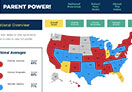
To observers of education policy, the large number of events comes as no surprise. Florida has one of the strongest school choice policy environments in the country compared to other states. In fact, the Sunshine State ranks No. 2 on The Center for Education Reform’s Parent Power Index, which evaluates states based on qualitative and proven education policies that provide choices for families and deliver successful outcomes for students.

Florida’s voucher program helps over 27,000 students with special needs; tax credit-funded scholarships assist over 60,000 students; and an estimated 239,996 Sunshine State students are enrolled in charter schools. Through the Florida Virtual School (FVS), there are more online learners in Florida than any other state. Lawmakers have expanded the state’s wildly successful tax credit-based school choice scholarship program, and established a new, albeit limited, program of personal learning scholarship accounts for special-needs learners.

However, these numbers merely represent approximately 7 percent of Florida’s public school population, meaning even one of the most choice-friendly states in the country still has a lot of work to do. Parents need and want more. They want their children to be eligible for scholarships, for funding to directly follow kids into the classroom, and for students to be in the best possible learning environment regardless of Zip code or background.

Parents are eagerly lining up to access personal learning scholarship accounts that allow students with special needs to have a more customized education experience with critical resources.

The breadth and makeup of state laws are critical in determining availability of choice and innovations in communities. It will be incumbent on lawmakers to continue the strengthening of laws on the books, while exploring new pathways toward excellent education models.

For all its positive points, Florida’s charter school law still lacks the establishment of multiple, independent charter authorizers that have proven successful elsewhere in the nation. A recent State Department of Education report shows a slowdown in charter school authorization by local districts, even as the report states there is clear interest to open schools in order to meet demand. The presence of multiple, independent authorizers free of local control would allow charter school options to expand with a high degree of accountability.

During National School Choice Week, let’s all resolve to listen to the inspiring stories of these families, celebrate the millions of students who now have a brighter future because their parents had a say about it and remind ourselves why this cause is so important.

Frank Biden

Ocean Ridge

The writer, the brother of Vice President Joe Biden, is CEO of School Choice LLC. Ocean Ridge is in South Florida.

Kicking Off School Choice Week With 9 Things You Need To Know

Maureen Sullivan
Forbes
January 26th, 2015

School Choice Week has grown from 150 events in 2011 to more than 11,000 events coming up this week around the country. They range from kids from Newark Prep Charter School ringing the bell to open the New York Stock Exchange Monday morning to thousands of kids doing the official dance with their yellow fleece scarves.

I spoke about the right of children to attend excellent schools at one of the first events four years ago – about 25 people at a bar in Hoboken, N.J. on a snowy January night. Some people in the community were shocked that I – an elected member of the school board – would speak at a school-choice forum. A few spies showed up to listen to the speech and report back. At the next school board meeting the president diverted from the agenda to announce that I had gone rogue and was not speaking for any of them, as if that were my plan. Since I left the board in 2013, the majority members have pressed a lawsuit against Hola Charter School, one of three charters in town, to keep it from expanding to seventh and eighth grades. Throughout the country, parents are fighting for the right to educate their children their way. And there remains a broad coalition of anti-choice advocates who want to reduce or eliminate education alternatives.

As School Choice Week kicks off, here’s a list of nine things that you need to know about education issues around the country.

1. The findings from the American Federation for Children poll released last week indicate that 69% of Americans support the concept of school choice, 63% support private school choice in the form of vouchers and 76% support public-school charters. “The findings of this poll reflect what we saw in the 2014 midterms and what I am seeing in communities across the country – a demand from parents for more options in deciding how their children are educated,” says Kevin Chavous, AFC’s executive counsel.

2. More than 100,000 students use vouchers to attend private schools, according to the Center for Education Reform. Tax-credit funded scholarship programs are available in 14 states and the District of Columbia and help pay tuition for about 190,000 student.
3. There are nearly 6,500 charter schools with more than 2.5 million students enrolled, according to the National Alliance for Public School Charters. Half of all charters are in four states: California, Texas, Florida and Arizona.

4. The Center for Education Reform ranks the charter school movement in each state from A to F based on a system that includes points for funding, autonomy and “teacher freedom.” The As are the District of Columbia, Minnesota (home of the first charter in 1991), Indiana, Michigan and Arizona. The Fs are Virginia, Iowa and Kansas. Nearly 300 students are on the average charter school waiting list. Another finding? Charters on average get 64% of the funding of their district public schools, $7,131 versus $11,184.

5. There are eight states that still don’t allow charter schools: North Dakota, South Dakota, Montana, Nebraska, Vermont, West Virginia, Alabama and Kentucky. Mississippi and Washington have recently changed their laws to allow charters and many are in the pipeline. Change may be coming to Nebraska, where Republican Governor Pete Ricketts, who favors charters and vouchers, in November beat a Democrat opponent who was against them.

6. Charter schools go out of business. The National Alliance for Public School Charters’ report last year notes that about 200 public charter schools that were open in 2012-13 did not open their doors the following year. The reasons for the shut-downs include low enrollment, financials problems and below-par academic performance. The Center for Education Reform says that of the approximately 6,700 charters that have ever opened, 1,036 have closed since 1992.

7. Charter schools are getting better results. A study of Texas charters issued last month by the Cato Institute says the improvement is due to three changes: the least-effective schools are the ones most likely to close, the schools that open out-perform those that close, and the schools that remained open during the 2001-11 period got better. The Evolution of Charter School Quality notes that as the sector matures, there’s less student turnover and students become more selective in picking their schools. “As schools improved, more successful charter school management organizations expanded and many less effective schools left the market,” according to the report.

8. For the first time, the U.S. Senate passed a resolution recognizing National School Choice Week. Sponsored by Republican Tim Scott of South Carolina, the resolution calls for Americans to “raise public awareness about the benefits of opportunity in education.” He had 10 co-sponsors including possible Republican presidential contenders Ted Cruz of Texas and Rand Paul of Kentucky, as well as one Democrat, Dianne Feinstein of California.

9. The nation’s two biggest teachers’ unions spent $60 million to defeat pro-school-choice candidates in the November mid-term elections, according to the Washington Post. The American Federation of Teachers represents 1.6 million members and the National Education Association has 3.2 million members. They unsuccessfully targeted Republican candidates including Governor Scott Walker of Wisconsin and Senator Joni Ernst of Iowa. Their only major victory was the ouster of unpopular Pennsylvania Governor Tom Corbett. In the days leading up to the election, NEA president Lily Eskelsen Garcia went on a “six-state blitz to pound the pavement with educators and candidates,” according to the union’s statement.