








Sign up for our newsletter

Obama Budget Leaves DC’s Poorest Students Out To Dry

By Blake Neff
The Daily Caller
February 3, 2015

School choice advocates are irate with President Obama after his proposed 2015 budget, released yesterday, refused to propose any additional funding for a District of Columbia voucher program that is extremely popular with the city’s poorest residents.

The D.C. Opportunity Scholarship Program, created in 2003,  was allowed to expire by Obama in 2009 and was then reborn in 2011 after the bipartisan passage of the SOAR Act. The program provides scholarships to cover tuition and fees at participating D.C. private schools.

Due to limited funding, demand for the scholarships far outstrips supply. Last year, over 1,700 students applied to received the scholarships, but limited funding means that only 285 were given out through a lottery system. Advocates of the program have urged the president to let it expand to meet some of this overwhelming demand, but the president’s budget proposal leaves them hanging, including only enough money to continue the administration of existing scholarships while cutting off the prospect of any new ones.

“Opportunity Scholarships are a lifeline for some of the neediest students in our nation’s capital,” Center for Education Reform president Kara Kerwin said in a statement sent to The Daily Caller News Foundation.. “The demand for this program is clear from the numbers alone. Parents want, and deserve, this choice for their children.”

Overall, more than 6,000 students have received Opportunity Scholarships throughout the program’s lifespan. According to the federal government’s own research, the program has substantially increased graduation rates for participants, as those given scholarships graduated at an 82 percent rate compared to 70 percent for a control group of those who applied for the scholarships but did not receive them.

“It’s inexcusable that the proven benefits of this program for students and parents are still being ignored,” said Kerwin.

Notably, almost all the beneficiaries of the program come from strong Democratic constituencies. Over 97 percent of participants are either black or Hispanic, and most are in poverty or barely above the poverty line.

“It really is political,” Kerwin told TheDCNF. “It’s the tendency of the status quo to constantly try and put pressure on [Obama] to not support school choice.”

Level playing field, ‘all’ students means vouchers, too

By Deborah Simmons
Washington Times
February 3, 2015

The president of the United States is fond of saying it.

The president of the American Federal of Teachers is fond of saying it.

Education Secretary Arne Duncan has said it.

Senate Minority Leader Harry Reid has said it.

They talk about a “level playing field.”

And they talk about improving education for “all” students.

Not all of them talks at the same time, and not all them of uses the words “level playing field” and “all” every time they speak.

But that doesn’t mean they aren’t trying to fool most of the American people most of the time.

Take what was and wasn’t said on Monday, the day President Obama submitted his budget proposal to Congress.

Mr. Obama reminded poor parents, black parents and D.C. parents who pray and dream of a better education for their children that they are undeserving. He did that by defunding the city’s voucher program, a program designed and appropriated by Congress to allow low-income parents to receive small stipends to send their children to a private school of their choosing.

Kara Kerwin, president of the Center for School Reform, called “inexcusable” the president’s decision to omit funding for new students in the D.C. Opportunity Scholarship Program.

Ditto her characterization — especially since there’s always a waiting list for the scholarships and since 90 percent of voucher recipients matriculate to two- and four-year colleges and universities.

And here’s what Randi Weingarten, a leading anti-choice voice, had to say about Mr. Obama’s denial to low-income families: “Public education should expand opportunity for students,” she said. “We must give all students the opportunities and resources they need — from computers to counselor even if their communities can’t afford them.”

Note that she used the words “should expand opportunity for students” and that she said “all” students should be given opportunities.

She’s faking sincerity.

Indeed, Miss Weingarten has even pulled Mr. Duncan’s strings. In 2010, she persuaded the education chief to back away from holding a press conference at a New York public school whose principal held teachers accountable. (The proof is in this New York Post article.)

Miss Weingarten made her post-budget comments in a letter to Sens. Lamar Alexander and Patty Murray, the chairman and ranking member, respectively, of the Senate Committee on Health, Education, Labor and Pensions. In the letter, Miss Weingarten’s sincerity shone through, saying that “portability” of Title I funds is a “first step” toward voucher programs like the D.C. one.

So, the next time you hear Miss Weingarten and others use “all” or “level playing field” know that means neither black families nor poor people.

It’s that simple.


NEWSWIRE: February 3, 2015

Vol. 17, No. 5

In this special federal policy edition of Newswire, The Center for Education Reform takes a look at some of the most essential parts of redefining the federal role in improving our nation’s schools.

OPPORTUNITY. In a true testament to Groundhog Day, President Obama’s budget request repeated itself by forgoing expansion of the immensely popular D.C. Opportunity Scholarship Program (DC OSP). It’s remarkable that a $4 trillion budget didn’t have room for bolstering a program that is not only popular among low-income families in the District of Columbia, but has resulted in scholarship recipient graduation rates of over 90 percent, nearly 90 percent of whom enroll in college. Conversely, the Obama budget expands Title I by $1 billion from last year, but the federal government should ensure that funding specifically aimed at aiding low-income students is actually going to good use. Expanding the OSP would be a step in the right direction.   

TESTING. The original idea in No Child Left Behind (NCLB) was strong; states submitted plans and were evaluated, and parents could demand data for the first time. This empowered states to set goals and testing structures while being held accountable for federal funds received. However, it’s the implementation and response from the status quo that went awry, which explains the current testing backlash and why Congress is debating the same issue as 15 years ago. In reality, it’s school choice that’s going to be the difference-maker once data and performance are fully known, because tests without choice and consequences are meaningless.

CHARTER SCHOOLS. As with anything else, the feds have been looking for ways to take local and classroom level innovations and apply them nationally, and charter schools are no exception. While it’s one thing to support the “expansion” and “replication” of proven charter policies and models in states, it’s equally, if not more critical, to support the start-ups and individuals seeking to provide a brand new education option. It’s worth remembering that replication wouldn’t be possible had there not been the independent charters in the first place. CER data show charters thrive in states with strong laws. Incentivize states to set up strong charter sectors, and leave the definitions on what constitutes a strong charter to independent authorizers and parental demand.

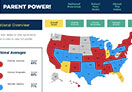
PARENT POWER. The Senate Education Committee met today on how to promote district-led innovation that best meets the learning needs of students. Among the witnesses was Katie Duffy of the highly successful Democracy Prep in New York, who said in the roundtable discussion with senators and school leaders, “Flexibility is incredibly important when funding innovation.” Duffy was talking specifically about Title I, but this was a recurring theme throughout the discussion about fostering the kinds of innovations that are helping families. One look at CER’s Parent Power Index reveals that the bulk of effective innovation happens at the state level, exhibited by the millions of students taking advantage of school choice programs. There are ways for the feds to responsibly support and incentivize parental empowerment, as long as it does not impede state-level policy.   

CHOOSING EXCELLENCE. Next week, Senator Tim Scott will be hosting a Capitol Hill forum on the freedom to choose education, where CER’s own Kara Kerwin will join fellow reformers to discuss the expansion of choice and information to more families. Click here to see the full agenda.

Fiscal Year 2016 Budget Neglects Opportunity Scholarships

Program Has Given 6,000 Low-Income D.C. Students Access to Education

Press Release
Washington, D.C.
February 3, 2015

The Obama administration’s FY2016 budget once again fails to recognize the importance of parent choice in giving low-income D.C. families access to excellent education options, allocating just enough funding to cover administrative costs for the D.C. Opportunity Scholarship Program (DC OSP).

“It’s inexcusable that the proven benefits of this program for students and parents are still being ignored, and just days after a school choice rally on Capitol Hill and new research that reveals DC OSP parents are empowered by this program,” said Kara Kerwin, president of The Center for Education Reform.

Nearly 6,000 students have been awarded scholarships through the DC OSP since its inception, and approximately 90 percent of DC OSP high school seniors go on to attend two-year and four-year colleges.

More than 1,700 new DC OSP applications were received for the 2014-15 school year, with 285 new scholarships being awarded via a lottery.

“Opportunity Scholarships are a lifeline for some of the neediest students in our nation’s capital,” said Kerwin. “The demand for this program is clear from the numbers alone. Parents want, and deserve, this choice for their children.”

“If anything there should be more resources going to a program that’s proving its power,” continued Kerwin. “It’s critical Congress acts to ensure the DC OSP remains a viable option for low-income families.”

The School Choice Journey: Parents Experiencing More than Improved Test Scores

By Thomas Stewart and Patrick J. Wolf
American Enterprise Institute
January 2015

Key Points

  • Studies indicate that low-income parents participating in the District of Columbia’s private-school choice program prioritize—at least initially—the safety of schools over schools’ academic quality as they transition from public schools. Furthermore, when evaluating their child’s academic progress, parents do not view standardized test scores as a key metric of success.
  • Most interestingly, these urban parents report that they want to be respected as advocates of their child’s education and will fight hard to keep their child’s private-school choice program if that program’s future is threatened.
  • These lessons should be considered when designing and implementing publicly funded, means-tested programs in an effort to break the cycle of poverty among low-income families and disadvantaged communities.


Read The School Choice Journey here.

School is in Session with Nation’s Pioneer and Leading Advocate for Reform

Taught by Ed Reform Founders, Unique Program Begins Today

Press Release
Washington, D.C.
February 2, 2015

A course designed by the founders of education reform to pass the history on to subsequent generations is formally in session today, a result of years of development and decades of experience by The Center for Education Reform (CER), and its founder, Jeanne Allen.

“It’s hard to explain the thrill of finally being able to convey the context of reform through the lens of those who were there,” said Allen, who also serves as senior fellow at CER. “The 50 scholars selected as the inaugural cohort are uniquely positioned to learn and lead for that reason. With history as their guide, the possibilities for accelerated reform are endless.”

Using the QLearn Mobile technology platform created by Qualcomm for the nation’s leading universities, the first foundational course, The Decline and Fall of the U.S. Education System – The Development of a Movement, takes students on an accelerated look at the past 25 years, from the actual conversations that shaped A Nation at Risk, through the lens of the governors and advocates who shaped the nation’s first choice laws, through the courts, to the battle for standards as first envisioned by state leaders, and beyond. The ten weeks will see students study original source documents, participate in synchronous and asynchronous activities and achieve, with success, a certificate that permits them to continue through a formal EdReformU™ graduate program, which will be developed for course credit and provide recognition to institutions who employ or wish to hire these individuals that have the foundational knowledge necessary to engage in substantive education reform efforts.

“The Center’s rich and varied experiences are often overlooked in the increasingly busy reform space,” said CER president Kara Kerwin. “Having lived the history over the past 15 years in various positions at CER, I can attest to the richness of the lessons that live in its repositories, that will now be available to enrolled students and as a result, the institutions they touch.”

In addition to weekly sessions with Allen, lessons with adjuncts will augment the readings, and original videos and communications that tell about each chapter in history.

“Learning from the past successes and failures of the education reform movement greatly enhances the prospects of future reformers,” said Allen. “We are looking forward to using this experience as we develop the next eight courses.”

The 50 enrollees in EdReformU’s first cohort hail from almost every state, represent those in the business community as well as local, state and federal legislative offices. Educators, students, new advocates and leadership from some of the most prominent organizations in education round out the diverse cohort.

“Since its founding in 1993, the work of CER has bridged the gap between policy and practice to transform K-12 student outcomes,” said Allen. “EdReformU™ takes this mission to the next level, utilizing twenty-plus years of experience to bridge the gap between the pioneers who came before and shook up the status quo and those fighting to ensure reforms continue to make America’s schools work better for all children.”

Accomplishment in the ten-week course will be recognized with a certificate and entitle those individuals to the subsequent coursework that is delivered. The opportunity to obtain Masters level credit is under discussion with numerous selective universities.

Click here to learn more about EdReformU™. To get on a list for future application periods, contact cer@staging.edreform.com.

An explanation of school choice and its variants

By Dan Spencer
Watchdog.org
January 29th, 2015

It’s National School Choice Week. School choice is all about public policy enabling families stuck with low-performing schools to being able to choose to attend higher-performing public and private schools. School choice encourages healthy competition among schools to better serve students. Parents are allowed to use the public funds set aside for their children’s education to choose schools that work best for them.

School choice includes things like charter schools, home schooling, and school vouchers:

  • Charter schools are public schools that are given independence from some local or even state rules. They are financed through public funds. Charter schools are open to any child, and if enrollment exceeds available space, charter schools accept students by random, public lottery. More than 2.5 million students now attend nearly 6,500 charter schools.
  • Some parents choose to home school their children instead of sending them to a traditional public or private school. Home schooling is legal in all 50 states. It is estimated that more than 1.5 million children are being home schooled in the U.S.
  • Vouchers, tax credit scholarships, and personal tax credits allow parents to use public funds to pay for some or all of their child’s private school tuition. The Center for Education Reform reports that there are 21 school voucher programs in 18 states plus the District of Columbia.

All these choices provide families with alternatives when a traditional school fails to adequately meet their student’s needs.

Study after study has found that school choice increases graduation rates and student achievement.  Education is the gateway to a better future. School choice is seen “the surest way” to end the cycle of poverty, as a way to expand opportunity, and a means to end the school-to-prison and welfare pipeline.

Why aren’t these alternatives to traditional public schools available to all children? Imagine how different things might be if school choice was universal.

Alternative Education Fair Offers School Options

By Amy Schneider
Eugene Weekly
January 29th, 2015

It’s National School Choice Week, a time for parents, students and teachers around the country to celebrate and recognize the diversity of school options available to kids. Sometimes all those options can be overwhelming — Eugene School District 4J alone has five alternative elementary schools.

Fortunately, the Jan. 31 Alternative Education Fair at the Eugene Public Library is here to help. The fair is a one-stop shopping opportunity for parents and students to chat with more than a dozen representatives from local charter schools, private schools and homeschooling advocates.

According to a 2014 survey by the Center for Education Reform, the number of charter schools in the U.S. has grown steadily since 2000, with an average growth rate of 340 schools per year.

“There seems to be a feeling among parents in 4J that public schools are under stress with chronic financial shortages and mandates from the feds that are pushing all kinds of testing on kids,” says Rebecca Daniels, executive director of Network Charter School. “As a longtime parent who’s had kids in both alternative schools and 4J neighborhood schools, I certainly feel that among the parents I know, there are people interested in looking at what the alternatives are.”

Parents can even find alternatives within traditional public school districts, like 4J, which will table at the fair. “We’re not the only choice in this area,” says Kerry Delf, communications coordinator for 4J. “You can choose to attend a school in 4J, or you can look at a charter school or private school.”

Delf says it’s important to distinguish between alternative public schools and public charter schools. “We have different processes,” she says, adding that the deadline for 4J’s school choice lottery is Feb. 27.  “A lot of times parents will assume a charter school is in 4J, but we have separate systems for enrollment. If you’re interested in those schools, talk to those schools.”

She says schools such as Corridor Alternative Elementary, a school that specializes in the performing arts, fieldtrips and enrichment programs while still operating within the 4J district, are opportunities for kids to experience alternative learning styles.

Laura Philips with the Eugene Public Library says the fair provides that very opportunity. “It’s been going on for more than a decade,” she says. “It’s a really lively event, and it’s fun because it brings together all these different people who are interested in education. We usually have a few hundred people visiting.”

Other schools tabling include the Eugene Sudbury School, which helped organize the event, High School Connections at LCC, Ridgeline Montessori Public Charter School and West Lane Technical Learning Center. The library will also showcase its free, online homework center for students.

The Alternative Education Fair is 1 to 4 pm Saturday, Jan. 31, at the Eugene Public Library.

How The Likely 2016 GOP Presidential Candidates Stack Up On School Choice

By Joanne Butler
The Daily Caller
January 29th, 2015

As it’s National School Choice Week, I wanted to see how Republican presidential hopefuls measure up on their actions to increase school choice (versus just talking about it). My specific focus: how charter schools are faring in their home states. Some states are doing well, others are muddling through, and still others are failing. (You can view a state-by-state matchup on charter schools here).

My home state of Delaware has popular charter schools; billboards advertising for students are a common sight. One school, the Charter School of Wilmington, is ranked number 10 nationwide among all high schools, public and private.

Despite this, establishing charter schools in our small blue state has not been easy. Democrats have controlled the governor’s office since 1993 and much of the statehouse over the past twenty years. Even now, statehouse Democrats are trying to limit access to charter schools. Delaware’s lesson is simple: charter schools need strong support from Republicans to survive and thrive.

With that in mind, I did some calculating. See the table below.

State

Candidate

Number of

Charter Schools

State Population Share

per Charter School

(lower is better)

Delaware

V.P. Biden (D)

24

38,573

Wisconsin

Gov. Scott Walker

245

23,440

New Jersey

Gov. Chris Christie

87

102,297

Ohio

Gov. John Kasich

400

28,927

Florida

Fmr. Gov. Jeb Bush, Senator Marco Rubio

625

31,284

Texas

Fmr. Gov. Rick Perry

689

38,386

Louisiana

Gov. Bobby Jindal

117

39,534

Kansas

Gov. Sam Brownback

11

263,087

Interestingly, the winner of my little survey is Governor Scott Walker of Wisconsin, the mild-mannered Clark Kent of the 2016 pack. He may act like Clark Kent, but he governs like Superman.

While Walker cannot take credit for establishing charter schools (that happened in 1993), he has helped the charter cause in his public career. As executive for Milwaukee County (2002-2010) and in his first term as governor, the University of Wisconsin at Milwaukee was empowered to form a charter school, and then to form more charters throughout the county. Coincidence? I don’t think so. An important extra benefit is the university is graduating people from its teachers program who have experience and a positive attitude to charter schools. Trust me, this is unusual.

The end result: Wisconsin has the most charter schools (245) for its population size (5.7 million).

However, it’s clear New Jersey Governor Chris Christie has some explaining to do. His population share per charter school is more than double that of neighboring Delaware’s. Blame grumpy teachers unions? We have them too! However, with so many charter schools in Delaware, I believe we now have a critical mass of charter school acceptance by parents and students.

Although Christie approved five new charter schools last year (with more to come in the 2015 pipeline), his approvals are too few to reach that critical mass, considering the state’s population of nearly nine million.

In Ohio, Governor John Kasich is doing a very credible job in promoting school choice. The Center of Education Reform rated Ohio 11th in the nation for school choice ‘Parent Power.’ Note that Ohio calls charter schools ‘community schools’ – a somewhat misleading term.

Florida can boast a respectable number of charter schools (625) for its population size (19.5 million) but it’s unclear if Jeb Bush or Marco Rubio can take much credit for this.

Florida’s initial charter school law was enacted in 1996, and the first school opened the same year. Bush became Florida’s governor in 1999 – well after the charter movement had taken hold. Same for Rubio, he first became a state legislator in 2000. Perhaps these men, as governor or legislator, took certain steps to expand access to charter schools. If so, these are stories they must tell us.

Meanwhile former Governor Rick Perry of Texas has little to boast about regarding charters. His state’s population (26.4 million) is about 25 percent larger than Florida’s (19.5 million), but has only 64 more charter schools than Florida (an increase of nine percent). Plus there are over 100,000 Texas kids on a charter school wait list. The Lone Star state’s population share per charter is just a wee bit better than Delaware’s – puzzling when you consider the length and strength of Republican control in Austin.

Why such abysmal charter school numbers, Mr. Perry?

Turning to Louisiana, the state has a relatively low number of charter schools, perhaps because its charter system is so complex.

Louisiana’s charter school website lists seven types of schools; variables include the entity that authorizes the charter. Yes, the website states there are five types, but look closer and you’ll see a Type 1B and Type 3B tucked in below. Cute, but it still makes for seven types.

So, Governor Jindal, how does this classification information help your average Louisianan choose a charter school? A parent’s main concerns are about the quality of teaching and the safety of the students. Knowing that a charter was authorized by a school board versus some other agency does not add value to the decision making process.

Final comment for Governor Jindal: when blue-state Delaware is beating your state on charter schools, something’s wrong. He’s a famous wonk with an Ivy League degree.

I included Kansas (with its meager 11 charter schools) in my survey, as it’s a sad example of missed opportunities caused by a governor who switched policies in midstream.

Governor Sam Brownback used to support charter schools, but moved away from them in the run-up to his 2014 re-election campaign. He opted for tax-credit funded school choice scholarships (enacted in 2014), as those involve private schools. However, the Center for Education Reform gives Brownback’s tax-credit/scholarship program a ‘D,’ stating it has “seriously restrictive provisions.”

Further, Brownback’s embrace of tax credit scholarships over charters resulted in the 2013 failure of proposed legislation to help expand charters. Without his backing, the legislation died in the statehouse.

While some conservatives see vouchers or scholarships for private schools as a purer solution to our education problems, realists know America has thousands of charter schools teaching millions of children. Vouchers and/or tax credit scholarships are generally restricted to the poorest families, while charters serve all students, including the middle class.

Charter schools are a way for people to create schools to fit certain needs, without having to raise the huge amount of money required to open a private school.

Advocates say Pennsylvania can do more for charter schools

By Evan Grossman
Watchdog.org
January 30th, 2015

Pennsylvania could be a lot friendlier to public charter schools.

That’s the message delivered by a pair of independent reports that call for an equitable funding formula and more hospitable policies for the state’s charter schools.

The NAPCS placed Pennsylvania 25th out of 43 states in its sixth annual charter law report, while a Pew studyzeroed in on Pennsylvania’s lack of a statewide funding formula as a prime reason why some charter schools receive a fraction of the funding that traditional district schools get. Pennsylvania was one of the first states to establish a charter law in 1997, but Ziebarth said the law is now “out-dated.”“They got out of the gate strong, but it’s beginning to stagnate there,” said Todd Ziebarth, senior vice president of the National Alliance for Public Charter Schools, which published its ranking of the nation’s charter laws this month. “A number of states have updated their laws. Pennsylvania has not.”

“Pennsylvania is really not up to par with some other states that have more widespread choice and access for students to get into better schools,” said Kara Kerwin, president of the Center for Education Reform.

NAPCS’s report shows the need for additional policy improvements across the nation, particularly in areas of funding. This evaluation is indicative of Pennsylvania’s greatest area of concern, too, as it is one of only three states without a funding formula for financing its schools.

State lawmakers have worked to rewrite Pennsylvania’s charter school law over the past few years, but have been unable to reach consensus. The funding formula and the creation of state-level authorizer for new charter schools have been the main sticking points.

NAPCS measures states’ charter climate according to 20 categories, from caps on the number of schools permitted to who can authorize them to transparency in the approval and denial process. Pennsylvania fell from No. 24 to 25 out of 43 states with charter laws this year because of its performance in the Equitable Operational Funding and Equal Access to All State and Federal Categorical Funding category.

In all, NAPCS scored the health of Pennsylvania’s charter school movement very high with 23 of a possible 26 points. However, the report recommends Pennsylvania shore up several areas, including prohibiting district-mandated restrictions on growth, ensuring authorizer accountability, providing authorizer funding, allowing multi-school charter contracts or multi-contract governing boards, and ensuring equitable access to capital funding and facilities.

For the fifth time in six years, Minnesota was named the No. 1 state for charter laws, while Maryland was last for the second straight year.

“More states need to enact legislation that reduces the funding gap between charter schools and traditional schools, provides charter schools with the flexibility to innovate and holds charter schools accountable for student achievement,” NAPCS President and CEO Nina Rees said.

Until 2011, the state provided school districts with a subsidy that reimbursed them for up to 32 percent of their per-pupil spending to offset the cost of charter schools. Pennsylvania eliminated that assistance, which cost districts $219 million in revenue, half of which was earmarked for Philadelphia schools, according to Pew.

“As a result of the change,” the report said, “individual districts had to spend a greater percentage of their overall funding on charter school students.”

Pennsylvania is one of five states that makes individual districts responsible for funding charter schools, placing a “greater financial burden on districts such as Philadelphia,” according to the Pew report.

The state determines how much districts must fund charters based on the district’s per-pupil operational cost, which is determined by taking the district total cost per pupil and subtracting certain federal reimbursements along with expenditures for facilities, transportation, adult education, dual enrollment and pre-K programs. Using this model funds charters $1,500 less per student than traditional public schools, according to the Commonwealth Foundation.

Last year, Pennsylvania Auditor General Eugene DePasquale issued a similar evaluation calling for an overhaul of the state’s charter laws, saying the system was “seriously flawed” and recommended restoring an exclusive funding stream for charters. In some cases, DePasquale found disparities in pupil funding as much as $21,000 among districts and $10,000 among charters.

Among DePasquale’s recommendations were to eliminate cyber charter school payments from school districts and replace them with direct funding from the state. He also recommended requiring charter schools to have the same teacher and principal performance evaluations as school districts.

“For school districts, the increasing costs of tuition, as more students opt to attend charter schools, combined with the loss in 2011 of the charter school reimbursement paid by the state are part of the funding problem,” he said.

Despite the hurdles facing charter schools in Pennsylvania, one school district could turn completely charter. The York City School District was taken over by the state in 2012 and may turn over its eight schools to Charter Schools USA in an effort to repair its bleeding budget and improve students’ academic performance. If approved, York would be the fourth district in the country to go all-charter.

Gov. Tom Wolf has made education a major issue as he takes office and establishing a progressive funding formula is among his administration’s top priorities as Pennsylvania faces a $2 billion budget deficit. Finding new revenue streams for schools will be a challenge, but lawmakers have already begun the process of fixing what is clearly a problem for districts across the commonwealth.

Last year, Harrisburg formed the Basic Education Funding Commission, a 15-member committee tasked with developing and recommending a new school funding formula to the Legislature. Its final report is due in June.