









Sign up for our newsletter

Texas ranks 25th

By Annette White
The Daily Tribune
March 27th, 2015

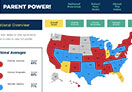
The Center for Education Reform released their education scorecards for 2015 last week, with Texas earning a C grade.

According to a statement from the CER, only one-third of the 42 states and the District of Columbia that have charter school laws earned above-average scores for implementing a strong policy environment.

“It is abundantly clear that little to no progress has been made over the past year in most states. While Texas’ law has had minor improvements over the last few years, the automatic closure law enacted to close underperforming charters has had some unintended consequences. Charter school growth does continue at a steady, nearly linear pace nationally, especially in states with charter laws graded ‘A’ or ‘B,’ but an even more accelerated pace would allow charter schools to play a more central role in addressing the demands and needs of our nation’s students,” Kara Kerwin, president of CER, said in the statement.

According to the scorecards, only four states and D.C. earned As, with D.C. holding on to the number one seat for seven years in a row. Eight states earned Bs, 19 earned Cs, and 11 earned Ds or Fs.

“Strong charter laws feature independent, multiple authorizers, few limits on expansion, equitable funding, and high levels of school autonomy,” Alison Consoletti Zgainer, CER executive vice president and the report’s lead editor, said. “Many states that appear to have all of the critical components of a strong law struggle with the implementation of key provisions, which is why the rankings over the past few years have shown little variance and have remained relatively stagnant.”

Kerwin also stated in the press release that the lack of progress made in statehouses across the country can be traced to a lack of political will leading up to a major mid-term election. She said the biggest culprit, however, was a lack of information and a growing body of misinformation.

According to the release, the CER has studied and evaluated charter school laws based on their construction and implementation since 1996.

Maryland gets an ‘F’ on its charter school laws

By Brad Matthews
Watchdog.org
March 26, 2015

The Center for Education Reform has released a new report card on the health of the nation’s charter school laws, and Maryland received an F for having the third-weakest law nationwide. Gov. Larry Hogan has proposed a bill offering modest improvements to the state’s charter school system, but provisions within the law have mobilized the teacher’s unions and their allies in the state Senate against the bill.

Maryland’s weaknesses in charter school implementation cannot be traced to one flaw; the state has a number of policies which inhibit the growth of charter schools. A school seeking to open would have to start with a local school board, which has sole control over approving charter schools.

The state has the limited ability to authorize a charter to restructure a failed school if the local school board has not acted within the span of 45 days, but that has never happened. Denied applications may be appealed to the state, but the state board has no clear legal authority and acts only as a mediator whose decisions are non-binding.

Schools also lack operational autonomy; control over the specifics of these schools, from operational contracts to teachers, are controlled locally by local school boards. Charter schools have to request waivers from state regulations, and they remain attached to their local school district in terms of policy.

Teachers are covered by local collective bargaining agreements–although charters can also negotiate with the unions themselves–and all charters have to abide by the state’s teacher retirement system.

Because control over charter schools is left up to the counties and local school boards, there are no state-level caps on the number of charters. Local school boards do have the power, however, to limit the number of charter schools allowed in their area.

Funding is another contentious area, insofar as it is done through the local school district. Although state law requires commensurate funding for public and charter schools, local school districts which aren’t favorable to the idea of charters have ways to use this power to create inequities between public school funding and charter school funding.

The report noted that several school districts have purposefully ignored the equitable funding statutes, leading to expensive lawsuits and uncertainty over staffing in some charter schools.

CER Hopes Maryland Lawmakers Continue To Debate Critical Changes To State’s Charter School Law

CER Press Release
Washington, D.C.
March 26, 2015

Kara Kerwin, president of The Center for Education Reform, issued the following statement on the Maryland Senate Education Committee’s changes to Governor Larry Hogan’s Public Charter School Expansion and Improvement Act of 2015:

“The Maryland Senate Education Committee yesterday made changes to charter school legislation that if signed into law would set charter school progress backwards.

“Amendments stripping the modest, yet important changes Governor Hogan originally proposed will have no impact in improving the charter school climate in our great state.

“Policies that ensure teacher freedom from collective bargaining, more autonomy for charter school leaders to make decisions about their budget and personnel, equitable funding, and allowing the state board to authorize charters on appeal are critical to charter school success in Maryland.

“There are 12,000 students on charter school wait lists in Maryland. It is my hope that lawmakers will continue to weigh these important changes that will help grow the public charter school environment in Maryland.”

Northeast Comes Out on Top in Study of Best K-12 Schools

By Laura Kiesel
Main St
March 26, 2015

NEW YORK (MainStreet) — The Northeast reigns and many Western states flounder in a study by the financial website SmartAsset ranking K-12 schools in all 50 states and the District of Columbia.

New York, Massachusetts, New Jersey and Connecticut make up the top four (with Virginia coming in fifth), while Washington, Arizona, Oregon and Nevada were on the bottom. In the top four states, 70% or more of high school graduates go on to attend college within 12 months. Minnesota, which ranked eighth on the list, was the only other state not in the Northeast to exceed 70% for that metric. Other states in the top 10 included other Northeastern states — New Hampshire and Delaware — as well as North Dakota and Nebraska.

But there’s more money at stake than students’ potential earnings after college. Taxpayers — especially those raising families — also have an interest, since there seems to be at least some correlation between financial investment in students and having higher high school graduation and college attendance rates. Each of the top four states in the SmartAsset study invested well above the national average in their students, spending an average $16,000 per student compared with the national average of about $12,800.

The nation spends about $500 billion annually on K-12 education, with all three levels of government — federal, state and municipal — contributing. With the federal government footing about 10% of the bill, the contributions of state and local governments can make a big difference. “State governments have an especially important role,” the report says. “They maintain standards for curriculum, make sure that school districts with faltering local tax bases are adequately funded and assess the efficacy of public schools by administering statewide achievement tests.”

Heavier financial investments made on the state level don’t always translate into higher-performing school systems. Alaska invests close to $20,000 per student yearly yet has one of the highest dropout rates in the nation at 7%, and only a 50% college attendance rate, landing it an abysmal rank of 44th on the SmartAsset list.

States were ranked according to several factors, including percentage of students who take the SAT and ACT, per capita funding by student, student-teacher ratios in the classroom, high school graduation rates and the percentage of students who go on to college. SmartAsset relied on data from the College Board, National Center for Education Statistics, Census Bureau and National Education Association.

Connecticut, No. 1 on the list, had the ninth-lowest high school dropout rate of any state and the third-highest college-enrollment rate at 76%. New Jersey, which was No. 2, has the second-lowest dropout rate and eighth-highest college attendance rate, while also rankling in the top 10 for one of the highest financial investments per student — $19,601 annually. Last year, Business Insider even ranked High Technology High School in Lincroft, N.J., as the top secondary school in the nation.

Meanwhile, schools in Massachusetts have improved significantly since the passage of a major statewide school reform bill in 1993. The state’s Advanced Placement Exam Fee Subsidy Program has helped catapult the rate of students taking AP tests into the top 10 of all states, with average scores on those tests ranking the fourth-highest in the U.S. Bay State students have the highest average ACT Score of any state in the country, even though only less than a quarter of them (23%) actually took the exam in 2014. The Commonwealth’s next-door neighbor, New Hampshire, was also competitive, with the lowest dropout rate of any state in the country: a mere 1.3%.

Besides the four lowest-ranking states all being on the West Coast, all had below-average college-attendance rates and per-student spending levels and higher-than-average student-teacher ratios — earning each an F on the SmartAsset report.

“Knowledge is power, and we are hoping to arm people with the data to make better decisions,” says A.J. Smith, managing editor at Smart Asset. “For this study, the data could help determine where you want to live, who you want to vote for, etc.”

Nevertheless, some experts warn that the study is limited in scope and doesn’t necessarily offer an accurate impression of the quality of education a student gets in a given state.

“We really have to be careful with studies like this,” says Kwame Abasi Patterson, media relations director at Stand for Children, an education advocacy organization. “There are several dynamics and nuances at play here that raw numbers like these just don’t and won’t answer. The quality of a school principal, teacher, support structures, interventions, funding spent wisely, socioeconomics, the achievement gap — they all matter.”

Kara Kerwin, president of the Center for Education Reform, wants the focus to be on the students themselves and not just numbers. She points to her organization’s Parent Power Index, which shows how states can boost student achievement based on qualitative studies and public policies that have a proven track record of success.

“SmartAsset rankings give full weight to per-pupil funding and double weight to the number of students taking college-entrance exams, meaning states that prioritize educational inputs such as spending and test offerings have a distinct advantage,” Kerwin says. “Outputs like whether schools can boost student achievement, and students’ reading and math proficiency scores, are more valuable in determining actual return on investment rather than what lawmakers are putting into the system.”

Education Budget Makes Charter Schools Nervous

By Kaye Burnet
WESA 90.5
March 26, 2015

Advocates for Pennsylvania’s charter schools are worried that Governor Tom Wolf’s new education budget would force some schools to close their doors.

Wolf’s 2015-2016 education budget includes more money for preschool through college education, but one school group is feeling ostracized.

“Charter schools in Pennsylvania are already receiving far less per pupil than their traditional school peers,” said Kara Kerwin, President of the Center for Education Reform. “On average it’s about 30 percent less per pupil.”

Kerwin and others are concerned about the possible effects of Wolf’s proposal that charter schools return all un-spent funds to their local school districts at the end of every year. Kerwin said this would eliminate the opportunity for charter schools to plan for the future and invest in infrastructure, such as new buildings or technology.

Pennsylvania’s approximately 160 charter schools serve more than 100,000 students. According to the governor’s spokesman Jeffrey Sheridan, these schools are sitting on $156 million dollars in excess fund balances.

“What the governor is proposing is simply that we do an annual review to make sure that money that is supposed to be spent on students is being spent on students,” Sheridan said. “Charter schools will still be able to pay their maintenance and infrastructure costs as needed, and we’re not taking away any of their existing fund balances.”

However, traditional public schools have fund balances that total approximately $1.7 billion, according to the Keystone Alliance for Public Charter Schools.

Tim Eller, executive director of the alliance, says taking away charter schools’ ability to save could lead to defaults on their loans.

“You’re going to start seeing charter schools closing down across Pennsylvania because a lot of charter schools rely on their fund balances throughout the school year to keep their cash flowing,” Eller said.

Banks might become more hesitant to loan money to charter schools for building projects, says Kerwin, which would limit their expansion.

Kerwin said charter schools serve an important function in Pennsylvania, and pointed to Washington, D.C. as an example. Roughly 45 percent of public school students in D.C. attend charter schools.

“The competition has made the nation’s worst-performing school district do far better,” Kerwin said. “We have seen major gains by all students, those in traditional public schools and in charters.”

The governor’s budget also included a provision that would create a flat tuition rate for school districts to pay to cyber charter schools. Instead of paying between $8,000 and $11,000 for every student who leaves a traditional school and goes to a cyber-school, districts would pay $5,950 per pupil.

Eller says education spending can be reformed, but it’s unfair to target charter schools.

“If there’s going to be streamlining of operations, if there’s going to be savings forced upon charter schools, then all of education needs to experience those savings, just not one sector of education,” Eller said.

Senate panel rewrites Hogan’s charter school law

By Erin Cox
The Baltimore Sun
March 25, 2015

A key state Senate panel spent Wednesday dismantling Gov. Larry Hogan’s bill to expand charter schools, redrafting it to allow for only small changes to Maryland’s program for alternative schools.

Democratic senators on the Education, Health & Environmental Affairs Committee stripped out the Republican governor’s proposals to exempt charters from the teachers’ union, to require local school systems to send more cash to charters, and to give their operators more leeway in hiring teachers and principals.

Hogan had said those provisions were necessary to encourage more charter schools to open in the state.

Lawmakers even retitled Hogan’s “Public Charter School Expansion and Improvement Act of 2015,” deleting “expansion” as they tore apart one of the signature initiatives of the governor’s inaugural year.

“We’re giving the modest stuff,” said Sen. Joan Carter Conway, the Baltimore Democrat who chairs the committee.

She said lawmakers do not want to create a “dual” education system in which charters compete against traditional schools for students, teachers and resources.

“That’s what we’ve been trying to do away with since 1954,” she said — a reference to the landmark Brown v. Board of Education school desegregation case.

Keiffer Mitchell, Hogan’s special assistant for education, thanked the committee for its work.

“That is not say that we are happy,” he added.

“For charters to be successful, they need to have flexibility,” Mitchell, a Democrat who served in the House until January, said in an interview. “The governor wants to see a stronger law. He does not want to go backwards.”

The committee is expected to vote Friday on the charter school bill, sending it to the Senate floor for debate next week.

The House of Delegates has been mulling its own set of changes to Hogan’s bill, but education subcommittee Chairwoman Anne R. Kaiser this week declined to discuss details.

Senate President Thomas V. Mike Miller last week urged senators to pass some version of Hogan’s charter school bill, saying there was a “tacit agreement” that passing it would prompt the governor to send more money to public schools.

Hogan’s administration has declined to discuss whether such an agreement exists.

Mitchell said that if the Senate passes its version of the bill, he’ll go to work trying to get more of the governor’s proposal approved in the House.

Since Maryland approved charters in 2003, 47 of the publicly funded, privately operated schools have opened across the state. Baltimore City has 32 of the schools. Many jurisdictions have none.

National advocacy groups for charter schools, hailed for their ability to experiment in teaching, rank Maryland among the worst states in the country to launch one.

But state education officials say the state’s strict rules about operating charters have ensured that those that do open here will thrive.

The rewritten bill would allow for a pilot program that would grant more flexibility in hiring, cirriculum, scheduling to successful existing charters that qualify.

The program would also make clear that charter operators would not have to accept principals they dislike and would have authority over day-to-day administration.

“It solves some of the challenges,” said Jason Botel, executive director of Maryland CAN, an organization that supports charter schools.

Botel said that there is “a lot of confusion” among charter schools about whether their principals and employees answer to the boards that govern the school or the local school districts that employ them.

Clarifying that for schools in the pilot program, he said, “is a significant step forward.”

“If this bill is the best we can get out of the legislature this year, we’ll be happy,” Botel said.

Representatives for the teachers’ union told lawmakers they much preferred the version drafted by the committee to Hogan’s original bill.

Sean Johnson, a lobbyist with the Maryland State Education Association, said the new version manages to “strategically thread a needle.”

The draft calls for a study of how much each school district spends per pupil on education, a figure that would eventually be used to determine how much money charter schools would get from local school boards.

Hogan’s originally called for giving charters 98 percent of what their local districts spend per pupil. Critics said that number was too high because per pupil spending includes large centralized expenses such as school buses and administration.

The governor proposed letting charters give preference to students from low-income neighborhoods and allowing siblings of students who are already attending the charter enroll.

The committee left those provisions in the bill, but added restrictions.

In Baltimore, the legislation found opposition from a surprising corner. Charter school teachers circulated a petition opposing the bill, and sent it to legislators outlining how they feared the unintended consequences of the law.

Of most concern, they said, was that it would create inequities in funding.

“I do not want our success to come on the backs of just as needy students in non-charter schools,” said Corey Gaber, a teacher at Southwest Baltimore Charter School.

The charter school-promoting Center for Education Reform in Washington sent material to the teachers arguing the law, particularly the provision that would allow a break from the union, would improve their working conditions.

In response, the Baltimore Teachers Union released literature to counter the claims.

Kris Sieloff, a teacher at City Neighbors High School, called the idea of leaving a union “disturbing.”

“We like the protections, and I like feeling part of a larger system,” she said.

Exempting teachers from the union was one of the measures that lawmakers refused to grant, Conway said.

“What they really want is the ability to hire and fire their own staff,” she said. “That’s what this is really about.”

NEWSWIRE: March 24, 2015

Vol. 17, No. 12

COMPROMISING NEGOTIATIONS. Lawmakers in the Maryland Senate want to strike key provisions of legislation that would strengthen Maryland’s F-graded charter law. One provision of vital importance would give charter schools the freedom to make personnel decisions based on what’s best for their school and teachers, something school districts are now responsible for despite the fact that they aren’t responsible for the day-to-day operations of the school. Sadly, it’s no surprise that this proposal is under scrutiny in attempts to placate union support for the status quo. Watering down meaningful change means future charter applicants would face the same uphill battles when it comes to receiving approval from local – often-hostile – school boards, and then having the freedom to provide a true alternative to kids who could benefit from their mission. There is still hope that real charter law reform will be realized, but not if lawmakers continue to dismember the critical aspects that will actually create new opportunities for students.

Act Now!Take action to let elected officials know that provisions that give charter schools equitable funding and true freedom and autonomy are vital for charter schools to play a role in improving education for all Marylanders!

BAD BUDGET. Pennsylvania Gov. Tom Wolf’s anti-charter school budget proposal is meeting resistance in Harrisburg, where lawmakers in recent weeks have been holding appropriations hearings. Rather than include charter schools as a viable part of public education, this budget proposal alienates them. One particularly egregious component would require charter schools to annually return unused expenditures to their home district, limiting the ability of charter officials to have savings and plan for the future. Not to mention, Keystone State charters have long faced inequity due to a funding system based on local control. As long as these inequities persist, don’t expect Pennsylvania to move beyond a C-graded charter law any time soon.

PROPORTION PROBLEM. District of Columbia reform blogger Mark Lerner debunks the premise that there is a ‘correct’ ratio of charter and traditional schools. The proliferation of choice is about meeting parent demand for more high-performing options, regardless of market share or school governance. More than half of DC traditional school students scored proficient in math for the first time last year, thanks in no small part to the charter ripple effect, ultimately made possible by having the strongest charter law in the country. Charter students continue to outperform on DC assessments in math and reading, meaning more students could be achieving similar proficiency if only they were in a learning environment that their families could choose as a best fit. We must worry less about proportionality of schools, and more about the proportionality of students who are now mastering course content.

HERE WE GO AGAIN. Illinois’ 32 ranking out of the nation’s 43 charter school laws served as a grim reminder of the litany of anti-charter proposals in Springfield that would weaken the state’s charter law even further. Throughout this week, legislators will be working fervently to pry bills out of committees so they at least have a chance of consideration in the current session. Among these proposals include the removal of the State Charter School Commission’s authority to reverse charter application denials at the local level, and a system of checks and balances that allow charter school options to open and grow in the face of hostility. A pro-reform gubernatorial administration should serve as a last line of defense, but lawmakers should be working to improve the Illinois charter environment, which includes blocking attempts to do the opposite.

TAX CREDIT MOMENTUM. Between a bilingual ad campaign, a New York Post opinion piece authored by Gov. Cuomo, and rallies held across the tri-state area, supporters are getting the word out about the Education Investment Tax Credit (EITC). If enacted, New York would become the 15th state with a program that allows tax credits to be claimed against donations to scholarships for students in need. The tax credit program, which has bipartisan support, would mean more scholarships for low-income students in need of a new learning opportunity. Over 190,000 students and counting now benefit from tax credit-funded scholarships, while New York families stand ready and waiting for the same opportunity afforded to others around the country.

NO LOVE FOR LIFO. A Star Tribune Minnesota poll found that 68 percent of Minnesota residents think schools should be able to prioritize performance over seniority when determining teacher retention and layoffs. This finding mirrors CER’s own findings, which actually indicate even higher levels of support for accountability in schools. Minnesota lawmakers are currently considering a revision to the ‘last-in-first-out’ policy, a practice that received national attention during the Vergara trial last year. Kids deserve schools that take all steps to ensure high-functioning classrooms, and educators deserve a dignified system that acknowledges the great work they do everyday.

Despite high marks, Pennsylvania charter schools still under attack

By Evan Grossman

Watchdog.org

March 24, 2015

PHILADELPHIA — A national education reform organization charges school choice and education freedom are under siege in the City of Brotherly Love.

Despite a host of new data that affirms academic achievement levels of charter schools and points to public thirst for more of them, charters continue to face an uphill battle, according to the Center for Education Reform.

Pennsylvania received a ‘C’ grade in its Charter School Laws Across the States 2015: Rankings and Scorecard“primarily because charters face relentless hostility from both local districts, and now state leaders,” CER President Kara Kerwin said.

“Rather than include charter schools as part of the solution to improving education in Pennsylvania,” she said, “Gov. Tom Wolf’s budget proposal seeks to marginalize them.”

Wolf proposed a state budget that cuts funding to online cyber charter schools and would allow local districts to seize cash reserves charters accrue. The governor alsodemoted School Reform Commission Chairman Bill Green and replaced him with Marjorie Neff, a commissioner who won the approval of the Philadelphia Federation of Teachers and other charter opponents earlier this year when she denied all 39 new charter applications before the SRC.

Five of those schools were approved by the agency against Wolf’s wishes and those approvals ultimately led to Green’s ouster.

“The governor seems to have bought into the PFT’s narrative about charter schools — hook, line and sinker,” said David Hardy, the CEO of Boy’s Latin Charter School and also one of those 34 rejected applicants. “You won’t be able to keep a charter school operational the way they’re picking at our finances and coming out with more regulations.”

The result: Parents seeking new and better educational opportunities for their children are having their freedom of choice snuffed out by bureaucratic policies.

“There are a lot of adults that don’t like parents having a say in where their children go,” said Tim Eller, director of the Keystone Alliance for Public Charter Schools. “That’s one of the basic fundamental differences between charter schools and traditional district schools: parents have a choice.”

While confidence in the School District of Philadelphia is morbid and tens of thousands of students remain on waiting lists to escape its failing schools, city charters are flourishing.

The Center for Research on Education Outcomes at Stanford University, an independent analyst of charter school effectiveness, found that most Philadelphia charter students show significant achievement in both math and reading against the scores found in other public school models.

Philadelphia charter schools, particularly those serving minorities, economically disadvantaged and English-learning students, outperform traditional district schools to the equivalent of 40 additional days of learning growth in math and 28 days of instruction in reading, according to the study.

Public Citizens for Children & Youth, an organization that called for the flat rejection of all 39 charter school applications reviewed earlier this year, declined to comment on the findings of the study. PFT spokesman George Jackson also said he did not see the report.

American Federation of Teachers President Randi Weingarten did see and comment on (part of) a recently published Pew poll that found an overwhelming majority respondents value education above all other issues facing the city of Philadelphia.

But the Pew poll also showed 58 percent of respondents view charter schools as improving education options and helping to keep middle-class families in the city, which Weingarten did not tweet about. According to Pew, residents with school-age children, those with household incomes between $30,000 and $50,000, and residents of South and Northeast Philadelphia, are among the most supportive of charters.

“It has to be really frustrating for these parents because charter schools allow them to control their lives a little more,” Hardy said. “When you can decide where your child goes to school, that’s empowering. But their power is being chipped away, little by little.”

Indiana’s Private School Voucher Program Expands Rapidly

By Arianna Prothero
Education Week
March 24, 2015

Participation in Indiana’s voucher program has exploded since it launched less than four years ago, putting the state on the leading edge of private school choice.

“There’s a degree of political timidity to bold reforms, or reforms as bold as school choice vouchers,” said Brian Backstrom, a senior policy adviser with the Center for Education Reform, a Washington-based school choice research and advocacy group. He said policymakers tend to dip their toes into the water with limited voucher programs. “Indiana did a big splash.”

Ahead of other states, D.C. charters need equal funding, better fiscal oversight

By Moriah Costa
Watchdog.org
March 23, 2015

WASHINGTON, D.C. — The charter school program here is ranked among the strongest in the country, but advocates and city officials say equitable funding and tighter fiscal controls are needed.

The pro-charter Center for Education Reform ranked the District as the No. 1 charter sector in the country for the seventh consecutive year.

Kara Kerwin, president of the nonprofit, said D.C scored so well, in part, because other states have done so little. Meanwhile, D.C. charter laws that foster autonomy and competition have improved traditional schools, she said.

“We know that when teachers have autonomy, we know that when people can choose, we see that all of our schools do better,” Kerwin said.

The D.C. charter board works to ensure schools are performing well academically and will close schools for poor academics — factors that have helped D.C. maintain its top standing, she said.

“Performance-based accountability is the hallmark of charter schools, and in D.C. they actually do close schools or they give them to some other organization that is better equipped to do it,” she said. “In our traditional public school system, we don’t do that.”

About 44 percent of students attend  D.C. charters.

CER’s scorecard criticized the city for a lack of equal funding for charter and traditional schools. The nonprofit supports a lawsuit that alleges the city shorted charter schools by $770 million — or $1,600 to $2,600 per student —since 2008.

Funding in the district is allocated on a per-pupil basis, with the traditional public schools receiving money based on estimated enrollment while charter schools get money based on actual enrollment. Still, a city commissioned report found D.C. public schools often receive additional money from other government agencies.

Need for more fiscal accountability

A city audit found that while fiscal oversight has improved in the past three years, the city’s charter board needs to do more, city officials say. The audit found the board was unable to provide some contracts between charter schools and companies involving more than $25,000. The board is required to review contracts exceeding that amount.

The audit also recommended the D.C. Council require for-profit management companies to disclose their finances to the charter board. The recommendation comes in light of two pending lawsuits that allege charter school for-profit management companies diverted millions in public money for personal gain.

Prosecutors claim Kent Amos, founder of Community Academy Public Charter School, paid himself more than $1 million through a management company. The charter board, citing fiscal mismanagement, revoked the school’s charter last month. The other lawsuit involves the Options Public Charter for at-risk teens. The lawsuit contends three former leaders diverted public money into their management companies. The school relinquished its charter in February and will close at the end of the year.

The charter board said it did not know about the misuse of funds because for-profit management companies are not required to reveal their financial statements. A bill introduced by D.C. Council members David Grosso, I- At Large, and Elissa Silverman, I-At Large, earlier this month would require the companies to reveal financial information to the board.

The audit did not examine academic achievement of charter schools.

In a response to the audit, the D.C. charter board said it hired a specialist to help oversee schools finances and would continue to improve contract oversight. It did not agree with some of the audit’s recommendations, such as providing fiscal policies, because it found it “overreaching and incomplete.”

“The Auditor’s report highlights the continued progress PCSB has made in ensuring public charter schools are good stewards of taxpayer dollars,” Scott Pearson, D.C. Public Charter School Board executive director, said in a statement. “We are encouraged that the D.C. Council, led by David Grosso and Elissa Silverman, has already introduced legislation to strengthen our authority to oversee charter school finances.”

Continued success

Despite accusations of fiscal mismanagement at some schools, charter advocates praise the D.C. charter laws and say states can learn from the district’s charter authorizer. A recent study by the Center for Research on Education Outcomes found — in D.C. and nationally — charters outperform traditional public schools academically.

The National Alliance for Public Charter Schools rated the city ninth in its charter law study and No. 1 in a “Health of the Movement” report, which analyzed how the law is implemented.

“Even though these rankings are important, we still have a lot to do to improve the quality of the laws so that there’s enough funding on the table and so that there’s enough autonomy for charters to start and to do the work that they need to do without additional rules and regulations,” said Nina Rees, president and CEO of the alliance.

Although Grosso’s legislation to provide financial documents to the D.C. charter board would lead to greater transparency, Rees warned that lawmakers should be cautious about passing too many charter regulations.

“Every time you add a new provision to what’s required, you’re taking away one of the key things that makes chartering unique, which is fewer rules in exchange for academic achievement,” she said.